
Antiviral Drugs Market Outlook: Size, Share, Trends, Growth Analysis, Competitive Landscape & Forecast, 2026-2033

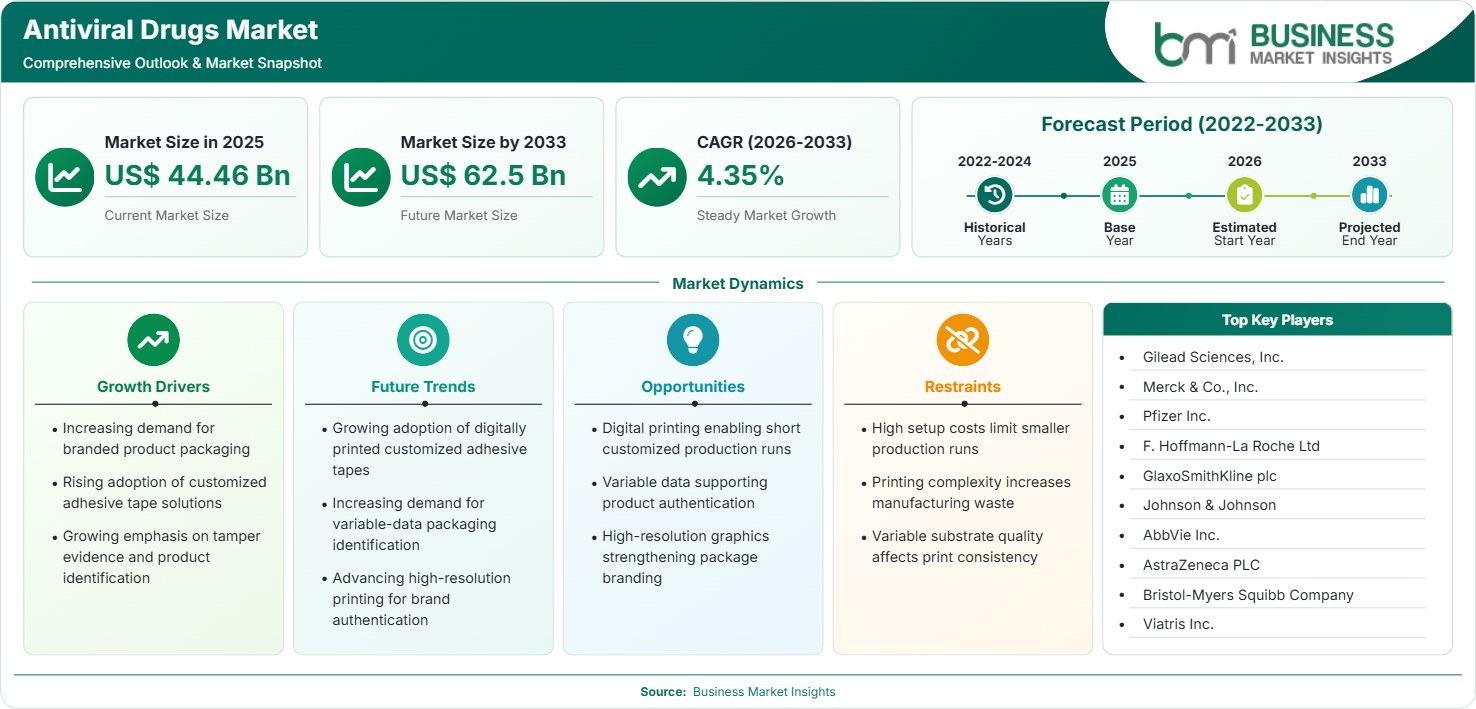
The Antiviral Drugs Market size was valued at US$ 44.46 Billion in 2025 and is projected to reach US$ 62.5 Billion by 2033, growing at a CAGR of 4.35% during 2026–2033, supported by persistent HIV and hepatitis treatment demand, rising antiviral innovation, long-acting therapies, improved diagnosis, and expanding access programs.

Report Coverage
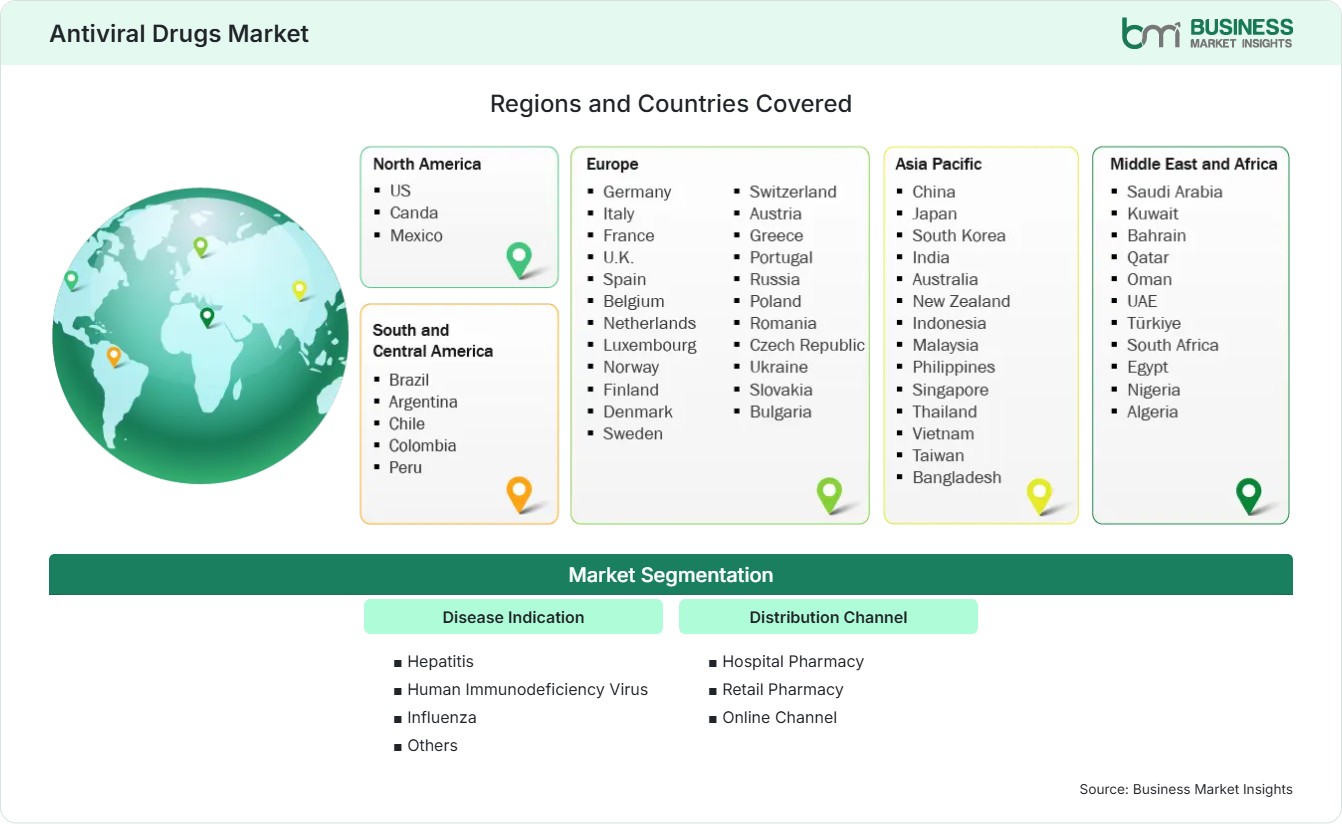
  • Disease Indication: Hepatitis, Human Immunodeficiency Virus, Influenza, Others
  • Distribution Channel: Hospital Pharmacy, Retail Pharmacy, Online Channel
US$ 44.46 Bn Market size in 2025
US$ 62.5 Bn Market Size by 2033
4.35% CAGR, 2026 - 2033
2026-2033 Forecast Period

AI Overview

Antiviral Drugs Market Summary

  • North America Region: North America holds a 38%–41% share in 2025, growing at a 3.9%–4.4% CAGR, influenced by advanced healthcare infrastructure, strong R&D, reimbursement coverage, HIV programs, and rapid adoption of innovative therapies. The US remains the regional anchor, with a 3.8%–4.3% CAGR through 2033, supported by pharmaceutical R&D, broad specialist access, and established infectious-disease treatment networks.
  • Fastest Growing Region: Asia Pacific holds a 21%–24% share in 2025, growing at a 5.0%–6.2% CAGR, driven by expanding healthcare infrastructure, increasing diagnosis, government-funded HIV programs, rising pharmaceutical manufacturing, and improving access to antiviral treatment.
  • Leading Segment: Combination Drugs hold a 60%–64% Antiviral Drugs Market share in 2025, growing at a 4.0%–4.5% CAGR, supported by simplified regimens, improved adherence, multidrug resistance management, established HIV treatment protocols, and continued development of fixed-dose therapies.
  • High Growth Segment: Integrase Inhibitors hold a 5%–8% share in 2025, growing at a 6.0%–7.0% CAGR, supported by high genetic barriers, favorable tolerability, widespread HIV treatment adoption, simplified regimens, and ongoing development of long-acting combinations.
  • Key Market Opportunity: Long-acting formulations, decentralized testing, earlier hepatitis treatment, pediatric regimens, and expanded access programs create commercial opportunities for manufacturers able to combine clinical efficacy, convenient dosing, scalable production, and affordable distribution.
  • Major Market Players: Gilead Sciences, Inc.; Merck & Co., Inc.; Pfizer Inc.; F. Hoffmann-La Roche Ltd; GlaxoSmithKline plc; Johnson & Johnson; AbbVie Inc.; AstraZeneca PLC; Bristol-Myers Squibb Company; and Viatris Inc.
Strategic Insights

Antiviral Drugs Market: Strategic Insights

Antiviral Drugs Market Strategic Framework
FREE PDF
Request your free sample
Request free sample
Stakeholder View

Key Takeaways

  • Supply chains increasingly depend on specialized active pharmaceutical ingredients, formulation expertise, cold-chain capabilities for selected products, regulatory-grade quality systems, and diversified manufacturing networks. Manufacturers with multiple qualified suppliers can better manage shortages, geopolitical disruptions, and sudden public-health procurement requirements.
  • The strongest upside lies in long-acting HIV therapies, combination regimens, direct-acting hepatitis treatments, and products designed for simplified treatment pathways. These applications can expand patient access while reducing adherence barriers and healthcare-system complexity.
  • Innovation is moving beyond incremental molecular changes toward capsid inhibition, integrase inhibition, long-acting injectables, once-weekly oral combinations, and therapies that address treatment duration. Gilead and Merck reported positive Phase 3 results for an investigational once-weekly oral islatravir/lenacapavir regimen in June 2026.
  • Asia Pacific presents a compelling investment case because large patient populations intersect with improving healthcare infrastructure, increasing diagnostic coverage, and domestic pharmaceutical manufacturing capabilities. India and China offer particularly attractive scale opportunities, while Japan provides a mature high-value market.
  • Investment strategies increasingly favor platform technologies and partnerships that can shorten development timelines. The Gilead-Merck collaboration illustrates how complementary mechanisms can be combined to create differentiated long-acting treatment options and distribute development and commercialization risk.
  • Access strategy is becoming a competitive differentiator. Voluntary licensing, tiered pricing, public procurement participation, pediatric formulations, and simplified dosing can influence adoption as strongly as clinical differentiation in lower-income and high-burden markets.
Geographic Outlook

Antiviral Drugs Market Regional Highlights

North America Antiviral Drugs Market

North America accounted for 38%–41% of the global Antiviral Drugs Market share in 2025 and is projected to register a 3.9%–4.4% CAGR during 2026–2033. The region benefits from strong pharmaceutical R&D, sophisticated reimbursement structures, specialist care, and established infectious-disease surveillance. The United States represents the principal revenue contributor, while Canada supports regional demand through public reimbursement and national treatment programs. Long-acting HIV products, hepatitis therapies, and influenza antivirals remain important commercial categories.

  • High pharmaceutical R&D spending supports rapid clinical development and commercialization of novel antiviral mechanisms across HIV, hepatitis, and respiratory infections.
  • The US maintains strong demand because specialist treatment networks, insurance coverage, and public health programs facilitate diagnosis and sustained access to prescription antiviral medicines.
  • Canada offers opportunities through provincial reimbursement systems, centralized procurement, and continuing efforts to expand hepatitis and HIV treatment coverage.
  • Long-acting HIV prevention and treatment products are creating differentiated opportunities as manufacturers address adherence and dosing-frequency challenges.

US Antiviral Drugs Market

The US represented approximately 78%–82% of North American Antiviral Drugs Market revenue in 2025 and is projected to grow at a 3.8%–4.3% CAGR through 2033. Demand is supported by extensive pharmaceutical development, specialist infectious-disease care, commercial insurance, public programs, and rapid regulatory adoption. The country also remains a central launch market for innovative antivirals, including long-acting HIV therapies. CDC guidance emphasizes that influenza antivirals work best when initiated within two days of symptom onset.

  • FDA pathways for breakthrough and priority-review medicines can accelerate access to differentiated antivirals with strong clinical evidence and significant unmet medical needs.
  • HIV treatment remains commercially important because long-term therapy creates recurring prescription demand and encourages development of more convenient dosing formats.
  • Commercial manufacturers increasingly balance innovation with pricing pressure, Medicare policy changes, generic competition, and payer scrutiny.

Europe Antiviral Drugs Market

Europe is estimated to hold a 23%-26% share in 2025 and is expected to grow at a 3.7%-4.3% CAGR from 2026 to 2033. Germany tops regional revenues on the back of a robust healthcare system, whereas the United Kingdom and France have strong treatment facilities. Spain and Italy offer good prospects for growth with growing screening, reimbursement, and infectious disease programs. Market access is aided by regulatory harmonization in Europe, but pricing and reimbursement affect adoption and launch timelines.

  • Germany remains a leading national market because specialist healthcare capacity and reimbursement systems support sustained antiviral treatment demand.
  • The United Kingdom continues investing in infectious-disease management, creating opportunities for therapies that support simplified treatment and prevention pathways.
  • Spain is positioned for comparatively faster expansion as diagnosis, specialist care, and public-health initiatives improve treatment access.
  • European demand favors clinically differentiated products capable of demonstrating health-economic value within cost-conscious reimbursement systems.

Asia Pacific Antiviral Drugs Market

Asia Pacific region held the leading share of the Antiviral Drugs Market of 21%–24% in 2025 and is expected to register the highest CAGR of 5.0%–6.2% until 2033. The main countries in the region driving the market include China, Japan, and India, and emerging markets exist in Indonesia and other Southeast Asian countries. Increasing infrastructure in health care, diagnostics, government policies, local production, and access to specialist treatment contribute to the market growth in the region.

  • China benefits from a large patient base, expanding hospital capacity, domestic pharmaceutical production, and increasing investment in infectious-disease research.
  • India combines substantial pharmaceutical manufacturing capabilities with public HIV programs and expanding private healthcare networks.
  • Japan remains a high-value mature market, supported by sophisticated healthcare delivery, specialist prescribing, and strong pharmaceutical innovation.
  • Southeast Asian countries offer opportunities as healthcare infrastructure, diagnostic availability, and private hospital networks expand.

Rest of World Antiviral Drugs Market

Rest of World held a cumulative share of 10%–13% in 2025 and is forecasted to grow at a CAGR of 4.0%–4.8% during 2026–2033. Latin America will have an advantage due to improved access to hepatitis treatments and programs. The significance of the Middle East and Africa lies in their HIV prevalence and unfulfilled treatment needs. Brazil and Mexico are major markets in Latin America, while South Africa and Saudi Arabia are significant players in their own regions.

Public sector procurement of medicines and the expanded scope of diagnosis can be an advantage for antiviral drugs in South and Central America. Middle East and Africa markets rely more on governmental initiatives, international collaborations, and cheaper drugs. According to the WHO, in 2024, 65% of individuals living with HIV were residing in the African Region.

  • Brazil benefits from established public healthcare procurement and extensive infectious-disease treatment infrastructure, supporting demand for affordable antiviral therapies.
  • Mexico provides opportunities through expanded diagnosis, public-sector treatment programs, and improving specialist access for hepatitis and HIV.
  • South Africa remains strategically important because of its substantial HIV burden and extensive antiretroviral treatment infrastructure.
  • Middle Eastern markets offer opportunities through healthcare modernization, hospital investment, and increasing access to specialist infectious-disease treatment.
Global Market Geography
FREE PDF
Request your free sample
Request free sample
Segment Analysis

Antiviral Drugs Market Segmentation

Drug Class

Drug Class stands out as a significant determinant in prescription, differentiation, and competition. The Combination Drugs segment is expected to capture between 60% and 64% of the market in 2025, with a 4.0%- 4.5% CAGR between 2026 and 2033. The Antiviral Drugs Market trends are increasingly leaning towards combination therapies of complementary mechanisms, while integrase and polymerase technologies differentiate treatment methods.

  • Protease Inhibitors: Protease inhibitors remain important for HIV and selected viral infections, particularly where resistance management requires high genetic barriers. Established formulations and combination use sustain demand.
  • Polymerase Inhibitors: Polymerase inhibitors target viral replication directly and support treatment across influenza, hepatitis, and emerging infections. Broad clinical utility and mechanism-specific development sustain commercial relevance.
  • Integrase Inhibitors: Integrase inhibitors offer potent HIV replication suppression and favorable treatment profiles. Their high genetic barrier and use in simplified combinations support increasing adoption across treatment settings.
  • Combination Drugs: Combination drugs reduce pill burden and address resistance through complementary mechanisms. Fixed-dose formulations remain central to HIV treatment and increasingly influence development strategies focused on adherence.
  • Reverse Transcriptase Inhibitors: Reverse transcriptase inhibitors remain foundational to antiretroviral therapy, with established clinical evidence and extensive combination use supporting continued demand across treatment populations.

Disease Indication

Disease Indication will drive demand, based on disease prevalence, therapy duration, diagnostic rates, and healthcare spending. HIV is the main indication, accounting for an 80%-83% share in 2025, with a 4.0%-4.5% CAGR in the Antiviral Drugs Market till 2033. The other recurring disease indications are hepatitis and influenza. New viruses also provide scope for rapid-response antivirals.

  • Hepatitis: Direct-acting antivirals support highly effective hepatitis C treatment, while hepatitis B requires long-term disease management. Earlier diagnosis and elimination programs can broaden treatment eligibility.
  • Human Immunodeficiency Virus (HIV): HIV generates sustained demand because treatment is lifelong for most patients. Long-acting prevention and treatment products are expanding the addressable opportunity by addressing adherence barriers.
  • Influenza: Influenza antivirals benefit from recurring seasonal outbreaks and pandemic preparedness requirements. WHO estimates around one billion seasonal influenza cases annually, including 3–5 million severe cases.

Distribution Channel

The distribution channel dictates availability, efficiency, and accessibility. Hospital Pharmacy is still the primary distribution channel for specialist and institutional care. The Retail Pharmacy distributes drugs for outpatient use on a recurrent basis. The Online Channel is becoming more popular where regulations allow, especially for recurrent prescriptions.

  • Hospital Pharmacy: Hospital pharmacies remain essential for specialist antivirals, inpatient treatment, government procurement, and therapies requiring clinical supervision or complex prescribing decisions.
  • Retail Pharmacy: Retail pharmacies provide convenient access to established oral antiviral medicines and support recurring treatment requirements for chronic viral diseases.
  • Online Channel: Online channels improve convenience for repeat prescriptions and can broaden geographic access, although prescription controls, authentication, and regulatory requirements influence adoption.
Market Forces

Antiviral Drugs Market Dynamics

Key Market Drivers

Persistent HIV Burden Sustains Long-Term Treatment Demand

WHO estimates that 41.0 million people were living with HIV globally at the end of 2025, while 1.2 million people acquired HIV during the year. These recurrent patients generate demand for antiretroviral medications and motivate companies to improve their tolerability, dosing frequency, and compliance. The potential of the Antiviral Drugs Market growth is consequently highly associated with HIV treatment, prevention, testing, and patient retention. Long-acting medicines alter the strategic considerations in this market as annual dose reductions could lessen pill burden. An example of such a shift is Gilead’s approval of lenacapavir for twice-yearly dosing and research into once-weekly oral combination therapies.

Expansion of Direct-Acting Therapies for Hepatitis

The management of hepatitis is moving towards the development of targeted drugs capable of providing cures with high success rates within a relatively short period. The creation of Mavyret by AbbVie in June 2025 to treat hepatitis infections among adults and pediatric patients aged 3 years and above took only 8 weeks and achieved a 96% cure rate in clinical trials. This advancement paves the way for the ongoing trend of early diagnosis and treatment in the antiviral drugs market. The goal of health institutions to eliminate disease provides an opportunity for increased demand for antiviral drugs for non-specialized treatments using the test-and-treat approach. This therefore provides opportunities for pharmaceutical companies, providing easy administration and coverage, including pediatric applications.

Seasonal and Emerging Viral Threats Support Antiviral Preparedness

Seasonal influenza requires ongoing treatment, whereas new respiratory viruses underscore the importance of being prepared to use antiviral drugs. The World Health Organization has estimated one billion cases of influenza each year, out of which three to five million cases are severe, and 290,000 to 650,000 deaths are from respiratory diseases. Early treatment is vital because, according to Centers for Disease Control and Prevention guidelines, influenza antivirals are most effective when started within 2 days of symptom onset. This situation is consistent with the Antiviral Drugs Market trends, including rapid diagnosis, stockpiling, flexible manufacturing, and easy-to-administer therapies. Roche has shown a 32% reduction in the odds of household influenza transmission in its CENTERSTONE phase 3 trial of Xofluza.

Key Market Opportunities

Commercialization of Long-Acting Antiviral Platforms

Long-acting delivery represents a major opportunity because treatment effectiveness depends not only on pharmacology but also on adherence and continuity. Twice-yearly HIV prevention can reduce the frequency of patient interactions with medication and address challenges associated with daily oral dosing. Gilead's approval of lenacapavir represents regulatory acceptance of this concept, with Gilead and Merck still working on weekly oral combinations. Potential for investment is not limited to injectables but also includes sustained-release technologies, adherence technologies, specialty pharmacy solutions, and manufacturing capabilities capable of producing high-value, long-acting products at volume. Companies with unique delivery systems have the potential to increase coverage and create higher value in repeatable therapies.

Decentralized Test-and-Treat Models for Hepatitis

Hepatitis C offers an area where diagnostics, pharmacy, and antivirals can be combined to provide quicker service routes. Acute hepatitis C infection can be asymptomatic, resulting in diagnostic delays and further spread of the disease. AbbVie's expansion of MAVYRET indications offers a good example of how broader treatment guidelines enable prompt treatment after diagnosis. Business opportunities include simplified testing partnerships, treatment through pharmacies, digitized patient journeys, and public-private partnerships to eliminate the disease. Drug manufacturers could improve their market access by empowering health providers outside the hepatologists' environment. This becomes more important for cases where specialist services are confined to urban centers. The Antiviral Drugs Market Forecasts will continue to rely on the ability to diagnose and treat patients.

Expansion of Affordable Regional Manufacturing

Regional manufacturing offers an opportunity to reduce supply-chain exposure and improve affordability in high-burden markets. Asia Pacific has substantial pharmaceutical production capabilities, while Latin America, Africa, and parts of the Middle East are increasing healthcare investment. Collaborations involving local manufacturers can help governments tender projects, lessen dependence on transportation, and increase access to drugs. Companies can adopt licensing models, contract manufacturing, technology transfers, and even local packaging. This will be a good opportunity, especially where demand is predictable, for instance, in the case of antiretroviral drugs and hepatitis. It is also important for the manufacturing firm to align production economics with procurement needs, thereby improving market penetration while supporting broader public health objectives.

Market Restraints and Challenges

Patent Expiries and Generic Price Competition

Factor: Lack of exclusivity may render existing antiviral drugs vulnerable to generics, especially in well-developed markets like HIV and hepatitis, which feature several producers capable of supplying therapeutic equivalents. Impact: Antiviral manufacturers may be forced to accept lower prices, lose market share, and reduce the time period to recoup development costs. The effect will also dictate the companies' research focus, as they must replace mature products with differentiated ones. While competition from generics may enhance product accessibility for consumers, it lowers profitability and raises the stakes for efficient production and differentiation of longer-duration formulations that create stronger clinical and commercial barriers.

Resistance, Safety Risks, and Regulatory Complexity

Factor: Viral mutations could reduce efficacy, and adverse event triggers would necessitate further monitoring or clinical trials. Impact: The time to bring the product to market would increase, the costs to bring the drug to market would increase, and doctors would restrict their use until there is clarity on issues of resistance or safety. Gilead's 2025 clinical hold on its investigational products, GS-1720 and GS-4182, is a case in point: a safety trigger could delay further development. Regulators demand extensive proof in many different situations. These requirements increase capital intensity and create execution risks for companies developing novel mechanisms or complex long-acting products.

Company Analysis

Competitive Landscape

The Antiviral Drugs Market analysis indicates a competitive structure shaped by established HIV franchises, hepatitis therapies, influenza products, generic manufacturing, and next-generation pipeline assets. Leading pharmaceutical companies increasingly differentiate through long-acting delivery, fixed-dose combinations, expanded indications, access partnerships, and mechanism-specific research.

Company Name

Overview

Products and Services relevant to this market

Gilead Sciences, Inc.

Major virology specialist with extensive HIV and hepatitis expertise and a strong long-acting development pipeline.

Biktarvy, Descovy, Sunlenca, Yeztugo, Vemlidy, and other HIV and viral-disease therapies.

Merck & Co., Inc.

Diversified pharmaceutical company with a substantial infectious-disease and HIV research portfolio.

Isentress, Delstrigo, Pifeltro, islatravir-based candidates, and combination HIV development programs.

Pfizer Inc.

Global pharmaceutical manufacturer with established antiviral capabilities and large-scale commercial infrastructure.

Paxlovid and related antiviral development, manufacturing, supply, and infectious-disease research.

F. Hoffmann-La Roche Ltd

Major healthcare company with antiviral expertise spanning influenza and diagnostic-linked infectious-disease management.

Xofluza, influenza research, diagnostics, and infectious-disease healthcare solutions.

GlaxoSmithKline plc

Global pharmaceutical company with longstanding infectious-disease expertise and HIV-related commercial capabilities.

Antiretroviral medicines, respiratory antivirals, infectious-disease research, and combination therapies.

Johnson & Johnson

Diversified healthcare company with established HIV treatment experience and global pharmaceutical infrastructure.

Symtuza, Prezcobix, Prezista, and related HIV treatment solutions.

AbbVie Inc.

Pharmaceutical company with a strong hepatitis C franchise and emphasis on simplified antiviral treatment.

Mavyret/Maviret and hepatitis C clinical development and treatment-support activities.

AstraZeneca PLC

Global biopharmaceutical company with experience in infectious-disease prevention and therapeutic development.

Antiviral and infectious-disease research, respiratory healthcare, and pandemic-response capabilities.

Bristol-Myers Squibb Company

Global biopharmaceutical company with historical infectious-disease expertise and specialty pharmaceutical capabilities.

HIV-related therapies, infectious-disease research, and specialty medicines.

Viatris Inc.

Global healthcare company focused strongly on broad access and affordable medicines, including antiretroviral treatments.

Generic and branded HIV medicines, fixed-dose combinations, pediatric formulations, and global access programs.

Trust & Transparency

Research Methodology

The market analysis combines proprietary research with secondary data from government agencies, company disclosures, regulatory filings, industry databases and expert interviews. Market estimates are validated through data triangulation, cross-market benchmarking and analyst review.

View Full Research Methodology

Questions Answered

Frequently Asked Questions

Which technologies could influence future antiviral innovation in the Antiviral Drugs Market report?

Future innovation will increasingly involve long-acting injectables, capsid inhibitors, integrase inhibitors, sustained-release formulations, rapid diagnostics, and computational drug discovery. These technologies can shorten dosing schedules, improve treatment targeting, and accelerate candidate selection.

How does antiviral resistance affect product development?

Resistance encourages manufacturers to develop therapies with high genetic barriers, complementary mechanisms, and combination approaches. Clinical programs increasingly evaluate resistance patterns alongside efficacy, safety, adherence, and long-term viral suppression.

What role will online pharmacies play in antiviral distribution?

Online pharmacies can improve convenience for eligible prescription refills, particularly for chronic therapies. Their expansion will depend on prescription verification, medicine authentication, local regulations, delivery infrastructure, and integration with digital healthcare services.

Why is hepatitis C an attractive antiviral opportunity?

Hepatitis C remains attractive because curative treatment can generate public-health value beyond individual disease management. Earlier diagnosis, simplified regimens, and test-and-treat pathways can expand the treated population and support elimination programs.

How are long-acting therapies changing antiviral drug development?

Long-acting therapies shift development priorities from daily adherence toward sustained drug exposure, dosing convenience, delivery technology, and patient retention. They can also create differentiated commercial positions where established oral therapies face intense competition.

Access the Full Antiviral Drugs Market Report

Get segment-level forecasts, regional estimates, competitive benchmarking, company profiles and downloadable Excel datasets.

Access the full Antiviral Drugs Market Report
350 pages PDF & Excel | 2026-09-10
Similar Research

Related Market Reports