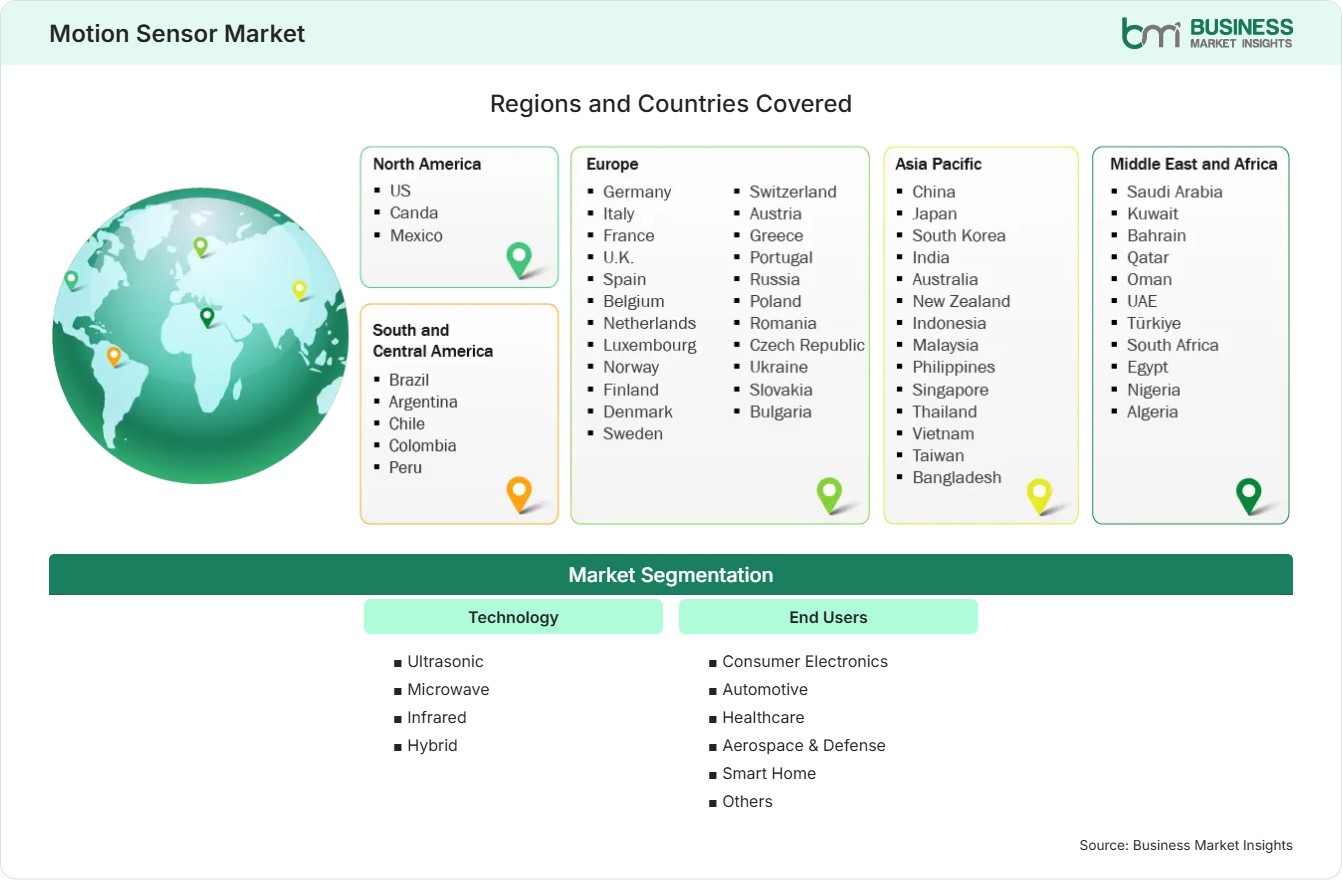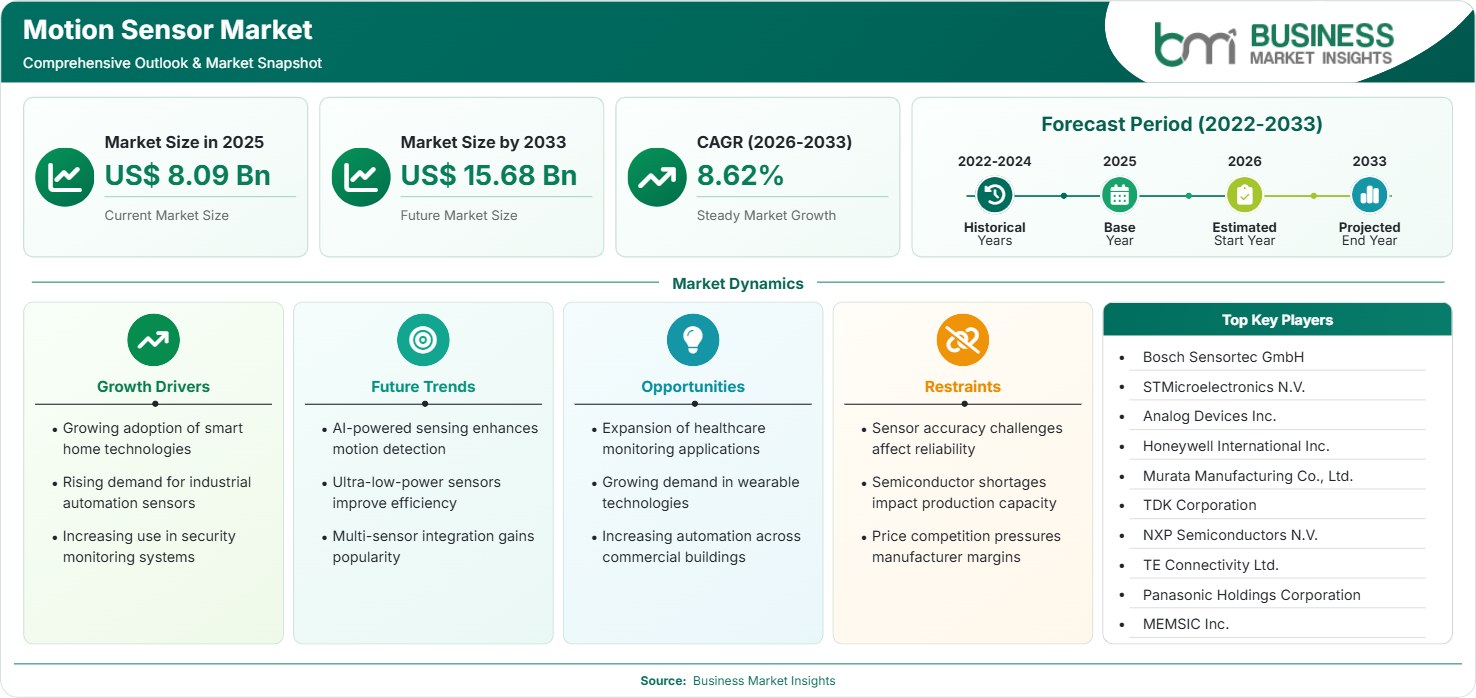
Motion Sensor Market Regional Highlights
North America Motion Sensor Market
North America accounted for 34%–37% of the Motion Sensor Market Share in 2025 and is projected to expand at a CAGR of 8.2%–8.8% during 2026–2033. Strong demand from smart homes, industrial automation, automotive safety systems, and intelligent security infrastructure continues supporting market expansion across the region.
- Increasing deployment of smart home ecosystems continues driving adoption of advanced motion sensing technologies for lighting, security, and energy management.
- Industrial automation investments support demand for precise motion sensors used in robotics, predictive maintenance, and factory automation systems.
- Automotive manufacturers increasingly integrate motion sensing technologies into advanced driver assistance systems and vehicle safety applications.
- Expansion of IoT-enabled commercial buildings strengthens demand for occupancy detection and intelligent environmental monitoring solutions.
US Motion Sensor Market
The U.S. represented 76%–79% of the North American market in 2025 and is expected to register a CAGR of 8.4%–9.0% through 2033. Growing investments in connected devices, industrial automation, healthcare technologies, and smart infrastructure continue strengthening market demand.
- Rising adoption of AI-enabled smart home products increases deployment of intelligent motion sensing devices.
- Healthcare providers continue integrating wearable monitoring technologies utilizing advanced motion sensors.
- Growing automation across manufacturing facilities accelerates industrial sensor implementation.
- Security modernization initiatives support increased installation of intelligent motion detection systems.
Europe Motion Sensor Market
Europe held 25%–28% market share in 2025 and is forecast to expand at a CAGR of 8.0%–8.6% during 2026–2033. Germany leads regional demand, while the United Kingdom records the fastest growth because of increasing industrial automation and smart building investments.
- Smart manufacturing initiatives continue expanding demand for industrial motion sensing technologies.
- Automotive innovation supports increasing integration of sensors into vehicle safety and driver assistance systems.
- Energy-efficient building regulations encourage adoption of intelligent occupancy sensing solutions.
- Healthcare digitalization strengthens utilization of wearable and remote monitoring technologies.
Asia Pacific Motion Sensor Market
Asia Pacific accounted for 31%–34% market share in 2025 and is expected to register the strongest Motion Sensor Market Forecasts, expanding at a CAGR of 9.1%–9.8% during 2026–2033. China leads regional revenue, while India demonstrates the fastest growth through expanding electronics manufacturing and industrial automation.
- Consumer electronics manufacturing significantly increases demand for compact motion sensing technologies.
- Smart city development programs continue encouraging deployment of intelligent sensing infrastructure.
- Industrial digitalization accelerates adoption of advanced sensors across manufacturing facilities.
- Automotive production growth strengthens demand for safety and positioning sensors.
- Expansion of healthcare technology supports increasing utilization of wearable sensing devices.
Rest of World Motion Sensor Market
The Rest of World region represented 8%–11% market share in 2025 and is projected to grow at a CAGR of 8.4%–9.0% through 2033. Brazil leads demand in South America, while the United Arab Emirates records the fastest growth owing to smart infrastructure investments and industrial modernization initiatives.
- Commercial building automation projects continue supporting wider deployment of intelligent sensing technologies.
- Industrial diversification programs strengthen adoption of advanced automation systems.
- Growing investments in public security infrastructure increase demand for motion detection solutions.
- Expansion of healthcare services supports greater implementation of wearable monitoring technologies.