The Middle East and Africa Defibrillators market size is expected to reach US$ 188.5 million by 2033 from US$ 154.6 million in 2025. The market is estimated to record a CAGR of 2.3% from 2026 to 2033.
The Middle East and Africa implantable defibrillators market reflects a heterogeneous but progressively evolving landscape characterized by widening access to advanced cardiac care technologies amidst persistent structural challenges. Across the region, demand for implantable defibrillators is buoyed by rising incidence of cardiovascular diseases, increasing awareness of sudden cardiac death prevention, and expanding healthcare services, particularly in urban centers and high-income economies. Regional healthcare infrastructure improvements and investments in electrophysiology and cardiac intervention capabilities have supported device adoption in specialist hospitals and cardiac centers throughout the Middle East and select African markets. Collaboration between global device manufacturers and regional healthcare providers has played an important role in introducing technologically advanced ICD variants to clinicians and patients across the region.
The market contends with constraints related to affordability, uneven reimbursement frameworks, and a shortage of highly trained cardiac electrophysiologists in several countries. Fragmented regulatory processes across the combined Middle Eastern and African landscape also contribute to delayed product introductions and inconsistent access to next-generation defibrillation devices. Moreover, disparities in healthcare spending between wealthier Gulf Cooperation Council (GCC) nations and lower-income African markets shape distinct adoption curves, making uniform market development strategies challenging for manufacturers.

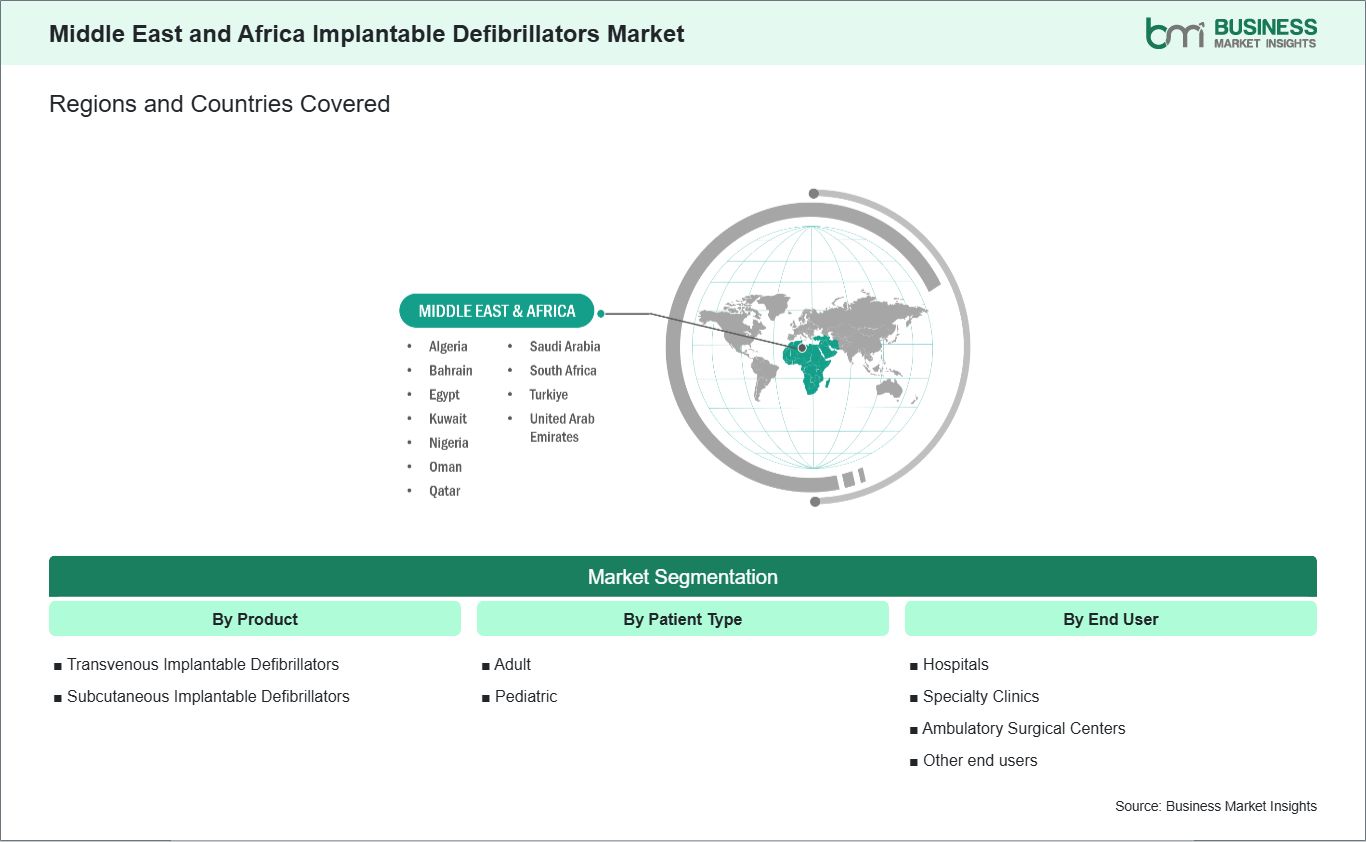
Key segments that contributed to the derivation of the Middle East and Africa Implantable Defibrillators market analysis are product type, patient type, and end user.
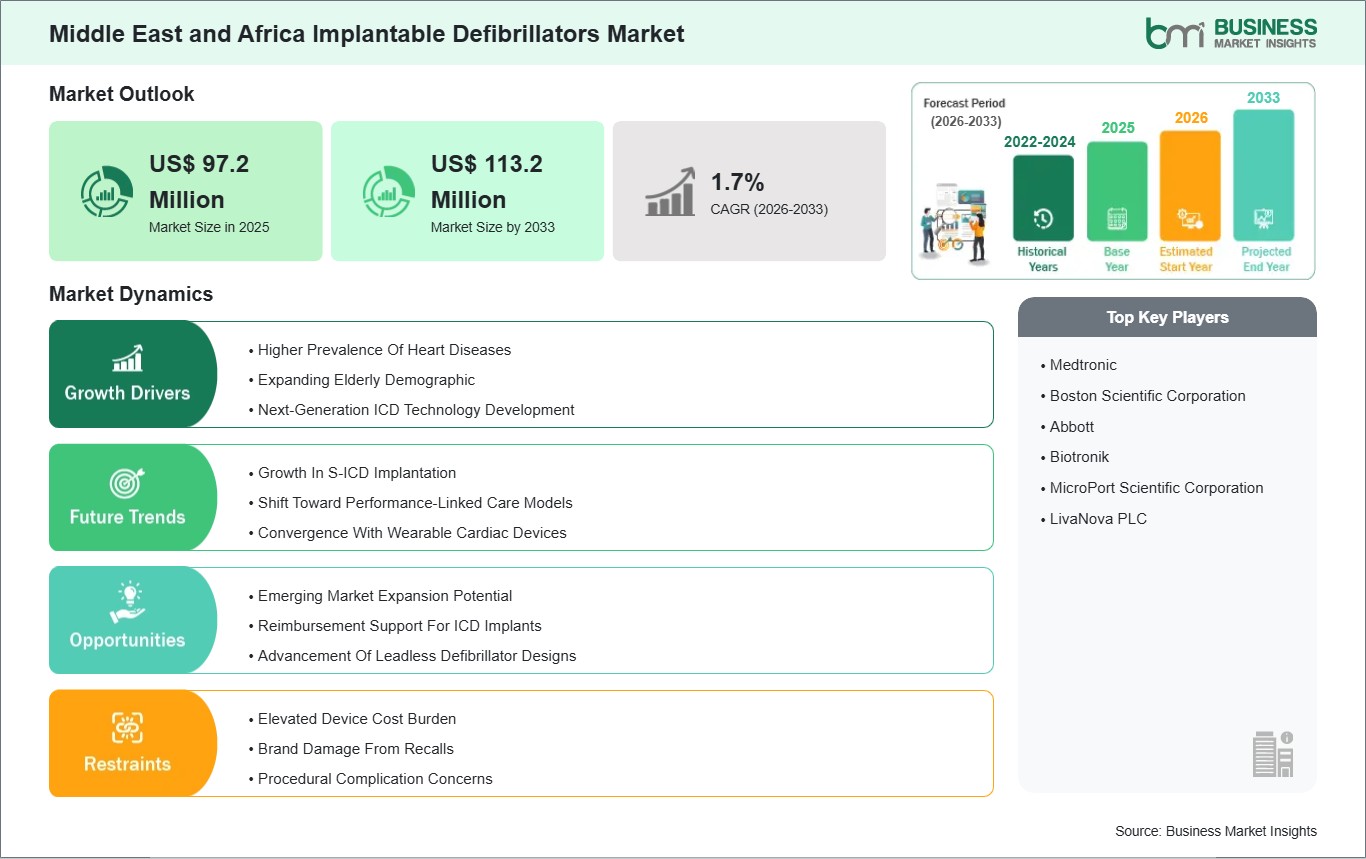
The Middle East and Africa is experiencing a growing prevalence of heart diseases, particularly coronary artery disease and serious heart rhythm disorders. Rapid urbanization, sedentary lifestyles, unhealthy diets, smoking, and rising cases of diabetes are contributing to the increasing burden of cardiovascular conditions. In several Middle Eastern countries, lifestyle-related risk factors are highly common, leading to a greater number of patients at risk of sudden cardiac arrest. This rising disease burden is increasing the need for effective cardiac rhythm management solutions such as implantable cardioverter defibrillators (ICDs).
Healthcare infrastructure in parts of the Middle East, especially in countries such as Saudi Arabia, the UAE, and Qatar, is well developed and equipped with advanced cardiac centers. These facilities are capable of performing ICD implantation procedures and managing complex heart conditions. In Africa, although access varies widely between countries, leading urban hospitals are gradually improving their cardiac care capabilities. Growing awareness among physicians about sudden cardiac death prevention is also supporting ICD adoption.
As the number of high-risk cardiac patients continues to rise, healthcare providers are focusing more on long-term disease management and prevention strategies. ICD therapy is recognized as an important treatment option for eligible patients. The higher prevalence of heart diseases acts as a strong driver for the ICD market in the Middle East and Africa.
Reimbursement support for ICD implants in the Middle East and Africa varies across countries, but positive developments are creating new opportunities. In wealthier Middle Eastern nations, public healthcare systems and government-funded insurance programs often cover advanced cardiac procedures, including ICD implantation for eligible patients. This financial support reduces out-of-pocket costs and encourages wider adoption of the therapy.
Private healthcare also plays an important role in the region. Many patients in the Gulf countries rely on private insurance plans that provide coverage for specialized cardiac treatments. As insurance penetration increases, more patients gain access to ICD implants. Hospitals and cardiac centers are therefore more willing to invest in advanced device technologies, supported by clearer reimbursement pathways.
In several African countries, reimbursement systems are still developing, and access to ICD therapy remains limited in some areas. However, healthcare reforms and international partnerships are gradually strengthening funding mechanisms for critical treatments. As governments focus on improving outcomes for non-communicable diseases, support for life-saving cardiac devices is expected to improve. Expanding reimbursement support presents a meaningful opportunity for ICD manufacturers to grow their presence in the Middle East and Africa market.

The Middle East and Africa implantable defibrillators market is experiencing steady growth, with market size and share analysis reflecting evolving treatment preferences and competitive dynamics among key players. The report evaluates important subsegments categorized within product type, patient type, and end user, highlighting their respective contributions to overall market performance.
By product type, the transvenous implantable defibrillators subsegment dominated the market in 2025, due to established clinical efficacy, broader physician familiarity, proven long-term outcomes, wider availability, and strong adoption in treating high-risk cardiac patients compared to newer subcutaneous options.
In terms of patient type, the adult subsegment dominated the market in 2025. This leadership is attributed to the higher prevalence of cardiac disorders in the adult population, increased awareness of sudden cardiac death prevention, and greater accessibility of advanced defibrillator therapies for adult patients.
Based on end user, the hospitals subsegment dominated the market in 2025. Hospitals remain the primary distribution channel due to their comprehensive cardiac care facilities, access to trained cardiologists and specialized technicians, advanced monitoring infrastructure, and ability to provide immediate, life-saving interventions.
| Report Attribute | Details |
|---|---|
| Market size in 2025 | US$ 97.2 Million |
| Market Size by 2033 | US$ 113.2 Million |
| CAGR (2026 - 2033) | 1.7% |
| Historical Data | 2022-2024 |
| Forecast period | 2026-2033 |
| Segments Covered | By Product
|
|
Regions and Countries Covered
| |
| Middle East and Africa | Saudi Arabia, United Arab Emirates, Kuwait, Bahrain, Qatar, Oman, Turkiye, South Africa, Egypt, Nigeria, Algeria |
| Market leaders and key company profiles |
|
The "Middle East and Africa Implantable Defibrillators Market Size and Forecast (2022–2033)" report provides a detailed analysis of the market covering below areas:
The geographical scope of the Middle East and Africa Defibrillators market report is divided into: Saudi Arabia, the United Arab Emirates, Kuwait, Bahrain, Qatar, Oman, Turkiye, South Africa, Egypt, Nigeria, Algeria, and the Rest of MEA. Turkiye held the largest share in 2025.
Turkiye represents the most developed market within the Middle East and Africa. The country benefits from a well-structured emergency medical response system and an established network of public and private healthcare institutions. External defibrillators are incorporated into hospital emergency departments, ambulances, corporate campuses, transportation hubs, and sports complexes. Regulatory alignment with international medical device standards has encouraged participation from multinational manufacturers and domestic distributors, creating a competitive and diversified supply environment. Public awareness initiatives around cardiac health and emergency preparedness have supported broader acceptance of automated external defibrillators beyond hospital settings. Corporate entities and educational institutions are equipping facilities with AEDs as part of occupational health and safety strategies. Turkiye’s strong logistics infrastructure and medical device distribution channels position it as a gateway for product movement into neighboring Middle Eastern and select African markets. Challenges persist in ensuring consistent access across rural provinces and maintaining standardized training programs for lay responders. Nonetheless, continuous healthcare system strengthening and growing institutional focus on rapid cardiac response sustain Turkiye’s leadership in the regional market.

The Middle East and Africa Defibrillators market is evaluated by gathering qualitative and quantitative data post primary and secondary research, which includes important corporate publications, association data, and databases. A few of the key developments in the Middle East and Africa Defibrillators market are:
The Middle East and Africa Implantable Defibrillators Market is valued at US$ 97.2 Million in 2025, it is projected to reach US$ 113.2 Million by 2033.
As per our report Middle East and Africa Implantable Defibrillators Market, the market size is valued at US$ 97.2 Million in 2025, projecting it to reach US$ 113.2 Million by 2033. This translates to a CAGR of approximately 1.7% during the forecast period.
The Middle East and Africa Implantable Defibrillators Market report typically cover these key segments-
The historic period, base year, and forecast period can vary slightly depending on the specific market research report. However, for the Middle East and Africa Implantable Defibrillators Market report:
The Middle East and Africa Implantable Defibrillators Market is populated by several key players, each contributing to its growth and innovation. Some of the major players include:
The Middle East and Africa Implantable Defibrillators Market report is valuable for diverse stakeholders, including:
Essentially, anyone involved in or considering involvement in the Middle East and Africa Implantable Defibrillators Market value chain can benefit from the information contained in a comprehensive market report.
Please tell us your area of interest
(Market Segments/ Regions and Countries/ Companies)