The Nordic Defibrillators market size is expected to reach US$ 201.8 million by 2033 from US$ 124.8 million in 2025. The market is estimated to record a CAGR of 6.2% from 2026 to 2033.
Advanced healthcare systems, strong emphasis on preventive medicine, and widespread adoption of innovative cardiac technologies define the implantable defibrillators market in the Nordic region. Sweden, Denmark, Norway, and Finland contribute to the regional market, with Sweden leading due to its robust infrastructure and high prioritization of cardiovascular health. The region benefits from well-organized public healthcare systems that ensure equitable access to advanced treatments, including implantable defibrillators. Growing awareness of sudden cardiac arrest prevention, coupled with strong physician expertise and patient education programs, has supported steady adoption. International medical device companies collaborate with Nordic hospitals and research institutions, ensuring rapid integration of new technologies and clinical best practices.
Restraints in the market stem primarily from high device costs and the complexity of implantation procedures, which can limit adoption in certain patient groups despite strong reimbursement frameworks. Regulatory requirements, while transparent and patient-focused, can slow down the introduction of innovative technologies compared to larger European markets. Additionally, the relatively smaller population base of the Nordic countries means that the market size is limited compared to other regions. Nonetheless, the Nordic region remains a leader in healthcare innovation, with ongoing investments in digital health, remote monitoring, and minimally invasive cardiac solutions expected to drive future growth.

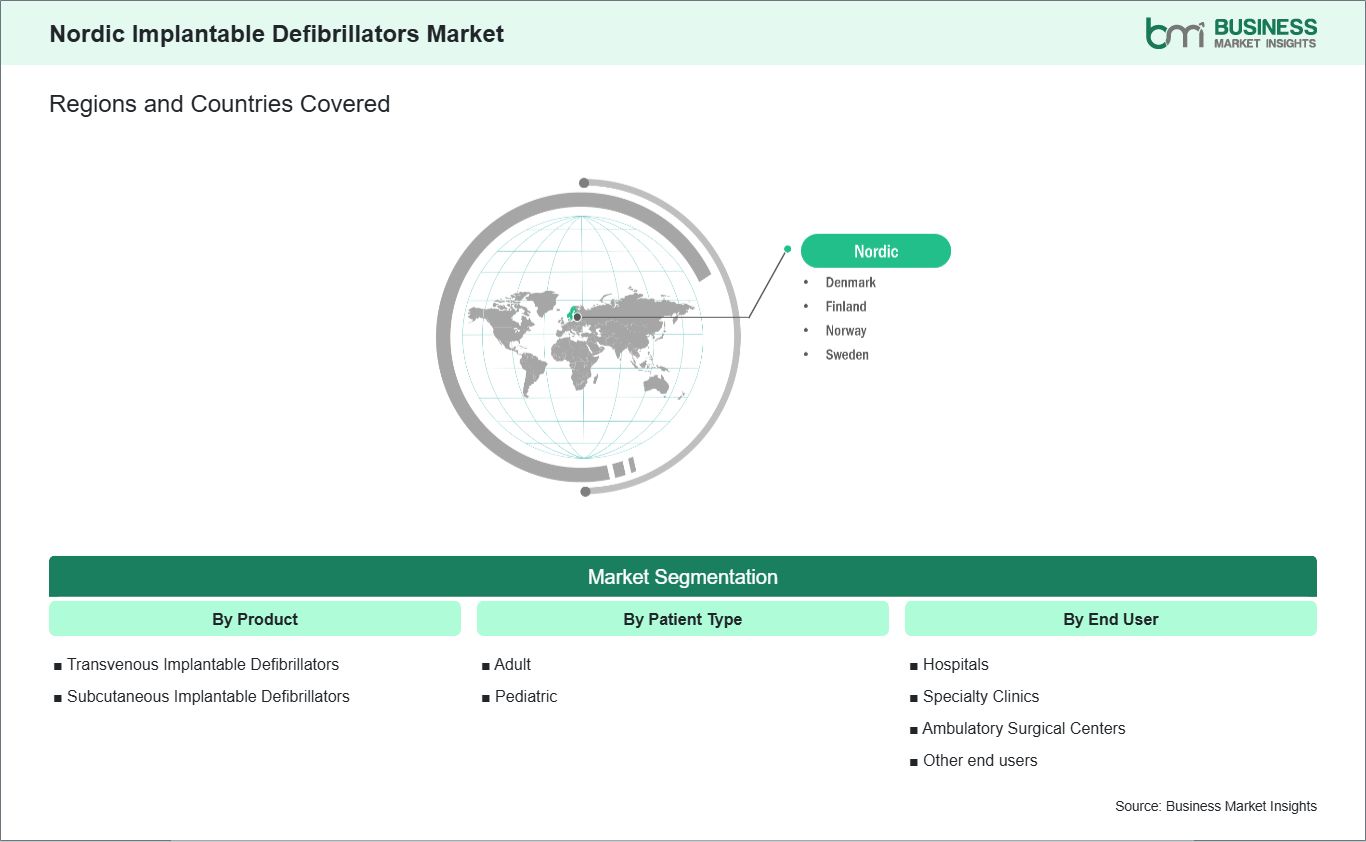
Key segments that contributed to the derivation of the Nordic Implantable Defibrillators market analysis are product type, patient type, and end user.
Cardiovascular diseases remain a significant health concern across the Nordic countries, influencing how healthcare systems prioritize acute care and emergency readiness. Hospitals and cardiac units encounter patients with arrhythmias and heart failure, prompting cardiologists to emphasize early detection and rapid intervention. This ongoing demand for cardiac care has placed defibrillators at the center of emergency response protocols.
The prevalence of lifestyle-related heart conditions among older adults has shaped healthcare planning. Clinics and emergency services are well integrated, with defibrillators stationed throughout major hospitals, ambulances, and even in some community health centers. The ability to deliver swift defibrillation is viewed as a key component in reducing long-term complications from sudden cardiac events.
The emphasis on preventive cardiology — including patient education, routine screening, and risk management — intersects with a growing focus on acute response capabilities. Hospital networks are standardizing defibrillator availability and training programs for medical staff, reflecting a shared regional commitment to improving cardiac survival outcomes in urban and rural settings.
In urban hubs such as Stockholm and Oslo, families with members who have a history of heart issues are more likely than before to explore automated external defibrillators (AEDs) for private use. This shift is part of a cultural emphasis on preparedness and personal health autonomy.
In Finland, where communities place a high value on independent living for seniors, there is growing interest in having defibrillators readily accessible outside of traditional clinical environments. Local health groups and senior associations discuss emergency readiness at community meetings, contributing to rising consumer awareness of how home defibrillators can serve as a complement to public healthcare services.
In smaller towns or coastal communities, residents may still rely primarily on well-equipped local health centers and rapid emergency response teams rather than investing in personal defibrillation devices. Still, as awareness increases and devices become more user-friendly, the concept of home defibrillator use is gaining traction among risk-aware households and caregivers throughout the Nordic countries.
The Nordic implantable defibrillators market is experiencing steady growth, with market size and share analysis reflecting evolving treatment preferences and competitive dynamics among key players. The report evaluates important subsegments categorized within product type, patient type, and end user, highlighting their respective contributions to overall market performance.
By product type, the transvenous implantable defibrillators subsegment dominated the market in 2025, due to established clinical efficacy, broader physician familiarity, proven long-term outcomes, wider availability, and strong adoption in treating high-risk cardiac patients compared to newer subcutaneous options.
In terms of patient type, the adult subsegment dominated the market in 2025. This leadership is attributed to the higher prevalence of cardiac disorders in the adult population, increased awareness of sudden cardiac death prevention, and greater accessibility of advanced defibrillator therapies for adult patients.
Based on end user, the hospitals subsegment dominated the market in 2025. Hospitals remain the primary distribution channel due to their comprehensive cardiac care facilities, access to trained cardiologists and specialized technicians, advanced monitoring infrastructure, and ability to provide immediate, life-saving interventions.
| Report Attribute | Details |
|---|---|
| Market size in 2025 | US$ 78.4 Million |
| Market Size by 2033 | US$ 120.6 Million |
| CAGR (2026 - 2033) | 5.5% |
| Historical Data | 2022-2024 |
| Forecast period | 2026-2033 |
| Segments Covered | By Product
|
|
Regions and Countries Covered
| |
| Nordic | Sweden, Denmark, Norway, Finland |
| Market leaders and key company profiles |
|
The "Nordic Implantable Defibrillators Market Size and Forecast (2022–2033)" report provides a detailed analysis of the market covering below areas:
The geographical scope of the Nordic Defibrillators market report is divided into: Sweden, Norway, Denmark, and Finland. Sweden held the largest share in 2025.
Sweden dominates the market due to its well-structured healthcare system and longstanding commitment to emergency response readiness. Hospitals and emergency medical services prioritize rapid cardiac intervention, with defibrillators deeply embedded into standard emergency care protocols. Public access defibrillators are widely placed in urban centers, including metro stations, workplaces, and recreational facilities, reflecting Sweden’s emphasis on empowering bystanders to act during cardiac emergencies.
CPR and AED awareness programs are commonly promoted through workplaces, schools, and community organizations, ensuring that defibrillators are not only available but effectively used. The country places strong emphasis on digital coordination, with emergency services increasingly aligned with defibrillator location awareness to optimize response times. While challenges exist in extending equal coverage to rural and remote areas, Sweden’s coordinated national approach, focus on preventive care, and high public engagement continue to position it as the leading market for defibrillators within the region.

The Nordic Defibrillators market is evaluated by gathering qualitative and quantitative data post primary and secondary research, which includes important corporate publications, association data, and databases. A few of the key developments in the Nordic Defibrillators market are:
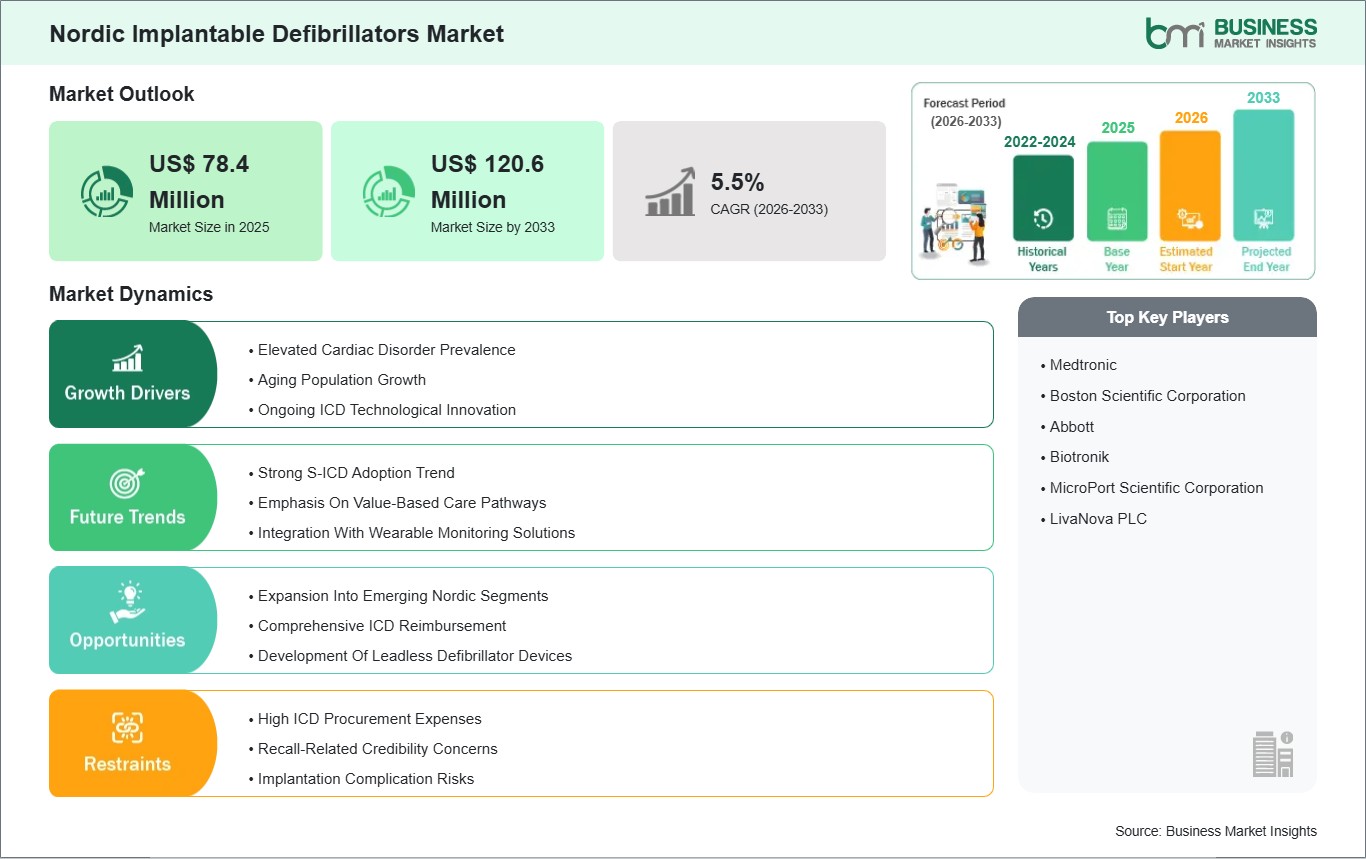
The Nordic Implantable Defibrillators Market is valued at US$ 78.4 Million in 2025, it is projected to reach US$ 120.6 Million by 2033.
As per our report Nordic Implantable Defibrillators Market, the market size is valued at US$ 78.4 Million in 2025, projecting it to reach US$ 120.6 Million by 2033. This translates to a CAGR of approximately 5.5% during the forecast period.
The Nordic Implantable Defibrillators Market report typically cover these key segments-
The historic period, base year, and forecast period can vary slightly depending on the specific market research report. However, for the Nordic Implantable Defibrillators Market report:
The Nordic Implantable Defibrillators Market is populated by several key players, each contributing to its growth and innovation. Some of the major players include:
The Nordic Implantable Defibrillators Market report is valuable for diverse stakeholders, including:
Essentially, anyone involved in or considering involvement in the Nordic Implantable Defibrillators Market value chain can benefit from the information contained in a comprehensive market report.
Please tell us your area of interest
(Market Segments/ Regions and Countries/ Companies)