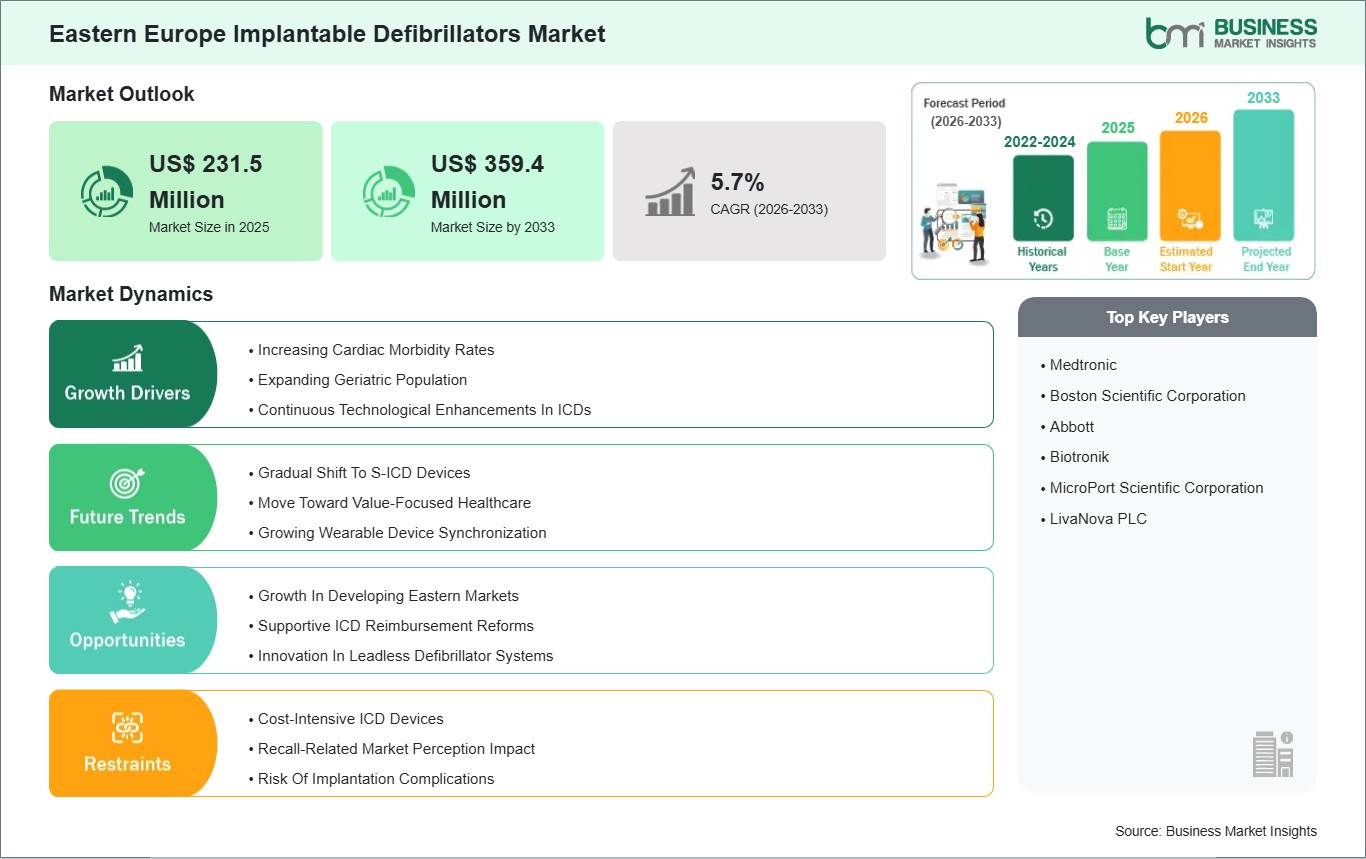
The Eastern Europe implantable Defibrillators market size is expected to reach US$ 359.4 million by 2033 from US$ 231.5 million in 2025. The market is estimated to record a CAGR of 5.7% from 2026 to 2033.
The implantable defibrillators market in Eastern Europe is expanding, supported by rising awareness of cardiovascular health and improvements in healthcare infrastructure across major countries. Russia dominated due to its large population base, relatively advanced medical facilities, and growing investment in specialized cardiac care. Urban hospitals and teaching institutions are adopting implantable defibrillators as part of preventive strategies against sudden cardiac arrest. International collaborations and partnerships with medical device companies have also played a role in introducing advanced technologies to the region. The growing emphasis on preventive healthcare and the modernization of hospital infrastructure are driving adoption.
Despite these positive developments, the market faces notable restraints. High device costs and limited reimbursement frameworks remain barriers to widespread adoption, particularly in lower-income segments. Regulatory complexities and slower approval processes compared to Western Europe hinder the pace of product introductions. Additionally, disparities in healthcare access between urban and rural areas limit the reach of advanced cardiac procedures. Economic instability and competing public health priorities also affect investment in specialized cardiac care. Nevertheless, Eastern Europe shows strong potential, with ongoing modernization efforts and increasing awareness of preventive solutions expected to expand the market gradually.

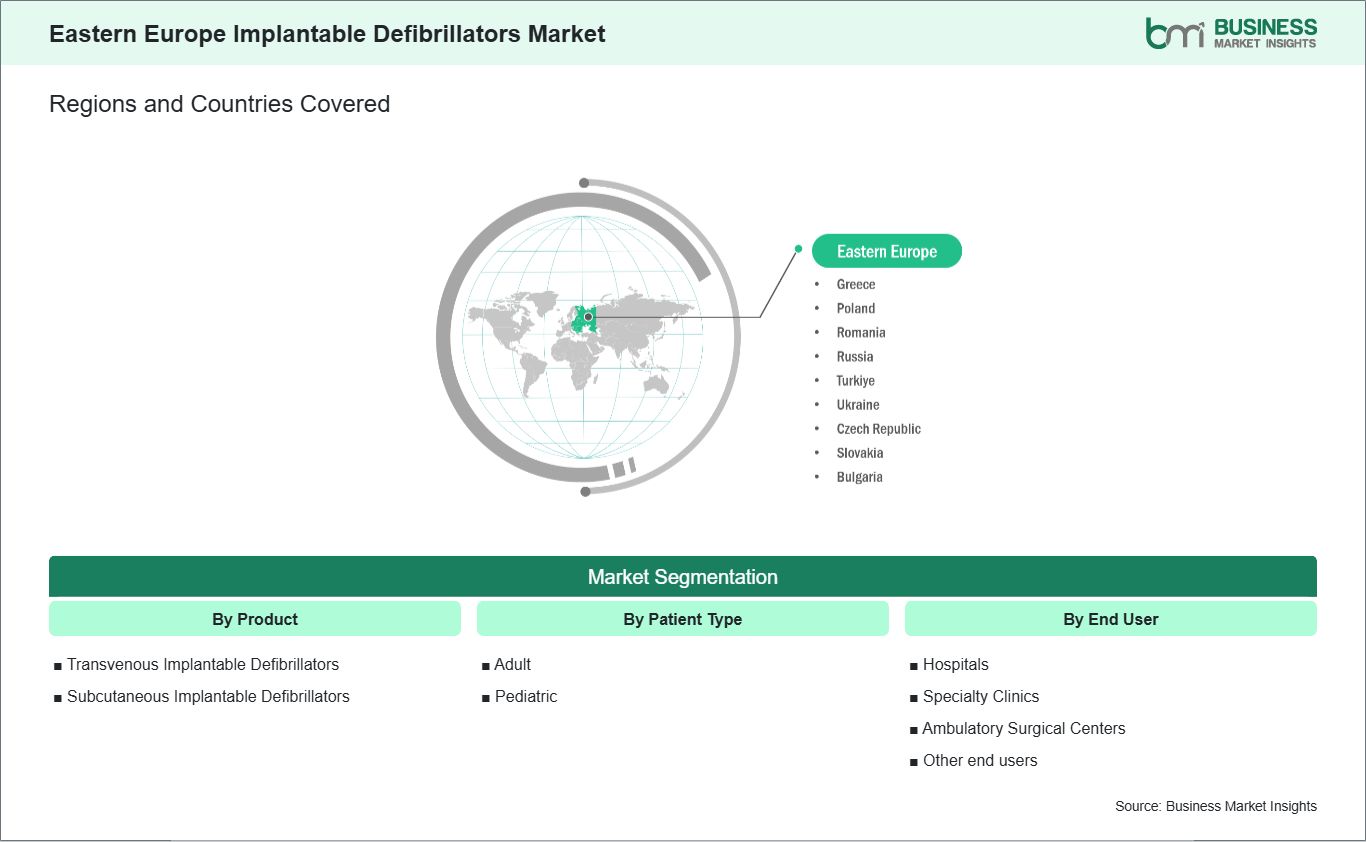
Key segments that contributed to the derivation of the Eastern Europe Implantable Defibrillators market analysis are product type, patient type, and end user.
Eastern Europe is experiencing increasing cardiac morbidity rates, particularly related to coronary artery disease, heart failure, and serious rhythm disorders. Lifestyle factors such as smoking, unhealthy diets, alcohol consumption, and limited physical activity contribute to the growing burden of heart disease in several countries across the region. In addition, aging populations in nations such as Poland, Hungary, the Czech Republic, and Romania are increasing the number of patients at risk of life-threatening arrhythmias. This rising disease burden is creating a greater need for long-term cardiac rhythm management solutions, including implantable cardioverter defibrillators (ICDs).
Healthcare systems in Eastern Europe are gradually strengthening their cardiology services. Many tertiary hospitals and university medical centers are equipped to perform advanced electrophysiology procedures, including ICD implantation. Clinical awareness regarding sudden cardiac death prevention is improving, and physicians are aligning with European treatment guidelines. As the diagnosis of high-risk patients becomes more structured, ICD therapy adoption is gradually increasing.
Disparities exist between urban and rural areas, access to specialized cardiac care is improving across the region. Governments are placing greater focus on reducing mortality linked to cardiovascular diseases. The increasing cardiac morbidity rates act as a key driver for the ICD market in Eastern Europe.
Eastern European countries are implementing healthcare reforms aimed at improving reimbursement support for advanced medical treatments, including ICD therapy. Many countries operate under public healthcare systems where cardiac procedures are funded through national insurance programs. While coverage levels vary, gradual reforms are helping to make reimbursement pathways clearer and more structured for hospitals and patients.
Governments in the region are working to align healthcare policies with broader European standards. As a result, ICD implantation is recognized as an important therapy for patients at high risk of sudden cardiac arrest. Hospitals benefit from more defined funding mechanisms, which reduce uncertainty in offering device-based treatments. This creates a more stable environment for ICD adoption in leading healthcare centers.
Although budget limitations remain a challenge in some markets, policy efforts are focused on improving access to life-saving therapies. Expansion of public health insurance coverage and better funding allocation for cardiovascular care are supporting gradual growth. These supportive reimbursement reforms present a meaningful opportunity for ICD manufacturers to expand their footprint and improve patient access across Eastern Europe.

The Eastern Europe implantable defibrillators market is experiencing steady growth, with market size and share analysis reflecting evolving treatment preferences and competitive dynamics among key players. The report evaluates important subsegments categorized within product type, patient type, and end user, highlighting their respective contributions to overall market performance.
By product type, the transvenous implantable defibrillators subsegment dominated the market in 2025, due to established clinical efficacy, broader physician familiarity, proven long-term outcomes, wider availability, and strong adoption in treating high-risk cardiac patients compared to newer subcutaneous options.
In terms of patient type, the adult subsegment dominated the market in 2025. This leadership is attributed to the higher prevalence of cardiac disorders in the adult population, increased awareness of sudden cardiac death prevention, and greater accessibility of advanced defibrillator therapies for adult patients.
Based on end user, the hospitals subsegment dominated the market in 2025. Hospitals remain the primary distribution channel due to their comprehensive cardiac care facilities, access to trained cardiologists and specialized technicians, advanced monitoring infrastructure, and ability to provide immediate, life-saving interventions.
| Report Attribute | Details |
|---|---|
| Market size in 2025 | US$ 231.5 Million |
| Market Size by 2033 | US$ 359.4 Million |
| CAGR (2026 - 2033) | 5.7% |
| Historical Data | 2022-2024 |
| Forecast period | 2026-2033 |
| Segments Covered | By Product
|
|
Regions and Countries Covered
| |
| Eastern Europe | Russia, Poland, Romania, Czech Republic, Greece, Ukraine, Slovakia, Bulgaria |
| Market leaders and key company profiles |
|
The "Eastern Europe Implantable Defibrillators Market Size and Forecast (2022-2033)" report provides a detailed analysis of the market covering below areas:
The geographical scope of the Eastern Europe implantable defibrillators market report is divided into: Russia, Poland, Romania, the Czech Republic, Ukraine, Romania, Greece, Slovakia, and Bulgaria. Russia held the largest share in 2025.
Russia holds a dominant position in the Eastern European implantable defibrillators market, supported by its extensive healthcare network and growing demand for advanced cardiac care. Major urban centers such as Moscow and St. Petersburg have established specialized cardiac hospitals and research institutions that drive the adoption of implantable defibrillators. Public health campaigns have emphasized the importance of early detection and prevention of sudden cardiac arrest, which has increased patient and physician awareness. Russia's healthcare modernization programs, including investments in hospital infrastructure and training for cardiac specialists, have strengthened the market. Collaborations with international medical device companies have introduced advanced technologies and expanded physician expertise, ensuring that patients have access to innovative solutions.
Unique challenges shape the Russian market landscape. Access to implantable defibrillators remains concentrated in urban centers, with rural regions facing limited infrastructure and specialist availability. High device costs and procedural expenses continue to restrict adoption among lower-income groups, even as government programs attempt to expand public healthcare coverage. Regulatory processes, while structured, can delay the introduction of new technologies compared to Western Europe. Additionally, economic pressures and competing healthcare priorities influence investment levels in advanced cardiac care. Despite these hurdles, Russia remains the regional leader, with ongoing investments in healthcare modernization and collaborations with global medical device companies ensuring its continued dominance in the Eastern European implantable defibrillators market.

The Eastern Europe implantable defibrillators market is evaluated by gathering qualitative and quantitative data post primary and secondary research, which includes important corporate publications, association data, and databases. A few of the key developments in the Eastern Europe implantable defibrillators market are:
The Eastern Europe Implantable Defibrillators Market is valued at US$ 231.5 Million in 2025, it is projected to reach US$ 359.4 Million by 2033.
As per our report Eastern Europe Implantable Defibrillators Market, the market size is valued at US$ 231.5 Million in 2025, projecting it to reach US$ 359.4 Million by 2033. This translates to a CAGR of approximately 5.7% during the forecast period.
The Eastern Europe Implantable Defibrillators Market report typically cover these key segments-
The historic period, base year, and forecast period can vary slightly depending on the specific market research report. However, for the Eastern Europe Implantable Defibrillators Market report:
The Eastern Europe Implantable Defibrillators Market is populated by several key players, each contributing to its growth and innovation. Some of the major players include:
The Eastern Europe Implantable Defibrillators Market report is valuable for diverse stakeholders, including:
Essentially, anyone involved in or considering involvement in the Eastern Europe Implantable Defibrillators Market value chain can benefit from the information contained in a comprehensive market report.
Please tell us your area of interest
(Market Segments/ Regions and Countries/ Companies)