The BRICS Defibrillators market size is expected to reach US$ 2,431.0 million by 2033 from US$ 1,396.0 million in 2025. The market is estimated to record a CAGR of 7.2% from 2026 to 2033.
The BRICS implantable defibrillators market represents a strategically important growth cluster within the global cardiac rhythm management landscape. The region is characterized by a high and rising burden of cardiovascular diseases, rapid demographic transitions, and expanding access to tertiary cardiac care across major economies, including Brazil, Russia, India, China, and South Africa. Increasing urbanization, lifestyle changes, and a growing elderly population have intensified the clinical focus on arrhythmia management and sudden cardiac death prevention. As a result, demand for implantable cardioverter defibrillators (ICDs) is gradually strengthening, particularly in metropolitan hospitals and specialized cardiac centers.
The market is also influenced by progressive healthcare reforms, broader insurance penetration in select countries, and the localization of medical device manufacturing, which is improving product accessibility. However, disparities in healthcare infrastructure across and within BRICS nations remain a critical restraint. ICD adoption is concentrated in urban centers, while rural populations face limited access to electrophysiology expertise and advanced procedural facilities. Cost sensitivity and variable reimbursement frameworks further restrict the penetration of premium ICD technologies. Despite these challenges, the region presents strong long-term potential driven by structural healthcare expansion and rising awareness of preventive cardiac interventions.

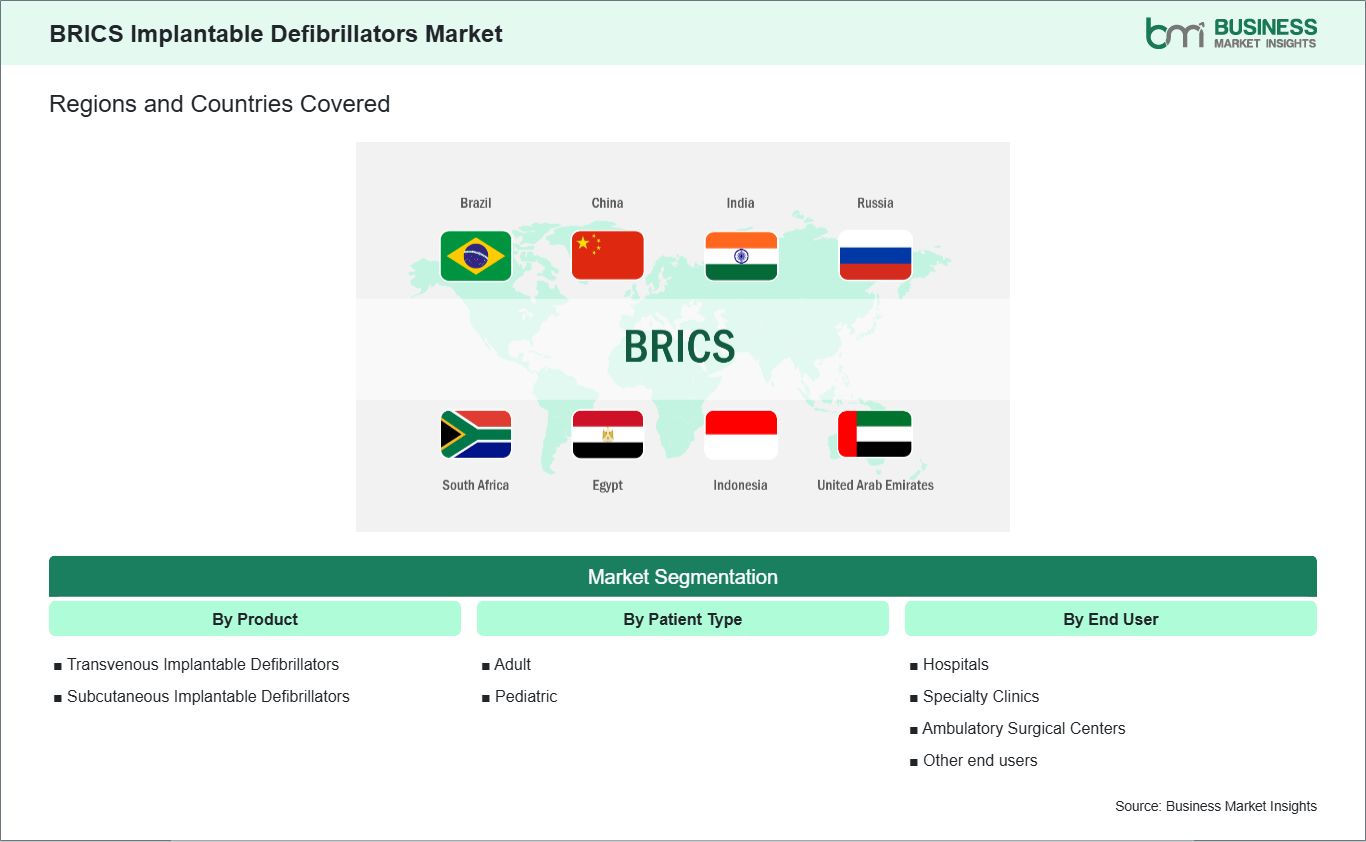
Key segments that contributed to the derivation of the BRICS Implantable Defibrillators market analysis are product type, patient type, and end user.
The BRICS countries are experiencing a rise in cardiovascular diseases, driven by lifestyle changes, urbanization, and aging populations. In Brazil and Russia, shifting diets and increasing sedentary behavior have contributed to higher rates of heart disease and arrhythmias. Rapid economic growth and urban living in India and China have led to increased stress, dietary changes, and other lifestyle factors that elevate cardiac risk. South Africa faces the added complexity of balancing noncommunicable and communicable disease burdens, which puts strain on cardiac care infrastructure.
Hospitals and emergency services are prioritizing the integration of defibrillators into their cardiac care protocols. Urban hospitals in cities such as São Paulo, Moscow, Beijing, and Mumbai are investing in advanced cardiac units and training programs focused on resuscitation and arrhythmia management. AEDs and ICDs are becoming standard tools in intensive care and emergency response, highlighting the critical role of timely defibrillation.
Despite growing attention to cardiovascular care, access to defibrillators remains uneven across the region. Rural and smaller towns often have limited availability of life-saving devices, and emergency response times can be slow in less urbanized areas. Governments and healthcare providers are responding with initiatives to expand training, increase equipment availability, and develop public awareness programs that emphasize rapid response to cardiac emergencies.
The demand for home-based defibrillators is rising across BRICS countries. Urban households with a history of cardiac conditions or higher awareness of health risks are interested in portable AEDs for personal use. In Brazil and South Africa, this trend is reflected in greater public engagement with heart health campaigns and emergency preparedness programs. In India and China, home-based solutions are being promoted as part of wellness and preventive healthcare strategies.
The growth of telemedicine and home healthcare services is accelerating this trend. Medical professionals are advising patients on using user-friendly defibrillators at home and integrating basic CPR training for family members. This approach is valuable in regions where emergency medical response times may be long or unpredictable due to geographic spread or urban congestion. By combining technology with patient education, home-based defibrillators provide a first line of defense against sudden cardiac arrest.
Cost, awareness, and maintenance requirements can be barriers for many households, particularly outside major urban centers. Nevertheless, initiatives by healthcare providers, NGOs, and government programs to promote device accessibility, training, and awareness indicate that home-based defibrillators will play an important role in cardiac care across the region in the coming years.
The BRICS implantable defibrillators market is experiencing steady growth, with market size and share analysis reflecting evolving treatment preferences and competitive dynamics among key players. The report evaluates important subsegments categorized within product type, patient type, and end user, highlighting their respective contributions to overall market performance.
By product type, the transvenous implantable defibrillators subsegment dominated the market in 2025, due to established clinical efficacy, broader physician familiarity, proven long-term outcomes, wider availability, and strong adoption in treating high-risk cardiac patients compared to newer subcutaneous options.
In terms of patient type, the adult subsegment dominated the market in 2025. This leadership is attributed to the higher prevalence of cardiac disorders in the adult population, increased awareness of sudden cardiac death prevention, and greater accessibility of advanced defibrillator therapies for adult patients.
Based on end user, the hospitals subsegment dominated the market in 2025. Hospitals remain the primary distribution channel due to their comprehensive cardiac care facilities, access to trained cardiologists and specialized technicians, advanced monitoring infrastructure, and ability to provide immediate, life-saving interventions.
| Report Attribute | Details |
|---|---|
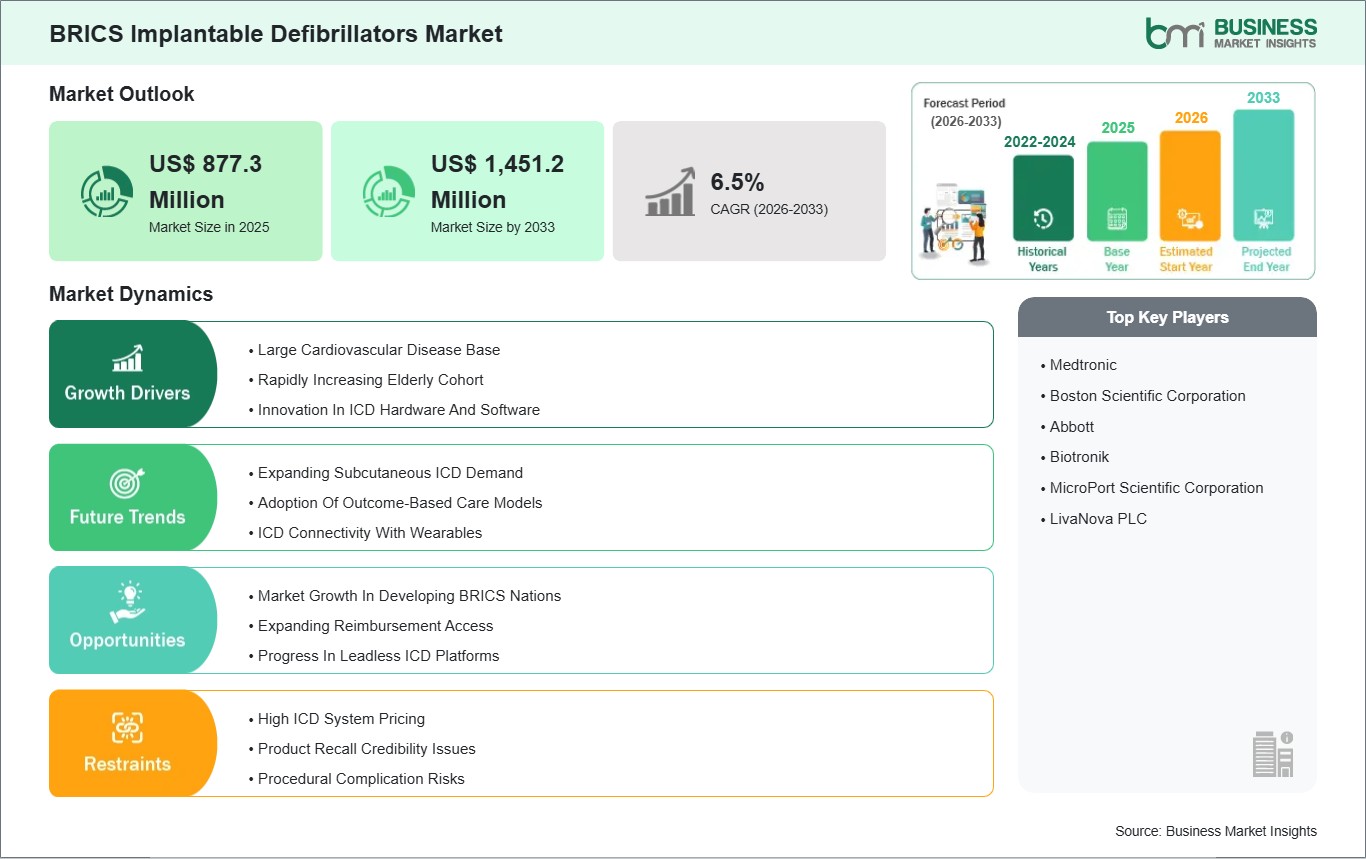
| Market size in 2025 | US$ 877.3 Million |
| Market Size by 2033 | US$ 1,451.2 Million |
| CAGR (2026 - 2033) | 6.5% |
| Historical Data | 2022-2024 |
| Forecast period | 2026-2033 |
| Segments Covered | By Product
|
|
Regions and Countries Covered
| |
| BRICS | Russia, Brazil, South Africa, India, China, Egypt, Indonesia, Saudi Arabia, United Arab Emirates |
| Market leaders and key company profiles |
|
The "BRICS Implantable Defibrillators Market Size and Forecast (2022–2033)" report provides a detailed analysis of the market covering below areas:
The geographical scope of the BRICS Defibrillators market report is divided into: Russia, Brazil, South Africa, India, China, Egypt, Indonesia, Saudi Arabia, and the UAE. China held the largest share in 2025.
China dominates the market due to its extensive healthcare infrastructure, large urban populations, and proactive public health initiatives targeting cardiovascular disease and sudden cardiac arrest. AED deployment has expanded across public spaces such as airports, shopping centers, transport hubs, and office complexes. Hospitals and tertiary care centers are adopting implantable and advanced therapeutic defibrillators to meet rising clinical demand.
Public awareness campaigns, coupled with government-led CPR and AED training programs, have empowered bystanders and workplace personnel to respond effectively during cardiac emergencies. Domestic manufacturers have introduced cost-effective AED models tailored to local healthcare needs, while global companies focus on advanced ICDs for critical care applications.
Challenges for China include ensuring uniform AED coverage in rural and less-developed regions and streamlining regulatory pathways for new device approvals. Coordinating EMS services to leverage the growing number of defibrillators remains an ongoing focus. China’s policy emphasis on cardiovascular health, combined with urban infrastructure investments and technological innovation in device manufacturing, reinforces its position as the leading market within the region.

The BRICS Defibrillators market is evaluated by gathering qualitative and quantitative data post primary and secondary research, which includes important corporate publications, association data, and databases. A few of the key developments in the BRICS Defibrillators market are:
The BRICS Implantable Defibrillators Market is valued at US$ 877.3 Million in 2025, it is projected to reach US$ 1,451.2 Million by 2033.
As per our report BRICS Implantable Defibrillators Market, the market size is valued at US$ 877.3 Million in 2025, projecting it to reach US$ 1,451.2 Million by 2033. This translates to a CAGR of approximately 6.5% during the forecast period.
The BRICS Implantable Defibrillators Market report typically cover these key segments-
The historic period, base year, and forecast period can vary slightly depending on the specific market research report. However, for the BRICS Implantable Defibrillators Market report:
The BRICS Implantable Defibrillators Market is populated by several key players, each contributing to its growth and innovation. Some of the major players include:
The BRICS Implantable Defibrillators Market report is valuable for diverse stakeholders, including:
Essentially, anyone involved in or considering involvement in the BRICS Implantable Defibrillators Market value chain can benefit from the information contained in a comprehensive market report.
Please tell us your area of interest
(Market Segments/ Regions and Countries/ Companies)