
Medication Management Market Outlook: Size, Share, Trends, Growth Analysis, Competitive Landscape & Forecast, 2022-2033

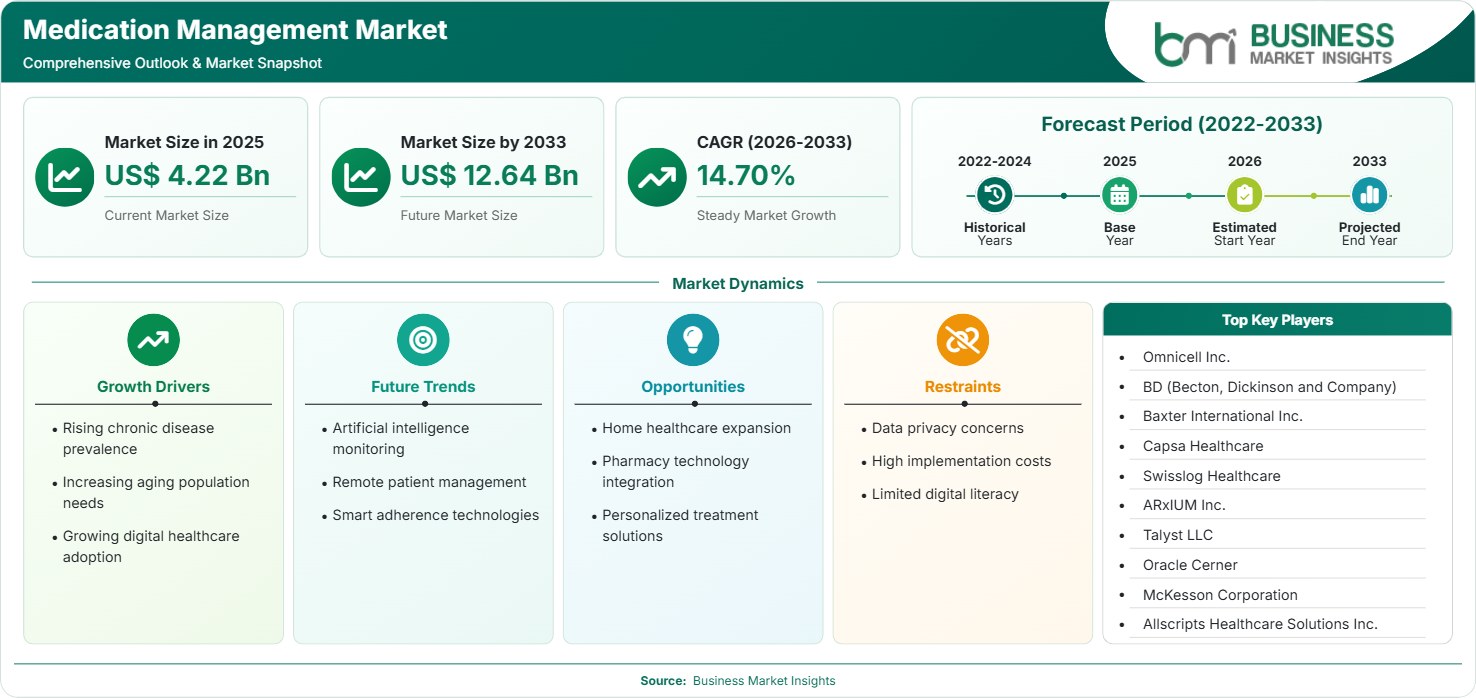
The Medication Management Market size was valued at US$ 4.22 billion in 2025 and is projected to reach US$ 12.64 billion by 2033, growing at a CAGR of 14.70% during 2026–2033. The rising prevalence of chronic diseases, the increasing needs of an aging population, and the growing adoption of digital healthcare are accelerating market expansion. Opportunities are emerging through home healthcare expansion, pharmacy technology integration, and personalized treatment solutions.

Report Coverage
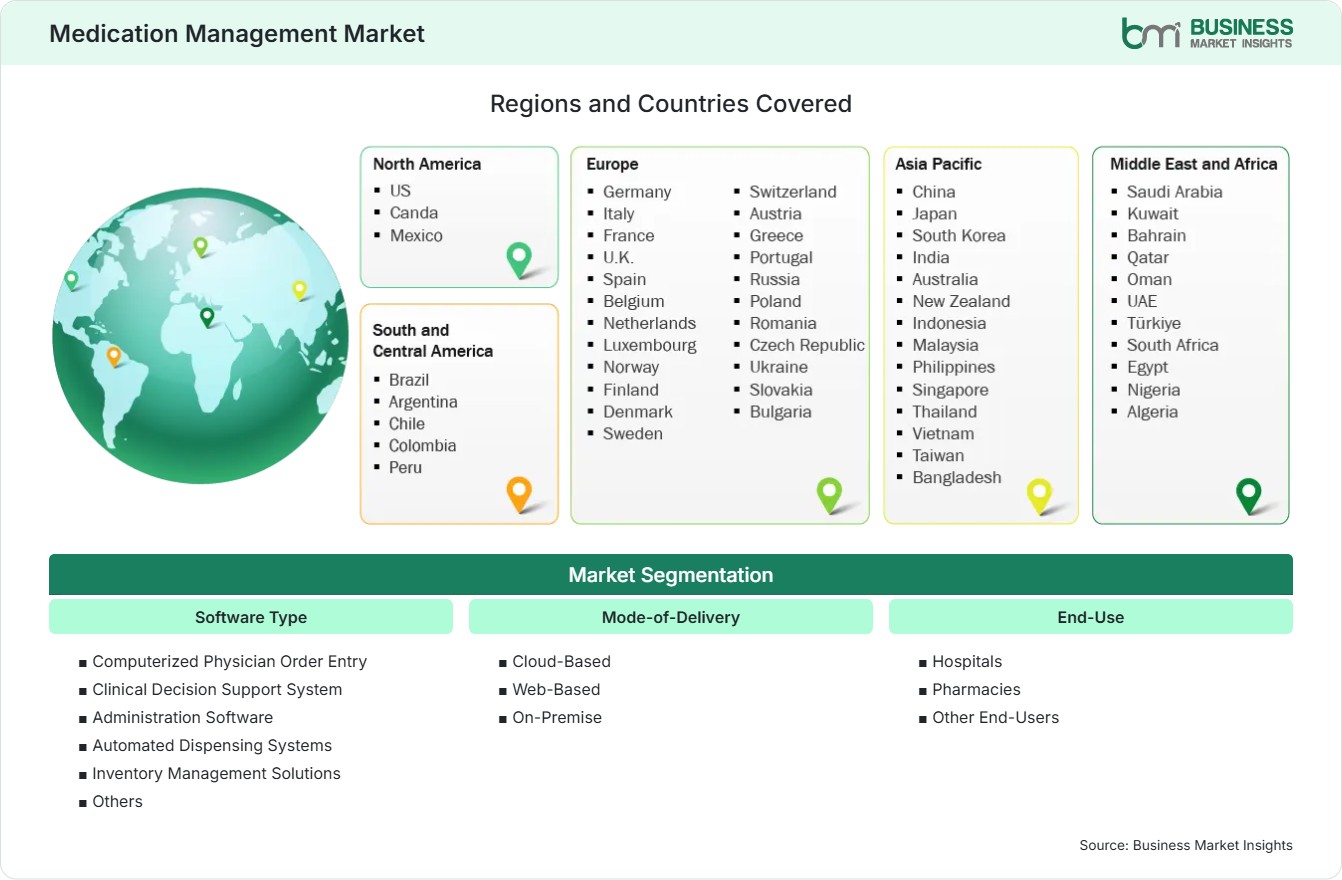
  • Software Type: Computerized Physician Order Entry, Clinical Decision Support System, Administration Software, Automated Dispensing Systems, Inventory Management Solutions, Others
  • Mode-of-Delivery: Cloud-Based, Web-Based, On-Premise
  • End-Use: Hospitals, Pharmacies, Other End-Users
US$ 4.22 Bn Market size in 2025
US$ 12.64 Bn Market Size by 2033
14.70% CAGR, 2026 - 2033
2026-2033 Forecast Period

01 AI Overview

Medication Management Market Summary

  • North America Region: North America accounts for 39%–42% market share in 2025 and is projected to grow at a CAGR of 14.2%–14.8% during 2026–2033. Advanced healthcare IT infrastructure, increasing adoption of automated pharmacy systems, and favorable regulatory support continue driving regional demand. The U.S. market is expected to register a CAGR of 14.4%–15.0% through 2033, supported by digital healthcare transformation and hospital automation.
  • Fastest Growing Region: Asia Pacific holds 23%–26% market share in 2025 while expanding at a CAGR of 15.5%–16.1% during 2026–2033. Expanding healthcare infrastructure, rising healthcare digitization, and increasing investments in hospital information systems continue to accelerate regional growth.
  • Leading Segment: Cloud-Based accounts for 45%–48% market share in 2025 and is expected to grow at a CAGR of 15.2%–15.8%. Scalability, remote accessibility, and lower infrastructure requirements continue to support widespread adoption.
  • High Growth Segment: Hospitals contribute 54%–57% market share in 2025 while growing at a CAGR of 15.0%–15.6%. Rising electronic medication administration, patient safety initiatives, and workflow automation continue strengthening market demand.
  • Key Market Opportunity: Increasing integration of artificial intelligence, remote patient monitoring, and digital pharmacy platforms is creating long-term opportunities for healthcare providers and software vendors.
  • Major Market Players: Omnicell Inc., BD (Becton, Dickinson and Company), Baxter International Inc., Capsa Healthcare, Swisslog Healthcare, ARxIUM Inc., Talyst LLC, Oracle Cerner, McKesson Corporation, Allscripts Healthcare Solutions Inc.
02 Strategic Insights

Medication Management Market: Strategic Insights

medication-management-market-market-strategic-framework
FREE PDF
Request your free sample
Request free sample
03 Stakeholder View

Key Takeaways

  • Healthcare providers continue prioritizing integrated medication management platforms that improve patient safety, reduce medication errors, and enhance operational efficiency across clinical workflows.
  • Cloud-based software solutions present the strongest growth opportunity by enabling scalable deployment, centralized monitoring, and seamless interoperability with electronic health record systems.
  • Artificial intelligence, predictive analytics, barcode verification, and automated dispensing technologies are transforming medication administration and pharmacy management processes.
  • Asia Pacific offers the strongest long-term investment opportunity through healthcare infrastructure expansion, hospital digitization, and increasing government investments in health information technology.
  • Strategic partnerships between healthcare software vendors, hospitals, and pharmacy automation providers continue accelerating innovation and expanding integrated medication management ecosystems.
04 Geographic Outlook

Medication Management Market Regional Highlights

North America Medication Management Market

North America remains the largest regional market owing to advanced healthcare infrastructure, widespread adoption of electronic health records, and increasing implementation of automated medication management solutions. The region accounts for 39%–42% Medication Management Market share in 2025 and is projected to grow at a CAGR of 14.2%–14.8% through 2033. Rising healthcare digitization and patient safety initiatives continue supporting sustained market expansion.

  • Hospitals increasingly deploy automated dispensing cabinets and electronic medication administration systems to improve patient safety and operational efficiency.
  • Healthcare providers continue integrating clinical decision support software with electronic health records for accurate medication management.
  • Regulatory requirements encourage adoption of digital medication tracking and pharmacy automation technologies.
  • Continued healthcare IT investments strengthen the Medication Management Market growth across hospitals and outpatient care settings.

US Medication Management Market

The United States represents the largest country-level market, accounting for 32%–35% global market share in 2025 while expanding at a CAGR of 14.4%–15.0% through 2033. Increasing hospital automation, widespread EHR implementation, and digital pharmacy transformation continue to support long-term market development.

  • Large healthcare networks continue investing in cloud-based medication management platforms.
  • Automated dispensing technologies improve medication accuracy and workflow efficiency.
  • Strong healthcare IT spending supports continuous software innovation.

Europe Medication Management Market

Europe accounts for 26%–29% market share in 2025 and is projected to expand at a CAGR of 14.0%–14.6% during the forecast period. Germany leads regional adoption through advanced hospital digitization, while the Netherlands records one of the fastest growth rates at 14.8%–15.4%, owing to digital health investments and integrated care initiatives.

  • Germany continues to lead healthcare software implementation and hospital automation.
  • The Netherlands expands digital prescribing and connected pharmacy systems.
  • Healthcare interoperability initiatives improve medication safety across European healthcare facilities.
  • Rising investment in digital healthcare infrastructure supports long-term software adoption.

Asia Pacific Medication Management Market

Asia Pacific is the fastest-growing regional market, accounting for 23%–26% market share in 2025 while growing at a CAGR of 15.5%–16.1% through 2033. China dominates regional adoption, while India records the fastest growth at 16.0%–16.6% due to expanding hospital infrastructure, healthcare digitization, and government-led digital health initiatives.

  • China continues expanding smart hospitals and integrated healthcare information systems.
  • India accelerates adoption through digital health missions and healthcare modernization.
  • Japan and South Korea invest heavily in hospital automation and AI-enabled clinical software.
  • Growing patient volumes continue to increase demand for efficient medication management solutions.

Rest of World Medication Management Market

The Rest of World region contributes 8%–10% market share in 2025 and is expected to register a CAGR of 14.6%–15.2% through 2033. Brazil leads adoption across South America, while Saudi Arabia records one of the fastest growth rates, at 15.1%–15.7%, driven by expanding digital healthcare infrastructure and hospital modernization initiatives.

  • Brazil continues investing in hospital information systems and pharmacy automation.
  • Saudi Arabia strengthens healthcare digitization through national digital transformation programs.
  • Expanding healthcare access increases demand for integrated medication management platforms.
  • Growing public and private healthcare investments continue supporting regional market expansion.
global-market-geography
FREE PDF
Request your free sample
Request free sample
05 Segment Analysis

Medication Management Market Segmentation

By Software Type

The software type segment is led by Automated Dispensing Systems owing to their ability to improve medication accuracy, reduce dispensing errors, and enhance pharmacy workflow efficiency. The segment accounts for 29%–32% market share in 2025 and is projected to grow at a CAGR of 15.0%–15.6% during 2026–2033. Increasing healthcare automation and digital transformation continue to expand the Market scope across healthcare facilities.

  • Computerized Physician Order Entry: Computerized physician order entry systems improve prescription accuracy by eliminating handwritten errors while enabling faster communication between physicians, pharmacists, and healthcare providers.
  • Clinical Decision Support System: Clinical decision support systems assist clinicians by providing evidence-based medication recommendations, allergy alerts, drug interaction warnings, and dosage optimization during prescribing.
  • Administration Software: Administration software streamlines medication scheduling, patient documentation, regulatory compliance, and workflow management while improving operational efficiency across healthcare organizations.
  • Automated Dispensing Systems: Automated dispensing systems dominate due to improved medication security, inventory accuracy, controlled access, and reduced medication administration errors within hospitals and pharmacies.
  • Inventory Management Solutions: Inventory management solutions optimize pharmaceutical stock control, reduce medication waste, improve procurement planning, and ensure timely medicine availability across healthcare facilities.

By Mode-Of-Delivery

Cloud-Based represents the largest delivery mode owing to lower infrastructure costs, scalable deployment, and seamless remote accessibility. The segment contributes 45%–48% market share in 2025 while expanding at a CAGR of 15.2%–15.8% through 2033. Increasing adoption of cloud healthcare platforms continues to strengthen the Medication Management Market share across hospitals and pharmacy networks.

  • Cloud-Based: Cloud-based solutions enable centralized data management, real-time access, simplified software updates, and improved interoperability across multiple healthcare facilities.
  • Web-Based: Web-based platforms provide flexible deployment and browser-based accessibility while supporting secure medication monitoring and clinical workflow management.
  • On-Premise: On-premise systems remain preferred among healthcare organizations requiring complete infrastructure control, customized deployment, and enhanced internal data governance.

By End-Use

The Hospitals segment remains the largest end-user segment owing to the increasing adoption of electronic prescribing, automated dispensing, and integrated medication management systems. The segment accounts for 54%–57% market share in 2025 while growing at a CAGR of 15.0%–15.6% through 2033. Rising patient safety initiatives and healthcare automation continue supporting long-term market expansion.

  • Hospitals: Hospitals remain the primary users due to high patient volumes, medication complexity, and increasing adoption of digital pharmacy and medication administration systems.
  • Pharmacies: Pharmacies increasingly deploy medication management platforms to improve dispensing accuracy, inventory optimization, prescription verification, and patient medication counseling.
  • Other End-Users: Ambulatory care centers, long-term care facilities, and specialty clinics continue to adopt medication management software to improve treatment coordination and medication safety.
06 Market Forces

Medication Management Market Dynamics

Key Market Drivers

Rising chronic disease prevalence

Increased occurrences of various chronic diseases, including diabetes, heart diseases, cancers, lung disorders, and neurodegenerative diseases, have been fueling the need for advanced medication management solutions. An increase in the number of patients necessitates continuous monitoring of medications, prescriptions, optimization of dosages, and tracking of adherence to medication regimens. Advanced medication management solutions integrated with EHRs, clinical decision support systems, and pharmacy information systems are increasingly adopted by healthcare organizations to prevent medication errors and ensure safe healthcare delivery. Moreover, digitization in the healthcare industry, the rise in telehealth services, and increased emphasis of regulatory bodies on patient safety are contributing to faster adoption of smart medication management solutions.

Increasing aging population needs

The increasing number of elderly individuals means that there is an increased need for complete drug management since there is an increase in comorbidities, polypharmacy, and complicated drug regimes. There is a growing trend towards implementing medication management systems in healthcare organizations. They help ensure drug compliance, reduce medication incidents, improve the prescription process, and enable continuous patient monitoring. The automation of medication dispensing, e-prescribing, barcode medication administration, and clinical decision support systems helps manage the increasing workload in pharmaceutical services and reduce medication incidents. In addition to these benefits, the integration of EHRs, pharmacy information systems, and remote patient monitoring solutions increases the quality of care.

Growing digital healthcare adoption

Digital transformation within the healthcare industry, which is happening very rapidly now, is continuously enhancing the adoption of medication management software. Various institutions like hospitals, pharmacies, and other healthcare facilities are implementing the use of cloud computing, EHRs, artificial intelligence, machine learning, decision support systems, analytics, etc., to ensure the safety of medication administration and optimization of the prescription process. Increased investment in healthcare IT infrastructure, healthcare IT interoperability, digital health strategy, and connected care solutions is boosting the adoption of integrated medication management solutions. There is also a lot of innovation happening due to the increased demand for data accessibility, automated workflow, and patient-centric care.

Key Market Opportunities

Home healthcare expansion

The growing preference for home-based healthcare services is emerging as a key Medication Management Market trend, increasing demand for remote medication management platforms. Digital monitoring solutions, electronic prescriptions, and connected healthcare technologies enable providers to improve medication adherence, enhance patient outcomes, and deliver coordinated care outside traditional hospital environments. Expanding home healthcare services, coupled with the adoption of telehealth and remote patient monitoring, continue creating new growth opportunities for software vendors and healthcare providers while supporting more efficient and patient-centric medication management.

Pharmacy technology integration

Healthcare organizations are increasingly integrating pharmacy automation, robotic dispensing systems, barcode verification, and inventory management technologies into medication management workflows, creating significant growth opportunities reflected in the Medication Management Market forecast. These integrated solutions improve operational efficiency, enhance medication accuracy, strengthen regulatory compliance, and reduce manual intervention across healthcare settings. Continued investments in pharmacy modernization, digital healthcare infrastructure, and intelligent medication management technologies are expected to support sustained market expansion while improving patient safety and overall healthcare delivery efficiency.

Personalized treatment solutions

Developments in precision medicine, individualized therapy design, and healthcare analytics have created many more possibilities in the area of personalized medication management. Software solutions aid clinicians in selecting drugs, dose recommendations, and monitoring treatments in relation to specific patient details. Personalized healthcare is increasingly becoming an important driver of innovations in medication management technologies.

Market Restraints and Challenges

Data privacy concerns

Factor: Medication management platforms process large volumes of sensitive patient information, making healthcare organizations increasingly vulnerable to cybersecurity threats, unauthorized access, and regulatory compliance risks.

Impact: Concerns regarding patient data protection and compliance with healthcare privacy regulations may delay software adoption and increase investments in cybersecurity infrastructure, secure cloud environments, and advanced data governance frameworks.

High implementation costs

Factor: Deploying integrated medication management systems requires substantial investment in software, hardware, infrastructure modernization, workforce training, and ongoing system maintenance.

Impact: High implementation costs can limit adoption among small healthcare providers and resource-constrained organizations. Budget constraints may delay digital transformation initiatives despite the long-term operational and clinical benefits of advanced medication management solutions.

07 Company Analysis

Competitive Landscape

The market remains highly competitive as healthcare technology providers focus on automation, interoperability, artificial intelligence, and cloud-based medication management platforms. The Medication Management Market analysis indicates that companies are expanding integrated software portfolios, strengthening hospital partnerships, and investing in pharmacy automation technologies to improve medication safety and operational efficiency.

Company Name

Overview

Products and Services Relevant to this Market

Omnicell Inc.

Healthcare technology company specializing in medication management and pharmacy automation.

Automated dispensing cabinets, medication management software, inventory management, and pharmacy automation solutions.

BD (Becton, Dickinson and Company)

Global medical technology company serving healthcare providers worldwide.

Medication dispensing systems, pharmacy automation, medication tracking, healthcare informatics solutions.

Baxter International Inc.

Healthcare company providing medication delivery and hospital care technologies.

Medication management systems, infusion technologies, hospital pharmacy automation, digital healthcare solutions.

Capsa Healthcare

Provider of healthcare workflow and medication management solutions.

Medication carts, automated medication systems, pharmacy workflow, healthcare technology solutions.

Swisslog Healthcare

Healthcare automation company focused on hospital logistics and pharmacy systems.

Robotic pharmacy automation, medication transport, inventory management, and healthcare software solutions.

ARxIUM Inc.

Developer of pharmacy automation and medication management technologies.

Central pharmacy automation, dispensing systems, medication packaging, workflow management software.

Talyst LLC

Healthcare software company specializing in pharmacy automation technologies.

Automated dispensing solutions, medication inventory management, and pharmacy workflow software.

Oracle Cerner

Global healthcare information technology provider.

Electronic health records, medication management software, clinical decision support, and healthcare interoperability solutions.

McKesson Corporation

Leading pharmaceutical distribution and healthcare technology company.

Pharmacy management software, medication distribution, inventory solutions, healthcare IT services.

Allscripts Healthcare Solutions Inc.

Healthcare IT company providing clinical and operational software.

Electronic prescribing, medication management software, clinical workflow, and healthcare information systems.

08 Industry Activity

Recent Developments

May 2026

Becton, Dickinson and Company (BD) announced a strategic partnership with Wellstar Health System to deploy AI-powered medication management by integrating the BD Pyxis Pro, BD Alaris, and BD Incada platforms across Wellstar hospitals to enhance medication safety and operational efficiency.

May 2026

Bluesight launched Prism, an AI platform for hospital pharmacy teams, introducing Prism Assistant to automate medication management and drug diversion investigations using natural-language queries and AI-driven analytics.

April 2026

Becton, Dickinson and Company (BD) announced the European launch of the BD Pyxis Pro Dispensing Solution and BD Incada™ Connected Care Platform, an AI-enabled medication management system designed to improve medication dispensing, inventory visibility, and workflow efficiency in hospitals.

April 2026

AdvancedMD launched its Electronic Medication Administration Record (eMAR) solution, fully integrated with the AdvancedMD EHR platform to simplify medication scheduling, administration, and documentation across behavioral health, long-term care, and specialty practices.

10 Trust & Transparency

Research Methodology

The market analysis combines proprietary research with secondary data from government agencies, company disclosures, regulatory filings, industry databases and expert interviews. Market estimates are validated through data triangulation, cross-market benchmarking and analyst review.

View Full Research Methodology

11 Questions Answered

Frequently Asked Questions

What opportunities are expected in the market?

Major opportunities include home healthcare expansion, pharmacy technology integration, and personalized treatment solutions, supported by increasing healthcare digitization and demand for patient-centric medication management.

Who are the leading companies in the Medication Management Market Report?

Leading companies include Omnicell Inc., BD (Becton, Dickinson and Company), Baxter International Inc., Capsa Healthcare, Swisslog Healthcare, ARxIUM Inc., Talyst LLC, Oracle Cerner, McKesson Corporation, and Allscripts Healthcare Solutions Inc.

Which delivery mode leads the market?

Cloud-based deployment leads the market because it offers scalability, lower infrastructure costs, remote accessibility, seamless software updates, and easier integration with electronic health record systems.

Which region is expected to grow the fastest?

Asia Pacific is expected to record the highest growth due to expanding healthcare infrastructure, increasing digital health investments, hospital modernization, and growing adoption of healthcare information technologies.

What is driving the Market?

The market is primarily driven by the rising prevalence of chronic diseases, the increasing needs of an aging population, and the growing adoption of digital healthcare, which is encouraging healthcare providers to implement advanced medication management technologies.

Access the Full Medication Management Market Report

Get segment-level forecasts, regional estimates, competitive benchmarking, company profiles and downloadable Excel datasets.

Access the full Medication Management Market Report
350 pages PDF & Excel | 2026-07-31