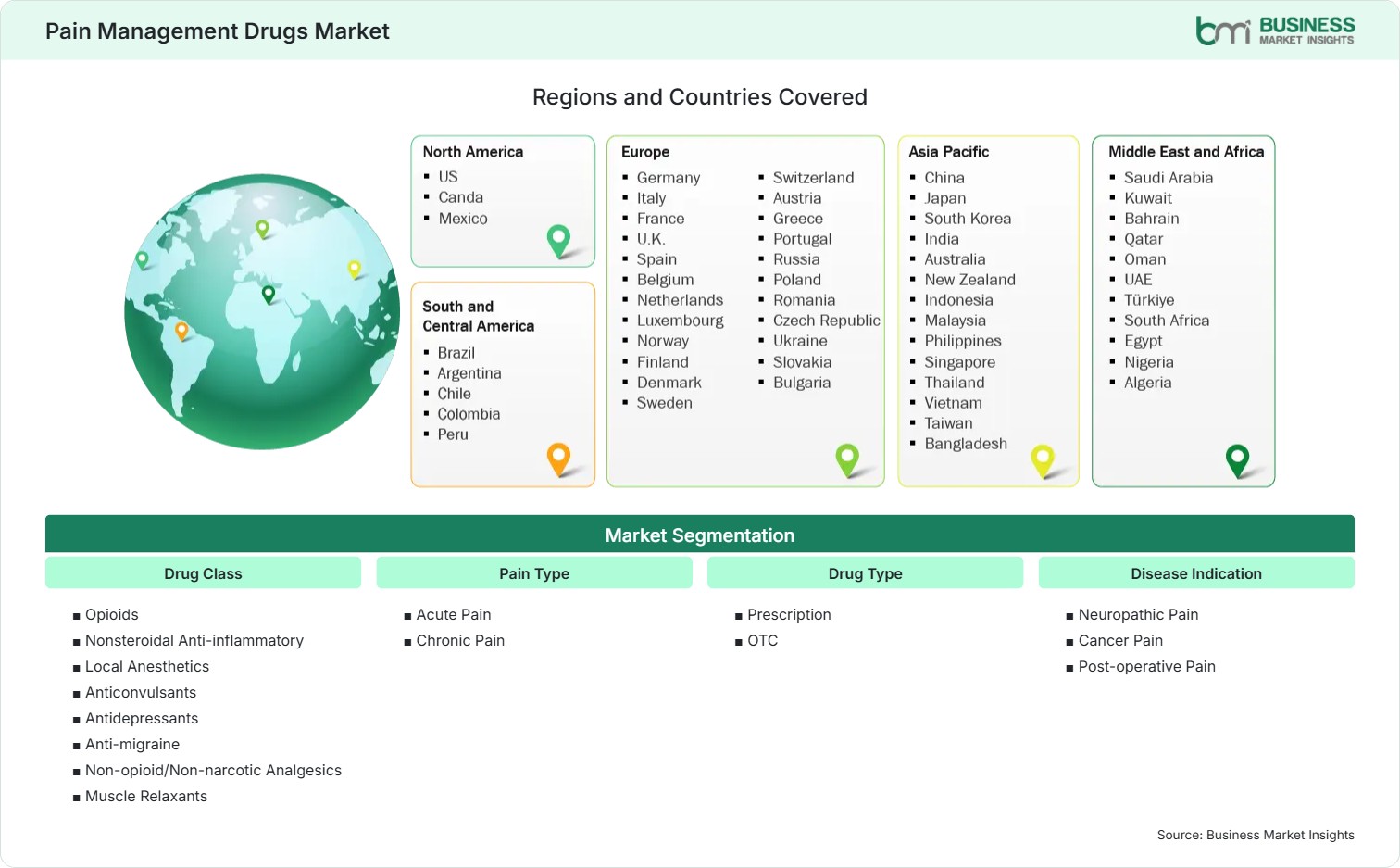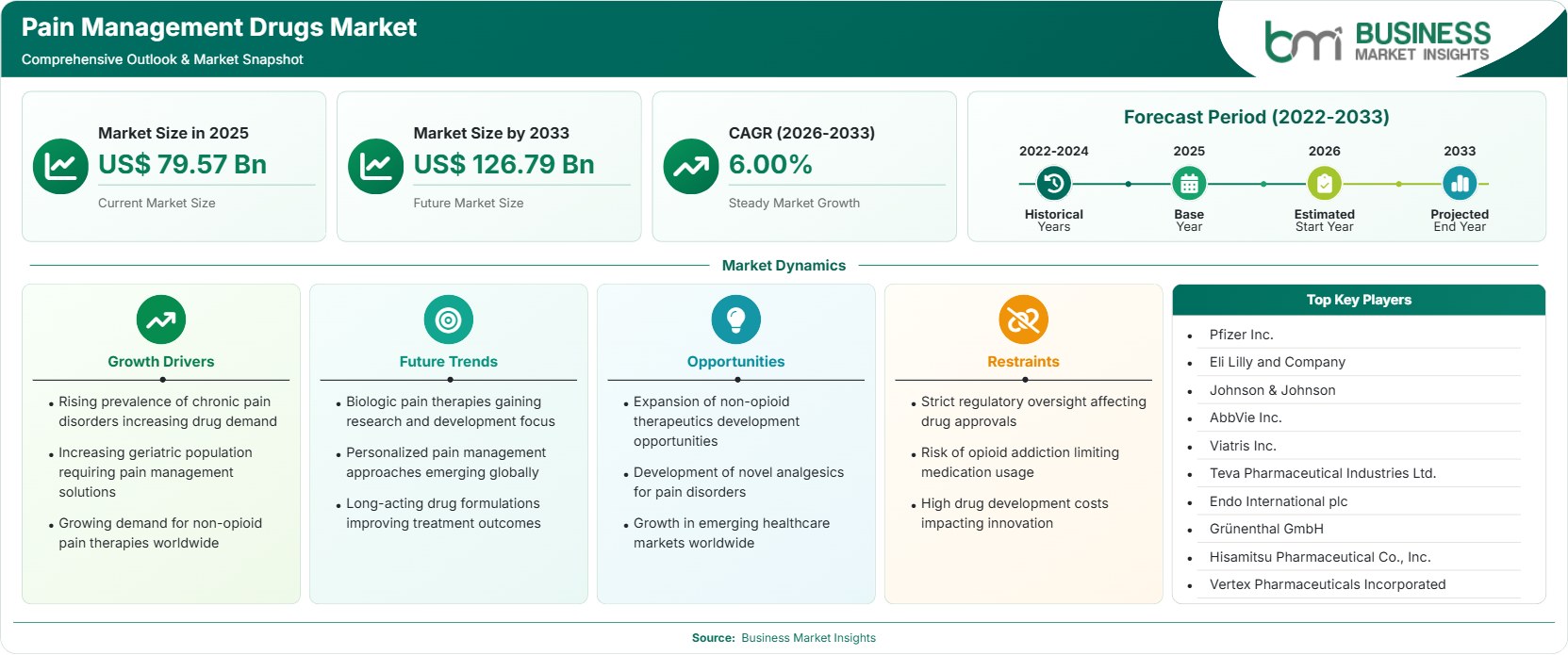
Pain Management Drugs Market Regional Highlights
North America Pain Management Drugs Market
North America accounts for 39%–42% of the Pain Management Drugs Market share in 2025 and is projected to grow at a CAGR of 5.6%–5.9% during 2026–2033. The region maintains market leadership due to high prevalence of chronic pain disorders, advanced healthcare infrastructure, strong pharmaceutical R&D capabilities, and broad access to prescription medicines. Favorable reimbursement policies, increasing adoption of non-opioid therapies, and continuous regulatory approvals for innovative pain treatments continue supporting market expansion.
- The United States remains the largest regional market due to high prescription volumes, increasing chronic disease burden, and strong investments in innovative analgesic drug development.
- Canada continues expanding demand through improving healthcare accessibility, rising elderly population, and greater emphasis on evidence-based chronic pain management strategies.
- Pharmaceutical companies continue investing in non-opioid pain therapies, extended-release formulations, and precision medicine approaches to improve treatment outcomes and patient safety.
- Increasing awareness regarding responsible opioid prescribing and multimodal pain management continues encouraging adoption of alternative pharmacological treatment options.
US Pain Management Drugs Market
The U.S. represents 84%–87% of the North American market in 2025 and is projected to register a CAGR of 5.7%–6.1% during the forecast period. Strong healthcare expenditure, advanced pharmaceutical research, high prevalence of arthritis, cancer, and neuropathic disorders, and broad insurance coverage continue supporting demand. Continuous clinical research, regulatory approvals, and adoption of innovative therapies reinforce the country's leadership in pain management pharmaceuticals during pain management drugs market.
- Growing incidence of chronic musculoskeletal disorders and post-operative pain continues increasing prescription demand across hospitals, specialty clinics, and outpatient healthcare settings.
- Strong pharmaceutical innovation supports commercialization of novel analgesics, abuse-deterrent formulations, and targeted therapies addressing unmet clinical needs.
- Healthcare providers increasingly adopt multimodal pain management strategies that combine pharmacological and non-pharmacological treatments to improve patient outcomes.
- Favorable reimbursement frameworks and established pharmaceutical distribution networks continue strengthening access to prescription and OTC pain medications.
Europe Pain Management Drugs Market
Europe holds 26%–29% market share in 2025 and is expected to expand at a CAGR of 5.5%–5.9% during 2026–2033. Rising geriatric populations, increasing prevalence of chronic pain conditions, universal healthcare systems, and expanding pharmaceutical innovation continue supporting regional demand. Germany leads the European market through strong pharmaceutical manufacturing capabilities, while the United Kingdom and France demonstrate steady growth in pain management drugs driven by increasing adoption of non-opioid therapies.
- Germany maintains leadership through advanced pharmaceutical production, strong clinical research activity, and broad access to innovative pain medications.
- The United Kingdom continues expanding adoption of evidence-based pain management guidelines and personalized treatment approaches across healthcare systems.
- France and Italy are witnessing increasing demand for chronic pain therapies owing to aging populations and higher incidence of musculoskeletal disorders.
- European pharmaceutical companies continue investing in novel analgesics, biosimilars, and safer alternatives to conventional opioid medications in pain management drugs market.
Asia Pacific Pain Management Drugs Market
Asia Pacific accounts for 24%–27% market share in 2025 and is projected to register the fastest CAGR of 6.8%–7.3% during the forecast period. Rising healthcare expenditure, expanding pharmaceutical manufacturing, increasing chronic disease prevalence, and improving access to healthcare services continue accelerating market growth. China leads regional demand due to its large patient population, while India represents the fastest-growing market supported by healthcare expansion and increasing pharmaceutical production.
- China continues strengthening pharmaceutical manufacturing capacity while expanding access to prescription pain therapies through healthcare reforms.
- India is experiencing rapid market growth due to increasing healthcare investments, growing elderly populations, and rising diagnosis of chronic pain conditions.
- Japan maintains strong demand owing to one of the world's oldest populations and widespread adoption of advanced pharmaceutical therapies.
- Regional governments continue improving healthcare infrastructure and encouraging domestic pharmaceutical manufacturing to strengthen medicine accessibility.
Rest of World Pain Management Drugs Market
Rest of World represents 8%–10% market share in 2025 and is expected to grow at a CAGR of 5.9%–6.3% through 2033. South & Central America and the Middle East & Africa are witnessing increasing demand due to expanding healthcare infrastructure, improving pharmaceutical access, and growing prevalence of chronic diseases. Brazil leads the Latin American market, while Saudi Arabia and the United Arab Emirates continue investing in healthcare modernization and specialty pharmaceutical services.
- Brazil remains the leading regional market supported by expanding public healthcare programs and improving availability of prescription pain medications.
- Latin American countries continue increasing pharmaceutical imports and domestic manufacturing capabilities to improve treatment accessibility.
- Gulf countries are strengthening specialty healthcare services through investments in hospital infrastructure and advanced pharmaceutical procurement.
- African healthcare systems are gradually improving access to essential medicines, creating long-term opportunities for pain management drug manufacturers.