
Central Pain Syndrome Management Market Outlook: Size, Share, Trends, Growth Analysis, Competitive Landscape & Forecast, 2026-2033

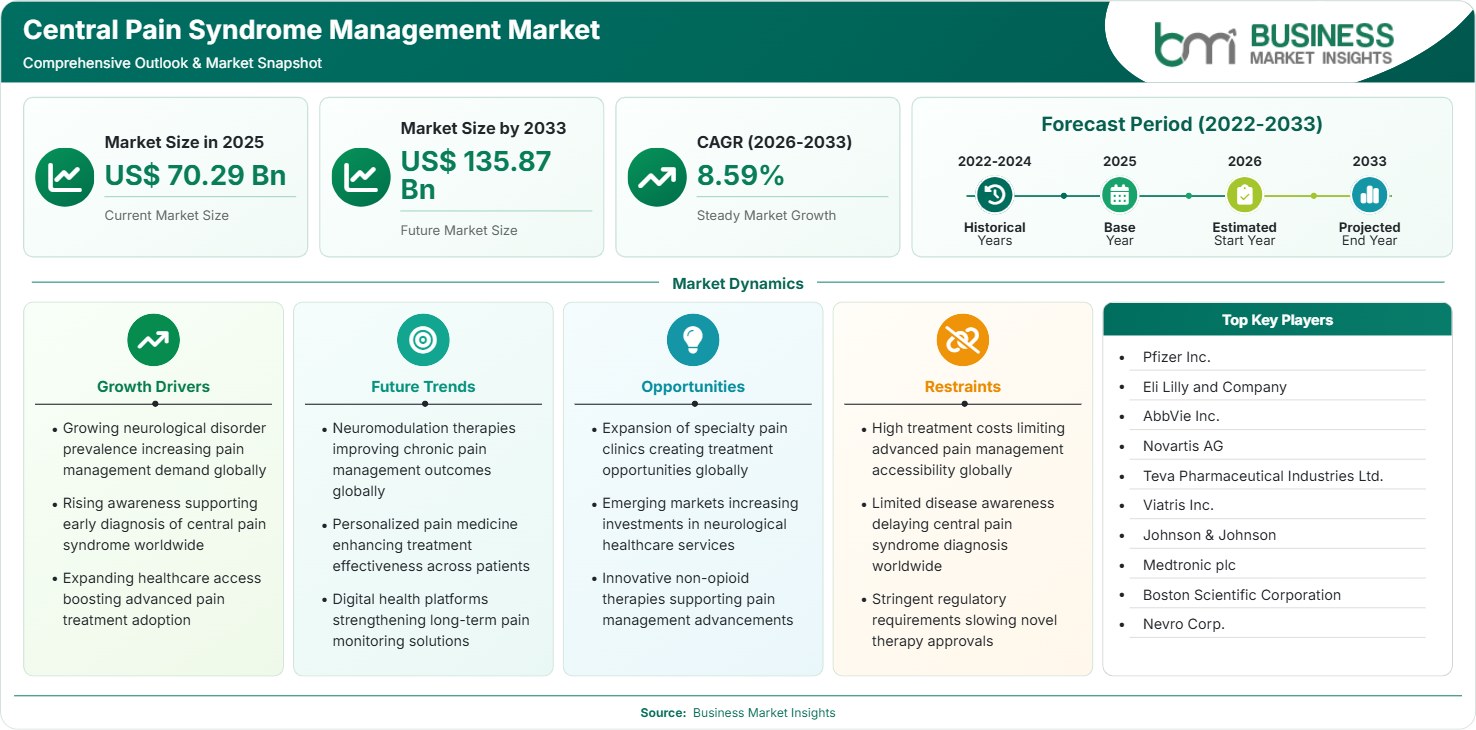
The Central Pain Syndrome Management Market size was valued at US$ 70.29 billion in 2025 and is projected to reach US$ 135.87 billion by 2033, growing at a CAGR of 8.59% during 2026–2033. The market is expanding due to increasing prevalence of neurological disorders, rising awareness regarding chronic pain conditions, growing demand for advanced pain management therapies, and improving healthcare accessibility worldwide. Central pain syndrome management includes pharmacological treatments, neuromodulation approaches, and supportive therapies designed to address chronic pain caused by damage or dysfunction within the central nervous system.

Report Coverage
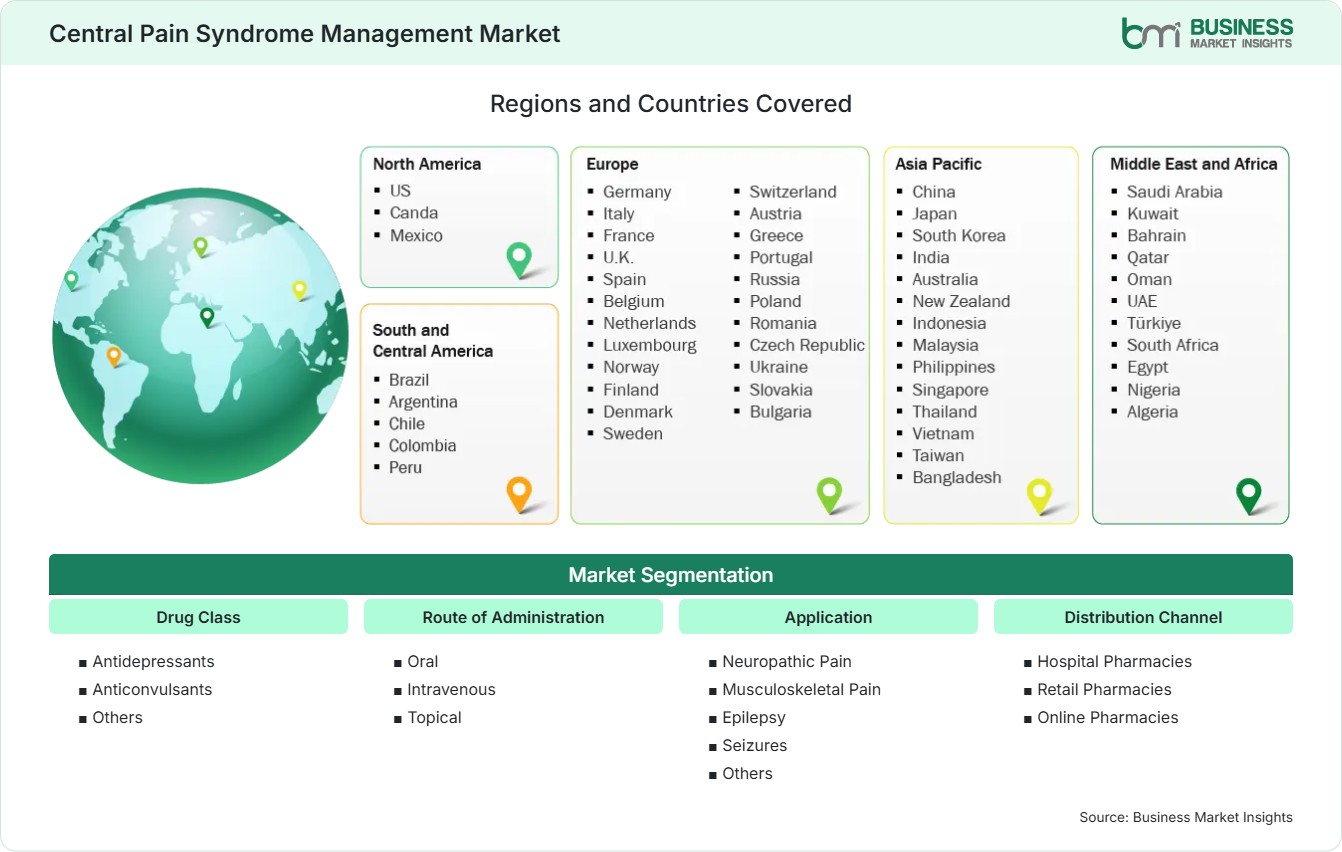
  • Drug Class: Antidepressants, Anticonvulsants, Others
  • Route of Administration: Oral, Intravenous, Topical
  • Application: Neuropathic Pain, Musculoskeletal Pain, Epilepsy, Seizures, Others
  • Distribution Channel: Hospital Pharmacies, Retail Pharmacies,Online Pharmacies
US$ 70.29 Bn Market size in 2025
US$ 135.87 Bn Market Size by 2033
8.59% CAGR, 2026 - 2033
2026-2033 Forecast Period

AI Overview

Central Pain Syndrome Management Market Summary

  • North America Region: North America accounts for 38%–41% share in 2025 and is projected to grow at a CAGR of 8.10%–8.50% during 2026–2033. Strong healthcare infrastructure, increasing neurological disorder diagnosis, advanced pain management adoption, and presence of leading pharmaceutical and medical technology companies support regional growth. The US market is projected to register a CAGR of 8.20%–8.60% throughout the forecast period.
  • Fastest Growing Region: Asia Pacific holds 22%–25% share in 2025 and is forecast to expand at a CAGR of 9.10%–9.60% during 2026–2033. Increasing healthcare investments, rising neurological disease burden, improving access to specialized care, and growing awareness of pain management solutions are driving regional expansion.
  • Leading Segment: Anticonvulsants account for 42%–45% central pain syndrome management market share in 2025 and are projected to grow at a CAGR of 8.50%–8.90%, supported by widespread use in neuropathic pain management and central nervous system-related pain conditions.
  • High Growth Segment: Online Pharmacies represent a high-growth distribution channel with a projected CAGR of 10.00%–10.50%, driven by increasing digital healthcare adoption, convenience, prescription delivery services, and expanding online pharmaceutical platforms.
  • Key Market Opportunity: Expansion of specialty pain clinics, emerging market healthcare investments, development of non-opioid therapies, and advancement of neuromodulation technologies continue creating significant opportunities.
  • Major Market Players: Pfizer Inc., Eli Lilly and Company, AbbVie Inc., Novartis AG, Teva Pharmaceutical Industries Ltd., Viatris Inc., Johnson & Johnson, Medtronic plc, Boston Scientific Corporation, Nevro Corp.
Strategic Insights

Central Pain Syndrome Management Market: Strategic Insights

Central Pain Syndrome Management Market Strategic Framework
FREE PDF
Request your free sample
Request free sample
Stakeholder View

Key Takeaways

  • The market value chain includes pharmaceutical companies, medical device manufacturers, healthcare providers, specialty pain clinics, hospitals, pharmacies, and digital healthcare platforms.
  • Anticonvulsants represent the leading drug class due to their established role in managing neuropathic pain associated with central nervous system disorders.
  • Increasing demand for personalized treatment approaches, non-opioid therapies, and advanced neuromodulation solutions continues influencing market development.
  • North America remains the leading regional market because of advanced healthcare infrastructure, high treatment adoption, and strong presence of key industry participants.
  • Strategic collaborations, therapeutic innovation, digital healthcare expansion, and improved diagnosis capabilities are expected to strengthen market competitiveness during the forecast period.
Geographic Outlook

Central Pain Syndrome Management Market Regional Highlights

North America Central Pain Syndrome Management Market

North America accounts for 38%–41% share in 2025 and is projected to grow at a CAGR of 8.10%–8.50% during 2026–2033. The region dominates the global market due to advanced healthcare infrastructure, high prevalence of neurological disorders, increasing adoption of specialized pain management therapies, and strong presence of pharmaceutical and medical device companies. The Central Pain Syndrome Management Market share remains significant as healthcare providers increasingly focus on early diagnosis, personalized treatment approaches, and advanced therapeutic options.

  • The US represents the largest regional market due to high healthcare spending, advanced neurological care facilities, and increasing demand for chronic pain treatments.
  • Canada continues witnessing adoption of innovative pain management therapies supported by improving healthcare accessibility.
  • Specialty pain clinics are expanding across the region to provide targeted treatment approaches.
  • Increasing research investments are supporting the development of advanced non-opioid therapies.

US Central Pain Syndrome Management Market

The US represents 86%–89% of the North American market in 2025 and is projected to grow at a CAGR of 8.20%–8.60% during 2026–2033. Increasing incidence of neurological disorders, rising chronic pain burden, and strong adoption of advanced treatment technologies continue supporting market expansion.

  • Growing awareness regarding chronic neurological pain conditions is improving diagnosis rates.
  • Pharmaceutical companies are investing in innovative pain management drug development.
  • Neuromodulation devices are increasingly adopted for patients with treatment-resistant pain.
  • Expansion of specialty healthcare centers is improving access to advanced therapies.

Europe Central Pain Syndrome Management Market

Europe accounts for 27%–30% share in 2025 and is projected to grow at a CAGR of 8.00%–8.40% during 2026–2033. The region benefits from established healthcare systems, increasing elderly population, rising neurological disease prevalence, and growing demand for advanced pain management solutions.

  • Germany, France, and the UK represent major markets due to strong healthcare infrastructure.
  • European healthcare systems are increasingly focusing on chronic disease management.
  • Rising adoption of minimally invasive pain therapies supports regional expansion in central pain syndrome management market.
  • Research initiatives continue improving understanding and treatment of neurological pain conditions.

Asia Pacific Central Pain Syndrome Management Market

Asia Pacific accounts for 22%–25% share in 2025 and is forecast to grow at a CAGR of 9.10%–9.60% during 2026–2033. The region represents the fastest-growing market due to increasing healthcare investments, expanding patient populations, improving medical infrastructure, and rising awareness of neurological disorders.

  • China continues expanding neurological healthcare services and specialty treatment facilities.
  • India records strong growth due to increasing healthcare access and rising awareness of chronic pain management.
  • Japan supports demand through advanced medical technologies and aging population-related healthcare needs.
  • South Korea continues investing in innovative medical treatments and healthcare modernization.
  • Southeast Asian countries are improving access to specialized pain management services.

Rest of World Central Pain Syndrome Management Market

Rest of World accounts for 8%–10% share in 2025 and is projected to grow at a CAGR of 8.40%–8.80% during 2026–2033. Latin America, the Middle East, and Africa are experiencing gradual market expansion due to improving healthcare infrastructure, increasing neurological disorder awareness, and growing investments in specialized healthcare services.

  • Brazil and Mexico support regional demand through expanding healthcare facilities.
  • Middle Eastern countries are investing in advanced healthcare technologies and specialty treatment centers.
  • African markets are gradually improving access to neurological care services.
  • International healthcare investments are supporting treatment infrastructure development.
  • Increasing awareness campaigns are encouraging earlier diagnosis and treatment adoption.
Global Market Geography
FREE PDF
Request your free sample
Request free sample
Segment Analysis

Central Pain Syndrome Management Market Segmentation

Drug Class

The Drug Class segment defines the Central Pain Syndrome Management Market scope by highlighting the therapeutic categories used for managing chronic neurological pain conditions. The segment accounted for 100% of the market in 2025 and is projected to grow at a CAGR of 8.59% during 2026–2033. Increasing prevalence of central nervous system disorders, rising demand for effective pain control therapies, and growing preference for targeted pharmacological treatments continue supporting segment expansion.

  • Antidepressants: Antidepressants represent an important drug class in central pain syndrome management due to their ability to influence neurotransmitters involved in pain regulation. These therapies are commonly used for neuropathic pain management and continue gaining adoption as part of multimodal treatment strategies.
  • Anticonvulsants: Anticonvulsants account for the largest share of the drug class segment due to their established role in controlling abnormal nerve signaling associated with neuropathic pain. Increasing usage in conditions involving central nervous system dysfunction and improved clinical understanding of their therapeutic benefits continue driving segment growth.
  • Others: Other drug classes include analgesics, muscle relaxants, and supportive medications used alongside primary therapies. Growing demand for combination treatment approaches continues supporting adoption of complementary pain management medications.

Route of Administration

The Route of Administration segment highlights the importance of treatment convenience, therapeutic effectiveness, and patient-specific care approaches. The Central Pain Syndrome Management Market trends indicate increasing adoption of oral therapies due to convenience, while intravenous treatments remain important for hospital-based management of severe pain conditions.

  • Oral: Oral administration represents the leading route segment due to ease of use, patient convenience, availability of multiple medication options, and suitability for long-term pain management. Oral therapies are widely prescribed for chronic pain conditions requiring continuous treatment.
  • Intravenous: Intravenous administration is primarily used in hospital and clinical settings where rapid therapeutic action is required. It is commonly preferred for patients experiencing severe pain episodes or requiring controlled medication delivery.
  • Tropical: Tropical administration provides localized treatment benefits and is used in specific pain management applications where direct application to affected areas is preferred. The segment continues developing through advancements in topical formulations and delivery technologies.

Application

The Application segment represents different medical conditions where central pain syndrome management therapies are utilized. Increasing neurological disorder prevalence, growing diagnosis rates, and rising demand for effective symptom management continue expanding applications across healthcare settings.

  • Neuropathic Pain: Neuropathic Pain represents the dominant application segment due to its strong association with central nervous system damage and abnormal nerve signaling. Increasing prevalence of neurological disorders, spinal injuries, and chronic nerve-related conditions supports segment growth.
  • Musculoskeletal Pain: Musculoskeletal Pain applications are increasing due to rising incidence of chronic pain conditions affecting muscles, joints, and supporting tissues. Growing elderly populations and increasing demand for pain management solutions contribute to adoption.
  • Epilepsy: Epilepsy-related applications benefit from the use of anticonvulsant therapies that also provide pain management benefits in selected neurological conditions.
  • Seizures: Seizure-related applications continue supporting demand for medications targeting abnormal neurological activity and associated pain symptoms.
  • Others: Other applications include stroke-related pain, spinal cord injury-associated pain, multiple sclerosis-related symptoms, and other central nervous system conditions.

Distribution Channel

The Distribution Channel segment highlights how patients access central pain syndrome management treatments through healthcare facilities, pharmacies, and digital platforms. Increasing healthcare accessibility and digital transformation are influencing distribution patterns worldwide.

  • Hospitals Pharmacies: Hospitals Pharmacies represent a major distribution channel due to the requirement for specialist consultation, prescription-based therapies, and management of complex neurological pain conditions.
  • Retail Pharmacies: Retail Pharmacies continue supporting long-term medication access for patients requiring ongoing pain management therapies. Their widespread availability makes them an important channel for chronic disease treatment.
  • Online Pharmacies: Online Pharmacies represent the fastest-growing distribution channel due to increasing digital healthcare adoption, convenient medication ordering, improved accessibility, and growing consumer acceptance of online healthcare services. The segment is expected to witness strong expansion during the forecast period.
Market Forces

Central Pain Syndrome Management Market Dynamics

Market Drivers

Growing neurological disorder prevalence increasing pain management demand globally

The increasing prevalence of neurological disorders such as stroke, multiple sclerosis, spinal cord injuries, and other central nervous system conditions is significantly driving demand for effective pain management solutions. Damage or dysfunction within the central nervous system can result in persistent and complex pain conditions requiring long-term therapeutic intervention. Rising cases of neurological disorders, combined with increasing healthcare awareness and improved diagnostic capabilities, are encouraging patients to seek specialized treatment options. Pharmaceutical therapies, neuromodulation technologies, and multidisciplinary pain management approaches are gaining adoption as healthcare providers focus on improving patient quality of life. These factors are strengthening Central Pain Syndrome Management Market growth, while Market trends increasingly focus on personalized therapies, non-opioid treatment approaches, and advanced neurological care solutions.

Rising awareness supporting early diagnosis of central pain syndrome worldwide

Increasing awareness regarding neurological pain disorders is improving early diagnosis and treatment adoption worldwide. Patients and healthcare professionals are becoming more aware of symptoms associated with central pain syndrome, leading to improved identification of underlying neurological conditions. Educational initiatives, healthcare campaigns, and advancements in diagnostic methods are supporting earlier intervention and reducing delays in treatment initiation. Early diagnosis enables healthcare providers to develop personalized management plans and select appropriate therapeutic approaches, supporting better patient outcomes.

Expanding healthcare access boosting advanced pain treatment adoption

Improving healthcare infrastructure and expanding access to specialized medical services are increasing adoption of advanced pain management treatments globally. Developing economies are investing in hospitals, specialty clinics, neurological care centers, and advanced medical technologies to address growing healthcare needs. Increased availability of trained healthcare professionals and improved insurance coverage in several markets are supporting wider adoption of pharmaceutical and device-based pain management solutions.

Market Opportunities

Expansion of specialty pain clinics creating treatment opportunities globally

The expansion of specialty pain clinics is creating significant opportunities for the market by improving access to dedicated diagnosis and treatment services. These clinics provide multidisciplinary care involving neurologists, pain specialists, rehabilitation experts, and other healthcare professionals. The growing preference for specialized treatment centers is supporting adoption of advanced therapies, including medication management, neuromodulation procedures, and personalized treatment plans. Central Pain Syndrome Management Market Forecasts indicate continued opportunities as healthcare systems increasingly prioritize specialized chronic pain management.

Emerging markets increasing investments in neurological healthcare services

Emerging markets are increasing investments in neurological healthcare infrastructure due to rising disease burden, improving healthcare awareness, and expanding medical capabilities. Governments and private healthcare providers are developing advanced hospitals, diagnostic facilities, and specialty treatment centers to improve neurological care access. These developments are creating opportunities for pharmaceutical companies and medical device manufacturers to expand their presence in high-growth regions.

Innovative non-opioid therapies supporting pain management advancements

Growing concerns regarding opioid dependency and adverse effects are accelerating research and development of innovative non-opioid pain management therapies. Pharmaceutical companies are focusing on developing safer treatment options that target specific pain pathways while reducing dependency risks. Advances in neuromodulation technologies, targeted drug delivery systems, and combination therapies are creating new opportunities for improving central pain syndrome treatment outcomes.

Market Restraints and Challenges

High treatment costs limiting advanced pain management accessibility globally

Factor: Advanced pain management treatments, including specialized medications, neuromodulation devices, and multidisciplinary care programs, often involve significant costs related to diagnosis, procedures, and long-term treatment management. Impact: High treatment expenses can restrict accessibility among patients in cost-sensitive regions and may delay adoption of advanced therapies, particularly in developing healthcare markets.

Limited disease awareness delaying central pain syndrome diagnosis worldwide

Factor: Central pain syndrome is a complex neurological condition that can be difficult to diagnose due to overlapping symptoms with other chronic pain disorders. Limited awareness among patients and healthcare professionals may result in delayed identification and treatment initiation. Impact: Delayed diagnosis can reduce treatment effectiveness, increase disease burden, and limit market expansion by reducing timely adoption of management solutions.

Company Analysis

Competitive Landscape

The Central Pain Syndrome Management Market analysis highlights a competitive healthcare landscape with pharmaceutical companies and medical technology providers focusing on innovative therapies, advanced drug development, neuromodulation technologies, and personalized pain management solutions. Market participants are investing in research and development, strategic collaborations, product launches, and expansion of therapeutic portfolios to address the increasing burden of chronic neurological pain conditions. The growing demand for effective non-opioid treatments and advanced medical devices is encouraging companies to strengthen their presence across global healthcare markets.

Company Name

Overview

Products and Services relevant to this market

Pfizer Inc.

Pfizer Inc. is a global pharmaceutical company engaged in developing and commercializing medicines across multiple therapeutic areas, including neurological and pain-related conditions.

Provides prescription therapies, pain management medications, and research-driven treatment solutions supporting neurological healthcare.

Eli Lilly and Company

Eli Lilly and Company develops innovative pharmaceutical products across neuroscience, immunology, and other therapeutic areas.

Offers neurological medicines, research programs, and therapeutic solutions addressing chronic pain and nervous system disorders.

AbbVie Inc.

AbbVie Inc. is a global biopharmaceutical company with strong capabilities in neuroscience and specialty care treatments.

Provides neurological therapies, chronic pain management solutions, and advanced pharmaceutical products.

Novartis AG

Novartis AG focuses on innovative medicines across multiple healthcare categories, including neuroscience.

Develops prescription therapies, neurological treatments, and advanced healthcare solutions for complex disorders.

Teva Pharmaceutical Industries Ltd.

Teva Pharmaceutical Industries Ltd. is a global pharmaceutical company specializing in generic and specialty medicines.

Provides generic and specialty pharmaceutical products, including medications used in neurological and pain management applications.

Viatris Inc.

Viatris Inc. develops and distributes a broad portfolio of medicines across global healthcare markets.

Offers pharmaceutical products, specialty medicines, and accessible treatment solutions supporting chronic disease management.

Johnson & Johnson

Johnson & Johnson operates across pharmaceutical and medical technology sectors with a focus on innovative healthcare solutions.

Provides neuroscience medicines, medical technologies, and healthcare products supporting pain management applications.

Medtronic plc

Medtronic plc is a global medical technology company specializing in advanced therapeutic devices.

Offers spinal cord stimulation systems, neuromodulation technologies, implantable devices, and pain management solutions.

Boston Scientific Corporation

Boston Scientific Corporation develops minimally invasive medical devices across multiple specialties.

Provides neuromodulation systems, spinal cord stimulation devices, and advanced technologies for chronic pain treatment.

Nevro Corp.

Nevro Corp. specializes in neuromodulation solutions focused on chronic pain management.

Offers spinal cord stimulation systems and innovative neuromodulation therapies for patients with persistent pain conditions.

Trust & Transparency

Research Methodology

The market analysis combines proprietary research with secondary data from government agencies, company disclosures, regulatory filings, industry databases and expert interviews. Market estimates are validated through data triangulation, cross-market benchmarking and analyst review.

View Full Research Methodology

Questions Answered

Frequently Asked Questions

What does the market report include?

The Central Pain Syndrome Management Market Report provides detailed insights into market size, segmentation, regional analysis, competitive landscape, growth opportunities, industry trends, technological developments, and future market outlook.

Why are non-opioid therapies gaining importance in pain management?

Non-opioid therapies are gaining importance due to increasing concerns regarding opioid dependency, safety issues, and the need for targeted treatment approaches with improved patient outcomes.

Which drug class holds the largest market share?

Anticonvulsants account for the largest share because of their established use in managing neuropathic pain and central nervous system-related pain conditions.

Which region dominates the market?

North America leads the market due to advanced healthcare infrastructure, high neurological disease awareness, strong adoption of pain management therapies, and presence of major healthcare companies.

What is driving the Central Pain Syndrome Management Market?

Growing neurological disorder prevalence, increasing awareness of central pain conditions, expanding healthcare access, and rising adoption of advanced pain treatment solutions are driving market growth.

Access the Full Central Pain Syndrome Management Market Report

Get segment-level forecasts, regional estimates, competitive benchmarking, company profiles and downloadable Excel datasets.

Access the full Central Pain Syndrome Management Market Report
350 pages PDF & Excel | 2026-08-12
Similar Research

Related Market Reports