
Central Nervous System Treatment Market Outlook: Size, Share, Trends, Growth Analysis, Competitive Landscape & Forecast, 2026-2033

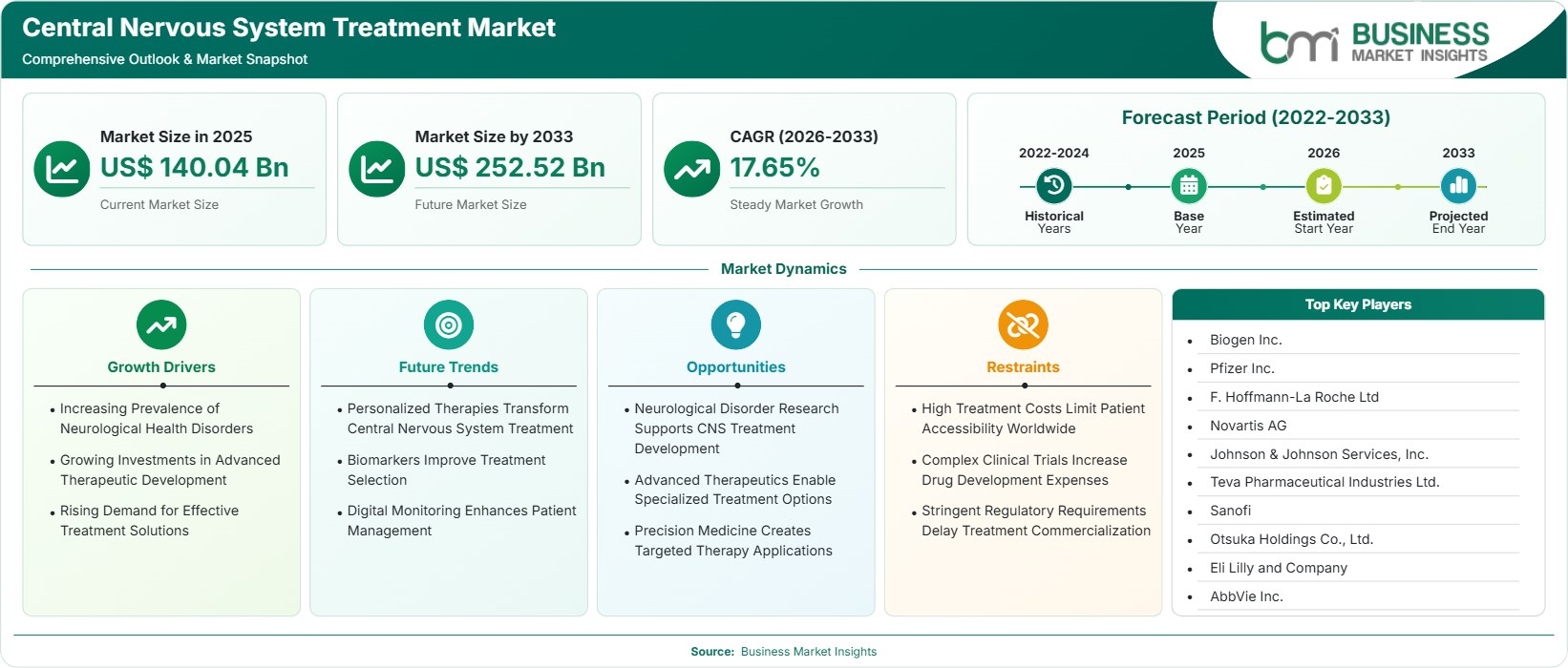
The Central Nervous System Treatment Market size was valued at US$ 140.04 Billion in 2025 and is projected to reach US$ 252.52 Billion by 2033, growing at a CAGR of 7.65% during 2026–2033, driven by neurological disease burden, aging populations, biologic innovation, precision medicine, improved diagnosis, and expanding access to advanced therapies.

Report Coverage
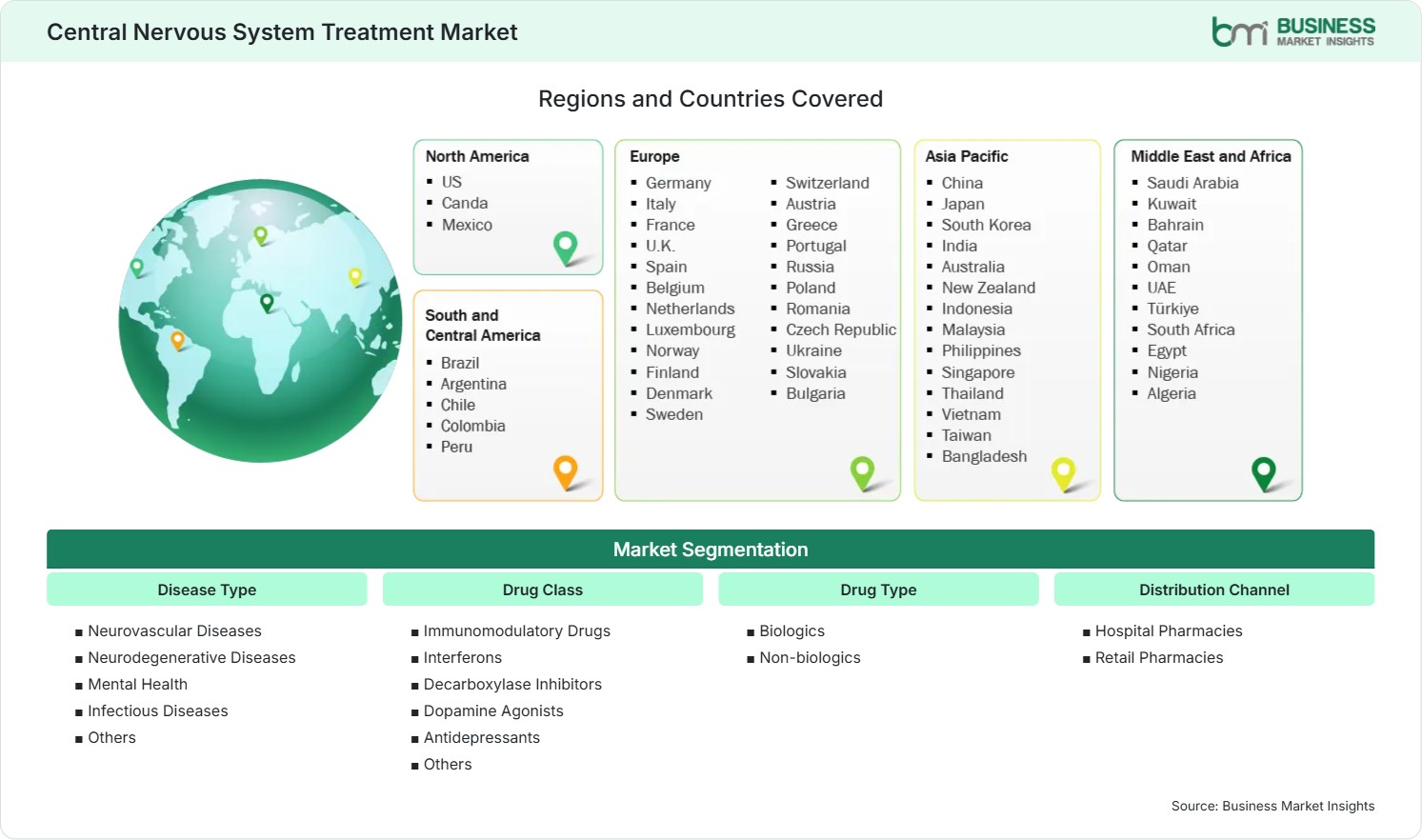
  • Disease Type: Neurovascular Diseases, Neurodegenerative Diseases, Mental Health, Infectious Diseases, Others
  • Drug Class: Immunomodulatory Drugs, Interferons, Decarboxylase Inhibitors, Dopamine Agonists, Antidepressants, Others
  • Drug Type: Biologics, Non-biologics
  • Distribution Channel: Hospital Pharmacies, Retail Pharmacies
US$ 140.04 Bn Market size in 2025
US$ 252.52 Bn Market Size by 2033
17.65% CAGR, 2026 - 2033
2026-2033 Forecast Period

AI Overview

Central Nervous System Treatment Market Summary

  • North America Region: North America holds a market share of 38%–41% in 2025, growing at a CAGR of 7.2%–7.8% during 2026–2033, influenced by advanced diagnostics, reimbursement capacity, neurological research, biologic adoption, aging demographics, and strong pharmaceutical pipelines. The US market benefits from high diagnosis rates, specialist infrastructure, clinical research, and rapid uptake of innovative CNS therapies, supporting a 7.1%–7.7% CAGR through 2033.
  • Fastest Growing Region: Asia Pacific holds a market share of 20%–23% in 2025, advancing at a CAGR of 8.4%–9.1% during 2026–2033, supported by expanding healthcare coverage, rising neurological diagnoses, pharmaceutical localization, improving specialist capacity, and increasing investment in biologics.
  • Leading Segment: Mental Health represents a leading disease-type segment with an estimated 36%–39% share in 2025, expanding at a CAGR of 7.6%–8.2% during 2026–2033, driven by depression, anxiety, schizophrenia, bipolar disorder, treatment access, digital diagnosis, and newer pharmacological approaches.
  • High Growth Segment: Biologics represent the high-growth drug-type segment, with an estimated 16%–19% share in 2025 and a CAGR of 9.0%–10.0% during 2026–2033, supported by disease-modifying therapies, antibody platforms, precision targeting, and expanding neurological indications.
  • Key Market Opportunity: Expanding disease-modifying therapies, injectable biologics, precision biomarkers, oral neuroimmune agents, and emerging-market access programs create opportunities for differentiated products addressing progressive neurological disorders and underserved patients.
  • Major Market Players: Biogen Inc.; Pfizer Inc.; F. Hoffmann-La Roche Ltd; Novartis AG; Johnson & Johnson Services, Inc.; Teva Pharmaceutical Industries Ltd.; Sanofi; Otsuka Holdings Co., Ltd.; Eli Lilly and Company; AbbVie Inc.
Strategic Insights

Central Nervous System Treatment Market: Strategic Insights

Central Nervous System Treatment Market Strategic Framework
FREE PDF
Request your free sample
Request free sample
Stakeholder View

Key Takeaways

  • The value chain increasingly extends beyond conventional pharmaceutical manufacturing toward biomarker development, companion diagnostics, specialty distribution, infusion infrastructure, patient-support programs, and longitudinal monitoring.
  • It is because disease-modifying neurological therapies have the greatest potential reward that they can be given differentiated pricing when clinical evidence shows a delay in progression, preservation of function, or a meaningful reduction in the disease burden.
  • There is a trend towards the use of molecules that can penetrate the brain, monoclonal antibodies, modulation of immune pathways, subcutaneous delivery methods, digital monitoring, and more precise selection of patients. For instance, in 2025 Biogen and Eisai announced that they were still advancing their lecanemab delivery methods and long-term Alzheimer’s data.
  • Asia Pacific presents a compelling investment case because improving diagnosis, expanding insurance coverage, rising healthcare expenditure, and growing specialist networks can increase treatment penetration from a comparatively lower base.
  • Pharmaceutical investment is nowadays becoming more focused on portfolio acquisitions, licensing, and late-stage pipeline assets, and in 2026 Novartis carried out the acquisition of Avidity, which gave it access to late-stage neuromuscular medicines and thus underlined the strategic significance of advanced CNS-related platforms.
  • Commercial success will in the future be based more on showing practical value by means of adherence, the convenience of administration, the way patients are selected, the health-economic outcomes, and access strategies than on clinical efficacy alone.
Geographic Outlook

Central Nervous System Treatment Market Regional Highlights

North America Central Nervous System Treatment Market

North America accounts for an estimated 38%–41% Central Nervous System Treatment Market share in 2025 and is projected to expand at a 7.2%–7.8% CAGR during 2026–2033. The region benefits from sophisticated neurological diagnosis, high specialist density, pharmaceutical R&D, reimbursement mechanisms, and rapid adoption of innovative medicines. The US remains the dominant contributor, while Canada supports growth through expanding specialty-care access and research capacity. Demand is concentrated across neurodegenerative, neurovascular, psychiatric, and immune-mediated CNS disorders, creating a broad commercial base for differentiated therapies.

  • Because of the ageing of the population there is greater demand for the diagnosis and treatment of Alzheimer's, Parkinson's disease, stroke-related complications, and other chronic neurological disorders, which in turn increases the volume of long-term prescriptions in both specialist and hospital sectors.
  • The use of biological adoption is supported by an advanced infusion system, specialist neurologists, cutting-edge imaging techniques, biomarker testing, and payer systems that are able to support high-value therapies once clinical benefits have been demonstrated.
  • The fact that clinical research activity is a competitive advantage enables pharmaceutical companies to carry out large-scale trials, produce real-world evidence, and speed up the process of bringing innovative medicines to market in various therapeutic areas.
  • The well-developed specialty-pharmacy network in the area provides support for complicated treatments which require adherence monitoring, prior authorization management, patient education, financial assistance, and coordinated communication between physicians and pharmacists.

US Central Nervous System Treatment Market

The US represents approximately 78%–82% of the North American Central Nervous System Treatment Market 2025 revenue, with a projected 7.1%–7.7% CAGR during 2026–2033. Strong pharmaceutical innovation, extensive clinical infrastructure, specialist availability, and relatively high treatment spending support market leadership. Alzheimer's disease, multiple sclerosis, depression, schizophrenia, epilepsy, and Parkinson's disease remain important demand pools. FDA regulatory pathways and growing emphasis on biomarker-defined populations are encouraging investment in therapies that demonstrate measurable disease modification, functional benefits, or improved administration convenience.

  • Innovative therapies for Alzheimer's disease are causing a rise in the need for biomarker confirmation, greater infusion capacity, more rigorous safety monitoring, and for alternative methods of delivery that can make treatment more convenient.
  • Specialty pharmacies and hospital systems are increasingly working together on high-complexity medicines, linking together the processes of reimbursement authorization, adherence support, patient education, adverse-event monitoring, and communication with physicians throughout the treatment journey.
  • The big pharmaceutical companies are still focusing on research into the central nervous system by means of their own initiatives, through partnerships, by means of acquisitions, and via strategies for managing the lifecycle of their products, which in turn raises the level of competition for already validated biological targets and for different mechanisms.

Europe Central Nervous System Treatment Market

Europe holds an estimated 27%–30% Central Nervous System Treatment Market share in 2025, with a 7.4%–8.0% CAGR during 2026–2033. Germany, the United Kingdom, France, Italy, and Spain remain leading markets because of established healthcare systems and specialist networks. Germany is estimated to expand at 7.5%–8.1% CAGR, while the UK is positioned for 7.7%–8.3% CAGR. Pricing controls can moderate revenue growth, but aging demographics, unmet neurological needs, and public-health initiatives sustain demand for effective treatments across major CNS indications.

  • Germany has access to a wide range of specialist infrastructure and possesses strong capabilities in pharmaceutical research, which enables it to adopt innovative medicines for neurological disorders when clinical evidence meets the requirements for reimbursement and for health-technology assessment.
  • The United Kingdom has the potential to experience faster growth since its national health services are focusing on earlier diagnosis, improved treatment and the use of evidence-based methods in the management of neurological and psychiatric disorders.
  • France and Italy have a great deal of potential for prescribing drugs since the ageing of populations leads to a higher prevalence of neurodegenerative disorders and the public healthcare systems enable access to established treatments in an organised manner.
  • European regulators are placing ever greater emphasis on safety, on achieving meaningful clinical outcomes, and on having evidence following approval, and as a result are urging drug developers to improve their trial designs, the way they stratify patients, and their ability to carry out long-term surveillance.

Asia Pacific Central Nervous System Treatment Market

Asia Pacific represents approximately 20%–23% share in 2025 and is expected to register the fastest regional expansion at 8.4%–9.1% CAGR during 2026–2033. Japan remains a leading market, while China, India, South Korea, and Australia provide substantial incremental opportunities. China is estimated to grow at 8.8%–9.5% CAGR, supported by expanding diagnosis and pharmaceutical capabilities. India is positioned at 9.0%–9.7% CAGR, reflecting increasing healthcare access, specialist development, and growing private-sector treatment capacity.

  • China has a large patient population. Diagnosis is getting better. Local drug companies are growing. Regulations are being updated. More people can get new medicines as payment systems change.
  • Because Japan has a mature neurological care sector, a highly sophisticated diagnostic infrastructure, and an aging population, there is a significant long-term commercial potential for innovative therapies in the field of neurodegenerative diseases.
  • India has great potential since its specialist capabilities, awareness of diagnosis, urban health care infrastructure, and network of private hospitals are growing, although neurological treatment is still underprovided outside the major metropolitan areas.
  • In South Korea and Australia there are specialist markets which are highly attractive since the advanced healthcare infrastructure, clinical research and the growing use of targeted therapies all support potential for premium treatment of disorders of the central nervous system.

Rest of World Central Nervous System Treatment Market

Rest of World accounts for approximately 9%–12% Central Nervous System Treatment Market share in 2025 and is projected to grow at 6.8%–7.4% CAGR during 2026–2033. South and Central America are supported by expanding private healthcare and improving diagnosis, while Middle East and Africa benefit from healthcare modernization. Brazil is estimated at 7.1%–7.7% CAGR, and Saudi Arabia at 7.8%–8.5% CAGR, supported by healthcare investment and specialist infrastructure development.

In Latin America there is a growing focus on gaining access to essential neurological and psychiatric medicines, while affordability and the uneven distribution of specialists continue to act as commercial limitations. The Gulf states are setting up advanced hospitals and specialist centres, which is opening up possibilities for premium therapies and international pharmaceutical partnerships. The World Health Organization states that over 80% of neurological deaths and disability happen in low- and middle-income countries, highlighting a large unmet need.

  • Because of the large number of people receiving treatment and the growing private healthcare sector together with increased public-sector buying power, there are opportunities for existing medicines and certain innovative therapies.
  • In Mexico and Argentina there are developing markets for prescription drugs which can see treatment uptake increased across neurological and psychiatric conditions due to urbanisation, greater healthcare investment and improved diagnostic procedures.
  • Saudi Arabia and the United Arab Emirates are putting money into specialized healthcare facilities in order to enable advanced neurological diagnosis, provide multidisciplinary care, handle biologics, and enter into international pharmaceutical collaborations.
  • There is a shortage of specialists in South Africa and in other selected African markets, but long-term opportunities are available via affordable medicines, decentralised care models, telemedicine, and public-private healthcare partnerships.
Global Market Geography
FREE PDF
Request your free sample
Request free sample
Segment Analysis

Central Nervous System Treatment Market Segmentation

Disease Type

The Disease Type sector is headed by Mental Health, accounting for a share of about 36% to 39% in 2025, and this category is expected to grow at a compound annual growth rate of 7.6% to 8.2% between 2026 and 2033. The demand for treatment is due to the high prevalence of diseases, the expanding scope of diagnosis, the need for chronic disease management, and the growing access to pharmacological treatments among a wide range of patient groups.

  • Neurovascular Diseases: Stroke prevention and treatment drive demand for antithrombotic, neuroprotective, and supportive therapies, while aging populations and vascular risk factors sustain long-term treatment requirements.
  • Neurodegenerative Diseases: Alzheimer’s, Parkinson’s, and related disorders are attracting substantial R&D as companies pursue disease-modifying mechanisms, biomarkers, antibodies, and therapies designed to delay functional decline.
  • Mental Health: Depression, anxiety, schizophrenia, and bipolar disorders support sustained prescription demand, with treatment innovation increasingly emphasizing tolerability, adherence, personalized therapy, and faster symptom control.
  • Infectious Diseases: CNS infections require timely diagnosis and pharmacological intervention, with opportunities linked to antimicrobial resistance, emerging infections, vaccination, and improved access to neurological intensive care.

Drug Class

The Drug Class is backed by the widespread use of antidepressants and immune-modulating therapies and is expected to account for 32% to 35% of the market in 2025, growing at a compound annual growth rate of 7.3% to 7.9% between 2026 and 2033 as treatment for chronic neurological and psychiatric conditions increases.

  • Immunomodulatory Drugs: Immune-targeted treatments address multiple sclerosis and related disorders, benefiting from improved disease understanding, biomarker development, and increasing preference for therapies that reduce relapse or progression.
  • Interferons: Interferon therapies remain established in selected immune-mediated neurological conditions, with demand shaped by treatment familiarity, safety monitoring, administration requirements, and competition from newer disease-modifying agents.
  • Decarboxylase Inhibitors: These agents support Parkinson’s disease management by improving levodopa utilization, with continuing demand reinforced by established treatment pathways and combination-therapy use.
  • Dopamine Agonists: Dopamine agonists remain important for Parkinson’s symptom control, although prescribing increasingly reflects individualized risk-benefit assessment, age, comorbidities, tolerability, and alternative pharmacological options.
  • Antidepressants: Antidepressants represent a major treatment category because depression and related disorders affect large populations, while improved diagnosis and longer-term disease management support continuing pharmaceutical demand.

Drug Type

Drug Type is increasingly influenced by biologic innovation, with Biologics estimated at 16%–19% share in 2025 and projected to expand at 9.0%–10.0% CAGR during 2026–2033 as targeted mechanisms gain clinical validation.

  • Biologics: Monoclonal antibodies and other advanced biologics enable precise biological targeting, creating opportunities in neurodegenerative and immune-mediated disorders while increasing requirements for specialized administration and monitoring.
  • Non-biologics: Small-molecule therapies remain the commercial foundation because of established manufacturing, oral administration, broad distribution, and competitive pricing across psychiatric, neurological, and supportive treatment categories.

Distribution Channel

The distribution channel is still preferring existing pharmacy networks, the hospital pharmacy sector being estimated at 45% to 48% of the market in 2025 and growing at a compound annual growth rate of 7.5% to 8.1% between 2026 and 2033 since more complex treatments need specialist supervision.

  • Hospital Pharmacies: Hospital pharmacies manage complex biologics, injectable medicines, acute neurological treatments, and specialist prescriptions, supported by integrated clinical teams and medication-monitoring capabilities.
  • Retail Pharmacies: Retail pharmacies provide broad access to chronic CNS medicines, particularly oral therapies, antidepressants, Parkinson’s treatments, and established neurological products requiring recurring prescriptions.
Market Forces

Central Nervous System Treatment Market Dynamics

Key Market Drivers

Rising Global Neurological Disease Burden

WHO reported in 2025 that neurological conditions affect more than 3 billion people globally and cause more than 11 million deaths annually. This expanding patient pool strengthens demand for diagnosis, pharmacological intervention, rehabilitation, and long-term disease management. Aging populations are particularly important because dementia and Parkinson’s disease prevalence rises with age. The commercial implication is broader treatment eligibility and increasing demand for medicines that can preserve function or slow progression. The Central Nervous System Treatment Market growth therefore reflects both demographic expansion and improving recognition of previously underdiagnosed conditions. WHO also identifies major workforce and access disparities, creating additional demand for medicines that can be delivered efficiently across different healthcare settings.

Shift Toward Disease-Modifying and Targeted Therapies

Drug development is now progressing from a focus on relieving symptoms to one on biological mechanisms that can affect the course of the disease. Examples of this shift include Alzheimer’s antibody therapies, inhibitors of immune pathways, and molecules that can penetrate the brain. In a Phase III study involving PPMS, Roche announced in February 2026 that its investigational drug fenebrutinib was at least as effective as OCREVUS and resulted in a 12% numerical decrease in the risk of disability progression, highlighting the significance of targeting specific mechanisms. This kind of evidence justifies the need to invest in precision therapies, biomarkers, and distinct delivery systems. The Central Nervous System Treatment Market Trends are also leading to greater development complexity since companies have to define clinically meaningful endpoints, identify populations who will respond, and prove safety over long treatment periods.

Expansion of Specialty Care and Treatment Infrastructure

The improvement of neurological infrastructure is expanding the number of people who can receive treatment. Increasingly, advanced imaging, biomarker testing, specialist clinics, infusion centres, specialty pharmacies, and patient-support schemes are becoming part of a connected chain of treatment services. This development is especially significant for biologics and other complex medicines which require screening, monitoring, and administration beyond simple retail dispensing. Since the World Health Organization states that low-income countries have more than 80 times as few neurologists as high-income countries, this highlights the gap between the level of disease burden and the capacity to provide treatment. It follows that investments in telemedicine, decentralised diagnostics, nurse-led administration, and digital follow-up can boost access to treatment without needing to expand the number of specialists to a similar extent.

Key Market Opportunities

Precision Neurology and Biomarker-Guided Treatment

Biomarker-guided treatment offers pharmaceutical companies a pathway to improve patient selection, demonstrate clearer efficacy, and reduce uncertainty in clinical development. Alzheimer’s disease has already demonstrated the commercial importance of amyloid confirmation, while multiple sclerosis and other immune-mediated conditions increasingly use biological and imaging measures to assess disease activity. The Central Nervous System Treatment Market Forecasts are therefore increasingly linked to companion diagnostics, imaging platforms, genetic information, and digital monitoring. Investment opportunities extend beyond medicines into diagnostic partnerships and integrated care models. Companies able to connect therapeutic development with patient identification can strengthen clinical-trial recruitment, improve treatment response, and build differentiated commercial propositions in crowded indications.

Subcutaneous and Longer-Acting CNS Therapy Delivery

The advantage offered by administration convenience is now acting as a key strategic distinction since ongoing neurological treatments demand consistent patient adherence. In August 2025, Biogen and Eisai received approval from the FDA for a weekly subcutaneous maintenance version of lecanemab, illustrating how advances in delivery methods can reinforce disease-modifying therapies. These types of approaches have the potential to lessen the treatment burden, may allow treatment to be given in a wider range of locations, and can support home-based care where this is suitable. Investment possibilities therefore involve autoinjectors, long-acting formulations, home-care services, remote monitoring, and coordination with specialty pharmacies. The commercial potential is greatest in cases where greater convenience leads to improved persistence, wider patient acceptance, or lower use of healthcare resources without affecting safety.

Underserved Emerging-Market Treatment Access

Emerging markets represent a substantial opportunity because neurological disease burden is high while specialist and medicine access remains uneven. WHO estimates that more than 80% of neurological deaths and health loss occur in low- and middle-income countries, emphasizing the gap between need and available treatment. Companies can address this opportunity through tiered pricing, local manufacturing, licensing, public-private partnerships, simplified treatment protocols, and digital specialist support. Central Nervous System Treatment Market scope is consequently expanding beyond premium pharmaceutical markets toward scalable access models. Partnerships with local distributors and healthcare systems can also improve regulatory navigation, patient identification, supply reliability, and post-treatment monitoring.

Market Restraints and Challenges

High Development Complexity and Safety Requirements

Factor: CNS disorders involve heterogeneous biology, slow disease progression, placebo effects, variable patient responses, and complex clinical endpoints, making trials lengthy and expensive.

Impact: Extended development timelines can reduce pipeline productivity and increase financial exposure before commercialization. Disease-modifying therapies may require large biomarker-defined populations and prolonged follow-up to demonstrate meaningful benefits. Safety monitoring can also become intensive when medicines affect immune pathways or neurological function. These requirements raise the probability that promising mechanisms will encounter late-stage setbacks. Companies therefore increasingly use adaptive designs, enriched populations, digital endpoints, and translational biomarkers to improve development efficiency while maintaining regulatory confidence and clinically meaningful evidence.

Affordability, Reimbursement, and Specialist Access Gaps

Factor: High-cost biologics and advanced CNS medicines can face restrictive reimbursement, budget pressure, limited specialist capacity, and unequal access across countries.

Impact: Commercial penetration may remain below clinical need even when effective therapies receive regulatory approval. WHO reports major disparities in neurological workforce and treatment access, particularly in low-income settings. Payers increasingly require comparative evidence, cost-effectiveness data, and real-world outcomes before supporting premium therapies. Manufacturers must therefore design market-access strategies alongside clinical development. Patient assistance, risk-sharing agreements, simplified delivery, local partnerships, and health-economic evidence can mitigate access barriers, but these measures can increase commercialization complexity and operating costs.

Company Analysis

Competitive Landscape

The Central Nervous System Treatment Market analysis indicates competition is increasingly shaped by disease-modifying pipelines, biologic platforms, specialty distribution, clinical evidence, and lifecycle management. The competitive environment includes diversified pharmaceutical companies and CNS-focused innovators with differentiated therapeutic franchises.

Company Name

Overview

Products and Services relevant to this market

Biogen Inc.

Global biotechnology company with a strong neurological portfolio and extensive expertise in neurodegenerative and immune-mediated diseases.

Alzheimer’s therapies, multiple sclerosis medicines, neurological research, biomarker development, specialty treatment support, and disease-management solutions.

Pfizer Inc.

Diversified biopharmaceutical company with global commercial infrastructure and research capabilities spanning neuroscience and specialty medicine.

CNS medicines, clinical development, innovative drug discovery, specialty pharmaceuticals, and research programs addressing neurological and psychiatric conditions.

F. Hoffmann-La Roche Ltd

Global healthcare company with major pharmaceutical and diagnostic capabilities and a substantial neuroscience franchise.

OCREVUS, neurological pipeline programs, diagnostics, biomarker capabilities, and disease-management solutions for multiple sclerosis and related conditions.

Novartis AG

Global pharmaceutical company with established expertise in immunology, neuroscience, and specialty medicines.

Kesimpta, Zolgensma, neurological research, immune-mediated disease therapies, specialty medicines, and advanced treatment development platforms.

Johnson & Johnson Services, Inc.

Diversified healthcare company with pharmaceutical operations spanning neuroscience, psychiatry, and specialty medicines.

CNS medicines, psychiatric therapies, neuroscience research, clinical development, specialty pharmaceuticals, and patient-support infrastructure.

Teva Pharmaceutical Industries Ltd.

Global pharmaceutical company with a longstanding presence in neurological and specialty medicines and broad generic capabilities.

Multiple sclerosis therapies, migraine medicines, generic CNS products, specialty pharmaceuticals, and global distribution capabilities.

Sanofi

Global biopharmaceutical company investing in specialty medicines and neurological immunology research.

Multiple sclerosis pipeline assets, immunomodulatory research, specialty medicines, clinical development, and patient-access programs.

Otsuka Holdings Co., Ltd.

Japanese healthcare group with established capabilities in psychiatry, neuroscience, and innovative pharmaceutical development.

Antipsychotic medicines, antidepressant-related therapies, neuroscience research, digital health initiatives, and psychiatric treatment solutions.

Eli Lilly and Company

Research-driven pharmaceutical company with major investments in neurodegenerative disease and innovative CNS drug development.

Alzheimer’s disease therapies, neuroscience pipeline programs, biomarkers, clinical research, and disease-modifying treatment development.

AbbVie Inc.

Diversified biopharmaceutical company with established neuroscience and movement-disorder expertise.

Parkinson’s disease therapies, psychiatric medicines, neurological research, specialty treatments, and patient-support programs.

Trust & Transparency

Research Methodology

The market analysis combines proprietary research with secondary data from government agencies, company disclosures, regulatory filings, industry databases and expert interviews. Market estimates are validated through data triangulation, cross-market benchmarking and analyst review.

View Full Research Methodology

Questions Answered

Frequently Asked Questions

What will differentiate CNS therapies in future portfolios?

Differentiation will increasingly depend on disease modification, clinically meaningful functional outcomes, biomarker-defined patient selection, safety, administration convenience, adherence, and health-economic value. Therapies combining biological precision with practical delivery advantages are positioned to compete more effectively.

Which emerging markets offer the strongest commercial potential?

China and India offer substantial opportunities because of large populations, improving diagnostic capacity, expanding healthcare infrastructure, growing pharmaceutical capabilities, and increasing treatment access. Gulf countries also provide attractive premium-care opportunities through major healthcare modernization programs.

How is administration technology influencing treatment adoption?

Subcutaneous delivery, autoinjectors, longer-acting formulations, and home-based treatment pathways can reduce administration burden for chronic patients. These technologies may improve adherence and expand treatment settings when clinical evidence and safety monitoring support decentralized care.

Why are biologics becoming more important in CNS treatment?

Biologics can target specific disease mechanisms that are difficult to address with conventional small molecules. Antibody-based approaches are particularly relevant to neurodegenerative and immune-mediated diseases, although manufacturing, administration, safety monitoring, and reimbursement requirements can limit adoption.

What disease categories create the largest treatment opportunities?

The Central Nervous System Treatment Market Report highlights that Neurological disorders, neurodegenerative diseases, and mental health conditions create the broadest opportunities because of high prevalence, chronic treatment requirements, aging demographics, and persistent gaps in diagnosis and care. WHO reports that neurological conditions affect more than 3 billion people worldwide, while more than one billion people live with mental disorders.

Access the Full Central Nervous System Treatment Market Report

Get segment-level forecasts, regional estimates, competitive benchmarking, company profiles and downloadable Excel datasets.

Access the full Central Nervous System Treatment Market Report
350 pages PDF & Excel | 2026-09-08