
Neuropathic Pain Market Outlook: Size, Share, Trends, Growth Analysis, Competitive Landscape & Forecast, 2026-2033

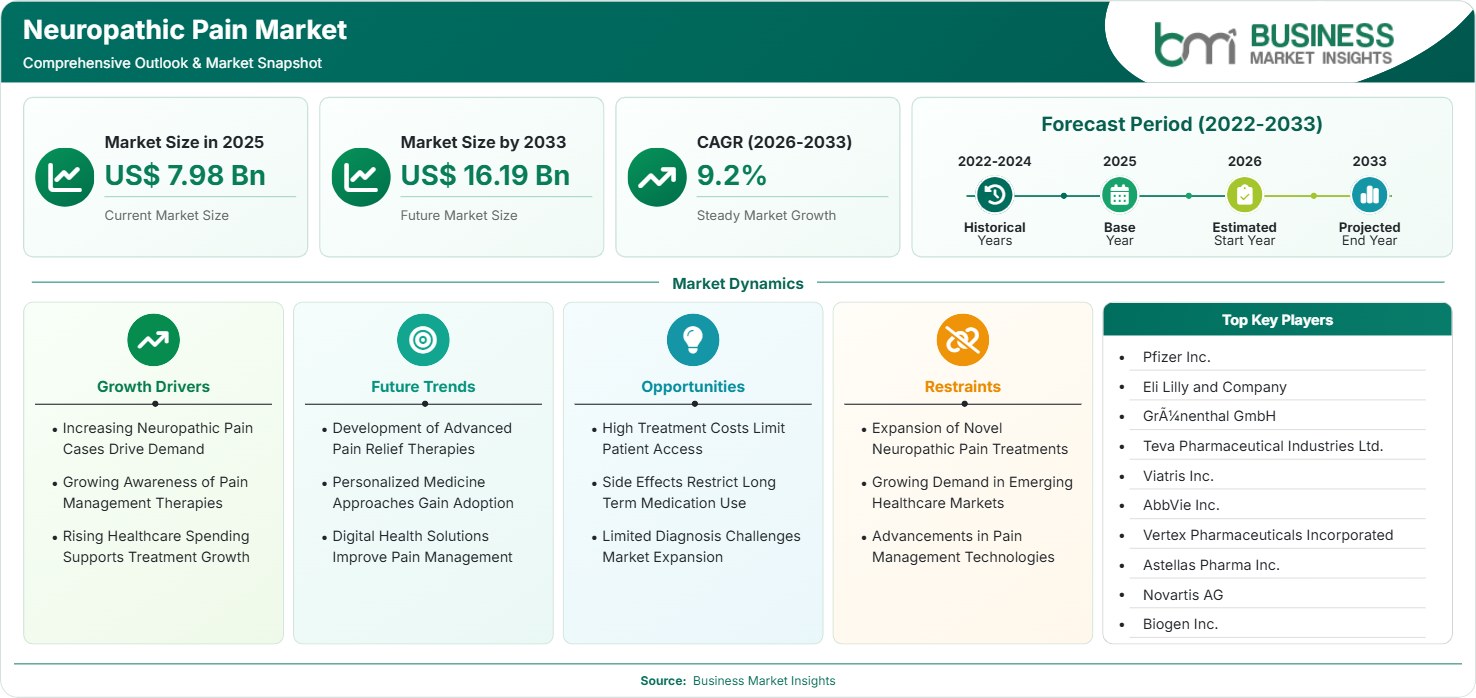
The Neuropathic Pain market size was valued at US$ 7.98 billion in 2025 and is projected to reach US$ 16.19 billion by 2033, growing at a CAGR of 9.2% during 2026–2033, driven by rising prevalence of chronic pain, expanding diagnoses of neurological disorders, pharmaceutical innovation, and increasing demand for targeted therapies.

Report Coverage
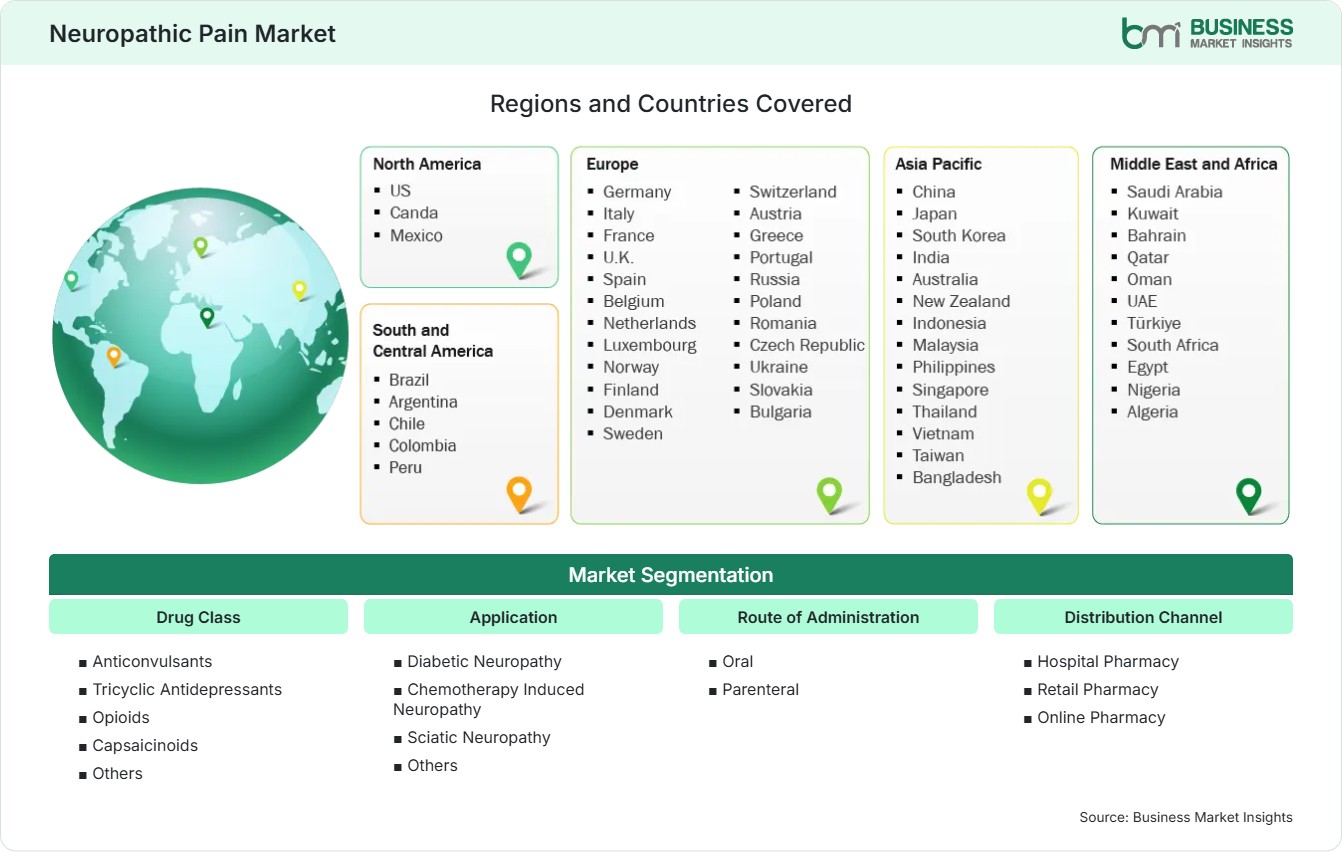
  • Drug Class: Anticonvulsants, Tricyclic Antidepressants, Opioids, Capsaicinoids, Others
  • Application: Diabetic Neuropathy, Chemotherapy Induced Neuropathy, Sciatic Neuropathy, Others
  • Route of Administration: Oral, Parenteral
  • Distribution Channel: Hospital Pharmacy, Retail Pharmacy, Online Pharmacy
US$ 7.98 Bn Market size in 2025
US$ 16.19 Bn Market Size by 2033
9.2% CAGR, 2026 - 2033
2026-2033 Forecast Period

AI Overview

Neuropathic Pain Market Summary

  • North America Region: North America holds a market share of 42%–45% in 2025, growing with a CAGR of 8%–10%, influenced by advanced healthcare infrastructure, higher diagnosis rates, and pharmaceutical innovation. The US market demonstrates strong adoption of neuropathic pain therapies through specialist care networks and research investments, registering a CAGR of 8%–10% between 2026–2033.
  • Fastest Growing Region: Asia Pacific accounts for a share of 22%–25% in 2025, expanding with a CAGR of 10%–12%, supported by improving healthcare access, increasing diabetes burden, and growing availability of neurological pain management treatments.
  • Leading Segment: Anticonvulsants represent the leading drug class segment with a share of 38%–41% in 2025, expanding at a CAGR of 8%–10% due to established clinical usage, broad prescriptions, and effectiveness across multiple neuropathic conditions.
  • High Growth Segment: Chemotherapy Induced Neuropathy represents a high growth application segment with a share of 15%–18% in 2025, achieving a CAGR of 11%–13% driven by rising cancer treatment volumes and increasing focus on supportive care management.
  • Key Market Opportunity: Growing investment in precision medicine, novel pain therapeutics, biomarker-based diagnosis, and non-opioid treatment approaches creates opportunities for pharmaceutical companies to address unmet needs among patients with chronic neuropathic disorders.
  • Major Market Players: Pfizer Inc., Eli Lilly and Company, Grünenthal GmbH, Teva Pharmaceutical Industries Ltd., Viatris Inc., AbbVie Inc., Vertex Pharmaceuticals Incorporated, Astellas Pharma Inc., Novartis AG, and Biogen Inc.
Strategic Insights

Neuropathic Pain Market: Strategic Insights

Neuropathic Pain Market Strategic Framework
FREE PDF
Request your free sample
Request free sample
Stakeholder View

Key Takeaways

  • The Neuropathic Pain Market ecosystem is shifting toward integrated pain management models involving pharmaceutical manufacturers, healthcare providers, diagnostic specialists, and research organizations focused on improving treatment outcomes.
  • Growth opportunities are emerging from diabetic neuropathy management, chemotherapy-related nerve damage treatment, and the development of therapies addressing patients with inadequate response to conventional medications.
  • Innovation efforts are increasingly focused on targeted molecular therapies, improved drug delivery approaches, and personalized treatment strategies that can enhance efficacy while reducing adverse effects.
  • North America remains a strategic investment region due to advanced clinical infrastructure, high healthcare spending, strong pharmaceutical presence, and significant research activity in neurological disorders.
  • Pharmaceutical companies are pursuing partnerships, pipeline expansion strategies, and research collaborations to strengthen their positions in chronic pain therapeutics and address competitive market pressures.
  • Increasing awareness among healthcare professionals regarding early diagnosis and comprehensive management approaches is supporting broader treatment adoption across multiple patient populations.
Geographic Outlook

Neuropathic Pain Market Regional Highlights

North America Neuropathic Pain

North America represents the largest regional market with a share of 42%–45% in 2025 and is projected to grow at a CAGR of 8%–10% during 2026–2033. Strong healthcare infrastructure, advanced diagnostic capabilities, and high prescription adoption support regional leadership. The neuropathic pain market share remains concentrated in the United States and Canada due to established pain management systems and pharmaceutical accessibility.

  • Increasing prevalence of diabetes and cancer-related conditions is expanding demand for neuropathic pain management therapies across healthcare facilities.
  • Advanced reimbursement systems support patient access to prescription medications and specialist-led chronic pain treatment programs.
  • Pharmaceutical companies are investing in clinical research to develop innovative therapies with improved safety profiles.
  • Growing adoption of multidisciplinary pain clinics is improving diagnosis and treatment management across patient groups.

US Neuropathic Pain

The US market holds a share of 38%–41% in 2025 and is expected to register a CAGR of 8%–10% from 2026–2033. The country remains a major pharmaceutical innovation center due to strong research capabilities, advanced healthcare delivery systems, and high awareness of chronic pain conditions. Expanding clinical trials and treatment advancements continue to support the neuropathic pain market development.

  • Rising diabetic patient populations are increasing demand for therapies addressing peripheral nerve complications and chronic pain symptoms.
  • Strong pharmaceutical research infrastructure supports the development and commercialization of advanced neurological treatments.
  • Healthcare providers are increasingly adopting evidence-based pain management protocols for chronic neuropathic disorders.
  • Growing emphasis on reducing opioid dependency is encouraging interest in alternative treatment approaches.

Europe Neuropathic Pain

Europe accounts for a share of 24%–27% in 2025 and is estimated to expand at a CAGR of 8%–10% during 2026–2033. The region benefits from established healthcare systems, increasing chronic disease burden, and supportive pharmaceutical research environments. Germany, the United Kingdom, and France represent leading neuropathic pain markets, while Spain and Italy demonstrate steady treatment adoption growth.

  • Germany maintains a strong demand through advanced healthcare facilities and increasing neurological disorder diagnosis capabilities.
  • The United Kingdom is supporting pain research through healthcare innovation programs and clinical development initiatives.
  • France is expanding access to chronic pain treatments through improved specialist healthcare networks.
  • European pharmaceutical companies continue investing in innovative pain management solutions and clinical research.

Asia Pacific Neuropathic Pain

Asia Pacific holds a share of 22%–25% in 2025 and is forecast to achieve the fastest CAGR of 10%–12% between 2026 and 2033. The region benefits from rising healthcare access, increasing diabetes prevalence, and improving awareness of neurological conditions. China, India, Japan, and South Korea represent key markets, with India and China demonstrating significant expansion potential.

  • Growing diabetes prevalence is increasing patient demand for neuropathic complication management solutions.
  • Healthcare infrastructure improvements are expanding access to neurological diagnosis and treatment services.
  • Japan continues supporting advanced pain research through established pharmaceutical and healthcare systems.
  • India is experiencing increased adoption due to expanding healthcare accessibility and chronic disease awareness.

Rest of World Neuropathic Pain

Rest of World markets represent a share of 7%–10% in 2025 and are projected to grow at a CAGR of 9%–11% during 2026–2033. Latin America, the Middle East, and Africa neuropathic pain markets are gradually expanding due to improving healthcare access, increasing chronic disease prevalence, and growing pharmaceutical availability. Brazil, Mexico, the UAE, and South Africa represent important growth contributors.

  • Brazil is expanding treatment access through healthcare modernization and increasing awareness of chronic neurological disorders.
  • Mexico is witnessing rising demand for pharmaceutical treatments due to improving diagnostic capabilities.
  • Middle Eastern countries are investing in healthcare infrastructure supporting advanced disease management services.
  • South Africa is improving access to essential medicines through healthcare system development initiatives.
Global Market Geography
FREE PDF
Request your free sample
Request free sample
Segment Analysis

Neuropathic Pain Market Segmentation

Drug Class

The drug class segment represents the core treatment landscape, with anticonvulsants, tricyclic antidepressants, opioids, capsaicinoids, and other therapies addressing different neuropathic pain mechanisms. The segment accounted for a share of 100% in 2025 and is projected to expand at a CAGR of 9%–11% between 2026–2033. The Neuropathic Pain Market scope continues to develop as clinicians prioritize mechanism-based treatments and improved therapeutic outcomes.

  • Anticonvulsants: Anticonvulsants remain widely prescribed due to effectiveness in nerve signal modulation. These therapies are commonly used for diabetic neuropathy and related conditions requiring long-term symptom management.
  • Tricyclic Antidepressants (TCA): TCAs provide pain relief through neurotransmitter modulation and remain valuable for selected patients. Their established clinical evidence supports continued utilization despite tolerability considerations.
  • Opioids: Opioids are used for severe neuropathic pain cases requiring stronger analgesic effects. Prescribing practices increasingly emphasize controlled usage due to dependency concerns and regulatory scrutiny.
  • Capsaicinoids: Capsaicinoid-based therapies provide localized pain relief through nerve receptor mechanisms. Topical applications are gaining interest among patients seeking targeted treatment approaches with reduced systemic exposure.

Application

The application segment includes diabetic neuropathy, chemotherapy-induced neuropathy, sciatic neuropathy, and other conditions associated with nerve damage. The segment represented a share of 100% in 2025 and is expected to grow at a CAGR of 9%–11% during 2026–2033. Increasing chronic disease prevalence and improved diagnosis are strengthening treatment demand across multiple patient groups.

  • Diabetic Neuropathy: Diabetic neuropathy represents a major application area due to increasing diabetes prevalence worldwide. Growing diagnosis rates are supporting demand for effective therapies addressing nerve-related complications.
  • Chemotherapy Induced Neuropathy: Chemotherapy induced neuropathy is gaining attention as cancer treatment survival improves. Supportive care advancements are increasing focus on managing treatment-related nerve damage.
  • Sciatic Neuropathy: Sciatic neuropathy treatment demand is supported by increasing musculoskeletal disorders and improved recognition of nerve compression-related pain conditions requiring specialized management.

Route of Administration

The route of administration segment is influenced by treatment effectiveness, patient convenience, and clinical requirements. The segment accounted for a share of 100% in 2025 and is forecast to grow at a CAGR of 9%–11% from 2026–2033. Pharmaceutical companies are developing administration approaches that improve adherence and optimize therapeutic delivery.

  • Oral: Oral therapies remain widely adopted due to convenience, established prescribing patterns, and suitability for chronic neuropathic pain management across outpatient healthcare settings.
  • Parenteral: Parenteral administration supports patients requiring rapid therapeutic action or specialized treatment delivery. Adoption remains focused on clinical settings and complex pain management scenarios.

Distribution Channel

The distribution channel segment reflects changing healthcare access patterns, prescription practices, and consumer preferences. The segment represented a share of 100% in 2025 and is anticipated to expand at a CAGR of 9%–11% during 2026–2033. Digital healthcare adoption and pharmacy modernization are influencing medicine accessibility worldwide.

  • Hospital Pharmacy: Hospital pharmacies remain important for specialized pain treatments, inpatient care, and physician-supervised medication management requiring clinical oversight.
  • Retail Pharmacy: Retail pharmacies support broad medication accessibility through established supply networks and convenient patient access for prescription-based neuropathic pain treatments.
  • Online Pharmacy: Online pharmacies are expanding through digital healthcare adoption, improving medicine availability, prescription fulfillment convenience, and access for patients managing chronic conditions.
Market Forces

Neuropathic Pain Market Dynamics

Key Market Drivers

Increasing Neuropathic Pain Cases Drive Demand

The growing prevalence of diabetes, cancer, and neurological disorders is increasing the global patient population requiring neuropathic pain management solutions. Rising diagnoses of nerve-related complications are contributing to greater treatment demand across healthcare systems. Market growth is supported by demographic aging, chronic disease expansion, and improved clinical recognition of neuropathic conditions. Healthcare providers are increasingly adopting evidence-based treatment protocols to address persistent pain symptoms and improve quality of life. The Neuropathic Pain Market trends indicate a stronger emphasis on early diagnosis, personalized treatment approaches, and comprehensive management strategies. Pharmaceutical companies are responding by expanding research programs focused on improving therapeutic effectiveness and developing alternatives for patients with inadequate responses to existing medications.

Growing Awareness of Pain Management Therapies

The rising awareness among health professionals and their patients with regard to chronic pain conditions is driving more prompt diagnoses and subsequent treatment in the neuropathic pain market. The increasing efforts to educate both professionals and patients about healthcare, combined with improved communication in healthcare, are contributing to a better understanding of neuropathies. It becomes more common for physicians to recognize signs of nerve injuries and offer suitable treatments depending on the needs of the individual patient. In addition, better-coordinated pain management programs ensure better collaboration of neurologists, general practitioners, and other relevant specialists. This is fueling the increased interest in pharmaceutical solutions and supportive care options.

Rising Healthcare Spending Supports Treatment Growth

As healthcare spending continues to increase in both developed and emerging countries, access to diagnostic services, specialist consultations, and better treatment options for neuropathic pain conditions will improve. Both government agencies and healthcare providers are allocating more resources to develop better facilities, chronic disease care programs, and make pharmaceutical drugs accessible to patients. Increased budgeting will lead to wider use of innovations in treating diseases and conducting research on effective methods of pain relief. Pharmaceutical firms will benefit greatly through increased funding for both their research and business processes. Increasing healthcare spending in emerging countries will also present new opportunities for treatment penetration in the neuropathic pain market.

Key Market Opportunities

Expansion of Novel Neuropathic Pain Treatments

Pharmaceutical innovations have created opportunities for new drugs that can target specific neurological pathways involved in pain signaling. There have been investments in the development of non-opiate treatments, precision medicines, and new drug formulations, which can help increase the success of the treatments. New drugs might be able to overcome some of the problems with current drugs, like their effectiveness issues and side effects. Innovations in biotechnology have made it possible to find new drug targets and develop clinical trials faster. The high demand for better and safer drugs has driven pharmaceutical companies to invest in drug research and development.

Growing Demand in Emerging Healthcare Markets

The emerging markets in healthcare offer great potential owing to improvements in medical facilities, healthcare awareness, and the prevalence of chronic diseases. Emerging markets from different regions, such as the Asia Pacific and Latin America, are increasingly becoming aware of the diagnosis and treatment of neurological disorders. The pharmaceutical industries have been increasingly concentrating on the neuropathic pain market expansion through strategies such as affordability, efficiency in distribution, and healthcare availability. Investments in hospitals, pharmacies, and health care systems are providing more ways through which the treatment can be adopted. There is an increase in medical experts and disease awareness that facilitates diagnosis.

Advancements in Pain Management Technologies

Technology innovations are generating new possibilities for the neuropathic pain market forecast because of better diagnostic tools, digital health care platforms, and individualized pain management strategies. The use of artificial intelligence, tele-monitoring tools, and digital health tools is helping improve the process of patient evaluation and tracking. Technology-powered approaches have been used by health care service providers to make their decisions more efficient and maximize the chances of delivering better results. Digital technologies can be integrated with medicines to help monitor adherence and improve the effectiveness of disease management. Companies can differentiate themselves from others through their innovative approach to using technologies within health care service delivery.

Market Restraints and Challenges

High Treatment Costs Limit Patient Access

Factor: Expensive advanced therapies, diagnostic procedures, and long-term treatment requirements increase financial pressure on patients and healthcare systems. Impact: Expensive treatment options are an obstacle to the accessibility of innovative methods for treating neuropathic pain, especially in areas where there is limited coverage by the health care system. Prolonged consumption of drugs makes patients have difficulties paying for the cost of the medicine. This puts a lot of strain on pharmaceutical firms to ensure that their cost of innovation is balanced with the issue of accessibility. In developing nations, the uptake is likely to be slower because of insufficient funding in the health care system.

Side Effects Restrict Long Term Medication Use

Factor: Adverse effects associated with certain neuropathic pain medications can impact patient tolerance and long-term treatment continuation. Impact: Safety concerns may reduce medication adherence and encourage physicians to seek alternative therapeutic approaches. Some commonly used treatments require careful monitoring due to potential complications, limiting their suitability for specific patient groups. Healthcare providers must evaluate treatment benefits against possible risks when managing chronic conditions. These limitations create demand for safer therapies with improved tolerability profiles. Pharmaceutical companies are focusing research efforts on developing medications that maintain therapeutic effectiveness while minimizing adverse reactions. Improved safety profiles could strengthen patient acceptance and support broader long-term treatment adoption.

Company Analysis

Competitive Landscape

The Neuropathic Pain Market analysis highlights a competitive pharmaceutical landscape shaped by multinational drug manufacturers, biotechnology companies, and healthcare innovators focused on chronic pain treatment solutions. Key participants are investing in clinical research, pipeline expansion, strategic collaborations, and development of therapies with improved efficacy and safety profiles. Companies are strengthening market positions through innovative drug discovery, commercialization capabilities, and broader patient access initiatives.

Company Name

Overview

Products and Services relevant to this market

Pfizer Inc.

Global pharmaceutical company developing and commercializing medicines across multiple therapeutic areas.

Neurological therapies, pain management medicines, pharmaceutical research, and clinical development programs.

Eli Lilly and Company

Research-driven pharmaceutical company with expertise in neuroscience and chronic disease treatments.

Pain therapeutics, neurological medicines, clinical research, and innovative drug development solutions.

Grünenthal GmbH

Specialty pharmaceutical company focused on pain management and related therapies.

Chronic pain medicines, neuropathic pain treatments, research programs, and therapeutic solutions.

Teva Pharmaceutical Industries Ltd.

Global generic and specialty pharmaceutical manufacturer serving diverse healthcare markets.

Generic pain medicines, neurological therapies, specialty pharmaceuticals, and treatment alternatives.

Viatris Inc.

Global healthcare company providing accessible medicines across multiple therapeutic categories.

Branded and generic medicines, pain treatments, pharmaceutical manufacturing, and healthcare solutions.

AbbVie Inc.

Biotechnology and pharmaceutical company focused on innovative therapies across healthcare areas.

Neuroscience medicines, specialty therapeutics, research and development capabilities.

Vertex Pharmaceuticals Incorporated

Biotechnology company developing innovative medicines using advanced research platforms.

Novel therapeutic development, clinical research, and specialty treatment programs.

Astellas Pharma Inc.

Pharmaceutical company focused on innovative therapies and patient-centered healthcare solutions.

Specialty medicines, research programs, and neurological treatment development.

Novartis AG

Global healthcare company engaged in innovative pharmaceutical research and commercialization.

Neurological medicines, specialty pharmaceuticals, clinical trials, and therapeutic innovation.

Biogen Inc.

Biotechnology company specializing in neuroscience-focused research and therapies.

Neurological treatments, biotechnology research, clinical development, and disease management solutions.

Industry Activity

Recent Developments

May 2026

Astellas Pharma Inc. announced its five-year Corporate Strategic Plan (CSP2026), outlining plans to accelerate pipeline-led growth, increase R&D investment, and advance multiple late-stage clinical programs. The strategy emphasizes the development of next-generation therapies using new targets and advanced modalities, supporting Astellas’ broader neuroscience and specialty medicine innovation initiatives.

October 2025

Novartis AG strengthened its neuroscience pipeline through an agreement to acquire Avidity Biosciences, adding late-stage RNA-based programs targeting genetic neuromuscular diseases. The acquisition supports Novartis’ broader neuroscience strategy and expansion into innovative neurological therapies.

May 2025

Biogen Inc. entered into a strategic research collaboration with City Therapeutics to develop novel RNA interference (RNAi)-based therapies for neurological diseases. The collaboration strengthens Biogen’s neuroscience pipeline by combining City Therapeutics’ RNAi technology platform with Biogen’s expertise in CNS drug development, supporting future innovation in neurological disorders relevant to the neuropathic pain market.

January 2025

Vertex Pharmaceuticals Incorporated received U.S. FDA approval for JOURNAVX (suzetrigine), a first-in-class non-opioid pain medicine targeting the NaV1.8 pain pathway. The approval marked a major advancement in pain management innovation, while Vertex continued development of suzetrigine for additional indications, including diabetic peripheral neuropathic pain.

Trust & Transparency

Research Methodology

The market analysis combines proprietary research with secondary data from government agencies, company disclosures, regulatory filings, industry databases and expert interviews. Market estimates are validated through data triangulation, cross-market benchmarking and analyst review.

View Full Research Methodology

Questions Answered

Frequently Asked Questions

What insights does the Neuropathic Pain Market Report provide?

The report provides an analysis of market size, competitive developments, segmentation trends, regional opportunities, treatment innovations, and factors influencing future pharmaceutical industry growth.

What challenges affect the adoption of neuropathic pain therapies?

High treatment costs, medication side effects, limited healthcare access in some regions, and challenges associated with long-term therapy adherence influence treatment adoption and patient outcomes.

How are emerging technologies influencing neuropathic pain treatment?

Digital health platforms, advanced diagnostics, artificial intelligence-based monitoring, and personalized treatment approaches are improving patient assessment and enabling more targeted pain management strategies.

Which drug class dominates neuropathic pain treatment?

Anticonvulsants represent a leading drug class due to established clinical usage, effectiveness in nerve-related pain conditions, and widespread physician acceptance for managing different neuropathic disorders.

What are the major factors driving the Neuropathic Pain Market growth?

The market is influenced by rising diabetes prevalence, increasing cancer treatment-related neuropathy cases, aging populations, improved diagnosis, and growing demand for effective chronic pain management solutions.

Access the Full Neuropathic Pain Market Report

Get segment-level forecasts, regional estimates, competitive benchmarking, company profiles and downloadable Excel datasets.

Access the full Neuropathic Pain Market Report
350 pages PDF & Excel | 2026-07-31
Similar Research

Related Market Reports