
Chronic Pain Drugs Market Outlook: Size, Share, Trends, Growth Analysis, Competitive Landscape & Forecast, 2026-2033

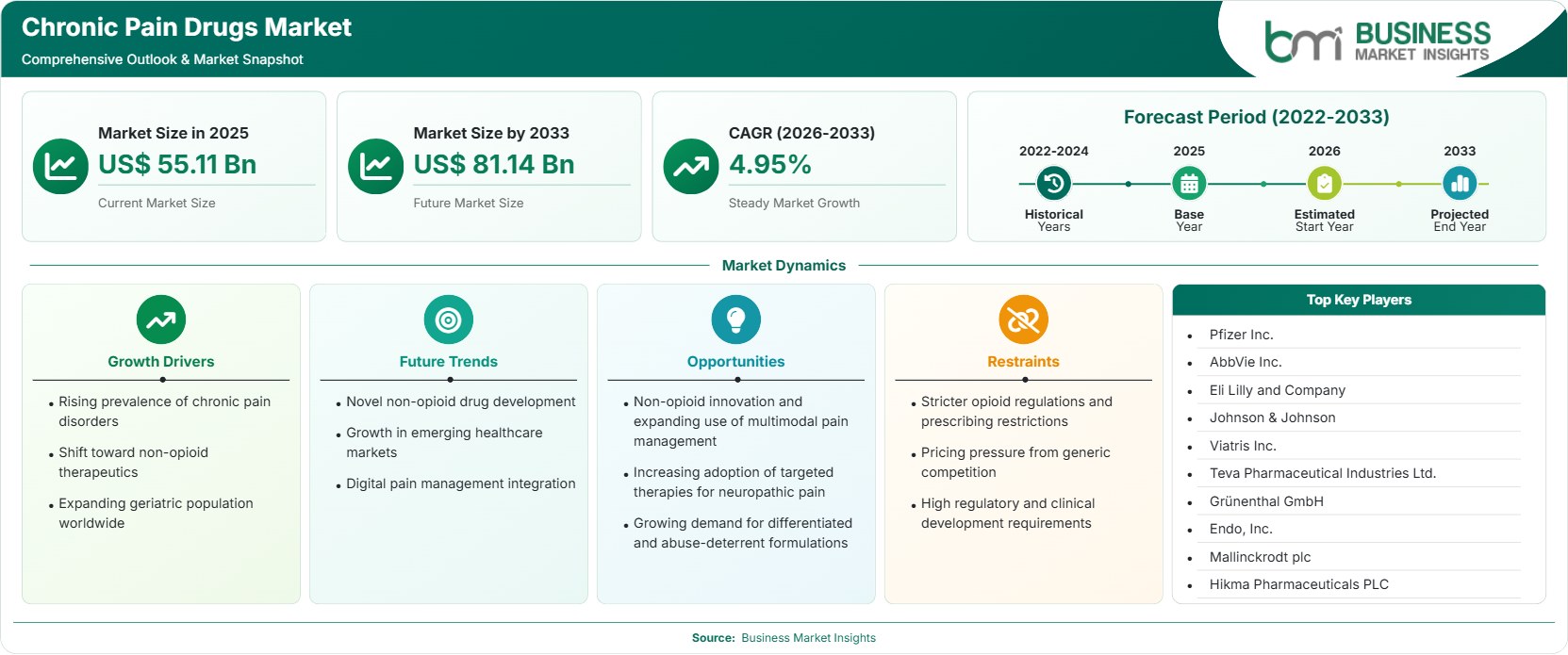
The Chronic Pain Drugs Market size was valued at US$ 55.11 Billion in 2025 and is projected to reach US$ 81.14 Billion by 2033, growing at a CAGR of 4.95% during 2026–2033. Rising chronic musculoskeletal disorders, growing elderly populations, increasing demand for non-opioid therapies, expanding pain management access, and innovation in targeted analgesics continue creating substantial commercial opportunities.

Report Coverage
  • Drug Class: NSAIDs, Opioids, Antidepressants, Anticonvulsants/Gabapentinoids, Topical Analgesics, Local Anesthetics
  • Disease Indication: Musculoskeletal Pain, Neuropathic Pain, Cancer-related Pain, Postsurgical/Post-traumatic Pain, Visceral Pain
  • Age Group: Pediatric, Adult
  • Type: Branded, Generic
  • Route of Administration: Oral, Parenteral
US$ 55.11 Bn Market size in 2025
US$ 81.14 Bn Market Size by 2033
4.95% CAGR, 2026 - 2033
2026-2033 Forecast Period

AI Overview

Chronic Pain Drugs Market Summary

  • North America Region: North America holds 36%–39% share in 2025 and expands at 4.6%–5.0% CAGR during 2026–2033. Strong reimbursement, high chronic pain prevalence, growing adoption of non-opioid medicines, specialty pain clinics, and continued pharmaceutical innovation support demand. The U.S. remains the regional revenue leader through advanced healthcare infrastructure and broad prescription access, registering 4.7%–5.1% CAGR.
  • Fastest Growing Region: Asia Pacific accounts for 24%–27% share in 2025 and advances at 5.8%–6.3% CAGR. Expanding healthcare coverage, improving diagnosis rates, urbanization, aging populations, wider drug access, and increasing investments in pain therapeutics accelerate industry expansion across major economies.
  • Leading Segment: NSAIDs represent 27%–30% share in 2025 and grow at 4.3%–4.8% CAGR. Broad clinical utilization, cost effectiveness, OTC availability, inflammatory pain management benefits, physician familiarity, and extensive distribution networks sustain leadership.
  • High Growth Segment: Neuropathic Pain accounts for 18%–21% share in 2025 while advancing at 5.9%–6.4% CAGR. Rising diabetes prevalence, increasing nerve injury diagnoses, greater awareness, expanded use of gabapentinoids, and novel treatment development support momentum.
  • Key Market Opportunity: Development of non-opioid therapies addressing chronic neuropathic and musculoskeletal conditions offers significant value through improved safety profiles, reduced dependency concerns, enhanced adherence, differentiated pricing, and broader physician acceptance.
  • Major Market Players: Pfizer Inc., AbbVie Inc., Eli Lilly and Company, Johnson & Johnson, Viatris Inc., Teva Pharmaceutical Industries Ltd., Grünenthal GmbH, Endo, Inc., Mallinckrodt plc, Hikma Pharmaceuticals PLC.
Strategic Insights

Chronic Pain Drugs Market: Strategic Insights

Chronic Pain Drugs Market Strategic Framework
FREE PDF
Request your free sample
Request free sample
Stakeholder View

Key Takeaways

  • The value chain increasingly integrates pharmaceutical manufacturers, specialty pharmacies, pain clinics, hospital systems, digital monitoring vendors, and reimbursement agencies to improve treatment continuity.
  • Neuropathic pain therapies and advanced non-opioid analgesics offer the highest commercial upside as healthcare systems seek effective alternatives to opioid-based treatment pathways.
  • Innovation is shifting toward targeted sodium-channel inhibitors, abuse-deterrent formulations, long-acting delivery systems, and personalized pain-management approaches.
  • Asia Pacific offers the strongest investment opportunity due to expanding healthcare coverage, rising chronic disease incidence, and improving pharmaceutical access.
  • Strategic acquisitions and licensing agreements increasingly focus on non-opioid pain programs, pipeline expansion, and specialty therapeutic capabilities.
  • Generic penetration remains strong across mature markets, creating pricing pressure while expanding patient accessibility.
Geographic Outlook

Chronic Pain Drugs Market Regional Highlights

North America Chronic Pain Drugs Market

North America maintains leadership with 36%–39% Chronic Pain Drugs Market share in 2025 and records 4.6%–5.0% CAGR between 2026 and 2033. Strong healthcare expenditure, high prevalence of arthritis and neuropathic disorders, extensive prescription access, and advanced reimbursement systems support regional demand. Regulatory emphasis on reducing opioid dependency is accelerating adoption of alternative therapies. Pharmaceutical innovation remains concentrated within the region, while specialty pain-management networks continue supporting patient access and treatment optimization across major healthcare systems.

  • Expanding use of non-opioid medicines is reshaping prescribing behavior across hospitals and pain clinics.
  • Rising chronic disease prevalence supports long-term demand for pharmacological pain management interventions.
  • Specialty pharmacies improve adherence by coordinating complex treatment regimens and patient support services.
  • Increased investment in innovative analgesics strengthens commercialization opportunities and competitive differentiation.

US Chronic Pain Drugs Market

The United States represents roughly 78%–82% of regional revenue and expands at 4.7%–5.1% CAGR. High chronic pain prevalence, extensive insurance coverage, strong physician access, and robust pharmaceutical research activity support demand. The country leads in novel pain therapy development, clinical trials, and commercialization activity. Regulatory initiatives encouraging safer treatment pathways continue influencing prescribing patterns and accelerating adoption of non-opioid solutions across healthcare settings.

  • Large patient populations with arthritis, neuropathy, and cancer-related pain sustain prescription volumes.
  • Innovation pipelines focus on improved safety profiles and reduced abuse potential.
  • Hospital systems increasingly utilize multimodal pain-management protocols supporting diverse medication classes.
  • Ongoing research partnerships strengthen development of next-generation pain therapeutics.

Europe Chronic Pain Drugs Market

Europe accounts for 27%–30% share in 2025 and is advancing at a 4.4%–4.9% CAGR in the Chronic Pain Drugs Market Forecasts. Universal healthcare coverage, aging populations, and growing awareness of chronic pain management support demand. Germany remains the leading market, while Spain and Eastern European countries demonstrate stronger expansion potential. Regulatory oversight encourages balanced prescribing and wider adoption of alternatives to conventional opioid therapies. Pharmaceutical innovation and generic availability collectively support sustainable market development.

  • Germany leads regional consumption through established healthcare infrastructure and reimbursement systems.
  • Spain demonstrates above-regional growth from improving pain diagnosis and treatment utilization.
  • Non-opioid strategies gain traction among healthcare providers seeking safer long-term management approaches.
  • Generic drug penetration improves affordability and patient access across major markets.

Asia Pacific Chronic Pain Drugs Market

Asia Pacific holds 24%–27% Chronic Pain Drugs Market share in 2025 and registers the fastest 5.8%–6.3% CAGR. Expanding healthcare expenditure, population aging, increasing diabetes incidence, and wider pharmaceutical access drive growth. China represents the largest regional opportunity, while India exhibits the strongest growth trajectory. Healthcare infrastructure development, domestic manufacturing expansion, and growing awareness of chronic pain diagnosis support adoption. Improving access to prescription medicines further strengthens regional prospects.

  • China benefits from large patient populations and expanding healthcare investments.
  • India records accelerated growth supported by rising healthcare access and chronic disease burden.
  • Domestic pharmaceutical production supports affordability and distribution efficiency.
  • Increasing awareness campaigns improve diagnosis and treatment rates for persistent pain conditions.

Rest of World Chronic Pain Drugs Market

Rest of World contributes 8%–11% share in 2025 and grows at 5.0%–5.5% CAGR. South and Central America benefit from healthcare modernization and broader pharmaceutical availability.

Middle East and Africa are supported by improving healthcare infrastructure, expanding hospital networks, and greater investment in specialty care. Brazil leads South American demand while Saudi Arabia demonstrates strong growth potential. Greater disease awareness and healthcare access continue supporting regional expansion.

  • Brazil remains the primary Latin American revenue contributor due to healthcare scale and pharmaceutical access.
  • Saudi Arabia benefits from healthcare investment and specialty treatment adoption.
  • Distribution network improvements increase medicine availability across underserved markets.
  • Governments increasingly focus on chronic disease management and patient quality-of-life outcomes.
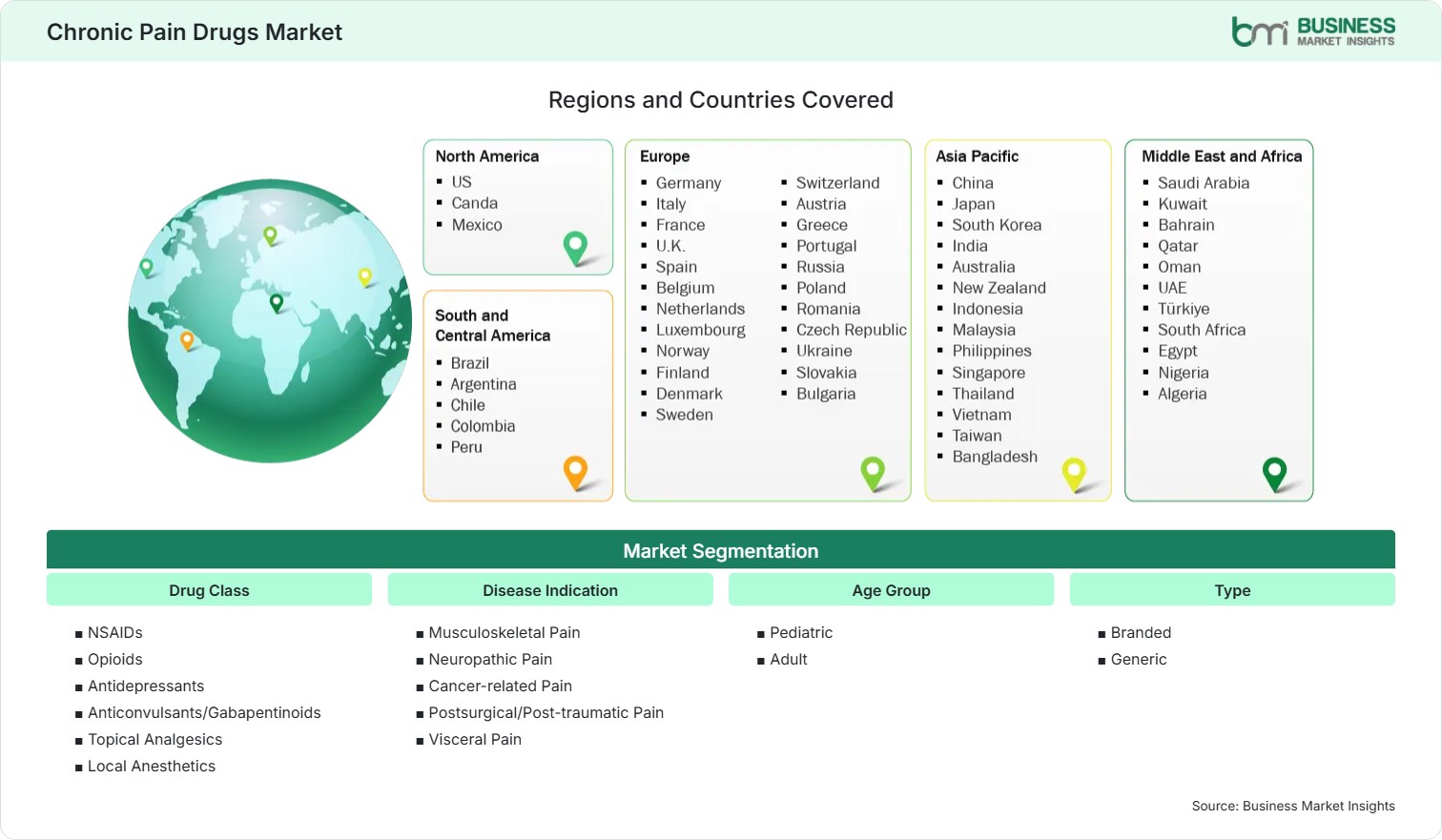
Global Market Geography
FREE PDF
Request your free sample
Request free sample
Segment Analysis

Chronic Pain Drugs Market Segmentation

Drug Class

Drug Class represents a critical industry component, with NSAIDs holding the largest position at 27%–30% share in 2025 and expanding at 4.3%–4.8% CAGR. Chronic Pain Drugs Market scope continues widening through diversified treatment algorithms, increasing non-opioid adoption, and growing demand for safer long-term pain management solutions.

  • NSAIDs: Widely prescribed for inflammatory and musculoskeletal conditions due to effectiveness, familiarity, affordability, and broad availability across prescription and over-the-counter channels.
  • Opioids: Utilized for severe pain management where alternative treatments prove insufficient, particularly in cancer-related and acute high-intensity chronic pain cases.
  • Antidepressants: Important for neuropathic conditions, offering pain modulation benefits and increasing integration into multidisciplinary treatment approaches.
  • Anticonvulsants/Gabapentinoids: Growing use in nerve-related disorders supports adoption, particularly among diabetic neuropathy and postherpetic neuralgia patients.
  • Topical Analgesics: Preferred for localized pain due to favorable safety profiles and reduced systemic exposure.
  • Local Anesthetics: Valued in procedural and specialty pain-management settings through targeted therapeutic action.

Disease Indication

Disease indication segmentation is influenced by rising chronic disease prevalence. Neuropathic pain represents the fastest-expanding category with 18%–21% share and 5.9%–6.4% CAGR. Chronic Pain Drugs Market trends increasingly reflect specialized therapeutic development targeting difficult-to-treat pain conditions.

  • Musculoskeletal Pain: Largest application category driven by arthritis, back pain, and age-related mobility conditions.
  • Neuropathic Pain: Expansion supported by diabetes prevalence and improved diagnosis of nerve-related disorders.
  • Cancer-related Pain: Sustained demand reflects growing oncology treatment volumes and survivorship rates.
  • Postsurgical/Post-traumatic Pain: Increasing surgical procedures support ongoing therapeutic utilization.
  • Visceral Pain: Specialized treatment demand remains linked to gastrointestinal and internal organ disorders.

Age Group

Adult patients dominate the Chronic Pain Drugs Market revenue generation with an estimated share exceeding three-quarters of demand, supported by greater disease prevalence and higher treatment utilization rates. Growth remains steady across both age categories through increasing diagnosis and healthcare accessibility.

  • Pediatric: Focused prescribing standards and specialized formulations support therapeutic use where clinically required.
  • Adult: Broad prevalence of chronic conditions sustains the largest treatment population and prescription volume.

Type

Brand competition and generic accessibility shape market dynamics. Generic medicines continue expanding due to affordability, while branded therapies retain value through innovation and differentiated clinical profiles.

  • Branded: Supported by novel mechanisms of action, intellectual property protection, and premium positioning.
  • Generic: Benefits from cost advantages, broad reimbursement acceptance, and large-scale patient accessibility.

Route of Administration

Oral therapies remain dominant due to convenience, adherence benefits, and established physician familiarity. Parenteral options maintain relevance in acute and specialty settings.

  • Oral: Preferred across chronic treatment pathways owing to convenience and long-term compliance.
  • Parenteral: Utilized for rapid relief, hospital-based care, and specialty interventions.

Distribution Channel

Distribution channels continue evolving alongside specialty care expansion and digital pharmacy adoption. Hospital systems remain essential to treatment initiation and complex pain management.

  • Hospital Pharmacies: Critical for specialty care, inpatient management, and advanced therapeutic administration.
  • Specialty Pharmacies: Enhance patient support, adherence monitoring, and access to complex medications.
  • Drug Stores & Retail Pharmacies: Broad geographic reach supports high-volume prescription fulfillment.
Market Forces

Chronic Pain Drugs Market Dynamics

Key Market Drivers

Rising Prevalence of Chronic Pain Disorders

According to WHO and healthcare organization figures, rising global burdens exist for pain disorders that include musculoskeletal pain, neuropathic pain, and age-related pain. The rising cases of arthritis, diabetes-related neuropathy, survivors of cancer, and obesity-related health conditions have been increasing the number of people who can be treated. Chronic Pain Drugs Market growth remains strongly associated with demographic aging and chronic disease expansion, particularly in developed economies where diagnosis rates are higher and treatment access remains comparatively strong. Population health trends therefore continue creating sustained therapeutic demand.

Shift Toward Non-Opioid Therapeutics

Regulators, physicians, and payers increasingly favor alternatives to opioid medications due to dependency concerns. This trend provides impetus for the investments into NSAIDS, antidepressants, gabapentinoids, topical agents, and new drug delivery systems. The pharmaceutical industry has been intensifying research efforts dedicated to safer and more effective drugs that still achieve good pain control. The increasing acceptance of multimodal therapy approaches facilitates their wider application. The growing acceptance of the risk/benefit ratio concept allows for diversification of treatment modalities.

Expanding Geriatric Population Worldwide

Older adults disproportionately experience osteoarthritis, neuropathy, cancer-related pain, and mobility limitations. With the increase in aging globally, the healthcare industry faces growing needs for the management of chronic symptoms. These needs apply to oral treatments, topical preparations, as well as pain management. Healthcare spending that focuses on the treatment of elderly patients is growing in North America, Europe, and the Asia-Pacific region, hence driving medication use.

Key Market Opportunities

Novel Non-Opioid Drug Development

Investment in sodium-channel inhibitors, targeted neurologic pathways, gene-based pain mechanisms, and precision analgesics is opening new avenues for premium pain therapeutics. The rising problems associated with opioid addiction and regulatory limitations are leading companies to emphasize safer alternatives with better safety profiles. There will be a bright future ahead for those companies that are producing differentiated non-opioid drugs that offer efficacy and better outcomes for patients. In addition, the development of pipelines is also generating new prospects for licensing, collaborations, and acquisitions in the pharma and biotech industries.

Growth in Emerging Healthcare Markets

Asia-Pacific, Latin America, and several Middle Eastern countries continue strengthening healthcare infrastructure, expanding pharmaceutical access, and increasing healthcare expenditures. Increasing penetration of insurance, better diagnostics, increased awareness among physicians, and higher prevalence of chronic illnesses are some of the factors behind the rising uptake rates of treatments. Companies that have local production plants, have a solid distribution network in place, and provide cost-effective solutions can reach huge patient populations. The process of healthcare reform, funding from governments for managing chronic illnesses, and increasing availability of prescription drugs is paving the way for market growth and income generation.

Digital Pain Management Integration

The use of remote monitoring systems, telemedicine solutions, wearables, and patient engagement apps in the pathways for managing chronic pain is becoming commonplace among healthcare practitioners. Using medications together with technological means helps achieve better compliance and personalized therapy. The use of advanced analytics and timely patient information can help to better optimize therapeutic options and discover new options for treatment adjustment sooner. This development will be helpful for the implementation of value-based care delivery models that concentrate on achieving positive results and saving costs. Pharmaceutical companies and other stakeholders in the healthcare industry can benefit from implementing digital pain management solutions.

Market Restraints and Challenges

Stricter Opioid Regulations and Prescribing Restrictions

Factor: Increasing regulatory scrutiny for opioid medicines, involving stricter prescribing rules, increased monitoring programs, and higher standards of compliance. Regulatory authorities in North America and Europe continue to toughen regulations in response to the abuse and risks associated with opioids. This leads to increased compliance obligations for drug manufacturers and healthcare professionals, and reduced flexibility of prescribing in various situations.

Impact: Reduced prescribing flexibility for manufacturers and healthcare providers. Regulatory agencies across North America and Europe have implemented stricter prescribing guidelines, enhanced monitoring programs, and tighter compliance requirements to address opioid misuse and addiction risks. These policies have led to greater bureaucracy for health professionals, while at the same time reducing opioid use in many clinical environments. Drug firms whose portfolio includes large amounts of opioids encounter slower drug prescription rates, increased regulatory expense, and increased oversight during the approval process. Consequently, pharmaceutical firms are increasingly looking towards alternative treatment options and new pain management drugs.

Pricing Pressure from Generic Competition

Factor: Expanding availability of lower-cost generic alternatives across major therapeutic classes, including nonsteroidal anti-inflammatory drugs (NSAIDs), antidepressants, and certain opioid medications. Healthcare providers, insurers, and reimbursement bodies increasingly emphasize cost-efficient treatment options, encouraging the use of generics whenever clinically appropriate. This trend intensifies competition for established branded products.

Impact: Product margin pressure among established brands. With the growing availability of generic pain relievers, the level of competition has become much fiercer within key therapeutic classes such as nonsteroidal anti-inflammatory drugs (NSAIDs), antidepressants, and some types of opioids. The emphasis on cost-efficient therapeutic solutions by healthcare providers, insurers, and reimbursement bodies leads to the increased promotion of generics whenever possible. Although this development is positive for patients, it negatively affects the sales of branded medications and contributes to pricing erosion. Companies address this challenge by developing differentiated products, improved formulations, indications for pain specialties, and innovative treatments.

Company Analysis

Competitive Landscape

Chronic Pain Drugs Market analysis indicates competition between diversified pharmaceutical leaders, specialty pain companies, and generic medicine manufacturers.

Company Name

Overview

Products and Services relevant to this market

Pfizer Inc.

Global biopharmaceutical company with extensive pain and inflammation therapeutic capabilities.

Analgesics, anti-inflammatory medicines, specialty therapies, research programs.

AbbVie Inc.

Major pharmaceutical innovator with broad immunology and neuroscience expertise.

Pain management products, specialty medicines, clinical development programs.

Eli Lilly and Company

Research-focused pharmaceutical company expanding non-opioid pain capabilities.

Neurology therapies, innovative analgesic pipeline assets.

Johnson & Johnson

Diversified healthcare organization with significant pharmaceutical presence.

Pain-related medicines, consumer healthcare products, specialty therapies.

Viatris Inc.

Global provider of branded and generic medicines.

Generic analgesics, pain-management pharmaceuticals, distribution capabilities.

Teva Pharmaceutical Industries Ltd.

Leading generic manufacturer with global therapeutic reach.

Generic pain medications, specialty pharmaceutical products.

Grünenthal GmbH

Specialist company focused on pain management innovation.

Prescription analgesics, pain-care solutions, research platforms.

Endo, Inc.

Specialty pharmaceutical company active in pain-management categories.

Branded and generic pain therapeutics, injectable products.

Mallinckrodt plc

Specialty pharmaceutical provider with hospital-focused capabilities.

Pain-control medicines, controlled substances portfolio.

Hikma Pharmaceuticals PLC

Global generic and injectable medicines manufacturer.

Injectable analgesics, generic pain-management products.

Trust & Transparency

Research Methodology

The market analysis combines proprietary research with secondary data from government agencies, company disclosures, regulatory filings, industry databases and expert interviews. Market estimates are validated through data triangulation, cross-market benchmarking and analyst review.

View Full Research Methodology

Questions Answered

Frequently Asked Questions

Why are non-opioid therapies gaining attention?

Healthcare systems increasingly prioritize therapies with lower dependency risks while maintaining pain-control effectiveness, encouraging investment in innovative treatment alternatives.

What does a Chronic Pain Drugs Market Report typically evaluate?

It generally evaluates competitive positioning, therapeutic segments, regulatory environment, regional demand patterns, innovation pipelines, pricing trends, and long-term commercial prospects.

Which region offers the strongest future expansion potential?

Asia Pacific presents the strongest future opportunity due to expanding healthcare infrastructure, increasing chronic disease incidence, and improving pharmaceutical accessibility.

What is the most widely used drug class in this industry?

NSAIDs remain the leading class because of broad applicability, cost effectiveness, physician familiarity, and availability in both prescription and over-the-counter formats.

What factors are driving demand for chronic pain medications?

Growing prevalence of arthritis, neuropathic disorders, cancer-related pain, aging populations, and improving healthcare access are the principal growth factors supporting consumption worldwide.

Access the Full Chronic Pain Drugs Market Report

Get segment-level forecasts, regional estimates, competitive benchmarking, company profiles and downloadable Excel datasets.

Access the full Chronic Pain Drugs Market Report
350 pages PDF & Excel | 2026-08-27