
Hemorrhagic Stroke Treatment Market Outlook: Size, Share, Trends, Growth Analysis, Competitive Landscape & Forecast, 2026-2033

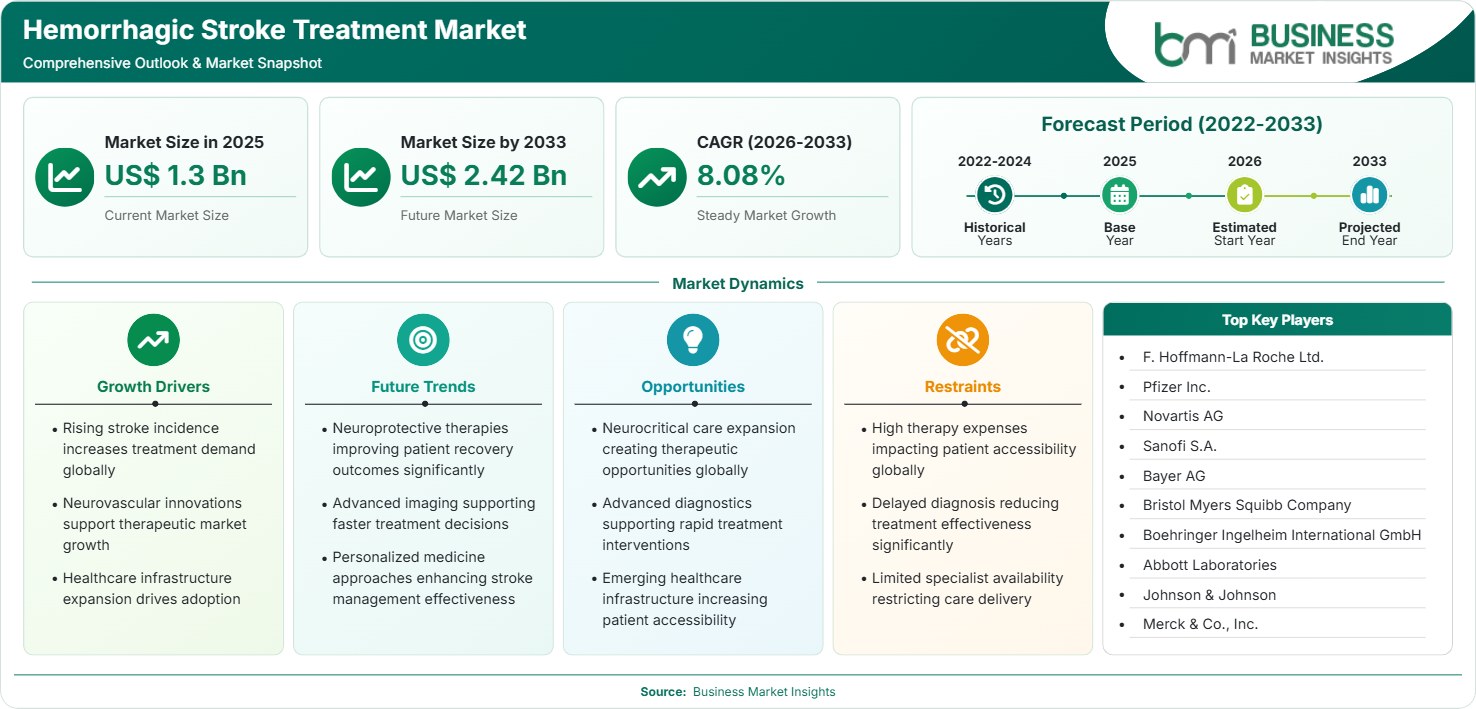
The Hemorrhagic Stroke Treatment Market size was valued at US$ 1.3 Billion in 2025 and is projected to reach US$ 2.42 Billion by 2033, growing at a CAGR of 8.08% during 2026–2033, supported by rising stroke incidence, expanding neurocritical care infrastructure, increasing adoption of targeted therapeutics, faster diagnosis pathways, and growing investments in advanced cerebrovascular treatment technologies.

Report Coverage
  • Drug Type: Antihypertensive, Anti-Coagulants, Anti-Convulsants, Others
  • Distribution Channel: Hospital Pharmacies, Retail Pharmacies, Online Pharmacies
US$ 1.3 Bn Market size in 2025
US$ 2.42 Bn Market Size by 2033
8.08% CAGR, 2026 - 2033
2026-2033 Forecast Period

AI Overview

Hemorrhagic Stroke Treatment Market Summary

  • North America Region: North America holds a market share of 38%–41% in 2025, growing with a CAGR of 7.4%–7.9% during 2026–2033. Growth is supported by advanced stroke centers, strong reimbursement frameworks, wider access to neuroimaging technologies, increased specialist availability, rapid emergency response systems, and expanding adoption of evidence-based intracerebral hemorrhage management protocols.
  • Fastest Growing Region: Asia Pacific accounts for 24%–27% market share in 2025 and is forecast to expand at a CAGR of 9.4%–10.0% during 2026–2033. Expansion is driven by healthcare infrastructure development, increasing stroke burden, greater treatment accessibility, public screening initiatives, expanding insurance coverage, rising specialist training programs, and stronger investments in tertiary neurology facilities.
  • Leading Segment: Antihypertensive drugs command 34%–37% market share in 2025 and are projected to grow at a CAGR of 7.8%–8.4% during 2026–2033. Demand remains supported by blood pressure stabilization requirements, established clinical guidelines, broad physician acceptance, recurrent utilization across acute care settings, and continued integration within comprehensive stroke treatment pathways.
  • High Growth Segment: Online pharmacies hold 11%–14% market share in 2025 and are anticipated to record a CAGR of 10.2%–10.8% during 2026–2033. Growth stems from digital prescription fulfillment, expanding telemedicine adoption, improved medicine accessibility, enhanced patient convenience, increasing chronic care monitoring, and broader penetration of healthcare e-commerce platforms globally.
  • Key Market Opportunity: Expansion of specialized stroke treatment programs across middle-income countries creates substantial opportunity through improved diagnosis rates, broader therapeutic access, enhanced emergency care coordination, increased healthcare spending, and stronger neurological service availability.
  • Major Market Players: F. Hoffmann-La Roche Ltd., Pfizer Inc., Novartis AG, Sanofi S.A., Bayer AG, Bristol Myers Squibb Company, Boehringer Ingelheim International GmbH, Abbott Laboratories, Johnson & Johnson, Merck & Co., Inc.
Strategic Insights

Hemorrhagic Stroke Treatment Market: Strategic Insights

Hemorrhagic Stroke Treatment Market Strategic Framework
FREE PDF
Request your free sample
Request free sample
Stakeholder View

Key Takeaways

  • The value chain is increasingly integrated with pharma manufacturers working alongside diagnostic imaging providers, emergency care networks, and tertiary hospitals to improve the speed of treatment and patient outcomes across the acute hemorrhagic stroke management pathway.
  • Significant growth potential exists in tertiary hospitals and specialized neurological centers where demand for evidence-based blood pressure control therapies, seizure management products, and intensive neurocritical care solutions continues to accelerate.
  • Innovation is moving in the direction of precision monitoring, AI-assisted diagnostic pathways, biomarker work, and therapies aimed at reducing neurological damage and improving outcomes in the post-stroke recovery phase for high-risk patients.
  • Asia Pacific is a very strong investment case. The drivers are clearly there in the form of rising healthcare expenditure, a huge pool of patients who are currently untreated, the expansion of the neurology infrastructure, and the increasing number of government initiatives aimed at stroke prevention and improved access to treatment.
  • Strategic partnerships, licensing deals and targeted acquisitions are all on the rise as companies look to build up their neurological portfolios, extend their geographical reach and improve their positioning in the high growth cerebrovascular therapeutic areas.
  • Long-term competitive advantage is going to go to the organizations that can combine pharma innovation with digital health, with real-world evidence generation and the ability to commercialize rapidly within the specific stroke ecosystem.
Geographic Outlook

Hemorrhagic Stroke Treatment Market Regional Highlights

North America Hemorrhagic Stroke Treatment Market

North America represents the largest regional market, accounting for approximately 38%–41% share in 2025 and advancing at a 7.4%–7.9% CAGR during 2026–2033. The Hemorrhagic Stroke Treatment Market share remains highest in this region due to strong healthcare expenditure and widespread access to comprehensive neurocritical care services.

  • High utilization of CT and MRI imaging facilitates quicker diagnosis and hence faster initiation of treatment, leading to improved patient management and, in turn, greater demand for the pharmaceuticals used in the intensive neurological care setting.
  • Academic medical centers are still the ones leading the way in clinical research into therapies for hemorrhagic stroke, which in turn is driving the rapid uptake of novel treatment strategies and evidence-based care pathways across the wider healthcare system.
  • The aging of the population is leading to an increase in the incidence of vascular disease and stroke risk factors, which in turn is resulting in greater long-term treatment needs and greater demand for specialist neurological services across the region.
  • Investment in tele-neurology programs is improving specialist access in rural areas, improving the treatment pathway and enabling greater use of the more sophisticated stroke management solutions.
  • Strong reimbursement mechanisms will enable providers to deliver the full range of care models and will support the consistent adoption of both pharmacological and supportive treatment strategies.

US Hemorrhagic Stroke Treatment Market

The United States accounts for approximately 82%–85% of the North American market in 2025 and is projected to grow at a 7.5%–8.0% CAGR through 2033. Market growth is supported by extensive stroke center networks, strong clinical guideline adherence, high healthcare spending, and robust pharmaceutical commercialization capabilities.

  • Comprehensive stroke centers are expanding their emergency treatment capabilities with increased use of advanced neurological monitoring and more sophisticated intensive care management.
  • Higher prevalence of hypertension and CVD risk factors leads to continued demand for treatment, and this in turn drives investment in both preventative and acute care programs.
  • Ongoing clinical trials looking at novel therapeutic approaches may lead to further treatment options and improved long-term neurological outcomes for the relevant patient groups.
  • Growing levels of AI integration into the diagnostic workflow enable earlier detection, faster decision-making, and better care coordination across the entire treatment pathway.

Europe Hemorrhagic Stroke Treatment Market

Europe accounts for approximately 27%–30% of the Hemorrhagic Stroke Treatment Market share in 2025 and is expected to register a 7.1%–7.7% CAGR during 2026–2033. Strong public healthcare systems, expanding stroke awareness programs, and increasing adoption of multidisciplinary treatment pathways support regional demand.

  • Germany has regional leadership on the basis of its excellent hospital infrastructure, widespread availability of stroke centers, and a high level of adoption of the evidence-based neurological treatment pathways, which in turn leads to consistent use of acute care therapies.
  • France is continuing to invest in its national stroke strategy with a view to improving access to treatment via better emergency care networks, specialist training and improved coordination between primary and tertiary care.
  • Spain has one of the fastest regional growth tracks, underpinned by healthcare digitalization, better access to diagnostics and increased investment in programs for the management of neurological disease.
  • Central and Eastern Europe are investing in the upgrading of their healthcare infrastructure, which is creating opportunities for pharma suppliers and healthcare providers looking to access previously underserved patient populations.
  • Collaborative clinical research across European institutions is underpinning therapeutic innovation and enabling the faster uptake of novel treatment approaches across the European healthcare landscape.

Asia Pacific Hemorrhagic Stroke Treatment Market

Asia Pacific represents approximately 24%–27% of global Hemorrhagic Stroke Treatment Market revenue in 2025 and is projected to expand at a 9.4%–10.0% CAGR during 2026–2033, making it the fastest-growing regional market. Rising prevalence of hypertension, increasing healthcare expenditure, and expanding access to neurological care drive demand.

  • China is by far the biggest contributor in the region as a result of its huge patient base, the increasing level of investment in healthcare, and the very rapid expansion of high-end neurological centers in the major cities.
  • India is amongst the fastest growing. That growth is being driven by improved healthcare infrastructure, greater awareness of the signs and symptoms of stroke and increased access to specialist neurology services.
  • Japan is still very much focused on early diagnosis and comprehensive care pathways, underpinned by a heavy investment in technology and one of the largest aging populations in the world.
  • SE Asian countries are increasing their healthcare expenditure and public health efforts to reduce the burden of cerebrovascular disease in the rapidly expanding urban populations.
  • Private healthcare providers are increasingly investing in dedicated neuroscience centers, which in turn creates further opportunities for both advanced treatment products and associated therapeutic services.

Rest of World Hemorrhagic Stroke Treatment Market

Rest of World contributes approximately 8%–10% Hemorrhagic Stroke Treatment Market share in 2025 and is anticipated to expand at an 8.3%–8.9% CAGR during 2026–2033. South and Central America benefit from expanding specialist care access and healthcare modernization programs.

  • Brazil is in an overall leadership position due to its large patient population, improved access to stroke centers, and increased investment in tertiary care infrastructure to support the delivery of advanced neurological care.
  • Mexico is still going ahead with expanding its healthcare coverage and diagnostic access, which is creating the right conditions for wider use of pharmacological treatment.
  • Saudi Arabia is showing strong growth, underpinned by its healthcare modernization program, with a significant expansion in the number of specialists and substantial investment in state-of-the-art medical infrastructure.
  • The UAE is building up its neurological care capacity via investment in specialist hospitals, digital health platforms and international healthcare partnerships.
  • A number of African countries are working to improve their capacity to manage stroke through public health partnerships, physician education and improved access to essential treatment products.
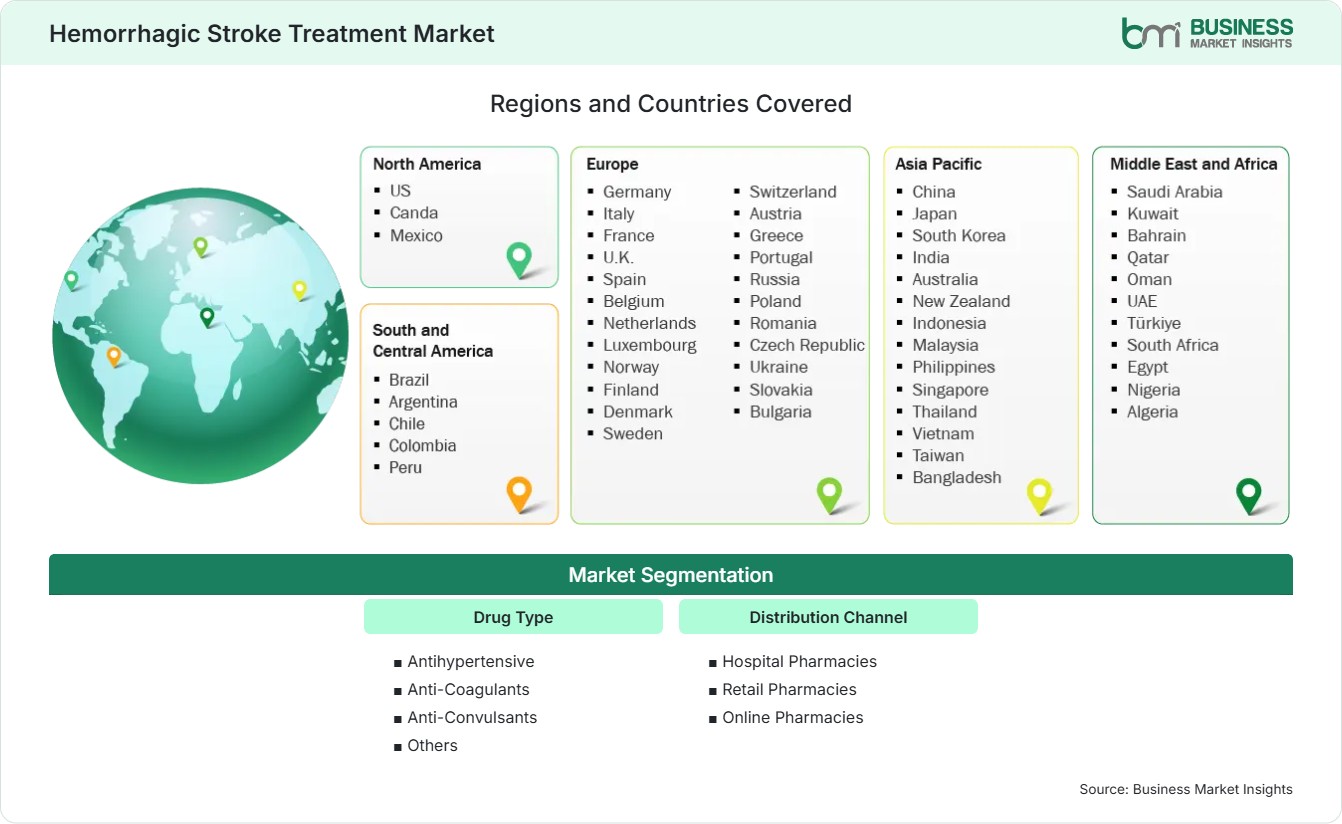
Global Market Geography
FREE PDF
Request your free sample
Request free sample
Segment Analysis

Hemorrhagic Stroke Treatment Market Segmentation

Drug Type

Drug Type represents the largest category within the industry, accounting for approximately 60%–63% market share in 2025 and expanding at a 7.9%–8.5% CAGR during 2026–2033. The Hemorrhagic Stroke Treatment Market scope continues to expand as clinical guidelines increasingly support comprehensive medication-based management within acute and post-acute neurological care settings.

  • Antihypertensive: Antihypertensive therapies remain central to acute management by rapidly controlling elevated blood pressure, reducing rebleeding risks, supporting neurological stabilization, and aligning with established clinical treatment recommendations.
  • Anticoagulants: Anticoagulant management solutions are utilized selectively in complex patient groups requiring thromboembolic risk assessment, with treatment strategies increasingly guided by personalized clinical decision-making frameworks.
  • Anti-convulsants: Anti-convulsant medications support seizure prevention and management among high-risk patients, helping reduce neurological complications while improving overall treatment outcomes within critical care environments.

Distribution Channel

Distribution channels account for roughly 37%–40% market share in 2025 and are anticipated to achieve an 8.6%–9.2% CAGR during 2026–2033. Current Hemorrhagic Stroke Treatment Market trends indicate growing integration of omni-channel pharmaceutical distribution models designed to improve continuity of care and treatment compliance across diverse healthcare environments.

  • Hospital Pharmacies: Hospital pharmacies maintain strong importance due to acute stroke treatment requirements, immediate medication availability, specialist supervision, and direct integration with emergency and intensive care workflows.
  • Retail Pharmacies: Retail pharmacies support ongoing prescription fulfillment and post-discharge treatment continuity, benefiting from established healthcare accessibility and trusted community-based pharmaceutical service networks.
  • Online Pharmacies: Online pharmacies are expanding rapidly through digital prescription services, home delivery capabilities, telemedicine integration, and enhanced convenience for caregivers managing long-term medication requirements.
Market Forces

Hemorrhagic Stroke Treatment Market Dynamics

Key Market Drivers

Rising Global Burden of Hypertension and Cerebrovascular Disease

Hypertension remains the most important modifiable risk factor associated with intracerebral hemorrhage, creating sustained demand for acute intervention and long-term neurological management. According to WHO estimates, more than one billion adults globally live with hypertension, while population aging continues to increase stroke susceptibility across developed and emerging economies. The Hemorrhagic Stroke Treatment Market growth is directly supported by expanding patient volumes requiring emergency treatment, intensive care monitoring, and follow-up therapies.

Expansion of Specialized Stroke Centers and Neurocritical Care Units

The ever-increasing number of certified stroke centers around the world is improving access to rapid diagnosis and evidence-based treatment. Hospitals are investing in advanced neuroimaging, dedicated neurointensive care units, and multidisciplinary care pathways, which in turn are improving outcomes for patients with hemorrhagic stroke. The faster you can get treatment, the fewer complications you will have and the greater the demand for antihypertensives, anti-epileptics, and supportive care.

Advancements in Diagnostic and Monitoring Technologies

Modern imaging platforms, artificial intelligence-assisted diagnostics, and remote patient monitoring technologies are transforming neurological treatment workflows. Faster identification of hemorrhagic events enables clinicians to implement targeted interventions with greater confidence and accuracy. Healthcare providers are increasingly integrating digital health tools into emergency departments and stroke care pathways, accelerating decision-making and improving resource utilization. The Hemorrhagic Stroke Treatment Market trends increasingly reflect demand for integrated care ecosystems where pharmaceuticals, diagnostics, and digital solutions work together.

Key Market Opportunities

Expansion of Advanced Stroke Care in Emerging Markets

Large patient populations across Asia, Latin America, and parts of the Middle East remain underserved by specialized neurological care infrastructure. Governments are increasing healthcare expenditure to strengthen stroke treatment capabilities through new hospitals, specialist training programs, and expanded diagnostic capacity. Hemorrhagic Stroke Treatment Market Forecasts indicate that emerging economies will contribute a growing proportion of future revenue growth as healthcare accessibility improves. Early market participation can provide strategic advantages for manufacturers seeking long-term expansion opportunities within rapidly developing healthcare systems.

Development of Precision and Personalized Treatment Approaches

Growing understanding of stroke pathophysiology is encouraging development of therapies tailored to individual patient characteristics and clinical risk profiles. Precision medicine strategies may improve treatment effectiveness while reducing complications associated with generalized intervention approaches. Advances in biomarker identification, genetic profiling, and digital patient monitoring create Hemorrhagic Stroke Treatment Market opportunities for highly targeted therapeutic pathways. Pharmaceutical companies investing in specialized neurological research can differentiate product portfolios and enhance clinical value propositions.

Integration of Telemedicine and Digital Health Platforms

Telemedicine is clearly a major opportunity to improve access to and continuity of care. The ability to conduct digital consultations enables much quicker neurological assessments in remote and rural areas where specialist services are scarce. The ability to integrate with electronic health records and remote monitoring tools allows for much more effective management of the patient throughout their recovery pathway. Digital health is increasingly being seen by healthcare organizations as a way of delivering more efficient care at a lower cost.

Market Restraints and Challenges

High Treatment Costs and Uneven Healthcare Access

Factor: High-level neurological care (imaging, intensive care, specialist input, length of stay, etc.) is inherently expensive. Impact: Cost pressures will inevitably lead to reduced access to care, particularly in lower-income health systems and among underinsured populations. Even with improvements in the infrastructure of care, many areas will still be constrained by funding, and this will limit access to full stroke care.

Complex Clinical Management and Outcome Uncertainty

Hemorrhagic stroke is a very complex clinical entity with outcomes being dictated by the site of the bleed, the severity of the bleed, the age of the patient, and their underlying comorbidities. The variable response to treatment makes the clinical decision very difficult and complicates the implementation of any standardized approach to treatment. Many patients will require a multi-disciplinary approach to care with a significant period of follow-up.

Company Analysis

Competitive Landscape

The competitive environment is characterized by pharmaceutical innovators, neurological treatment specialists, and diversified healthcare companies investing in therapeutic development and commercialization. Current Hemorrhagic Stroke Treatment Market analysis indicates increasing emphasis on cerebrovascular disease management, strategic partnerships, and neurological portfolio expansion.

Company Name

Overview

Products and Services relevant to this market

F. Hoffmann-La Roche Ltd.

Global biopharmaceutical leader with significant neuroscience research capabilities and extensive hospital-focused commercial networks.

Neurological therapeutics, diagnostics, biomarker solutions, hospital medicines, and research initiatives supporting cerebrovascular disease management.

Pfizer Inc.

Major pharmaceutical company with broad cardiovascular and hospital care expertise across global healthcare markets.

Acute care drugs, cardiovascular therapies, specialty pharmaceuticals, and supportive treatment products relevant to neurological patients.

Novartis AG

Multinational healthcare company focused on innovative medicines and advanced therapeutic development programs.

Cardiovascular treatments, specialty medicines, neurological research programs, and hospital-focused therapeutic solutions.

Sanofi S.A.

Diversified healthcare company with strong prescription medicine portfolio and global commercial presence.

Prescription pharmaceuticals, specialty care products, cardiovascular therapies, and patient support programs.

Bayer AG

Global life sciences company with extensive cardiovascular and hospital treatment expertise.

Cardiovascular medicines, prescription therapeutics, research programs, and healthcare services applicable to stroke management.

Bristol Myers Squibb Company

Research-driven biopharmaceutical organization specializing in innovative treatment development and commercialization.

Specialty pharmaceuticals, cardiovascular products, clinical research programs, and hospital treatment solutions.

Boehringer Ingelheim International GmbH

Privately held pharmaceutical company with established presence in cardiovascular medicine and research.

Cardiovascular therapies, prescription medicines, physician support programs, and healthcare innovation initiatives.

Abbott Laboratories

Healthcare technology provider with broad diagnostic and medical device capabilities.

Diagnostic systems, patient monitoring technologies, laboratory services, and hospital-based healthcare solutions.

Johnson & Johnson

Diversified healthcare corporation operating across pharmaceuticals and medical technology markets.

Medical devices, specialty medicines, surgical technologies, and healthcare support services.

Merck & Co., Inc.

Research-based pharmaceutical company with global commercial and development capabilities.

Prescription medicines, specialty therapeutics, research collaborations, and healthcare innovation programs.

Trust & Transparency

Research Methodology

The market analysis combines proprietary research with secondary data from government agencies, company disclosures, regulatory filings, industry databases and expert interviews. Market estimates are validated through data triangulation, cross-market benchmarking and analyst review.

View Full Research Methodology

Questions Answered

Frequently Asked Questions

What does the Hemorrhagic Stroke Treatment Market Report help stakeholders evaluate?

The Hemorrhagic Stroke Treatment Market Report provides insight into regional opportunities, competitive positioning, segment performance, investment priorities, technology developments, and long-term strategic growth prospects across the industry.

What is the role of hospital pharmacies in treatment delivery?

Hospital pharmacies play a central role because hemorrhagic stroke often requires immediate access to critical medications under specialist supervision within emergency departments and intensive care units.

How are digital technologies changing stroke treatment pathways?

Artificial intelligence, telemedicine platforms, advanced imaging software, and remote patient monitoring solutions are enabling faster diagnosis, improved treatment decisions, better patient management, and enhanced continuity of neurological care.

Which region offers the strongest future growth potential?

Asia Pacific offers the strongest growth potential due to expanding healthcare expenditure, rising awareness, increasing stroke incidence, broader insurance coverage, and ongoing investments in specialized neurological treatment infrastructure.

What factors most strongly influence demand for hemorrhagic stroke treatments?

Demand is primarily influenced by hypertension prevalence, aging demographics, healthcare infrastructure quality, specialist availability, emergency response efficiency, and access to advanced diagnostic imaging technologies capable of supporting rapid intervention.

Access the Full Hemorrhagic Stroke Treatment Market Report

Get segment-level forecasts, regional estimates, competitive benchmarking, company profiles and downloadable Excel datasets.

Access the full Hemorrhagic Stroke Treatment Market Report
350 pages PDF & Excel | 2026-11-10
Similar Research

Related Market Reports