Rising Prevalence of Cardiovascular Diseases
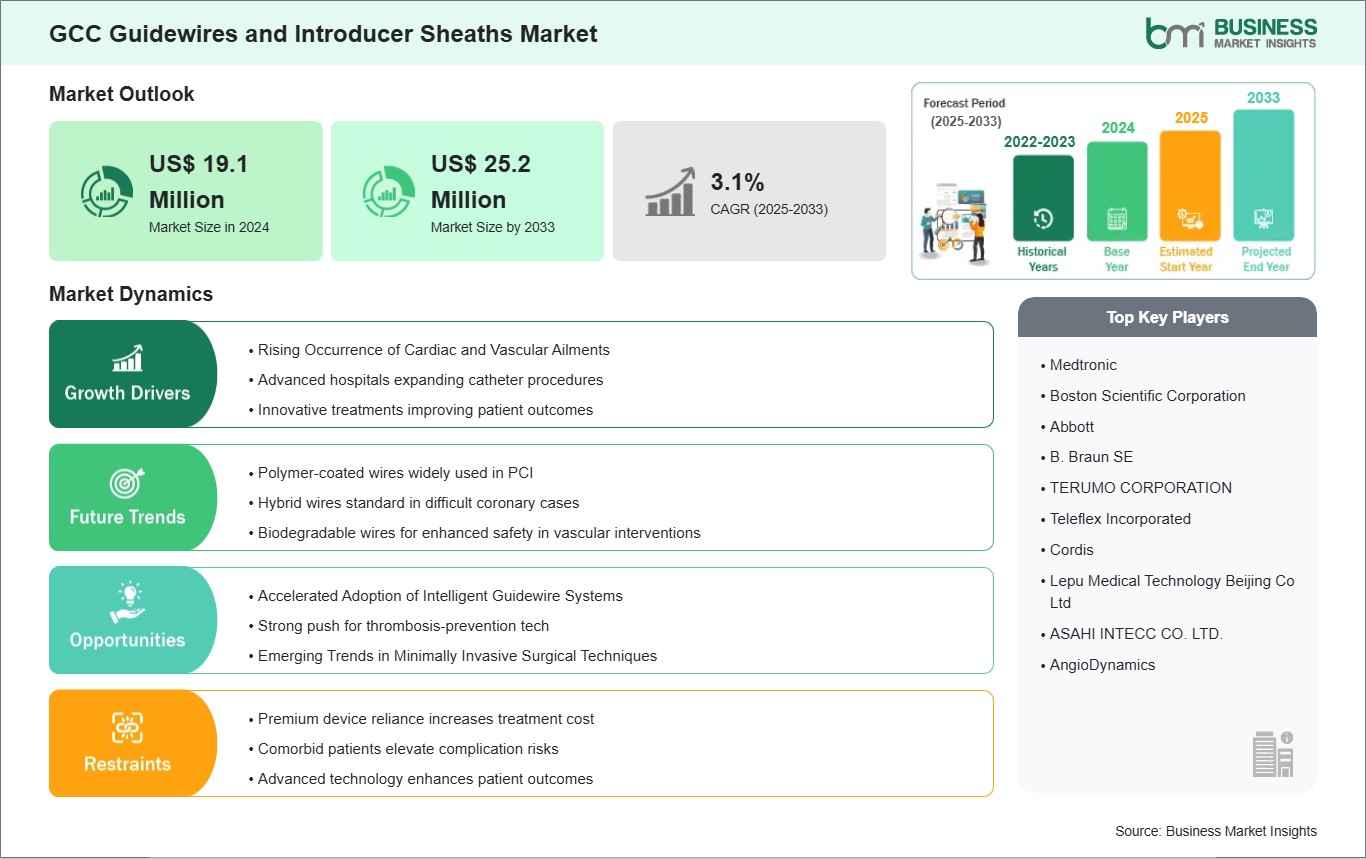
The Gulf Cooperation Council (GCC) countries are facing one of the world's fastest-growing burdens of cardiovascular diseases, largely driven by high rates of diabetes, obesity, and sedentary lifestyles. Saudi Arabia, the UAE, and Kuwait report high prevalence of coronary artery disease and hypertension, creating sustained demand for interventional cardiology services. This health profile is pushing hospitals to rely more heavily on catheter-based procedures, where guidewires and introducer sheaths are essential for safe and efficient vascular access.
GCC governments are responding by expanding specialized cardiac centers and investing heavily in advanced hospital infrastructure. Flagship institutions in Riyadh, Dubai, and Doha have increased the number of catheterization laboratories and hybrid operating rooms. These upgrades support a growing volume of angiography, angioplasty, and structural heart procedures, increasing the consumption of guidewires and introducer sheaths across the region.
The region's strong private healthcare sector is attracting patients seeking high-quality, minimally invasive cardiac care. Medical tourism hubs such as the UAE are promoting advanced interventional treatments with shorter recovery times and improved outcomes. As cardiovascular diseases continue to rise, the combination of public investment and private sector growth will sustain strong demand for guidewires and introducer sheaths throughout the GCC market.
Growing Adoption of Sensor-Enabled Guidewires
The GCC is emerging as a premium market for sensor-enabled guidewires, supported by its focus on technologically advanced healthcare. These devices provide real-time physiological data, helping cardiologists assess lesion severity and optimize treatment strategies during interventions. Leading cardiac centers in Saudi Arabia, the UAE, and Qatar are integrating sensor-enabled guidewires into complex coronary and peripheral procedures.
The adoption of these advanced devices aligns well with the region's emphasis on high-quality, outcome-driven care. Sensor-enabled guidewires allow physicians to make precise, data-based decisions, reducing unnecessary stenting and improving patient safety. In a region where healthcare systems prioritize efficiency and premium clinical outcomes, these capabilities offer strong clinical and economic value to hospitals.
MedTech companies view the GCC as a strategic launch market for advanced cardiovascular technologies. Through direct partnerships, distributor networks, and physician training programs, these companies are accelerating awareness and availability of sensor-enabled guidewires. As the GCC continues to modernize its cardiac care ecosystem, the adoption of these devices is expected to drive innovation and high-value growth in the guidewires and introducer sheaths market.