Key Market Drivers
Government Incentives Supporting Agricultural Electrification
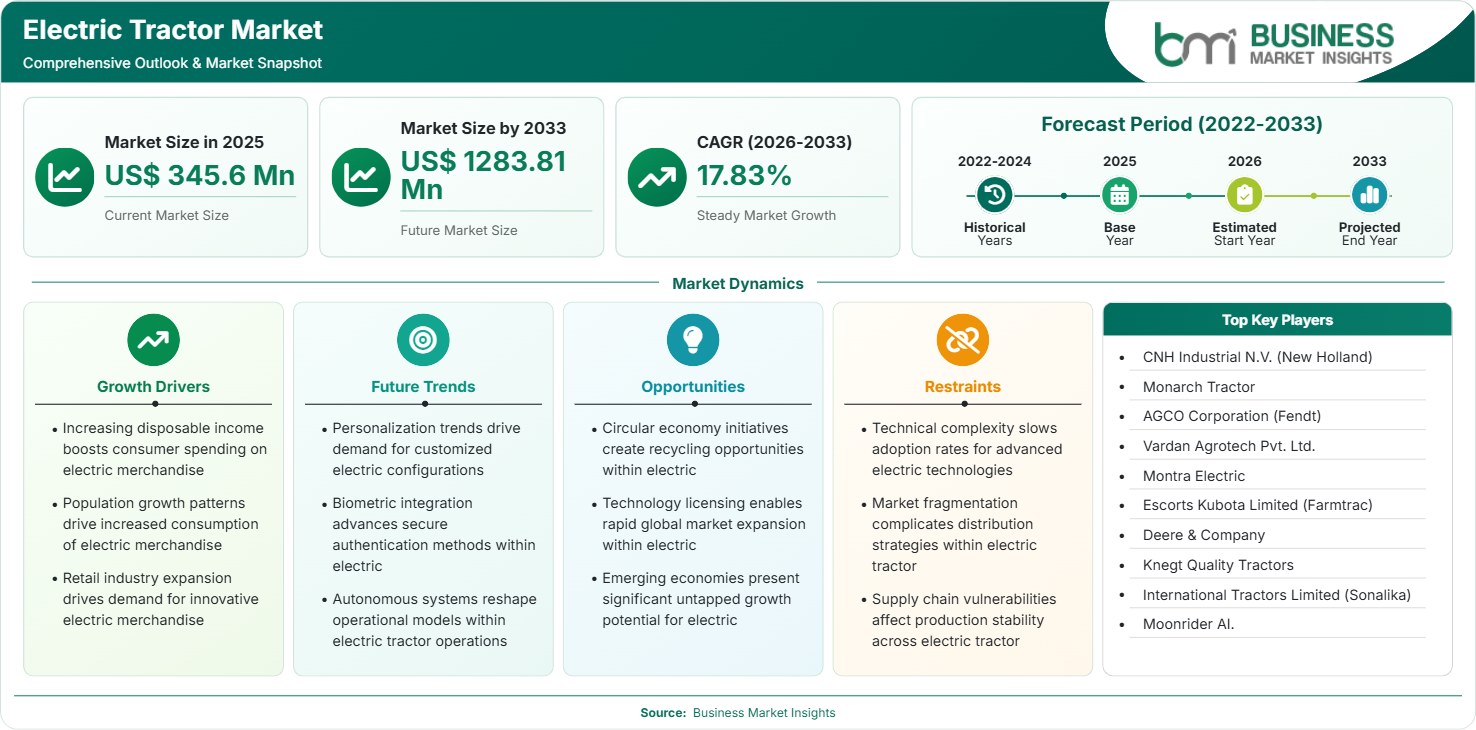
Programs designed to decrease carbon footprint in agriculture on the continents of North America, Europe, and Asia are increasing the rate of equipment electrification. More financial support for clean energy is provided by the government. The Electric Tractor Market growth gets enhanced by subsidies which lower the barrier of high capital costs in switching to machines that run on electricity in lieu of diesel fuel. Some of the countries in Europe have incentives that favor the use of low-emission farm machinery, while the states of the United States have been promoting the use of electrified farming. The Indian government has similarly increased its support for clean transportation and farming.
Advancements in Autonomous and Precision Farming Technologies
Rapid integration of artificial intelligence, machine vision, connectivity platforms, and autonomous navigation systems is transforming agricultural machinery. Manufacturers increasingly combine electrification with advanced automation capabilities to improve productivity and labor efficiency. Electric Tractor Market trends show that there is an increasing demand for intelligent devices that can carry out repetitive jobs with little interference from humans. Autonomous tractors will help in the optimization of the operations in the field, reduce reliance on human labor, and increase accuracy in planting, spraying, and harvesting activities. With better sensors, cloud computing analysis, and real-time monitoring of operations, efficient use of resources and reduction in operational costs is possible.
Rising Fuel Cost Volatility and Farm Operating Expenses
Farm operators increasingly seek alternatives that reduce exposure to diesel price fluctuations and maintenance expenses. An electric powertrain has fewer moving parts, needs less maintenance, and is more efficient at energy conversion than a traditional engine. More studies and real-world case studies are emerging to show the cost savings associated with the use of electric agricultural machinery. In weighing total life-cycle costs for a piece of farm equipment, farmers are becoming more concerned with overall costs of ownership instead of just the purchase price. Awareness about energy independence, which is also possible using on-farm power generation through renewable sources, is another factor contributing to the popularity of electric farm machines.
Key Market Opportunities
Expansion of Autonomous Specialty Crop Farming
The production of specialty crops is a great chance to commercialize for manufacturers. For instance, orchards and vineyards, as well as other valuable horticulture enterprises, need compact machines that would function in limited areas. Autonomous electric tractors can do monotonous work with more accuracy than people. Electric Tractor Market Forecasts show promising investment opportunities in the realm of specialty farming that offer economic viability through sustainable practices, efficiencies, and automation. Shortage of labor in agricultural zones leads to an interest in the implementation of intelligent machines. Companies able to combine advanced technologies with electric vehicles will have competitive advantages in this sector of agriculture.
Integration with Renewable Energy Ecosystems
Growing deployment of farm-based solar and renewable energy systems creates favorable conditions for equipment electrification. The use of electric tractors could make it possible to generate electricity from local sources without relying on any foreign source of fuel, thereby lowering costs of operation. As the distributed energy systems grow, there will be increased flexibility on how to handle the problem of charging. The integration of these systems with energy management systems will provide more efficiency in the scheduling of charging and lower the costs of energy. More and more agricultural businesses that seek sustainable certifications have begun to realize that investing in electrified tractors is a good choice.
Emerging Demand Across Developing Agricultural Economies
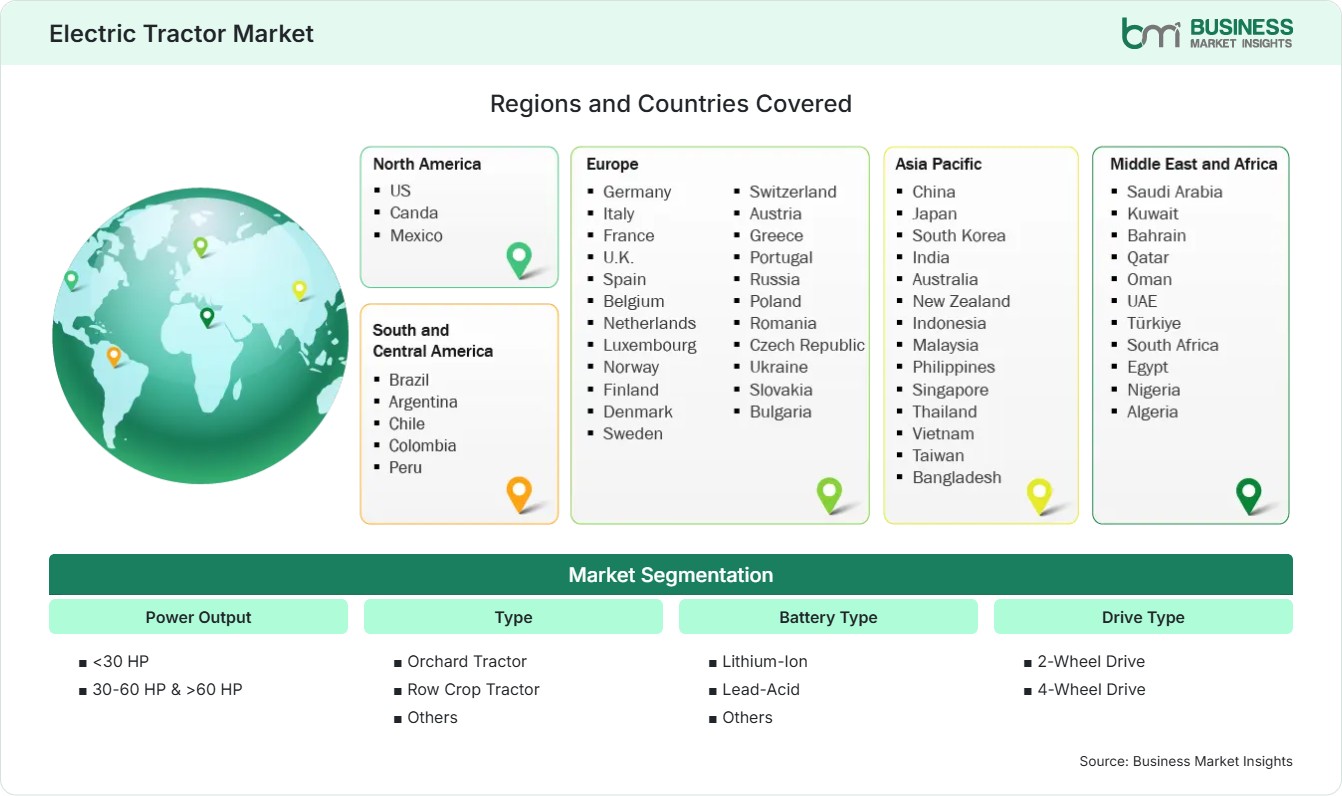
Countries across Asia-Pacific, Latin America, and parts of the Middle East are accelerating agricultural modernization initiatives. The increasing mechanization trends, government initiatives and growing awareness about sustainable farming methods are some of the factors which would make the adoption of these technologies possible in the future. Many emerging economies keep making investments in their rural electrification and renewable energy infrastructures, making it easier for electric machinery to be adopted in these regions. The manufacturers that offer economically viable products designed according to the needs of agriculture in the region have a lot of growth potential.
Market Restraints and Challenges
High Initial Acquisition Costs and Financing Constraints
Factor: Electric tractors continue to carry higher upfront costs than comparable diesel-powered equipment due to battery expenses, advanced electronics, and integrated autonomous technologies. Impact: Many farmers, especially small and medium-sized ones, struggle to gain the necessary finance for the replacement of equipment. Even if lifecycle costs are less expensive, the initial capital cost is a major consideration in the decision-making process. Lack of favorable agricultural credit also hinders its use in developing countries. The issue of battery replacement affects the decision-making process on the long-term use of electric farming equipment. Economic uncertainty, volatile prices, and limited profits also hinder investment decisions.
Charging Infrastructure and Operational Range Limitations
Factor: Rural charging infrastructure remains underdeveloped in many agricultural regions, while battery capacity constraints can affect continuous operation during demanding field activities. Impact: Farmers working long hours when crops are being planted or harvested can face constraints in the operation of such electric machines compared to diesel engines. Investments in infrastructure need to be made for scaling up the fleet size in the electric segment. Issues related to charging time, electricity availability, and heavy duty work remain relevant in purchase decisions. While batteries have been improving continuously, manufacturers still need to tackle issues of range and reliability.