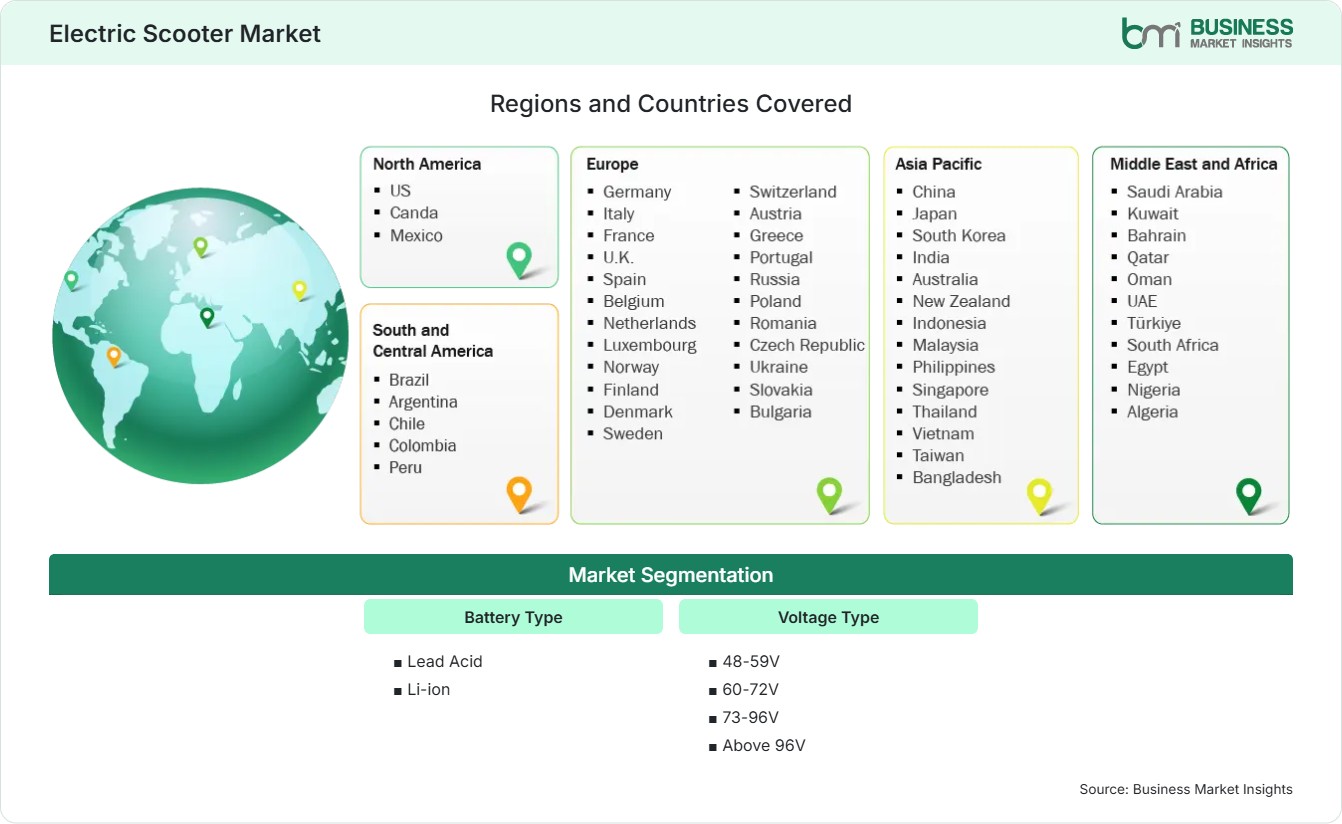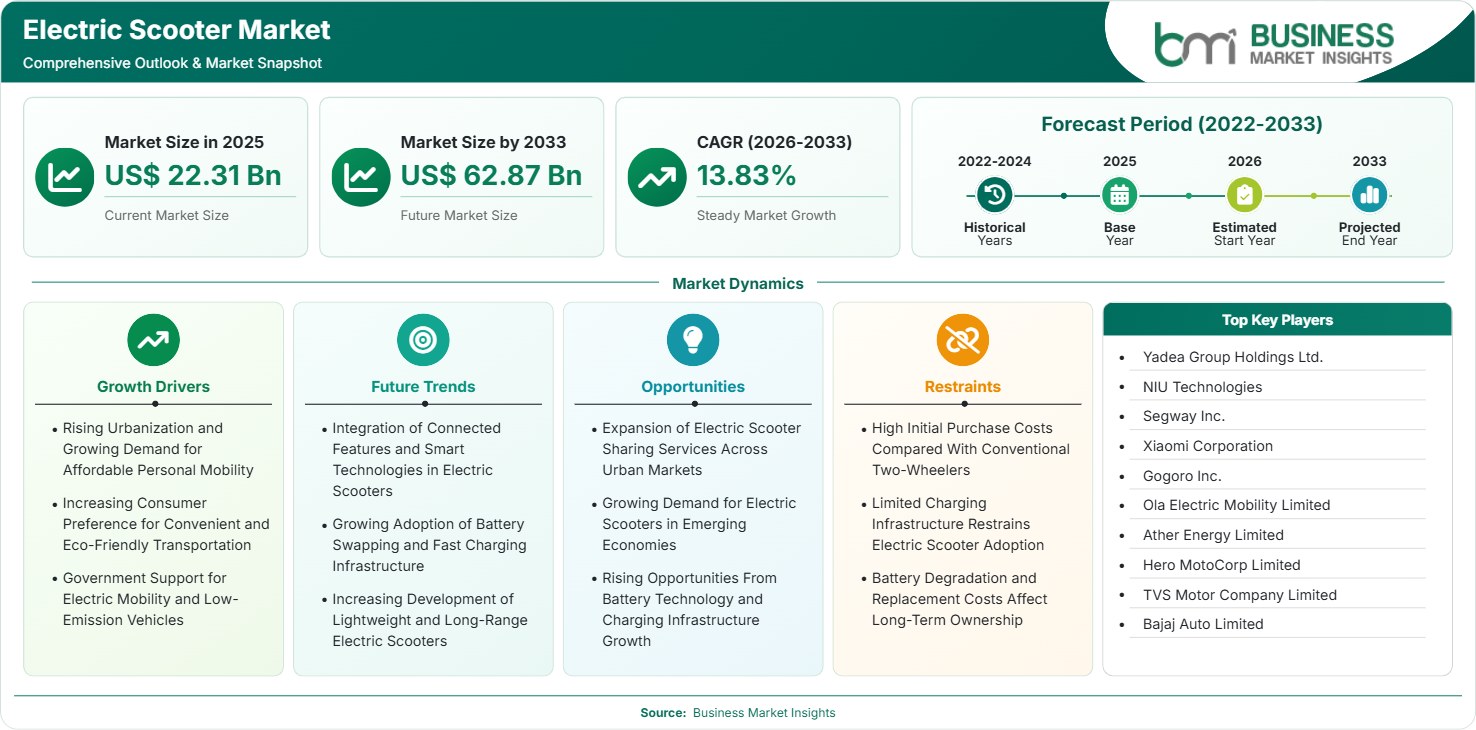
Electric Scooter Market Regional Highlights
North America Electric Scooter Market
North America accounted for a 10%–14% share in 2025 and is projected to grow at a CAGR of 11.0%–12.0% through 2033. The region benefits from increasing micromobility adoption, urban congestion, sustainability initiatives, and demand for convenient last-mile transportation. Electric Scooter Market share is supported primarily by the US, while Canadian cities are also developing micromobility ecosystems. Shared services and private ownership represent complementary demand channels.
- Growing use of lightweight electric vehicles for short-distance commuting is encouraging cities and mobility operators to expand sustainable transportation options.
- Electric scooter-sharing services are expanding access to low-emission transportation, particularly in dense urban areas where parking constraints and congestion make short trips difficult.
- Rising interest in convenient, economical, and environmentally responsible transportation is supporting private electric scooter purchases among urban commuters and younger consumers.
- Local governments are increasingly establishing operating rules, safety standards, and designated mobility zones, providing greater structure for the development of electric scooter services.
US Electric Scooter Market
The US represented a 9%–12% share in 2025 and is expected to expand at a CAGR of 11.5%–12.5% through 2033. Demand is concentrated around metropolitan areas where micromobility addresses first- and last-mile transportation needs. Electric Scooter Market growth is supported by shared mobility programs, consumer interest in low-emission transportation, and increasing availability of connected electric scooters with improved range and safety features.
- Shared electric scooter operators provide convenient transportation for short urban journeys, particularly around public transit stations, commercial districts, universities, and entertainment areas.
- Consumers are increasingly considering electric scooters for commuting and short-distance travel where compact dimensions, low operating costs, and convenient parking provide practical advantages.
- Connected dashboards, GPS tracking, mobile applications, and improved battery management are increasing product functionality and supporting differentiated premium scooter offerings.
- Municipal operating requirements and safety rules influence fleet deployment, product specifications, parking practices, and the commercial scalability of shared electric scooter programs.
Europe Electric Scooter Market
Europe held a 13%–17% share in 2025 and is projected to grow at a CAGR of 12.5%–13.5% through 2033. Germany leads regional demand, while France and Italy represent important urban mobility markets. Germany is projected to grow at a CAGR of 12.0%–13.0%, while France is expected to expand at 12.5%–13.5%. Low-emission policies, urban congestion, and integrated mobility systems support regional adoption.
- Germany's established mobility infrastructure and environmental priorities support electric scooter adoption for short-distance travel, particularly in cities with developed public transportation networks.
- France's major metropolitan areas provide opportunities for private and shared electric scooters as consumers seek alternatives for short journeys and first- and last-mile connectivity.
- Italy's dense urban centers and high two-wheeler usage create favorable conditions for electric scooter adoption, particularly where compact vehicles improve mobility through congested streets.
- European safety and vehicle regulations influence product development, encouraging manufacturers to improve braking systems, lighting, connectivity, battery safety, and overall vehicle reliability.
Asia Pacific Electric Scooter Market
Asia Pacific represented a 65%–69% share in 2025 and APAC electric scooter market forecast to grow at a CAGR of 14.5%–15.5% through 2033. China dominates regional volumes, while India represents a high-growth market. China is projected to grow at a CAGR of 13.5%–14.5%, whereas India is expected to expand at 18.0%–19.0%. High two-wheeler penetration, affordability, manufacturing scale, and government support underpin demand.
- China's extensive electric two-wheeler ecosystem supports high-volume production, widespread consumer adoption, and continuous innovation in batteries, connected systems, motors, and vehicle designs.
- India's expanding electric mobility ecosystem is creating opportunities through domestic manufacturing, government incentives, charging investments, and increasing consumer acceptance of electric two-wheelers.
- Southeast Asia offers substantial potential as urban populations grow and consumers seek affordable alternatives to conventional petrol-powered motorcycles for daily commuting.
- Battery swapping: Swapping networks are gaining attention in high-density markets by reducing charging downtime and supporting commercial fleets, delivery operators, and high-utilization urban mobility applications.
Rest of World Electric Scooter Market
South and Central America Electric Scooter Market accounted for a 7%–9% share in 2025 and are projected to grow at a CAGR of 11.0%–12.0% through 2033, led by Brazil and Colombia. Middle East and Africa represented a 4%–6% share and are expected to grow at a CAGR of 9.5%–10.5%, with the UAE and Saudi Arabia offering emerging opportunities.
- Brazil's large urban population and growing interest in sustainable transportation create opportunities for electric scooters, particularly as charging availability and product affordability improve.
- Colombia's established two-wheeler culture provides a potential foundation for electric scooter adoption as consumers increasingly consider lower operating costs and reduced urban emissions.
- The UAE's smart mobility initiatives and technology-oriented urban development support opportunities for connected electric scooters, shared mobility services, and premium micromobility solutions.
- Saudi Arabia's economic diversification and emerging sustainable transportation initiatives may support future adoption as electric vehicle infrastructure and consumer awareness continue developing.