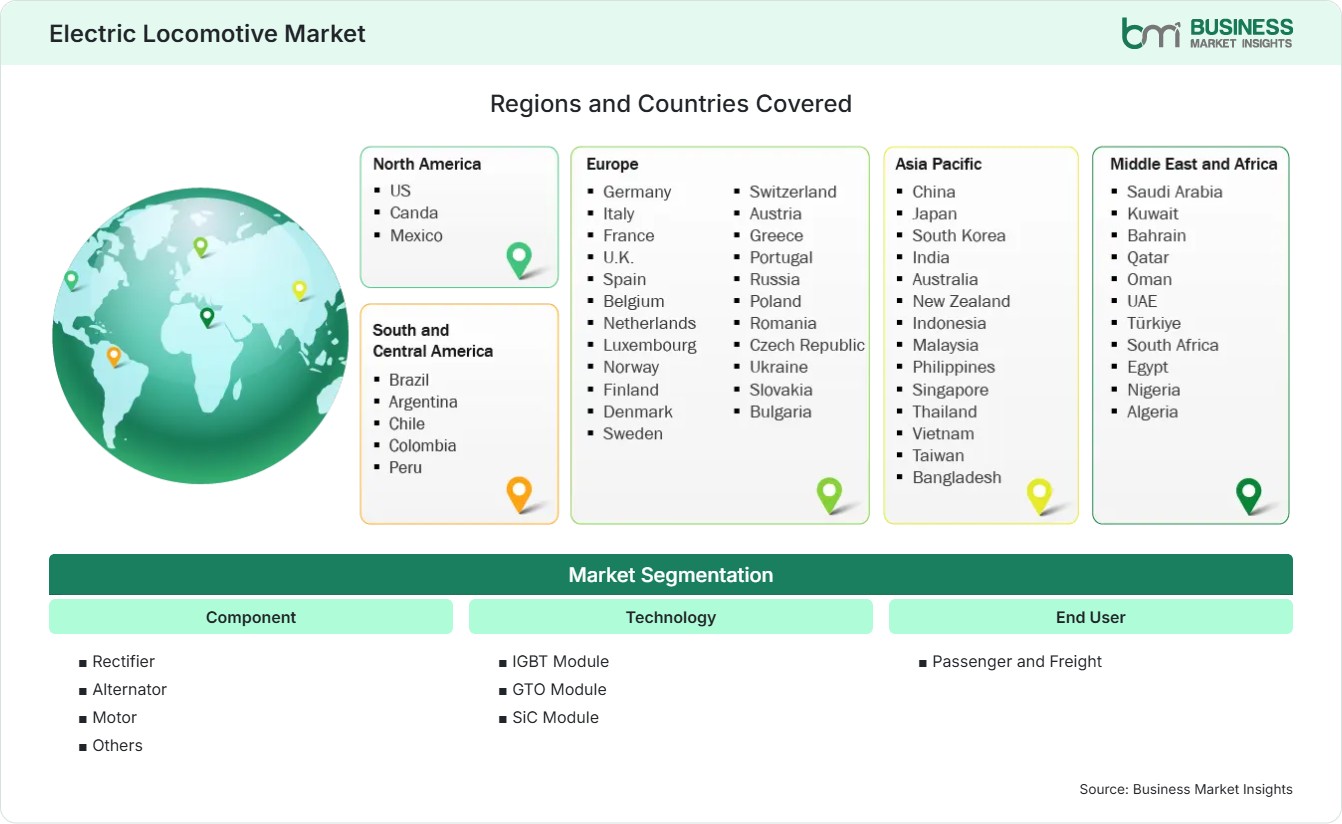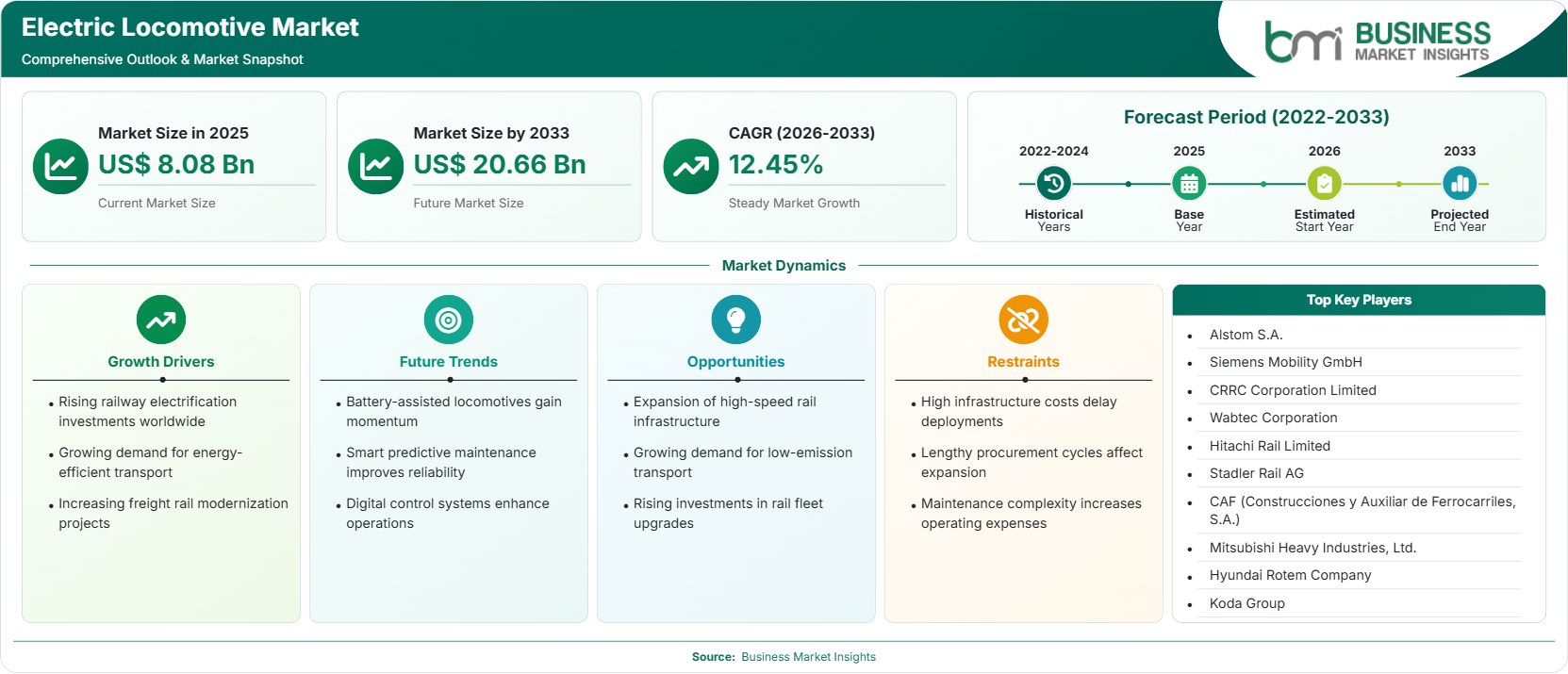
Electric Locomotive Market Regional Highlights
North America Electric Locomotive Market
North America accounted for 22%–25% of the Electric Locomotive Market Share in 2025 and is projected to expand at a CAGR of 11.5%–12.2% during 2026–2033. Investments in railway electrification, freight corridor modernization, and sustainable transportation infrastructure continue supporting regional market expansion. Government initiatives promoting lower-emission rail transportation further strengthen long-term demand.
- Railway operators continue investing in fleet modernization to improve operational efficiency, reliability, and environmental performance across passenger and freight networks.
- Digital signaling systems and predictive maintenance technologies are enhancing locomotive performance while reducing operating costs.
- Public investments in sustainable transportation infrastructure encourage wider adoption of electric locomotives across regional rail networks.
- Growing intercity passenger rail development supports procurement of next-generation electric locomotives with advanced propulsion technologies.
US Electric Locomotive Market
The U.S. represented 72%–75% of the North American market in 2025 and is anticipated to register a CAGR of 11.8%–12.6% through 2033. Increasing investments in rail infrastructure, freight efficiency improvements, and intercity passenger transportation continue driving market growth.
- Freight operators increasingly evaluate electrified rail solutions to improve fuel efficiency and reduce emissions.
- Federal infrastructure investments support modernization of railway corridors and associated electrical systems.
- Smart rail technologies improve operational reliability, safety, and asset utilization across transportation networks.
- Expanding passenger rail projects stimulate demand for technologically advanced electric locomotives.
Europe Electric Locomotive Market
Europe held 27%–30% market share in 2025 and is forecast to expand at a CAGR of 12.0%–12.8% during 2026–2033. Germany leads regional adoption, while Poland demonstrates the fastest growth due to railway modernization investments and expanding cross-border rail connectivity. The Electric Locomotive Market Forecasts remain favorable across the region.
- European decarbonization policies continue accelerating railway electrification and fleet replacement projects.
- Cross-border rail connectivity programs encourage procurement of interoperable electric locomotives.
- Increasing freight rail investments strengthen demand for advanced traction technologies.
- Modern signaling and digital train management systems improve operational efficiency across rail networks.
Asia Pacific Electric Locomotive Market
Asia Pacific accounted for 42%–45% market share in 2025 and is expected to register the highest growth at a CAGR of 13.4%–14.2% during 2026–2033. China leads regional revenue, while India records the fastest expansion owing to extensive railway electrification, high-speed rail construction, and government infrastructure investments.
- Large-scale railway electrification programs continue increasing procurement of electric locomotives.
- High-speed rail network expansion strengthens long-term equipment demand across the region.
- Rapid urbanization supports investment in efficient passenger rail transportation systems.
- Government-backed infrastructure projects encourage domestic manufacturing and technology development.
- Increasing freight transportation volumes accelerate modernization of railway fleets.
Rest of World Electric Locomotive Market
The Rest of World region represented 8%–11% market share in 2025 and is projected to grow at a CAGR of 11.9%–12.7% through 2033. Brazil leads adoption in South America, while Saudi Arabia records the strongest growth through continued railway expansion and transportation diversification initiatives.
- National railway development projects increase investment in electric rail infrastructure.
- Freight transportation modernization encourages procurement of efficient locomotive technologies.
- Government sustainability strategies support adoption of low-emission rail transportation.
- International financing initiatives facilitate modernization of regional railway networks.