Eco Fiber Market Regional Highlights
North America Eco Fiber Market
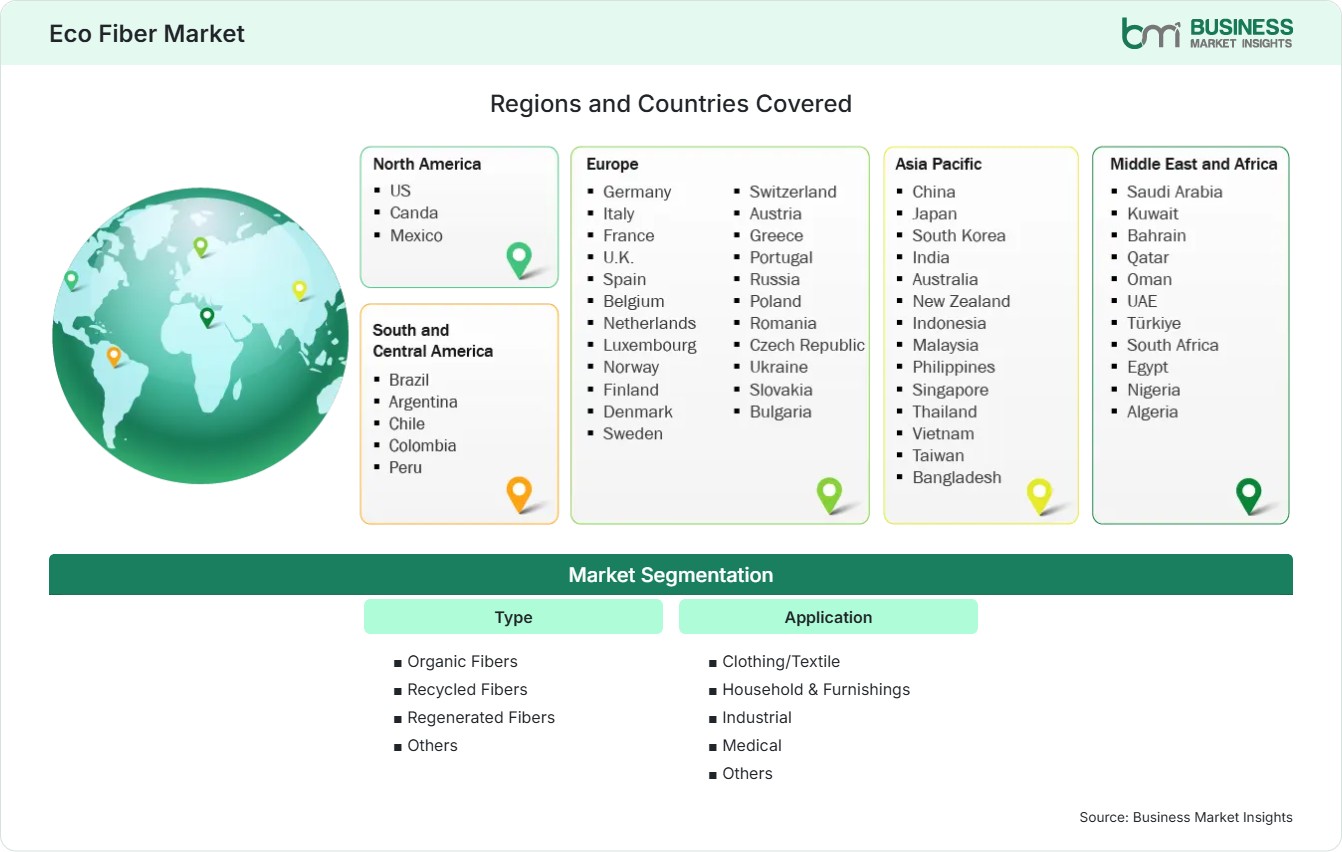
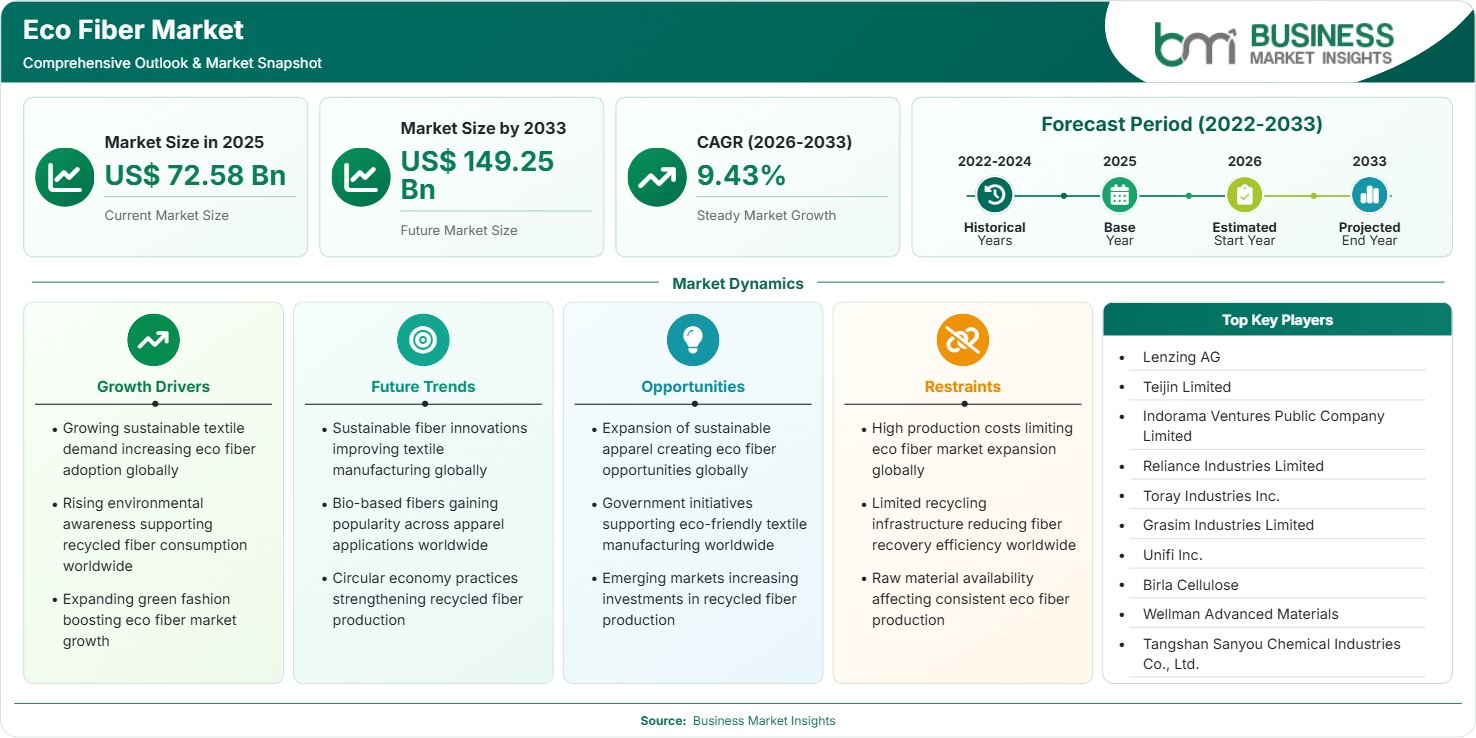
North America accounts for 24%–27% share in 2025 and is projected to grow at a CAGR of 8.80%–9.20% during 2026–2033. Demand is supported by sustainable apparel production, increasing textile recycling, and stronger corporate environmental commitments. The Eco Fiber Market share continues expanding as fashion brands adopt recycled and bio-based fibers to achieve sustainability targets. Growing investments in circular textile systems and environmentally responsible manufacturing further strengthen regional market development.
- The US leads regional demand through sustainable apparel manufacturing, textile recycling initiatives, and strong consumer preference for environmentally friendly products.
- Canada continues expanding recycled fiber production through circular economy investments and government sustainability programs supporting low-carbon manufacturing.
- Apparel companies increasingly collaborate with fiber manufacturers to strengthen sustainable sourcing and supply chain transparency.
- Investments in textile recycling technologies continue improving fiber recovery rates and reducing dependence on virgin raw materials.
US Eco Fiber Market
The US represents 20%–23% of the global market in 2025 and is projected to expand at a CAGR of 8.90%–9.30% during 2026–2033. Rising demand for sustainable fashion, increasing retailer ESG commitments, and growing recycled textile utilization continue supporting market expansion. Manufacturers are investing in innovative fiber technologies and responsible sourcing practices to meet evolving consumer and regulatory expectations.
- Fashion brands continue increasing procurement of recycled and regenerated textile materials.
- Textile recyclers are expanding domestic processing capacity to improve raw material availability.
- Consumer demand for environmentally responsible apparel continues supporting premium sustainable products.
- Digital traceability technologies are strengthening transparency across textile supply chains.
Europe Eco Fiber Market
Europe holds 28%–31% share in 2025 and is expected to register a CAGR of 9.20%–9.70% during 2026–2033. Germany, France, Italy, and the Nordic countries remain major contributors because of strict sustainability regulations and strong circular economy policies. Germany leads regional production, while Eastern Europe is emerging as a higher-growth manufacturing location supported by expanding sustainable textile investments.
- Germany remains the regional leader through advanced recycling infrastructure and environmentally responsible textile manufacturing.
- France and Italy continue expanding premium sustainable fashion supported by circular textile initiatives.
- European regulations encourage increased use of recycled fibers and responsible production methods.
- Manufacturers continue investing in low-emission fiber production technologies and renewable raw materials.
Asia Pacific Eco Fiber Market
Asia Pacific captures 39%–42% share in 2025 and is forecast to grow at a CAGR of 10.20%–10.80% during 2026–2033. China, India, Japan, Bangladesh, and Vietnam are driving regional expansion through strong textile manufacturing, export growth, and increasing investments in sustainable production. Government initiatives supporting recycling infrastructure and green manufacturing continue accelerating market development.
- China remains the largest regional producer through integrated textile manufacturing and expanding recycled fiber capacity.
- India is the fastest-growing country because of increasing sustainable apparel exports and government support for green manufacturing.
- Japan continues investing in advanced regenerated fiber technologies and sustainable textile innovation.
- Bangladesh and Vietnam are strengthening sustainable apparel manufacturing to meet international sourcing requirements.
- Regional companies continue increasing recycled material utilization across textile production.
Rest of World Eco Fiber Market
Rest of World accounts for 6%–9% share in 2025 and is projected to grow at a CAGR of 8.90%–9.40% during 2026–2033. Latin America benefits from expanding sustainable cotton and recycled textile production, while the Middle East and Africa are gradually strengthening environmentally responsible manufacturing capabilities. Brazil, South Africa, and the UAE remain important developing markets supported by sustainability initiatives.
- Brazil continues expanding sustainable textile production supported by renewable raw material availability.
- South Africa is increasing investments in textile recycling and environmentally responsible manufacturing.
- Middle Eastern manufacturers are gradually adopting sustainable production technologies for export markets.
- International apparel brands continue strengthening sourcing partnerships across emerging textile-producing regions.
- Government sustainability initiatives encourage environmentally responsible fiber production and recycling investments.