Market Summary
Executive Summary and Global Market Analysis
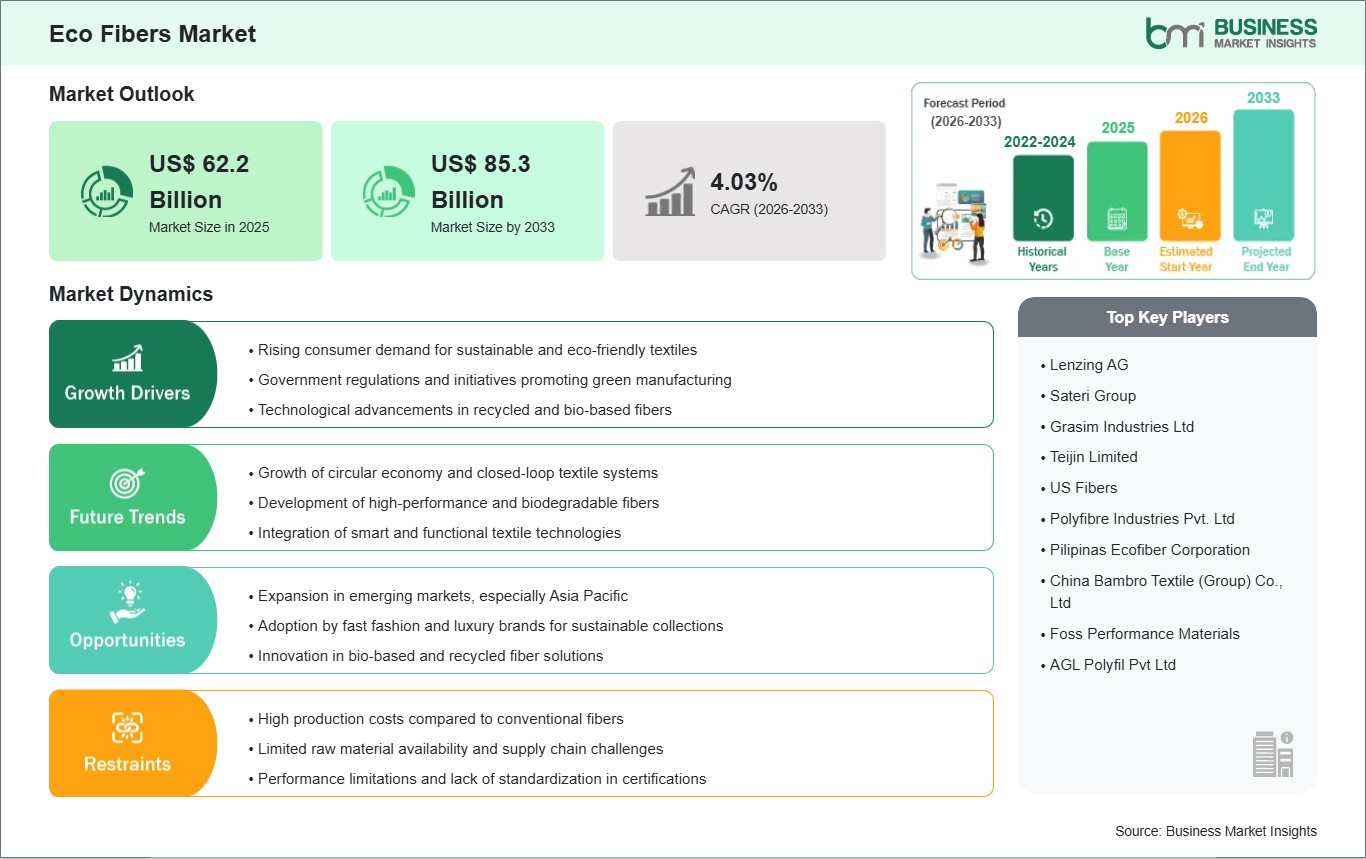
Eco fibers are becoming a key part of the global textile and materials industry as sustainability moves from a niche issue to a mainstream priority. These fibers come from eco-friendly sources like organic farming, recycled materials, and renewable biomass. They are widely used in clothing, home textiles, industrial applications, and packaging, offering a lower environmental impact than traditional synthetic and non-organic fibers. Eco fibers are crucial for reducing carbon footprints, conserving water, and cutting down waste throughout the textile value chain. Market growth mainly comes from greater environmental awareness, stricter government rules on textile sustainability, and higher demand from the fashion and apparel industry. The growth of fast fashion sustainability initiatives, along with commitments from global brands toward carbon neutrality and ethical sourcing, is speeding up adoption.However, the eco fibers market faces several challenges. High production costs compared to conventional fibers remain a major hurdle, particularly in price-sensitive markets. Limited infrastructure for large-scale recycling and inconsistent supply of raw materials can also hinder growth. Performance issues in specific applications and a lack of standardization in eco-labeling make adoption more complicated. Smaller manufacturers may also find it hard to invest in sustainable production systems.
Segment Analysis
Eco Fibers Market Segmentation
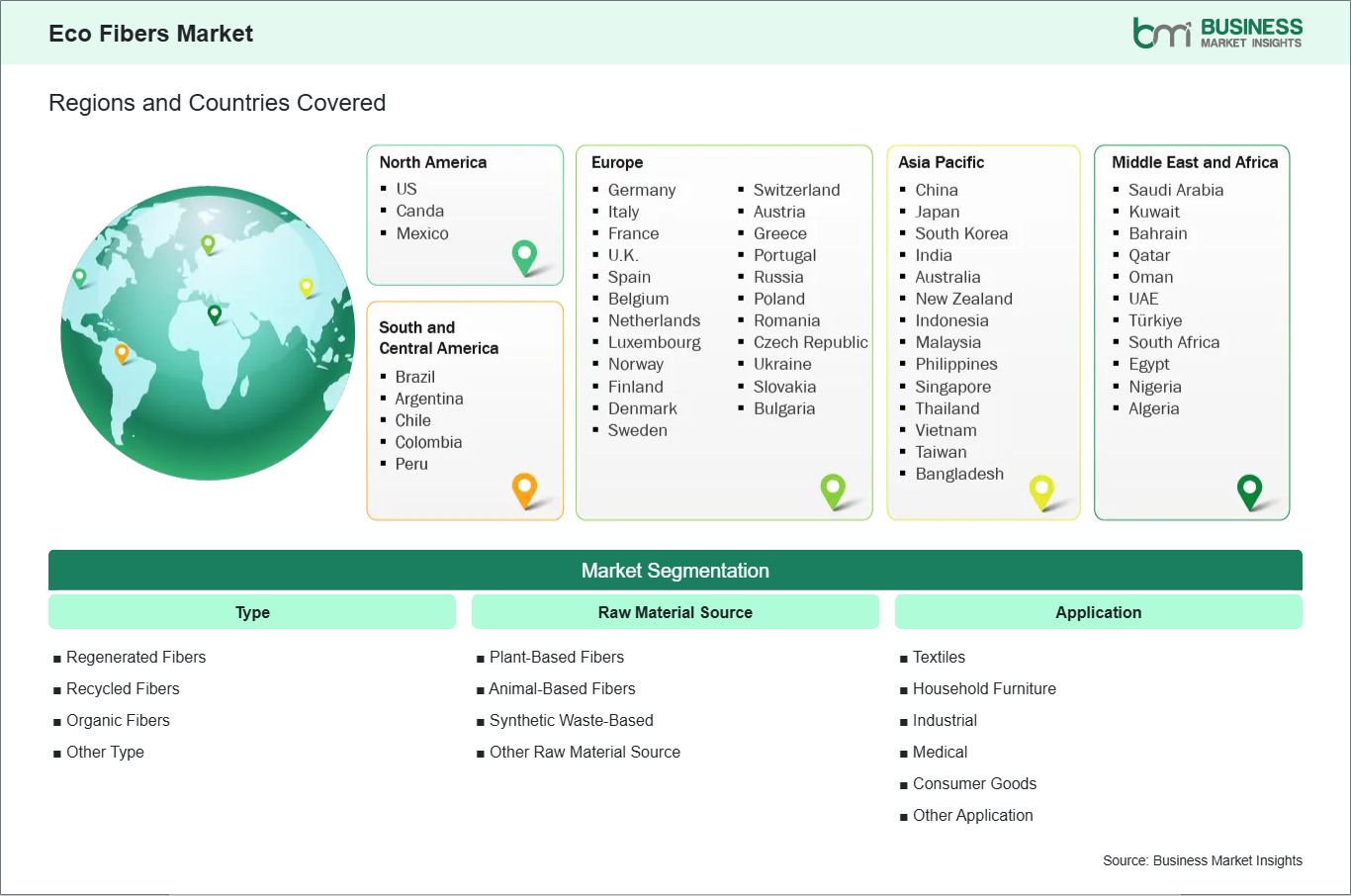
Key segments that contributed to the derivation of the Eco Fibers market analysis are type, raw material source, and application.
- By type, the eco fibers market is segmented into regenerated fibers, recycled fibers, organic fibers, and other type. The recycled fibers segment dominated the market in 2025.
- By raw material source, the market is categorized into plant-based fibers, animal-based fibers, synthetic waste-based, and other raw material source. The plant-based fibers segment dominated the market in 2025.
- By application, the market is categorized into textiles, household furniture, industrial, medical, consumer goods, and other application. The textiles segment held the largest share of the market in 2025.
Market Forces
Eco Fibers Market Drivers and Opportunities
Rising Demand for Sustainable and High-Performance Fiber Solutions
Manufacturers and brands are increasingly using eco fibers to improve product sustainability, boost material performance, and respond to changing consumer expectations. These fibers offer a practical and scalable way to reduce environmental impact while maintaining quality, durability, and versatility across different applications. They help use resources efficiently by lowering water consumption, cutting carbon emissions, and reducing waste production without needing major changes to existing textile infrastructure. Eco fibers meet today's industry demands for safer and more responsible production by providing consistent quality and compatibility with large-scale manufacturing. Their role in circular and sustainable textile systems is becoming crucial, especially in clothing, home furnishings, and industrial uses. The move toward responsible sourcing and eco-friendly production is speeding up innovation in fiber technologies, including recycled and bio-based materials. The industry is concentrating on research, new materials, and better processes to meet changing regulations and consumer standards. Growth is also driven by sustainability commitments from global brands, more investment in green technologies, and rising demand for environmentally friendly products. The need for better functionality and sustainability keeps driving the development of advanced eco fiber solutions, ensuring steady market growth.
Shift Toward Circular Economy and Environmentally Responsible Materials
There is a growing focus on recyclable, biodegradable, and low-impact fiber options in the textile industry. This change shows an increasing demand for sustainable alternatives to traditional synthetic fibers. Eco fibers like recycled polyester and regenerated cellulosic materials help cut down waste and improve lifecycle management, making them appealing to both manufacturers and consumers. These fibers promote resource efficiency by encouraging reuse, decreasing the need for virgin raw materials, and lowering environmental impact. They also support global sustainability goals by helping to reduce emissions, ensure responsible sourcing, and minimize waste. The rising interest in bio-based fibers and closed-loop production systems shows the industry`s commitment to balancing performance with environmental responsibility. Strict environmental rules and corporate sustainability targets are speeding up the use of eco-friendly materials. The industry is working on developing fibers that provide high performance while meeting environmental standards. The push for long-term sustainability, regulatory compliance, and a smaller ecological footprint is driving the global shift toward eco fibers, fostering ongoing innovation and market growth.
Size and Share Analysis
Eco Fibers Market Size and Share Analysis
The eco fibers market demonstrates steady growth, with size and share analysis revealing evolving trends and competitive positioning among key players. The report further examines subsegments categorized within type, raw material source, and application, offering insights into their contribution to overall market performance.
Based on type, the recycled fibers subsegment dominates the eco fibers market. Recycled fibers come from post-consumer and post-industrial waste materials, like plastic bottles, unwanted textiles, and industrial scraps. Common types are recycled polyester, nylon, and cotton. These fibers reduce landfill waste, save natural resources, and use less energy compared to virgin fiber production. They are important for supporting circular economy practices in the textile industry. Recycled fibers find applications in clothing, home furnishings, and industrial uses because they are cost-effective and versatile. Increasing awareness about the environment, sustainability goals, and brand promises is pushing their use, even with issues related to quality consistency and recycling infrastructure challenges.
Report Coverage
Eco Fibers Market Report Coverage and Deliverables
The " Eco Fibers Market Size and Forecast (2022 - 2033)" report provides a detailed analysis of the market covering below areas:
- Eco Fibers market size and forecast at global, regional, and country levels for all the key market segments covered under the scope
- Eco Fibers market trends, as well as market dynamics such as drivers, restraints, and key opportunities
- Eco Fibers market analysis covering key market trends, global and regional framework, major players, regulations, and recent market developments
- Industry landscape and competition analysis covering market concentration, heat map analysis, prominent players, and recent developments for the eco fibers market
- Detailed company profiles, including SWOT analysis
Geographic Insights
Eco Fibers Market Geographic Insights
The geographical scope of the Eco Fibers market report is divided into five regions: North America, Asia Pacific, Europe, Middle East & Africa, and South & Central America. The Asia Pacific Eco Fibers Market is segmented into China, Japan, South Korea, India, Australia, New Zealand, Indonesia, Malaysia, the Philippines, Singapore, Thailand, Vietnam, Taiwan, Bangladesh, and the Rest of Asia Pacific. Rising population, urbanization, and increasing disposable income are key factors boosting demand for sustainable clothing and household products.
Consumers are more aware of environmental issues like pollution and carbon emissions. This awareness is driving a shift toward organic, recycled, and biodegradable fibers. The fast growth of the fashion industry and brands' promises to be more sustainable are speeding up this change. Government programs and policies that promote eco-friendly textiles and sustainable manufacturing are also helping the market grow. Countries such as India and China are putting money into organic farming, recycling systems, and green textile technologies. Additionally, more foreign investments and the expansion of textile industries in emerging economies are boosting regional demand.
Industry Activity
Recent Developments
The Eco Fibers market is evaluated by gathering qualitative and quantitative data post-primary and secondary research, which includes important corporate publications, association data, and databases. A few of the key developments in the eco fibers market are:
- In March 2026, Thermore, a company in the thermal insulation sector for clothing, proudly announced the launch of Ecodown Fibers T2T, a free fiber insulation made from recycled polyester waste from the textile supply chain.
- In July 2022, Sateri, the viscose fibre manufacturer, launched three zero-carbon fibre products: EcoCosy, Lyocell, and FINEX. All three products have obtained the PAS2060 assessment certification for carbon neutrality and have been launched in their respective markets.
Trust & Transparency
Research Methodology
The market analysis combines proprietary research with secondary data from government agencies, company disclosures, regulatory filings, industry databases and expert interviews. Market estimates are validated through data triangulation, cross-market benchmarking and analyst
review.
View Full Research Methodology
Key Sources Referred:
World Bank - Global Trade IndicatorsEuropean Chemicals AgencyInternational Monetary Fund (IMF)World Trade Organization (WTO)International Trade Administration (ITA)Company WebsitesCompany Annual ReportsCompany Investor PresentationsThe Sustainable Fibre Alliance