
Distributed Energy Resource Management System Market Outlook: Size, Share, Trends, Growth Analysis, Competitive Landscape & Forecast, 2026-2033

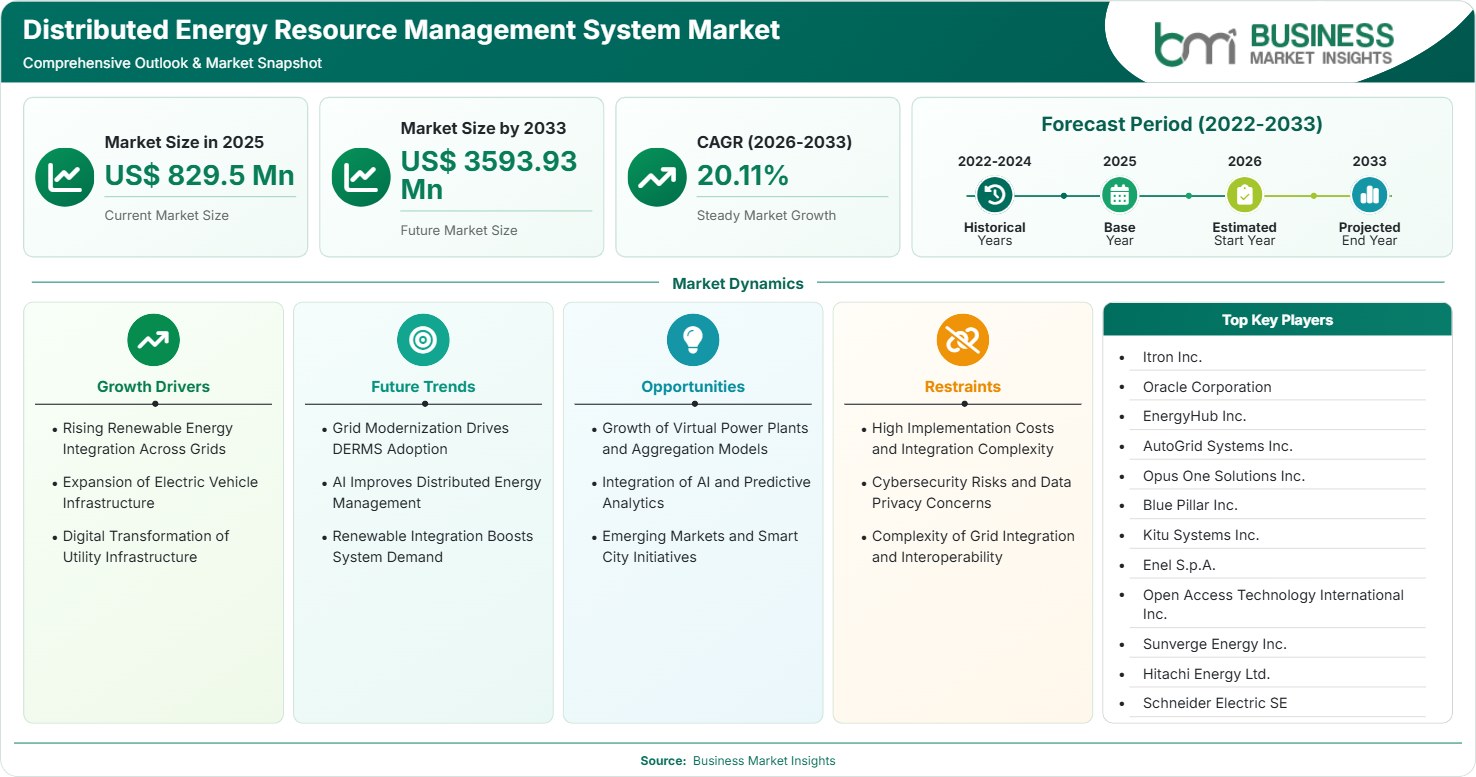
The Distributed Energy Resource Management System Market size was valued at US$ 829.5 Million in 2025 and is projected to reach US$ 3593.93 Million by 2033, growing at a CAGR of 20.11% during 2026–2033, driven by grid decentralization, renewable integration, rising EV adoption, and opportunities in AI-enabled energy optimization and virtual power plant deployment.

Report Coverage
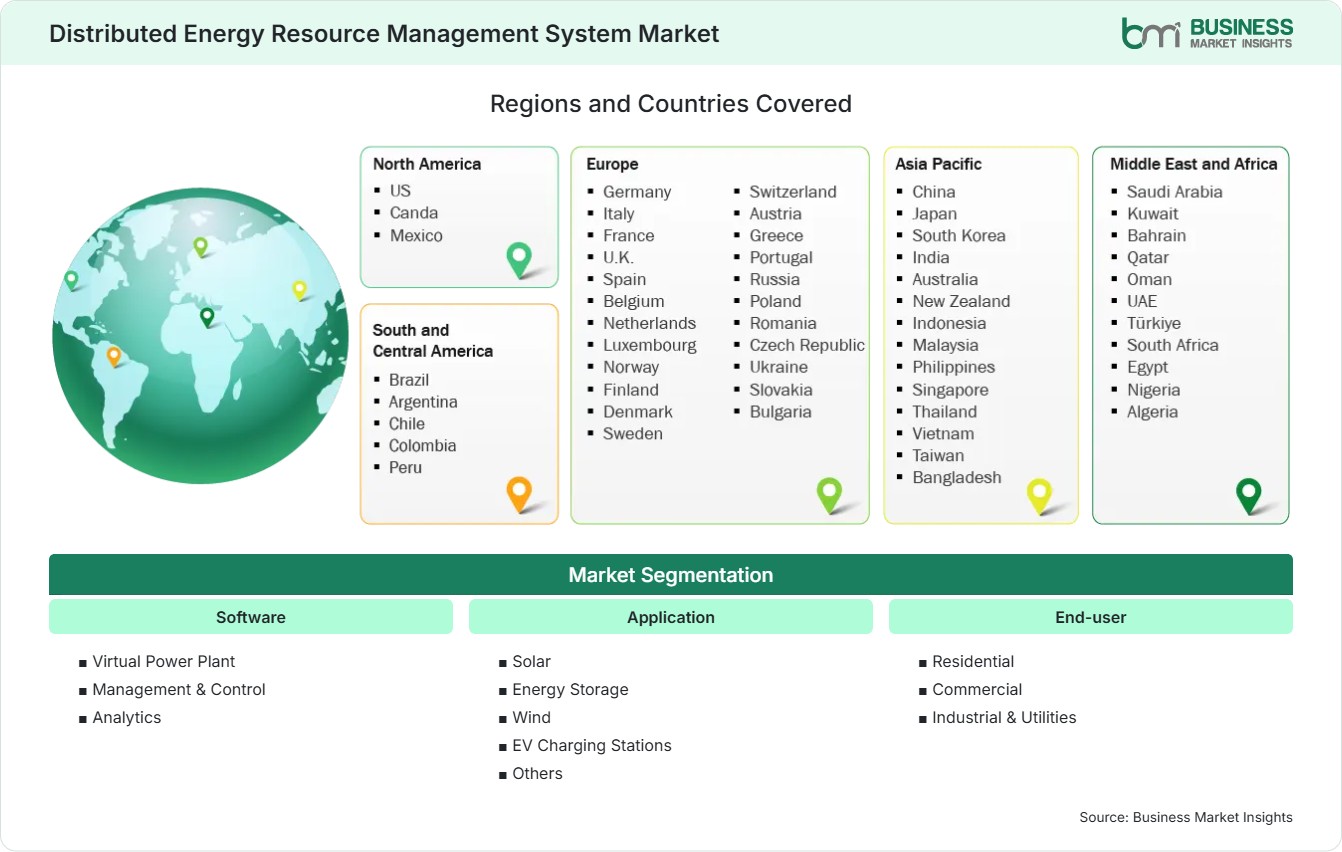
  • Software: Virtual Power Plant, Management & Control, Analytics
  • Application: Solar, Energy Storage, Wind, EV Charging Stations, Others
  • End-user: Residential, Commercial, Industrial & Utilities
US$ 829.5 Mn Market size in 2025
US$ 3593.93 Mn Market Size by 2033
20.11% CAGR, 2026 - 2033
2026-2033 Forecast Period

AI Overview

Distributed Energy Resource Management System Market Summary

  • North America Region: North America holds a Distributed Energy Resource Management System Market share of 38%–42% in 2025, growing with a CAGR of 18.5%–20.5% influenced by grid modernization, renewable mandates, and digital utility transformation. US leads adoption with DER orchestration expansion, advancing at 19.0%–21.0% CAGR supported by regulatory incentives.
  • Fastest Growing Region: Asia Pacific holds market share of 24%–28% in 2025, growing with a CAGR of 22.0%–24.5% driven by rapid urbanization, renewable investments, smart grid deployment, and electrification initiatives across China, India, and Southeast Asia.
  • Leading Segment: The software segment holds a market share of 52%–56% in 2025, growing with a CAGR of 19.5%–21.5% supported by rising demand for analytics platforms, virtual power plant software, and grid optimization tools.
  • High Growth Segment: EV Charging Stations application holds Distributed Energy Resource Management System Market share of 14%–18% in 2025, growing with a CAGR of 24.0%–26.5% fueled by electrification trends, smart charging integration, and grid load balancing requirements.
  • Key Market Opportunity: Expansion of decentralized energy systems and integration of AI-driven predictive analytics create scalable opportunities for utilities to enhance grid resilience, optimize distributed resources, and enable real-time energy orchestration.
  • Major Market Players: Itron Inc., Oracle Corporation, EnergyHub Inc., AutoGrid Systems Inc., Opus One Solutions Inc., Blue Pillar Inc., Kitu Systems Inc., Enel S.p.A., Open Access Technology International Inc., Sunverge Energy Inc., Hitachi Energy Ltd., Schneider Electric SE, Siemens AG, General Electric Company, ENGIE SA
Strategic Insights

Distributed Energy Resource Management System Market: Strategic Insights

Distributed Energy Resource Management System Market Strategic Framework
FREE PDF
Request your free sample
Request free sample
Stakeholder View

Key Takeaways

  • The value chain is evolving from centralized grid management to decentralized digital ecosystems integrating software providers, utilities, hardware vendors, and cloud analytics firms.
  • EV charging infrastructure and energy storage integration represent the most lucrative growth pockets due to rising electrification and load balancing requirements.
  • AI-driven predictive analytics and cloud-based energy orchestration platforms are redefining system capabilities and operational efficiency.
  • Asia Pacific presents a strong investment case with rapid renewable adoption, urbanization, and policy-driven smart grid deployment.
  • Strategic acquisitions and collaborations between utilities and software firms are accelerating innovation and expanding market reach.
  • Cybersecurity and data management are emerging as critical investment areas due to increased digitalization of grid infrastructure.
Geographic Outlook

Distributed Energy Resource Management System Market Regional Highlights

North America Distributed Energy Resource Management System Market

North America will have a market share of 38% to 42%, growing at a CAGR of 18.5% to 20.5%. Smart grid investments and the mandatory use of renewable energy are driving growth in North America. It is the most dominant market because of its highly developed infrastructure and supportive policies, while the Distributed Energy Resource Management System Market growth is supported by digital grid transformation and demand response programs.

  • Utilities in the US and Canada are investing heavily in DER integration platforms, enhancing grid flexibility and resilience while supporting renewable energy expansion across distributed networks and improving operational efficiency significantly.
  • Regulatory support from agencies like FERC and DOE promotes adoption of advanced energy management systems, enabling utilities to manage distributed assets effectively and optimize grid operations.
  • Increasing adoption of rooftop solar and energy storage solutions drives demand for real-time monitoring and control systems, strengthening DER management capabilities across residential and commercial sectors.
  • Digital transformation initiatives and cloud-based platforms enhance scalability and integration of distributed resources, supporting long-term market expansion across North America.

US Distributed Energy Resource Management System Market

The US is expected to hold 75%-80% market share in North America in 2025, with a 19.0%-21.0% CAGR, driven by the development of renewable energy and modern grid technology. Federal government and private investments encourage DER adoption across utilities and commercial sectors nationwide.

  • Federal incentives and tax credits support solar and storage adoption, driving demand for advanced management systems across residential and industrial sectors.
  • Utilities deploy AI-driven platforms for real-time grid monitoring and predictive analytics, enhancing system efficiency and reducing operational risks.
  • Rapid EV adoption increases demand for smart charging infrastructure integrated with DER management platforms, supporting load balancing and energy optimization.
  • Collaboration between technology providers and utilities fosters innovation and accelerates deployment of scalable DER solutions nationwide.

Europe Distributed Energy Resource Management System Market

Europe accounts for 26%–30% share in 2025, growing at 18.0%–20.0% CAGR supported by renewable targets and energy transition policies. Germany leads with 19.0%–21.0% CAGR, while the UK shows 20.0%–22.0% CAGR of the Distributed Energy Resource Management System Market driven by smart grid initiatives and distributed energy integration.

  • Strong regulatory frameworks such as the EU Green Deal accelerate renewable integration and DER deployment across member states, boosting demand for management systems.
  • Utilities invest in digital grid infrastructure to enhance flexibility and support decentralized energy generation, improving operational efficiency and sustainability outcomes.
  • Increasing penetration of distributed solar and wind energy drives demand for advanced analytics and control platforms, enabling real-time grid management.
  • Strategic partnerships between technology firms and utilities support innovation and deployment of scalable energy management solutions across Europe.

Asia Pacific Distributed Energy Resource Management System Market

Asia-Pacific will command 24-28% of the market in 2025, driven by rising urbanization and investment in renewables, with growth at a CAGR of 22.0-24.5%. China will register the highest CAGR of 23.0-25.0%, whereas India shows 24.0%–26.0% CAGR supported by electrification and smart grid initiatives.

  • Government policies promoting renewable energy and electrification drive adoption of distributed energy systems across the region, enhancing demand for management platforms.
  • Rapid urbanization and industrialization increase energy demand, necessitating efficient grid management and integration of distributed resources.
  • Investments in smart grid infrastructure and digital technologies enable real-time monitoring and control of distributed energy assets.
  • Expansion of EV charging infrastructure and energy storage systems supports market growth and enhances grid flexibility across Asia Pacific.

Rest of World Distributed Energy Resource Management System Market

Rest of World contributes 6% to 10% market share in 2025 and grows at 17.5% to 19.5% CAGR. Latin America registers a CAGR of 18.0% to 20.0% on account of increased use of renewable energy. The Middle East & Africa exhibit 17.0%–19.0% CAGR supported by grid modernization and energy diversification strategies.

  • Renewable energy projects in Brazil and Chile drive demand for DER management systems, enabling efficient integration and optimization of distributed resources across regional grids.
  • Middle East investments in smart cities and sustainable energy infrastructure accelerate adoption of advanced energy management solutions, supporting long-term market growth.
  • Electrification initiatives in Africa increase demand for decentralized energy systems, driving adoption of scalable DER platforms across rural and urban areas.
  • Partnerships between governments and private stakeholders enhance deployment of digital grid solutions, improving energy access and system reliability across emerging markets.
Global Market Geography
FREE PDF
Request your free sample
Request free sample
Segment Analysis

Distributed Energy Resource Management System Market Segmentation

Software

The software is expected to dominate market share, ranging from 52% to 56%, during 2025, with a CAGR of 19.5% and 21.5%, due to growing demand for real-time analytical tools. The scope of the Distributed Energy Resource Management System Market highlights the importance of software in integrating distributed energy resources and predictive analysis.

  • Virtual Power Plant: Enables aggregation of distributed energy resources into unified networks, supporting grid stability and energy trading opportunities while enhancing operational efficiency through centralized control and optimization platforms.
  • Management & Control: Provides real-time monitoring and control capabilities for distributed assets, enabling utilities to optimize energy flows and maintain grid reliability across diverse energy sources.
  • Analytics: Advanced analytics tools support predictive maintenance, demand forecasting, and energy optimization, enhancing decision-making and operational efficiency across distributed energy networks.

Application

In the Applications Segment, diversified growth is evident, with high adoption in renewables and electrification. The Applications segment is projected to have a market share of 44% to 48% in 2025, with a CAGR of 20.0% to 22.0%, driven by the deployment of distributed energy and smart infrastructure investments.

  • Solar: Increasing rooftop and utility-scale solar installations drive demand for monitoring and control systems, enabling efficient integration and optimization of solar energy resources.
  • Energy Storage: Growth in battery storage systems supports grid stability and energy optimization, driving adoption of advanced management platforms across utilities and commercial sectors.
  • Wind: Distributed wind installations require efficient monitoring and control systems to optimize energy generation and integration into the grid.
  • EV Charging Stations: Rapid expansion of EV infrastructure increases demand for smart charging solutions integrated with energy management systems, enhancing load balancing and grid efficiency.

End-user

The end-user segment holds a 46%–50% share in 2025, growing at 19.0%–21.0% CAGR of the Distributed Energy Resource Management System Market, driven by increasing adoption across utilities and commercial sectors seeking efficient energy management and cost optimization solutions.

  • Residential: Adoption of rooftop solar and home energy systems drives demand for user-friendly management platforms enabling efficient energy usage and cost savings.
  • Commercial: Businesses deploy DER systems to reduce energy costs and enhance sustainability, driving demand for advanced management solutions.
  • Industrial & Utilities: Large-scale operations require robust systems for managing distributed assets, ensuring grid stability and operational efficiency across complex energy networks.
Market Forces

Distributed Energy Resource Management System Market Dynamics

Key Market Drivers

Rising Renewable Energy Integration Across Grids

Global additions to the installed capacity of renewable energy systems surpassed 440 GW in 2023, according to International Energy Agency data, underscoring the demand for sophisticated management systems. Growth in the market is driven by the increase in installations of solar and wind energy that require effective integration. Utilities use Distributed Energy Resource Platforms to balance the grid. Distributed Energy Resource Management System Market trends indicate the growing use of real-time monitoring software and predictive analysis. Growing distributed generation challenges traditional grid operations, making advanced management systems essential for balancing supply and demand across decentralized networks

Expansion of Electric Vehicle Infrastructure

According to the International Energy Agency, total worldwide electric vehicle sales stood at 14 million units in 2023. This will lead to increased demand from the power grid. For the successful operation of an electric vehicle charging station, a highly advanced energy management system is essential to ensure load balancing. The utility companies are using the DERs platform to manage peak demand. Growth in the Distributed Energy Resource Management System market will be driven by the requirements for smart charging and energy optimization. Market trends indicate rising investment in EV infrastructure and digital grid technologies that support electrification and sustainable energy transitions globally.

Digital Transformation of Utility Infrastructure

Utilities across the globe are embracing digital grids, with annual spending on smart grids surpassing $300 billion. Growth in the market is being driven by the implementation of IoT, artificial intelligence, and cloud computing technologies, which facilitate data analysis. The Distributed Energy Resource Management System Market trends indicate a growing use of software to optimize grids. The adoption of digitalization improves operational efficiency, reduces downtime, and enables better decision-making. Integration of distributed resources into digital platforms enables utilities to manage complex energy networks effectively and supports long-term sustainability goals.

Key Market Opportunities

Growth of Virtual Power Plants and Aggregation Models

Virtual power plants facilitate the aggregation of distributed energy resources, enabling scalable opportunities for utilities and service providers alike. As shown in the Distributed Energy Resource Management System Market Forecasts, there is strong demand for virtual power plant solutions driven by the need for renewable generation and grid flexibility. The platform can be used by utilities to manage energy distribution more effectively and generate additional revenue. This is because the use of decentralized energy sources will result in such aggregation schemes. Investments in developing VPPs will increase significantly, enabling more efficient management of distributed resources.

Integration of AI and Predictive Analytics

There is significant potential in using AI-powered analytics to improve energy forecasting and system optimization. The use of machine learning algorithms is becoming common among utility companies to forecast energy demand and leverage distributed assets. Analytics platforms enable real-time decision-making and improve operational efficiency through better decisions. The application of AI allows for proactive maintenance and minimizes downtime. Investments in digital technologies open up ways for innovation in distributed energy management and market expansion.

Emerging Markets and Smart City Initiatives

Projects undertaken in the Asia-Pacific and Middle East regions to build smart cities have generated high demand for energy management systems. There is an emphasis by governments on sustainable infrastructure and the development of renewable energy sources. This necessitates sophisticated energy management platforms. Markets in emerging countries offer many opportunities due to rising energy demand and electrification. Technologies like smart grids help proliferate distributed energy and energy management and improve grid reliability across urban and rural areas.

Market Restraints and Challenges

High Implementation Costs and Integration Complexity

The high costs of investment and integration pose serious limitations. Factor: It requires substantial financial investment to deploy sophisticated software and hardware systems. Impact: Utilities and other small firms suffer from such financial limitations. Integrating existing systems with modern ones poses additional difficulties. Such limitations slow the deployment and expansion of the market, especially in developing countries lacking financial and technological capabilities.

Cybersecurity Risks and Data Privacy Concerns

Digitization poses a threat to cybersecurity in energy systems. Factor: The networking and cloud computing infrastructure make energy systems vulnerable to cyberattacks. Impact: Data breaches and other system malfunctions present risks. Compliance with regulations and security measures is an added burden. The resolution of any cybersecurity issues is important for the efficient functioning of distributed energy systems and maintaining trust among stakeholders, influencing adoption rates and market growth.

Company Analysis

Competitive Landscape

The Distributed Energy Resource Management System Market analysis highlights intense competition among global technology providers, utilities, and software firms focusing on innovation and strategic partnerships.

Company Name

Overview

Products and Services relevant to this market

Itron Inc.

Provides advanced energy and water resource management solutions with a strong focus on smart grid technologies and analytics platforms.

Offers DER management software, smart metering solutions, and analytics platforms enabling utilities to optimize distributed energy resources and improve grid efficiency.

Oracle Corporation

Global technology leader specializing in cloud infrastructure and enterprise software solutions for utilities and energy sectors.

Provides cloud-based DER management platforms, data analytics, and energy optimization tools supporting real-time grid monitoring and resource integration.

EnergyHub Inc.

Focuses on distributed energy management solutions enabling utilities to manage demand response and distributed assets efficiently.

Offers DERMS platforms, demand response solutions, and IoT integration tools supporting grid optimization and energy efficiency initiatives.

AutoGrid Systems Inc.

Specializes in AI-driven energy management platforms enabling utilities to optimize distributed resources and enhance grid performance.

Provides analytics software, DERMS platforms, and energy optimization solutions leveraging machine learning for predictive insights.

Opus One Solutions Inc.

Develops advanced grid orchestration software enabling utilities to manage distributed energy resources effectively.

Offers grid optimization platforms, DERMS solutions, and analytics tools supporting real-time energy management and system reliability.

Blue Pillar Inc.

Provides energy management solutions focusing on data integration and real-time monitoring of distributed assets.

Offers IoT-enabled platforms, DER management systems, and analytics tools supporting energy optimization and operational efficiency.

Kitu Systems Inc.

Specializes in connectivity solutions for distributed energy resources enabling seamless integration and communication.

Provides DER connectivity platforms, IoT solutions, and energy management software supporting grid integration and real-time control.

Enel S.p.A.

Global energy company focusing on renewable energy and digital grid solutions across multiple markets.

Offers DER management platforms, renewable integration solutions, and smart grid technologies supporting energy transition initiatives.

Open Access Technology International Inc.

Provides software solutions for energy markets and grid operations with strong expertise in DER management.

Offers DERMS platforms, energy trading solutions, and grid optimization tools enabling efficient management of distributed resources.

Sunverge Energy Inc.

Focuses on distributed energy storage and management solutions for utilities and consumers.

Provides energy storage systems, DERMS platforms, and analytics tools supporting grid stability and energy optimization.

Hitachi Energy Ltd.

Global provider of energy solutions with a focus on digital grid technologies and advanced analytics.

Offers DER management systems, grid automation solutions, and analytics platforms enabling efficient energy distribution and control.

Schneider Electric SE

Leader in energy management and automation solutions with strong presence in digital grid technologies.

Provides DERMS platforms, energy management software, and automation solutions supporting efficient integration of distributed resources.

Siemens AG

Global technology company focusing on digitalization and energy solutions for utilities and industries.

Offers DER management platforms, smart grid solutions, and analytics tools supporting efficient energy management and optimization.

General Electric Company

Provides advanced energy solutions and digital technologies for utilities and industrial sectors.

Offers DER management systems, grid automation solutions, and analytics platforms supporting distributed energy integration.

ENGIE SA

Global energy company focusing on renewable energy and distributed energy solutions.

Provides DERMS platforms, renewable integration solutions, and energy optimization tools supporting decentralized energy systems.

Trust & Transparency

Research Methodology

The market analysis combines proprietary research with secondary data from government agencies, company disclosures, regulatory filings, industry databases and expert interviews. Market estimates are validated through data triangulation, cross-market benchmarking and analyst review.

View Full Research Methodology

Questions Answered

Frequently Asked Questions

What is included in a Distributed Energy Resource Management System Market Report?

A Market Report includes analysis of market size, trends, segmentation, regional insights, competitive landscape, and future growth opportunities, providing comprehensive industry intelligence.

What are the major challenges in this market?

High implementation costs, integration complexity, and cybersecurity risks are key challenges affecting adoption. Addressing these issues is critical for market expansion and ensuring reliable system performance.

Which region shows the highest growth potential?

Asia Pacific demonstrates the fastest growth due to rapid urbanization, renewable investments, and smart grid initiatives, supported by government policies and increasing energy demand across developing economies.

How do DERMS platforms benefit utilities?

DERMS platforms enable real-time monitoring, predictive analytics, and optimization of distributed energy resources, improving operational efficiency, reducing costs, and enhancing grid reliability for utilities.

What is driving adoption of distributed energy resource management systems?

Increasing renewable energy integration, EV adoption, and grid digitalization are key drivers. Utilities require advanced systems to manage distributed resources efficiently and ensure grid stability, boosting adoption globally.

Access the Full Distributed Energy Resource Management System Market Report

Get segment-level forecasts, regional estimates, competitive benchmarking, company profiles and downloadable Excel datasets.

Access the full Distributed Energy Resource Management System Market Report
350 pages PDF & Excel | 2026-09-22
Similar Research

Related Market Reports