
Blockchain In Energy Utilities Market Outlook: Size, Share, Trends, Growth Analysis, Competitive Landscape & Forecast, 2026-2033

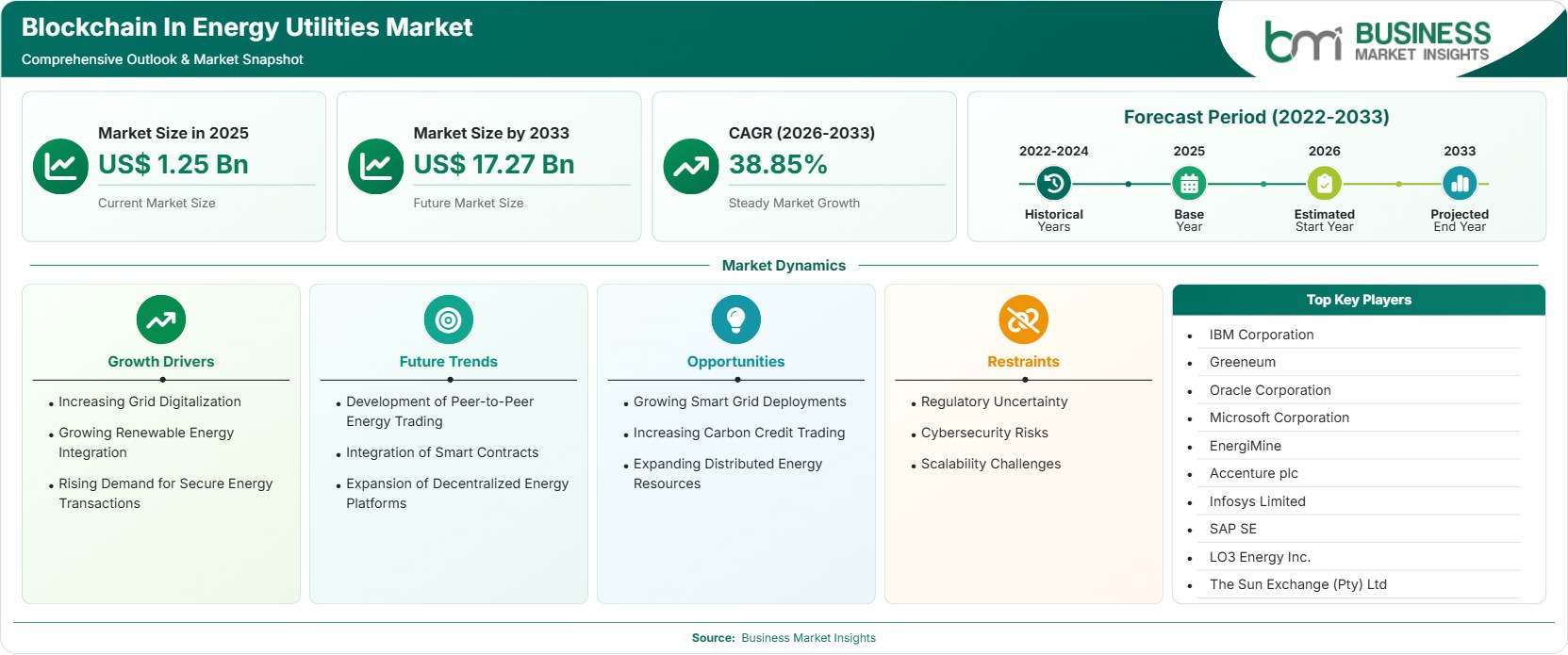
The Blockchain in Energy Utilities Market size was valued at US$ 1.25 Billion in 2025 and is projected to reach US$ 17.27 Billion by 2033, growing at a CAGR of 38.85% during 2026–2033. Increasing grid digitalization, renewable energy integration, decentralized electricity trading, smart contract adoption, and expanding carbon markets are accelerating investments while creating opportunities across peer-to-peer energy ecosystems and utility modernization initiatives.

Report Coverage
  • Offerings: Vertical Solutions, Blockchain-as-a-Service
  • Deployment: Proof of Concept, Pilot, Production
US$ 1.25 Bn Market size in 2025
US$ 17.27 Bn Market Size by 2033
38.85% CAGR, 2026 - 2033
2026-2033 Forecast Period

AI Overview

Blockchain In Energy Utilities Market Summary

  • North America Region: North America holds a market share of 36%–39% in 2025 and is projected to expand at a 37%–40% CAGR during 2026–2033. Strong smart grid investments, supportive utility digitization programs, advanced cybersecurity initiatives, and growing distributed energy resources continue creating commercial opportunities for blockchain-enabled electricity settlement platforms. The U.S. market benefits from utility digital transformation programs and distributed energy investments, advancing at an estimated 38%–41% CAGR through 2033.
  • Fastest Growing Region: Asia Pacific accounts for 26%–29% market share in 2025 and is expected to register a 40%–43% CAGR during 2026–2033. Expanding renewable capacity, government-backed digital infrastructure, rising electricity demand, and rapid smart city development accelerate blockchain deployment across modern energy networks and decentralized trading ecosystems.
  • Leading Segment: Blockchain-as-a-Service represents 54%–57% of market share in 2025 while advancing at a 39%–42% CAGR. Cloud-based deployment flexibility, reduced implementation complexity, scalable distributed ledgers, and enterprise-grade security encourage utilities to modernize operational processes while lowering infrastructure investment requirements.
  • High Growth Segment: Production Deployment accounts for 32%–35% share in 2025 and is forecast to expand at a 42%–45% CAGR through 2033. Growing commercial implementation, mature blockchain frameworks, regulatory pilots, and expanding enterprise confidence accelerate full-scale operational deployment across electricity trading and asset management.
  • Key Market Opportunity: Growing integration of distributed energy resources, tokenized renewable certificates, automated smart contracts, and decentralized electricity marketplaces enables utilities to optimize transactions, improve transparency, strengthen grid resilience, and unlock innovative revenue streams globally.
  • Major Market Players: IBM Corporation, Greeneum, Oracle Corporation, Microsoft Corporation, EnergiMine, Accenture plc, Infosys Limited, SAP SE, LO3 Energy Inc., and The Sun Exchange (Pty) Ltd.
Strategic Insights

Blockchain In Energy Utilities Market: Strategic Insights

Blockchain In Energy Utilities Market Strategic Framework
FREE PDF
Request your free sample
Request free sample
Stakeholder View

Key Takeaways

  • The value chain in the industry is moving away from the centralized utility transaction model to interconnected ecosystems where the technology provider, grid operators, renewable energy producers, cybersecurity vendors, cloud computing firms, and energy retailers work together to facilitate trusted, automated, and transparent electricity transactions.
  • The best commercial applications of this technology can be found in the large-scale production deployments and the Blockchain-as-a-Service platform, in which utilities require a scalable solution for their renewable energy certificates, peer-to-peer electricity transactions, demand response, and distributed asset management.
  • Innovations in this field tend to focus on integration of blockchain technologies with artificial intelligence, IoT sensors, advanced metering infrastructure, digital twins, and predictive analytics.
  • Asia Pacific presents one of the most attractive long-term investment destinations as countries including China, Japan, South Korea, India, Singapore, and Australia accelerate renewable integration, smart grid modernization, digital infrastructure development, and decentralized energy market initiatives.
  • Strategic collaborations between utilities, cloud platform providers, enterprise software companies, blockchain developers, and renewable energy specialists are becoming more common, enabling faster commercialization, lower implementation risks, and improved interoperability across modern electricity ecosystems.
Geographic Outlook

Blockchain In Energy Utilities Market Regional Highlights

North America Blockchain in Energy Utilities Market

North America accounted for 36%–39% of the global market share in 2025 and is projected to register a 37%–40% CAGR during 2026–2033. The region maintains technology leadership through widespread smart grid investments, mature cloud infrastructure, strong utility digitization initiatives, and growing deployment of distributed energy resources. The Blockchain in Energy Utilities Market share remains supported by favorable innovation ecosystems, expanding renewable integration, increasing digital electricity transactions, and collaboration between utilities, software vendors, and cybersecurity providers.

  • Utilities continue expanding blockchain-enabled renewable certificate tracking systems to improve transparency, automate verification, reduce administrative costs, and strengthen trust among regulators, renewable energy developers, electricity retailers, and industrial consumers.
  • Smart grid modernization programs encourage integration of distributed ledger technology with advanced metering infrastructure, enabling secure transaction validation, decentralized energy settlements, improved grid visibility, and enhanced operational resilience across regional electricity networks.
  • Growing investments in distributed energy resources increase demand for secure peer-to-peer electricity trading platforms capable of supporting automated settlements, transparent billing mechanisms, and real-time balancing of decentralized generation assets.
  • Collaboration among utilities, cloud technology providers, and enterprise software companies accelerates commercial implementation by reducing deployment complexity, improving interoperability, and strengthening cybersecurity across digital energy ecosystems.
  • Rising regulatory support for clean energy transition programs continues encouraging blockchain innovation across renewable integration, digital carbon accounting, and decentralized electricity market participation.

US Blockchain in Energy Utilities Market

The United States Blockchain in Energy Utilities Market represents 74%–77% of the North American regional market while advancing at an estimated 38%–41% CAGR during the forecast period. Strong investments in grid modernization, utility digitalization, renewable integration, enterprise cloud adoption, and distributed energy management continue supporting commercialization of blockchain-enabled electricity platforms across regulated and competitive electricity markets.

  • Major utilities increasingly evaluate blockchain for renewable certificate management, distributed asset coordination, and secure energy transaction recording while improving transparency, operational efficiency, and regulatory reporting capabilities.
  • Advanced cloud infrastructure and artificial intelligence integration strengthen enterprise blockchain deployment, enabling scalable digital platforms supporting electricity settlements, predictive maintenance, and automated compliance management.
  • Federal and state clean energy initiatives continue encouraging utilities to modernize digital infrastructure, creating favorable conditions for decentralized electricity trading and blockchain-enabled renewable energy ecosystems.
  • Growing partnerships between software vendors, cloud providers, and utility operators accelerate pilot-to-production transitions while improving interoperability, cybersecurity, and enterprise adoption across evolving digital electricity networks.

Europe Blockchain in Energy Utilities Market

Europe represented 27%–30% of the Blockchain in Energy Utilities Market in 2025 and is projected to expand at a 38%–41% CAGR during 2026–2033. Germany maintains regional leadership through extensive smart grid modernization and industrial digitalization, while the Netherlands and Nordic countries demonstrate rapid innovation. Spain is expected to record one of the strongest regional growth rates as renewable investments and decentralized electricity trading continue expanding.

  • European utilities increasingly deploy blockchain platforms to simplify renewable energy certificate management, automate electricity settlements, and improve transparency across interconnected cross-border electricity markets while supporting ambitious climate objectives.
  • Germany continues leading regional implementation through advanced industrial automation, utility digital transformation programs, and expanding investments in intelligent electricity distribution networks integrated with secure distributed ledger technologies.
  • The Netherlands, Denmark, and Sweden actively promote decentralized renewable energy trading pilots, enabling peer-to-peer electricity exchange while strengthening consumer participation and improving distributed energy resource utilization.
  • Spain and Italy are witnessing growing commercial investments in blockchain-enabled renewable energy management as solar and wind installations expand, creating stronger demand for automated transaction verification and digital settlement platforms.

Asia Pacific Blockchain in Energy Utilities Market

Asia Pacific accounted for 26%–29% of global revenue in 2025 and is anticipated to register the highest 40%–43% CAGR throughout 2026–2033. China remains the largest market owing to extensive digital infrastructure investments, while India and Southeast Asia are emerging as high-growth destinations supported by accelerating energy transition programs and increasing distributed energy deployment.

  • China continues investing in digital grid infrastructure, renewable integration, and enterprise blockchain development, strengthening commercial deployment across electricity trading, carbon accounting, and distributed energy management applications.
  • India is expected to experience one of the region's fastest expansion rates as utilities modernize transmission infrastructure, accelerate renewable integration, and implement digital energy management initiatives supported by government reforms.
  • Japan and South Korea emphasize advanced utility automation, cybersecurity, and intelligent grid technologies, encouraging commercial blockchain deployment for operational transparency, secure settlements, and renewable certificate management.
  • Australia continues expanding decentralized energy ecosystems through residential solar generation, battery storage adoption, and virtual power plant development, increasing demand for blockchain-enabled peer-to-peer electricity transactions.
  • Southeast Asian countries are strengthening regional investment through smart city development, electricity infrastructure upgrades, and increasing renewable energy installations that require transparent digital transaction platforms.

Rest of World Blockchain in Energy Utilities Market

The Rest of World region accounted for 8%–10% of the Blockchain in Energy Utilities Market in 2025 and is forecast to expand at a 39%–42% CAGR during the forecast period. South and Central America continue benefiting from renewable electricity expansion and electricity market modernization, while the Middle East and Africa increasingly invest in digital utilities, smart cities, and sustainable infrastructure supporting blockchain-enabled energy ecosystems.

  • Brazil continues expanding renewable electricity generation, encouraging utilities to evaluate blockchain technologies for transparent electricity settlements, renewable certificate management, and decentralized energy market participation.
  • Chile benefits from rapid renewable energy deployment and electricity market reforms that strengthen opportunities for secure digital transaction platforms and blockchain-enabled energy trading ecosystems.
  • The United Arab Emirates and Saudi Arabia continue investing in smart grid modernization, digital infrastructure, and clean energy diversification, supporting enterprise blockchain implementation across utility operations.
  • South Africa increasingly explores blockchain for distributed solar integration, electricity payment automation, and secure renewable energy transaction management within evolving decentralized electricity markets.
  • Regional partnerships among utilities, governments, and technology companies continue improving investment confidence while supporting commercialization of scalable blockchain-enabled digital energy infrastructure.
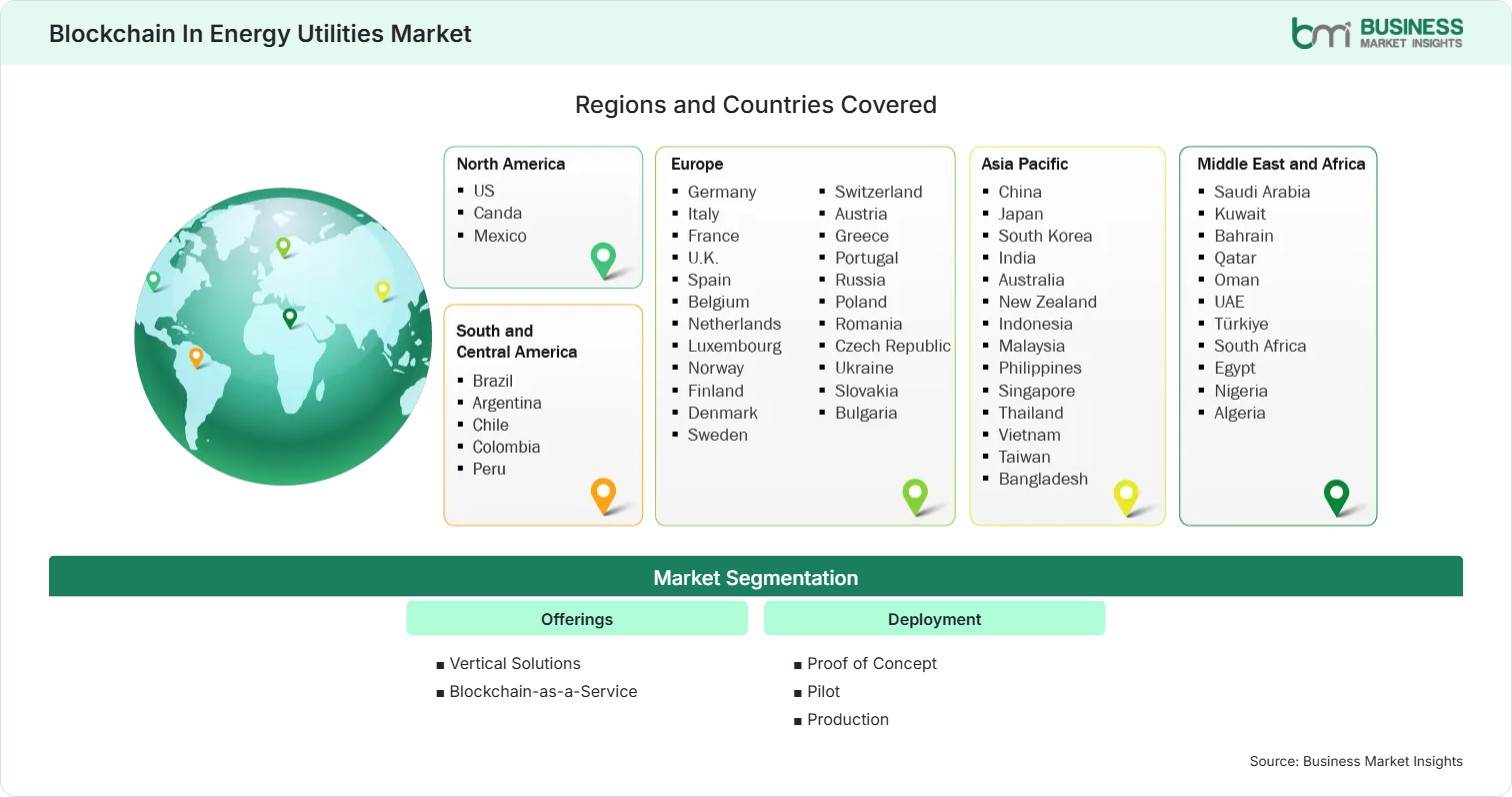
Global Market Geography
FREE PDF
Request your free sample
Request free sample
Segment Analysis

Blockchain In Energy Utilities Market Segmentation

Offerings

The Offerings segment accounted for a significant portion of industry revenue in 2025 as utilities increasingly adopted scalable digital platforms supporting decentralized energy transactions, renewable certificate management, and intelligent grid operations. Blockchain in Energy Utilities Market scope continues expanding through enterprise modernization initiatives, with this segment holding approximately 54%–57% market share in 2025 and advancing at an estimated 39%–42% CAGR through the forecast period as cloud-native blockchain solutions become mainstream.

  • Vertical Solutions: Industry-specific blockchain platforms enable utilities to optimize electricity trading, renewable asset management, smart contract execution, regulatory compliance, and grid transparency while supporting customized operational workflows across diverse energy business models.
  • Blockchain-as-a-Service: Cloud-based blockchain services simplify deployment, reduce implementation costs, accelerate scalability, strengthen interoperability, and provide utilities with flexible digital infrastructure supporting secure transactions and enterprise-grade operational efficiency.

Deployment

Deployment strategies continue evolving as utilities transition from pilot initiatives toward enterprise-wide implementation across electricity markets. This segment represents approximately 43%–46% market share in 2025 while expanding at an estimated 40%–43% CAGR during the forecast period, driven by increasing commercialization and operational scalability.

  • Proof of Concept: Organizations validate blockchain performance through controlled demonstrations focusing on transaction security, interoperability, operational feasibility, and integration with existing utility management systems before committing to large-scale investments.
  • Pilot: Pilot deployments evaluate real-world operational performance across selected distribution networks, renewable energy projects, or electricity trading environments, helping utilities optimize technical architecture and establish measurable commercial outcomes.
  • Production: Enterprise-scale implementation supports secure electricity settlements, renewable energy certificate management, decentralized energy trading, digital asset verification, and automated smart contracts, reflecting accelerating commercialization across modern utility ecosystems.
Market Forces

Blockchain In Energy Utilities Market Dynamics

Key Market Drivers

Increasing Grid Digitalization

Electric utilities are accelerating digital transformation by integrating advanced metering infrastructure, Internet of Things devices, cloud computing, and distributed ledger technologies into grid operations. Governments and utilities keep on modernizing their smart grids in order to increase efficiency and flexibility of the grids, along with the use of renewable energy sources. Blockchain in Energy Utilities Market growth becomes more and more dependent on secure decentralized data exchange, automated smart contracts, and efficient asset management systems.

Growing Renewable Energy Integration

The rapid expansion of renewable generation is creating increasingly decentralized electricity networks that require transparent and secure transaction mechanisms. Blockchain enables trusted tracking of renewable electricity generation, carbon credits, renewable energy certificates, and distributed generation assets. The Blockchain in Energy Utilities Market trends are continually gaining from increasing investments made in renewable energy sources because decentralization of energy systems requires secure, automated, and audited transactions for electric power among several parties.

Rising Demand for Secure Energy Transactions

The growing digitization of electrical power markets is causing a growing need for enhanced cybersecurity measures, open settlement processes, and incorruptible transaction histories. The use of smart contracts enables automated electricity transactions, invoicing, renewable certificate verification, and distributed asset management with a minimum amount of human input. Peer-to-peer electricity trading and decentralized energy sources are causing utility companies to focus on blockchain security infrastructure.

Key Market Opportunities

Growing Smart Grid Deployments

Expanding investments in intelligent electricity infrastructure create significant opportunities for blockchain solution providers. There is increasing reliance on secure communication among distributed assets, smart meters, electric vehicle charging networks, battery systems, and utility control centers as smart grids become more common. Blockchain in Energy Utilities Market Forecasts indicate increasing enterprise spending on decentralization of transaction processing, automatic billing, and secure digital identity management of grid entities.

Increasing Carbon Credit Trading

The rising trend towards sustainability and decarbonization of companies has resulted in an increased need for transparent digital carbon markets. Blockchain technology offers unalterable transactional records that streamline the process of issuing, validating, trading, and retiring of carbon credits, minimizing the complexity involved in these processes. Utility companies, renewable energy developers, and other industries have the need for trusted digital technology in their environmental accounting and compliance requirements.

Expanding Distributed Energy Resources

Deployments of rooftop solar installations, battery storage, electric cars, micro-grids, and other community energy initiatives are reshaping the structure of electricity markets. The use of blockchain technology offers decentralized coordination of thousands of these resources through secure validation of transactions and smart contracts. Energy companies that utilize distributed energy resources management systems are starting to demand the use of blockchain technology that will help them to balance electricity production and optimize electricity consumption patterns while improving the transparency of these markets.

Market Restraints and Challenges

Regulatory Uncertainty

Factor: Regulatory frameworks governing blockchain-based electricity transactions, tokenized energy assets, and decentralized electricity markets remain inconsistent across jurisdictions. Impact: This leads to delays in commercialization, higher compliance costs, prolonged testing periods, and discouragement of large investment decisions. Enterprise deployment is often delayed until clearer regulatory guidelines are made available, even when technology is well prepared and demand high for digital utility platforms.

Cybersecurity Risks

Factor: Although blockchain strengthens transaction integrity, surrounding digital infrastructure including cloud platforms, connected devices, application interfaces, and user authentication systems remains vulnerable to cyberattacks. Impact: Security concerns elevate implementation costs, require continuous investment in monitoring and identity management, and lengthen deployment timelines. Utilities must establish comprehensive cybersecurity strategies combining blockchain, encryption, zero-trust architecture, and real-time threat detection to maintain operational resilience and protect critical energy infrastructure.

Company Analysis

Competitive Landscape

The competitive environment is characterized by collaborations between enterprise software providers, blockchain specialists, cloud platform vendors, and digital transformation consultants. Blockchain in Energy Utilities Market analysis indicates that market participants are focusing on scalable Blockchain-as-a-Service offerings, smart contract development, renewable energy certificate management, peer-to-peer electricity trading, and grid digitalization solutions. Strategic partnerships with utilities, renewable energy developers, and transmission operators remain central to commercial deployment.

Company Name

Overview

Products and Services Relevant to this Market

IBM Corporation

Global technology company delivering enterprise blockchain, cloud computing, artificial intelligence, and consulting services supporting digital transformation across regulated industries, including utilities and energy.

IBM Blockchain Platform, hybrid cloud infrastructure, smart contract development, digital asset management, utility data integration, cybersecurity solutions, and blockchain consulting for electricity market modernization.

Greeneum

Clean technology company specializing in blockchain-enabled renewable energy ecosystems supporting sustainable electricity markets, environmental reporting, and decentralized energy transactions.

Renewable energy certificate platforms, carbon credit management, tokenization solutions, blockchain sustainability platforms, decentralized energy marketplaces, and digital environmental asset management.

Oracle Corporation

Enterprise software and cloud infrastructure provider supporting digital transformation through integrated databases, cloud platforms, analytics, and blockchain-enabled enterprise applications.

Oracle Blockchain Platform, cloud infrastructure, utility enterprise applications, supply chain management, digital identity, analytics, and secure transaction management solutions.

Microsoft Corporation

Global cloud technology leader providing enterprise digital infrastructure, artificial intelligence, cybersecurity, and application development platforms for utility modernization initiatives.

Microsoft Azure, blockchain integration services, cloud computing, artificial intelligence, digital identity management, analytics, and secure enterprise application development.

EnergiMine

Energy technology company focused on blockchain-enabled energy efficiency, consumer engagement, decentralized transactions, and sustainable digital energy ecosystems.

Energy reward platforms, blockchain transaction systems, decentralized energy applications, sustainability programs, digital incentives, and energy efficiency solutions.

Accenture plc

International consulting and digital transformation company helping utilities modernize operations through cloud, cybersecurity, artificial intelligence, and blockchain implementation.

Blockchain consulting, utility modernization, digital transformation, cloud integration, cybersecurity services, smart grid consulting, and enterprise technology implementation.

Infosys Limited

Global information technology company delivering enterprise software development, cloud services, digital engineering, and blockchain implementation for utility organizations.

Enterprise blockchain development, cloud transformation, utility software modernization, cybersecurity integration, digital platforms, analytics, and application management services.

SAP SE

Enterprise software company providing integrated digital business platforms supporting asset management, utility operations, sustainability reporting, and blockchain-enabled business processes.

SAP Business Technology Platform, utility management software, enterprise resource planning, blockchain integration, digital asset management, and sustainability analytics.

LO3 Energy Inc.

Energy technology company recognized for decentralized electricity trading platforms supporting community energy markets and distributed energy resource participation.

Peer-to-peer electricity trading platforms, microgrid management, blockchain transaction systems, distributed energy resource coordination, and smart contract solutions.

The Sun Exchange (Pty) Ltd

Renewable energy financing platform utilizing blockchain-enabled models to support solar project investment and distributed clean energy deployment.

Solar investment marketplace, blockchain-enabled financing, renewable asset tokenization, distributed solar funding platforms, and sustainable energy investment solutions.

Trust & Transparency

Research Methodology

The market analysis combines proprietary research with secondary data from government agencies, company disclosures, regulatory filings, industry databases and expert interviews. Market estimates are validated through data triangulation, cross-market benchmarking and analyst review.

View Full Research Methodology

Questions Answered

Frequently Asked Questions

What challenges could limit broader commercial adoption?

Key barriers include regulatory uncertainty, cybersecurity concerns surrounding connected digital infrastructure, integration with legacy utility systems, interoperability limitations, and the shortage of experienced blockchain implementation professionals across energy organizations.

Which factors are driving this Blockchain in Energy Utilities Market Report?

Growing renewable integration, increasing grid digitalization, rising cybersecurity requirements, expanding distributed energy resources, cloud adoption, smart grid deployment, and demand for transparent electricity transactions are collectively accelerating commercial adoption across global utility markets.

Why are utilities investing in Blockchain-as-a-Service platforms?

Blockchain-as-a-Service reduces implementation complexity, minimizes infrastructure costs, enables rapid deployment, improves scalability, strengthens cybersecurity, and allows utilities to integrate distributed ledger capabilities without maintaining extensive on-premises blockchain infrastructure.

Which region is expected to witness the fastest adoption?

Asia Pacific is projected to record the fastest expansion during the forecast period, supported by smart grid investments, renewable energy deployment, digital infrastructure modernization, and favorable government initiatives promoting decentralized electricity ecosystems.

What are the primary applications of Blockchain in Energy Utilities Market?

Blockchain supports peer-to-peer electricity trading, renewable energy certificate management, carbon credit tracking, smart contract automation, grid asset management, billing, decentralized energy coordination, and secure transaction verification across electricity markets.

Access the Full Blockchain In Energy Utilities Market Report

Get segment-level forecasts, regional estimates, competitive benchmarking, company profiles and downloadable Excel datasets.

Access the full Blockchain In Energy Utilities Market Report
350 pages PDF & Excel | 2026-08-18