
Dermatophytic Onychomycosis Treatment Market Outlook: Size, Share, Trends, Growth Analysis, Competitive Landscape & Forecast, 2026–2033

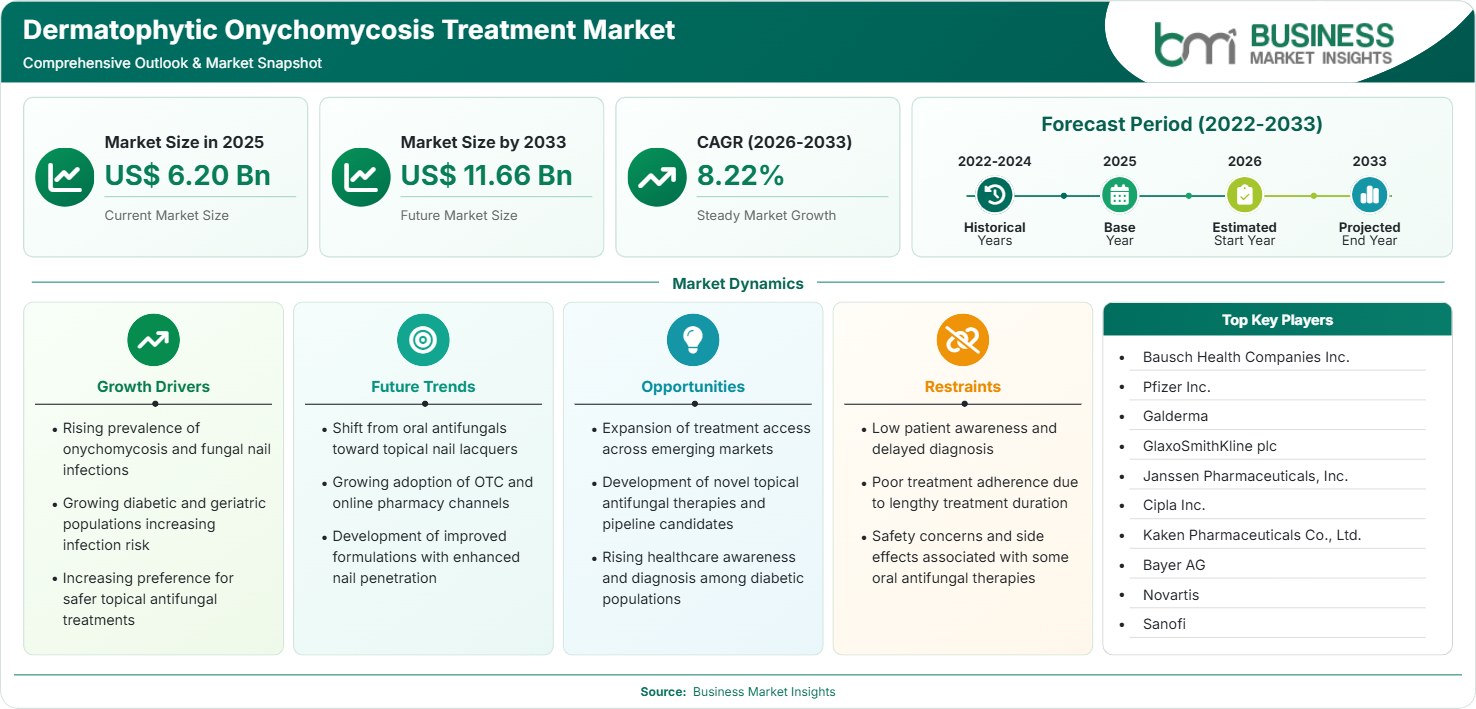
The Dermatophytic Onychomycosis Treatment Market size was valued at US$ 6.20 Billion in 2025 and is projected to reach US$ 11.66 Billion by 2033, growing at a CAGR of 8.22% during 2026–2033. Rising incidence of fungal nail infections, increasing diabetic and geriatric populations, expanding access to dermatological care, and innovation in oral and topical antifungal formulations are strengthening market demand. Growing e-pharmacy penetration and OTC product availability further support long-term revenue expansion globally.

Report Coverage
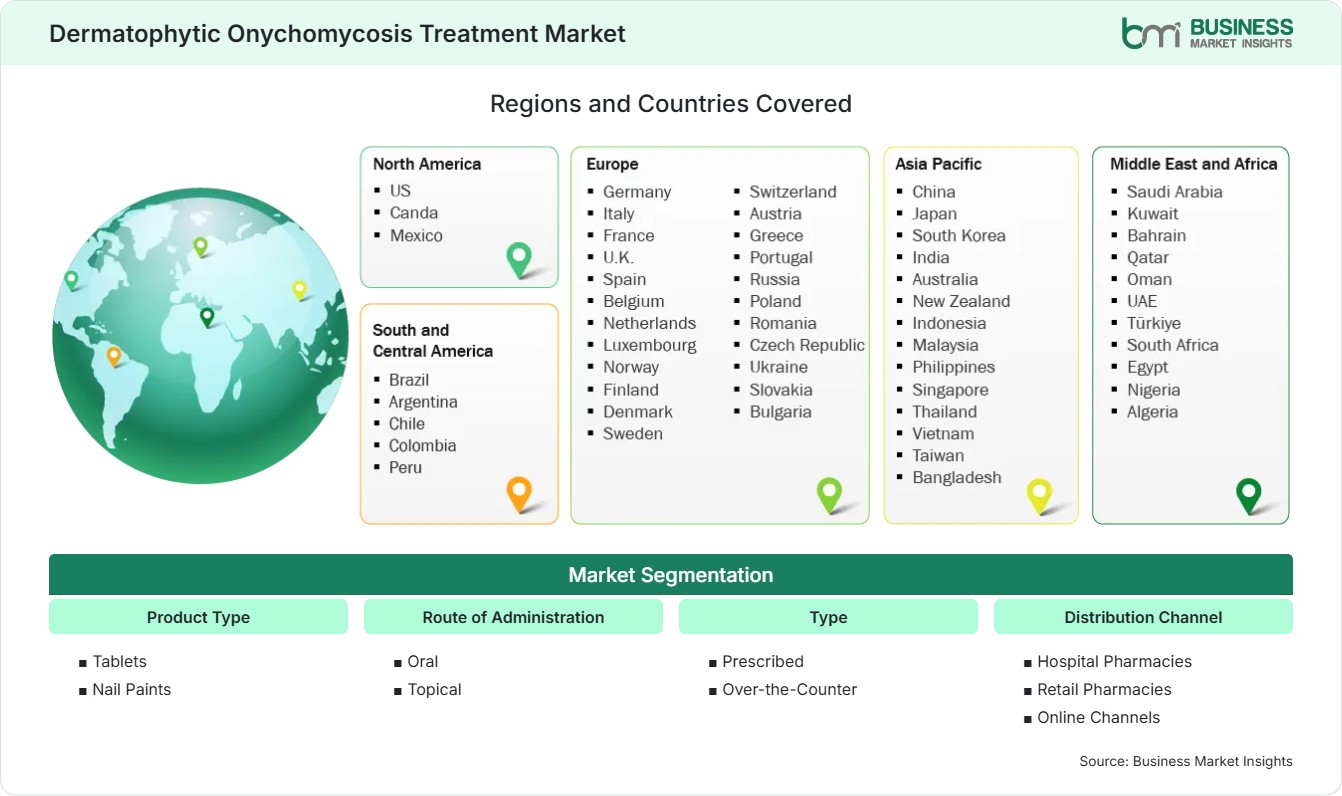
  • Product Type: Tablets, Nail Paints
  • Route of Administration: Oral, Topical
  • Type: Prescribed, Over-the-Counter
  • Distribution Channel: Hospital Pharmacies, Retail Pharmacies, Online Channels
US$ 6.20 Bn Market size in 2025
US$ 11.66 Bn Market Size by 2033
8.22% CAGR, 2026 - 2033
2026-2033 Forecast Period

AI Overview

Dermatophytic Onychomycosis Treatment Market Summary

  • North America Region: North America holds a market share of 38%–41% in 2025 and is projected to grow at a CAGR of 7.4%–7.9% during 2026–2033. Strong diagnosis rates, widespread prescription utilization, advanced reimbursement structures, and ongoing dermatology innovation continue supporting market leadership and sustained commercialization opportunities across healthcare systems. The U.S. remains the largest regional contributor, supported by strong prescription adherence and a CAGR of 7.5%–8.0%.
  • Fastest Growing Region: Asia Pacific accounts for 24%–27% share in 2025 and is forecast to expand at a CAGR of 10.0%–10.6% through 2033. Expanding healthcare access, growing diabetes prevalence, increasing disposable incomes, and strong online pharmaceutical distribution networks continue driving rapid treatment adoption.
  • Leading Segment: Tablets represent 58%–61% share in 2025 and are anticipated to grow at a CAGR of 7.6%–8.1%. Strong clinical efficacy, physician familiarity, established treatment guidelines, and broad global availability maintain segment dominance across major healthcare markets.
  • High Growth Segment: Nail Paints account for 39%–42% share in 2025 and are expected to advance at a CAGR of 9.4%–9.9%. Enhanced nail penetration technologies, lower systemic exposure, better patient compliance, and increasing preference for convenient therapies support accelerated adoption.
  • Key Market Opportunity: Digital healthcare integration is transforming patient access by enabling teledermatology consultations, online prescribing, recurring refill programs, and improved treatment adherence throughout prolonged antifungal therapy cycles.
  • Major Market Players: Bausch Health Companies Inc., Pfizer Inc., Galderma SA, GSK plc, Janssen Pharmaceuticals, Inc., Cipla Limited, Kaken Pharmaceutical Co., Ltd., Bayer AG, Novartis AG, and Sanofi S.A.
Strategic Insights

Dermatophytic Onychomycosis Treatment Market: Strategic Insights

Dermatophytic Onychomycosis Treatment Market Strategic Framework
FREE PDF
Request your free sample
Request free sample
Stakeholder View

Key Takeaways

  • The value chain for treatment is now increasingly involving the participation of pharmaceutical companies, dermatologists, podiatrists, diagnostic agencies, and digital health firms.
  • Topicals are among the most promising opportunities because consumers have become more concerned about the safety of their treatments, especially for mild to moderate toenail infections which require long-term treatment regimens.
  • Development is now increasingly targeting the use of formulation technology which is aimed at improving nail bed penetration, faster fungal destruction, low recurrences, and better results, without increased system absorption.
  • Asia Pacific provides an attractive investment market due to increasing disposable income, greater awareness of skin disorders, improved healthcare facilities, and a large pool of under-diagnosed patients in several nations.
  • Strategic alliances, licensing deals, and generic entry into the market remain vital forces that affect competition, as firms continue striving for better geographical presence and access to higher growth distribution channels.
  • The growth of e-commerce pharmacies and electronic prescription management solutions can become key competitive advantages able to facilitate patient retention and multiple purchases.
Geographic Outlook

Dermatophytic Onychomycosis Treatment Market Regional Highlights

North America Dermatophytic Onychomycosis Treatment Market

North America represents the largest regional market with approximately 38%–41% share during 2025 and is projected to record a CAGR of 7.4%–7.9% through 2033. Strong healthcare expenditure, widespread fungal infection awareness, and established dermatology infrastructure contribute significantly to regional leadership. The Dermatophytic Onychomycosis Treatment Market share remains highest in North America because of favorable reimbursement environments and high utilization of prescription therapies.

  • The increasing number of senior patients increases the risk of getting fungus on nails, hence driving the need for drugs to deal with the condition.
  • Healthcare expenditures in the region are high and drive easy access to better treatments, resulting in higher diagnosis and treatment rates compared to many other healthcare markets in development.
  • The use of teledermatologic technology is helping to identify and treat the condition in populations that previously lacked access to specialist healthcare.
  • Good healthcare literacy means that medical consultations will happen faster, leading to more drug utilization in the region.

US Dermatophytic Onychomycosis Treatment Market

The United States contributes approximately 82%–86% of North American revenue and is expected to grow at a CAGR of 7.5%–8.0% during 2026–2033. Strong physician awareness, high dermatology consultation rates, and well-established pharmaceutical distribution systems continue supporting market expansion. The country serves as a major hub for product launches, dermatological innovation, and commercialization strategies across the antifungal treatment landscape.

  • Strong prescription compliance rates improve treatment completion and contribute to sustained demand for both branded and generic therapies.
  • Growing diabetes prevalence increases susceptibility to fungal nail infections, strengthening long-term treatment requirements across adult patient populations.
  • Expanded retail pharmacy networks increase accessibility of prescription and non-prescription therapeutic alternatives for patients.
  • Digital healthcare platforms and online refill systems improve patient monitoring and encourage continued treatment adherence during lengthy therapy cycles.

Europe Dermatophytic Onychomycosis Treatment Market

Europe accounts for approximately 27%–30% Dermatophytic Onychomycosis Treatment Market share in 2025 and is forecast to register a CAGR of 7.8%–8.3% during the forecast period. Germany remains the largest revenue contributor due to strong pharmaceutical consumption and comprehensive healthcare access. Spain and selected Eastern European countries are demonstrating relatively stronger growth as healthcare spending and awareness continue improving. Demand remains supported by aging demographics and increasing diagnosis rates.

  • Germany dominates regional revenue generation owing to high prescription usage, efficient healthcare systems, and good availability of specialty treatment centers.
  • Spain is one of the fastest growing markets in Europe with increased awareness and healthcare utilization in dermatology.
  • Generic drug availability is making treatments more affordable and facilitating usage among sensitive populations.
  • Increased digitization in healthcare will make prescriptions easy and help monitor treatment regularly for recurring diseases.

Asia Pacific Dermatophytic Onychomycosis Treatment Market

Asia Pacific captures around 24%–27% share in 2025 and is expected to achieve the fastest CAGR of 10.0%–10.6% through 2033. Rising healthcare expenditure, growing urbanization, increasing diabetes incidence, and expanding health insurance coverage are transforming treatment accessibility. China and Japan remain major revenue generators, while India demonstrates particularly strong future growth potential due to improving healthcare access and large patient populations.

  • China benefits from continued healthcare modernization and increasing access to dermatology specialists across urban and semi-urban healthcare facilities.
  • India demonstrates high-growth potential supported by rising healthcare awareness, expanding pharmaceutical distribution, and growing diagnosis rates.
  • Rapid growth of online pharmacies increases convenience and broadens access to treatment products among consumers.
  • Urban healthcare investments support utilization of advanced therapeutic products across both public and private healthcare settings.

Rest of World Dermatophytic Onychomycosis Treatment Market

Rest of World contributes approximately 8%–10% Dermatophytic Onychomycosis Treatment Market share in 2025 and is anticipated to grow at a CAGR of 8.4%–8.9% through 2033. South and Central America benefit from increasing healthcare accessibility and rising awareness of dermatological disorders. Meanwhile, Middle Eastern and African markets continue developing through healthcare modernization initiatives, improving specialist availability and broader pharmaceutical access across urban healthcare centers.

  • Brazil remains a leading South American market due to strong pharmaceutical distribution and improving awareness of fungal nail disorders.
  • Saudi Arabia is emerging as a high-growth market supported by healthcare transformation initiatives and expanding specialty-care infrastructure.
  • Private healthcare investments are improving access to advanced treatment options throughout several major metropolitan regions.
  • Expansion of e-pharmacy channels is helping overcome distribution challenges and improving patient access to therapies.
Global Market Geography
FREE PDF
Request your free sample
Request free sample
Segment Analysis

Dermatophytic Onychomycosis Treatment Market Segmentation

Product Type

Product type remains one of the most influential determinants of treatment selection. Tablets continue to dominate due to strong physician preference and proven effectiveness in moderate-to-severe infections. The leading product category held approximately 58%–61% share in 2025 and is projected to expand at 7.6%–8.1% CAGR through 2033. The Dermatophytic Onychomycosis Treatment Market scope continues expanding as manufacturers develop innovative topical formulations capable of improving adherence and clinical outcomes.

  • Tablets: Oral antifungal therapies remain the standard treatment approach for extensive fungal nail infections because they provide systemic activity, established clinical success, and strong physician confidence.
  • Nail Paints: Growing consumer preference for localized therapy, improved safety characteristics, and formulation advancements are supporting increased adoption across mild and moderate infection categories.

Route of Administration

Route of Administration plays an important role in treatment selection, influencing efficacy, patient compliance, and therapeutic outcomes. Oral administration remains the leading route, holding approximately 56%–59% Dermatophytic Onychomycosis Treatment Market share in 2025 and registering a CAGR of 7.5%–8.0% through 2033. Oral therapies are widely prescribed for moderate-to-severe infections because of their systemic activity and established clinical effectiveness. However, growing concerns regarding prolonged systemic treatment and increasing adoption of advanced topical formulations are gradually reshaping prescribing patterns. Expanding patient preference for convenient and safer treatment approaches continues to support innovation across administration routes.

  • Oral: Preferred for extensive nail involvement and difficult-to-treat infections where deeper systemic antifungal action is required to achieve successful therapeutic outcomes.
  • Topical: Rapidly expanding owing to ease of application, lower systemic risks, and increasing availability of clinically advanced formulations that improve nail penetration.

Type

Type-based segmentation remains significantly influenced by physician prescribing practices and healthcare reimbursement frameworks. Prescribed products lead the segment with approximately 67%–70% Dermatophytic Onychomycosis Treatment Market share in 2025 and are expected to grow at a CAGR of 7.7%–8.2% during 2026–2033. Their dominance is supported by stronger clinical efficacy, specialist recommendations, and adoption in moderate-to-severe fungal nail infections. At the same time, increasing consumer awareness, improved product availability, and rising self-care trends are encouraging greater utilization of non-prescription alternatives. The segment continues evolving as patients seek earlier treatment intervention and more accessible therapeutic options.

  • Prescribed: Professional medical oversight, stronger formulations, and suitability for severe infections continue supporting category leadership across global healthcare markets.
  • Over-the-Counter (OTC): Convenience, affordability, and growing self-medication behavior are contributing to expanding consumer demand worldwide.

Distribution Channel

Distribution channels are evolving rapidly as digital healthcare ecosystems reshape purchasing behavior across prescription and consumer healthcare markets. Hospital Pharmacies, Retail Pharmacies, and Online Channels collectively support broad treatment accessibility and product availability. Retail Pharmacies remain the leading distribution channel, accounting for approximately 44%–47% share in 2025 and expanding at a CAGR of 7.8%–8.3% during 2026–2033. The Dermatophytic Onychomycosis Treatment Market trends increasingly reflect consumer preference for convenience, digital prescriptions, and home-delivery pharmaceutical services.

  • Hospital Pharmacies: Essential for specialist-prescribed therapies, patient counseling, and management of advanced or recurring fungal infections.
  • Retail Pharmacies: Maintain strong market relevance through accessibility, pharmacist guidance, and trusted consumer relationships developed over time.
  • Online Channels: Experiencing rapid expansion due to telehealth integration, simplified ordering processes, and recurring delivery models supporting patient adherence.
Market Forces

Dermatophytic Onychomycosis Treatment Market Dynamics

Key Market Drivers

Rising Prevalence of Diabetes and Aging Population Worldwide

Increasing prevalence of diabetes and associated diseases related to age contributes to increasing the number of people globally who have onychomycosis due to fungal infection. As people age, their nails tend to grow slowly; they suffer from poor circulation and are susceptible to diseases that can lead to infections with dermatophytes. Diabetic patients face a high risk of fungal infection due to compromised immunity and associated foot problems. More attention is being paid by healthcare professionals towards preventive measures as well as treatment for fungal infection. These demographic trends remain among the most influential factors supporting sustained expansion of the Dermatophytic Onychomycosis Treatment Market across both developed and emerging healthcare systems.

Advancements in Antifungal Formulations and Delivery Technologies

Pharmaceutical innovation is driving improvements in therapeutic effectiveness through enhanced delivery systems, improved nail penetration technologies, and patient-friendly formulations. Pharmaceutical manufacturers are now producing highly advanced formulations of topical medications as well as nail lacquers with the aim of enhancing drug concentrations at the site of infection while minimizing systemic absorption. This approach not only promotes greater adherence to treatment regimens but also provides improved results when compared to previous generations of medication. Health care providers are now promoting treatment strategies which take into account efficacy, safety, and convenience in order to foster adoption by more patients. Better science behind formulations is also helping pharmaceuticals differentiate themselves in an increasingly competitive environment.

Growing Awareness and Improved Access to Dermatological Care

Increasing public awareness regarding fungal nail disorders is encouraging more patients to seek medical advice rather than relying on untreated self-management strategies. Educational efforts by healthcare organizations, clinics, and pharmaceutical companies have focused on the importance of diagnosis and management. Availability of dermatologists and podiatrists along with telemedicine has enhanced the access to specialists' consultations, especially in the urban and semi-urban settings. Patients are now well-informed about their cosmetic problems, possibilities of reoccurrence, and possible complications due to the absence of infection management. Earlier diagnosis helps in increasing the chances of successful treatment and conversion rate of prescriptions. Such trends continue to enhance the utilization of therapeutics and create sustained demand in the market.

Key Market Opportunities

Expansion of Teledermatology and Digital Healthcare Platforms

Transformation towards digital healthcare is providing lucrative growth prospects through enhanced patient access to specialty care and antifungal treatments. The teledermatology platform helps the provider assess the condition, give treatment recommendations, and monitor the results from a distance. This kind of approach is especially useful where there is still a shortage of specialists in dermatology. The use of electronic prescription, refill online options, and digital reminders for patients could help boost the adherence rate during prolonged periods of treatment. Pharmaceutical companies cooperate with digital health providers more and more often. Dermatophytic Onychomycosis Treatment Market Forecasts indicate that digitally enabled patient management ecosystems could become a major competitive differentiator, particularly as consumers increasingly prefer convenient healthcare access and remote consultation services.

Untapped Demand Across Emerging Asian and Latin American Markets

Emerging economies continue presenting substantial commercial opportunities due to growing healthcare expenditure, expanding health insurance coverage, and improving pharmaceutical accessibility. The countries of India, Indonesia, Vietnam, Brazil, and Mexico are experiencing growing demand for dermatology and medication-based therapy. High population numbers, increased diagnostic rates, and greater awareness of fungal nail diseases create an ideal climate for long-term growth. Pharmaceutical companies are focusing on local distribution agreements and physician education campaigns to enhance their market presence. Enhanced health care infrastructure and digitization of pharmacies are providing an added boost to the adoption of therapies.

Development of Personalized and Combination Therapy Approaches

The future of fungal nail infection management is expected to involve increasingly personalized treatment strategies. Healthcare providers are exploring approaches that combine oral and topical therapies to improve efficacy and reduce recurrence risk. Developments in diagnostic technologies might help identify the fungal strain and determine patients' personalized treatment needs. Personalized treatments not only deliver better results but also help position products as premium in the market. Combined treatment is another area gaining importance due to its ability to overcome resistant infections. For pharmaceutical companies, it would be worthwhile to invest in research and development in order to gain commercial success.

Market Restraints and Challenges

Long Treatment Cycles and Patient Compliance Challenges

One of the most significant challenges affecting market performance is the prolonged treatment period required to achieve complete fungal nail clearance. Factor: many therapies require several months of continuous treatment before visible improvement becomes apparent. Impact: patients frequently discontinue treatment prematurely because of slow results, perceived lack of effectiveness, or therapy fatigue. Reduced adherence can negatively affect clinical outcomes, increase recurrence rates, and limit overall treatment success. Pharmaceutical companies and healthcare providers continue to invest in education programs designed to improve compliance; however, behavioral and lifestyle factors remain difficult to overcome. Long treatment timelines therefore continue representing a meaningful commercial and clinical challenge across the global treatment landscape.

Systemic Antifungal Safety and Prescribing Limitations

Safety considerations remain an important constraint for certain oral antifungal medications used to treat severe infections. Factor: systemic treatments may require monitoring because of potential drug interactions and patient-specific health considerations. Impact: physicians may adopt a cautious prescribing approach, particularly when treating elderly patients or individuals with multiple comorbidities. These restrictions can limit utilization among selected patient populations and encourage use of alternative therapies that may offer lower efficacy or longer treatment durations. Regulatory guidance and clinical practice recommendations further reinforce careful patient selection. While newer topical products address some safety concerns, prescribing limitations continue influencing treatment patterns and overall market dynamics across key healthcare regions.

Company Analysis

Competitive Landscape

The Dermatophytic Onychomycosis Treatment Market analysis indicates competition among multinational pharmaceutical companies and dermatology-focused participants that leverage strong distribution networks, therapeutic expertise, formulation development capabilities, and branded antifungal product portfolios.

Company Name

Overview

Products and Services Relevant to this Market

Bausch Health Companies Inc.

Global pharmaceutical company with strong dermatology and specialty healthcare operations across major developed and emerging markets.

Efinaconazole-based therapies, dermatology products, specialty pharmaceuticals, and prescription fungal infection treatment solutions.

Pfizer Inc.

Multinational research-driven pharmaceutical company operating across numerous therapeutic areas with extensive global commercial reach.

Prescription medicines, anti-infective products, healthcare research, and pharmaceutical development capabilities relevant to fungal infections.

Galderma SA

Leading dermatology-focused company specializing in therapeutic and aesthetic skin health solutions globally.

Dermatology therapeutics, specialty topical treatments, prescription skin-health products, and patient-support services.

GSK plc

Global healthcare company with broad prescription and consumer-health operations serving multiple international markets.

Consumer healthcare products, dermatological treatments, self-care solutions, and pharmaceutical distribution capabilities.

Janssen Pharmaceuticals, Inc.

Pharmaceutical subsidiary recognized for innovation-driven research and specialty medicine development.

Therapeutic research, specialty medicines, anti-infective development expertise, and healthcare innovation programs.

Cipla Limited

Major generic and specialty pharmaceutical manufacturer with significant presence across emerging economies.

Generic antifungal medicines, prescription therapies, topical products, and affordable treatment solutions.

Kaken Pharmaceutical Co., Ltd.

Japanese pharmaceutical company recognized for strong dermatology specialization and research activities.

Antifungal products, dermatological treatments, physician-focused solutions, and specialty healthcare products.

Bayer AG

Diversified life-sciences company operating across pharmaceuticals and consumer healthcare segments.

OTC antifungal solutions, consumer healthcare products, dermatology-related treatments, and wellness offerings.

Novartis AG

Global pharmaceutical innovator with broad therapeutic and commercialization capabilities.

Prescription medicines, anti-infective development resources, healthcare innovation, and pharmaceutical services.

Sanofi S.A.

International healthcare company with extensive pharmaceutical and consumer healthcare operations.

Consumer healthcare products, prescription medicines, dermatology-related treatments, and global distribution services.

Trust & Transparency

Research Methodology

The market analysis combines proprietary research with secondary data from government agencies, company disclosures, regulatory filings, industry databases and expert interviews. Market estimates are validated through data triangulation, cross-market benchmarking and analyst review.

View Full Research Methodology

Questions Answered

Frequently Asked Questions

What insights does a Market Report provide?

A Dermatophytic Onychomycosis Treatment Market Report evaluates competitive positioning, regional opportunities, segment performance, innovation trends, regulatory influences, investment prospects, and future industry expansion strategies.

How are digital healthcare platforms influencing the industry?

Teledermatology, e-prescriptions, online pharmacies, and digital adherence programs are improving access to treatment while increasing prescription continuity and long-term patient engagement.

Which segment shows the strongest growth potential?

Nail Paints represent the fastest-growing product category due to improved patient convenience, better safety profiles, enhanced formulation technologies, and increasing consumer preference for topical treatment approaches.

Which region currently leads revenue generation?

North America maintains the dominant position because of advanced healthcare infrastructure, high diagnosis rates, favorable reimbursement policies, and strong utilization of prescription antifungal therapies.

What factors are primarily increasing demand for dermatophytic onychomycosis treatments?

Growing diabetes prevalence, aging populations, increasing healthcare awareness, and better access to dermatological care are the key factors driving treatment demand across global markets.

Access the Full Dermatophytic Onychomycosis Treatment Market Report

Get segment-level forecasts, regional estimates, competitive benchmarking, company profiles and downloadable Excel datasets.

Access the full Dermatophytic Onychomycosis Treatment Market Report
350 pages PDF & Excel | 2026-09-20
Similar Research

Related Market Reports