
Nanomedicine Market Outlook: Size, Share, Trends, Growth Analysis, Competitive Landscape & Forecast, 2026–2033

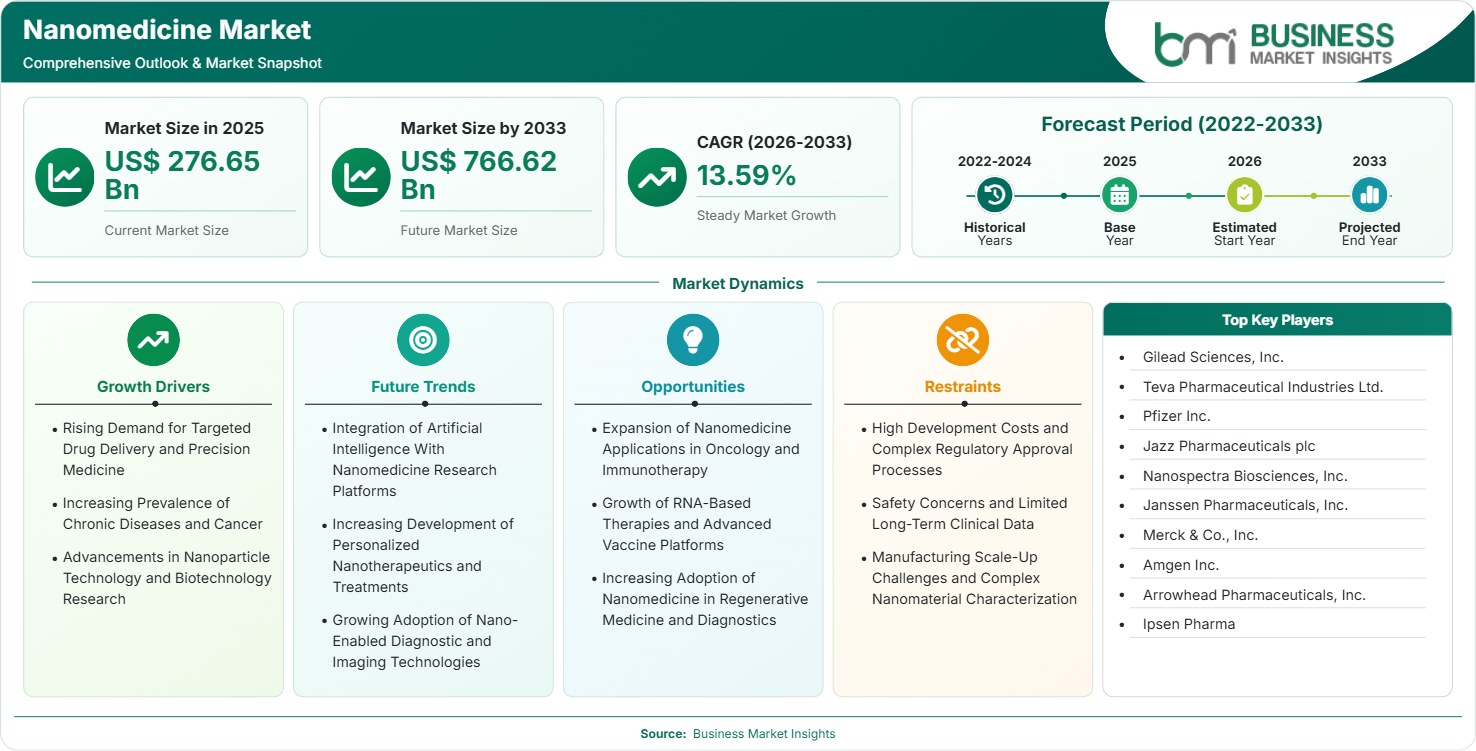
The Nanomedicine Market size was valued at US$ 276.65 Billion in 2025 and is projected to reach US$ 766.62 Billion by 2033, growing at a CAGR of 13.59% during 2026–2033. Increasing adoption of targeted drug delivery systems, rising prevalence of chronic diseases, advancements in nanotechnology-based therapeutics, and growing investments in precision medicine are driving market expansion across pharmaceutical, biotechnology, and healthcare sectors.

Report Coverage
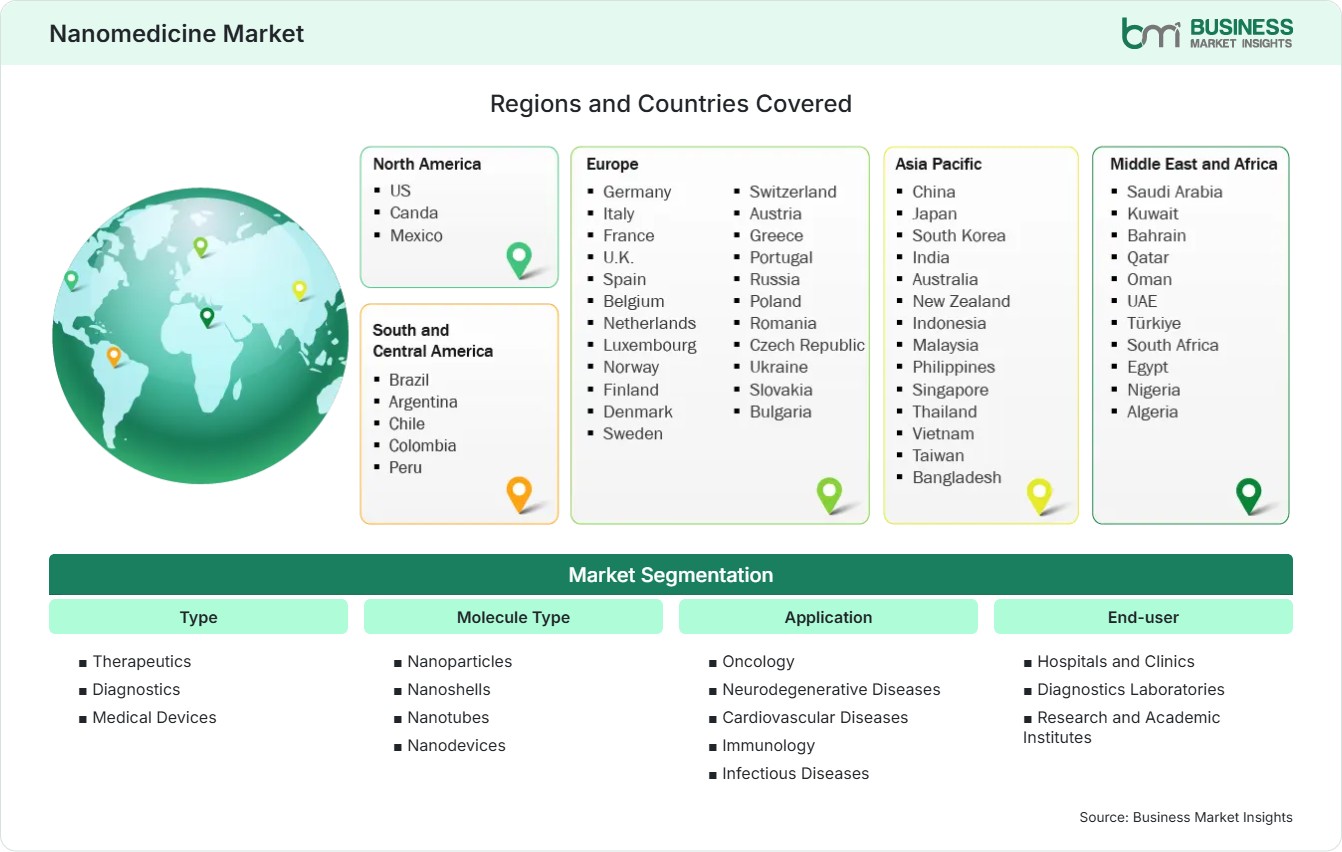
  • Type: Therapeutics , Diagnostics , Medical Devices
  • Molecule Type: Nanoparticles , Nanoshells, Nanotubes, Nanodevices
  • Application: Oncology, Neurodegenerative Diseases, Cardiovascular Diseases, Immunology, Infectious Diseases
  • End-user: Hospitals and Clinics, Diagnostics Laboratories, Research and Academic Institutes
US$ 276.65 Bn Market size in 2025
US$ 766.62 Bn Market Size by 2033
13.59% CAGR, 2026 - 2033
2026-2033 Forecast Period

01 AI Overview

Nanomedicine Market Summary

  • North America Region: North America accounted for 38%–41% share in 2025 and is expected to grow at a CAGR of 13.2%–13.8% during 2026–2033. Strong pharmaceutical innovation, advanced healthcare infrastructure, and significant investments in biotechnology research support regional dominance. The U.S. represents the largest contributor due to high adoption of nanotechnology-based therapies, clinical research activities, and precision medicine initiatives, registering a CAGR of 13.4%–14.0%.
  • Fastest Growing Region: Asia Pacific represented 27%–30% share in 2025 and is projected to expand at a CAGR of 14.2%–14.8%. Increasing healthcare investments, expanding pharmaceutical manufacturing, rising research activities, and growing adoption of advanced therapies are accelerating regional growth.
  • Leading Segment: Therapeutics accounted for 46%–49% share in 2025 and is projected to grow at a CAGR of 13.8%–14.4% due to increasing demand for targeted drug delivery, nanocarrier-based treatments, and improved therapeutic efficacy.
  • High Growth Segment: Nanoparticles are expected to register a CAGR of 14.5%–15.1% owing to increasing utilization of lipid-based nanoparticles, polymer-based systems, and inorganic nanoparticles in drug delivery and vaccine technologies.
  • Key Market Opportunity: Growing applications of nanomedicine in oncology, personalized medicine, gene therapy, regenerative medicine, and advanced diagnostics are creating significant opportunities for pharmaceutical and biotechnology companies.
  • Major Market Players: Gilead Sciences, Inc., Teva Pharmaceutical Industries Ltd., Pfizer Inc., Jazz Pharmaceuticals plc, Nanospectra Biosciences, Inc., Janssen Pharmaceuticals, Inc., Merck & Co., Inc., Amgen Inc., Arrowhead Pharmaceuticals, Inc., and Ipsen Pharma.
02 Strategic Insights

Nanomedicine Market: Strategic Insights

Nanomedicine Market Strategic Framework
FREE PDF
Request your free sample
Request free sample
03 Stakeholder View

Key Takeaways

  • The market value chain includes nanomaterial manufacturers, biotechnology companies, pharmaceutical developers, diagnostic technology providers, healthcare institutions, and research organizations involved in nanotechnology innovation.
  • Oncology and targeted therapeutics represent major growth opportunities as nanomedicine improves drug delivery precision and enhances treatment outcomes for complex diseases.
  • Lipid nanoparticles, polymer-based nanocarriers, and nanodevices are gaining importance due to their applications in drug delivery, vaccines, diagnostics, and regenerative medicine.
  • Asia Pacific provides attractive growth opportunities due to expanding healthcare infrastructure, increasing pharmaceutical research investments, and rising adoption of advanced medical technologies.
  • Strategic collaborations between pharmaceutical companies, biotechnology firms, research institutes, and healthcare providers are accelerating commercialization of nanomedicine-based therapies and diagnostic platforms.
  • The presence of major pharmaceutical companies, advanced clinical research networks, and supportive regulatory frameworks continues accelerating nanomedicine commercialization.
04 Geographic Outlook

Nanomedicine Market Regional Highlights

North America Nanomedicine Market

North America accounted for 38%–41% share in 2025 and Market forecast to grow at a CAGR of 13.2%–13.8% during 2026–2033. The region maintains a leading position due to strong pharmaceutical research capabilities, advanced healthcare infrastructure, high adoption of innovative therapies, and significant investments in biotechnology development. The Nanomedicine Market share remains highest in North America as organizations increasingly invest in targeted therapies, molecular diagnostics, and next-generation drug delivery technologies.

  • The U.S. pharmaceutical industry continues expanding nanotechnology-based research for oncology, vaccines, gene therapies, and precision medicine applications.
  • Biotechnology companies are increasing investments in nanoparticle platforms to improve therapeutic delivery and treatment effectiveness.
  • Research institutions are collaborating with pharmaceutical developers to accelerate clinical development of nanomedicine-based solutions.
  • Healthcare providers are adopting advanced diagnostic and therapeutic technologies to improve disease management and patient outcomes.

US Nanomedicine Market

The United States represented 84%–88% of North American revenue in 2025 and US Nanomedicine Market forecast to register a CAGR of 13.4%–14.0% through 2033. Strong pharmaceutical innovation, increasing healthcare expenditure, and growing investment in precision medicine continue supporting market expansion. The country remains a global hub for nanotechnology research, biotechnology development, and commercialization of advanced therapeutic platforms.

  • Leading pharmaceutical companies are developing nanoparticle-based treatments for cancer, genetic disorders, and infectious diseases.
  • Government and private research funding continues supporting innovation in nanotechnology-enabled healthcare solutions.
  • Growing demand for personalized medicine is increasing adoption of targeted drug delivery technologies.
  • Advanced clinical trial infrastructure is accelerating development and commercialization of nanomedicine products.

Europe Nanomedicine Market

Europe accounted for 25%–28% share in 2025 and is forecast to expand at a CAGR of 12.8%–13.4% during 2026–2033. The region benefits from strong biomedical research capabilities, established pharmaceutical industries, and increasing investment in advanced healthcare technologies. Germany, the United Kingdom, France, Switzerland, and the Netherlands are key contributors due to their strong biotechnology ecosystems and academic research networks. The Nanomedicine Market growth is supported by rising demand for precision therapies, advanced diagnostics, and innovative medical devices.

  • European pharmaceutical companies are expanding research programs focused on nanocarrier-based drug delivery systems.
  • Regulatory support for innovative healthcare technologies is encouraging development of advanced therapeutic platforms.
  • Academic institutions continue contributing through nanotechnology research collaborations and clinical innovation.
  • Increasing healthcare expenditure is supporting adoption of advanced diagnostics and personalized treatment approaches.

Asia Pacific Nanomedicine Market

Asia Pacific represented 27%–30% share in 2025 and is projected to achieve the fastest CAGR of 14.2%–14.8% during 2026–2033. Rapid healthcare modernization, increasing pharmaceutical manufacturing capabilities, rising research investments, and growing disease burden are driving regional demand. China, Japan, India, South Korea, and Singapore are emerging as important centers for nanotechnology research and biotechnology development. The Nanomedicine Market trends indicate increasing adoption of advanced therapies and diagnostic solutions across developing healthcare systems.

  • China is expanding nanotechnology research through government-supported pharmaceutical and biotechnology initiatives.
  • India is increasing investments in affordable advanced therapies, biotechnology research, and healthcare innovation.
  • Japan and South Korea continue advancing nanomedicine applications through strong electronics, biotechnology, and medical research capabilities.
  • Southeast Asian countries are improving healthcare infrastructure and adopting advanced diagnostic technologies.

Rest of World Nanomedicine Market

The Rest of World accounted for 7%–10% share in 2025 and is expected to grow at a CAGR of 12.5%–13.1% during 2026–2033. Latin America, the Middle East, and Africa are gradually increasing adoption of advanced healthcare technologies as medical infrastructure improves and investments in biotechnology expand. Growing awareness of precision medicine and increasing healthcare modernization initiatives are creating opportunities for nanomedicine providers.

  • Middle Eastern countries are investing in advanced healthcare facilities and biotechnology research capabilities.
  • Latin American markets are increasing adoption of innovative therapies to address rising chronic disease prevalence.
  • African healthcare systems are gradually improving access to advanced diagnostics and specialized treatment technologies.
  • International pharmaceutical companies are expanding partnerships to improve availability of advanced healthcare solutions in emerging markets.
Global Market Geography
FREE PDF
Request your free sample
Request free sample
05 Segment Analysis

Nanomedicine Market Segmentation

Type

The Type segment includes Therapeutics, Diagnostics, and Medical Devices. Therapeutics accounted for the largest 46%–49% share in 2025 and is projected to grow at a CAGR of 13.8%–14.4% during 2026–2033. Increasing demand for targeted drug delivery systems, improved therapeutic efficacy, and advanced treatments for complex diseases continues supporting segment expansion. The Nanomedicine Market scope is expanding as pharmaceutical companies increasingly utilize nanoscale technologies to improve drug absorption, reduce toxicity, and enhance treatment outcomes.

  • Therapeutics: Nanomedicine-based therapeutics use nanoscale carriers to deliver active pharmaceutical ingredients more effectively. Applications include cancer treatments, gene therapies, biologics, and small molecule drug delivery systems that improve precision and reduce unwanted side effects.
    • Biologics: Nanotechnology is improving delivery of complex biological therapies, including proteins, vaccines, and genetic materials, by enhancing stability, cellular targeting, and therapeutic performance.
    • Small Molecules: Nanocarriers improve solubility, bioavailability, and controlled release of small molecule drugs, supporting more effective treatment strategies across multiple disease areas.
  • Diagnostics: Nanomedicine-based diagnostics enhance disease detection through advanced imaging technologies, in-vitro diagnostics, and molecular detection platforms with improved sensitivity and accuracy.
    • IVD: Nanotechnology improves diagnostic testing through highly sensitive detection systems capable of identifying biomarkers associated with infectious diseases, cancer, and other medical conditions.
    • Imaging: Nanoparticle-based contrast agents improve medical imaging capabilities by enabling more precise visualization of biological structures and disease progression.
    • Others: Includes emerging diagnostic applications utilizing nanosensors, biosensors, and advanced molecular detection technologies.
  • Medical Devices: Nanotechnology is supporting development of advanced medical devices focused on regenerative medicine, implants, and improved biological compatibility.
    • Regenerative Medicine: Nanomaterials are enabling tissue engineering, cell regeneration, and advanced biomaterial development for repairing damaged tissues.
    • Implants: Nano-engineered implant surfaces improve biocompatibility, durability, and integration with biological systems.

Molecule Type

The Molecule Type segment comprises Nanoparticles, Nanoshells, Nanotubes, and Nanodevices. Nanoparticles dominated the market with 52%–55% share in 2025 and are expected to register the fastest CAGR of 14.5%–15.1% through 2033. Increasing utilization in drug delivery, vaccines, cancer therapy, and diagnostic applications is driving demand for nanoparticle-based technologies. The Nanomedicine Market trends show increasing adoption of advanced nanomaterials for precision healthcare applications.

  • Nanoparticles: Nanoparticles are widely used because of their ability to improve drug delivery efficiency, enhance therapeutic targeting, and support controlled release mechanisms.
    • Lipid Based: Lipid nanoparticles provide efficient delivery platforms for nucleic acids, vaccines, and therapeutic molecules due to their biocompatibility and ability to protect sensitive compounds.
    • Polymers & Polymer Drug Conjugates: Polymer-based systems enable controlled drug release, improved stability, and targeted delivery for various pharmaceutical applications.
    • Inorganic Nanoparticles: Inorganic nanoparticles support imaging, diagnostics, and therapeutic applications through unique optical, magnetic, and chemical properties.
  • Nanoshells: Nanoshell technologies are used in targeted therapies and imaging applications due to their ability to interact with specific wavelengths of light and improve treatment precision.
  • Nanotubes: Nanotubes are being explored for drug delivery, biosensing, and regenerative medicine because of their unique structural and electrical characteristics.
  • Nanodevices: Nanodevices support advanced diagnostics, monitoring systems, and personalized medicine through highly sensitive nanoscale detection and therapeutic mechanisms.

Application

The Application segment includes Oncology, Neurodegenerative Diseases, Cardiovascular Diseases, Immunology, and Infectious Diseases. Oncology accounted for the leading application segment due to increasing use of nanomedicine in targeted cancer therapy, drug delivery, and diagnostic imaging. Rising cancer prevalence and demand for personalized treatment approaches continue driving adoption.

  • Oncology: Nanomedicine improves cancer treatment by enabling targeted drug delivery, reducing toxicity, and increasing therapeutic concentration at tumor sites.
  • Neurodegenerative Diseases: Nanotechnology supports development of therapies for neurological disorders by improving drug delivery across biological barriers.
  • Cardiovascular Diseases: Nanomedicine applications include targeted therapies, imaging technologies, and advanced delivery systems for cardiovascular treatment.
  • Immunology: Nanotechnology enhances immune-based therapies, vaccines, and immunomodulation strategies for disease management.
  • Infectious Diseases: Nanomedicine supports development of advanced antimicrobial therapies, diagnostics, and vaccine delivery platforms.

End-user

The End-user segment includes Hospitals and Clinics, Diagnostics Laboratories, and Research and Academic Institutes. Hospitals and Clinics represent the leading end-user segment due to increasing adoption of advanced therapeutic and diagnostic solutions. Research institutions also play an important role by supporting innovation, clinical development, and commercialization of nanotechnology-based healthcare products.

  • Hospitals and Clinics: Increasing adoption of targeted therapies, advanced imaging systems, and precision medicine solutions is driving demand among healthcare providers.
  • Diagnostics Laboratories: Laboratories are adopting nanotechnology-enabled testing platforms to improve diagnostic accuracy and early disease detection.
  • Research and Academic Institutes: Universities and research organizations contribute to nanomedicine development through clinical studies, material research, and technology innovation.
06 Market Forces

Nanomedicine Market Dynamics

Key Market Drivers

Rising Demand for Targeted Drug Delivery and Precision Medicine

Precision medicine is one of the main contributors to the growing trend in the Nanomedicine Market. Conventional drug delivery suffers from several problems including low bioavailability, toxicity, and poor distribution of drugs throughout the body. This problem is addressed by the use of nanomedicine that facilitates targeting of drugs to certain cells and tissues within the body. In addition to improving the stability and absorption of the drugs, nanoparticles have controlled release mechanisms that increase the effectiveness of the treatments. With the move towards individualized treatments in healthcare, there is expected to be an increased uptake of nanomedicine techniques.

Increasing Prevalence of Chronic Diseases and Cancer

The increasing global prevalence of cancer, cardiovascular diseases, neurological ailments, and infections has greatly increased the need for new treatment technologies. One of the biggest applications of nanomedicine lies in the treatment of cancer since the nanoparticles can help in delivering the drugs to the affected sites without damaging any other tissue. The use of nanomedicine for treating disease helps in offering better efficiency in the treatment process due to high concentrations of drug, controlled release, and fewer side effects. Increased funding for oncology, immunotherapy, and combination therapies has fast-tracked the commercial development of nanomedicine products.

Advancements in Nanoparticle Technology and Biotechnology Research

Continuous advancements in nanomaterials, biotechnology, and molecular engineering are creating new opportunities for nanomedicine development. Innovations in lipid nanoparticles, polymer-based carriers, inorganic nanoparticles, and nanoscale devices are improving the performance of therapeutic and diagnostic applications. The success of nanoparticle-based vaccine delivery has increased interest in broader applications, including gene therapy, RNA-based treatments, and regenerative medicine. Researchers are focusing on developing safer, more efficient, and biologically compatible nanomaterials capable of delivering complex molecules with greater precision.

Key Market Opportunities

Expansion of Nanomedicine Applications in Oncology and Immunotherapy

Oncology is considered a promising area for nanomedicine firms because of increased needs for targeted cancer treatments and personalized medicines. The ability of nanoparticles to provide for improved accumulation of drugs at tumors, higher efficacy, and less toxicity in comparison with traditional methods creates opportunities for the development of new medical devices and products. The increased popularity of immunotherapy and combined treatments gives way to developing technologies that would support improved immune reaction and improved drug delivery. Pharmaceutical firms are implementing new programs related to cancer treatment via nanomedicine applications. Innovations in oncology diagnostics, imaging, and drug delivery are going to create many growth opportunities.

Growth of RNA-Based Therapies and Advanced Vaccine Platforms

The increasing importance of RNA-based medicines and advanced vaccine technologies is creating new opportunities for nanomedicine manufacturers. Lipid nanoparticles have demonstrated strong potential as delivery systems for genetic materials by protecting fragile molecules and enabling efficient cellular uptake. Growing investments in messenger RNA therapies, gene editing technologies, and next-generation vaccines are encouraging pharmaceutical companies to expand nanotechnology capabilities. The development of scalable manufacturing processes and improved nanoparticle formulations will support broader adoption across therapeutic areas.

Increasing Adoption of Nanomedicine in Regenerative Medicine and Diagnostics

Regenerative medicine and advanced diagnostics represent additional growth opportunities as healthcare providers seek technologies capable of improving early disease detection and tissue repair. Nano-engineered biomaterials are enabling advances in tissue engineering, implant development, and cellular regeneration. Nanotechnology-based diagnostic platforms offer enhanced sensitivity, faster detection, and improved accuracy compared with traditional diagnostic methods. The integration of nanosensors, imaging agents, and molecular detection technologies is expanding applications across hospitals, laboratories, and research institutions.

Market Restraints and Challenges

High Development Costs and Complex Regulatory Approval Processes

Factor: Nanomedicine development requires significant investment in research, clinical trials, advanced manufacturing technologies, and regulatory compliance due to the complexity of nanoscale materials. Impact: High development costs can limit innovation among smaller biotechnology companies and increase commercialization timelines. Regulatory agencies require extensive safety evaluations to understand the biological behavior, toxicity, and long-term effects of nanomaterials. The complexity of approval processes may delay product launches and increase overall development expenses.

Safety Concerns and Limited Long-Term Clinical Data

Factor: The interaction between nanomaterials and biological systems remains complex, requiring extensive research to evaluate safety, toxicity, and long-term effects. Impact: Concerns regarding nanoparticle accumulation, immune reactions, and potential toxicity may create challenges for regulatory approval and market acceptance. Healthcare providers and patients require strong clinical evidence demonstrating safety and effectiveness before widespread adoption.

07 Company Analysis

Competitive Landscape

The Nanomedicine Market analysis indicates a highly competitive environment driven by pharmaceutical companies, biotechnology firms, and research organizations focusing on targeted therapies, advanced drug delivery platforms, diagnostic technologies, and regenerative medicine solutions. Leading companies are investing in research and development, strategic partnerships, clinical trials, and commercialization activities to strengthen their market position.

Company Name

Overview

Products and Services Relevant to this Market

Gilead Sciences, Inc.

Biotechnology and pharmaceutical company focused on innovative therapies.

Advanced therapeutics, oncology-related solutions, antiviral treatments, and research-based drug development platforms.

Teva Pharmaceutical Industries Ltd.

Global pharmaceutical company specializing in generic and specialty medicines.

Specialty pharmaceuticals, complex drug formulations, and advanced therapeutic development.

Pfizer Inc.

Global pharmaceutical company with extensive research and development capabilities.

Innovative medicines, vaccines, oncology therapies, and advanced drug delivery research.

Jazz Pharmaceuticals plc

Specialty pharmaceutical company focused on complex therapeutic areas.

Oncology treatments, neuroscience medicines, and innovative pharmaceutical solutions.

Nanospectra Biosciences, Inc.

Biotechnology company specializing in nanoparticle-based medical technologies.

Nano-enabled cancer therapeutics, photothermal therapy platforms, and targeted treatment technologies.

Janssen Pharmaceuticals, Inc.

Pharmaceutical company developing advanced healthcare solutions.

Oncology therapies, immunology treatments, biotechnology products, and innovative medicines.

Merck & Co., Inc.

Global healthcare company with strong pharmaceutical research capabilities.

Oncology therapies, immunology solutions, vaccines, and advanced biomedical research.

Amgen Inc.

Biotechnology company focused on biologic therapies and innovative medicines.

Biologic drugs, targeted therapies, oncology solutions, and biotechnology research.

Arrowhead Pharmaceuticals, Inc.

Biotechnology company specializing in RNA-based medicine development.

RNA interference therapies, nanoparticle delivery technologies, and genetic medicine platforms.

Ipsen Pharma

Specialty pharmaceutical company focused on innovative treatments.

Oncology, neuroscience, rare disease therapies, and advanced pharmaceutical solutions.

10 Trust & Transparency

Research Methodology

The market analysis combines proprietary research with secondary data from government agencies, company disclosures, regulatory filings, industry databases and expert interviews. Market estimates are validated through data triangulation, cross-market benchmarking and analyst review.

View Full Research Methodology

11 Questions Answered

Frequently Asked Questions

What challenges affect the Market?

Major challenges include high research and development costs, complex regulatory approval procedures, safety concerns related to nanomaterials, limited long-term clinical data, and manufacturing complexity.

Why are nanoparticles important in nanomedicine?

Nanoparticles improve drug delivery efficiency by enhancing stability, increasing bioavailability, enabling controlled release, and allowing targeted delivery of therapeutic molecules to specific cells or tissues.

Which segment accounts for the largest market share in nanomedicine?

The Therapeutics segment dominates the market due to increasing adoption of nanoparticle-based drug delivery systems, targeted cancer treatments, biologics, and advanced pharmaceutical therapies.

Which region dominates the Market?

North America holds the largest market share due to strong pharmaceutical innovation, advanced healthcare infrastructure, high research funding, and the presence of leading biotechnology and pharmaceutical companies.

What factors are driving the Nanomedicine Market report growth?

The market is driven by increasing demand for targeted drug delivery, rising prevalence of cancer and chronic diseases, advancements in nanoparticle technologies, growing adoption of precision medicine, and increasing pharmaceutical investments in biotechnology research.

Access the Full Nanomedicine Market Report

Get segment-level forecasts, regional estimates, competitive benchmarking, company profiles and downloadable Excel datasets.

Access the full Nanomedicine Market Report
350 pages PDF & Excel | 2026-08-17