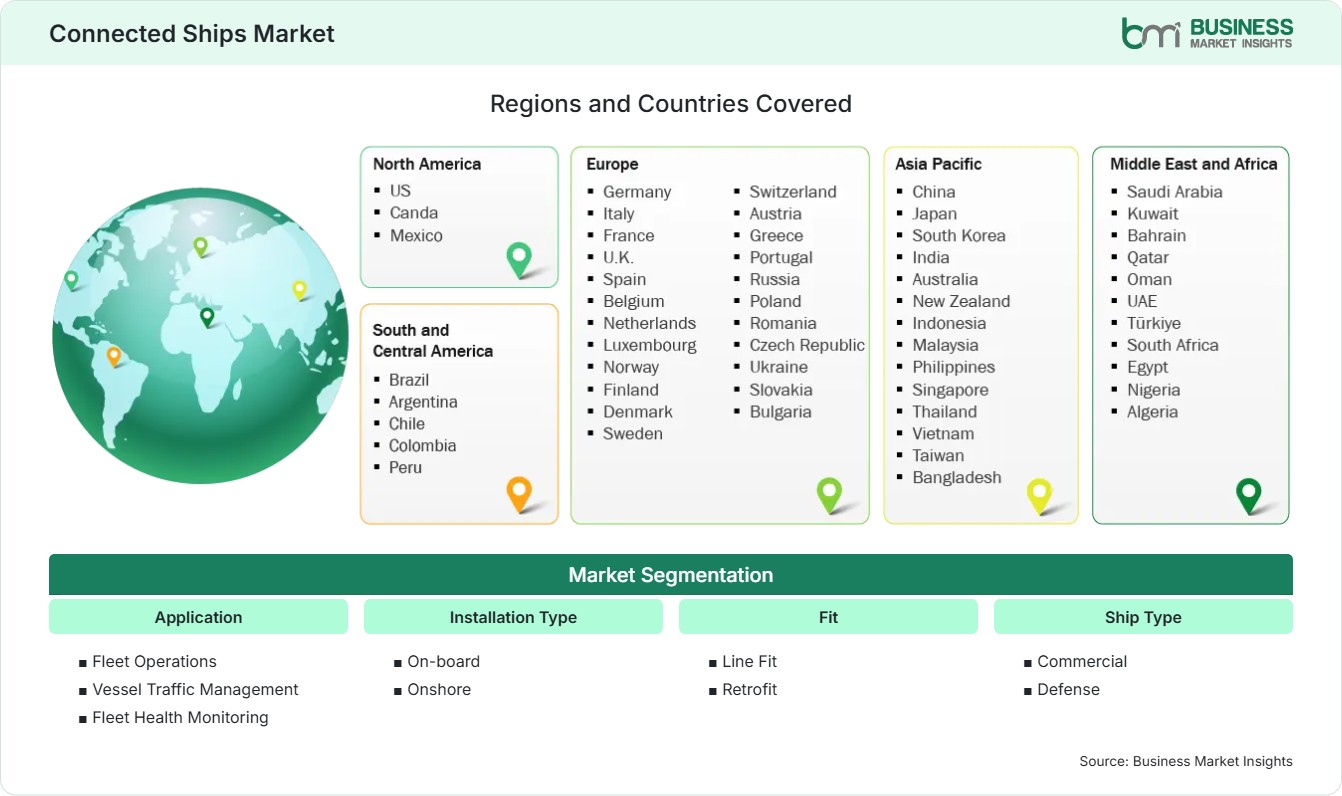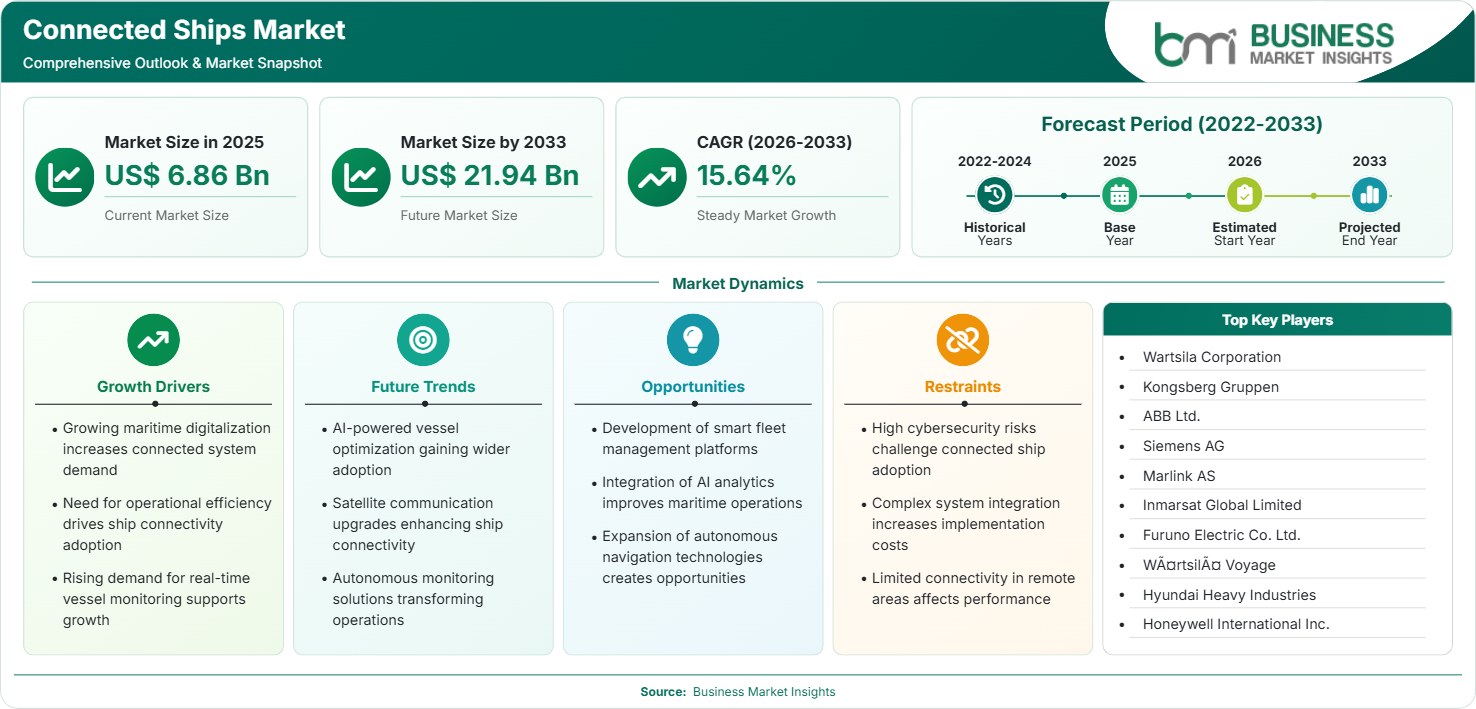
Connected Ships Market Regional Highlights
North America Connected Ships Market
North America accounts for 29%–32% Connected Ships Market share in 2025 and is expected to register a CAGR of 14.8%–15.3% during 2026–2033. Regional growth is supported by advanced maritime communication infrastructure, naval modernization programs, commercial fleet digitization, and increasing investment in satellite-enabled vessel monitoring. Shipping companies continue adopting integrated operational platforms to improve safety, fuel efficiency, regulatory compliance, and fleet visibility across domestic and international maritime operations.
- Commercial fleet operators increasingly deploy cloud-based vessel management platforms to improve operational efficiency and reduce maintenance costs.
- Maritime authorities continue investing in intelligent traffic management systems supporting safer navigation and improved port operations.
- Satellite communication providers expand maritime broadband coverage for reliable global vessel connectivity.
- Rising cybersecurity investments strengthen protection of connected ship networks against evolving maritime cyber threats.
US Connected Ships Market
The United States contributes 80%–83% of North American revenue and is projected to expand at a CAGR of 15.0%–15.5% throughout the forecast period. Strong naval modernization programs, advanced digital infrastructure, and increasing commercial fleet investments continue supporting widespread deployment of connected maritime technologies.
- U.S. shipping companies increasingly adopt predictive maintenance systems to reduce operational downtime.
- Investments in autonomous maritime technologies support long-term digital transformation initiatives.
- Defense modernization programs continue strengthening demand for secure connected vessel platforms.
- Growing implementation of AI-enabled fleet analytics improves operational planning and fuel management.
Europe Connected Ships Market
Europe represents 26%–29% market share in 2025 and is projected to grow at a CAGR of 15.1%–15.7% through 2033. Strict maritime safety regulations, digital shipping initiatives, and widespread adoption of intelligent navigation systems continue supporting regional expansion. Norway leads regional adoption through advanced maritime technologies, while Germany records the fastest growth owing to continued investment in smart shipping infrastructure and vessel modernization.
- European shipowners continue investing in connected fleet management platforms for operational optimization.
- Maritime technology providers strengthen digital navigation capabilities through AI-enabled software solutions.
- Sustainability regulations encourage deployment of intelligent fuel optimization systems.
- Shipbuilders increasingly integrate connected technologies into newly constructed commercial vessels.
Asia Pacific Connected Ships Market
Asia Pacific accounts for 34%–37% market share in 2025 and is expected to register the fastest 16.6%–17.2% CAGR during the forecast period. Expanding shipbuilding industries, rising maritime trade volumes, and increasing government investment in digital ports continue driving regional adoption. China remains the largest market, while South Korea records the fastest growth through investments in autonomous vessels and advanced shipbuilding technologies.
- Rapid expansion of commercial shipping fleets increases demand for connected operational systems.
- Smart port initiatives improve integration between vessels and port infrastructure.
- Shipbuilders continue incorporating intelligent monitoring technologies into new vessel designs.
- Maritime communication providers expand satellite connectivity services across regional trade routes.
Rest of World Connected Ships Market
The Rest of World region represents 8%–11% market share in 2025 and is projected to expand at a CAGR of 15.4%–16.0% through 2033. Growing maritime trade, offshore energy activities, and investments in modern fleet infrastructure continue supporting digital transformation across Latin America, the Middle East, and Africa. Brazil leads regional adoption, while the United Arab Emirates records the fastest growth through smart port development and maritime technology investments.
- Offshore energy operations continue increasing demand for connected vessel monitoring solutions.
- Smart port expansion strengthens regional maritime digital infrastructure.
- Fleet modernization programs improve adoption of intelligent navigation and communication technologies.
- Growing international shipping activity encourages investment in integrated maritime connectivity platforms.