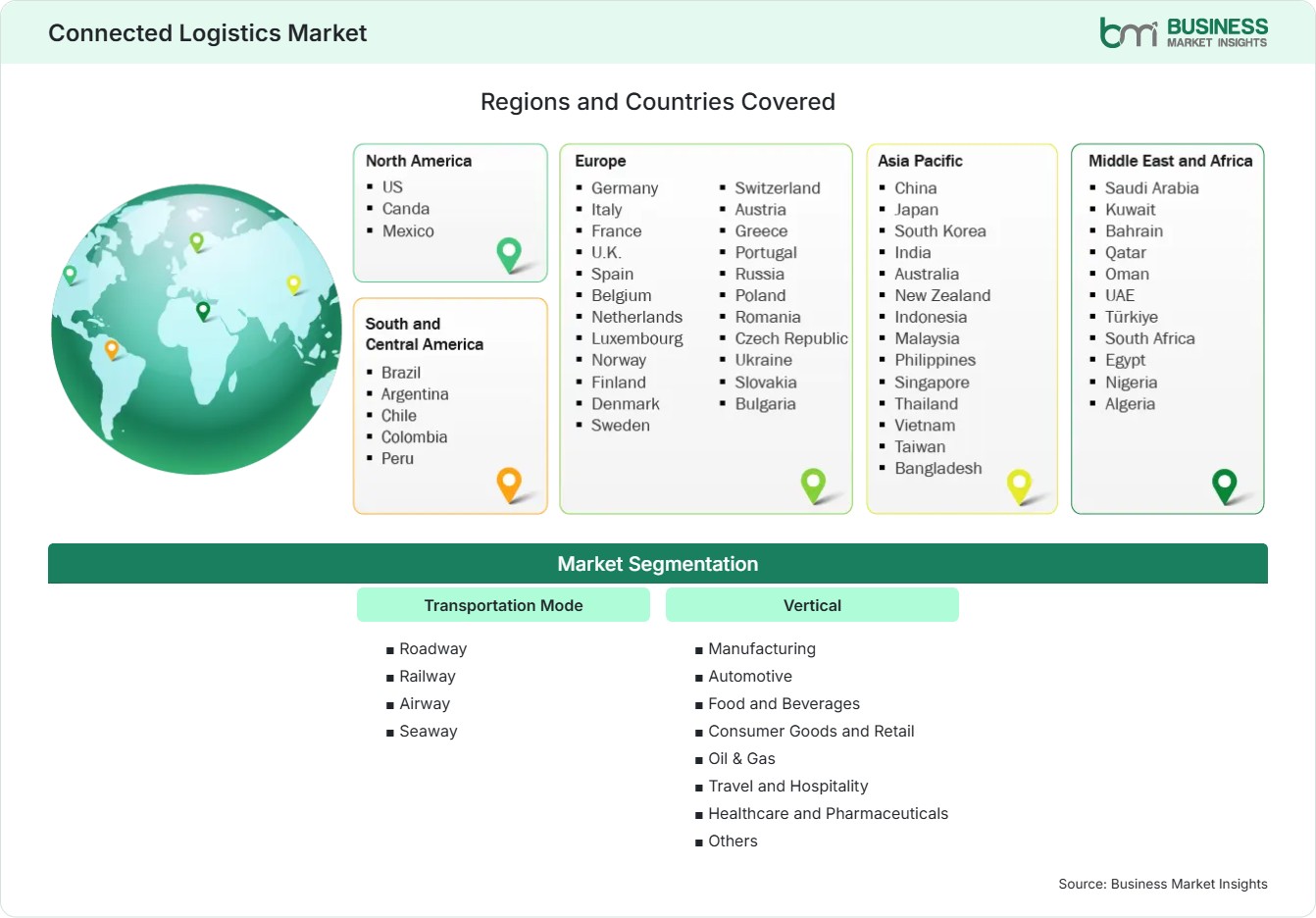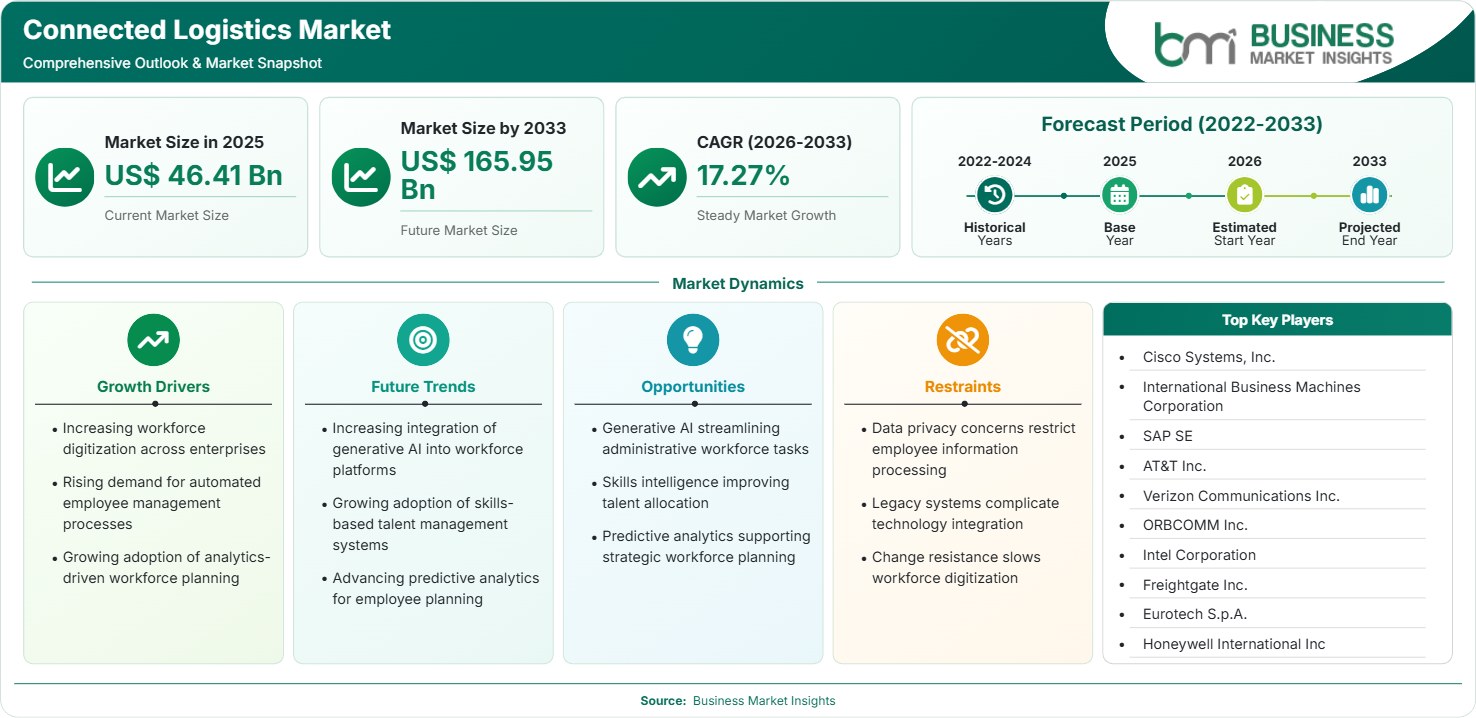
Connected Logistics Market Regional Highlights
North America Connected Logistics Market
North America accounted for approximately 34%–37% of global revenue in 2025 and is projected to expand at a 15.8%–16.6% CAGR through 2033. Regional leadership stems from mature telematics infrastructure, widespread IoT deployment, and strong adoption of logistics visibility platforms among retailers, manufacturers, and transportation providers. The region represents the largest Connected Logistics Market share, supported by advanced transportation networks and continuous investments in digital supply chain transformation. Growth is being reinforced by automation initiatives, predictive fleet management, and increasing integration of cloud-based logistics intelligence platforms.
- E-commerce fulfillment operators continue expanding warehouse automation and connected transportation capabilities to reduce delivery times while improving shipment visibility across increasingly complex distribution networks.
- Enterprises are adopting AI-powered route optimization platforms to improve vehicle utilization, lower transportation expenses, and enhance delivery reliability across long-haul and last-mile operations.
- Rising demand for cold-chain visibility solutions supports implementation of connected monitoring systems in food, beverage, healthcare, and pharmaceutical logistics applications.
- Logistics service providers increasingly deploy predictive maintenance platforms that use fleet telemetry and real-time diagnostics to reduce downtime and improve operational efficiency.
- Cross-border trade between the United States, Canada, and Mexico continues driving investment in integrated tracking and digital freight management technologies.
US Connected Logistics Market
The United States represented approximately 74%–78% of North American revenue in 2025 and is expected to register a 16.0%–16.8% CAGR through 2033. The presence of efficient logistics infrastructure, fast cloud implementation, and extensive fleet management solutions is helpful in expanding the market. The transportation infrastructure in the nation is greatly helped by heavy freight movement, complex warehousing solutions, and investments made in digital transformation of the supply chain process. The increasing need for operational intelligence helps in promoting advanced logistics management systems.
- Large retailers increasingly integrate transportation visibility platforms with fulfillment systems, enabling synchronized inventory management and enhanced customer delivery experiences.
- Manufacturing organizations are deploying connected logistics solutions to improve inbound material visibility and optimize production-related transportation planning.
- Regulatory emphasis on fleet safety and operational transparency encourages adoption of advanced telematics and compliance monitoring technologies.
- Healthcare logistics providers continue investing in connected monitoring systems to support pharmaceutical traceability and temperature-sensitive deliveries.
Europe Connected Logistics Market
Europe maintained a 25%–28% market share in 2025 and is projected to achieve a 16.5%–17.4% CAGR through 2033. Regional adoption is supported by sustainability initiatives, smart mobility strategies, and digital freight modernization programs. Germany remains the leading national market with an estimated CAGR of 16.8%–17.5%, while Poland and other Central European economies demonstrate accelerated deployment trends near 18.0%–19.0%. Integrated transport corridors and advanced industrial ecosystems continue encouraging connected logistics investments across the region.
- Carbon reduction targets are motivating transportation operators to adopt route optimization and fleet efficiency solutions that improve fuel utilization and operational performance.
- Manufacturers increasingly leverage connected tracking technologies to enhance cross-border freight visibility throughout European supply chains.
- Port modernization programs support digital shipment monitoring and multimodal logistics coordination across major maritime trade gateways.
- Automotive companies continue investing in connected transportation systems to improve production scheduling and supplier coordination.
- Digital freight documentation initiatives are enabling more efficient cargo processing and transportation management capabilities.
Asia Pacific Connected Logistics Market
Asia Pacific held approximately 27%–30% of global Connected Logistics Market revenue in 2025 and is expected to record the fastest growth at a 19.0%–20.2% CAGR through 2033. Strong industrialization, expanding regional trade, and logistics infrastructure development support rapid adoption. China remains the largest regional contributor, while India demonstrates one of the highest growth trajectories with a CAGR of 20.0%–21.0%. The region benefits from manufacturing expansion, e-commerce growth, and government-backed digital transportation initiatives supporting Connected Logistics Market growth.
- Smart logistics projects across China, Japan, South Korea, and Singapore accelerate implementation of advanced transportation visibility technologies.
- Rising cross-border e-commerce activity increases demand for real-time shipment monitoring and integrated logistics orchestration platforms.
- Manufacturing relocation strategies encourage investments in connected supply chain networks capable of managing geographically dispersed operations.
- Rapid warehouse construction and automation deployment support growing adoption of asset-tracking and fleet-monitoring technologies.
- National infrastructure modernization programs continue improving connectivity across transportation corridors and logistics ecosystems.
Rest of World Connected Logistics Market
The Rest of World region represented approximately 10%–13% of Connected Logistics Market revenue in 2025 and is forecast to grow at a 17.0%–18.0% CAGR through 2033. South and Central America benefit from increasing freight digitization initiatives and expanding retail logistics networks. Meanwhile, Middle East and African markets are witnessing significant investments in logistics hubs, smart ports, and transportation corridors. Countries such as Brazil, Saudi Arabia, and the United Arab Emirates are emerging as key adopters of connected transportation technologies supporting regional trade development.
- Brazil continues strengthening digital freight management capabilities to improve transportation efficiency and support growing industrial logistics requirements.
- Gulf countries invest heavily in logistics infrastructure modernization, smart ports, and integrated transportation systems aligned with economic diversification goals.
- Mining and energy sectors increasingly utilize connected asset-tracking solutions to improve equipment utilization and operational visibility.
- Expanding retail distribution networks drive demand for route optimization and fleet management technologies across regional logistics ecosystems.
- International trade corridor development encourages greater implementation of cloud-connected logistics monitoring systems.