Automotive Logistics Market Regional Highlights
North America Automotive Logistics Market
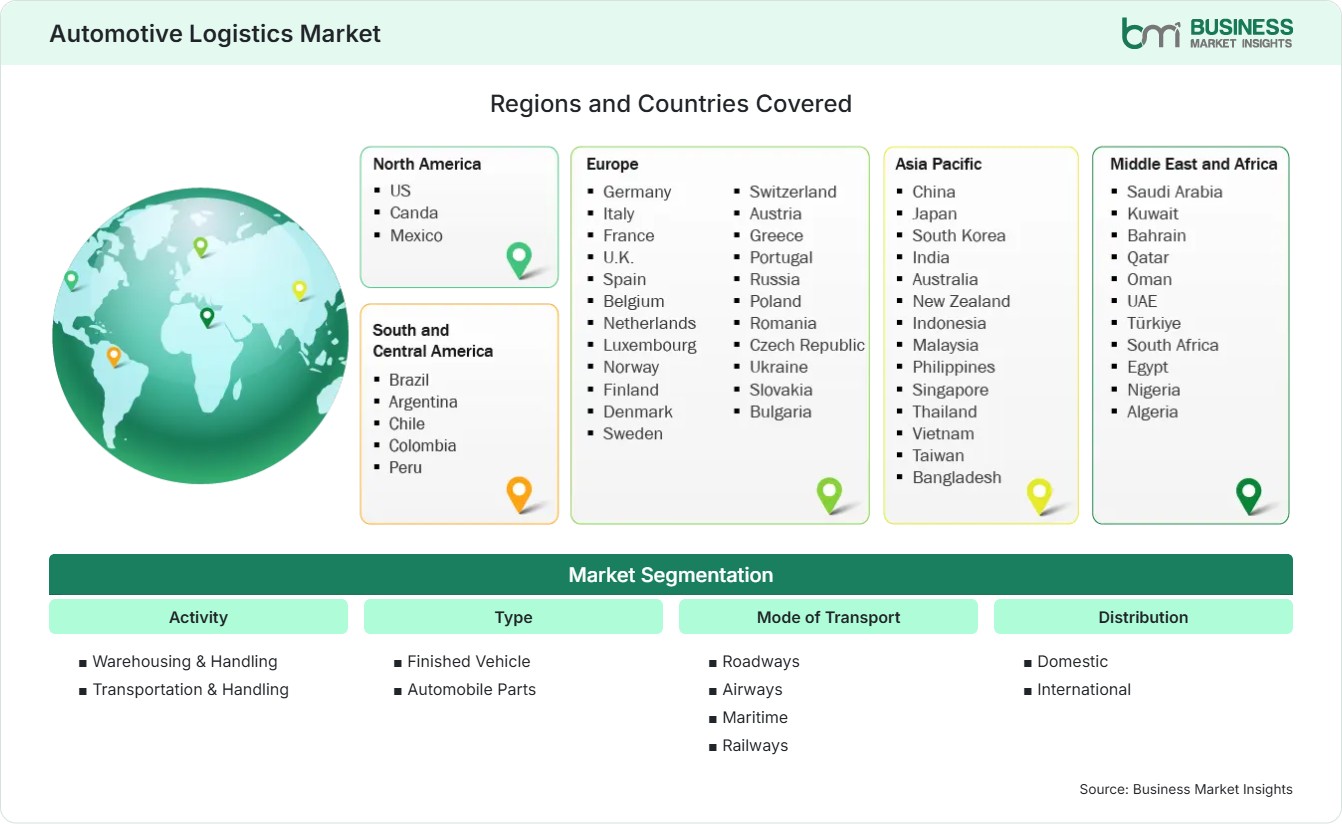
North America accounts for approximately 22%–25% of global revenue in 2025 and is projected to expand at a CAGR of 7.4%–8.0% through 2033. Regional growth is supported by automotive manufacturing investments, increasing EV production, and integrated supply chains connecting the United States, Canada, and Mexico. The Automotive Logistics Market share remains supported by strong aftermarket distribution networks, advanced warehouse infrastructure, and growing demand for supply chain visibility. Automotive manufacturers continue diversifying sourcing strategies to improve resilience and reduce operational risks.
- Nearshoring initiatives are increasing cross-border freight flows between the United States and Mexico, creating stronger demand for integrated transportation and customs management solutions.
- Automotive battery manufacturing projects are expanding logistics requirements for hazardous materials handling, specialized warehousing, and temperature-controlled transportation infrastructure.
- Digital freight management platforms are improving shipment visibility, reducing delays, and enhancing coordination across automotive production and distribution networks.
- Growing aftermarket demand supports warehousing expansion and inventory optimization initiatives across regional automotive service ecosystems.
- Railroad intermodal solutions are gaining importance as manufacturers seek cost-efficient and lower-emission transportation alternatives.
US Automotive Logistics Market
The United States accounts for roughly 76% to 80% of North America's revenue and is projected to experience a CAGR of around 7.5% to 8.1% through 2033. With efficient automobile manufacturing capabilities, robust freight infrastructure, and investments in electric vehicle production, demand for logistics services remains steady. The automation of warehouses, advanced AI-based transportation management systems, and diversification programs help increase operational efficiency.
- EV assembly facilities and battery gigafactories are generating new transportation requirements for specialized components and high-value cargo movements.
- Automotive manufacturers increasingly deploy predictive analytics platforms to improve inventory planning and production continuity.
- Rising aftermarket parts demand supports expansion of regional fulfillment centers and service logistics capabilities.
- Connected logistics technologies are improving visibility, compliance management, and shipment performance across complex distribution networks.
Europe Automotive Logistics Market
Europe represents about 24%–27% of the world's total revenue in 2025 and is forecast to have a CAGR of 7.8%–8.4% during 2033. Germany continues to dominate as the largest regional market, but Poland emerges as the fastest-growing country due to manufacturing investments and the development of its logistics network. Sustainability policies, vehicle electrification, and international vehicle movements continue to impact regional logistics strategies. Automotive supply chains increasingly emphasize multimodal transportation and carbon reduction initiatives.
- Germany leads regional demand through its extensive automotive manufacturing ecosystem and advanced logistics infrastructure.
- Poland records one of the fastest regional growth rates, benefiting from supplier investments and strategic geographic positioning.
- Rail freight adoption is increasing as manufacturers pursue sustainability targets and cost optimization strategies.
- Cross-border automotive trade within the European Union supports strong demand for integrated logistics services.
- EV battery transportation requirements continue driving investments in specialized logistics capabilities.
Asia Pacific Automotive Logistics Market
The Asia Pacific region accounts for around 39% to 42% of worldwide revenue in 2025 and is projected to register the highest CAGR of 9.1% to 9.8% through 2033. This region enjoys high levels of vehicle manufacturing, a large supplier base, and exports. China is the leader of all activities in this market, while India acts as a developing logistics base due to infrastructure expansion, manufacturing, and automotive investment. The Asia-Pacific region has long been considered the largest automotive logistics market by industry sources.
- China dominates regional demand through its scale of vehicle production, battery manufacturing, and automotive exports.
- India benefits from logistics corridor development, warehousing investments, and expanding domestic automotive manufacturing activity.
- Southeast Asian economies continue strengthening regional automotive supply chains through industrial investments and trade integration.
- Maritime logistics remain critical for supporting vehicle exports and international component sourcing activities.
- Increasing digitization improves visibility and efficiency across regional automotive transportation networks.
Rest of World Automotive Logistics Market
South & Central America are benefiting from automotive manufacturing expansion, particularly in Brazil and Mexico, alongside improving freight corridors and port modernization projects. Vehicle exports and component movements continue supporting logistics demand across regional supply chains.
The Middle East & Africa are seeing a rise in investment in logistics infrastructure, industrial complexes, and vehicle distribution centers. The market represents 8%-11% of the total worldwide revenue in 2025 and is estimated to grow at a CAGR of 8.0%-8.7% through 2033. Increased trade linkages and improved transportation continue to be strong drivers of growth.
- Brazil leads regional logistics demand through established vehicle production facilities and increasing exports to North America and European markets.
- Mexico benefits from strong integration with North American automotive supply chains and rising cross-border transportation requirements.
- The United Arab Emirates is emerging as a strategic vehicle distribution hub supported by advanced port infrastructure and trade facilitation initiatives.
- South Africa maintains a significant role in regional vehicle exports, creating opportunities for integrated warehousing and transportation services.
- Investments in logistics parks, free trade zones, and multimodal freight networks continue strengthening automotive supply chain efficiency across emerging economies.