
Autism Spectrum Disorder Treatment Market Outlook: Size, Share, Trends, Growth Analysis, Competitive Landscape & Forecast, 2026-2033

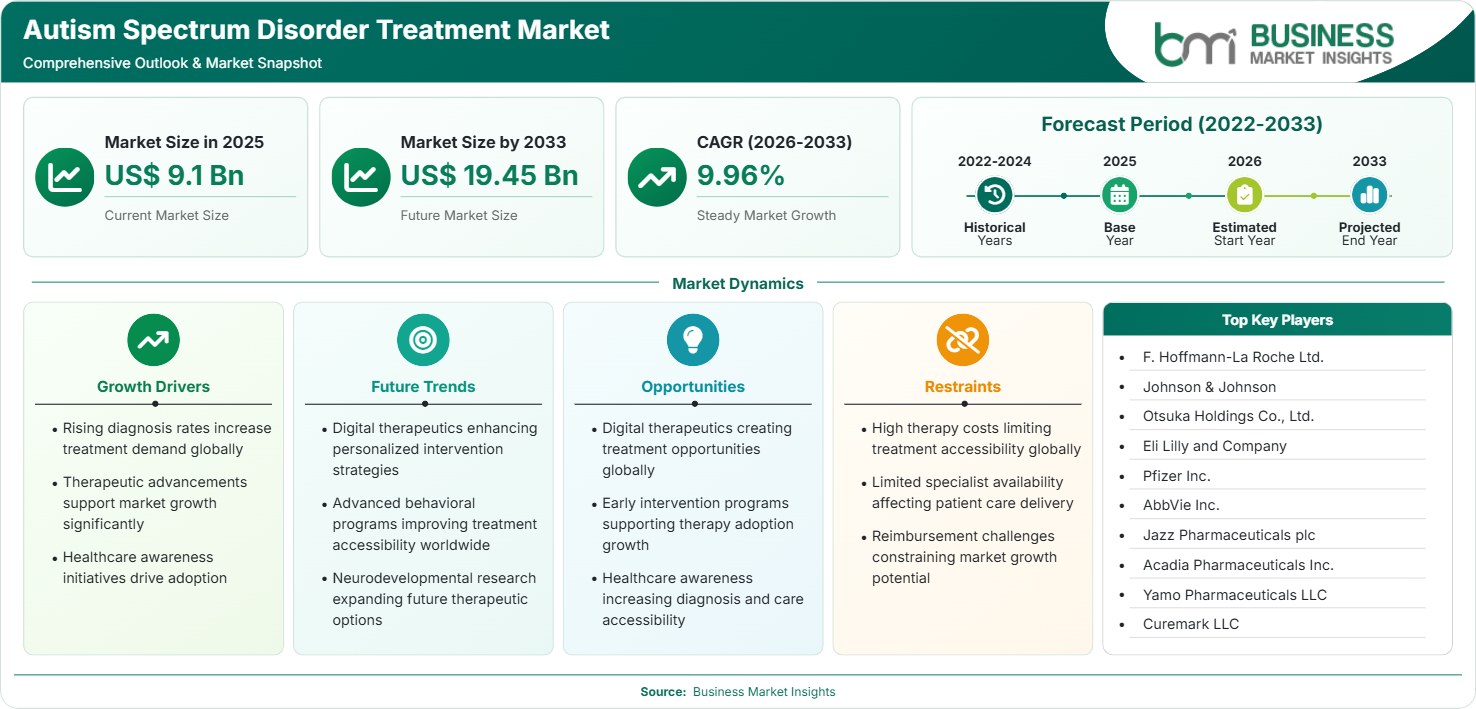
The Autism Spectrum Disorder Treatment Market size was valued at US$ 9.1 Billion in 2025 and is projected to reach US$ 19.45 Billion by 2033, growing at a CAGR of 9.96% during 2026–2033. Rising autism diagnosis rates, expanding behavioral therapy access, greater healthcare funding, enhanced digital intervention tools, and development of targeted therapeutics are creating significant opportunities across global treatment ecosystems.

Report Coverage
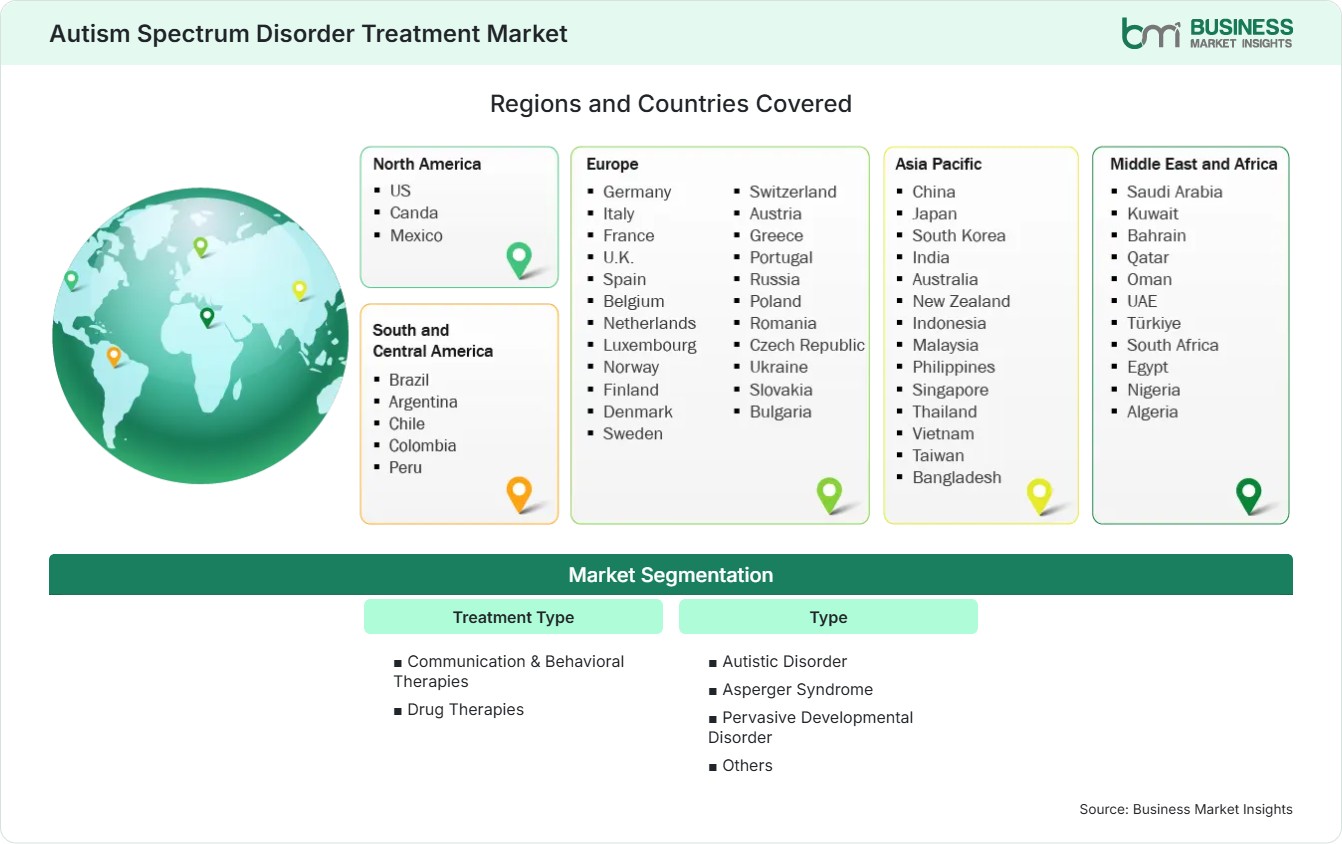
  • Treatment Type: Communication & Behavioral Therapies , Drug Therapies
  • Type: Autistic Disorder, Asperger Syndrome, Pervasive Developmental Disorder, Others
US$ 9.1 Bn Market size in 2025
US$ 19.45 Bn Market Size by 2033
9.96% CAGR, 2026 - 2033
2026-2033 Forecast Period

AI Overview

Autism Spectrum Disorder Treatment Market Summary

  • North America Region: North America holds a market share of 39%–42% in 2025, growing with a CAGR of 9.2%–9.8% during 2026–2033, supported by strong reimbursement systems, extensive therapy networks, increasing diagnostic coverage, growing clinical research activity, pediatric intervention programs, healthcare digitization, insurer participation, and pharmaceutical innovation. The U.S. remains the regional leader due to advanced care infrastructure, favorable reimbursement, and expanding early-intervention programs, recording a CAGR of 9.3%–9.9%.
  • Fastest Growing Region: Asia Pacific accounts for a 24%–27% share in 2025 and is expected to expand at a CAGR of 11.2%–11.8% through 2033, driven by increasing diagnosis awareness, healthcare infrastructure investments, supportive government initiatives, growing specialist availability, urban healthcare modernization, digital therapy adoption, and improving treatment accessibility.
  • Leading Segment: Communication & Behavioral Therapies represent a 61%–64% share in 2025 and are anticipated to grow at a CAGR of 9.4%–10.0% during 2026–2033, supported by clinical effectiveness, early intervention emphasis, multidisciplinary care models, educational integration, parental preference, insurance coverage expansion, therapist workforce development, and long-term developmental outcomes.
  • High Growth Segment: Drug Therapies hold a 36%–39% share in 2025 and are projected to advance at a CAGR of 10.8%–11.4%, supported by pipeline innovation, symptom-management demand, increasing clinical trials, biomarker research, broader psychiatrist engagement, precision medicine development, combination treatment approaches, and regulatory incentives.
  • Key Market Opportunity: Expansion of personalized treatment pathways integrating digital therapeutic platforms, artificial intelligence-enabled monitoring, genomic insights, remote diagnostics, and multidisciplinary care coordination offers substantial revenue potential across underserved patient populations worldwide.
  • Major Market Players: F. Hoffmann-La Roche Ltd., Johnson & Johnson, Otsuka Holdings Co., Ltd., Eli Lilly and Company, Pfizer Inc., AbbVie Inc., Jazz Pharmaceuticals plc, Acadia Pharmaceuticals Inc., Yamo Pharmaceuticals LLC, Curemark LLC.
Strategic Insights

Autism Spectrum Disorder Treatment Market: Strategic Insights

Autism Spectrum Disorder Treatment Market Strategic Framework
FREE PDF
Request your free sample
Request free sample
Stakeholder View

Key Takeaways

  • The value chain increasingly relies on coordination among diagnostic centers, behavioral therapists, education systems, pharmaceutical developers, and digital-health providers, creating opportunities for integrated care platforms.
  • Communication and behavioral interventions continue generating the largest revenue pool, while prescription therapies present the strongest upside through pipeline expansion and symptom-targeted treatment innovation.
  • Artificial intelligence-assisted screening, teletherapy delivery models, and data-driven patient monitoring are accelerating treatment personalization and improving long-term therapy adherence outcomes.
  • Asia Pacific offers one of the strongest investment cases due to improving healthcare infrastructure, rising awareness programs, higher diagnostic rates, and substantial unmet treatment demand.
  • Strategic collaborations, licensing agreements, and targeted acquisitions are increasing as pharmaceutical companies seek access to novel neurodevelopmental treatment assets and specialized clinical expertise.
  • Workforce development initiatives addressing therapist shortages may become a decisive competitive advantage across both developed and emerging healthcare markets.
Geographic Outlook

Autism Spectrum Disorder Treatment Market Regional Highlights

North America Autism Spectrum Disorder Treatment Market

North America accounts for approximately 39%–42% of global revenue in 2025 and is expected to register a 9.2%–9.8% CAGR through 2033. Strong diagnosis rates, insurance reimbursement frameworks, and specialized treatment infrastructure support regional leadership. The region benefits from extensive behavioral therapy utilization, pharmaceutical innovation, and active clinical research. The Autism Spectrum Disorder Treatment Market share remains highest in this region due to comprehensive care ecosystems and established early-intervention policies that encourage long-term therapy participation among diagnosed patients.

  • Public and private insurance reimbursement continues strengthening therapy adoption rates while improving patient access to multidisciplinary treatment frameworks across diverse socioeconomic groups.
  • Clinical research institutions actively evaluate emerging therapeutics, contributing to regional innovation leadership and commercial development opportunities.
  • School-based intervention programs increasingly collaborate with healthcare providers to improve developmental outcomes and support earlier treatment engagement.
  • Digital therapy platforms and telehealth solutions help reduce access barriers, particularly in underserved and geographically dispersed communities.

US Autism Spectrum Disorder Treatment Market

The United States represents approximately 82%–86% of North American revenue in 2025 and is forecast to record a CAGR of 9.3%–9.9% through 2033. Strong reimbursement support, high awareness levels, expanding autism screening programs, and substantial research funding continue driving market expansion. Large therapy-provider networks and growing investment in digital behavioral health solutions strengthen accessibility. Pharmaceutical innovation and increasing participation in clinical studies support treatment diversification while improving long-term patient management outcomes across pediatric and adolescent populations.

  • Early childhood screening initiatives are increasing diagnostic rates, enabling treatment initiation during critical developmental stages and improving intervention effectiveness across healthcare systems.
  • Multidisciplinary treatment centers are expanding across metropolitan and suburban regions, supporting coordinated behavioral, speech, occupational, and pharmacological care delivery.
  • Employer-sponsored insurance plans increasingly include developmental disorder services, improving affordability and encouraging broader treatment utilization among eligible families.
  • Healthcare providers are integrating remote monitoring tools and virtual therapy platforms, strengthening continuity of care and facilitating patient engagement.

Europe Autism Spectrum Disorder Treatment Market

Europe accounts for 26%–29% of global Autism Spectrum Disorder Treatment Market revenue in 2025 and is projected to expand at a CAGR of 9.0%–9.6% between 2026 and 2033. Growing awareness campaigns, public healthcare support, and increasing autism prevalence recognition continue to support demand. Regional growth benefits from multidisciplinary treatment models and expanding specialist availability. Germany and the United Kingdom remain leading national markets, while Spain and Poland demonstrate comparatively faster expansion owing to healthcare modernization initiatives and increasing developmental disorder screening programs.

  • Germany maintains leadership through comprehensive care infrastructure, established reimbursement pathways, and growing integration of behavioral therapy within national healthcare services.
  • The United Kingdom benefits from strong advocacy organizations, public diagnosis initiatives, and increasing investment in community-based intervention programs.
  • Spain represents a notable high-growth country with estimated growth exceeding regional averages due to increasing therapy accessibility and awareness programs.
  • Poland records accelerating adoption supported by healthcare investments, specialized center development, and improving diagnostic screening coverage.
  • Cross-border research collaboration across European institutions continues advancing understanding of neurodevelopmental disorders and therapeutic innovation.

Asia Pacific Autism Spectrum Disorder Treatment Market

Asia Pacific accounts for 24-27% of global revenue in 2025, the highest share, making it the fastest-growing region with a CAGR of 11.2-11.8% through 2033. Growing awareness, rising healthcare expenditure, and a growing number of specialists make treatment more accessible to people. China and Japan are among the leading countries in the region, while India and Southeast Asia offer significant opportunities for future growth.

  • China leads regional revenue generation through expanding healthcare infrastructure, increasing diagnosis awareness, and supportive investments in developmental disorder treatment services.
  • Japan maintains a strong position due to advanced healthcare systems, specialist availability, and growing emphasis on early intervention programs.
  • India displays one of the highest regional growth trajectories as healthcare access broadens and government-backed awareness initiatives expand nationwide.
  • Telehealth adoption supports therapy accessibility in underserved areas, helping address resource constraints and therapist shortages.
  • Private-sector investment in pediatric developmental care facilities continues accelerating treatment capacity and service availability.

Rest of World Autism Spectrum Disorder Treatment Market

The Rest of World segment accounts for roughly 8%–10% of total revenue in 2025, with a CAGR of 10.0%–10.6% through 2033. South and Central America will continue to capitalize on the growing number of awareness campaigns and gradual improvement of their healthcare systems.

The Middle East and Africa markets will be driven by rising investment in the healthcare industry, expanding diagnostic capabilities, and the increasing popularity of pediatric-specific services. The countries considered significant market participants include Brazil and Saudi Arabia; those with strong growth prospects are the UAE and South Africa.

  • Brazil leads regional demand through expanding healthcare programs, greater autism awareness, and increasing participation from private therapy providers.
  • Saudi Arabia continues investing in specialized pediatric healthcare infrastructure, improving treatment access and supporting long-term service development.
  • The United Arab Emirates demonstrates strong growth prospects through healthcare diversification strategies and advanced care facility expansion.
  • South Africa benefits from increasing awareness campaigns and improving diagnostic services for developmental disorders.
  • International partnerships and training programs are supporting specialist workforce development across emerging healthcare markets.
Global Market Geography
FREE PDF
Request your free sample
Request free sample
Segment Analysis

Autism Spectrum Disorder Treatment Market Segmentation

Treatment Type

The Treatment Type accounted for the largest share of revenue in the industry in 2025. The market share of Communication & Behavioral Therapies was about 61%-64% and is expected to grow at a CAGR of 9.4%-10.0%. However, drug therapies would grow faster than communication and behavioral therapies. The scope of the Autism Spectrum Disorder Treatment Market continues to increase due to increasing integration of treatment methods with education, therapy, and drugs.

  • Applied Behavior Analysis (ABA): Remains widely utilized owing to structured intervention frameworks, measurable behavioral outcomes, strong clinical acceptance, and growing reimbursement support across developed healthcare systems.
  • Speech & Language Therapy: Essential for improving communication skills, social interaction capabilities, and language development among children experiencing varying levels of developmental impairment.
  • Occupational Therapy: Supports motor skill development, sensory integration management, daily living activities, and functional independence, making it a core component of multidisciplinary treatment strategies.
  • Antipsychotic Drugs: Frequently prescribed for managing irritability, aggression, and behavioral symptoms associated with autism, supported by established clinical evidence and specialist oversight.
  • Selective Serotonin Reuptake Inhibitors: Utilized selectively to address anxiety-related symptoms, repetitive behaviors, and associated mental health conditions within individualized treatment plans.
  • Stimulants: Primarily prescribed for attention-related challenges and coexisting behavioral symptoms, assisting patients requiring focused symptom management approaches.
  • Sleep Medications: Increasingly adopted to address sleep disturbances that affect developmental progress, caregiver burden, and overall treatment effectiveness.

Type

Autistic Disorder generated the highest revenue in 2025, with a 56%-60% share, and is expected to continue growing through 2033. The Autism Spectrum Disorder Treatment Market trends show rising diagnosis rates across the spectrum due to increased awareness, new screening guidelines, physician training, and the availability of intervention facilities.

  • Autistic Disorder: Represents the largest patient population requiring comprehensive intervention, supporting strong demand for behavioral therapies, educational services, and symptom-management solutions.
  • Asperger Syndrome: Growing recognition of social communication challenges and increased diagnosis among adolescents and adults continue to support treatment and support service utilization.
  • Pervasive Developmental Disorder: Demand remains supported by individualized treatment planning, multidisciplinary care requirements, and increasing awareness among healthcare professionals and caregivers.
Market Forces

Autism Spectrum Disorder Treatment Market Dynamics

Key Market Drivers

Rising Global Autism Diagnosis and Screening Rates

Growing diagnostic identification remains one of the strongest growth catalysts across treatment services and therapeutic products. However, according to the statistics provided by the U.S. Centers for Disease Control and Prevention, there has been an increase in the prevalence rate of autism identified in children within the past decade. Healthcare institutions have begun implementing more screening and intervention programs due to the rising prevalence rate. Early diagnosis allows treatment to be provided at key developmental stages, thereby increasing the need for speech, occupational, and behavioral therapy. The Autism Spectrum Disorder Treatment Market growth can be attributed to the adoption of screening procedures in pediatrics and improved clinician education.

Expansion of Insurance Coverage and Reimbursement Support

Advancements in reimbursement systems are improving access to therapy and removing financial constraints for many patients. Most of the developed nations have included behavioral therapy, communication therapy, and related therapies in their public and private health care plans. As the industry increasingly incorporates evidence-based treatments, patients continue to show consistent engagement with therapy. Healthcare providers have been able to develop their expertise and broaden their offerings in the market because of these changes. The consistent reimbursement mechanism has played an important role in the Autism Spectrum Disorder Treatment Market growth by enabling professionals to invest in developing their workforce and facilities.

Increasing Research into Targeted Therapeutic Interventions

Pharmaceutical companies, academic institutions, and biotechnology firms are intensifying research into neurodevelopmental mechanisms associated with autism spectrum disorders. Increasing levels of biomarker development, precision medicines, genetic testing, and symptom-based drug treatments are opening up new opportunities for future treatment. Existing treatment methods mainly focus on symptoms associated with biological processes rather than on the processes themselves, leaving ample scope for innovation. In line with Autism Spectrum Disorder Treatment Market trends, there is increased cooperation between research and healthcare firms to improve treatment effectiveness. With continued progress in digital health monitoring and patient data collection, more support is being provided for clinical development programs, accelerating translation of scientific findings into commercial treatment solutions.

Key Market Opportunities

Digital Therapeutics and Remote Intervention Platforms

Telehealth technology is creating significant opportunities for providers to address the shortage of specialists and geographic barriers. Telehealth platforms offer an opportunity to deliver behavioral therapy, train caregivers, monitor, and evaluate outcomes for underserved patients. Artificial intelligence and analytics help increase the personalization of the treatment process and improve operational effectiveness. Providers are adopting more hybrid approaches, which include both virtual and on-site solutions. Autism Spectrum Disorder Treatment Market Forecasts continue to emphasize digital treatment platforms as one of the most important investment themes due to the scalability of models, which helps to increase patient access while maintaining cost-effective treatment.

Precision Medicine and Biomarker-Guided Therapies

Some of the emerging developments in genetic science, molecular diagnostics, and neuroscience are paving the way for a more tailored approach to treatment. Pharmaceutical and biotech companies are considering different methods of patient stratification that could lead to better treatment outcomes and reduced variation in patient responses. The use of biomarkers can help develop treatment selection procedures and facilitate the design of clinical trials. In parallel with growing knowledge of the spectrum of disorders, the concept of personalized medicine can shift from treating symptoms to targeting disease mechanisms. Investment activity surrounding genomic research and data-driven treatment planning is expected to support long-term innovation across therapeutic development pipelines.

Expansion Across Emerging Healthcare Markets

Larger underserved groups in the Asia-Pacific, Latin America, the Middle East, and Africa offer considerable growth prospects. There is increasing government recognition of the significance of developmental disorders, and there are investments being made in building health infrastructure, screening, specialist education, and campaigns. An increase in disposable income and healthcare spending helps ensure access to treatments. Providers are developing centers and online services in response to growing demands. The mix of rising diagnostic rates, improved reimbursement schemes, and greater awareness makes emerging markets an attractive destination for investment in the industry.

Market Restraints and Challenges

High Treatment Costs and Limited Accessibility

Many behavioral intervention programs are characterized by long-term involvement of multiple specialists, thereby incurring high costs for both individuals and health care facilities. Treatment costs for speech therapy, occupational therapy, behavior management, evaluations, and other services can be quite substantial, especially when there is no reimbursement coverage in certain markets. Impact: High treatment costs limit accessibility and may delay intervention for underprivileged groups. Even with insurance, there are still restrictions and a shortage of providers, which can make treatment difficult to afford, limit market penetration, and create disparities between urban and rural healthcare settings.

Shortage of Skilled Specialists and Capacity Constraints

The number of skilled therapists, developmental experts, and autism-specific healthcare providers is often inadequate in many locations. The growth in demand often outpaces workforce growth, leading to waiting times and delays in initiating treatment. A shortage of providers curtails capacity to deliver services and impedes access despite rising diagnoses. Rural and developing healthcare markets suffer from these issues more than others due to resource constraints and a lack of specialist distribution. Recruiting, certifying, and training the workforce take a lot of time and money. These shortages may affect treatment quality, reduce scalability, and slow adoption of evidence-based interventions across healthcare systems.

Company Analysis

Competitive Landscape

The competitive environment remains characterized by pharmaceutical innovation, behavioral intervention specialization, and expanding research into targeted neurodevelopmental therapies. Ongoing Autism Spectrum Disorder Treatment Market analysis indicates increasing collaboration among pharmaceutical developers, healthcare providers, and digital health innovators.

Company Name

Overview

Products and Services relevant to this market

F. Hoffmann-La Roche Ltd.

Global pharmaceutical company actively researching neurological and neurodevelopmental disorders through advanced clinical development programs.

CNS research programs, precision medicine initiatives, neurodevelopmental clinical trials, biomarker-driven therapeutic development.

Johnson & Johnson

Diversified healthcare leader with strong neuroscience expertise and extensive global healthcare presence.

Psychiatric medications, neuroscience research, patient-support programs, healthcare innovation solutions.

Otsuka Holdings Co., Ltd.

Major pharmaceutical organization recognized for central nervous system treatment development.

Antipsychotic therapies, psychiatric research, neurological disorder treatment solutions, clinical development programs.

Eli Lilly and Company

Research-driven pharmaceutical company advancing neuroscience and developmental disorder innovation.

CNS therapeutics, neuropsychiatric research initiatives, clinical development and support solutions.

Pfizer Inc.

Global biopharmaceutical company with broad neurological and pediatric healthcare capabilities.

Drug development, research collaborations, neuroscience assets, healthcare support services.

AbbVie Inc.

Pharmaceutical company with significant neuroscience and specialty-care operations globally.

Neurology-focused treatments, clinical research activities, healthcare partnerships, patient-support initiatives.

Jazz Pharmaceuticals plc

Biopharmaceutical company focused on innovative therapies for complex neurological conditions.

Neuroscience medicines, specialty pharmaceutical development, clinical research programs.

Acadia Pharmaceuticals Inc.

Biotechnology company specializing in neurological and central nervous system disorders.

CNS-focused therapeutics, neurodevelopmental research, innovative treatment development.

Yamo Pharmaceuticals LLC

Specialty pharmaceutical company dedicated to therapies addressing autism-related symptoms.

Autism-focused investigational treatments, clinical research, developmental disorder therapeutics.

Curemark LLC

Biopharmaceutical company pursuing proprietary therapies addressing autism spectrum disorder needs.

Novel autism treatment candidates, clinical trials, research-driven therapeutic solutions.

Trust & Transparency

Research Methodology

The market analysis combines proprietary research with secondary data from government agencies, company disclosures, regulatory filings, industry databases and expert interviews. Market estimates are validated through data triangulation, cross-market benchmarking and analyst review.

View Full Research Methodology

Questions Answered

Frequently Asked Questions

What insights are included in an Autism Spectrum Disorder Treatment Market Report?

A comprehensive report typically covers market size, competitive landscape, segmentation analysis, regional trends, growth drivers, investment opportunities, regulatory developments, and future industry outlook.

How does technology influence treatment outcomes?

Digital therapeutics, telehealth consultations, remote monitoring platforms, and artificial intelligence-assisted assessments are improving treatment access, personalization, patient engagement, and continuity of care.

What regions offer the strongest future growth opportunities?

Asia Pacific presents the strongest growth prospects due to improving healthcare infrastructure, growing specialist availability, expanding awareness programs, and rising investments in developmental healthcare services.

Which treatment category holds the largest revenue share?

Communication and behavioral therapies maintain the largest share because they are widely adopted for early intervention, developmental skill enhancement, and long-term patient support across multiple severity levels.

What factors are driving demand for autism treatment services globally?

Increasing diagnosis rates, earlier screening programs, expanding reimbursement coverage, greater public awareness, and broader availability of evidence-based behavioral therapies are contributing to sustained demand across healthcare systems.

Access the Full Autism Spectrum Disorder Treatment Market Report

Get segment-level forecasts, regional estimates, competitive benchmarking, company profiles and downloadable Excel datasets.

Access the full Autism Spectrum Disorder Treatment Market Report
350 pages PDF & Excel | 2026-11-10
Similar Research

Related Market Reports