
Anticoagulant Reversal Drugs Market Size, Share, Trends & Forecast Report, 2026–2033

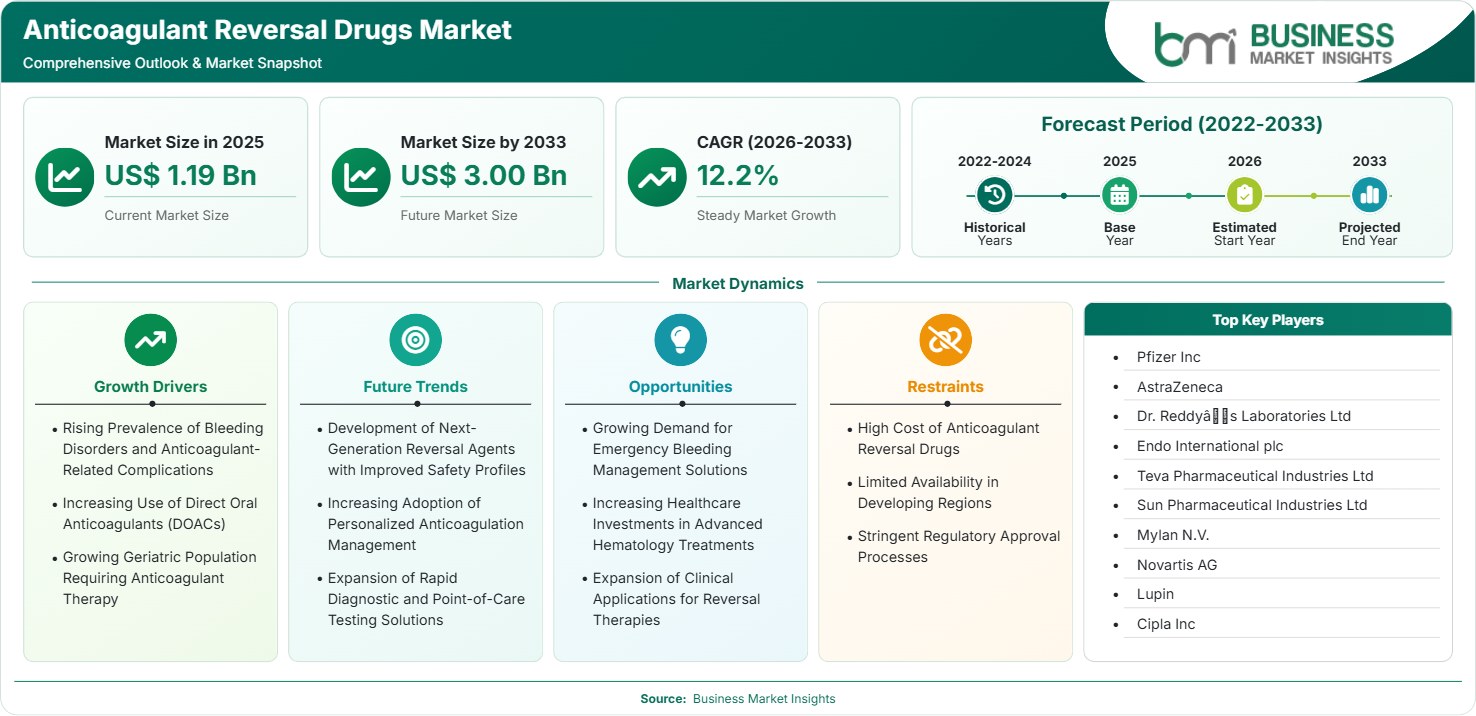
The Anticoagulant Reversal Drugs Market size was valued at US$ 1.19 Billion in 2025 and is projected to reach US$ 3.00 Billion by 2033, growing at a CAGR of US$ 12.25% during 2026–2033, driven by increased incidence of bleeding disorders, increased use of anticoagulants, increasing need for emergency medical care, and potential

Report Coverage
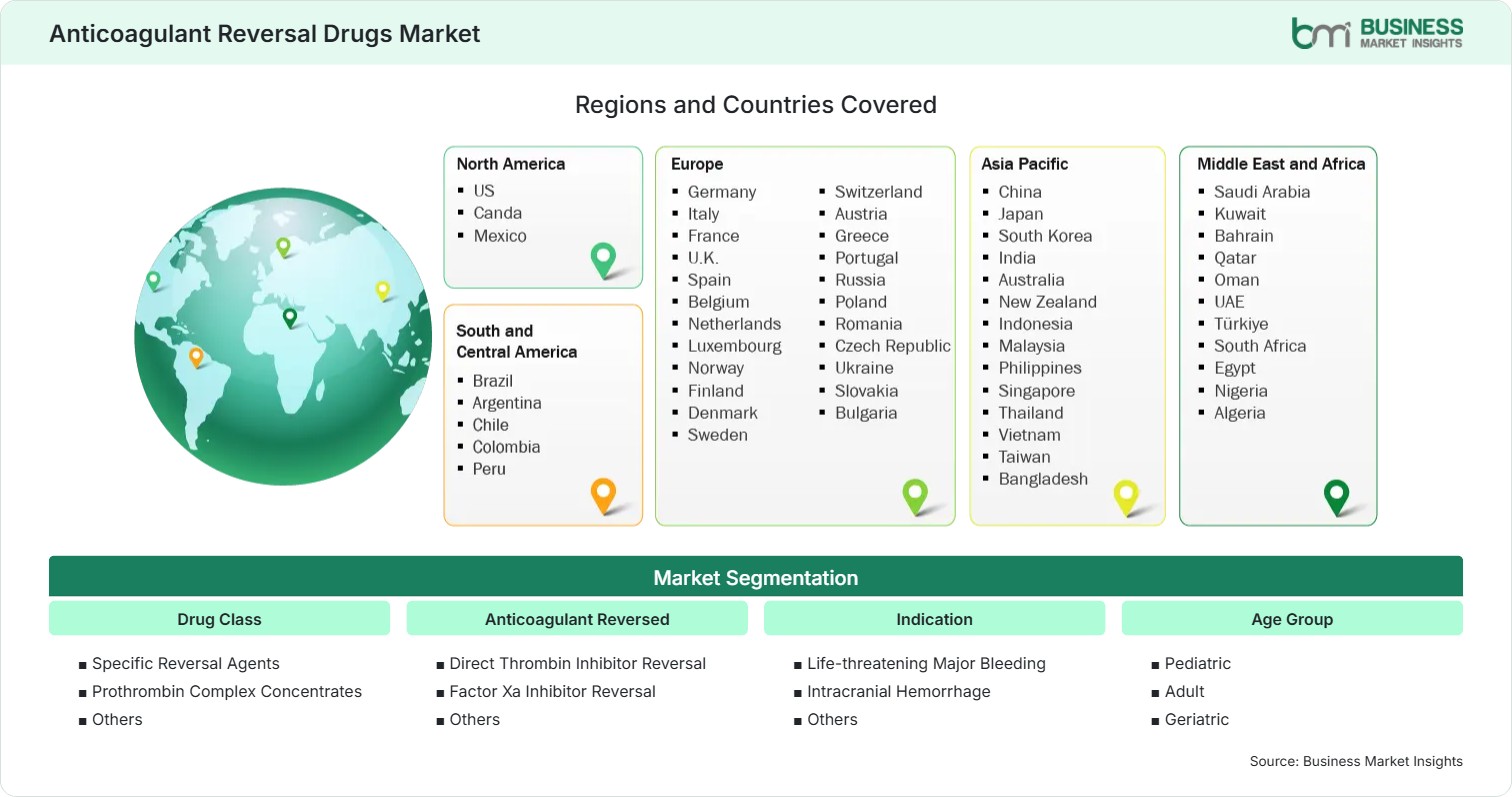
  • Drug Class: Specific Reversal Agents, Prothrombin Complex Concentrates, Others
  • Anticoagulant Reversed: Direct Thrombin Inhibitor Reversal, Factor Xa Inhibitor Reversal, Others
  • Indication: Life-threatening Major Bleeding, Intracranial Hemorrhage, Others
  • Age Group: Pediatric, Adult, Geriatric
  • Type: Branded and Generic
US$ 1.19 Bn Market size in 2025
US$ 3.00 Bn Market Size by 2033
12.2% CAGR, 2026 - 2033
2026-2033 Forecast Period

01 AI Overview

Anticoagulant Reversal Drugs Market Summary

  • North America Region: North America is projected to hold a 42%–45% share in 2025, expanding at a 12%–14% CAGR, driven by sophisticated emergency services, increased use of anticoagulants, reimbursement policies, and medical innovation. The US market forecast demonstrates the CAGR of 12%–14% from 2026 to 2033, driven by the hospital
  • Fastest Growing Region: Asia Pacific holds a 18%–21% share in 2025, growing with a CAGR of 14%–16% driven by improving healthcare infrastructure, increasing cardiovascular disease burden, expanding access to specialized medicines, and rising investments in emergency treatment capabilities.
  • Leading Segment: Specific Reversal Agents hold a 55%–58% share in 2025, growing with a CAGR of 13%–15% due to targeted mechanisms, rapid action requirements, increasing clinical acceptance, and preference for precision-based anticoagulant management.
  • High Growth Segment: Direct Thrombin Inhibitor Reversal holds a 16%–19% share in 2025, growing with a CAGR of 15%–17% supported by increasing utilization of direct oral anticoagulants, emergency bleeding management needs, and improved hospital protocols.
  • Key Market Opportunity: Growth opportunities include increased use of emergency care, improved access to health care in developing economies, expanded clinical uses, and the development of affordable, effective reversal treatments.
  • Major Market Players: Pfizer Inc, AstraZeneca, Dr. Reddy’s Laboratories Ltd, Endo International plc, Teva Pharmaceutical Industries Ltd, Sun Pharmaceutical Industries Ltd, Mylan N.V., Novartis AG, Lupin, Cipla Inc.
02 Strategic Insights

Anticoagulant Reversal Drugs Market: Strategic Insights

Anticoagulant Reversal Drugs Market Strategic Framework
FREE PDF
Request your free sample
Request free sample
03 Stakeholder View

Key Takeaways

  • The supply chain structure is becoming increasingly specialized, with pharmaceutical companies focusing on biologic production, active pharmaceutical ingredient reliability, regulatory compliance, and hospital distribution networks to support emergency treatment availability.
  • Growth opportunities are concentrated in specific reversal agents and advanced hospital-based therapies, as healthcare systems prioritize rapid intervention solutions for severe bleeding events associated with anticoagulant treatments.
  • Emerging trends indicate innovation towards developing specific reversal agents for targeted anticoagulants while limiting coagulation-related risks to patients.
  • Asia Pacific presents an attractive expansion opportunity due to improving healthcare infrastructure, increasing cardiovascular disease prevalence, and government initiatives aimed at strengthening emergency and specialty care services.
  • Pharmaceutical companies are pursuing portfolio expansion through partnerships, product launches, and strategic investments to strengthen positions in specialized hematology and emergency medicine segments.
  • Healthcare organizations are embracing an evidence-based anticoagulation treatment protocol; therefore, there is a need for products that provide evidence, enable quick administration, and ensure predictable patient responses.
04 Geographic Outlook

Anticoagulant Reversal Drugs Market Regional Highlights

North America Anticoagulant Reversal Drugs Market

North America accounted for a 42%–45% share in 2025 and is projected to expand at a CAGR of 12%–14% during 2026–2033. The region maintains leadership due to advanced healthcare infrastructure, high anticoagulant utilization, and established emergency care networks. The Anticoagulant Reversal Drugs Market share is supported by strong hospital adoption and continuous therapeutic innovation.

  • The United States leads regional demand due to high prescription rates of anticoagulants, advanced trauma care systems, and broad availability of specialized reversal therapies.
  • Canada contributes through improving access to specialty medicines, expanding hospital capabilities, and increasing focus on evidence-based anticoagulation management protocols.
  • Pharmaceutical companies are investing in targeted reversal therapies to address unmet needs associated with major bleeding events and emergency clinical interventions.
  • Favorable reimbursement structures and established healthcare networks continue supporting adoption of advanced anticoagulant management solutions across hospitals.

US Anticoagulant Reversal Drugs Market

The US represented a 38%–41% share in 2025 and is expected to register a CAGR of 12%–14% between 2026–2033. The country remains the largest individual market due to advanced clinical infrastructure, high healthcare spending, and increasing utilization of direct oral anticoagulants. The Anticoagulant Reversal Drugs Market growth reflects strong demand from emergency departments and specialty care facilities.

  • Increasing adoption of direct oral anticoagulants is creating demand for specific reversal agents in hospitals and emergency treatment settings.
  • Clinical guideline updates and physician awareness are supporting broader utilization of approved reversal therapies for severe bleeding management.
  • Research investments and pharmaceutical innovation are improving treatment options for patients requiring rapid anticoagulation reversal.

Europe Anticoagulant Reversal Drugs Market

 Europe held a 28%–31% share in 2025 and is anticipated to grow at a CAGR of 11%–13% during 2026–2033. The region benefits from established healthcare systems, increasing elderly populations, and strong adoption of anticoagulant therapies. Germany leads regional adoption, while the United Kingdom and Switzerland demonstrate innovation-driven growth through advanced clinical research and healthcare investments.

  • Germany supports market development through extensive hospital infrastructure, specialist care availability, and increasing demand for emergency bleeding management solutions.
  • The United Kingdom demonstrates strong growth through clinical research programs, healthcare modernization initiatives, and adoption of advanced pharmaceutical therapies.
  • Switzerland contributes through pharmaceutical innovation capabilities and strong research ecosystems supporting specialty drug development.
  • European healthcare systems are emphasizing optimized anticoagulant management pathways to improve patient safety and treatment outcomes.
  • Regulatory harmonization across European countries supports broader availability of approved reversal therapies and advanced treatment options.

Asia Pacific Anticoagulant Reversal Drugs Market

Asia Pacific accounted for an 18%–21% share in 2025 and is expected to expand at a CAGR of 14%–16% from 2026–2033. The region represents the fastest-growing Anticoagulant Reversal Drugs market due to increasing healthcare expenditure, rising cardiovascular disease burden, and improving access to advanced medicines. China, Japan, India, and South Korea are major contributors.

  • China is expanding healthcare capabilities through pharmaceutical investments, improved hospital infrastructure, and increasing availability of specialized emergency medicines.
  • India is experiencing rising demand due to cardiovascular disease prevalence, healthcare modernization, and expanding access to specialty treatments.
  • Japan and South Korea continue supporting adoption through advanced medical systems and strong pharmaceutical research capabilities.
  • Healthcare investments across Asia Pacific are improving emergency care readiness and increasing awareness of anticoagulant reversal therapies.

Rest of World Anticoagulant Reversal Drugs Market

Rest of World represented a 9%–12% share in 2025 and is projected to grow at a CAGR of 10%–12% during 2026–2033. South America, the Middle East, and Africa are gradually adopting advanced reversal medicines through healthcare infrastructure improvements and increasing specialty care access. The Anticoagulant Reversal Drugs Market share is expanding through regional healthcare investments.

  • Brazil is improving access to advanced therapies through healthcare system expansion and increasing demand for cardiovascular treatment solutions.
  • Mexico is developing specialty healthcare capabilities, supporting adoption of emergency medicines and hospital-based treatment options.
  • Middle Eastern countries are investing in advanced hospitals and specialty care centers to improve critical treatment availability.
  • African healthcare markets are gradually expanding access through international partnerships and pharmaceutical supply improvements.
  • Regional growth depends on healthcare financing, medicine availability, physician awareness, and development of emergency care infrastructure.
Global Market Geography
FREE PDF
Request your free sample
Request free sample
05 Segment Analysis

Anticoagulant Reversal Drugs Market Segmentation

Drug Class

Drug Class segment accounted for significant market participation in 2025, led by Specific Reversal Agents with a 55%–58% share and a CAGR of 13%–15% through 2034. The Anticoagulant Reversal Drugs Market scope is influenced by targeted therapies, faster response requirements, and increasing preference for mechanism-specific treatment approaches across emergency settings.

  • Specific Reversal Agents: Targeted agents provide rapid anticoagulant neutralization and are increasingly preferred for managing severe bleeding events requiring precise therapeutic intervention.
  • Prothrombin Complex Concentrates (PCCs): PCCs support emergency reversal protocols by providing coagulation factors and maintaining clinical relevance in urgent bleeding management.

Anticoagulant Reversed

Anticoagulant Reversed segment reflects increasing demand for therapies addressing different anticoagulation mechanisms. Direct Thrombin Inhibitor Reversal accounted for a 16%–19% share in 2025 and is projected to grow at a CAGR of 15%–17% through 2034 due to expanding DOAC usage and emergency treatment needs.

  • Direct Thrombin Inhibitor Reversal: Therapies addressing thrombin inhibitors support rapid management of bleeding complications associated with specific anticoagulant medications.
  • Factor Xa Inhibitor Reversal: Increasing use of Factor Xa inhibitors is encouraging development and adoption of dedicated reversal solutions in hospitals.

Indication

Indication segment is driven by increasing clinical demand for rapid intervention during severe bleeding events. Life-threatening Major Bleeding represented the leading application category with a 62%–65% share in 2025 and a CAGR of 12%–14% through 2034. Growing emergency care requirements support adoption across hospitals.

  • Life-threatening Major Bleeding: Severe bleeding cases require immediate therapeutic intervention, increasing demand for effective reversal medications and emergency treatment protocols.
  • Intracranial Hemorrhage: Intracranial bleeding management requires rapid anticoagulation reversal to reduce complications and improve patient outcomes.

Age Group

Age Group segment is influenced by demographic changes and rising anticoagulant prescriptions among older populations. Adult patients represented the largest category with a 68%–71% share in 2025 and a CAGR of 12%–14% through 2034. The segment benefits from widespread anticoagulant therapy adoption.

  • Pediatric: Pediatric applications remain specialized, requiring carefully evaluated dosing approaches and clinical evidence for safe anticoagulant reversal.
  • Adult: Adult patients represent major demand due to high anticoagulant usage associated with cardiovascular and thromboembolic conditions.
  • Geriatric: Geriatric populations require reversal therapies due to increased bleeding risks associated with age-related conditions and medication use.

Type

Type segment is shaped by demand for innovative branded therapies and cost-effective generic alternatives. Branded products accounted for a 72%–75% share in 2025 and are projected to expand at a CAGR of 11%–13% through 2034 due to clinical adoption, regulatory approvals, and physician familiarity with established reversal agents.

  • Branded: Branded therapies maintain strong adoption due to proven clinical outcomes, established safety profiles, and physician confidence in emergency anticoagulant management.
  • Generic: Generic products are gaining attention through affordability advantages, broader healthcare accessibility, and increasing demand from cost-sensitive healthcare systems.

Route of Administration

Route of Administration segment is dominated by Intravenous therapies due to their rapid action and suitability for emergency clinical settings. Intravenous administration represented a 78%–81% share in 2025 and is expected to grow at a CAGR of 12%–14% through 2034, supported by hospital-based treatment requirements.

  • Intravenous: Intravenous therapies enable fast delivery and predictable drug action, making them essential for urgent bleeding management and critical care applications.

Distribution Channel

Distribution Channel segment reflects the importance of institutional access for emergency medicines. Hospital Pharmacies represented the leading channel with a 74%–77% share in 2025 and a CAGR of 12%–14% through 2034 due to the requirement for immediate availability during critical bleeding events.

  • Hospital Pharmacies: Hospital pharmacies remain central distribution points because reversal drugs require professional administration, monitoring, and emergency response coordination.
  • Retail Pharmacies: Retail pharmacies support outpatient access for selected therapies while expanding availability for chronic anticoagulation management needs.
06 Market Forces

Anticoagulant Reversal Drugs Market Dynamics

Key Market Drivers

Rising Prevalence of Bleeding Disorders and Anticoagulant-Related Complications

The increasing use of anticoagulant therapies for cardiovascular disorders, atrial fibrillation, and thromboembolic conditions is creating demand for effective reversal solutions. According to the World Health Organization, cardiovascular diseases remain the leading global cause of mortality, increasing the requirement for anticoagulation management. The market growth is supported by rising emergency bleeding cases, improved hospital preparedness, and clinical adoption of targeted reversal agents. The Anticoagulant Reversal Drugs Market trends indicate a shift toward rapid-response therapies that improve patient outcomes during severe bleeding events.

Increasing Use of Direct Oral Anticoagulants (DOACs)

The adoption of direct oral anticoagulants is expanding due to their convenience, predictable dosing, and reduced monitoring requirements compared with traditional anticoagulant therapies. Growing prescriptions of factor Xa inhibitors and direct thrombin inhibitors are increasing demand for specialized reversal agents. Healthcare providers are prioritizing treatment options that can quickly manage anticoagulant-related bleeding complications. Pharmaceutical companies are focusing on developing targeted therapies with improved safety profiles and faster mechanisms of action. This shift is encouraging investment in clinical research, regulatory approvals, and commercialization of advanced reversal medicines.

Growing Geriatric Population Requiring Anticoagulant Therapy

The expanding geriatric population is increasing demand for anticoagulation treatments due to higher prevalence of atrial fibrillation, stroke risk, and cardiovascular conditions. Older patients often require careful management because of elevated bleeding risks associated with age-related health conditions and multiple medications. Healthcare systems are strengthening emergency treatment capabilities to address these challenges. Increasing awareness among clinicians regarding individualized anticoagulant management is supporting adoption of reversal therapies. Pharmaceutical developers are focusing on solutions that provide predictable outcomes and improve safety for elderly patients requiring anticoagulant treatment.

Key Market Opportunities

Growing Demand for Emergency Bleeding Management Solutions

Emergency departments and critical care units are creating opportunities for advanced reversal therapies as hospitals seek faster and more effective approaches for managing severe bleeding. Increasing investments in emergency medicine infrastructure are improving availability of specialized treatments. The Anticoagulant Reversal Drugs Market Forecasts highlight opportunities arising from expanded hospital adoption, improved clinical protocols, and increasing demand for therapies capable of addressing urgent anticoagulant complications. Manufacturers are focusing on solutions that enhance treatment efficiency while supporting healthcare providers during time-sensitive medical situations.

Increasing Healthcare Investments in Advanced Hematology Treatments

Growing investments in specialty healthcare, biotechnology research, and advanced hematology treatments are creating opportunities for innovation in anticoagulant reversal solutions. Pharmaceutical companies are expanding research programs focused on improving therapeutic performance, reducing adverse effects, and developing next-generation products. Increasing healthcare expenditure across emerging economies is also improving access to specialized medicines. Partnerships between pharmaceutical manufacturers, research institutions, and healthcare providers are accelerating development pipelines and supporting broader adoption of advanced reversal therapies across different healthcare systems.

Expansion of Clinical Applications for Reversal Therapies

Reversal therapies are gaining opportunities beyond traditional emergency bleeding management through expanding clinical applications in surgical procedures, trauma care, and complex patient management. Hospitals are developing comprehensive anticoagulation protocols that incorporate reversal options for high-risk situations. Increasing awareness of personalized medicine approaches is encouraging the use of therapies tailored to specific anticoagulant mechanisms. Future adoption will be supported by clinical evidence, improved treatment guidelines, and broader physician familiarity with specialized reversal agents across multiple healthcare settings.

Market Restraints and Challenges

High Cost of Anticoagulant Reversal Drugs

Factor: High development expenses, complex manufacturing processes, and specialized production requirements contribute to elevated prices for advanced anticoagulant reversal drugs. Impact: High treatment costs can restrict adoption in cost-sensitive healthcare systems and create reimbursement challenges for hospitals managing emergency medicine budgets. Manufacturers must balance innovation investments with affordability considerations to improve accessibility. Pricing pressures may encourage development of generic alternatives and cost-efficient production methods. Healthcare providers also evaluate clinical benefits against financial constraints when selecting reversal therapies, particularly in regions with limited healthcare resources.

Limited Availability in Developing Regions

Factor: Inadequate healthcare infrastructure, limited specialist availability, and supply chain challenges affect access to advanced reversal therapies in developing markets. Impact: Restricted availability can delay emergency treatment and reduce adoption of innovative anticoagulant management solutions. Improving distribution networks, strengthening hospital capabilities, and expanding healthcare investment are essential for broader access. Pharmaceutical companies are exploring regional partnerships and supply strategies to improve availability. Addressing these challenges will support more equitable access to critical reversal medicines and enhance treatment readiness across underserved healthcare systems.

07 Company Analysis

Competitive Landscape

The Anticoagulant Reversal Drugs Market analysis indicates a competitive environment shaped by pharmaceutical manufacturers, specialty drug developers, and healthcare solution providers. Companies are focusing on expanding hematology portfolios, improving emergency treatment options, strengthening regulatory approvals, and developing therapies that address evolving anticoagulation management requirements.

Company Name

Overview

Products and Services relevant to this market

Pfizer Inc

Global pharmaceutical company developing innovative medicines across multiple therapeutic areas.

Provides anticoagulation-related therapies, research capabilities, and specialty healthcare products.

AstraZeneca

International biopharmaceutical company focused on cardiovascular and specialty medicines.

Develops cardiovascular treatments and healthcare solutions supporting anticoagulation management.

Dr. Reddy’s Laboratories Ltd

Indian pharmaceutical company offering affordable global healthcare solutions.

Manufactures generic medicines and specialty pharmaceutical products for diverse applications.

Endo International plc

Specialty pharmaceutical company focused on complex healthcare treatments.

Provides pharmaceutical products and hospital-focused therapeutic solutions.

Teva Pharmaceutical Industries Ltd

Global generic and specialty medicine manufacturer with broad product portfolios.

Develops generic pharmaceuticals and healthcare products supporting medication accessibility.

Sun Pharmaceutical Industries Ltd

Leading pharmaceutical company specializing in branded and generic medicines.

Offers specialty medicines, generics, and pharmaceutical manufacturing capabilities.

Mylan N.V.

Global pharmaceutical company known for generic medicine development.

Provides generic pharmaceutical products and healthcare solutions worldwide.

Novartis AG

Swiss healthcare company focused on innovative pharmaceutical research.

Develops advanced medicines across cardiovascular and specialty therapeutic categories.

Lupin

Pharmaceutical company providing branded and generic medicines globally.

Manufactures specialty pharmaceuticals and affordable healthcare products.

Cipla Inc

Global pharmaceutical company focused on accessible healthcare solutions.

Produces generic medicines and specialty pharmaceutical formulations.

08 Industry Activity

Recent Developments

January 2026

Rentschler Biopharma SE expanded its collaboration with VarmX B.V. to support late-stage development and commercial manufacturing of VMX-C001, an investigational Factor X-based anticoagulant reversal therapy for patients receiving Factor Xa direct oral anticoagulants (FXa DOACs). The partnership advances manufacturing readiness as VMX-C001 moves toward Phase 3 clinical development and potential commercialization.

December 2025

AstraZeneca PLC ended U.S. commercial sales of Andexxa (andexanet alfa), a Factor Xa anticoagulant reversal agent, following FDA safety communication regarding postmarketing data showing serious thromboembolic risks. AstraZeneca submitted a request to voluntarily withdraw the product’s U.S. biologics license application for commercial reasons.

September 2025

CSL Limited entered into a strategic collaboration with VarmX B.V. to develop VMX-C001, a novel recombinant Factor X treatment designed to restore coagulation in patients experiencing severe bleeding or requiring urgent surgery while taking Factor Xa inhibitors. CSL agreed to fund the global Phase 3 program and support late-stage development, manufacturing, and pre-launch activities.

September 2025

VarmX B.V. received FDA Fast Track Designation for VMX-C001, recognizing the therapy’s potential to address an unmet need in restoring coagulation for patients on Factor Xa direct oral anticoagulants who require urgent surgery or treatment for severe bleeding. The designation is expected to accelerate regulatory interactions and development timelines.

10 Trust & Transparency

Research Methodology

The market analysis combines proprietary research with secondary data from government agencies, company disclosures, regulatory filings, industry databases and expert interviews. Market estimates are validated through data triangulation, cross-market benchmarking and analyst review.

View Full Research Methodology

11 Questions Answered

Frequently Asked Questions

What insights are highlighted in the Anticoagulant Reversal Drugs Market Report?

The Anticoagulant Reversal Drugs Report highlights evolving treatment approaches, increasing demand for targeted therapies, healthcare infrastructure improvements, and opportunities for pharmaceutical companies developing advanced reversal solutions.

What role does innovation play in the future Anticoagulant Reversal Drugs market development?

Innovation is focused on improving drug safety, reducing response time, expanding indications, and developing affordable therapies that can improve access across different healthcare systems.

Which healthcare facilities are major users of reversal drugs?

Hospitals, emergency departments, trauma centers, and specialty care facilities are the primary users because these therapies require rapid administration, monitoring, and professional clinical management.

How do specific reversal agents differ from conventional reversal approaches?

Specific reversal agents are designed to directly target individual anticoagulant mechanisms, offering more precise action compared with broader approaches that affect multiple coagulation pathways.

What factors are increasing demand for anticoagulant reversal therapies?

Demand is increasing due to rising anticoagulant prescriptions, growing cardiovascular disease prevalence, aging populations, and the need for rapid intervention during severe bleeding events.

Access the Full Anticoagulant Reversal Drugs Market Report

Get segment-level forecasts, regional estimates, competitive benchmarking, company profiles and downloadable Excel datasets.

Access the full Anticoagulant Reversal Drugs Market Report
350 pages PDF & Excel | 2026-07-28