
Respiratory Drugs Market Size, Share, Trends & Forecast Report, 2026–2033

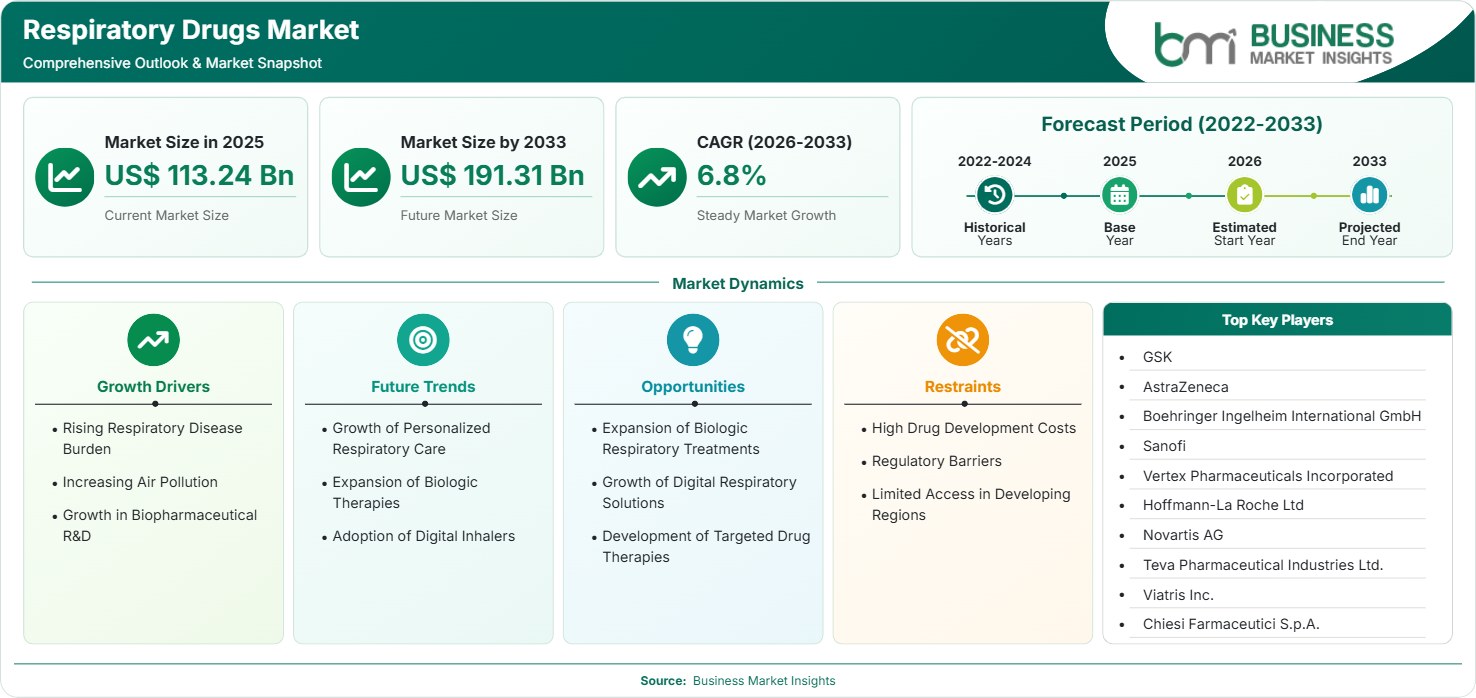
The Respiratory Drugs Market size was valued at US$ 113.24 Billion in 2025 and is projected to reach US$ 191.31 Billion by 2033, growing at a CAGR of 6.8% during 2026–2033. Rising prevalence of chronic respiratory disorders, increasing exposure to environmental pollutants, expanding biologics pipelines, and broader access to advanced inhalation therapies are strengthening demand, while precision medicine, digital respiratory monitoring, and emerging healthcare investments continue to create long-term commercial opportunities.

Report Coverage
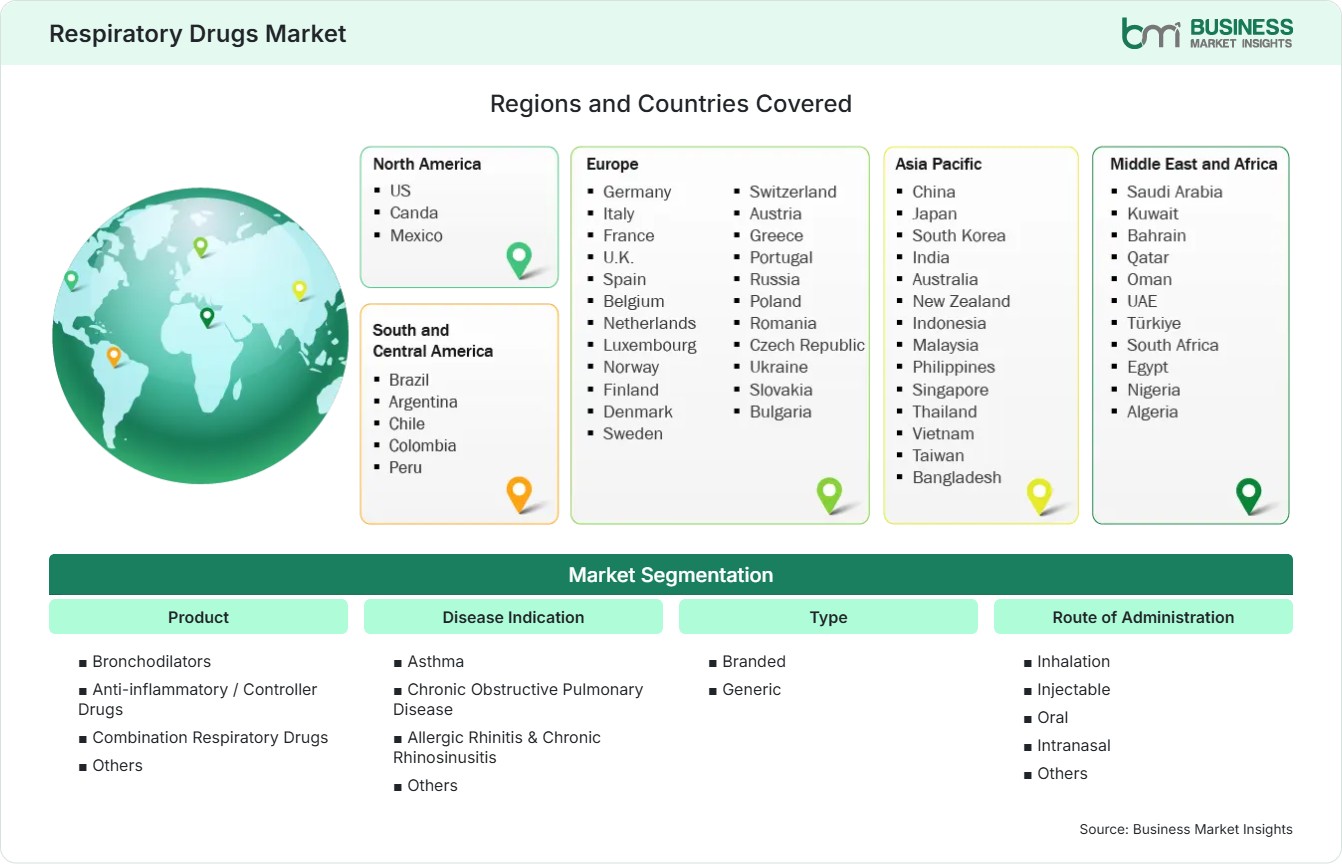
  • Product: Bronchodilators, Anti-inflammatory / Controller Drugs, Combination Respiratory Drugs, Others
  • Disease Indication: Asthma, Chronic Obstructive Pulmonary Disease, Allergic Rhinitis & Chronic Rhinosinusitis, Others
  • Type: Branded, Generic
  • Route of Administration: Inhalation, Injectable, Oral, Intranasal, Others
  • Distribution Channel: Hospital Pharmacies, Retail Pharmacies, Specialty Pharmacies, Others
US$ 113.24 Bn Market size in 2025
US$ 191.31 Bn Market Size by 2033
6.8% CAGR, 2026 - 2033
2026-2033 Forecast Period

01 AI Overview

Respiratory Drugs Market Summary

  • North America: North America holds a 37%–39% share in 2025 and is projected to grow at a 6.1%–6.4% CAGR during 2026–2033, supported by strong reimbursement systems, continuous biologics innovation, increasing respiratory disease prevalence, and widespread adoption of advanced inhalation therapies across healthcare providers. The US remains the regional growth engine with expanding specialty respiratory care and an estimated 6.2%–6.5% CAGR through 2033.
  • Fastest Growing Region: Asia Pacific accounts for approximately 26%–28% of the Respiratory Drugs Market share in 2025 and is forecast to register a 7.8%–8.2% CAGR through 2033, driven by expanding healthcare infrastructure, improving diagnosis rates, urban pollution concerns, domestic pharmaceutical manufacturing, and growing patient access to innovative respiratory medicines.
  • Leading Segment: Bronchodilators represent the leading product segment with a 34%–36% market share in 2025 and are expected to expand at a 6.3%–6.7% CAGR owing to sustained utilization in asthma and COPD management, physician familiarity, and continuous formulation improvements enhancing long-term treatment adherence.
  • High Growth Segment: Inhalation remains the highest growth route of administration with an estimated 47%–49% share in 2025 and a projected 7.1%–7.5% CAGR, supported by targeted pulmonary drug delivery, improved therapeutic outcomes, patient convenience, and expanding smart inhaler technologies.
  • Key Market Opportunity: Growing investment in biologics, precision respiratory medicine, digital inhalation platforms, and specialty therapies for severe asthma and rare pulmonary diseases is creating substantial opportunities for pharmaceutical manufacturers and healthcare providers worldwide.
  • Major Market Players: GSK plc, AstraZeneca PLC, Boehringer Ingelheim International GmbH, Sanofi SA, Vertex Pharmaceuticals Incorporated, F. Hoffmann-La Roche Ltd, Novartis AG, Teva Pharmaceutical Industries Ltd., Viatris Inc., and Chiesi Farmaceutici S.p.A.
02 Strategic Insights

Respiratory Drugs Market: Strategic Insights

respiratory-drugs-market-market-strategic-framework
FREE PDF
Request your free sample
Request free sample
03 Stakeholder View

Key Takeaways

  • The Respiratory Drugs Market value chain is increasingly integrated through partnerships between pharmaceutical innovators, inhaler device manufacturers, contract development organizations, and digital health providers, improving manufacturing efficiency and accelerating commercialization of advanced respiratory therapies.
  • Premium growth opportunities are concentrated in biologics for severe asthma, targeted therapies for rare pulmonary diseases, and innovative inhalation drug delivery platforms that improve treatment adherence while reducing hospitalization rates.
  • Research priorities continue shifting toward precision medicine, AI-assisted patient monitoring, smart inhalers, biomarker-guided treatment selection, and long-acting formulations designed to optimize clinical outcomes and strengthen patient compliance.
  • Asia Pacific presents the strongest long-term investment potential as governments expand healthcare coverage, domestic pharmaceutical production increases, and respiratory disease diagnosis improves across rapidly urbanizing populations with rising healthcare expenditures.
  • Strategic acquisitions, licensing agreements, and co-development partnerships are reshaping competitive positioning as established pharmaceutical companies strengthen specialty respiratory portfolios while biotechnology firms advance differentiated biologics and gene-based respiratory therapies.
04 Geographic Outlook

Respiratory Drugs Market Regional Highlights

North America Respiratory Drugs Market

North America accounted for an estimated 37%–39% Respiratory Drugs Market share in 2025 and is projected to expand at a 6.1%–6.4% CAGR during 2026–2033. The region benefits from high healthcare expenditure, favorable reimbursement policies, advanced pharmaceutical R&D capabilities, and widespread adoption of biologics and combination therapies.

  • Rising prevalence of chronic respiratory disorders, coupled with increasing elderly populations, continues to strengthen demand for maintenance therapies, biologics, and combination inhalers across hospital, specialty clinic, and retail pharmacy channels.
  • Pharmaceutical companies continue expanding manufacturing capabilities while accelerating clinical research programs focused on severe asthma, COPD, and rare respiratory diseases, improving therapeutic options and supporting regional market competitiveness.
  • The positive payment schemes support early diagnosis and treatment of diseases, resulting in higher prescriptions of branded drugs and a continuous need for cost-effective generic respiratory products.
  • The use of digital health through the use of smart inhalers and remote patient monitoring systems increases medication compliance, reduces hospitalizations, and improves physician decisions in respiratory disease management

US Respiratory Drugs Market

The United States represented approximately 29%–31% of the global Respiratory Drugs Market in 2025 and is expected to register a 6.2%–6.5% CAGR through 2033. The country's leadership is supported by extensive pharmaceutical innovation, high adoption of biologics, robust healthcare infrastructure, and strong investment in respiratory disease research.

  • Growing investments in biologic drugs and personalized medicine will increase the number of therapies available to treat patients with severe asthma and uncommon lung diseases, enhancing commercialization prospects for innovative pharmaceutical companies.
  • The rising use of smart inhalers, digital respiratory monitoring systems, and telemedicine helps achieve enhanced disease management, medication adherence, and personalized therapy planning.
  • Growing insurance coverage for patients with chronic respiratory disorders will facilitate early diagnosis and improve patient outcomes, ensuring steady demand for prescribed drugs.

Europe Respiratory Drugs Market

Europe region accounted for 27%–29% of the market share in 2025 and is expected to witness a CAGR of 6.0%–6.3% during 2026–2033 due to stringent regulatory norms, universal healthcare access in many countries, and high investment in respiratory disease management, which continue to support market expansion.

  • Germany continues to dominate the pharmaceutical industry in the European region owing to excellent respiratory research abilities, a highly developed healthcare system, and the wide availability of innovative respiratory drugs.
  • Spain region is expected to witness the highest regional CAGR growth of 6.7%–7.0% backed by increasing healthcare investments, rising rate of diagnosis, and higher usage of advanced inhalers.
  • Environmental sustainability movements are driving the adoption of low-carbon inhalers as pharmaceutical companies focus on environmentally sustainable respiratory product development.
  • Biosimilar adoption and generic substitution policies improve treatment affordability, enabling broader patient access while maintaining sustainable healthcare expenditure across European markets.

Asia Pacific Respiratory Drugs Market

The Asia Pacific region held a 26%-28% share of the Respiratory Drugs Market in 2025 and is projected to experience the fastest growth with a 7.8%-8.2% CAGR during 2033. Rapid urbanization, increased healthcare spending, rising pharmaceutical production capacity, and the rising number of diagnoses of chronic respiratory diseases will further drive regional market demand.

  • China remains the largest contributor in this region due to large-scale pharmaceutical production, expanded healthcare coverage, and the adoption of advanced respiratory drugs.
  • India is expected to register an 8.5%-8.9% CAGR, backed by an increasing prevalence of respiratory diseases, improved healthcare accessibility, increased pharmaceutical production within the country, and increased awareness about chronic respiratory disease management.
  • A favorable environment is being created by government policies that promote healthcare reforms and pharmaceutical production.

Rest of World Respiratory Drugs Market

The Rest of World region accounted for approximately 7%–9% market share in 2025 and is projected to expand at a 6.6%–7.0% CAGR during 2026–2033. South & Central America continues benefiting from improving healthcare access and pharmaceutical distribution, while the Middle East & Africa experiences increasing investment in specialty healthcare infrastructure and respiratory disease diagnosis.

  • Brazil remains a leader in regional demand due to growing public health initiatives, rising diagnoses of chronic respiratory ailments, and increased access to branded and generic respiratory drugs.
  • Saudi Arabia will exhibit a CAGR of 7.3%–7.7%, driven by the development of healthcare infrastructure, growth in pharmaceutical spending, and government-led initiatives to transform healthcare.
  • Awareness campaigns on asthma, COPD, and allergic respiratory diseases are boosting diagnoses and driving early treatment in emerging healthcare systems.
  • Rising healthcare expenditure, expanding specialist care networks, and increasing adoption of advanced respiratory therapeutics are expected to sustain long-term regional demand despite affordability challenges.
global-market-geography
FREE PDF
Request your free sample
Request free sample
05 Segment Analysis

Respiratory Drugs Market Segmentation

Product

The product segment captured the biggest share of the revenue owing to a wide range of maintenance and rescue therapy products. The product segment accounted for about 100% of the market by definition, and product innovation was the primary driver of differentiation among competitors. The product segment is projected to grow at a CAGR of 6.8% from 2026 to 2033, driven by the rising prevalence of chronic respiratory diseases, ongoing drug development, and increased use of novel inhaled drugs. The Respiratory Drugs Market scope continues to widen through biologics and combination therapies.

  • Bronchodilators: Held the leading position owing to their extensive use in asthma and COPD management. Continuous improvements in long-acting formulations, patient adherence, and inhalation devices continue supporting widespread clinical adoption across global healthcare systems.
  • Anti-inflammatory / Controller Drugs: Demand is increasing as physicians prioritize long-term disease control through inhaled corticosteroids and advanced anti-inflammatory therapies that reduce exacerbation frequency and improve respiratory function in chronic disease management.
  • Combination Respiratory Drugs: Growing preference for fixed-dose combinations is enhancing treatment adherence while simplifying medication regimens. Increasing clinical evidence supporting dual and triple therapies continues driving adoption among patients with moderate to severe respiratory diseases.

Disease Indication

Disease indication remains an essential segment due to evolving approaches to treatment in chronic respiratory diseases. This segment accounted for the entire market classification and is expected to grow at a 6.8% CAGR through 2033.

  • Asthma: Represents the largest therapeutic indication due to its high global prevalence, continuous treatment requirements, expanding biologics availability, and increasing awareness regarding long-term disease control among patients and healthcare providers.
  • Chronic Obstructive Pulmonary Disease (COPD): Continues witnessing strong adoption of maintenance therapies as aging populations, smoking-related complications, and environmental risk factors increase the need for long-acting bronchodilators and combination medicines.
  • Allergic Rhinitis & Chronic Rhinosinusitis: Rising environmental allergens, urban pollution, and improved diagnosis are supporting increased prescription volumes for anti-inflammatory agents, intranasal therapies, and targeted treatment options across outpatient settings.

Type

The type category classifies pharmaceutical drugs as branded or generic, depending on the business strategy and pricing structure. It encompasses the whole market category and is expected to grow at a 6.8% CAGR during the period of analysis.

  • Branded: Innovation-driven products maintain strong market presence through differentiated clinical efficacy, biologics development, premium pricing strategies, and continuous investment in research, regulatory approvals, and physician education programs.
  • Generic: Generic respiratory medicines continue gaining momentum as governments and healthcare providers emphasize affordability, broader patient access, and sustainable healthcare expenditure while maintaining therapeutic equivalence across established treatment categories.

Route of Administration

Route of administration plays an important role in treatment efficacy, compliance, and prescribing preference, among other factors, in respiratory disorders. The mode of administration includes all routes of administration and is projected to witness a 6.8% CAGR from 2026 to 2033. The Respiratory Drugs Market trends favor advanced drug-delivery methods, innovative inhalation devices, and precision drug delivery systems that improve clinical outcomes.

  • Inhalation: Remains the preferred delivery route because it enables targeted pulmonary drug delivery, rapid therapeutic response, lower systemic exposure, and improved patient outcomes through advanced inhaler technologies.
  • Injectable: Injectable therapies continue expanding, particularly for severe asthma, biologic treatments, and specialty respiratory conditions requiring targeted immune modulation and long-term disease management under specialist supervision.
  • Oral: Oral formulations maintain broad utilization due to ease of administration, patient convenience, and suitability for maintenance therapy, particularly in chronic respiratory diseases requiring long-term pharmacological intervention.
  • Intranasal: Intranasal therapies remain important for allergic rhinitis and chronic rhinosinusitis management by providing localized drug delivery, rapid symptom relief, and improved patient comfort with minimal systemic exposure.
06 Market Forces

Respiratory Drugs Market Dynamics

Key Market Drivers

Rising Respiratory Disease Burden

The rising incidence of chronic respiratory illnesses continues to be the major driver of long-term growth in drug demand. A rising aging population, increasing smoking-linked disorders, occupational exposure, and enhanced disease screening have contributed significantly to growing populations requiring treatment. Therefore, there is an increase in the prescription of combination drugs, long-acting bronchodilators, and biologics to improve disease management and reduce hospitalizations.

Increasing Air Pollution

Air pollution continues to worsen the incidence and effects of respiratory conditions in developed and developing countries. Particulates, ozone, and other air pollutants contribute to asthma, COPD exacerbations, allergic respiratory illnesses, and poor lung function. Such problems have led governments to improve their respiratory health care programs and drug manufacturers to develop products for maintaining health, anti-inflammatory drugs, and innovative inhaler technologies to improve long-term disease management and patient outcomes.

Growth in Biopharmaceutical R&D

Biopharmaceuticals have revolutionized the field of respiratory disease treatment with the advent of biologic drugs, monoclonal antibodies, RNA-based drugs, and precision medicine. The efforts of pharmaceutical firms to develop respiratory treatments continue to grow due to advances in biomarker identification and personalized medicine. Collaboration among biotechnology firms, research institutes, and pharmaceutical manufacturers worldwide has led to new treatment modalities for severe asthma, eosinophilic conditions, cystic fibrosis, and rare lung diseases.

Key Market Opportunities

Expansion of Biologic Respiratory Treatments

Biologic drugs appear to be among the best commercial opportunities in respiratory medicine, driven by a shift towards targeted drug development by healthcare professionals for difficult-to-treat respiratory conditions such as severe asthma. The growing body of evidence proves better treatment outcomes through proper drug selection based on biomarkers. The Respiratory Drugs Market Forecasts indicate that further growth is expected due to increased approvals, reimbursement, and physician confidence in the use of biologic respiratory drugs.

Growth of Digital Respiratory Solutions

Digital healthcare platforms are creating new opportunities by integrating connected inhalers, remote patient monitoring, artificial intelligence, and mobile health applications into respiratory disease management. Smart inhalers provide real-time data on medication adherence and enable doctors to fine-tune therapy regimens by continuously monitoring patients. There is a growing understanding among healthcare professionals of the importance of digital respiratory ecosystems in reducing hospital readmissions and improving outcomes. The pharmaceutical industry is partnering up with digital health companies to create solutions that integrate medicines with connected devices and advanced analytics.

Development of Targeted Drug Therapies

Advances in molecular biology and genomics will enable the development of highly targeted respiratory medications for patients with distinct disease mechanisms. Personalized medicine will enable more efficient treatment by reducing unnecessary medication use and increasing efficacy through biomarker-based prescribing. The pharmaceutical industry continues to invest in the development of new biologics, gene editing, RNA-based medications, and orphan medications for rare respiratory conditions. In view of this, the trend toward targeted medicines is expected to present good commercialization potential.

Market Restraints and Challenges

High Drug Development Costs

Developing innovative respiratory medicines requires substantial investment across discovery, preclinical evaluation, multi-phase clinical trials, manufacturing scale-up, and regulatory approval. Factor: Increasing R&D expenditure and complex biologic development significantly raise overall development costs while extending commercialization timelines. Impact: Smaller biotechnology companies often face financing constraints, delaying promising product candidates or encouraging strategic licensing agreements with larger pharmaceutical manufacturers. High investment requirements also contribute to premium pricing for innovative therapies, potentially limiting accessibility in cost-sensitive healthcare systems despite significant clinical benefits.

Regulatory Barriers

Respiratory medicines are subject to rigorous regulatory evaluation covering safety, efficacy, manufacturing quality, device performance, and post-marketing surveillance requirements across multiple jurisdictions. Factor: Differing regional regulatory frameworks, extensive clinical evidence requirements, and evolving standards for combination drug-device products increase approval complexity. Impact: Longer review timelines and higher compliance costs may delay product launches, increase commercialization risks, and reduce speed to market for innovative respiratory therapies. Manufacturers must therefore maintain substantial regulatory expertise and continuous investment in quality management systems to achieve global Respiratory Drugs Market expansion.

07 Company Analysis

Competitive Landscape

The competitive environment remains highly consolidated, with multinational pharmaceutical companies competing through innovation in biologics, inhalation technologies, combination therapies, and specialty respiratory medicines. The Respiratory Drugs Market analysis highlights that companies are strengthening their portfolios through strategic acquisitions, licensing agreements, R&D collaborations, and investments in digital respiratory solutions to address evolving patient needs and maintain long-term competitive advantage.

Company Name

Overview

Products and Services Relevant to this Market

GSK plc

Global biopharmaceutical company with a strong respiratory franchise and extensive experience in innovative inhaled medicines and biologics.

Inhaled corticosteroids, combination inhalers, bronchodilators, biologics for severe asthma, respiratory R&D, and specialty pulmonary therapies.

AstraZeneca PLC

Leading global pharmaceutical company focused on respiratory, immunology, oncology, and rare disease innovation through extensive clinical research.

Maintenance inhalers, biologics for severe asthma, COPD therapies, respiratory biologics, precision medicine, and digital healthcare collaborations.

Boehringer Ingelheim International GmbH

Privately owned pharmaceutical company recognized for long-standing expertise in respiratory disease research and inhalation technologies.

Long-acting bronchodilators, COPD therapies, asthma medicines, inhalation devices, and combination respiratory drug development.

Sanofi SA

Global healthcare company expanding respiratory capabilities through biologics, immunology research, and strategic partnerships.

Biologic therapies for asthma, immunology medicines, specialty respiratory products, and advanced clinical development programs.

Vertex Pharmaceuticals Incorporated

Biotechnology company specializing in transformative therapies for serious diseases, including cystic fibrosis and rare respiratory disorders.

CFTR modulators, precision therapies, genetic medicine research, and next-generation respiratory disease treatments.

F. Hoffmann-La Roche Ltd

Global biotechnology and pharmaceutical company emphasizing personalized medicine, diagnostics, and specialty therapeutics.

Respiratory diagnostics, biologic research, precision medicine platforms, clinical development, and companion diagnostic technologies.

Novartis AG

Diversified pharmaceutical manufacturer investing in innovative medicines and advanced respiratory research across global healthcare markets.

Respiratory therapeutics, biologics, specialty medicines, inhalation research, and pharmaceutical manufacturing capabilities.

Teva Pharmaceutical Industries Ltd.

Major global producer of generic and specialty medicines with a broad respiratory treatment portfolio.

Generic inhalers, bronchodilators, respiratory medicines, specialty pharmaceuticals, and inhalation delivery technologies.

Viatris Inc.

Global healthcare company delivering branded and generic medicines through an extensive worldwide manufacturing and distribution network.

Generic respiratory medicines, inhalers, oral therapies, injectable products, and specialty pharmaceutical manufacturing.

Chiesi Farmaceutici S.p.A.

International research-focused pharmaceutical company recognized for innovation in respiratory care and environmentally sustainable inhalers.

Inhaled respiratory therapies, asthma medicines, COPD treatments, low-carbon inhalers, and specialty pulmonary healthcare solutions.

08 Industry Activity

Recent Developments

March 2026

AstraZeneca PLC announced that tozorakimab met the primary endpoint in both the Phase III OBERON and TITANIA trials in COPD. The IL-33-targeting biologic significantly reduced moderate-to-severe COPD exacerbations, supporting future regulatory submissions for the investigational respiratory medicine.

January 2026

GSK plc announced the approval of Trelegy Ellipta (fluticasone furoate/umeclidinium/vilanterol) for the treatment of adults with uncontrolled asthma in China by the National Medical Products Administration (NMPA). The approval expanded Trelegy’s respiratory market presence in China by adding asthma to its existing COPD indication, making it the first single-inhaler triple therapy approved for both asthma and COPD in the country.

November 2025

Chiesi Farmaceutici S.p.A. inaugurated the expansion of its industrial manufacturing site in La Chaussée-Saint-Victor, France, to support production of next-generation Carbon Minimal Inhalers (CMI) for respiratory diseases. The expansion is part of Chiesi’s investment strategy to increase sustainable inhaler manufacturing capacity and strengthen its global respiratory portfolio.

July 2025

Merck & Co., Inc. (MSD) announced a definitive agreement to acquire Verona Pharma plc for approximately US$10 billion. The acquisition adds Ohtuvayre (ensifentrine), a first-in-class COPD maintenance treatment approved for adults, to Merck’s cardiopulmonary portfolio and strengthens its presence in respiratory medicines.

10 Trust & Transparency

Research Methodology

The market analysis combines proprietary research with secondary data from government agencies, company disclosures, regulatory filings, industry databases and expert interviews. Market estimates are validated through data triangulation, cross-market benchmarking and analyst review.

View Full Research Methodology

11 Questions Answered

Frequently Asked Questions

What distinguishes this Respiratory Drugs Market Report from general industry summaries?

This Market Report combines market sizing, regional assessment, segmentation analysis, competitive benchmarking, strategic trends, and future growth opportunities, enabling decision-makers to evaluate investment priorities and competitive positioning with a comprehensive industry perspective.

How are biologics influencing future competition?

Biologics are shifting competition toward precision medicine by offering targeted treatment for severe respiratory diseases. Companies investing in monoclonal antibodies and biomarker-guided therapies are strengthening premium product portfolios and creating new long-term revenue opportunities.

Why is Asia Pacific expected to experience the fastest expansion?

Rapid urbanization, improving healthcare infrastructure, increasing pharmaceutical manufacturing capacity, expanding insurance coverage, growing awareness of respiratory diseases, and rising healthcare expenditure collectively support faster market expansion across Asia Pacific.

Which product category currently dominates the Respiratory Drugs Market?

Bronchodilators remain the leading product category because they are extensively prescribed for both asthma and COPD management. Their established clinical effectiveness, broad physician acceptance, and continuous formulation improvements contribute to sustained market leadership.

What factors are driving demand for respiratory drugs worldwide?

Growing prevalence of asthma, COPD, allergic respiratory diseases, aging populations, increasing air pollution, improved diagnosis, expanding healthcare access, and continuous innovation in biologics and inhalation technologies are the primary demand drivers across global healthcare markets.

Access the Full Respiratory Drugs Market Report

Get segment-level forecasts, regional estimates, competitive benchmarking, company profiles and downloadable Excel datasets.

Access the full Respiratory Drugs Market Report
350 pages PDF & Excel | 2026-07-30