Respiratory Care Devices Market Outlook (2022-2033)

Historic Data: 2022-2024   |   Base Year: 2025   |   Forecast Period: 2026-2033
Report Content: Market Scope, Market Segmentation, Market Dynamics, and Competitive Analysis

Report Coverage:
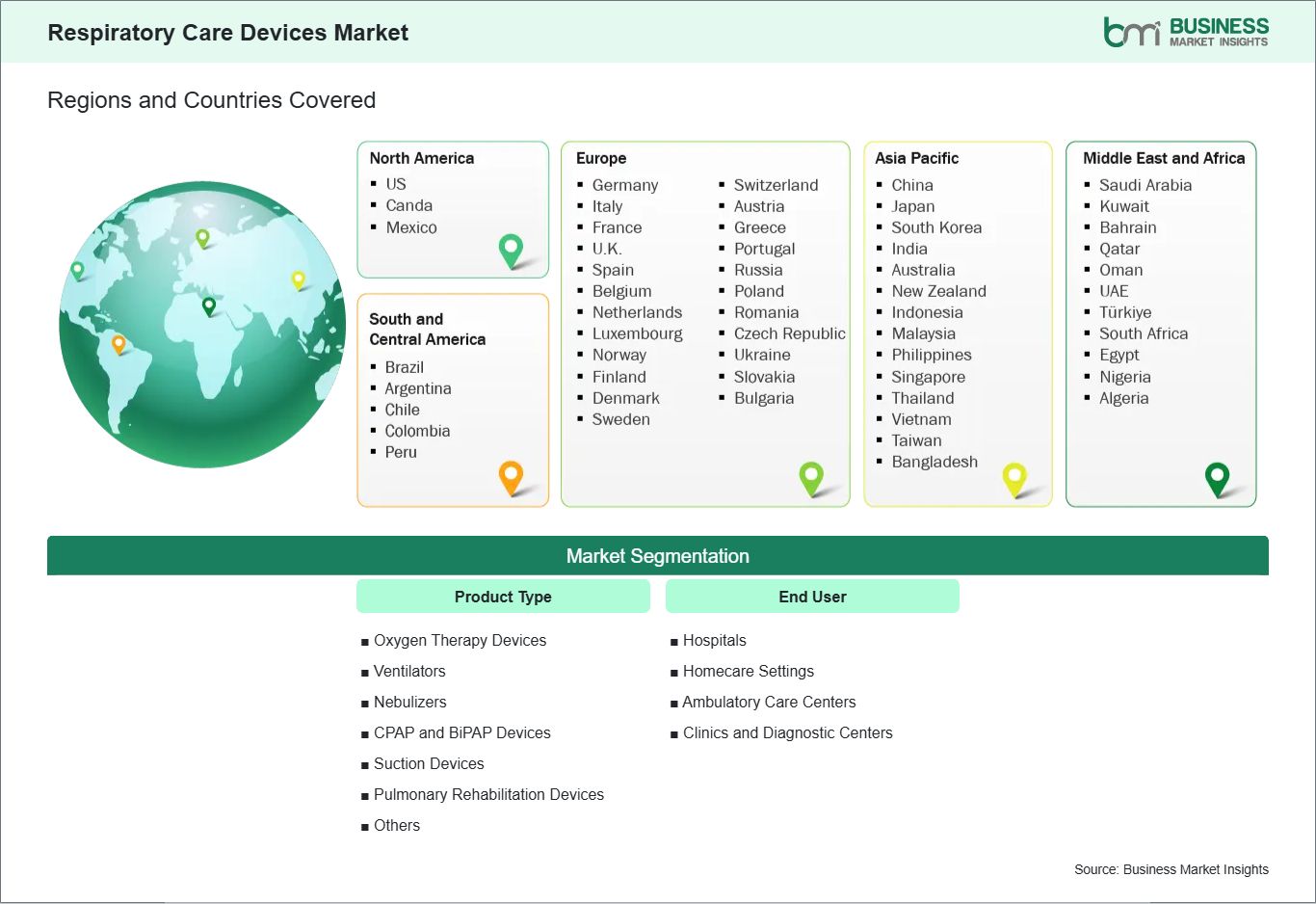
  • Product Type (Oxygen Therapy Devices, Ventilators, Nebulizers, CPAP and BiPAP Devices, Suction Devices, Pulmonary Rehabilitation Devices, Others)
  • End User (Hospitals, Homecare Settings, Ambulatory Care Centers, Clinics and Diagnostic Centers)

No. of Pages: 400
Report Code: BMIPUB00032655
Category: Life Sciences
Respiratory Care Devices Market

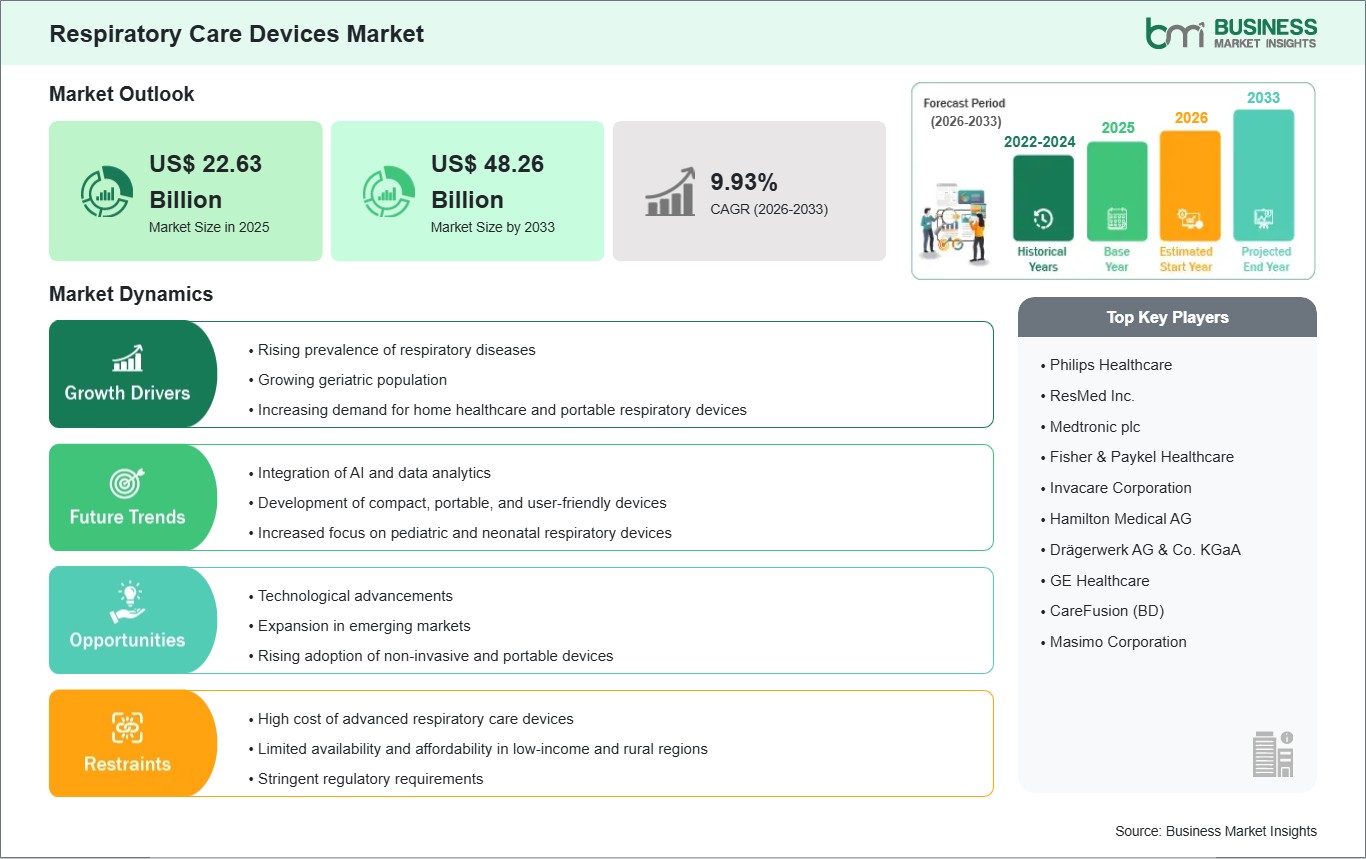
The Respiratory Care Devices Market size is expected to reach US$ 48.26 Billion by 2033 from US$ 22.63 Billion in 2025. The market is estimated to record a CAGR of 9.93% from 2026 to 2033.

Executive Summary and Global Market Analysis:

With an increase in the incidence of respiratory disorders (i.e., COPD, asthma, pneumonia), along with a growing elderly population and increasing public understanding regarding the importance of maintaining healthy lungs and other respiratory system components, the global market for respiratory care devices is experiencing rapid expansion. The various types of respiratory care devices available include: ventilators; oxygen delivery devices; nebulizers; CPAPs/BiPAPs; spirometers; and inhalers etc. All of these devices aid in monitoring and treating chronic as well as acute respiratory illnesses or diseases (e.g., sleep apnea). Technological innovations such as portable/home-use devices and smart monitoring systems, coupled with advances in non-invasive modes of ventilation, have enhanced patient satisfaction, safety, and overall quality of life; thereby contributing to increased adoption of these respiratory care devices across hospitals and clinics.

A significant increase in demand for hospital care as well as home care has resulted from the increase in lifestyle-related respiratory ailments, as well as the heightened concern about air pollution and smoking-related illnesses. The majority of the hospital and clinic users of new respiratory care device technology are primarily hospitals and clinics since they primarily provide care for acute or long-term chronic respiratory diseases. North America and Europe still maintain substantial market shares which can be attributed to advanced healthcare infrastructure and strong regulatory frameworks. Besides that, the Asia Pacific is becoming a prominent region of high growth mainly due to factors like increased healthcare expenditure, urbanization, and rising awareness of respiratory diseases. The global respiratory care devices market will experience a continuous growth trend influenced by various factors such as technological innovations, demographic changes, and the increasing emphasis on chronic disease management.

Respiratory Care Devices Market - Strategic Insights:

global-market-strategic-framework
Get more information on this report

Respiratory Care Devices Market Segmentation Analysis:

Key segments that contributed to the derivation of the Respiratory Care Devices market analysis are product type, end user.

  • By product type, the respiratory care devices market is segmented into oxygen therapy devices, ventilators, nebulizers, CAPA and BiPAP devices, suction devices, pulmonary rehabilitation devices, others. The oxygen therapy devices segment dominated the market in 2024.
  • By end user, the market is segmented into hospitals, homecare settings, ambulatory care centers, clinics and diagnostic centers. The hospitals segment held the largest share of the market in 2024.

Respiratory Care Devices Market Drivers and Opportunities:

Rising Prevalence of Respiratory Diseases and Aging Population

An increase in the amount of respiratory illnesses and an increase in the number of elderly people in every area of the world is one of the driving forces for the growth of the global market for respiratory care devices. As a result of air pollution, cigarette smoking, occupational health risks, and lifestyle-related health problems, the incidence of chronic respiratory disease such as COPD, Asthma, Pneumonia, and Pulmonary Fibrosis has increased. The elderly population have a higher risk of respiratory issues because many suffer from other health conditions that can compromise their immune systems, and because their lungs generally become less efficient with advancing age, the elderly make up a significant portion of the customer base for respiratory care devices. Likewise, during pandemics or seasonal outbreaks, we see more patients needing acute respiratory care, which adds to the demand for products like Ventilators, Oxygen Therapy Systems, Nebulizers, and Non-Invasive Ventilation products. Hospitals, clinics, and home care agencies have been adapting to the changing environment and purchasing more technologically advanced respiratory care devices that are able to monitor and improve the quality of care provided to patients. Companies are beginning to introduce portable oxygen concentrators, smart CPAP/BiPAP devices, and remote monitoring systems that promote patient compliance and allow for the continuity of care outside the traditional hospital setting. As disease burden continues to rise, our population ages and develops more chronic and acute respiratory conditions, user demand for respiratory care devices will only continue to drive sustained growth of this market on a global scale.

Expansion in Homecare Solutions and Emerging Markets

The respiratory care devices market is poised for growth through the increase in the adoption of homecare solutions as well as through expansion into developing markets. As more patients are choosing to receive care at home for chronic illnesses like chronic obstructive pulmonary disease (COPD) and sleep apnea, there has been a corresponding increase in the need for user-friendly, portable respiratory devices such as: Oxygen Concentrators, Continuous Positive Airway Pressure/Bi-level Positive Airway Pressure (CPAP/BiPAP Systems), and Handheld Nebulizers. By providing the ability for patients to be able to breathe easier while receiving treatment at home, homecare models will not only help improve the quality of patients’ lives and their convenience in accessing healthcare, but they will also reduce the need for hospital visits and costs associated with healthcare for both patients and providers. In addition, the healthcare markets in developing regions are seeing an increase in government spending on healthcare, facility/building improvements, and improving patient awareness of respiratory problems, however current levels of market penetration are significantly less compared to developed nations. Therefore, manufacturers now have a major opportunity to supply economically priced, regionally tailored, technologically advanced respiratory equipment to the markets of developing regions of the world. By further enhancing the use of telemedicine and remote patient monitoring through the integration of technology into homecare models, clinicians can monitor patients’ progress, tailor treatment plans as necessary in real-time, and improve the overall quality of care for patients. Manufacturers who develop portable and cost-effective connected respiratory care solutions are likely to benefit from the current trends in order to grow their market share as well as create a sustainable revenue stream for their businesses both domestically and internationally for by supplying devices to be used in all areas of respiratory care.

Respiratory Care Devices Market Size and Share Analysis:

By product type, the respiratory care devices market is segmented into oxygen therapy devices, ventilators, nebulizers, CAPA and BiPAP devices, suction devices, pulmonary rehabilitation devices, others. The oxygen therapy devices segment dominated the market in 2024. The market for oxygen therapy devices is expanding mainly due to the increased prevalence of respiratory diseases and the rise in the elderly population.

By end user, the market is segmented hospitals, homecare settings, ambulatory care centers, clinics and diagnostic centers. The hospitals segment held the largest share of the market in 2024. Hospitals are buying more of these devices because they have a high number of patients coming with acute respiratory illnesses and due to the increasing incidence of chronic respiratory disorders.

Respiratory Care Devices Market Report Highlights:

Report Attribute Details
Market size in 2025 US$ 22.63 Billion
Market Size by 2033 US$ 48.26 Billion
Global CAGR (2026 - 2033)9.93%
Historical Data 2022-2024
Forecast period 2026-2033
Segments Covered By Product Type
  • Oxygen Therapy Devices
  • Ventilators
  • Nebulizers
  • CPAP and BiPAP Devices
  • Suction Devices
  • Pulmonary Rehabilitation Devices
  • Others
By End User
  • Hospitals
  • Homecare Settings
  • Ambulatory Care Centers
  • Clinics and Diagnostic Centers
Regions and Countries Covered
North America US, Canada, Mexico
Europe Belgium, Austria, Finland, Denmark, Greece, Poland, Romania, Russia, Ukraine, Czech Republic, Slovakia, Bulgaria, Italy, Luxembourg, Germany, Switzerland, France, Netherlands, Norway, Portugal, Spain, Sweden, United Kingdom
Asia-Pacific Australia, China, India, Japan, South Korea, Indonesia, Malaysia, Philippines, Singapore, Thailand, Vietnam, Bangladesh, New Zealand, Taiwan
South and Central America Brazil, Argentina, Peru, Chile, Colombia
Middle East and Africa Bahrain, Kuwait, Oman, Qatar, Saudi Arabia, United Arab Emirates, Turkiye, South Africa, Egypt, Algeria, Nigeria
Market leaders and key company profiles
  • Philips Healthcare
  • ResMed Inc.
  • Medtronic plc
  • Fisher & Paykel Healthcare
  • Invacare Corporation
  • Hamilton Medical AG
  • Drägerwerk AG & Co. KGaA
  • GE Healthcare
  • CareFusion (BD)
Get more information on this report

Respiratory Care Devices Market Report Coverage and Deliverables:

The "Respiratory Care Devices Market Size and Forecast (2022–2033)" report provides a detailed analysis of the market covering below areas:

  • Respiratory Care Devices market size and forecast at global, regional, and country levels for all the key market segments covered under the scope
  • Respiratory Care Devices market trends, as well as market dynamics such as drivers, restraints, and key opportunities
  • Respiratory Care Devices market analysis covering key market trends, global and regional framework, major players, regulations, and recent market developments
  • Industry landscape and competition analysis covering market concentration, heat map analysis, prominent players, and recent developments for the Respiratory Care Devices market
  • Detailed company profiles, including SWOT analysis

Respiratory Care Devices Market Geographic Insights:

The geographical scope of the Respiratory Care Devices market report is divided into five regions: North America, Asia Pacific, Europe, Middle East and Africa, and South and Central America. The Respiratory Care Devices market in Asia Pacific is expected to grow significantly during the forecast period.

The Asia-Pacific Respiratory Care Devices market is segmented into China, Japan, South Korea, India, Australia, New Zealand, Indonesia, Malaysia, the Philippines, Singapore, Thailand, Vietnam, Taiwan, Bangladesh, and the Rest of Asia. The Asia Pacific respiratory care devices market is experiencing considerable growth spurred by a rise in the number of patients who are being diagnosed with respiratory disease, increased spending on healthcare, and increased access to healthcare through hospital and homecare programs.  Countries in the Asia Pacific region that are contributing significantly to this growth are China, India, Japan, South Korea, and Australia; all have large urban populations, high rates of exposure to air pollution, and high rates of chronic respiratory diseases such as chronic obstructive pulmonary disease (COPD), asthma, and obstructive sleep apnea.  Additionally, as the population in the Asia Pacific region continues to age, the need for respiratory support devices increases since the elderly are more susceptible to respiratory complications and often require long-term care.  New technologies, including portable oxygen concentrators, non-invasive ventilators, smart CPAP/BiPAP devices, and tele-monitoring systems, are improving patient compliance and facilitating the efficient delivery of home-based therapies to patients.  Government programs aimed at improving healthcare infrastructure, increasing awareness of respiratory health, and promoting preventive care are supporting market growth.  Hospitals, clinics, and homecare providers are continually seeking new and improved methods of incorporating new respiratory devices into their patient management programs to reduce hospitalizations, improve treatment outcomes, and effectively manage chronic illnesses.  The Asia Pacific region represents a significant opportunity for growth driven by increased awareness among patients, technological advancements, and continued focus on improving outcomes for both chronic and acute respiratory conditions.

global-market-geography
Get more information on this report

Respiratory Care Devices Market Research Report Guidance:

  • The report includes qualitative and quantitative data in the Respiratory Care Devices market across product type, end user, and geography.
  • The report starts with the key takeaways (chapter 2), highlighting the key trends and outlook of the Respiratory Care Devices market.
  • Chapter 3 includes the research methodology of the study.
  • Chapter 4 further includes ecosystem analysis.
  • Chapter 5 highlights the major industry dynamics in the Respiratory Care Devices market, including factors that are driving the market, prevailing deterrents, potential opportunities, as well as future trends. Impact analysis of these drivers and restraints is also covered in this section.
  • Chapter 6 discusses the Respiratory Care Devices market scenario, in terms of historical market revenues, and forecast till the year 2031.
  • Chapters 7 to 10 cover Respiratory Care Devices market segments by product type, end user, and geography across North America, Europe, Asia Pacific, Middle East and Africa, and South and Central America. They cover the market volume revenue forecast and factors driving the market.
  • Chapter 11 describes the competitive analysis along with the heat map analysis for the key players operating in the market.
  • Chapter 12 describes the industry landscape analysis. It provides detailed descriptions of business activities such as market initiatives, new developments, mergers, and joint ventures globally, along with a competitive landscape.
  • Chapter 13 provides detailed profiles of the major companies operating in the Respiratory Care Devices market. Companies have been profiled on the basis of their key facts, business descriptions, products and services, financial overview, SWOT analysis, and key developments.
  • Chapter 14, i.e., the appendix is inclusive of a brief overview of the company, list of abbreviations, and disclaimer.

Respiratory Care Devices Market News and Key Development:

The Respiratory Care Devices market is evaluated by gathering qualitative and quantitative data post primary and secondary research, which includes important corporate publications, association data, and databases. A few of the key developments in the respiratory care devices market are:

  • In November 2025, Dynarex Corporation, launched the Resp-O-™ Vortex 72 Closed Suction Catheter, an innovative respiratory solution engineered to support safer, more efficient airway management for ventilated patients. Designed for up to 72 hours of use, the Vortex 72 provides continuous suctioning without ventilator disconnection — helping clinicians maintain lung volume, preserve oxygenation, and reduce infection risk during critical care procedures.
  • In October 2025, GaleMed Corporation launched BioVent-Circuit — the world’s first anesthesia breathing circuit made from sugarcane-derived bioplastic. The product will make its international debut at MEDICA 2025 in Düsseldorf, Germany, establishing a new benchmark for combining clinical safety with environmental responsibility.
  • In February 2024, Getinge launched its Servo-c mechanical ventilator in India. The Servo-c is designed to address patients’ respiratory needs, offering lung-protective therapeutic tools.

Key Sources Referred:

  • World Bank – Global Trade Indicators
  • World Trade Organization (WTO)
  • Centers for Disease Control and Prevention (CDC)
  • World Health Organization (WHO)
  • (International Monetary Fund )IMF
  • International Trade Administration (ITA)
  • Company website
  • Company annual reports
  • Company investor presentations
The List of Companies - Respiratory Care Devices Market
  • Philips Healthcare
  • ResMed Inc.
  • Medtronic plc
  • Fisher & Paykel Healthcare
  • Invacare Corporation
  • Hamilton Medical AG
  • Dr?gerwerk AG & Co. KGaA
  • GE Healthcare
  • CareFusion (BD)
  • Masimo Corporation
Frequently Asked Questions
How big is the Respiratory Care Devices Market?

The Respiratory Care Devices Market is valued at US$ 22.63 Billion in 2025, it is projected to reach US$ 48.26 Billion by 2033.

What is the CAGR for Respiratory Care Devices Market by (2026 - 2033)?

As per our report Respiratory Care Devices Market, the market size is valued at US$ 22.63 Billion in 2025, projecting it to reach US$ 48.26 Billion by 2033. This translates to a CAGR of approximately 9.93% during the forecast period.

What segments are covered in this report?

The Respiratory Care Devices Market report typically cover these key segments-

  • Product Type (Oxygen Therapy Devices, Ventilators, Nebulizers, CPAP and BiPAP Devices, Suction Devices, Pulmonary Rehabilitation Devices, Others)
  • End User (Hospitals, Homecare Settings, Ambulatory Care Centers, Clinics and Diagnostic Centers)

What is the historic period, base year, and forecast period taken for Respiratory Care Devices Market?

The historic period, base year, and forecast period can vary slightly depending on the specific market research report. However, for the Respiratory Care Devices Market report:

  • Historic Period : 2022-2024
  • Base Year : 2025
  • Forecast Period : 2026-2033
  • Who are the major players in Respiratory Care Devices Market?

    The Respiratory Care Devices Market is populated by several key players, each contributing to its growth and innovation. Some of the major players include:

  • Philips Healthcare
  • ResMed Inc.
  • Medtronic plc
  • Fisher & Paykel Healthcare
  • Invacare Corporation
  • Hamilton Medical AG
  • Drägerwerk AG & Co. KGaA
  • GE Healthcare
  • CareFusion (BD)
  • Masimo Corporation
  • Who should buy this report?

    The Respiratory Care Devices Market report is valuable for diverse stakeholders, including:

    • Investors: Provides insights for investment decisions pertaining to market growth, companies, or industry insights. Helps assess market attractiveness and potential returns.
    • Industry Players: Offers competitive intelligence, market sizing, and trend analysis to inform strategic planning, product development, and sales strategies.
    • Suppliers and Manufacturers: Helps understand market demand for components, materials, and services related to concerned industry.
    • Researchers and Consultants: Provides data and analysis for academic research, consulting projects, and market studies.
    • Financial Institutions: Helps assess risks and opportunities associated with financing or investing in the concerned market.

    Essentially, anyone involved in or considering involvement in the Respiratory Care Devices Market value chain can benefit from the information contained in a comprehensive market report.

    Available Report Formats

    pdf-format excel-format pptx-format
    Buy Now
    Sales Assistance
    +1 646 791 7070 (US & UK)
    Customization Form

    Please tell us your area of interest
    (Market Segments/ Regions and Countries/ Companies)