
AI in Cancer Diagnostics Market Outlook: Size, Share, Trends, Growth Analysis, Competitive Landscape & Forecast, 2026-2033

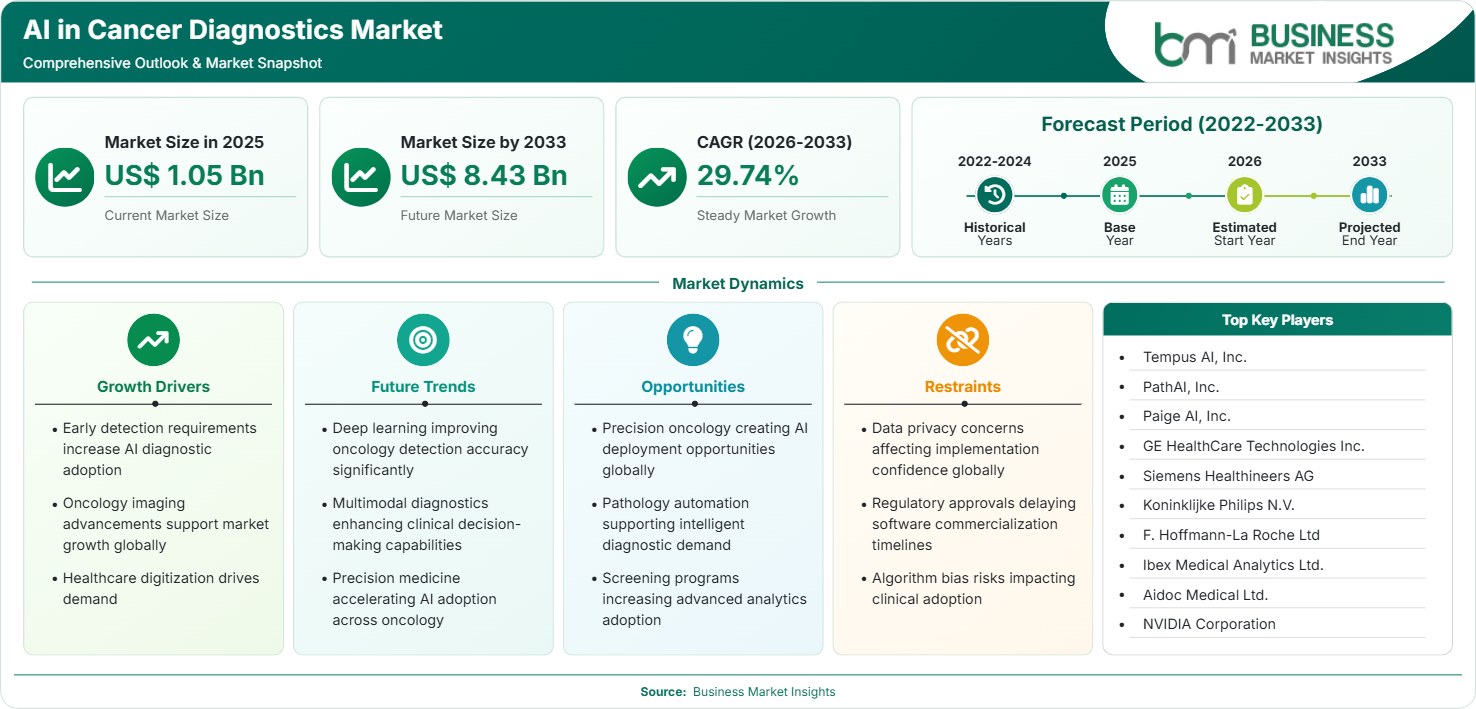
The AI in Cancer Diagnostics Market size was valued at US$ 1.05 Billion in 2025 and is projected to reach US$ 8.43 Billion by 2033, growing at a CAGR of 29.74% during 2026–2033. Growth is supported by expanding cancer screening programs, increasing digital pathology adoption, rising healthcare AI investments, and opportunities emerging from precision oncology, biomarker discovery, and cloud-enabled diagnostic workflows.

Report Coverage
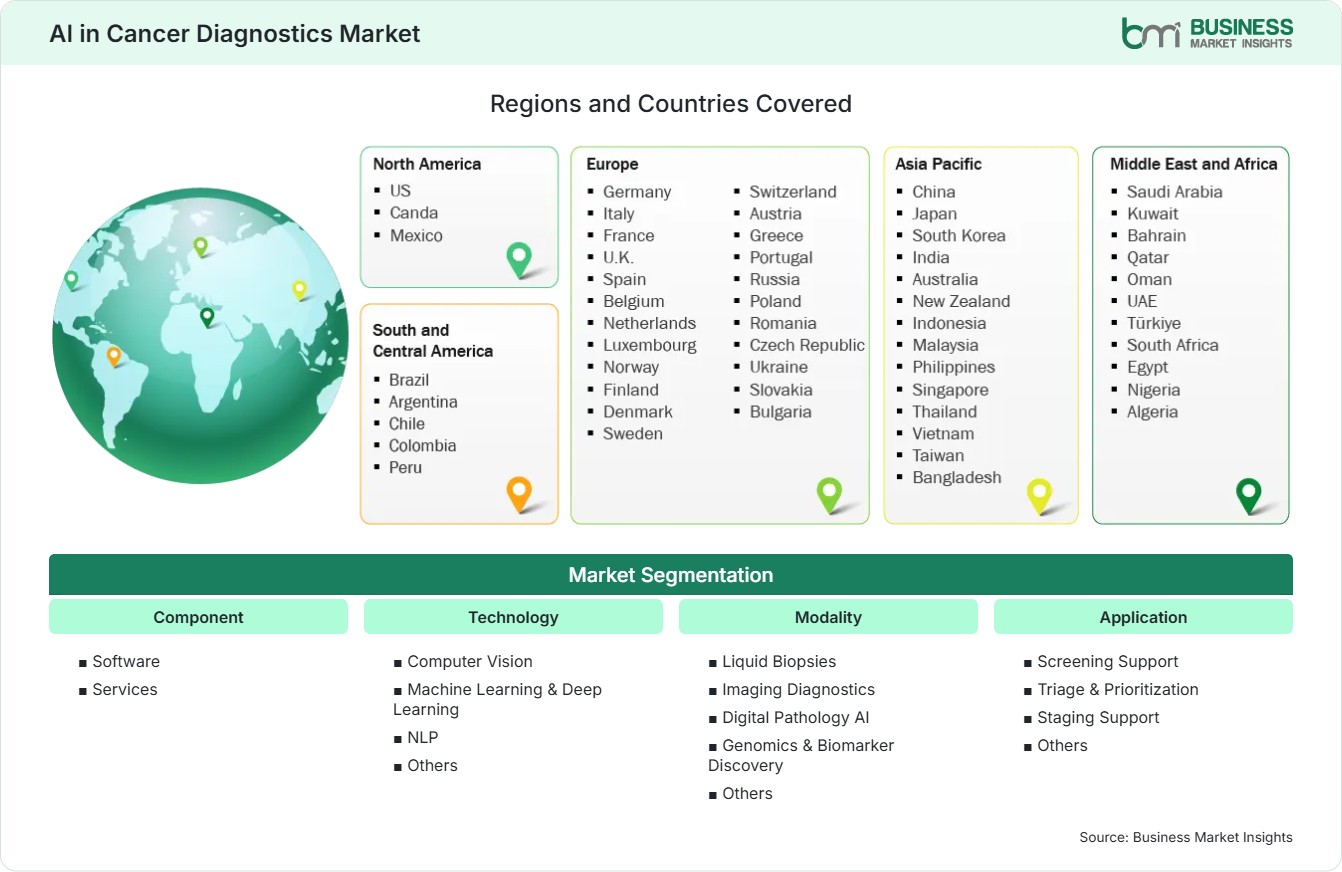
  • Component: Software, Services
  • Technology: Computer Vision, Machine Learning & Deep Learning, NLP, Others
  • Modality: Liquid Biopsies, Imaging Diagnostics, Digital Pathology AI, Genomics & Biomarker Discovery, Others
  • Application: Screening Support, Triage & Prioritization, Staging Support, Others
  • Deployment: Cloud-Based, On-Premise, Hybrid
US$ 1.05 Bn Market size in 2025
US$ 8.43 Bn Market Size by 2033
29.74% CAGR, 2026 - 2033
2026-2033 Forecast Period

AI Overview

AI in Cancer Diagnostics Market Summary

  • North America Region: North America holds a market share of 38%–42% in 2025, growing at a CAGR of 27%–30% during 2026–2033, supported by advanced healthcare digitization, strong reimbursement pathways, adoption of digital pathology platforms, growing oncology data repositories, and strategic AI collaborations across major cancer centers. The US market benefits from extensive clinical validation activities and is anticipated to expand at a CAGR of 28%–31% through 2033.
  • Fastest Growing Region: Asia Pacific accounts for 22%–26% AI in Cancer Diagnostics Market share in 2025 and is expected to grow at a CAGR of 31%–34% during 2026–2033, driven by expanding oncology infrastructure, increasing diagnostic imaging investments, government-supported AI initiatives, broader healthcare digitization, population-scale screening programs, and rising cancer prevalence.
  • Leading Segment: Software represents 58%–62% market share in 2025 and is projected to advance at a CAGR of 28%–31% during 2026–2033, supported by scalable analytics capabilities, integration with imaging systems, workflow automation, clinical decision support demand, and ongoing algorithm improvements.
  • High Growth Segment: Digital Pathology AI holds 18%–22% market share in 2025 and is expected to register a CAGR of 32%–35% during 2026–2033, fueled by whole-slide imaging expansion, pathology workforce shortages, computational biomarker identification, enhanced diagnostic consistency, and increasing regulatory clearances.
  • Key Market Opportunity: Expanding integration of multimodal AI platforms combining pathology, imaging, genomics, and clinical records presents opportunities for personalized oncology diagnostics, improved treatment selection, accelerated workflows, and stronger healthcare system efficiency.
  • Major Market Players: Tempus AI, Inc.; PathAI, Inc.; Paige AI, Inc.; GE HealthCare Technologies Inc.; Siemens Healthineers AG; Koninklijke Philips N.V.; F. Hoffmann-La Roche Ltd; Ibex Medical Analytics Ltd.; Aidoc Medical Ltd.; NVIDIA Corporation.
Strategic Insights

AI in Cancer Diagnostics Market: Strategic Insights

AI in Cancer Diagnostics Market Strategic Framework
FREE PDF
Request your free sample
Request free sample
Stakeholder View

Key Takeaways

  • The value chain in the industry is becoming more integrated, bringing together imaging providers, pathology laboratories, developers of AI software, cloud infrastructure companies, and oncology care providers, and this has led to the creation of a collaborative ecosystem for diagnostic innovation.
  • Since healthcare systems are focusing on early cancer detection and on improving operational efficiency, there is considerable commercial potential in the areas of digital pathology, genomics-assisted diagnostics, and screening support applications.
  • The innovative work is focused on multimodal algorithms that are able to analyze pathology slides, radiology scans, genomic data, and clinical records on integrated diagnostic platforms.
  • The Asia Pacific region offers a highly attractive investment opportunity because of the growing healthcare spending, the rising burden of cancer, and the fact that the government is supporting the implementation of healthcare artificial intelligence.
  • The commercialization of AI solutions focused on oncology and access to clinical datasets is being sped up through strategic acquisitions, venture capital financing, and partnerships in the field of healthcare technology.
  • The way in which companies will differentiate themselves in the future will rely on the quality of clinical validation, their interoperability capabilities, the presence of explainable AI features, and compliance with regulatory requirements in global healthcare markets.
Geographic Outlook

AI in Cancer Diagnostics Market Regional Highlights

North America AI in Cancer Diagnostics Market

North America accounted for approximately 38%–42% of global AI in Cancer Diagnostics Market revenue in 2025 and is projected to expand at a CAGR of 27%–30% during 2026–2033. The region benefits from mature healthcare digitization, strong adoption of digital pathology, extensive oncology research infrastructure, and favorable investment conditions.

  • The widespread use of digital pathology platforms allows slides to be interpreted more quickly, which shortens the time taken to make a diagnosis and at the same time promotes the wider adoption of computational pathology applications within healthcare networks.
  • Increasing financial support from healthcare providers and technology companies is still enhancing oncology AI systems, which in turn promotes the commercialization, clinical validation, and scalability of cutting-edge diagnostic solutions.
  • Rising adoption of cancer screening initiatives increases demand for automated image interpretation technologies that assist clinicians in identifying suspicious lesions earlier and more consistently.
  • Strong collaboration among hospitals, research institutes, and software developers accelerates innovation in imaging diagnostics, genomic analytics, and multimodal clinical decision support systems.
  • The region maintains the highest AI in Cancer Diagnostics Market share, supported by reimbursement readiness, advanced infrastructure, and increasing utilization of AI-enabled precision oncology approaches.

US AI in Cancer Diagnostics Market

The United States represented approximately 78%–82% of North American AI in Cancer Diagnostics Market revenue in 2025 and is expected to grow at a CAGR of 28%–31% through 2033. Demand for precision medicine, high investment in healthcare technologies, and greater adoption of digital pathology have been driving market growth.

  • Major healthcare systems are implementing enterprise-scale pathology digitization programs that create large datasets for algorithm training, clinical validation, and workflow optimization.
  • Precision oncology initiatives are increasing demand for integrated solutions combining imaging interpretation, biomarker analysis, and genomic data assessment within unified platforms.
  • Venture capital activity and strategic partnerships continue accelerating commercialization of innovative diagnostic technologies targeting breast, lung, prostate, and colorectal cancers.
  • Regulatory clarity for software-based diagnostic tools improves provider confidence and supports broader adoption across healthcare delivery organizations.

Europe AI in Cancer Diagnostics Market

Europe held approximately 24%–28% of global AI in Cancer Diagnostics Market revenue in 2025 and is forecast to grow at a CAGR of 26%–29% during 2026–2033. The region is supported by existing healthcare systems, adoption of digital pathology, and investments in precision diagnostics.

  • Germany remains the leading regional country market, supported by advanced hospital infrastructure, strong medical technology capabilities, and widespread digital healthcare adoption.
  • Spain represents a high-growth country market, advancing at an estimated CAGR of 29%–32%, driven by increasing AI investments and digital transformation initiatives.
  • Growing implementation of whole-slide imaging technologies supports broader utilization of pathology automation and computational biomarker identification applications.
  • European cancer screening programs increasingly evaluate AI-assisted tools to improve efficiency, consistency, and resource allocation across healthcare systems.
  • Regulatory frameworks emphasizing data security and clinical performance encourage development of trustworthy and interoperable diagnostic platforms.

Asia Pacific AI in Cancer Diagnostics Market

Asia Pacific accounted for approximately 22%–26% of global AI in Cancer Diagnostics Market revenue in 2025 and is expected to register the fastest regional expansion with a CAGR of 31%–34% during 2026–2033. Growing rates of cancer, development of healthcare systems, and government-sponsored AI initiatives are fueling its implementation.

  • China leads regional revenue generation due to significant investments in healthcare digitalization, artificial intelligence research, and cancer screening infrastructure.
  • India represents one of the fastest-growing markets, expanding at an estimated 33%–36% CAGR, supported by healthcare modernization and increasing diagnostic accessibility initiatives.
  • Regional healthcare providers increasingly adopt cloud-based deployment models to overcome resource constraints and improve access to advanced analytical capabilities.
  • Government-backed innovation programs encourage research partnerships between healthcare institutions, technology providers, and academic organizations.
  • Strong demand for scalable screening solutions is accelerating implementation of automated imaging analysis and pathology interpretation technologies.

Rest of World AI in Cancer Diagnostics Market

Rest of World represented approximately 10%–14% of global AI in Cancer Diagnostics Market Share in 2025 and is anticipated to grow at a CAGR of 28%–31% during 2026–2033. Digital diagnostics is increasingly being adopted in South and Central America, especially in the large urban healthcare systems.

  • Brazil maintains the leading position within South and Central America due to increasing investments in diagnostic infrastructure and oncology service capabilities.
  • Saudi Arabia demonstrates strong growth potential with an estimated CAGR of 30%–33%, driven by healthcare digitization and national transformation initiatives.
  • Growing demand for specialist diagnostic expertise supports adoption of telepathology and cloud-enabled diagnostic platforms across underserved regions.
  • Public healthcare modernization projects increasingly incorporate artificial intelligence capabilities into radiology, pathology, and screening service delivery models.
  • International partnerships and technology transfer initiatives are improving access to advanced oncology diagnostic solutions across emerging healthcare markets.
Global Market Geography
FREE PDF
Request your free sample
Request free sample
Segment Analysis

AI in Cancer Diagnostics Market Segmentation

Component

The Component segment is led by software platforms, with the category accounting for approximately 58%–62% market share in 2025 and advancing at a CAGR of 28%–31% during 2026–2033. The AI in Cancer Diagnostics Market scope continues widening as healthcare institutions integrate advanced software ecosystems and specialized service offerings into oncology diagnostic workflows.

  • Software: Software solutions enable automated image interpretation, pathology analysis, predictive modeling, and workflow optimization, supporting faster clinical decisions while improving diagnostic consistency across oncology care settings.
  • Services: Services include implementation, integration, validation, consulting, maintenance, and training functions that help healthcare organizations maximize value from artificial intelligence deployments while ensuring regulatory compliance.

Technology

The Technology segment continues evolving rapidly, supported by advances in computational power, algorithm sophistication, and expanding oncology datasets. Technology adoption is accelerating across diagnostic laboratories and hospital systems seeking greater precision and operational efficiency.

  • Computer Vision: Computer vision technologies analyze pathology slides and medical imaging datasets, supporting lesion identification, tumor classification, and diagnostic workflow enhancement across clinical environments.
  • Machine Learning & Deep Learning: Machine learning and deep learning algorithms identify hidden diagnostic patterns, improve predictive accuracy, enable biomarker discovery, and support precision oncology decision-making capabilities.
  • Natural Language Processing: Natural language processing extracts actionable clinical information from pathology reports, physician notes, and medical records, facilitating comprehensive oncology analytics and research initiatives.

Modality

The Modality segment reflects increasing diversification of AI applications across cancer diagnostics. AI in Cancer Diagnostics Market Adoption is driven by growing demand for early detection, precision medicine, and scalable diagnostic workflows.

  • Liquid Biopsies: Artificial intelligence enhances liquid biopsy interpretation by identifying subtle molecular signals, supporting non-invasive cancer detection, monitoring, and recurrence risk evaluation across patient populations.
  • Imaging Diagnostics: AI-powered imaging diagnostics improve lesion detection, prioritization, and characterization while helping radiologists manage increasing imaging volumes and diagnostic complexity.
  • Digital Pathology AI: Digital pathology AI enables whole-slide image analysis, automated tissue classification, computational biomarker assessment, and workflow automation to support pathology productivity and diagnostic quality.
  • Genomics and Biomarker Discovery: Genomic analytics solutions identify clinically relevant biomarkers, facilitate precision medicine initiatives, and improve oncologists' ability to personalize treatment strategies effectively.

Application

The Application segment continues benefiting from growing emphasis on early detection, workflow efficiency, and clinical decision support. Healthcare providers increasingly utilize artificial intelligence technologies throughout diagnostic pathways to reduce delays and improve patient outcomes.

  • Screening Support: Screening support applications assist clinicians in identifying suspicious findings earlier, improving diagnostic consistency and supporting large-scale population health screening initiatives.
  • Triage & Prioritization: Triage and prioritization solutions automatically identify high-risk cases for review, helping healthcare providers optimize resources and accelerate intervention decisions.
  • Staging Support: Staging support technologies evaluate tumor characteristics and disease progression indicators, contributing to treatment planning and clinical management decisions.

Deployment

Deployment preferences vary according to healthcare infrastructure, regulatory requirements, and organizational technology strategies. Cloud-based environments are experiencing accelerated adoption due to scalability, accessibility, and lower infrastructure burdens.

  • Cloud-Based: Cloud-based deployments provide scalable computing resources, centralized data access, and rapid software updates, supporting broader utilization of advanced oncology analytics.
  • On Premise: On-premise deployments appeal to organizations prioritizing data control, customized infrastructure management, and strict governance requirements for sensitive clinical information.
  • Hybrid: Hybrid deployment models combine local infrastructure and cloud capabilities, balancing operational flexibility, performance optimization, and compliance objectives across healthcare environments.

Cancer Type

The Cancer Type segment reflects varying disease prevalence, screening intensity, and diagnostic technology utilization across oncology disciplines. Breast and lung cancer applications account for significant activity due to extensive screening programs and high diagnostic volumes. The AI in Cancer Diagnostics Market trends increasingly reflect demand for disease-specific analytical capabilities that improve detection accuracy and treatment planning.

  • Breast Cancer: Breast cancer applications leverage artificial intelligence to enhance mammography interpretation, lesion identification, and risk assessment, supporting earlier detection initiatives.
  • Lung Cancer: Lung cancer diagnostics utilize advanced image analysis technologies to improve nodule characterization, screening efficiency, and clinical decision-making processes.
  • Colorectal Cancer: Colorectal cancer solutions support pathology assessment, screening optimization, and diagnostic precision through advanced pattern recognition and analytics capabilities.
  • Prostate Cancer: Prostate cancer applications facilitate tissue evaluation, imaging interpretation, and risk stratification to improve diagnostic accuracy and treatment selection processes.
Market Forces

AI in Cancer Diagnostics Market Dynamics

Key Market Drivers

Increasing Diagnostic Workloads and Demand for Earlier Detection

Increase in diagnosis work for cancers has led to a need for solutions to help doctors in detecting abnormalities, prioritizing urgent cases, and analyzing large amounts of images and pathology reports. As per the World Health Organization's International Agency for Research on Cancer, there were around 20 million new cancer cases globally in 2022. AI solutions could assist in automating routine analysis and focusing on difficult cases. AI in Cancer Diagnostics Market growth therefore depends on solutions that improve specific steps in existing pathways rather than simply adding another software layer.

Growing Digitization of Pathology and Diagnostic Imaging

The availability of medical images and tissue slides for computational analysis, remote consultation, and repeated examination is made possible by digitization. Whole-slide scanners, picture archiving systems, and laboratory information systems provide the technical basis for using image-based algorithms. Computer vision is useful for quantifying structures that are hard to evaluate consistently by manual review alone, and machine learning can combine image features with clinical data. To obtain these advantages, it is necessary to have appropriate image quality, standardized workflows, and compatible infrastructure.

Advances in Multimodal Models and Clinical Decision Support

Increasingly, machine learning systems can analyze various types of data within a cohesive workflow. The results of imaging studies, tissue morphology, molecular markers, and medical history can all offer relevant insight into a potential cancer diagnosis. Natural language processing can pull out relevant details in reports, computer vision can analyze images, and risk estimates can be predicted. AI in Cancer Diagnostics Market trends will favor systems that demonstrate reproducible improvements in diagnostic decisions while clearly communicating uncertainty and limitations.

Key Market Opportunities

Expansion of AI-Assisted Screening in Underserved Communities

Healthcare providers can use validated AI tools to support screening pathways where specialist capacity is limited or diagnostic workloads are concentrated in urban centers. Image prioritization, remote review, and automated quality checks may help smaller facilities connect patients with specialist services more efficiently. AI in Cancer Diagnostics Market Opportunity evaluation needs to take into account factors such as the availability of equipment, connectivity, training, and downstream capacity for verifying abnormal results. The value of a screening algorithm is limited if patients are unable to undergo imaging, biopsies, or consultations with specialists.

Integration of Molecular Diagnostics and Biomarker Discovery

AI systems have the opportunity to make use of genomics and liquid biopsy platforms by analyzing complex molecular patterns and spotting potential diagnostic biomarkers. Such methods could help with the classification of challenging cases, the assessment of cancer-related signals, and the development of additional testing approaches. When it comes to commercial investment, it is important to tell the difference between exploratory discovery of biomarkers and their use as validated diagnostics, as performance in a research setting does not prove clinical usefulness. Developers must have reproducible assay procedures, representative patient groups, analytical sensitivity, and independent evaluation using suitable reference standards.

Enterprise Platforms and Scalable Diagnostic Infrastructure

The healthcare industry is moving towards systems that allow diagnostic software to be linked to their existing imaging archive systems, lab and clinical records systems. Enterprise-level deployment could provide licensing, system integration, and support services revenue streams. A cloud-based platform could help with collaboration and centralized updates, while a hybrid platform will support institutions that need local computing. The AI in Cancer Diagnostics Market Forecasts favor vendors capable of supporting multiple clinical workflows without compromising security or reliability.

Market Restraints and Challenges

Clinical Validation Gaps and Generalizability Across Patient Populations

The fact that differences in patient demographics, the prevalence of disease, scanner settings, tissue preparation, and laboratory procedures can lead to considerable variation between development data and actual clinical inputs means that an algorithm which works well at one institution might give less reliable results at another, thus raising the possibility of missing findings, carrying out unnecessary investigations, or providing inappropriate reassurance. Therefore, developers should carry out external validation and assess the algorithm's performance across the relevant subgroups before making any general clinical claims.

Data Governance, Integration Costs, and Uncertain Reimbursement

The need for diagnostic AI to have access to sensitive patient information and its frequent reliance on integration with existing clinical systems mean that cybersecurity measures and special infrastructure are also required. Concerns about privacy, delays in the procurement process, high implementation costs, and the lack of clear reimbursement can all hinder the uptake of such a tool even if it shows promising results. Before deploying it, organizations must establish lawful access to data, appropriate data retention policies, access controls, and audit capabilities, and define the vendor's responsibilities.

Company Analysis

Competitive Landscape

The competitive environment is characterized by increasing collaboration between diagnostic technology vendors, healthcare providers, pathology laboratories, and oncology research institutions. Current AI in Cancer Diagnostics Market analysis indicates that vendors are focusing on multimodal diagnostics, workflow automation, digital pathology expansion, and precision oncology applications to strengthen competitive positioning.

Company Name

Overview

Products and Services relevant to this market

Tempus AI, Inc.

Precision medicine company leveraging clinical and molecular data analytics to support oncology diagnostics and treatment optimization.

AI-enhanced genomic profiling, oncology data platforms, biomarker discovery solutions, clinical decision support, and precision diagnostics.

PathAI, Inc.

Specialized artificial intelligence company focused on pathology workflow enhancement and diagnostic accuracy improvements.

Digital pathology software, image analysis algorithms, pathology workflow automation, and biomarker assessment tools.

Paige AI, Inc.

Developer of computational pathology technologies supporting cancer identification and clinical decision-making.

AI-powered pathology platforms, whole-slide image analytics, cancer detection software, and laboratory workflow solutions.

GE HealthCare Technologies Inc.

Global healthcare technology provider with strong imaging and digital healthcare capabilities.

Oncology imaging systems, AI-assisted radiology tools, workflow optimization software, and advanced diagnostic analytics.

Siemens Healthineers AG

Major medical technology company supporting imaging, diagnostics, and healthcare digitalization initiatives.

Diagnostic imaging solutions, AI-enabled clinical applications, oncology analytics, and integrated workflow platforms.

Koninklijke Philips N.V.

Healthcare technology provider emphasizing precision diagnostics and connected care solutions.

Image-guided diagnostics, informatics platforms, AI-enabled imaging analytics, and oncology workflow management tools.

F. Hoffmann-La Roche Ltd

Global healthcare leader integrating diagnostics, genomics, and oncology innovation capabilities.

Companion diagnostics, digital pathology platforms, genomic testing solutions, and precision oncology technologies.

Ibex Medical Analytics Ltd.

Specialist provider of artificial intelligence solutions for pathology applications.

AI-enabled pathology diagnostics, cancer detection software, quality assurance tools, and pathology decision-support solutions.

Aidoc Medical Ltd.

Healthcare AI company focused on automated medical imaging interpretation and prioritization.

Imaging analytics platforms, triage applications, clinical workflow enhancement tools, and diagnostic support software.

NVIDIA Corporation

Technology company providing accelerated computing infrastructure for advanced AI development.

AI computing platforms, healthcare AI frameworks, accelerated analytics infrastructure, and deep learning technologies.

Trust & Transparency

Research Methodology

The market analysis combines proprietary research with secondary data from government agencies, company disclosures, regulatory filings, industry databases and expert interviews. Market estimates are validated through data triangulation, cross-market benchmarking and analyst review.

View Full Research Methodology

Questions Answered

Frequently Asked Questions

Why is this AI in Cancer Diagnostics Market Report important for stakeholders?

The report provides insights into technology adoption patterns, investment opportunities, competitive dynamics, regional developments, growth segments, and strategic considerations influencing future industry expansion and commercialization prospects.

How are cloud-based deployment models influencing industry adoption?

Cloud deployment reduces infrastructure requirements, supports scalable computing resources, facilitates rapid software updates, and improves accessibility of advanced diagnostic tools for healthcare providers across diverse regions.

How does digital pathology contribute to market expansion?

Digital pathology creates high-quality datasets required for machine learning algorithms, supports remote collaboration among specialists, improves workflow efficiency, and enables scalable deployment of computational diagnostic applications.

Which cancer types are witnessing the strongest adoption of AI-based diagnostic tools?

Breast cancer and lung cancer currently represent leading areas of adoption due to extensive screening programs, high imaging volumes, and strong demand for earlier and more accurate disease detection capabilities.

What role does artificial intelligence play in modern cancer diagnosis?

Artificial intelligence assists clinicians by analyzing pathology images, radiology scans, genomic information, and clinical data to improve diagnostic accuracy, workflow efficiency, and early disease detection while supporting precision medicine initiatives.

Access the Full AI in Cancer Diagnostics Market Report

Get segment-level forecasts, regional estimates, competitive benchmarking, company profiles and downloadable Excel datasets.

Access the full AI in Cancer Diagnostics Market Report
350 pages PDF & Excel | 2026-10-28
Similar Research

Related Market Reports