Market Summary
Executive Summary and Global Market Analysis
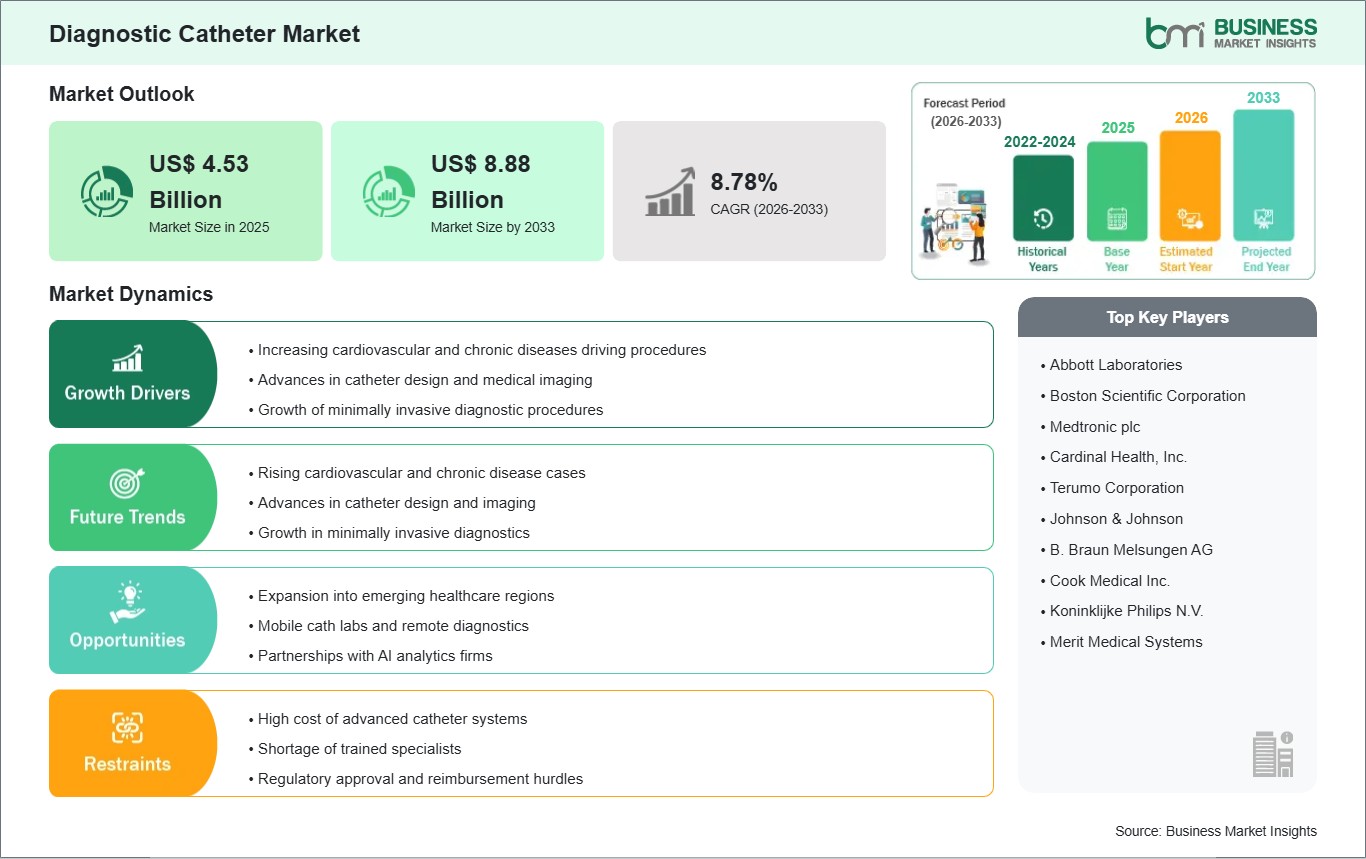
The medical field depends on diagnostic catheter products because these devices enable physicians to accurately assess and diagnose cardiovascular, neurovascular, and urological conditions through minimally invasive procedures. Diagnostic catheters are flexible, thin tubes that doctors use to access blood vessels and body cavities for the purpose of visualizing blockages while measuring pressure and collecting samples and guiding interventional procedures. The devices enable clinicians to make accurate treatment choices which result in better patient outcomes during procedures that include angiography and electrophysiology studies and cardiac catheterization. The global diagnostic catheter market has evolved because more people with cardiovascular diseases and peripheral artery disease and other chronic conditions develop their symptoms as they grow older.
The market is expanding because hospitals and specialty cardiac centers are implementing advanced imaging techniques together with minimally invasive diagnostic methods which help patients achieve better health results while decreasing their hospital time and operational dangers. The market shows strong growth potential, but it must overcome multiple obstacles which include expensive operating expenses and demanding regulatory standards and product recalls and the requirement for trained staff to conduct catheter-based diagnostics. The upcoming years will bring major growth opportunities because developing regions are building more healthcare facilities and people are becoming more aware of the importance of early disease identification and technological advancements continue to emerge.
Segment Analysis
Diagnostic Catheter Market Segmentation
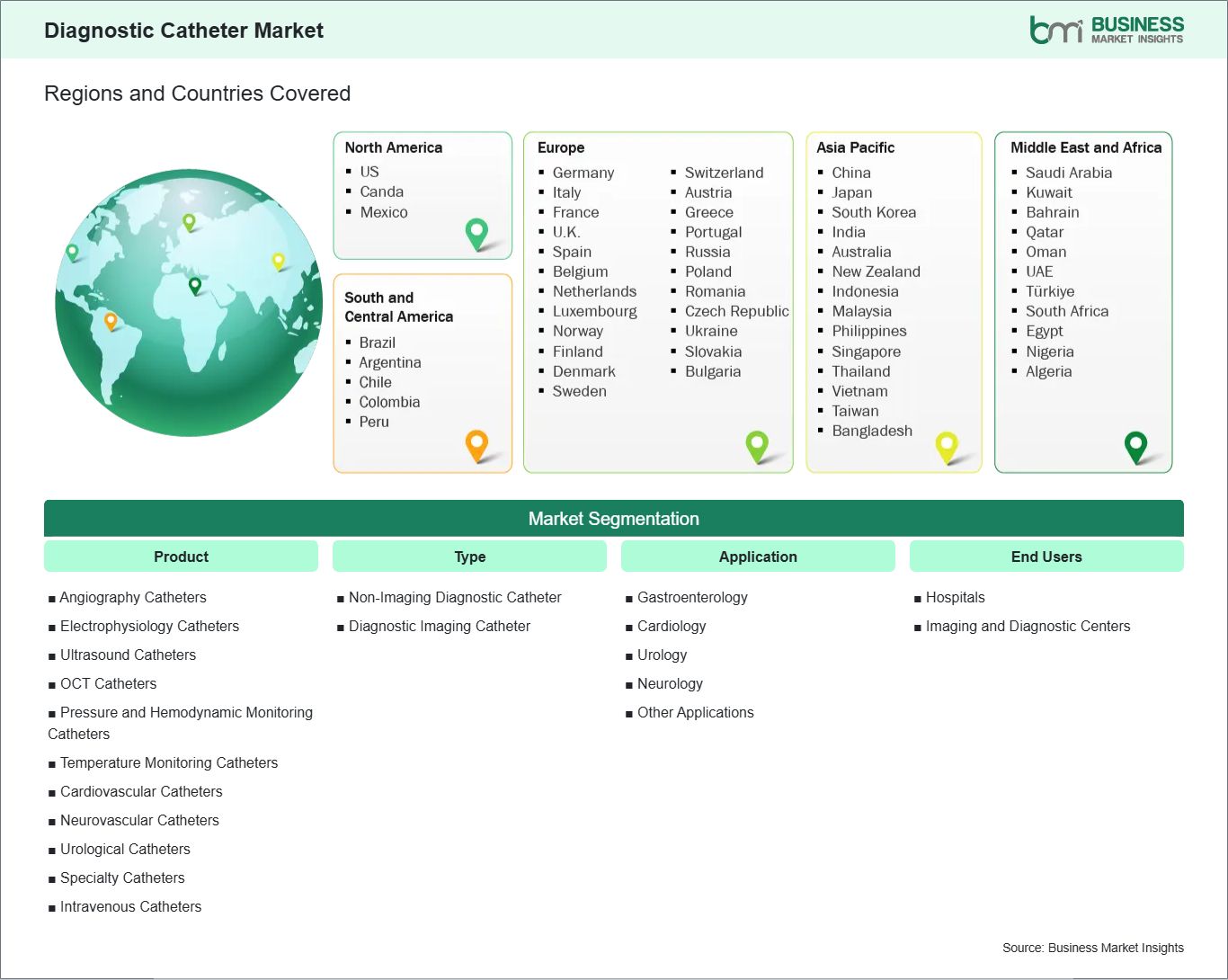
Key segments that contributed to the derivation of diagnostic catheter market analysis are product, type, application, and end users.
- By product, the diagnostic catheter market is segmented into angiography catheters, electrophysiology catheters, ultrasound catheters, oct catheters, pressure and hemodynamic monitoring catheters, temperature monitoring catheters, cardiovascular catheters, neurovascular catheters, urological catheters, specialty catheters, intravenous catheters. The angiography catheters segment dominated the market in 2025.
- By type, the market is segmented into non-imaging diagnostic catheter, diagnostic imaging catheter. The diagnostic imaging catheter segment held the largest market share in 2025.
- By application, the market is segmented into gastroenterology, cardiology, urology, neurology, others. The cardiology segment held the largest market share in 2025.
- By end user, the diagnostic catheter market is segmented into hospitals, imaging and diagnostic centers. The hospitals segment dominated the market in 2025.
Market Forces
Diagnostic Catheter Market Drivers and Opportunities
Rising Prevalence of Cardiovascular and Chronic Diseases
The global rise in cardiovascular diseases together with lifestyle-related diseases drives the growth of the diagnostic catheter market. The prevalence of coronary artery disease and arrhythmias and hypertension and structural heart disorders have increased because people now spend more time sitting and choosing unhealthy foods and smoking and experiencing higher stress levels. Early detection through medical evaluation serves as the most effective method to address the worldwide health crisis caused by cardiovascular diseases which rank as the top cause of death. Diagnostic catheters function as crucial instruments to detect arterial blockages and assess cardiac performance and support medical treatment choice. The rising elderly demographic requires more catheter-based diagnostic tests because older adults face higher risks for heart and vascular diseases. The market continues to grow because preventive healthcare awareness has increased and more people now participate in regular screening tests to receive earlier diagnostic evaluations.
Technological Advancements and Expanding Access in Emerging Markets
The diagnostic catheter market provides major development potential because of ongoing technological improvements and increasing medical service availability throughout developing nations. The new developments in catheter technology which include better materials and flexible design and advanced imaging capabilities and pressure-sensing, and electrophysiology catheters lead to improved diagnostic results and safer medical procedures. Digital imaging platforms combined with real-time data monitoring systems enable clinicians to perform complex procedures with greater precision and reduced complications.
Healthcare infrastructure development in Asian countries and Latin American nations and Middle Eastern regions will enhance their diagnostic and interventional capabilities according to their current investment levels. Healthcare organizations from both public and private sectors are establishing more cardiac care centers while they expand insurance options and promote early disease detection initiatives. The establishment of dedicated cardiac hospitals together with increasing medical tourism activities leads to further regional market development. The combination of healthcare system advances and increased healthcare accessibility enables manufacturers and service providers to access new patient groups while expanding their worldwide operations.
Size and Share Analysis
Diagnostic Catheter Market Size and Share Analysis
By product, the diagnostic catheter market is segmented into angiography catheters, electrophysiology catheters, ultrasound catheters, oct catheters, pressure and hemodynamic monitoring catheters, temperature monitoring catheters, cardiovascular catheters, neurovascular catheters, urological catheters, specialty catheters, intravenous catheters. The angiography catheters segment dominated the market in 2025. The segment maintains its dominant position because of five factors which include rising rates of coronary artery disease and growing interventional cardiology procedures and increasing demand for minimally invasive imaging and improvements in catheter manufacturing which enable better flexible movement and torque handling and the growth of cath lab facilities which now exist throughout the world.
By type, the market is segmented into non-imaging diagnostic catheter, and diagnostic imaging catheter. The diagnostic imaging catheter segment held the largest market share in 2025. The market maintains its leadership position because growing demand for real-time visualization during procedures and advanced imaging system integration and image-guided intervention and complex cardiovascular case processes drive procedural safety and accuracy results.
By application, the market is segmented into gastroenterology, cardiology, urology, neurology, and others. The cardiology segment held the largest market share in 2025. The global cardiovascular disease burden which exists today together with the rising number of percutaneous coronary interventions and the growing elderly population and strong reimbursement systems in developed countries and ongoing progress in cardiac diagnostic technology create conditions that enable cardiology to maintain its highest revenue generation.
By end user, the diagnostic catheter market is segmented into hospitals, imaging and diagnostic centers. The hospitals segment dominated the market in 2025. The segment achieves market leadership because hospitals deliver diagnostic and interventional treatments to numerous patients while employing expert staff members and using their advanced imaging systems and their advantageous reimbursement policies and their patients’ needs for cardiac and neurovascular treatment at hospitals.
Report Coverage
Diagnostic Catheter Market Report Coverage and Deliverables
The "Diagnostic catheter Market Size and Forecast (2022&2033)" report provides a detailed analysis of the market covering below areas:
- Diagnostic catheter market size and forecast at global, regional, and country levels for all the key market segments covered under the scope
- Diagnostic catheter market trends, as well as market dynamics such as drivers, restraints, and key opportunities
- Diagnostic catheter market analysis covering key market trends, global and regional framework, major players, regulations, and recent market developments
- Industry landscape and competition analysis covering market concentration, heat map analysis, prominent players, and recent developments for the diagnostic catheter market
- Detailed company profiles, including SWOT analysis
Geographic Insights
Diagnostic Catheter Market Geographic Insights
The geographical scope of the diagnostic catheter market report is divided into five regions: North America, Asia Pacific, Europe, Middle East & Africa, and South & Central America. The Diagnostic catheter market in Asia Pacific is expected to grow significantly during the forecast period.
The Asia-Pacific Diagnostic catheter market is segmented into China, Japan, South Korea, India, Australia, New Zealand, Indonesia, Malaysia, the Philippines, Singapore, Thailand, Vietnam, Taiwan, Bangladesh, and the Rest of Asia. The Asia-Pacific diagnostic catheter market is experiencing rapid growth because of three factors which include rising cardiovascular disease rates and increasing elderly population and better healthcare awareness. China, Japan India, South Korea, and Australia are developing their healthcare systems through investments in advanced diagnostic technologies which will help them meet increased patient requirements. The patient population growth between China, Japan, and India, together with their hospitals and specialty cardiac centers adopting minimally invasive procedures will create strong market growth opportunities. The regional market for diagnostic catheter products is experiencing rapid growth because of government programs which expand health insurance coverage and enhance diagnostic facilities and build stronger treatment capabilities.
Industry Activity
Recent Developments
The diagnostic catheter market is evaluated by gathering qualitative and quantitative data post primary and secondary research, which includes important corporate publications, association data, and databases. A few of the key developments in the Diagnostic catheter market are:
- In February 2025, Johnson & Johnson MedTech launched its CEREGLIDE 92 Catheter System, a next-generation neurovascular diagnostic catheter designed for acute ischemic stroke treatment. The system enhances navigation in distal brain vessels, allowing for more precise and effective diagnostics. It aims to improve revascularization outcomes while reducing procedural risks. This development highlights the company’s focus on innovation and advanced minimally invasive technologies in the Diagnostic Catheter Market.
- In February 2024, BIOTRONIK introduced the Micro Rx catheter, a new rapid exchange microcatheter designed to enhance guidewire support during percutaneous coronary interventions (PCI) with ease. Exclusively distributed by BIOTRONIK and manufactured by IMDS (Interventional Medical Device Solutions), this cutting-edge device joins BIOTRONIK's portfolio alongside NHancer Rx, TrapIT, and ReCross catheters.
Trust & Transparency
Research Methodology
The market analysis combines proprietary research with secondary data from government agencies, company disclosures, regulatory filings, industry databases and expert interviews. Market estimates are validated through data triangulation, cross-market benchmarking and analyst
review.
View Full Research Methodology
Key Sources Referred:
World Bank – Global Trade Indicators American Medical Association (AMA) National Center for Biotechnology Information (NCBI) National Library of Medicine (NLM) Centers for Disease Control and Prevention (CDC) Company website National Institutes of Health (NIH) International Hospital Federation (IHF) Company annual reports Company investor presentations