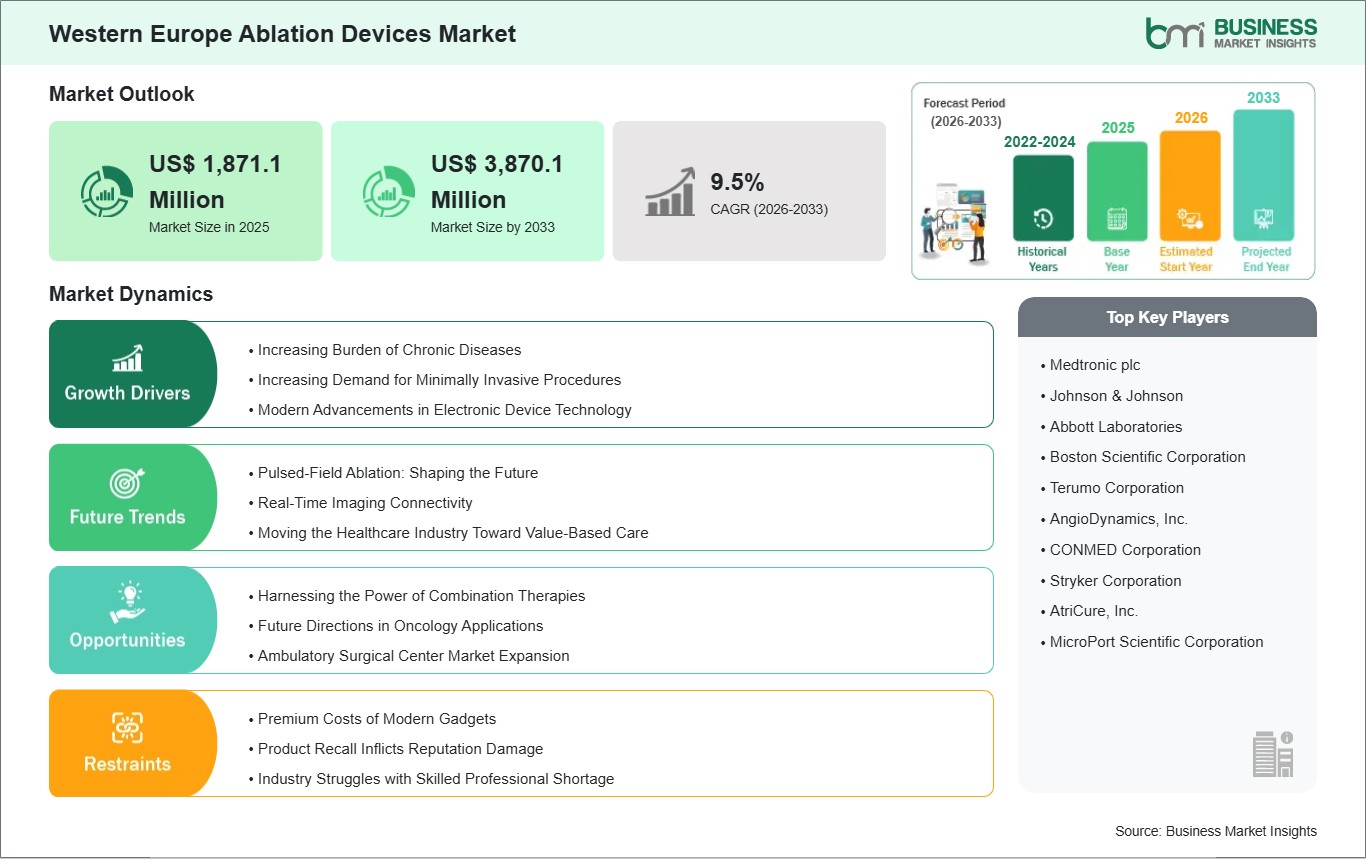
The Western Europe Ablation Devices market size is expected to reach US$ 3,870.1 million by 2033 from US$ 1,871.1 million in 2025. The market is estimated to record a CAGR of 9.5% from 2026 to 2033.
The region shows increasing demand for ablation procedures across cardiology, oncology, and pain management, driven by rising patient awareness, aging populations, and growing prevalence of chronic diseases that require precise interventions. Hospitals and specialty clinics are investing in advanced energy-based technologies, including radiofrequency, cryoablation, and microwave systems, as these solutions reduce hospital stays, improve recovery times, and offer targeted treatment options. Strong healthcare reimbursement frameworks and widespread insurance coverage encourage the adoption of these procedures.
High procurement and operational costs of sophisticated ablation systems can limit accessibility in smaller hospitals and non-urban regions. Strict regulatory standards for device approval and compliance may delay the introduction of innovative technologies, affecting adoption cycles. Despite these constraints, the market demonstrates potential, driven by continuous technological innovation, a highly skilled clinical workforce, and increasing patient preference for minimally invasive therapies. Western Europe remains a strategic hub for device manufacturers seeking clinical validation and adoption of novel ablation solutions.

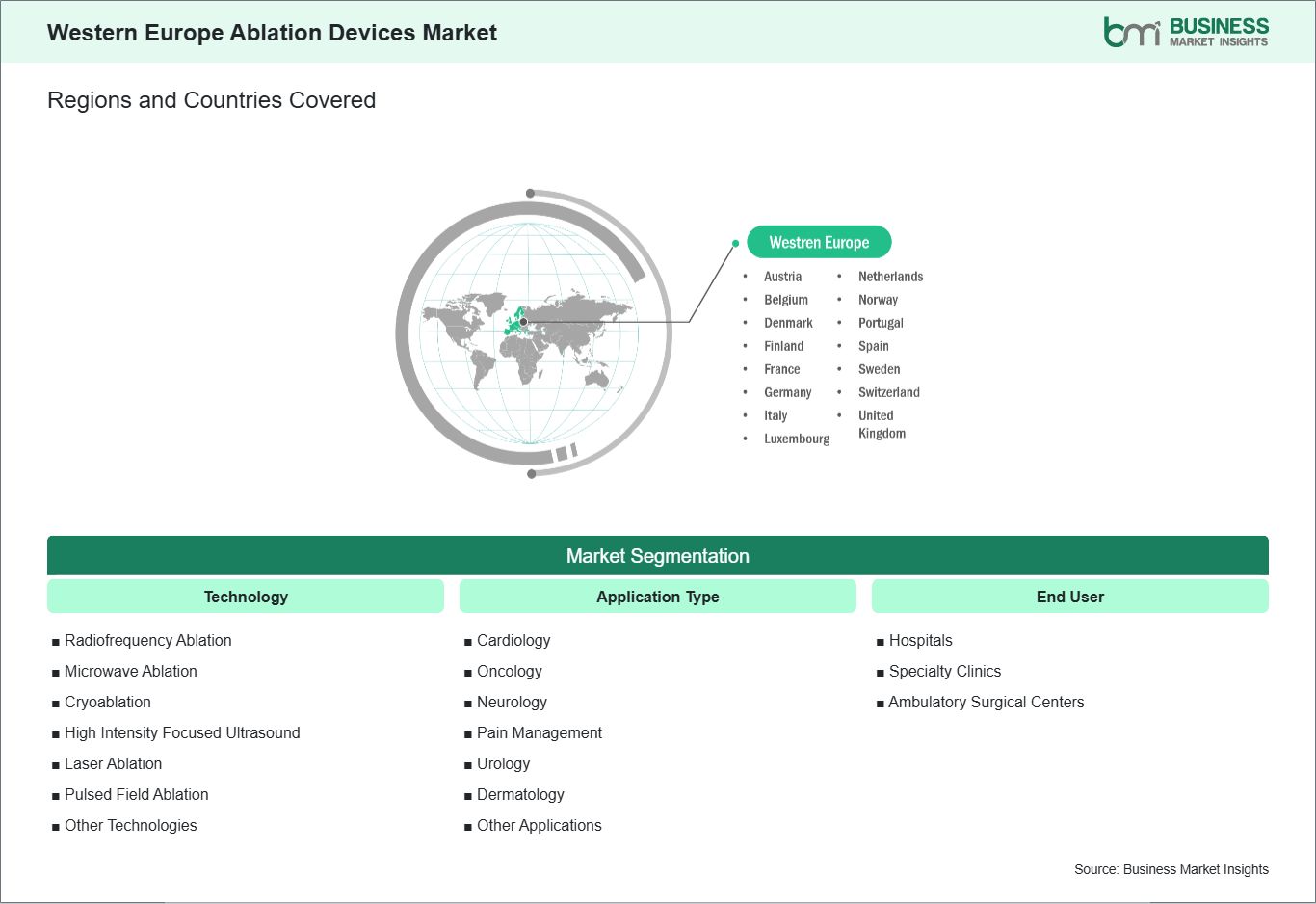
Key segments that contributed to the derivation of the Western Europe Ablation Devices market analysis are technology type, application, and end user.
Aging populations and lifestyle-related risk factors have increased the number of patients requiring long-term intervention. Minimally invasive ablation procedures offer precise treatment with reduced recovery times, lower complication rates, and improved patient comfort, aligning with the region’s focus on efficient and patient-centered care.
Healthcare providers are integrating catheter-based ablation procedures into routine cardiac care to address abnormal electrical activity. This approach reduces reliance on long-term medication, improves symptom control, and enhances quality of life for patients managing persistent heart conditions, reflecting the strong emphasis on advanced cardiac care and procedural innovation.
Thermal ablation techniques are widely used to treat localized tumors where surgery may pose higher risks, while nerve and tissue ablation procedures are applied to chronic pain conditions. These trends highlight the region’s focus on modern, minimally invasive interventions that enhance patient outcomes, optimize healthcare efficiency, and integrate with treatment pathways.
In cardiology, ablation is paired with pharmacological interventions and advanced diagnostic technologies, including mapping and imaging systems. These integrated approaches enhance procedural precision, minimize recurrence of arrhythmias, and enable clinicians to deliver personalized care plans tailored to complex cardiac conditions.
In oncology, combination strategies allow ablation to be integrated into multimodal treatment protocols alongside systemic therapies, targeted drug regimens, and image-guided interventions. This approach maximizes tumor control while preserving surrounding healthy tissue, demonstrating how ablation complements other therapies rather than serving as a standalone intervention. Multidisciplinary care teams rely on this approach to improve recovery outcomes and reduce procedural risk.
Pain management and endocrine care are benefiting from combination therapy approaches. Nerve and tissue ablation procedures are combined with physiotherapy, rehabilitation programs, and tailored medication plans to support long-term relief and improved functional outcomes. This integrative model reflects commitment to holistic care pathways, positioning ablation devices as essential tools within coordinated treatment strategies designed to enhance patient quality of life across clinical areas.

The Western Europe Ablation Devices market demonstrates consistent growth, with market size and share analysis reflecting evolving treatment preferences and competitive dynamics among leading players. The report evaluates important subsegments categorized within technology type, application, and end user, highlighting their respective contributions to overall market performance.
By technology type, the radiofrequency ablation subsegment dominated the market in 2025. Its adoption is driven by its proven clinical efficacy, precise tissue targeting capabilities, consistent procedural outcomes, and strong safety profile across multiple therapeutic areas, making it a cornerstone technology in minimally invasive treatment approaches.
In terms of application, the cardiology subsegment dominated the market in 2025. This leadership is attributed to the rising prevalence of cardiac arrhythmias in the adult population, increasing awareness of catheter-based rhythm management procedures, and greater accessibility of advanced ablation therapies for patients requiring long-term cardiac care.
Based on end user, the hospitals subsegment dominated the market in 2025. Hospitals remain the primary distribution channel due to their comprehensive cardiac care facilities, access to trained electrophysiologists and specialized technicians, advanced imaging and mapping infrastructure, and ability to provide immediate, life-saving interventional procedures.
| Report Attribute | Details |
|---|---|
| Market size in 2025 | US$ 1,871.1 Million |
| Market Size by 2033 | US$ 3,870.1 Million |
| CAGR (2026 - 2033) | 9.5% |
| Historical Data | 2022-2024 |
| Forecast period | 2026-2033 |
| Segments Covered | By Technology
|
|
Regions and Countries Covered
| |
| Western Europe | Belgium, Netherlands, Luxembourg, Germany, France, Italy, Spain, Switzerland, Sweden, Austria, United Kingdom, Denmark, Portugal, Norway, Finland |
| Market leaders and key company profiles |
|
The "Western Europe Ablation Devices Market Size and Forecast (2022–2033)" report provides a detailed analysis of the market covering below areas:
The geographical scope of the Western Europe Ablation Devices market report is divided into: Belgium, the Netherlands, Luxembourg, Germany, France, Italy, Spain, Switzerland, Sweden, Austria, the UK, Denmark, Portugal, Norway, and Finland. Germany held the largest share in 2025.
The country has a dense network of specialized hospitals, cardiac centers, and oncology clinics that implement ablation procedures across clinical specialties. Physicians are well-trained in energy-based ablation techniques, enabling clinical applications and encouraging the uptake of innovative technologies.
Collaboration between global device manufacturers and local distributors ensures the continuous availability of cutting-edge equipment and procedural training. Urban centers such as Berlin, Munich, and Hamburg serve as primary hubs for advanced ablation interventions, while regional hospitals adopt these technologies as access and expertise expand. High device costs and rigorous regulatory approval processes can extend timelines for introducing novel systems. Germany remains a key driver of the Western Europe ablation devices market, setting trends for clinical adoption, technological innovation, and procedural excellence, while serving as a model for other countries in the region seeking to expand minimally invasive treatment options.

The Western Europe Ablation Devices market is evaluated by gathering qualitative and quantitative data post primary and secondary research, which includes important corporate publications, association data, and databases. A few of the key developments in the Western Europe Ablation Devices market are:
The Western Europe Ablation Devices Market is valued at US$ 1,871.1 Million in 2025, it is projected to reach US$ 3,870.1 Million by 2033.
As per our report Western Europe Ablation Devices Market, the market size is valued at US$ 1,871.1 Million in 2025, projecting it to reach US$ 3,870.1 Million by 2033. This translates to a CAGR of approximately 9.5% during the forecast period.
The Western Europe Ablation Devices Market report typically cover these key segments-
The historic period, base year, and forecast period can vary slightly depending on the specific market research report. However, for the Western Europe Ablation Devices Market report:
The Western Europe Ablation Devices Market is populated by several key players, each contributing to its growth and innovation. Some of the major players include:
The Western Europe Ablation Devices Market report is valuable for diverse stakeholders, including:
Essentially, anyone involved in or considering involvement in the Western Europe Ablation Devices Market value chain can benefit from the information contained in a comprehensive market report.
Please tell us your area of interest
(Market Segments/ Regions and Countries/ Companies)