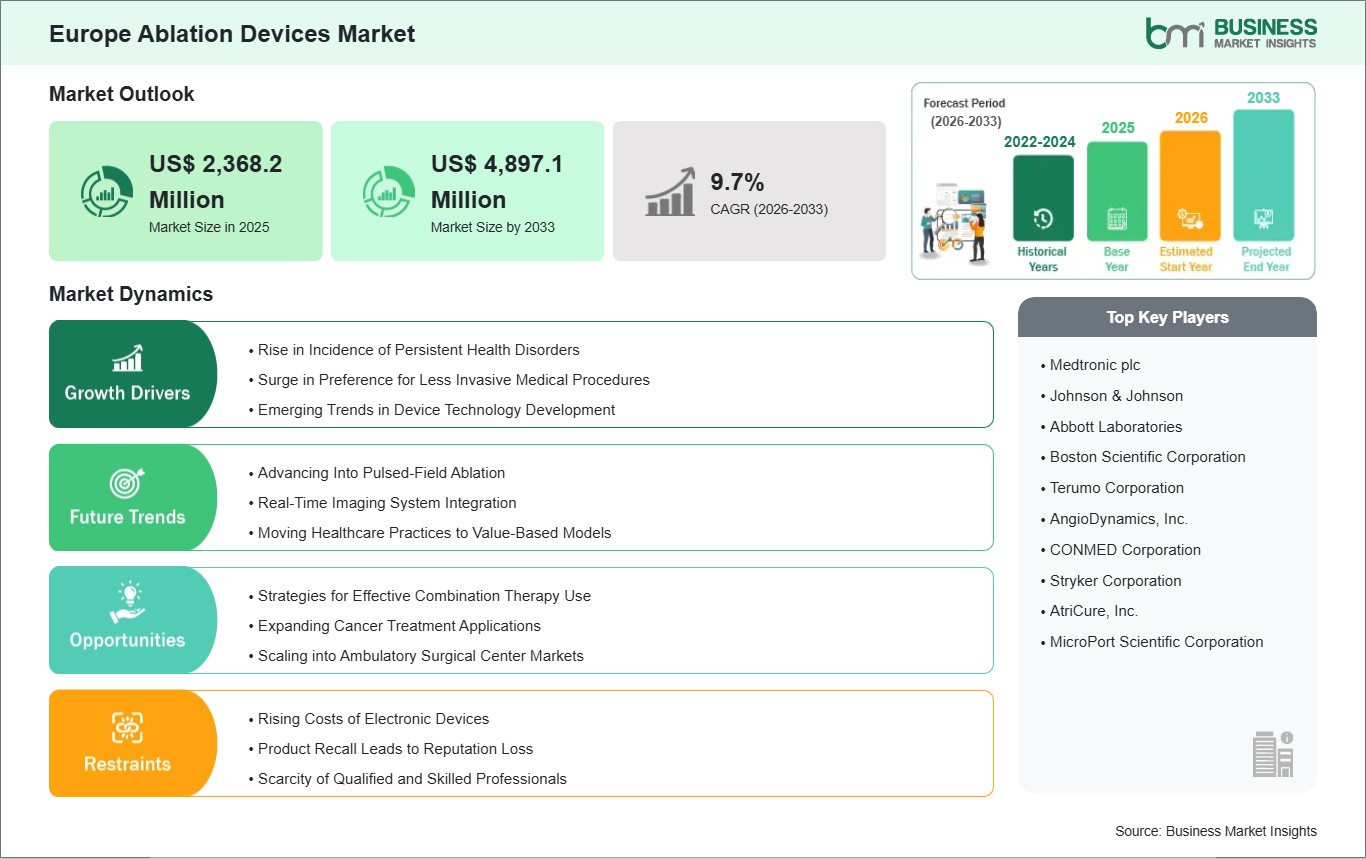
The Europe Ablation Devices market size is expected to reach US$ 4,897.1 million by 2033 from US$ 2,368.2 million in 2025. The market is estimated to record a CAGR of 9.7% from 2026 to 2033.
The increasing prevalence of chronic conditions such as cardiac arrhythmias and localized tumors is driving the demand for procedures that minimize hospitalization and recovery time. Hospitals and specialized centers are investing in advanced ablation platforms, including radiofrequency, cryoablation, and microwave systems, reflecting a commitment to improving procedural accuracy and patient outcomes.
The market is supported by well-established healthcare infrastructure, skilled clinical professionals, and initiatives promoting clinician training and procedural standardization. However, expansion is moderated by factors such as regulatory requirements for medical devices and the high acquisition and maintenance costs of cutting-edge ablation technologies. Smaller clinics or facilities in less urbanized regions may face challenges in adopting sophisticated ablation systems due to budget constraints. Despite these challenges, ongoing innovation, clinical awareness, and patient preference for minimally invasive procedures sustain interest in ablation therapies throughout Europe.

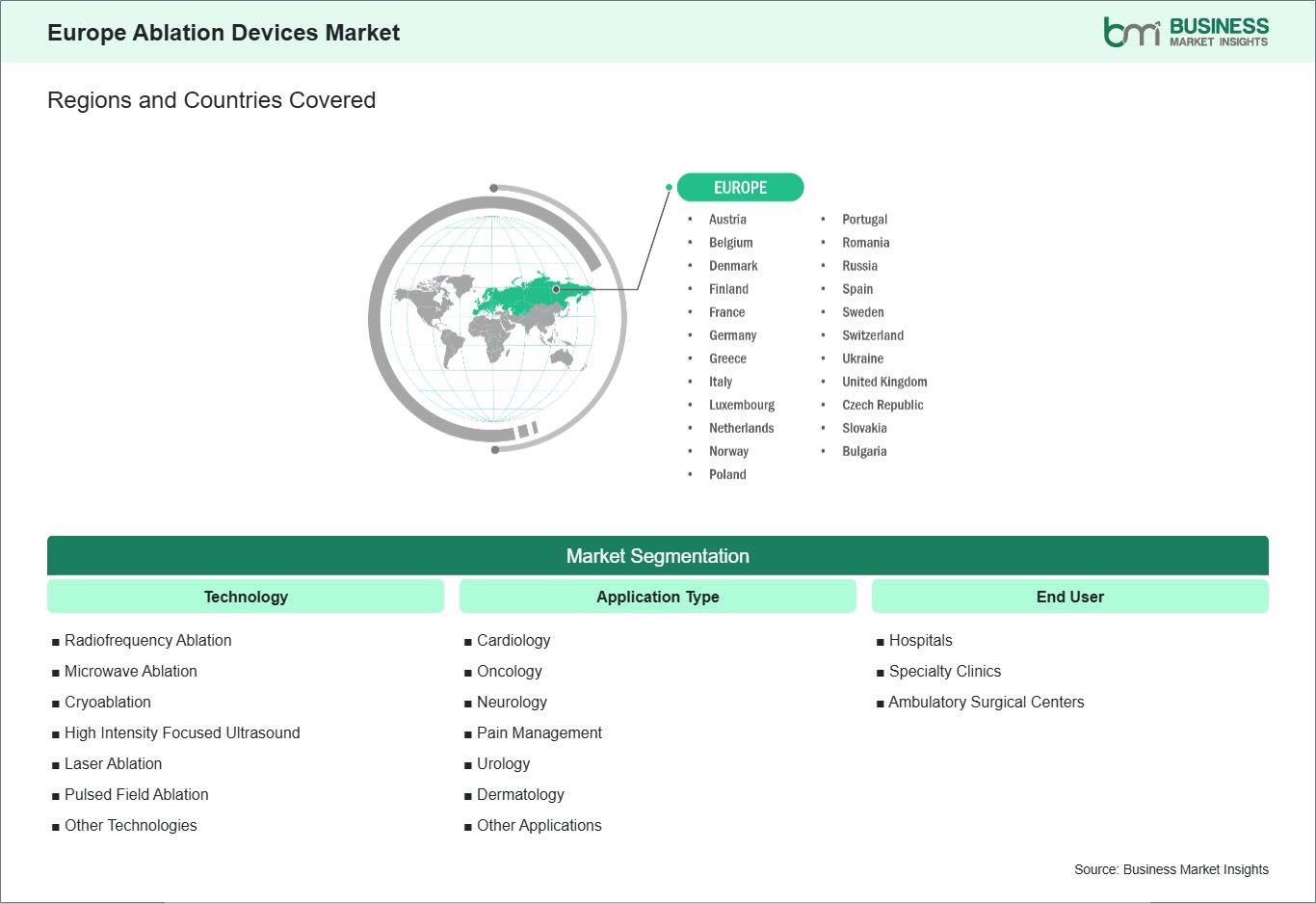
Key segments that contributed to the derivation of the Europe Ablation Devices market analysis are technology type, application, and end user.
Cardiovascular illnesses remain the leading cause of mortality across the region, with atrial fibrillation driving demand for catheter-based ablation procedures. The increasing incidence of oncology cases, particularly liver and lung cancers, has strengthened the role of ablation technologies as minimally invasive alternatives to traditional surgery. These developments underscore the importance of advanced medical devices in addressing Europe’s evolving healthcare challenges.
Older patients are more vulnerable to arrhythmias, tumors, and musculoskeletal disorders, conditions where ablation therapies have demonstrated strong efficacy. This demographic trend is creating sustained demand for ablation devices, particularly in countries with well-developed healthcare infrastructures that support widespread adoption of advanced technologies.
Lifestyle-related risk factors such as smoking, alcohol consumption, and sedentary behavior are contributing to the rise in persistent health disorders across Europe. These factors are increasing the incidence of cardiovascular and oncology cases, placing additional strain on healthcare systems. As providers seek to modernize treatment pathways, ablation devices are being positioned as critical tools to deliver clinical effectiveness and economic efficiency, making them central to Europe’s healthcare modernization efforts.
Oncology specialists are integrating ablation with systemic treatments such as chemotherapy, immunotherapy, and radiotherapy to enhance survival rates and reduce recurrence. This multi-modal approach is valuable in healthcare systems focused on maximizing treatment efficacy while managing costs, ensuring that patients benefit from comprehensive care strategies.
In cardiovascular care, ablation is being paired with pharmacological therapies to manage atrial fibrillation and other rhythm disorders. This dual strategy improves treatment outcomes and reduces hospital readmissions, aligning with Europe’s healthcare priorities centered on efficiency and patient well-being. The integration of ablation into therapeutic frameworks reflects a growing emphasis on holistic, patient-centered care models.
Pain management and musculoskeletal treatments are benefiting from combination approaches in Europe. By coupling ablation with targeted drug delivery or physiotherapy, clinicians are achieving better long-term outcomes for patients with chronic pain conditions. These innovations highlight how ablation devices are evolving beyond standalone applications, becoming integral to multi-modal treatment strategies that address the complex healthcare needs of Europe’s diverse populations.

The Europe Ablation Devices market demonstrates steady growth, with size and share analysis highlighting evolving trends and competitive dynamics among key players. The report evaluates important subsegments categorized within technology type, application, and end user, highlighting their respective contributions to overall market performance.
By technology type, the radiofrequency ablation subsegment dominated the market in 2025. Its adoption is driven by its proven clinical efficacy, precise tissue targeting capabilities, consistent procedural outcomes, and strong safety profile across multiple therapeutic areas, making it a cornerstone technology in minimally invasive treatment approaches.
In terms of application, the cardiology subsegment dominated the market in 2025. This leadership is attributed to the rising prevalence of cardiac arrhythmias in the adult population, increasing awareness of catheter-based rhythm management procedures, and greater accessibility of advanced ablation therapies for patients requiring long-term cardiac care.
Based on end user, the hospitals subsegment dominated the market in 2025. Hospitals remain the primary distribution channel due to their comprehensive cardiac care facilities, access to trained electrophysiologists and specialized technicians, advanced imaging and mapping infrastructure, and ability to provide immediate, life-saving interventional procedures.
| Report Attribute | Details |
|---|---|
| Market size in 2025 | US$ 2,368.2 Million |
| Market Size by 2033 | US$ 4,897.1 Million |
| CAGR (2026 - 2033) | 9.7% |
| Historical Data | 2022-2024 |
| Forecast period | 2026-2033 |
| Segments Covered | By Technology
|
|
Regions and Countries Covered
| |
| Europe | Germany, Italy, France, U.K., Spain, Belgium, Netherlands, Luxembourg, Norway, Finland, Denmark, Sweden, Switzerland, Austria, Greece, Portugal, Russia, Poland, Romania, Czech Republic, Ukraine, Slovakia, Bulgaria |
| Market leaders and key company profiles |
|
The "Europe Ablation Devices Market Size and Forecast (2022–2033)" report provides a detailed analysis of the market covering below areas:
The geographical scope of the Europe Ablation Devices market report is divided into: Germany, Italy, France, the UK, Spain, Belgium, the Netherlands, Luxembourg, Norway, Finland, Denmark, Sweden, Austria, Switzerland, Russia, Romania, Greece, the Czech Republic, Portugal, Ukraine, Poland, Slovakia, and Bulgaria. Germany held the largest share in 2025.
Germany has a well-established ecosystem of specialized cardiac, oncology, and interventional centers where ablation procedures are commonly performed. Clinicians are adopting technologically advanced ablation systems that integrate real-time imaging and precise energy delivery, reflecting the country’s leadership in procedural innovation and clinical excellence.
The healthcare environment in Germany encourages adoption through structured care pathways, specialized training programs, and support for minimally invasive therapies. Collaboration between hospitals and technology providers facilitates early deployment of innovative ablation solutions. While access is concentrated in urban and metropolitan regions, Germany continues to set the standard for clinical adoption and technological advancement in Europe’s ablation devices market, influencing trends across the region.

The Europe Ablation Devices market is evaluated by gathering qualitative and quantitative data post primary and secondary research, which includes important corporate publications, association data, and databases. A few of the key developments in the Europe Ablation Devices market are:
The Europe Ablation Devices Market is valued at US$ 2,368.2 Million in 2025, it is projected to reach US$ 4,897.1 Million by 2033.
As per our report Europe Ablation Devices Market, the market size is valued at US$ 2,368.2 Million in 2025, projecting it to reach US$ 4,897.1 Million by 2033. This translates to a CAGR of approximately 9.7% during the forecast period.
The Europe Ablation Devices Market report typically cover these key segments-
The historic period, base year, and forecast period can vary slightly depending on the specific market research report. However, for the Europe Ablation Devices Market report:
The Europe Ablation Devices Market is populated by several key players, each contributing to its growth and innovation. Some of the major players include:
The Europe Ablation Devices Market report is valuable for diverse stakeholders, including:
Essentially, anyone involved in or considering involvement in the Europe Ablation Devices Market value chain can benefit from the information contained in a comprehensive market report.
Please tell us your area of interest
(Market Segments/ Regions and Countries/ Companies)