Market Summary
Executive Summary and Market Analysis
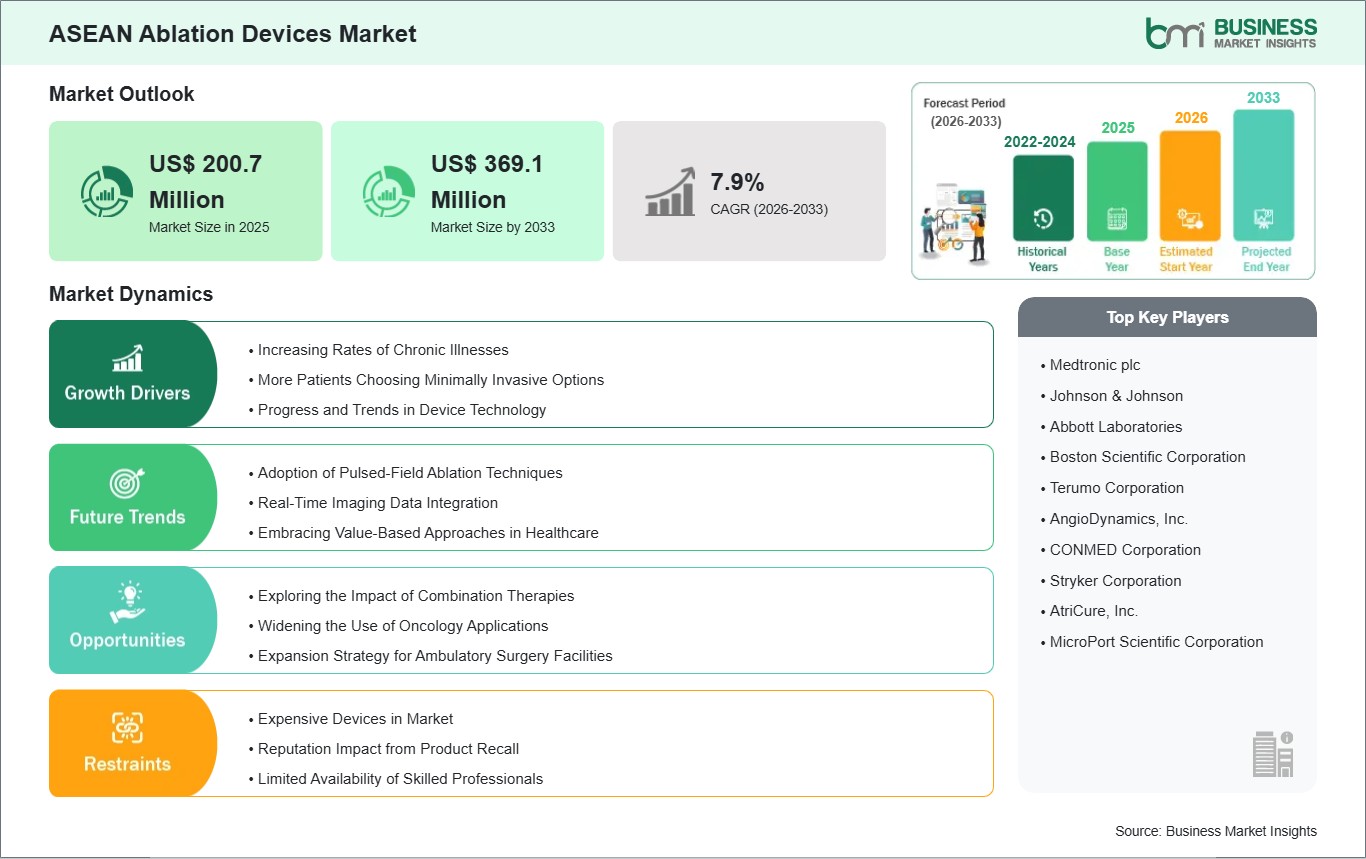
The growing awareness of ablation procedures among clinicians, coupled with improvements in healthcare infrastructure in urban centers, is contributing to higher adoption of technologies such as radiofrequency, microwave, and cryoablation. These procedures are valued for reducing surgical complications, shortening hospital stays, and improving patient comfort, which aligns with the trend toward patient-centered care. Private healthcare networks and specialized hospitals are playing a key role in expanding procedural availability, supported by investments in interventional facilities and clinician training programs.
High equipment acquisition costs and the recurring expense of disposables restrict smaller hospitals and clinics from adopting ablation technologies. Reimbursement and insurance coverage are often inconsistent across the region, impacting patient access and affordability. A shortage of trained interventional specialists and uneven distribution of procedural infrastructure, particularly outside major urban areas, pose a barrier to wider adoption. Regulatory approval processes can be lengthy, delaying the introduction of advanced technologies. Ongoing efforts to modernize healthcare systems, expand private sector services, and raise awareness of minimally invasive treatments strengthen the region’s position in the global ablation devices market.
Segment Analysis
ASEAN Ablation Devices Market Segmentation
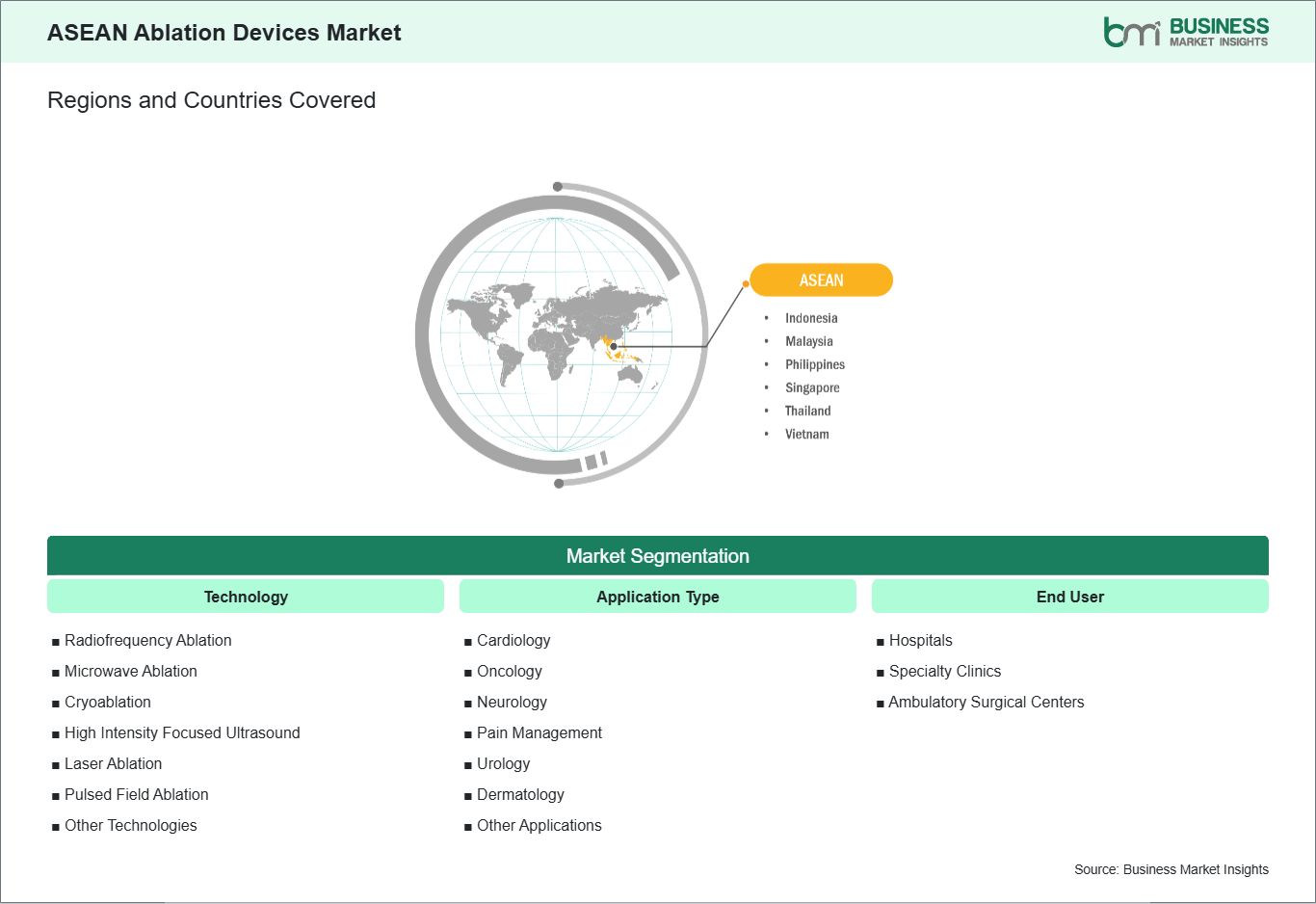
Key segments that contributed to the derivation of the ASEAN Ablation Devices market analysis are technology type, application, and end user.
- By technology type, the ablation devices market is segmented into radiofrequency ablation, microwave ablation, cryoablation, high-intensity focused ultrasound, laser ablation, pulsed field ablation, and others. The radiofrequency ablation segment dominated the market in 2025.
- Based on application, the ablation devices market is classified into cardiology, oncology, neurology, pain management, urology, dermatology, and others. The cardiology segment dominated the market in 2025.
- In terms of end user, the ablation devices market is categorized into hospitals, specialty clinics, and ambulatory surgical centers. The hospitals segment dominated the market in 2025.
Market Forces
ASEAN Ablation Devices Market Drivers and Opportunities
Increasing Rates of Chronic Illnesses
The region is facing a rising burden of chronic illnesses, particularly cancer and cardiovascular diseases, which is driving increased demand for advanced medical technologies. Ablation devices are vital for treating tumors and cardiac conditions, offering minimally invasive options that reduce recovery time and procedural risks compared with traditional surgery. Hospitals and specialty clinics are integrating these devices into patient care protocols to address the growing prevalence of these conditions.
Oncology treatment pathways are evolving to incorporate ablation as a key intervention, especially for localized tumors where targeted tissue removal can improve patient outcomes. Clinicians are leveraging ablation to manage complex cases, enhance precision, and reduce the need for more invasive procedures. The rising acceptance of these technologies reflects growing clinical confidence and an expanding base of trained specialists who can perform these procedures safely and effectively.
In cardiovascular care, ablation is becoming a standard intervention for managing rhythm disorders. Physicians are using these devices to treat arrhythmias earlier in the disease progression, offering patients the potential to reduce long-term dependence on medication while improving quality of life. As chronic disease rates continue to rise across urban and rural healthcare settings, the adoption of ablation devices is expected to grow steadily in modern disease management.
Exploring the Impact of Combination Therapies
In oncology, ablation is paired with systemic therapies, such as chemotherapy or targeted drug regimens, to enhance tumor control and prolong survival. Using ablation alongside other treatment modalities allows physicians to address disease from multiple angles while minimizing patient discomfort and procedural complications.
Cardiovascular specialists are adopting integrated approaches, combining ablation with pharmacotherapy or device-based interventions to manage complex heart conditions. This strategy improves clinical outcomes and reduces the risk of recurrence, providing patients with more comprehensive care. Multidisciplinary teams are coordinating these treatments to ensure that ablation complements other therapeutic options effectively.
Advanced medical centers are leading the way in integrating ablation into multi-modal treatment strategies, while smaller facilities face challenges related to equipment, training, and resource availability. Nevertheless, as healthcare infrastructure and clinical expertise continue to develop, combination therapy involving ablation devices is expected to play a central role in cancer and cardiovascular care.
Size and Share Analysis
ASEAN Ablation Devices Market Size and Share Analysis
The ASEAN Ablation Devices market is experiencing steady growth, with market size and share analysis reflecting evolving treatment preferences and competitive dynamics among key players. The report evaluates important subsegments categorized within technology type, application, and end user, highlighting their respective contributions to overall market performance.
By technology type, the radiofrequency ablation subsegment dominated the market in 2025. Its adoption is driven by its proven clinical efficacy, precise tissue targeting capabilities, consistent procedural outcomes, and strong safety profile across multiple therapeutic areas, making it a cornerstone technology in minimally invasive treatment approaches.
In terms of application, the cardiology subsegment dominated the market in 2025. This leadership is attributed to the rising prevalence of cardiac arrhythmias in the adult population, increasing awareness of catheter-based rhythm management procedures, and greater accessibility of advanced ablation therapies for patients requiring long-term cardiac care.
Based on end user, the hospitals subsegment dominated the market in 2025. Hospitals remain the primary distribution channel due to their comprehensive cardiac care facilities, access to trained electrophysiologists and specialized technicians, advanced imaging and mapping infrastructure, and ability to provide immediate, life-saving interventional procedures.
Report Coverage
ASEAN Ablation Devices Market Report Coverage and Deliverables
The "ASEAN Ablation Devices Market Size and Forecast (2022–2033)" report provides a detailed analysis of the market covering below areas:
- ASEAN Ablation Devices market size and forecast at regional and country levels for all market segments covered under the scope
- ASEAN Ablation Devices market trends, as well as drivers, restraints, and opportunities
- ASEAN Ablation Devices market analysis covering key trends, regional framework, major players, regulations, and recent developments
- Industry landscape and competition analysis covering market concentration, heat map analysis, prominent players, and recent developments for the ASEAN Ablation Devices market
- Detailed company profiles, including SWOT analysis
Geographic Insights
ASEAN Ablation Devices Market Geographic Insights
The geographical scope of the ASEAN Ablation Devices market report is divided into: Indonesia, Malaysia, the Philippines, Singapore, Thailand, and Vietnam. Indonesia held the largest share in 2025.
Indonesia represents the dominant market due to its large population base, increasing chronic disease burden, and expanding network of referral hospitals. Major urban centers such as Jakarta and Surabaya function as key hubs for advanced cardiac electrophysiology and interventional oncology procedures. Leading hospitals in these cities are equipped with catheterization laboratories and imaging infrastructure that enable effective delivery of radiofrequency and cryoablation therapies. The country’s national health insurance system has improved access to specialized procedures, although coverage variations influence patient uptake. Private hospitals play an important role in adopting newer ablation technologies, as they have greater flexibility in capital investment and technology procurement. Indonesia has seen improvements in specialist training programs, particularly for cardiologists and interventional radiologists, strengthening local expertise in ablation procedures. Nevertheless, adoption outside Tier-1 cities remains limited due to uneven infrastructure distribution and a shortage of trained operators in rural provinces. High device costs and dependence on imported systems impact accessibility. Despite these challenges, Indonesia continues to anchor ASEAN’s ablation devices market through its expanding urban healthcare ecosystem and growing procedural capabilities.
Industry Activity
Recent Developments
The ASEAN Ablation Devices market is evaluated by gathering qualitative and quantitative data post primary and secondary research, which includes important corporate publications, association data, and databases. A few of the key developments in the ASEAN ablation devices market are:
- In July 2025, Johnson & Johnson MedTech announced the launch of its VARIPULSE Platform across APAC. It is a pulsed field ablation (PFA) system integrated with the CARTO 3 electroanatomical mapping system designed to streamline cardiac catheter ablation procedures. Although initially approved in Japan, Hong Kong, China, Australia, Taiwan, and Korea, this rollout reflects broader APAC expansion, which includes markets relevant to ASEAN healthcare providers adopting advanced ablation technology.
- In March 2025, Baird Medical announced that its Great Wall Microwave Therapeutic Instrument and Microwave Ablation Needles received regulatory approval from the Ministry of Health, Republic of Indonesia, allowing commercial distribution of its microwave ablation technology for tumor and tissue ablation in Indonesia.
Trust & Transparency
Research Methodology
The market analysis combines proprietary research with secondary data from government agencies, company disclosures, regulatory filings, industry databases and expert interviews. Market estimates are validated through data triangulation, cross-market benchmarking and analyst
review.
View Full Research Methodology
Key Sources Referred:
The World BankWorld Health Organization (WHO)Center for Disease Control and Prevention (CDC)Food and Drug Administration (FDA)European Database on Medical Devices (EUDAMED)European Society of Cardiology (ESC)American College of Cardiology (ACC)American Heart Association (AHA)Company WebsitesCompany Annual ReportsCompany Investor Presentations