Market Summary
Executive Summary and Market Analysis
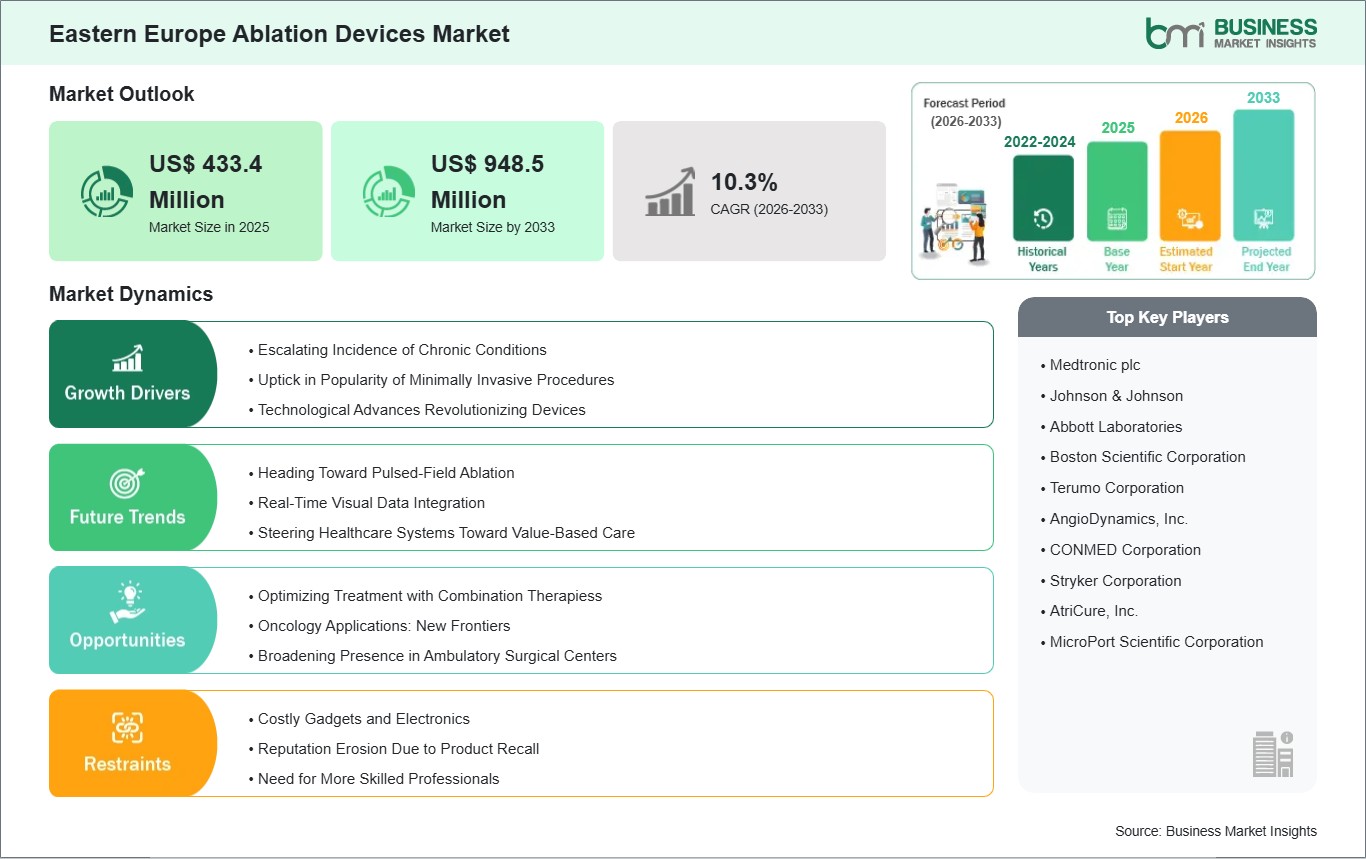
There is a growing emphasis on minimally invasive procedures within regional healthcare infrastructures, which enables faster patient recovery, lower complication rates, and reduced hospitalization durations. Healthcare providers are adopting advanced energy‑based ablation systems, including radiofrequency, microwave, and cryoablation technologies, to modernize interventional therapeutics.
Supportive government initiatives, improved reimbursement frameworks in select countries, and strategic alliances between global device manufacturers and local distribution partners have bolstered device availability and procedural uptake. However, market expansion is tempered by limited procedural reimbursement in less affluent Eastern European nations and uneven access to state‑of‑the‑art elective procedures outside major urban centers. Clinician familiarity with complex ablation systems is developing in several regional markets, potentially slowing adoption. Despite these challenges, the market is poised for gradual growth as healthcare systems invest in capacity building, diagnostic upgrades, and clinical education programs to support utilization of ablation therapies.
Segment Analysis
Eastern Europe Ablation Devices Market Segmentation
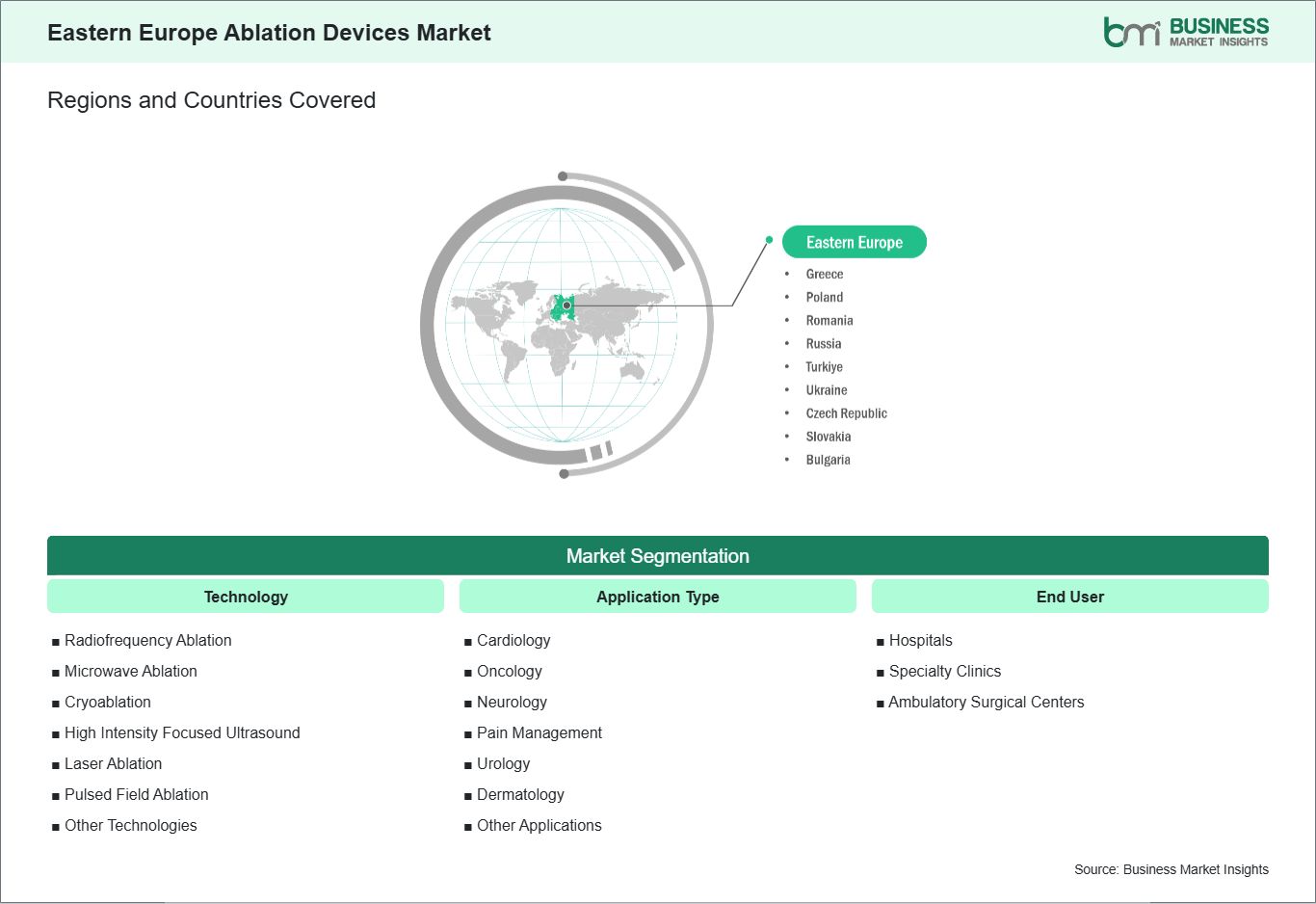
Key segments that contributed to the derivation of the Eastern Europe Ablation Devices market analysis are technology type, application, and end user.
- By technology type, the ablation devices market is segmented into radiofrequency ablation, microwave ablation, cryoablation, high-intensity focused ultrasound, laser ablation, pulsed field ablation, and others. The radiofrequency ablation segment dominated the market in 2025.
- Based on application, the ablation devices market is classified into cardiology, oncology, neurology, pain management, urology, dermatology, and others. The cardiology segment dominated the market in 2025.
- In terms of end user, the ablation devices market is categorized into hospitals, specialty clinics, and ambulatory surgical centers. The hospitals segment dominated the market in 2025.
Market Forces
Eastern Europe Ablation Devices Market Drivers and Opportunities
Escalating Incidence of Chronic Conditions
Cardiovascular diseases remain the leading cause of mortality in the region, with atrial fibrillation and other rhythm disorders driving demand for catheter-based ablation procedures. The growing burden of cancer, particularly liver and lung malignancies, is fueling the adoption of ablation technologies as minimally invasive alternatives to surgery. These trends reflect a shift toward advanced medical interventions aimed at reducing hospital stays and improving patient outcomes.
The demographic profile of Eastern Europe, characterized by aging populations and declining birth rates, is intensifying the need for effective chronic disease management. Older patients are more susceptible to arrhythmias, tumors, and musculoskeletal disorders, conditions where ablation therapies have demonstrated strong efficacy. This demographic shift is creating demand for ablation devices, particularly in urban healthcare centers where advanced technologies are more readily available.
Lifestyle-related risk factors are contributing to the rise in chronic illnesses across the region. High rates of smoking, alcohol consumption, and sedentary behavior are increasing the incidence of cardiovascular and oncology cases. As healthcare systems seek to modernize treatment pathways, ablation devices are being positioned as critical tools to address these evolving health challenges, offering clinical effectiveness and economic efficiency.
Optimizing Treatment with Combination Therapies
Oncology specialists are integrating ablation with systemic treatments such as chemotherapy and immunotherapy to improve survival rates and reduce recurrence. This approach is valuable in resource-constrained healthcare systems, where maximizing treatment efficacy can lower long-term costs and improve patient access.
In cardiovascular care, ablation is being paired with pharmacological therapies to manage atrial fibrillation and other rhythm disorders. This dual strategy enhances treatment outcomes and reduces hospital readmissions, aligning with regional priorities focused on efficiency and cost containment. The integration of ablation into therapeutic frameworks reflects a growing emphasis on holistic, patient-centered care models.
Pain management and musculoskeletal treatments are benefiting from combination approaches. By coupling ablation with targeted drug delivery or physiotherapy, clinicians are achieving better long-term outcomes for patients with chronic pain conditions. These innovations highlight how ablation devices are evolving beyond standalone applications, becoming integral to multi-modal treatment strategies that address the complex healthcare needs of the region.
Size and Share Analysis
Eastern Europe Ablation Devices Market Size and Share Analysis
The Eastern Europe Ablation Devices market demonstrates steady growth, with size and share analysis highlighting evolving trends and competitive dynamics among key players. The report evaluates important subsegments categorized within technology type, application, and end user, highlighting their respective contributions to overall market performance.
By technology type, the radiofrequency ablation subsegment dominated the market in 2025. Its adoption is driven by its proven clinical efficacy, precise tissue targeting capabilities, consistent procedural outcomes, and strong safety profile across multiple therapeutic areas, making it a cornerstone technology in minimally invasive treatment approaches.
In terms of application, the cardiology subsegment dominated the market in 2025. This leadership is attributed to the rising prevalence of cardiac arrhythmias in the adult population, increasing awareness of catheter-based rhythm management procedures, and greater accessibility of advanced ablation therapies for patients requiring long-term cardiac care.
Based on end user, the hospitals subsegment dominated the market in 2025. Hospitals remain the primary distribution channel due to their comprehensive cardiac care facilities, access to trained electrophysiologists and specialized technicians, advanced imaging and mapping infrastructure, and ability to provide immediate, life-saving interventional procedures.
Report Coverage
Eastern Europe Ablation Devices Market Report Coverage and Deliverables
The "Eastern Europe Ablation Devices Market Size and Forecast (2022–2033)" report provides a detailed analysis of the market covering below areas:
- Eastern Europe Ablation Devices market size and forecast at regional and country levels for all market segments covered under the scope
- Eastern Europe Ablation Devices market trends, as well as drivers, restraints, and opportunities
- Eastern Europe Ablation Devices market analysis covering key trends, regional framework, major players, regulations, and recent developments
- Industry landscape and competition analysis covering market concentration, heat map analysis, prominent players, and recent developments for the Eastern Europe Ablation Devices market
- Detailed company profiles, including SWOT analysis
Geographic Insights
Eastern Europe Ablation Devices Market Geographic Insights
The geographical scope of the Eastern Europe Ablation Devices market report is divided into: Russia, Poland, Romania, the Czech Republic, Ukraine, Romania, Greece, Slovakia, and Bulgaria. Russia held the largest share in 2025.
Russia stands as the dominant market within Eastern Europe, underpinned by a robust network of tertiary care hospitals and specialized cardiac and oncological centers located in metropolitan hubs such as Moscow and Saint Petersburg. The extensive prevalence of arrhythmia and atrial fibrillation cases has fostered a high demand for cardiac ablation procedures. This demand is reinforced by ongoing modernization within the Russian healthcare system, where investments in interventional cardiology and electrophysiology have elevated procedural volumes and expanded the pool of trained specialists.
The oncology care segment has incorporated thermal ablation techniques for liver, kidney, and lung tumors, contributing to the breadth of indications supported by ablation device usage. Partnerships between global ablation technology leaders and Russian healthcare providers have facilitated localized training programs, knowledge transfer, and improved access to next‑generation devices among clinical practitioners.
However, disparities in access remain between major urban institutions and peripheral regions, where resource constraints and fewer procedural specialists may limit the adoption of advanced ablation therapies. However, Russia’s leadership in procedural volumes and clinical expertise makes it a focal market for intervention device manufacturers targeting Eastern Europe’s ablation landscape.
Industry Activity
Recent Developments
The Eastern Europe Ablation Devices market is evaluated by gathering qualitative and quantitative data post primary and secondary research, which includes important corporate publications, association data, and databases. A few of the key developments in the Eastern Europe Ablation Devices market are:
- In March 2025, Abbott announced that it had received CE Mark approval in Europe for its Volt Pulsed Field Ablation (PFA) System to treat atrial fibrillation, enabling commercial launch and expanded use of this next‑generation ablation device throughout the European Union, which includes Eastern European member states.
- In January 2025, Stereotaxis announced that it had received European CE Mark approval for its MAGiC robotically‑navigated magnetic ablation catheter, marking a regulatory milestone for the company’s cardiac ablation technology in Europe and enabling commercial availability across EU markets, including Eastern European countries where CE‑marked devices are adopted.
Trust & Transparency
Research Methodology
The market analysis combines proprietary research with secondary data from government agencies, company disclosures, regulatory filings, industry databases and expert interviews. Market estimates are validated through data triangulation, cross-market benchmarking and analyst
review.
View Full Research Methodology
Key Sources Referred:
The World BankWorld Health Organization (WHO)Center for Disease Control and Prevention (CDC)Food and Drug Administration (FDA)European Database on Medical Devices (EUDAMED)European Society of Cardiology (ESC)American College of Cardiology (ACC)American Heart Association (AHA)Company WebsitesCompany Annual ReportsCompany Investor Presentations