
Veterinary Therapeutics Market Outlook: Size, Share, Trends, Growth Analysis, Competitive Landscape & Forecast, 2026-2033

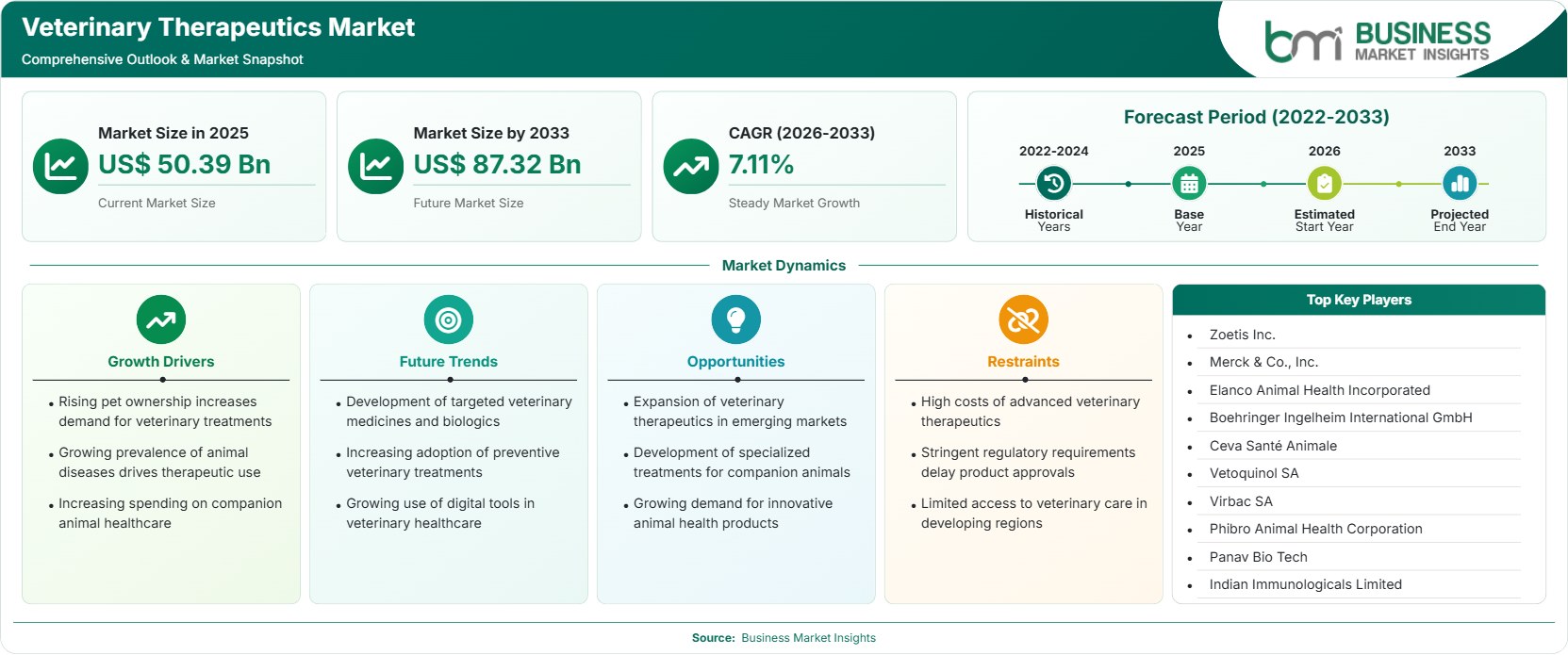
The Veterinary Therapeutics Market size was valued at US$ 50.39 Billion in 2025 and is projected to reach US$ 87.32 Billion by 2033, growing at a CAGR of 7.11% during 2026–2033. Rising pet ownership, increasing livestock production, growing awareness regarding animal health, expanding vaccination programs, rising incidence of zoonotic diseases, and continuous advancements in veterinary pharmaceuticals are driving market growth globally.

Report Coverage
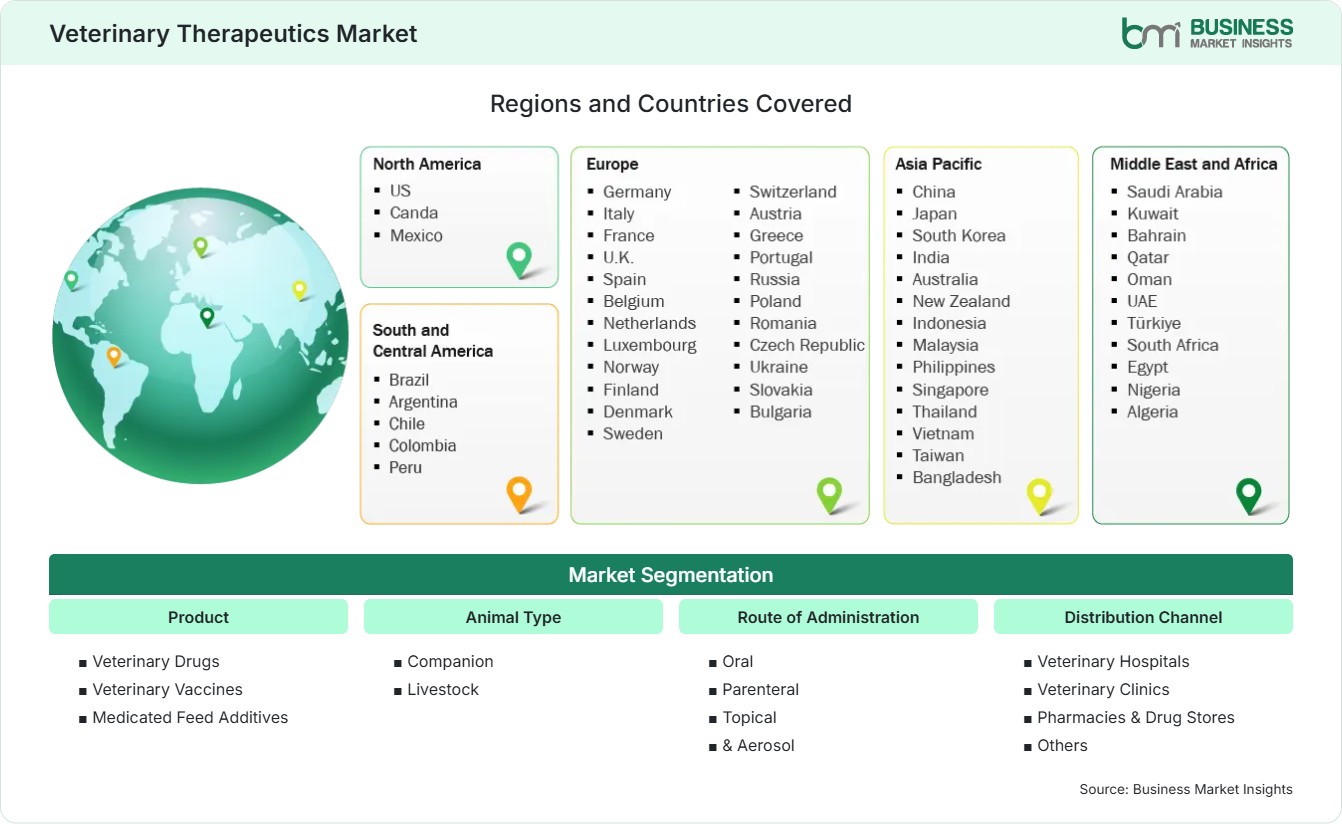
  • Product: Veterinary Drugs , Veterinary Vaccines , Medicated Feed Additives
  • Animal Type: Companion, Livestock
  • Route of Administration: Oral, Parenteral, Topical, Aerosol
  • Distribution Channel: Veterinary Hospitals, Veterinary Clinics, Pharmacies & Drug Stores, Others
US$ 50.39 Bn Market size in 2025
US$ 87.32 Bn Market Size by 2033
7.11% CAGR, 2026 - 2033
2026-2033 Forecast Period

AI Overview

Veterinary Therapeutics Market Summary

  • North America Region: North America holds a market share of 34%–38% in 2025 and is projected to grow at a CAGR of 6.7%–7.3% during 2026–2033. Growth is supported by high pet healthcare expenditure, advanced veterinary infrastructure, widespread adoption of companion animals, increasing livestock health management, and strong pharmaceutical innovation. The U.S. remains the dominant market, advancing at a CAGR of 6.8%–7.4%.
  • Fastest Growing Region: Asia Pacific accounts for 26%–30% share in 2025 and is expected to register a CAGR of 8.1%–8.9% through 2033. Growth is fueled by expanding livestock production, rising pet ownership, growing animal healthcare awareness, increasing veterinary clinic penetration, and government-supported disease control programs.
  • Leading Segment: Veterinary Drugs represent 48%–52% share in 2025 and are anticipated to grow at a CAGR of 7.2%–7.8% through 2033. Demand is supported by increasing treatment rates, rising prevalence of infectious diseases, chronic animal health conditions, and advances in pharmaceutical formulations.
  • High Growth Segment: Companion Animals capture 42%–46% share in 2025 and are forecast to expand at a CAGR of 8.0%–8.8% during 2026–2033. Growth is driven by increasing pet ownership, pet humanization trends, higher veterinary spending, and growing demand for preventive healthcare services.
  • Key Market Opportunity: Growing adoption of preventive animal healthcare, advanced biologics, precision veterinary medicine, and digital veterinary care platforms is creating significant opportunities across the market.
  • Major Market Players: Zoetis Inc., Merck Animal Health, Elanco Animal Health Incorporated, Boehringer Ingelheim Animal Health, Ceva Santé Animale, Virbac S.A., Phibro Animal Health Corporation, Dechra Pharmaceuticals PLC, Vetoquinol S.A., and IDEXX Laboratories, Inc.
Strategic Insights

Veterinary Therapeutics Market: Strategic Insights

Veterinary Therapeutics Market Strategic Framework
FREE PDF
Request your free sample
Request free sample
Stakeholder View

Key Takeaways

  • The veterinary therapeutics market has been showing strong growth due to increasing number of pets, increase in veterinary healthcare spending, increase in livestock production and increase in disease prevention efforts.
  • Veterinary Drugs is the most successful product category due to its increased application in treatment of infectious diseases, parasitic infections, metabolic disorders and chronic animal health issues.
  • Companion Animals is the fastest-growing animal type category because of pet humanization, increase in healthcare spending and adoption of better veterinary therapeutics.
  • Asia Pacific is becoming the fastest-growing regional market due to increase in animal healthcare awareness, improvement in veterinary infrastructure and increase in livestock industries.
  • Manufacturers are making more investments in vaccines, biologics, precision therapeutics and better pharmaceutical formulation.
  • Preventive care, vaccination programs and digital veterinary healthcare services have become key driving forces for the future success of the market.
Geographic Outlook

Veterinary Therapeutics Market Regional Highlights

North America Veterinary Therapeutics Market

North America accounted for 34%–38% of global revenue in 2025 and is projected to grow at a CAGR of 6.7%–7.3% through 2033. The region benefits from advanced veterinary healthcare infrastructure, high pet ownership rates, increasing expenditure on animal health, and extensive livestock disease management programs. The Veterinary Therapeutics Market share remains dominant due to strong pharmaceutical innovation and widespread adoption of preventive healthcare measures.

  • Pet owners increasingly spend on premium veterinary treatments, preventive healthcare programs, and advanced diagnostics to improve animal well-being.
  • Growing adoption of companion animals continues driving demand for therapeutics, vaccines, and specialized healthcare products.
  • Livestock producers are investing in disease prevention strategies to improve productivity, food safety, and operational efficiency.
  • Strong regulatory oversight and advanced veterinary healthcare systems support widespread adoption of innovative therapeutics.
  • Continuous pharmaceutical research and development efforts are introducing advanced animal health solutions across multiple treatment categories.

US Veterinary Therapeutics Market

The United States represents 84%–88% of North American veterinary therapeutics market demand and is expected to grow at a CAGR of 6.8%–7.4% through 2033. Growth is supported by high pet care spending, increasing demand for advanced veterinary treatments, and strong pharmaceutical innovation.

  • Companion animal healthcare remains a major revenue contributor due to increasing pet adoption and humanization trends.
  • Growing awareness regarding preventive animal healthcare is encouraging broader adoption of vaccines and therapeutic treatments.
  • Livestock producers continue investing in disease management programs that support demand for veterinary pharmaceuticals.
  • Expanding veterinary clinic networks are improving access to high-quality animal healthcare services.

Europe Veterinary Therapeutics Market

Europe held 25%–29% of global revenue in 2025 and is expected to register a CAGR of 6.9%–7.5% through 2033. Strong animal welfare standards, increasing pet ownership, and advanced livestock health management programs continue supporting regional growth. Germany remains the leading market, while Spain represents a strong growth market with a CAGR of 7.6%–8.2%.

  • Animal welfare regulations continue encouraging investment in preventive care and veterinary treatment solutions.
  • Growing adoption of companion animals is increasing demand for pharmaceuticals, vaccines, and specialized healthcare products.
  • Livestock health initiatives are driving broader use of therapeutics designed to improve animal productivity and disease control.
  • Veterinary healthcare providers are increasingly utilizing advanced treatment and diagnostic solutions to enhance patient outcomes.
  • Growing investments in veterinary research and biologics development continue supporting market expansion.

Asia Pacific Veterinary Therapeutics Market

Asia Pacific accounted for 26%–30% of global revenue in 2025 and is expected to record the fastest CAGR of 8.1%–8.9% through 2033. Rising livestock production, increasing pet ownership, growing veterinary awareness, and expanding healthcare infrastructure are driving regional growth. China and India remain major markets, while Indonesia is projected to register a CAGR of 8.9%–9.6%.

  • Increasing demand for animal protein products is encouraging livestock producers to prioritize disease prevention and productivity enhancement.
  • Pet ownership growth is driving increased spending on veterinary care, vaccinations, and advanced therapeutics.
  • Governments are strengthening animal disease surveillance and healthcare programs to improve public health and food security.
  • Expansion of veterinary clinics and healthcare providers is improving access to modern treatment options.
  • Growing awareness regarding animal welfare and preventive healthcare is supporting adoption of advanced veterinary products.

Rest of World Veterinary Therapeutics Market

Rest of World accounted for 8%–12% of global revenue in 2025 and is forecast to grow at a CAGR of 6.8%–7.4% through 2033. Market growth is supported by expanding livestock industries, increasing veterinary healthcare awareness, and improving animal health infrastructure.

  • Livestock disease management efforts continue driving demand for therapeutics and vaccines across agricultural markets.
  • Increasing pet ownership trends are supporting growing adoption of companion animal healthcare products.
  • Veterinary healthcare providers are expanding services to address evolving animal health requirements.
  • Government and industry initiatives focused on disease prevention continue supporting market development.
  • International animal health companies are strengthening regional presence through partnerships and distribution expansion.
Global Market Geography
FREE PDF
Request your free sample
Request free sample
Segment Analysis

Veterinary Therapeutics Market Segmentation

Product

Veterinary Drugs account for 48%–52% share in 2025 and are expected to grow at a CAGR of 7.2%–7.8% through 2033. The segment dominates due to increasing treatment rates for infectious diseases, parasitic infestations, chronic disorders, and metabolic conditions affecting both companion and livestock animals. The Veterinary Therapeutics Market scope continues to expand as pharmaceutical companies introduce advanced formulations, targeted therapies, and long-acting treatment options designed to improve animal health outcomes and treatment compliance.

  • Veterinary Drugs: Lead the market owing to widespread use in disease treatment, infection management, and chronic care applications.
  • Veterinary Vaccines: Experience strong demand due to increasing focus on preventive healthcare, disease control programs, and zoonotic disease prevention.
  • Medicated Feed Additives: Continue witnessing adoption in livestock production to enhance animal health, productivity, and disease resistance.

Animal Type

Companion Animals account for 42%–46% share in 2025 and are projected to grow at a CAGR of 8.0%–8.8% through 2033. Growth is supported by increasing pet ownership, rising pet humanization trends, higher spending on veterinary services, and growing awareness regarding preventive animal healthcare.

  • Companion: Driven by increasing expenditure on pet wellness, chronic disease management, diagnostics, and preventive care.
  • Livestock: Supported by rising demand for animal protein, disease management initiatives, and productivity enhancement programs.

Route of Administration

Oral administration accounts for 38%–42% share in 2025 and is anticipated to grow at a CAGR of 7.0%–7.6% through 2033. The segment benefits from ease of administration, strong owner compliance, broad product availability, and suitability for long-term treatment protocols.

  • Oral: Preferred due to convenience, patient acceptance, and wide therapeutic applicability.
  • Parenteral: Widely utilized for vaccines, emergency treatments, and therapies requiring rapid absorption.
  • Topical: Increasingly adopted for dermatological conditions, parasite management, and localized treatments.
  • Aerosol: Used in respiratory disease treatment and growing specialty veterinary applications.

Distribution Channel

Veterinary Hospitals account for 33%–37% share in 2025 and are expected to grow at a CAGR of 7.4%–8.0% through 2033. The segment benefits from comprehensive treatment capabilities, advanced diagnostic infrastructure, specialist expertise, and growing availability of sophisticated veterinary services. Current Veterinary Therapeutics Market trends indicate increased utilization of integrated veterinary hospital networks offering advanced diagnostics, therapeutics, preventive care, and specialty treatment services.

  • Veterinary Hospitals: Lead due to access to comprehensive care, advanced therapeutics, and specialized treatment capabilities.
  • Veterinary Clinics: Supported by growing accessibility of primary animal healthcare services and routine treatment demand.
  • Pharmacies & Drug Stores: Benefit from increased prescription fulfillment and over-the-counter animal healthcare product sales.
  • Others: Include online veterinary pharmacies, farm supply stores, and specialty animal healthcare distributors.
Market Forces

Veterinary Therapeutics Market Dynamics

Key Market Drivers

Increasing Pet Ownership and Pet Humanization Trends

There is an increasing trend in the global pet population, with pets increasingly seen as an important member of families. Consequently, there is an increased willingness among pet owners to invest in preventive care, diagnostic, medications, vaccinations, and new forms of treatment. The growing knowledge about the health of the animals and managing chronic conditions is further adding to this trend. The trend towards pet humanization has also contributed to an increase in demand for high-end healthcare products similar to those used in human medicines.

Growing Focus on Livestock Health and Productivity

The livestock industry is now allocating more resources to animal health management in efforts to increase production, meet food quality requirements, and limit financial losses caused by disease outbreaks. Veterinary medicines have become an integral component of disease prevention, infection control, growth maximization, and herd management practices. The growing worldwide need for meat, milk, eggs, and other animal-based products further increases the significance of keeping healthy livestock populations. Disease monitoring and control programs are also gaining more support from government authorities and agricultural institutions.

Advancements in Veterinary Pharmaceuticals and Biologics

Innovation in veterinary medicines has provided more options in the treatment of animals. There are ongoing developments by the pharmaceuticals in biologics, monoclonal antibodies, targeted drugs, new vaccines, and extended-action drug forms that are aimed at increasing efficacy and patient compliance in treatments. Improved diagnostic services have increased early diagnosis of diseases and the development of tailor-made treatments. Increasing amounts of money being pumped into animal health research have fast-tracked the development of products. The availability of new treatment options for veterinarians will see the market grow significantly.

Key Market Opportunities

Expansion of Preventive Animal Healthcare Programs

Preventive medicine is rapidly gaining importance within the realm of veterinary medicine as people become interested in lowering risks and ensuring good health in the future. Programs such as vaccination, preventive monitoring of health conditions, preventive measures against parasites and other illnesses, and preventative treatment therapies are gradually gaining popularity among companion and farm animals. Such programs lower treatment expenses and improve health status. More and more interest in the benefits of preventive medicine is leading to more usage of veterinarian medicines and services.

Growing Adoption of Precision Veterinary Medicine

Diagnostics, genomics, and data analytics advancements are facilitating the rise of precision veterinary medicine. The ability to design personalized treatments according to the specific animal's condition, breed, and illness is becoming more possible for veterinarians. This ensures better efficiency and less use of medications in the process. There is an investment in technology for personalizing the treatment and therapy from pharmaceutical manufacturers and healthcare providers. Precision medicine is anticipated to represent a growing area with further improvements in diagnostics.

Expansion of Digital Veterinary Healthcare Solutions

The use of digital platforms is changing animal healthcare delivery due to the increased use of telemedicine, remote monitoring, electronic health records, and diagnostics. The use of such technologies has improved the accessibility of veterinary care while improving the management of treatment and interaction of the clients. According to Veterinary Therapeutics Market Forecast, the increased use of digital health technology along with the increasing need for preventative care and therapeutics will present various opportunities for animal health care service providers.

Market Restraints and Challenges

High Cost of Advanced Veterinary Treatments

Factor: The advanced therapies, specialty biologics, new vaccines, and complex diagnostic tests require substantial financial investment, which may be hard to bear for certain owners and breeders.

Impact: Heavy costs of therapy can affect the uptake of the service, the decision regarding the use of the product and access to quality healthcare services. Financial factors may prove problematic especially in developing areas and small-scale livestock farming businesses.

Regulatory and Antimicrobial Resistance Challenges

Factor: The therapeutics for animals are regulated heavily for the processes of approval, safety, use of antimicrobials, and animal welfare. Also, there is an issue of antimicrobial resistance, which keeps affecting healthcare.

Impact: The compliance issues can increase costs and time of the process of product approval. Restrictions in the use of antimicrobials might affect the need for the development of other treatments and preventive healthcare products.

Company Analysis

Competitive Landscape

The Veterinary Therapeutics Market analysis points out the stiff competition existing in the industry amongst companies dealing with animal health, veterinary pharmaceuticals, vaccines, and animal healthcare services. The players in this market are concentrating on biologics, therapeutics, companion animals healthcare, livestock diseases management products, and digital veterinary healthcare to consolidate their positions in the market.

Company Name

Overview

Products and Services Relevant to this Market

Zoetis Inc.

Global leader in animal health products and services.

Veterinary drugs, vaccines, diagnostics, parasiticides, and companion animal healthcare solutions.

Merck Animal Health

Animal health division focused on livestock and companion animal care.

Vaccines, pharmaceuticals, disease management products, and digital livestock monitoring solutions.

Elanco Animal Health Incorporated

Provider of animal health products for pets and livestock.

Therapeutics, vaccines, parasiticides, feed additives, and animal productivity solutions.

Boehringer Ingelheim Animal Health

Global animal health company with diversified product portfolio.

Vaccines, therapeutics, parasite control products, and preventive healthcare solutions.

Ceva Santé Animale

International veterinary pharmaceutical and vaccine manufacturer.

Companion animal therapeutics, livestock vaccines, and disease prevention solutions.

Virbac S.A.

Animal health company serving veterinarians worldwide.

Veterinary medicines, dermatology products, vaccines, and dental care solutions.

Phibro Animal Health Corporation

Animal health and nutrition solutions provider.

Medicated feed additives, vaccines, nutritional products, and livestock therapeutics.

Dechra Pharmaceuticals PLC

Veterinary pharmaceutical specialist.

Companion animal therapeutics, endocrinology products, analgesics, and specialty medicines.

Vetoquinol S.A.

Independent veterinary pharmaceutical company.

Companion animal drugs, livestock therapeutics, anti-infectives, and specialty animal health products.

IDEXX Laboratories, Inc.

Veterinary diagnostics and healthcare technology company.

Veterinary diagnostic solutions, healthcare services, software platforms, and disease monitoring tools.

Trust & Transparency

Research Methodology

The market analysis combines proprietary research with secondary data from government agencies, company disclosures, regulatory filings, industry databases and expert interviews. Market estimates are validated through data triangulation, cross-market benchmarking and analyst review.

View Full Research Methodology

Questions Answered

Frequently Asked Questions

What does this Veterinary Therapeutics Market Report evaluate?

The market report evaluates product trends, animal type analysis, route of administration trends, distribution channel developments, regional opportunities, competitive dynamics, growth drivers, market opportunities, and industry challenges through 2033.

Which animal type segment is growing the fastest?

Companion Animals represent the fastest-growing segment due to increasing pet humanization, higher veterinary spending, and growing demand for preventive and specialty healthcare services.

Why is Asia Pacific the fastest-growing region?

Asia Pacific benefits from expanding livestock industries, rising pet ownership, growing veterinary healthcare infrastructure, and increasing government support for disease prevention programs.

Which product segment dominates the market?

Veterinary Drugs dominate the market due to widespread use in treating infectious diseases, parasitic infections, chronic disorders, and various animal health conditions.

What is driving growth in the Veterinary Therapeutics Market?

Growth is driven by increasing pet ownership, expanding livestock production, growing animal healthcare awareness, rising vaccination rates, and advancements in veterinary drugs and biologics.

Access the Full Veterinary Therapeutics Market Report

Get segment-level forecasts, regional estimates, competitive benchmarking, company profiles and downloadable Excel datasets.

Access the full Veterinary Therapeutics Market Report
350 pages PDF & Excel | 2026-09-22
Similar Research

Related Market Reports