
Ophthalmic Disease Therapeutics Market Outlook: Size, Share, Trends, Growth Analysis, Competitive Landscape & Forecast, 2026-2033

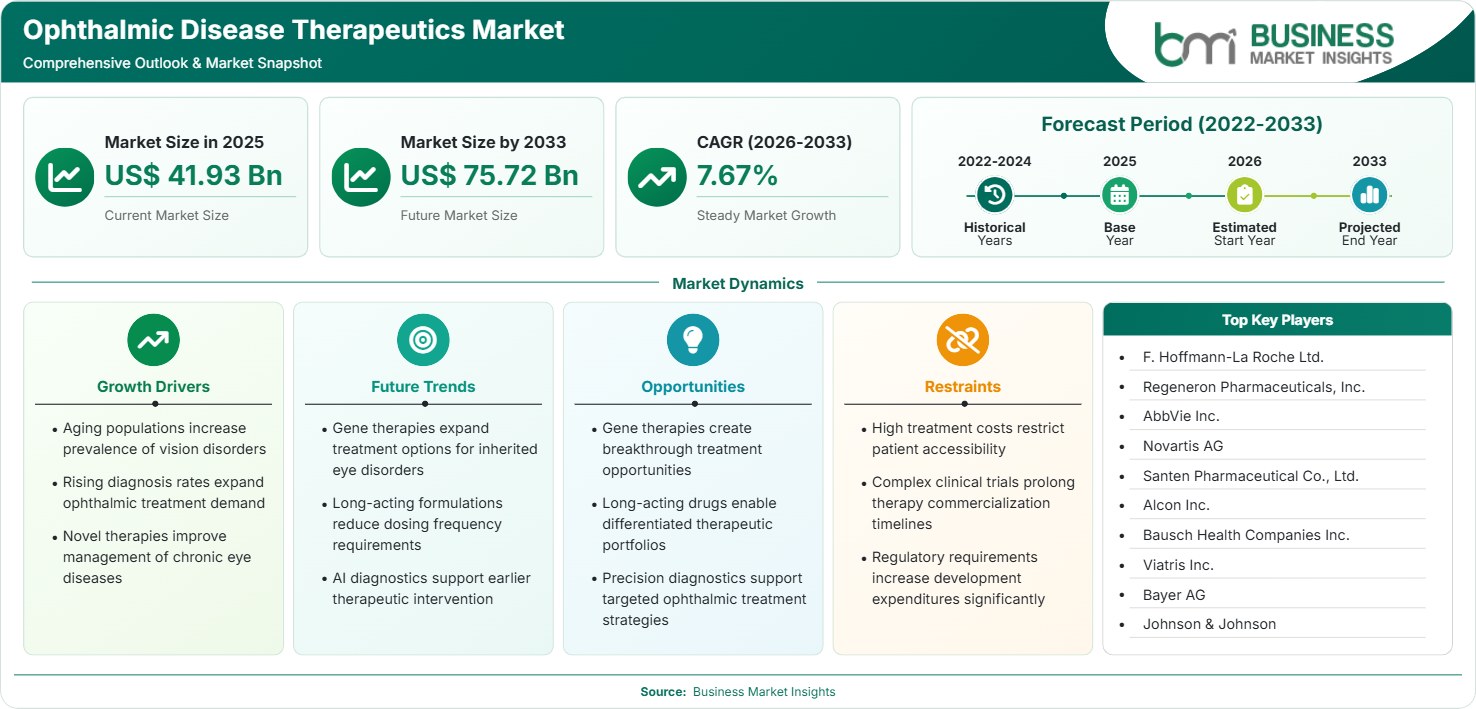
The Ophthalmic Disease Therapeutics Market size was valued at US$ 41.93 Billion in 2025 and is projected to reach US$ 75.72 Billion by 2033, growing at a CAGR of 7.67% during 2026–2033. Rising prevalence of glaucoma, retinal disorders, diabetic eye diseases, and increasing adoption of biologics create growth momentum, while gene therapies, sustained-release formulations, and emerging market penetration unlock substantial opportunities.

Report Coverage
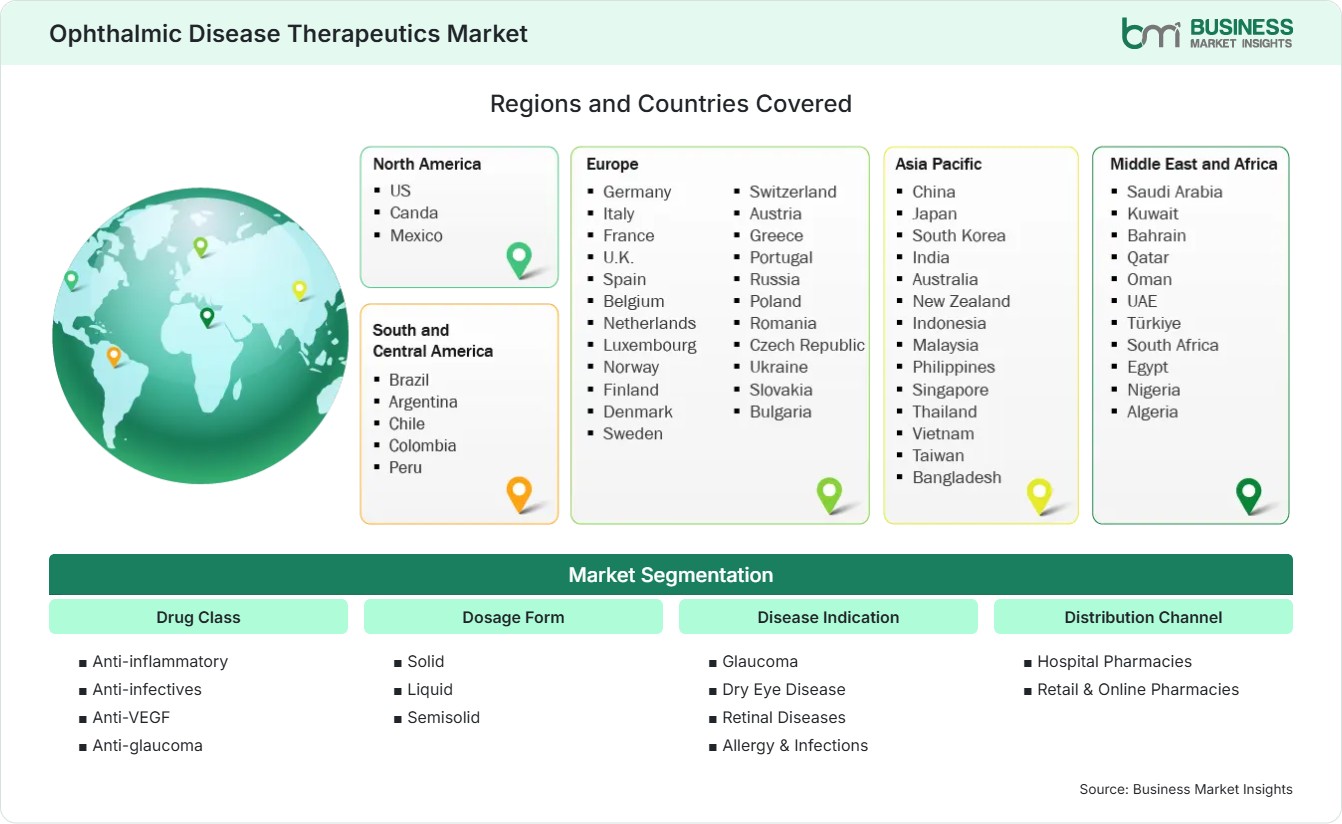
  • Drug Class: Anti-inflammatory, Anti-infectives, Anti-VEGF, Anti-glaucoma
  • Dosage Form: Solid, Liquid, Semisolid
  • Disease Indication: Glaucoma, Dry Eye Disease, Retinal Diseases, Allergy & Infections
  • Distribution Channel: Hospital Pharmacies, Retail & Online Pharmacies
US$ 41.93 Bn Market size in 2025
US$ 75.72 Bn Market Size by 2033
7.67% CAGR, 2026 - 2033
2026-2033 Forecast Period

AI Overview

Ophthalmic Disease Therapeutics Market Summary

  • North America Region: North America holds a market share of 38%–41% in 2025, growing with a CAGR of 7.0%–7.4% during 2026–2033, supported by advanced retinal treatment adoption, strong reimbursement structures, aging populations, innovation in biologics, increasing diagnosis rates, expanding specialty clinics, and sustained ophthalmic pharmaceutical investments across major healthcare systems worldwide. US market benefits from rapid anti-VEGF uptake, premium ophthalmology care infrastructure, and approximately 7.1%–7.5% CAGR during 2026–2033.
  • Fastest Growing Region: Asia Pacific holds a market share of 26%–29% in 2025, growing with a CAGR of 8.8%–9.4% during 2026–2033, driven by expanding diabetic populations, healthcare modernization, increased eye screening programs, rising disposable income, wider treatment accessibility, local manufacturing expansion, and government initiatives supporting ophthalmic care delivery.
  • Leading Segment: Anti-VEGF drug class accounts for 32%–35% share in 2025 and advances at a CAGR of 8.0%–8.6%, supported by growing retinal disease prevalence, favorable clinical outcomes, extended dosing intervals, reimbursement support, specialist preference, chronic treatment demand, and continuing biologic innovation.
  • High Growth Segment: Retinal Diseases indication represents 24%–27% share in 2025 and expands at a CAGR of 8.8%–9.5%, fueled by diabetic macular edema incidence, aging demographics, earlier diagnosis, broader biologic adoption, imaging advancements, treatment awareness initiatives, and increasing specialist access globally.
  • Key Market Opportunity: Development of long-acting therapies, sustained-release implants, gene therapies, and home-based disease monitoring solutions offers manufacturers opportunities to improve adherence, reduce treatment burden, extend product lifecycles, and address underserved patient populations.
  • Major Market Players: F. Hoffmann-La Roche Ltd., Regeneron Pharmaceuticals, Inc., AbbVie Inc., Novartis AG, Santen Pharmaceutical Co., Ltd., Alcon Inc., Bausch Health Companies Inc., Viatris Inc., Bayer AG, and Johnson & Johnson.
Strategic Insights

Ophthalmic Disease Therapeutics Market: Strategic Insights

Ophthalmic Disease Therapeutics Market Strategic Framework
FREE PDF
Request your free sample
Request free sample
Stakeholder View

Key Takeaways

  • The value chain is increasingly centered on biologic innovation, specialty ophthalmology practices, retinal imaging providers, contract manufacturing organizations, and distribution networks capable of supporting temperature-sensitive therapeutics and chronic disease management.
  • Retinal disease therapies offer the strongest commercial upside as diabetic macular edema and age-related macular degeneration continue expanding the addressable patient population, particularly in aging and diabetes-burdened economies.
  • Innovation is shifting toward extended-duration anti-VEGF formulations, sustained-release implants, topical biologics, precision drug delivery systems, and gene-based interventions designed to reduce treatment frequency and improve adherence.
  • Asia Pacific presents an attractive investment environment due to growing healthcare expenditure, expanding ophthalmology infrastructure, large diabetic populations, and government-backed blindness prevention initiatives across major economies.
  • Strategic licensing agreements, ophthalmology-focused acquisitions, and ophthalmic biotechnology investments continue reshaping competitive dynamics as large pharmaceutical companies seek pipeline expansion and differentiated retinal disease assets.
  • Digital ophthalmology platforms combining artificial intelligence-assisted diagnostics with therapeutic decision support are creating opportunities for earlier intervention and improved long-term visual outcomes.
Geographic Outlook

Ophthalmic Disease Therapeutics Market Regional Highlights

North America Ophthalmic Disease Therapeutics Market

North America accounted for 38%–41% of global revenue in 2025 and is projected to expand at a 7.0%–7.4% CAGR through 2033. Advantages in this market include widespread biological acceptance, modern facilities for ophthalmology, good specialty payment, and high awareness of retinal diseases. Continued development of new drugs and an increase in age-related ocular disease will maintain demand in this market. This market continues to be a leader in clinical research and drug development. The Ophthalmic Disease Therapeutics Market share remains highest in North America due to established healthcare infrastructure.

  • Anti-VEGF therapies maintain strong utilization across retinal disease treatment pathways, supported by comprehensive diagnosis rates, specialist availability, and reimbursement frameworks covering chronic ophthalmic conditions throughout major healthcare systems.
  • Growing prevalence of diabetes continues increasing demand for diabetic retinopathy and diabetic macular edema treatments, strengthening long-term requirements for advanced retinal therapeutics and monitoring solutions.
  • Clinical adoption of long-acting formulations is helping improve patient adherence while reducing injection frequency, creating value for providers, payers, and patients managing chronic retinal conditions.
  • Pharmaceutical innovation remains concentrated within the region, supported by extensive research funding, biotechnology partnerships, and active ophthalmology-focused clinical development programs.
  • Expanding elderly populations contribute to increased diagnosis of glaucoma, macular degeneration, and dry eye disease, reinforcing treatment demand across multiple therapeutic classes.

US Ophthalmic Disease Therapeutics Market

The United States represented approximately 74%–78% share within North America during 2025 and is expected to advance at a 7.1%–7.5% CAGR through 2033. Networks of specialist physicians, wide biologic availability, and innovation ensure continued growth. Increased healthcare spending in relation to vision protection and chronic conditions management keeps driving demand for the products. The strongest therapeutic adoption occurs in retinal disease treatment, glaucoma treatment, and dry eye treatment.

  • Large diabetic patient populations support increasing utilization of retinal therapeutics and ophthalmic monitoring technologies across healthcare systems.
  • Presence of leading ophthalmic pharmaceutical developers accelerates commercialization of innovative biologics, gene therapies, and drug delivery platforms.
  • Value-based healthcare initiatives increasingly emphasize prevention of visual disability, encouraging earlier diagnosis and therapeutic intervention strategies.
  • Retail pharmacy expansion and digital prescription channels improve treatment accessibility for chronic ophthalmic disease populations.

Europe Ophthalmic Disease Therapeutics Market

Europe captured 27%–30% of global revenue in 2025 and is anticipated to grow at a 6.8%–7.2% CAGR through 2033. The universal coverage of health insurance in many countries promotes access to treatment, while the aging population drives the demand for ophthalmological treatment services. Retinal disorders' management is among the key areas of focus in leading healthcare systems. The regional market leader is Germany, while the growth rate in Eastern Europe is relatively high due to the modernization of the healthcare sector.

  • Germany leads regional demand owing to strong healthcare infrastructure, specialist availability, and broad access to advanced ophthalmology treatments.
  • Spain and Italy continue expanding utilization of retinal disease therapies as aging demographics increase demand for vision-preserving interventions.
  • Central and Eastern European nations are demonstrating higher growth rates, supported by healthcare investments and improving diagnostic capabilities.
  • Regulatory support for biosimilars may contribute to broader treatment accessibility while helping healthcare systems manage costs effectively.
  • Collaborations between healthcare providers and pharmaceutical manufacturers support evidence-generation and real-world outcome monitoring initiatives.

Asia Pacific Ophthalmic Disease Therapeutics Market

Asia Pacific accounted for 26%–29% of global Ophthalmic Disease Therapeutics Market revenue in 2025 and is forecast to expand at a 8.8%–9.4% CAGR through 2033, making it the fastest-growing regional market. Urbanization, higher costs on healthcare, higher prevalence of diabetes and development of ophthalmic services stimulate the growth of the sector. China is the biggest market at present, while India is showing the fastest growth. Better access to healthcare and screening are boosting penetration rates in the region.

  • China leads regional revenue generation through extensive patient populations, healthcare expansion initiatives, and increasing specialty ophthalmology capacity.
  • India demonstrates accelerated adoption levels driven by rising disease awareness, growing insurance coverage, and expanding access to specialist care.
  • Japan maintains a substantial therapeutic market due to advanced healthcare infrastructure and significant elderly population demographics.
  • Local pharmaceutical manufacturing capabilities help improve affordability and access to ophthalmic medications across several emerging economies.
  • Government-supported blindness prevention programs encourage early diagnosis and treatment across glaucoma, diabetic retinopathy, and other vision-threatening conditions.

Rest of World Ophthalmic Disease Therapeutics Market

The Rest of World region accounted for 8%–11% of global Ophthalmic Disease Therapeutics Market revenue in 2025 and is expected to progress at a 7.4%–7.9% CAGR through 2033. The markets in South and Central America benefit from enhanced healthcare coverage and increased ophthalmological care. The market in the Middle East and Africa is fueled by investment in healthcare infrastructure and rising awareness about eye health issues. Brazil is at the forefront of demand in Latin America, while GCC countries play an important role in the Middle East.

  • Brazil maintains regional leadership due to large patient populations, improving specialist networks, and increasing access to advanced therapies.
  • Mexico continues attracting pharmaceutical investment as ophthalmology service capacity expands across both public and private healthcare systems.
  • Saudi Arabia and the United Arab Emirates are strengthening ophthalmic treatment infrastructure through healthcare modernization programs.
  • Rising prevalence of diabetes-related eye disorders supports long-term therapeutic demand throughout developing healthcare markets.
  • International partnerships and healthcare investment initiatives continue improving access to advanced ophthalmic treatments across underserved populations.
Global Market Geography
FREE PDF
Request your free sample
Request free sample
Segment Analysis

Ophthalmic Disease Therapeutics Market Segmentation

Drug Class

The drug class segment represents the core therapeutic landscape within the market. Anti-VEGF therapies accounted for the largest share of approximately 32%–35% in 2025 and are projected to grow at 8.0%–8.6% CAGR through 2033 due to expanding retinal disease treatment volumes. Continued innovation in biologics, glaucoma medications, and anti-inflammatory therapies is strengthening the Ophthalmic Disease Therapeutics Market scope, while demand for chronic disease management supports sustained revenue expansion across all major treatment classes.

  • Anti-inflammatory: Widely prescribed for postoperative care, uveitis, ocular inflammation, and allergy management. Adoption is supported by improved formulations, enhanced efficacy profiles, and increasing ophthalmic surgical procedures globally.
  • Anti-infectives: Demand remains driven by bacterial conjunctivitis, keratitis, and postoperative infection prevention. Broad-spectrum formulations and rising awareness regarding ocular infection management support consistent utilization.
  • Anti-VEGF: Represents the category with maximum commercial importance owing to improved diagnoses of retinal diseases and high levels of confidence among physicians regarding biological products that preserve vision and minimize disease progression.
  • Anti-glaucoma: Demand is high due to the increasing number of people who suffer from glaucoma and need lifelong treatment. Product development will emphasize better patient compliance and lower dosing intervals.
  • Beta Blockers: Frequently utilized as first-line or combination therapies for glaucoma management. Established efficacy, physician familiarity, and affordability continue supporting market penetration across developed and emerging markets.
  • Prostaglandins Analogs: Preferred due to strong intraocular pressure reduction and convenient dosing schedules. High patient adherence and favorable therapeutic outcomes support widespread clinical adoption.
  • Alpha Adrenergic Agonists: Utilized in combination regimens and patients requiring additional pressure control. Continued demand stems from increasing diagnosis rates and comprehensive glaucoma management approaches.

Dosage Form

Dosage form preferences continue evolving as pharmaceutical companies focus on improving convenience, bioavailability, and treatment adherence. Liquid formulations held the largest Ophthalmic Disease Therapeutics Market share of 52%–55% in 2025 and are expected to grow at 7.5%–8.0% CAGR through 2033. Development of advanced delivery systems, preservative-free formulations, and sustained-release technologies continues supporting the segment's leadership position within ophthalmology therapeutics.

  • Solid: Includes tablets, capsules, and specialized formulations used for selected ophthalmic conditions. Adoption remains linked to systemic therapy requirements and disease-specific therapeutic protocols.
  • Liquid: Dominates utilization due to extensive use of eye drops, injectable biologics, and ophthalmic solutions. Ease of administration and broad therapeutic applicability drive continued demand.
  • Semisolid: Encompasses gels and ointments designed for extended ocular surface contact. Strong clinical utility in dry eye disease, infections, and inflammatory conditions supports consistent usage.

Disease Indication

Disease indication segmentation reflects changing global patterns of visual impairment and chronic eye disorders. Retinal diseases accounted for approximately 24%–27% share in 2025 and are forecast to register the highest 8.8%–9.5% CAGR through 2033. Rising diabetes prevalence, aging populations, improved diagnosis rates, and greater access to biologic therapies continue shaping Ophthalmic Disease Therapeutics Market trends across major treatment categories worldwide.

  • Glaucoma: Remains a major therapeutic category due to irreversible vision loss risks and lifelong disease management requirements. Earlier diagnosis and awareness initiatives continue supporting treatment uptake.
  • Open Angle Glaucoma: Represents the predominant glaucoma subtype treated in clinical practice. Strong prevalence rates and long-term medication dependence sustain demand across mature and emerging markets.
  • Angle Closure Glaucoma: Although less prevalent, treatment urgency and risk of rapid visual impairment contribute to continued therapeutic demand and specialist intervention.
  • Dry Eye Disease: Increasing screen exposure, aging demographics, and environmental factors are expanding patient populations. Innovation in anti-inflammatory and lubricating therapies supports segment growth.
  • Retinal Diseases: Fastest-growing indication category due to increasing diabetic eye complications and age-related retinal degeneration. Advanced biologics continue improving visual outcomes and treatment effectiveness.
  • Diabetic Macular Edema: Growth is closely linked to rising global diabetes prevalence and expansion of retinal screening initiatives that facilitate earlier disease detection.
  • Macular Degeneration: Significant demand originates from aging populations, particularly in developed economies where diagnosis rates and treatment accessibility remain comparatively high.
  • Allergy & Infections: Seasonal allergies, environmental exposure, and infectious eye disorders continue supporting treatment demand across both prescription and over-the-counter therapeutic categories.

Distribution Channel

Distribution channels play a critical role in therapy accessibility, reimbursement management, and patient adherence. Hospital pharmacies accounted for 57%–60% Ophthalmic Disease Therapeutics Market share in 2025 and are projected to expand at 7.2%–7.8% CAGR through 2033. Increasing specialty biologic administration and hospital-based retinal disease management continue supporting demand, while digital pharmacy expansion improves patient access and prescription fulfillment.

  • Hospital Pharmacies: Remain the primary distribution channel for biologics, specialty injections, and prescription ophthalmic therapies. Strong physician oversight and reimbursement integration support dominant positioning.
  • Retail & Online Pharmacies: Growth is driven by convenience, chronic disease management requirements, expanding e-commerce penetration, and increasing patient preference for home-based medication procurement.
Market Forces

Ophthalmic Disease Therapeutics Market Dynamics

Key Market Drivers

Increasing Burden of Glaucoma and Retinal Disorders

The increased occurrence of glaucoma, diabetic retinopathy, diabetic macular edema, and age-related macular degeneration is continuing to increase the demand for treatment of these conditions. Visual impairment is regarded by the World Health Organization as an increasing health care issue, especially among elderly people. The increased occurrence of diabetes has led to considerable demand for therapies for retinal conditions in both developed and developing health care settings. These factors collectively strengthen Ophthalmic Disease Therapeutics Market growth by increasing the number of patients receiving ongoing pharmaceutical management, biologic therapy, and specialist ophthalmology care globally.

Advancements in Biologics and Sustained Drug Delivery

Biological treatments have revolutionized the management of retinal disorders with improvements in visual results and extended efficacy of the treatments. The pharmaceutical industry is focusing on the development of new anti-VEGF agents, refilling implants, long-lasting systems, and extended dosing schedules. These advances target one of the most significant clinical problems – adherence to therapy and visits to offices. Doctors tend to favor treatments that are effective but also decrease the burden of administration. Continued investment in ophthalmic research and development is accelerating commercialization pathways, supporting the Ophthalmic Disease Therapeutics Market growth and enabling broader adoption of premium therapies across major ophthalmology treatment settings worldwide.

Expansion of Eye Screening and Diagnostic Infrastructure

Eye screening facilities are being increased by governments, health systems, and even individuals to tackle preventable blindness and poor vision. Increased utilization of Optical Coherence Tomography, AI-assisted diagnostic tools, and teleophthalmology projects improves diagnostic performance. Early diagnosis results in higher therapeutic treatment instances, especially in glaucoma and retinal disorders. Enhanced access to specialty treatment in developing countries makes more patient bases accessible. Healthcare practitioners are increasingly incorporating vision diagnostics in diabetes management programs, enhancing the need for retinal drugs. This boosts the disease detection efficacy and hence increases drug use, ensuring market growth in the long run.

Key Market Opportunities

Commercialization of Gene Therapies for Inherited Retinal Disorders

Gene therapy represents one of the most promising future opportunities within ophthalmology therapeutics. Advances in genetic diagnostics are enabling precise identification of patients with inherited retinal diseases. Drug makers are looking at the development of drug pipelines that concentrate on producing sustained therapeutic results from single-dose administrations. Regulatory bodies are becoming more open to the assessment of novel drugs aimed at treating extreme visual impairment. Increased physicians' knowledge of advanced biological drugs and personalized treatments will create conducive conditions for the commercialization of such treatments. With advances in production technology and research, gene therapy may prove profitable.

Growth Potential in Emerging Asian Healthcare Markets

The rapid evolution of the healthcare industry in the Asian region has resulted in tremendous growth opportunities for drug companies. The large population base, favorable reimbursement systems, high healthcare spending, and disease awareness have been contributing to the growth in drug consumption. Countries like India, China, Indonesia, and Vietnam are making efforts towards building their specialty care and ophthalmic departments. Long-term Ophthalmic Disease Therapeutics Market Forecasts indicate that regional demand will increasingly be supported by diabetic eye disease management, age-related conditions, and broader access to specialist ophthalmology services across urban and secondary healthcare centers.

Development of Long-Acting and Home-Based Care Solutions

Healthcare systems increasingly seek solutions that reduce treatment burden while maintaining clinical effectiveness. Long-acting dosage forms, refills through implants, remote monitoring devices, and patient-level disease management systems help meet this demand. These advances could reduce healthcare cost utilization and ensure compliance in treatment. Firms having the capability to integrate therapeutics with digital monitoring environments would be able to enhance their competitive position. All of these developments are especially applicable to chronic eye diseases that require continuous management, such as glaucoma, retinopathy, and dry eye syndrome.

Market Restraints and Challenges

High Cost of Advanced Biologic Therapies

Factor: Premium-priced biologics and innovative retinal therapies often require substantial healthcare expenditure. Impact: The financial burden, on the one hand, may limit the ease of access for patients and the ability to get paid, especially in emerging healthcare environments. Financial constraints within the public healthcare system may lead to delayed uptake of any newly introduced drugs, even if there is evidence of their effectiveness. Payers need to consider treatment outcomes and the therapy's economic benefits before offering coverage.

Patient Adherence and Long-Term Treatment Burden

Factor: Many ophthalmic diseases require chronic treatment schedules involving repeated physician visits, monitoring, and medication use. Impact: The non-conformity with the regimen may influence the effectiveness of the treatment and its outcome. Retinal treatments usually involve several injections administered over a prolonged period of time. Besides transport issues, treatment-related fatigue, and costs may also play a role in a patient missing a visit. Medical practitioners are still seeking ways to improve persistence and adherence. Even though there are already some innovations in this sphere, adherence-related problems are still a significant hurdle.

Company Analysis

Competitive Landscape

The competitive environment is characterized by biologic innovation, retinal disease specialization, glaucoma portfolio expansion, and strategic collaborations. Current Ophthalmic Disease Therapeutics Market analysis indicates competition is increasingly focused on extended-duration therapies, novel delivery systems, and advanced retinal disease treatments.

Company Name

Overview

Products and Services relevant to this market

F. Hoffmann-La Roche Ltd.

Global pharmaceutical leader with strong ophthalmology presence and extensive biologics development capabilities.

Vabysmo and retinal disease therapies targeting macular degeneration and diabetic retinal conditions.

Regeneron Pharmaceuticals, Inc.

Biotechnology company recognized for innovative ophthalmology biologics and retinal disease expertise.

EYLEA franchise and advanced retinal disease treatment solutions.

AbbVie Inc.

Diversified biopharmaceutical company with substantial ophthalmology portfolio following acquisitions and expansion initiatives.

Dry eye disease therapies and specialty ophthalmic pharmaceutical products.

Novartis AG

Multinational healthcare company active in ophthalmology innovation and specialty medicines.

Retinal disease therapeutics and advanced ophthalmology treatment development programs.

Santen Pharmaceutical Co., Ltd.

Ophthalmology-focused pharmaceutical company serving global eye care markets.

Glaucoma therapies, anti-inflammatory products, and ocular surface disease treatments.

Alcon Inc.

Eye care leader operating across surgical and vision care categories.

Prescription eye care products, ocular health solutions, and ophthalmology support technologies.

Bausch Health Companies Inc.

Healthcare company with established ophthalmic pharmaceutical portfolio and global distribution network.

Dry eye, glaucoma, and ocular infection treatment products.

Viatris Inc.

Global healthcare company supplying branded and generic ophthalmic medications.

Ophthalmic formulations for glaucoma, inflammation, and infection management.

Bayer AG

Research-driven healthcare company active in retinal disease therapy development and commercialization.

Retinal disease biologics and ophthalmology-focused therapeutic partnerships.

Johnson & Johnson

Global healthcare company investing in vision care and ophthalmology innovation.

Eye health solutions, ophthalmic technologies, and specialty care products.

Trust & Transparency

Research Methodology

The market analysis combines proprietary research with secondary data from government agencies, company disclosures, regulatory filings, industry databases and expert interviews. Market estimates are validated through data triangulation, cross-market benchmarking and analyst review.

View Full Research Methodology

Questions Answered

Frequently Asked Questions

How are distribution channels evolving in this industry?

Hospital pharmacies remain dominant for specialty biologics and advanced therapies, while online and retail channels are expanding due to convenience, chronic disease management needs, and digital prescription adoption.

What does the Ophthalmic Disease Therapeutics Market Report indicate about innovation?

The report highlights accelerating investment in biologics, gene therapies, sustained-release delivery platforms, artificial intelligence-enabled diagnostics, and personalized treatment approaches designed to improve long-term clinical outcomes.

Which region offers the highest future expansion potential?

Asia Pacific presents the most attractive growth potential due to healthcare infrastructure expansion, rising diabetes prevalence, increasing awareness, and improving access to specialty ophthalmology services.

Which therapeutic category currently leads revenue generation?

Anti-VEGF therapies generate the largest revenue contribution because they are widely used in retinal disease treatment and demonstrate strong effectiveness in preserving vision among affected patients.

What factors are increasing demand for ophthalmic therapeutics?

Rising incidence of glaucoma, diabetic eye disease, macular degeneration, and dry eye disease are increasing treatment demand. Improved screening capabilities and aging populations also contribute to higher diagnosis and therapy adoption rates.

Access the Full Ophthalmic Disease Therapeutics Market Report

Get segment-level forecasts, regional estimates, competitive benchmarking, company profiles and downloadable Excel datasets.

Access the full Ophthalmic Disease Therapeutics Market Report
350 pages PDF & Excel | 2026-09-16
Similar Research

Related Market Reports