Vehicle To Grid (V2G) Market Regional Highlights
North America Vehicle To Grid Market
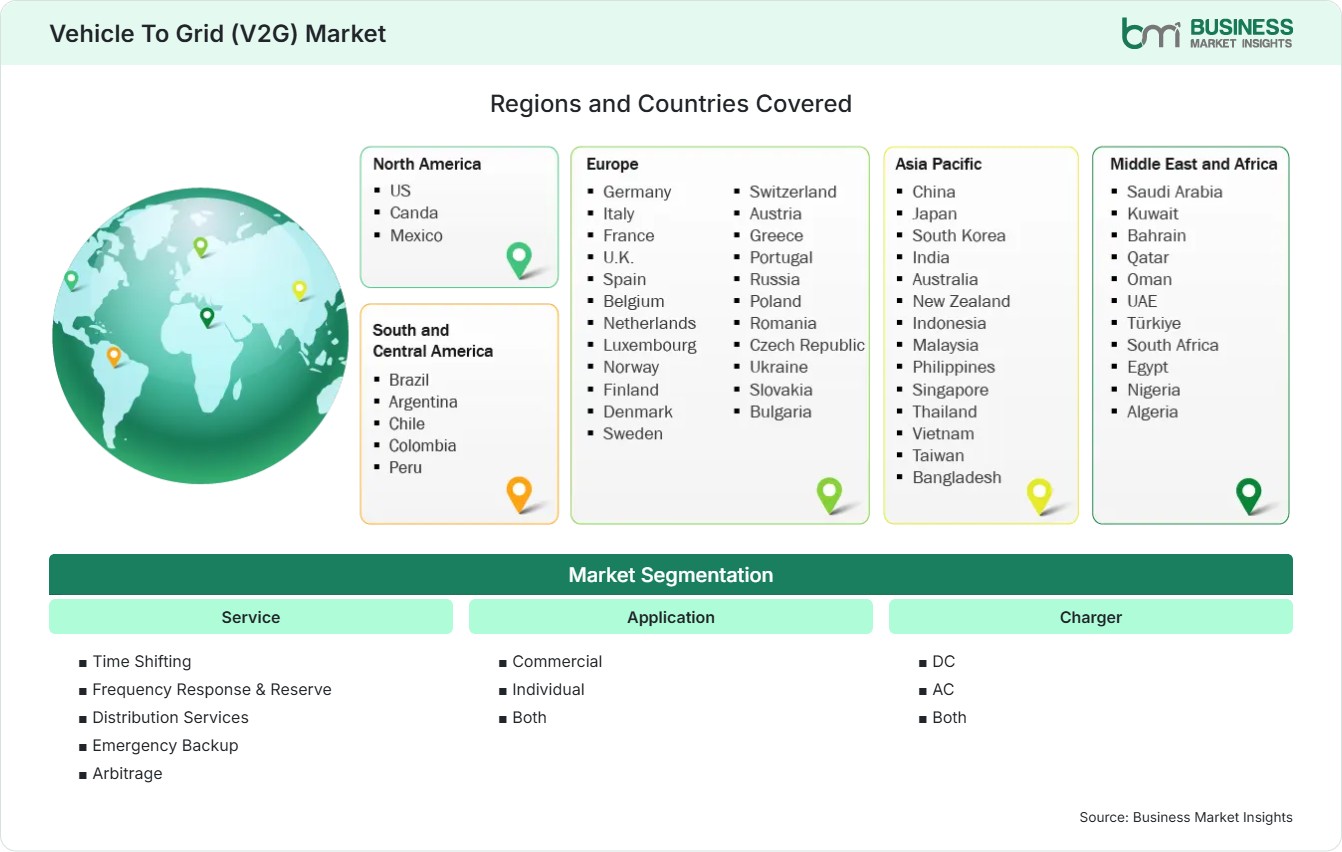
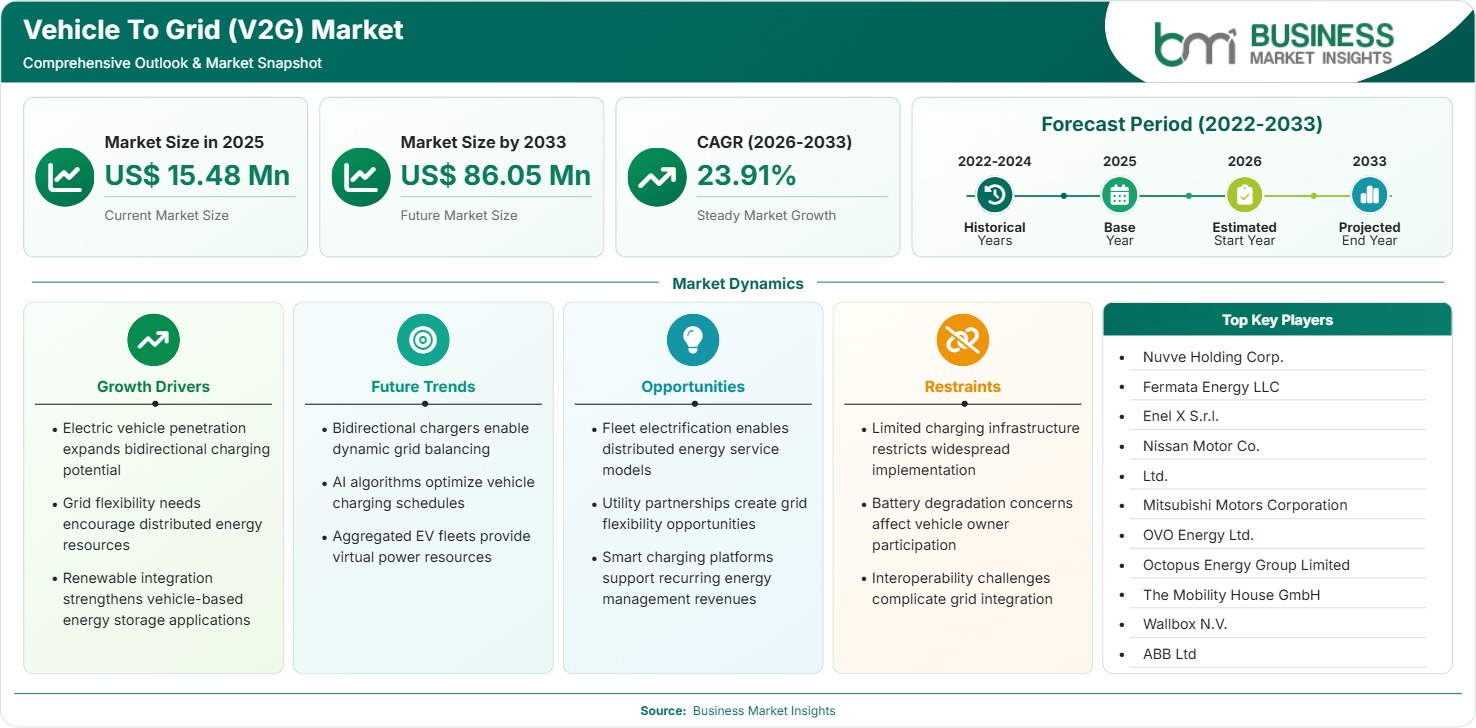
North America represents the leading regional market with a Vehicle To Grid Market share of 36%–39% in 2025 and a projected CAGR of 22%–24% through 2033. Strong utility engagement, mature EV infrastructure, supportive regulatory frameworks, and large-scale pilot deployments continue supporting market expansion.
- Increasingly, utility companies are using aggregation platforms that connect EV fleets with electricity networks, which enhances their ability to manage peak demand and, at the same time, increases the involvement of distributed energy resources in regional power systems.
- California is still a leading center for deployment because of its progressive energy regulations, its renewable energy targets, and the way its utilities are working with technology providers and car manufacturers.
- The federal funding programmes encourage the development of the charging infrastructure, promote investments in grid modernization, and support clean transportation initiatives, all of which contribute to the wider ecosystem's development.
- The electrification of the commercial fleet in the areas of logistics, delivery, and transit enhances the ability to scale up participation in providing grid services and to earn money from energy storage.
US Vehicle To Grid Market
The United States accounts for 78%–82% of the North American Vehicle To Grid Market revenue in 2025 and is forecast to expand at a 22%–24% CAGR during 2026–2033. Strong EV adoption, utility-led demonstrations, growing renewable penetration, and supportive federal incentives are accelerating commercialization.
- California is leading the way in terms of adoption due to supportive regulations, its large number of electric vehicle owners, and various utility programs that encourage the use of bidirectional charging in residential, commercial, and fleet applications.
- The programs aimed at electrifying school buses create considerable opportunities since vehicles that are parked can be used for energy storage and for providing grid balancing services during the hours when they are not in operation.
- Increasingly, utility companies are forming partnerships with providers of charging technology to incorporate distributed battery resources into virtual power plant networks and demand-response mechanisms.
- Companies are extending their investments in electrifying their fleets and are at the same time promoting the wider use of energy management software and bidirectional charging equipment.
Europe Vehicle To Grid Market
Europe holds 28%–31% Vehicle To Grid Market share in 2025 and is anticipated to record a 23%–26% CAGR through 2033. Ambitious decarbonization objectives, electricity market flexibility requirements, and high renewable energy penetration support long-term expansion. Vehicle-grid integration projects have moved beyond demonstration phases within several countries.
- The United Kingdom is at the forefront of regional deployment, due to the use of advanced aggregation platforms, retail energy innovations, and the active involvement of consumers in flexibility markets.
- Germany continues to be a major source of revenue due to its robust automotive industry, its investments in smart-grid technology, and the growing electrification of its transportation sector.
- The Netherlands is still carrying out pilot projects which combine renewable generation with distributed storage resources drawn from connected electric vehicles.
- The Nordic countries have strong growth potential, with an expected compound annual growth rate between 24% and 27%, due to the need to integrate renewable energy and the presence of advanced digital energy infrastructure.
- The reforms currently taking place in the energy market are increasingly promoting involvement by distributed energy providers, which is leading to new sources of income for vehicle owners and for service aggregators.
Asia Pacific Vehicle To Grid Market
Asia Pacific represents 25%–28% Vehicle To Grid Market share in 2025 and is projected to achieve the fastest growth at a 25%–28% CAGR between 2026 and 2033. Accelerated EV penetration, large urban populations, renewable energy targets, and extensive smart-grid investments drive regional momentum. Governments across the region increasingly support electrification and distributed energy initiatives.
- China is ahead of the other countries in the region when it comes to generating revenue, due to the size of its electric vehicle ecosystem, the extent of its charging infrastructure, and its ongoing smart-grid development programmes.
- Japan is still at the forefront of the deployment of bidirectional charging technology and of the various vehicle-energy integration projects backed by the big automotive companies.
- South Korea is showing strong activity in terms of investment in energy storage technologies and intelligent grid management systems.
- India is an emerging high-growth market with an expected compound annual growth rate of 27% to 30%, due to its electrification targets and the expansion of its charging network.
- The difficulties associated with integrating renewable energy sources are leading utilities to look into flexible battery resources that can help meet grid stability goals.
Rest of World Vehicle To Grid Market
Rest of World accounts for 7%–10% Vehicle To Grid Market share in 2025 and is forecast to expand at a 21%–24% CAGR through 2033. South and Central America are gradually introducing smart-grid initiatives connected with transportation electrification goals.
- Brazil is leading South and Central America by means of its deployment of renewable energy, its utility modernization programs, and its growing range of electric mobility adoption initiatives.
- Chile shows great potential for growth, with projected annual rates of growth ranging from 23% to 26%, because of its clean-energy strategies and smart-grid projects.
- The United Arab Emirates is still one of the leading markets in the Middle East as a result of its investments in sustainable transportation and its advanced infrastructure programs.
- Saudi Arabia is increasingly promoting electrification via its Vision 2030 initiatives, which aim to encourage the use of clean transportation and promote energy diversification.
- South Africa is seeing growing opportunities since concerns about grid reliability are increasing interest in distributed energy storage and resilience measures.