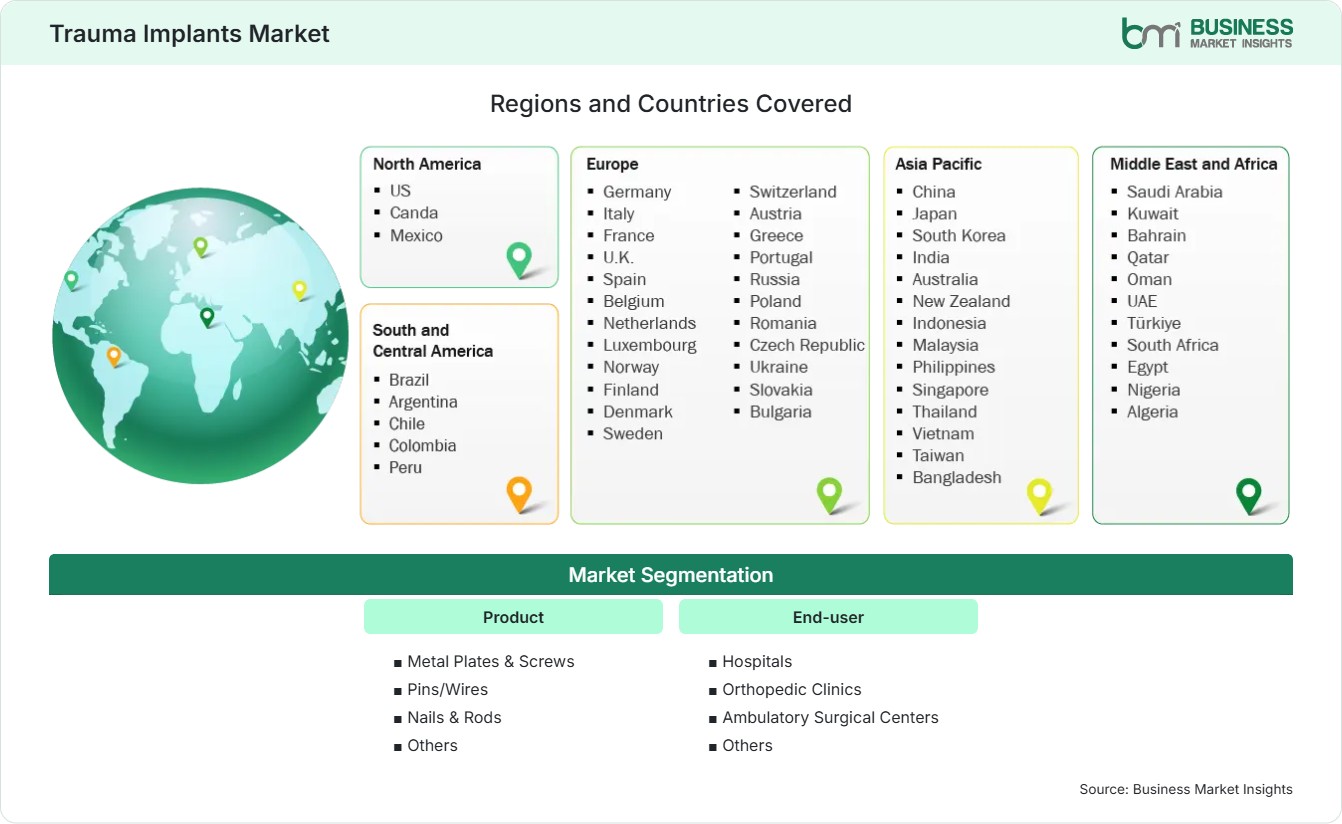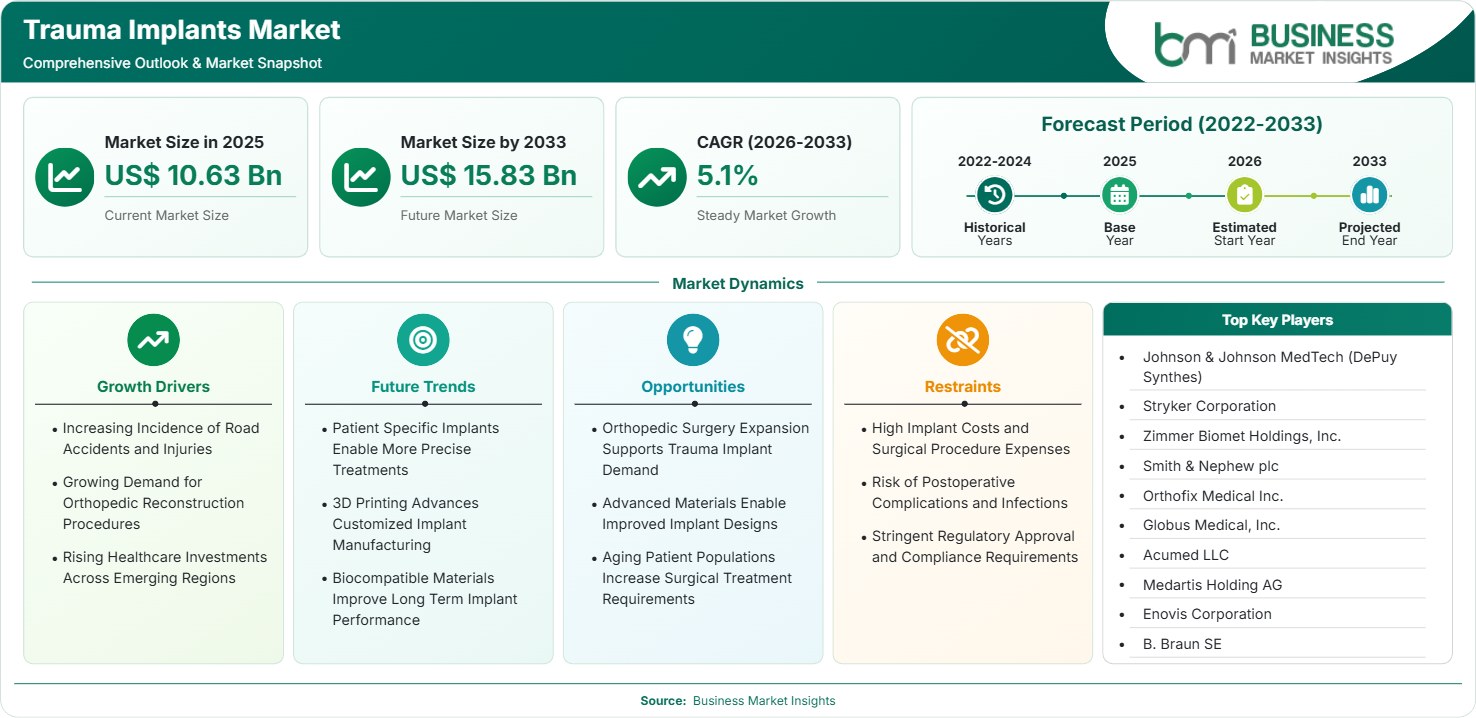
Trauma Implants Market Regional Highlights
North America Trauma Implants Market
North America accounts for 36%–39% of revenue in 2025 and records a CAGR of 4.4%–4.8% through 2033. The region maintains leadership through advanced healthcare infrastructure, high orthopedic procedure rates, strong reimbursement frameworks, and widespread adoption of innovative fixation systems. The Trauma Implants Market share remains supported by aging demographics, sports injuries, and a large trauma care network. Market participants benefit from extensive surgeon training and technology integration across leading orthopedic centers.
- High adoption of titanium implants and advanced plating systems supports procedure efficiency and clinical outcomes.
- Trauma centers increasingly deploy digital planning technologies alongside conventional fixation workflows.
- Ambulatory orthopedic procedures continue expanding as payers emphasize cost optimization.
- Strong R&D spending and product launches sustain competitive intensity among leading manufacturers.
US Trauma Implants Market
The United States represents 78%–82% of North American revenue and advances at 4.5%–4.9% CAGR. Demand is influenced by fracture prevalence, aging demographics, and high healthcare expenditure. Clinical adoption of advanced fixation technologies remains strong, while hospitals increasingly seek outcome-based procurement approaches. Procedure migration toward outpatient settings complements ongoing investments in orthopedic surgery efficiency.
- Broad surgeon access to innovative fixation systems strengthens utilization rates.
- High trauma center density supports consistent demand across metropolitan regions.
- Digital planning and procedural workflow technologies improve operational performance.
- Reimbursement support encourages ongoing adoption of advanced orthopedic devices.
Europe Trauma Implants Market
Europe holds a 27%–30% share in 2025 and expands at 4.8%–5.2% CAGR. Germany remains the leading national market, while Central and Eastern European countries demonstrate faster expansion. Regional demand is supported by population aging, orthopedic innovation, and established hospital networks. Regulatory harmonization encourages adoption of advanced fixation technologies while maintaining patient safety standards.
- Germany leads regional revenues through strong orthopedic infrastructure and procedural volumes.
- Spain and Poland display comparatively higher growth supported by healthcare investments.
- Trauma management modernization supports procurement of advanced fixation systems.
- Increasing geriatric fracture cases stimulate long-term procedural demand.
- Hospital digitalization strengthens integration of planning and surgical technologies.
Asia Pacific Trauma Implants Market
Asia Pacific generates a 25%–28% share in 2025 and records the fastest CAGR of 6.4%–6.9%. Rapid urbanization, expanding healthcare access, and growing incidence of road traffic injuries support demand. China leads regional revenues, while India demonstrates the strongest growth momentum. Governments continue investing in trauma care facilities and orthopedic capabilities, improving access to fixation procedures.
- China leads regional sales due to extensive hospital infrastructure and procedure volume.
- India demonstrates rapid expansion driven by healthcare modernization and trauma burden.
- Medical tourism contributes additional procedural demand in selected markets.
- Local manufacturing initiatives improve affordability and product availability.
- Expanding surgeon training programs facilitate adoption of complex fixation procedures.
Rest of World Trauma Implants Market
Rest of World represents 8%–10% share and grows at 5.4%–5.9% CAGR. Latin America benefits from healthcare infrastructure development, particularly in Brazil and Mexico. Middle East and Africa markets are supported by specialized hospital investments and trauma care modernization programs. Although penetration remains lower than developed regions, improving access expands long-term opportunities.
- Brazil leads Latin American demand through large procedure volumes and hospital investments.
- Mexico records favorable growth supported by orthopedic service expansion.
- Gulf countries invest heavily in advanced trauma and orthopedic facilities.
- South Africa remains a significant regional contributor across Africa.
- Public-private healthcare initiatives improve access to fixation technologies.