
Endosteal Dental Implants Market Outlook: Size, Share, Trends, Growth Analysis, Competitive Landscape & Forecast, 2026-2033

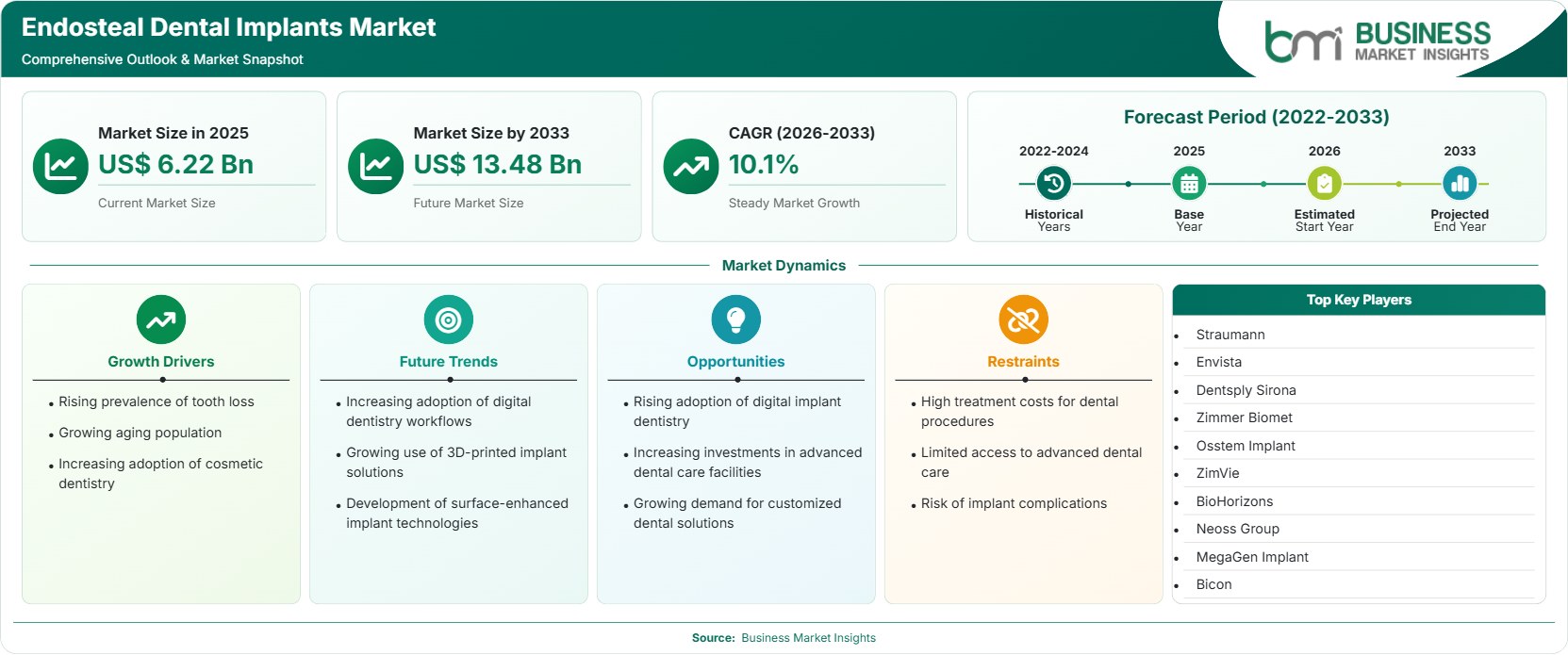
The Endosteal Dental Implants Market size was valued at US$ 6.22 Billion in 2025 and is projected to reach US$ 13.48 Billion by 2033, growing at a CAGR of 10.1% from 2026 to 2033. Growth will be influenced by the increase in tooth loss incidences, growth in the aged population, increased use of cosmetic dentistry, adoption of dental implants using digital technology, and custom dental restoration.

Report Coverage
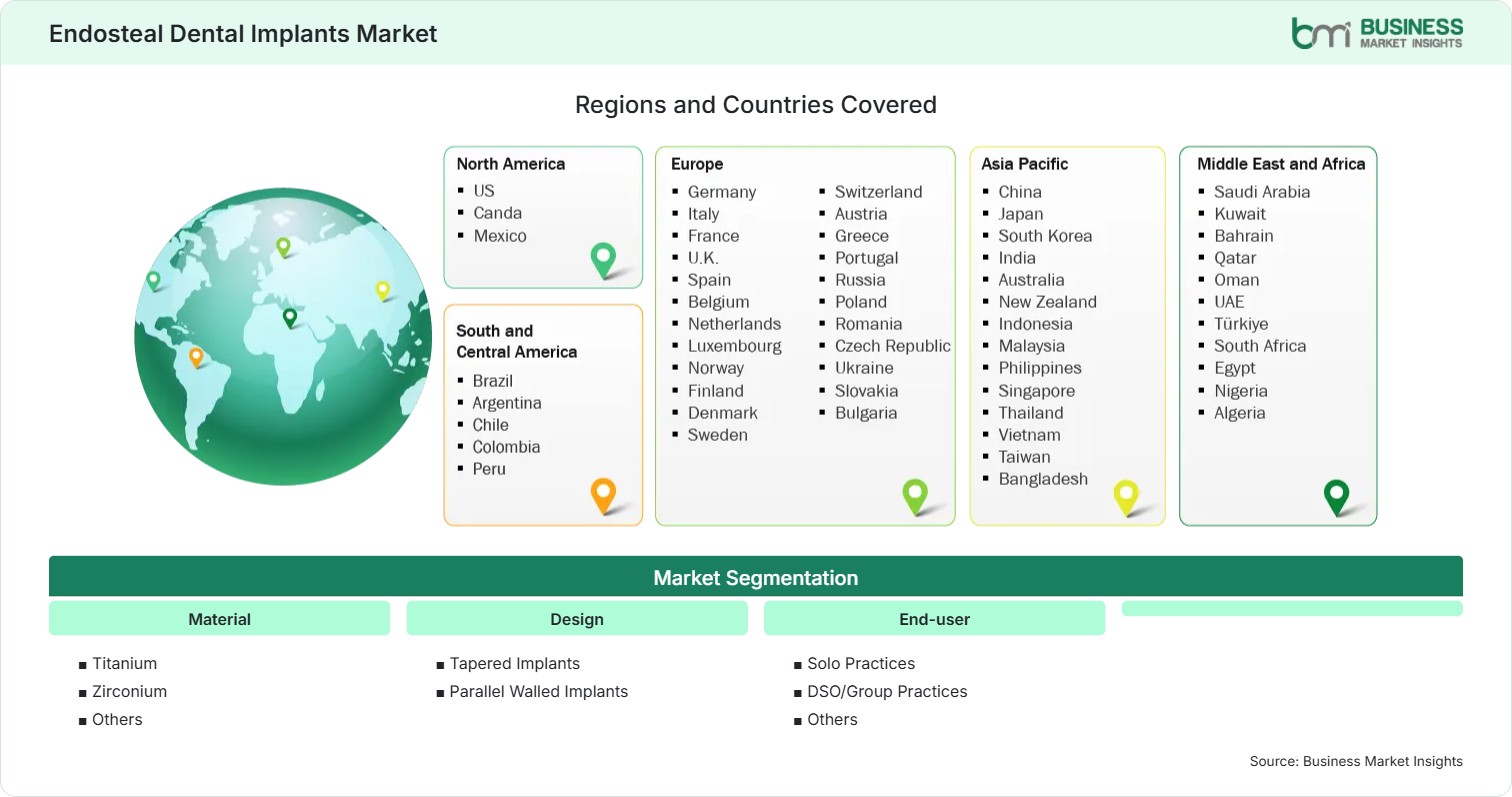
  • Material: Titanium, Zirconium, Others
  • Design: Tapered Implants, Parallel Walled Implants
  • End-user: Solo Practices, DSO/Group Practices, Others
US$ 6.22 Bn Market size in 2025
US$ 13.48 Bn Market Size by 2033
10.1% CAGR, 2026 - 2033
2026-2033 Forecast Period

AI Overview

Endosteal Dental Implants Market Summary

  • North America Region: North America holds a market share of 38%–41% in 2025 and is projected to grow at a CAGR of 9.5%–10.3% during 2026–2033, supported by high dental care expenditure, advanced implant adoption, cosmetic dentistry demand, and established healthcare infrastructure. The US market is expected to register a CAGR of 9.7%–10.5% through 2033, driven by aging demographics and increasing dental restoration procedures.
  • Fastest Growing Region: Asia Pacific represents 23%–26% share in 2025 and is forecast to expand at a CAGR of 11.0%–11.8% during 2026–2033, supported by improving dental infrastructure, rising disposable income, expanding medical tourism, increasing awareness of oral health, and growing adoption of advanced implant procedures across emerging economies.
  • Leading Segment: Titanium implants account for a market share of 68%–72% in 2025 and are projected to grow at a CAGR of 9.8%–10.5% during 2026–2033, supported by biocompatibility, long clinical history, durability, and widespread adoption among dental professionals for restorative procedures.
  • High Growth Segment: Zirconium implants represent a high-growth segment with a market share of 12%–15% in 2025 and are expected to grow at a CAGR of 11.5%–12.4% during 2026–2033, driven by increasing aesthetic dentistry demand, metal-free restoration preferences, and advancements in ceramic implant technology.
  • Key Market Opportunity: Digital implant dentistry, customized treatment planning, advanced dental facility investments, and personalized implant solutions are creating opportunities for manufacturers to improve clinical outcomes and expand adoption.
  • Major Market Players: Straumann, Envista, Dentsply Sirona, Zimmer Biomet, Osstem Implant, ZimVie, BioHorizons, Neoss Group, MegaGen Implant, Bicon.
Strategic Insights

Endosteal Dental Implants Market: Strategic Insights

Endosteal Dental Implants Market Strategic Framework
FREE PDF
Request your free sample
Request free sample
Stakeholder View

Key Takeaways

  • The dental implant ecosystem is shifting toward digitally enabled treatment workflows, where imaging technologies, computer-guided surgery, and customized implant planning are becoming important factors influencing clinical adoption and provider preferences.
  • Titanium implants continue representing the largest opportunity due to established clinical acceptance, while zirconium implants are gaining attention among patients seeking aesthetic and metal-free dental restoration alternatives.
  • Innovation is increasingly focused on surface modification technologies, implant design optimization, and digital integration to improve osseointegration, treatment predictability, and long-term restoration performance.
  • Asia Pacific presents a strong expansion opportunity due to improving dental infrastructure, increasing healthcare spending, medical tourism growth, and rising awareness regarding implant-based tooth replacement solutions.
  • Competitive strategies are increasingly centered on product portfolio expansion, acquisitions, digital dentistry partnerships, and investments in advanced implant technologies to strengthen global market positioning.
  • Dental service organizations and group practices are becoming important growth channels as they increase purchasing efficiency, standardize treatment protocols, and adopt advanced implant systems across multiple locations.
Geographic Outlook

Endosteal Dental Implants Market Regional Highlights

North America Endosteal Dental Implants Market

North America accounted for a 38%–41% of the Endosteal Dental Implants Market Share in 2025 and is projected to grow at a CAGR of 9.5%–10.3% during 2026–2033. The region maintains leadership due to advanced dental infrastructure, high adoption of implant procedures, strong cosmetic dentistry demand, and increasing investment in digital treatment technologies. The US remains the largest contributor, supported by aging demographics and established dental care networks.

  • The US market benefits from rising tooth replacement procedures, increasing cosmetic dentistry adoption, and growing demand for advanced implant-based restoration solutions.
  • Dental professionals are adopting digital workflows, guided surgery systems, and advanced imaging technologies to improve implant treatment accuracy.
  • Growing dental service organization networks are supporting standardized implant procedures and expanding access to specialized dental services.
  • Higher healthcare expenditure and patient awareness are encouraging adoption of premium implant technologies with improved clinical outcomes.

US Endosteal Dental Implants Market

The US accounted for 32%–35% of the market in 2025 and is expected to grow at a CAGR of 9.7%–10.5% in the Endosteal Dental Implants Market Forecasts. The country benefits from advanced dental infrastructure, increasing demand for aesthetic procedures, and strong adoption of digital dentistry technologies. Rising aging population, higher disposable income, and increasing preference for permanent tooth replacement solutions continue supporting market expansion.

  • Aging demographics are increasing demand for dental implants as tooth loss prevalence rises among older patient populations.
  • Dental clinics are investing in digital implant planning, three-dimensional imaging, and computer-guided procedures to improve treatment outcomes.
  • Cosmetic dentistry growth is encouraging adoption of premium implant solutions focused on aesthetics, durability, and patient satisfaction.

Europe Endosteal Dental Implants Market

Europe held a 25%–28% share of the Endosteal Dental Implants Market in 2025 and is forecast to expand at a CAGR of 9.2%–10.0% during 2026–2033. The region benefits from strong dental technology adoption, established healthcare systems, and increasing demand for restorative and cosmetic procedures. Germany, Switzerland, the United Kingdom, and France represent leading markets, with Switzerland and Germany maintaining strong positions due to advanced dental innovation.

  • Germany demonstrates strong demand through advanced dental clinics, implant technology adoption, and growing restorative dentistry procedures.
  • Switzerland supports premium implant adoption due to established dental expertise and strong preference for high-quality treatment solutions.
  • The United Kingdom is expanding implant adoption through increasing awareness of oral rehabilitation and advanced dental treatment options.
  • France is experiencing growth through healthcare modernization and increasing acceptance of implant-supported restoration procedures.

Asia Pacific Endosteal Dental Implants Market

Asia Pacific accounted for a 23%–26% share of the Endosteal Dental Implants Market in 2025 and represents the fastest-growing region with a CAGR of 11.0%–11.8% during 2026–2033. Growth is supported by improving healthcare access, rising dental awareness, increasing disposable income, and expansion of advanced dental facilities. China, Japan, South Korea, and India are key contributors due to growing patient populations and increasing adoption of modern dental procedures.

  • China is expanding implant adoption through healthcare infrastructure development, rising dental awareness, and increasing availability of specialized clinics.
  • India is witnessing higher demand due to dental tourism growth, improving private healthcare facilities, and increasing awareness of tooth replacement options.
  • South Korea is strengthening its position through advanced cosmetic dentistry adoption and technology-driven dental care services.
  • Japan continues supporting market growth through aging population demand and advanced restorative dentistry capabilities.

Rest of World Endosteal Dental Implants Market

Rest of World represented a 8%–11% share of the Endosteal Dental Implants Market in 2025 and is projected to grow at a CAGR of 10.0%–10.8% during 2026–2033. Latin America, the Middle East, and Africa are witnessing gradual expansion due to improving healthcare infrastructure, increasing dental tourism, and rising awareness of implant procedures. Investment in specialty clinics and advanced dental equipment is supporting regional market development.

  • Middle Eastern countries are investing in premium healthcare facilities and dental tourism infrastructure, supporting adoption of advanced implant procedures.
  • Latin American markets are expanding through increasing private dental care investments and growing patient demand for restorative dentistry.
  • African countries are improving access to dental services through healthcare development programs and increasing availability of specialized treatment centers.
  • Regional providers are adopting international implant technologies to improve treatment quality and expand dental service offerings.
Global Market Geography
FREE PDF
Request your free sample
Request free sample
Segment Analysis

Endosteal Dental Implants Market Segmentation

Material

The material segment represents the core product categories within the Endosteal Dental Implants Market, including titanium and zirconium implants. The segment accounted for the complete market revenue base in 2025 and is projected to grow at a CAGR of 10.1% during 2026–2033. Material selection is influenced by biocompatibility, durability, aesthetics, clinical performance, and patient preferences. Manufacturers are focusing on improving surface technologies and material properties to enhance implant success rates and treatment outcomes.

  • Titanium: Titanium implants dominate adoption due to excellent biocompatibility, proven clinical history, mechanical strength, and widespread preference among dental professionals for reliable long-term restoration procedures.
  • Zirconium: Zirconium implants are gaining attention due to metal-free characteristics, aesthetic advantages, and increasing patient preference for natural-looking dental restoration solutions with advanced ceramic technology.

Design

The design segment influences implant stability, surgical efficiency, and clinical outcomes within the Endosteal Dental Implants Market. Tapered implants and parallel walled implants are selected based on bone conditions, treatment requirements, and practitioner preferences. Increasing adoption of advanced implant designs is supported by improvements in digital planning, guided surgery, and personalized treatment approaches. Manufacturers are developing optimized geometries and surface modifications to improve primary stability, osseointegration, and long-term implant performance.

  • Tapered Implants: Tapered implants are widely adopted due to improved primary stability, suitability for immediate placement procedures, and effective performance in varying bone conditions.
  • Parallel Walled Implants: Parallel walled implants provide predictable placement and are preferred for specific clinical applications requiring consistent implant positioning and controlled surgical outcomes.

End-user

The end-user segment reflects changing patterns in dental implant service delivery across different practice models. Solo practices, DSO/group practices, and specialized dental providers are adopting implant technologies based on patient volume, operational capacity, and investment capabilities. DSO/group practices are expanding rapidly due to centralized purchasing, standardized procedures, and broader access to advanced dental technologies. Solo practices continue maintaining importance through personalized patient care and specialist expertise.

  • Solo Practices: Solo practices remain important users of dental implants due to personalized treatment approaches, specialist expertise, and direct patient relationships supporting implant procedure adoption.
  • DSO/Group Practices: DSO/group practices are expanding implant adoption through standardized workflows, centralized procurement, multiple locations, and investments in advanced dental technologies.
Market Forces

Endosteal Dental Implants Market Dynamics

Key Market Drivers

Rising Prevalence of Tooth Loss

Rising prevalence of tooth loss is a major factor supporting the market growth as patients increasingly seek permanent restoration solutions that improve functionality and aesthetics. Tooth loss caused by aging, periodontal diseases, dental trauma, and oral health issues is increasing demand for implant-based treatments. The Endosteal Dental Implants Market trends are characterized by rising demand for products that have high durability, look natural, and improve quality of life when compared with existing treatment options. The application of innovative technology by dental practitioners is helping them ensure predictable results. Rising awareness about oral rehabilitation and dental care is also motivating people.

Growing Aging Population

The growing aging population is significantly contributing to market expansion as older adults experience higher rates of tooth loss and require restorative dental solutions. According to global demographic trends, increasing numbers of elderly individuals are creating sustained demand for dental implants that restore chewing function, speech, and appearance. Aging demographics in developed nations have increased the adoption rate of premium dental procedures, while developing countries have focused on expanding the availability of implant procedures. Dental companies are developing solutions that cater to different patient requirements, such as improved implant surface technologies and personalized treatment options.

Increasing Adoption of Cosmetic Dentistry

Increasing adoption of cosmetic dentistry is accelerating demand for endosteal implants as patients prioritize aesthetic improvements alongside functional restoration. Smile correction services are gaining popularity owing to the increased awareness among people about smile correction techniques, advanced dental technology, and increased disposable incomes. The cosmetic dentistry sector has been adopting innovations like digital imaging, simulation of treatment methods, and customized dental implants. There has also been an increased liking for natural looking results that have been fostering the popularity of zirconium implants and other advanced restoration materials. The demand for cosmetic dental services has been increasing and dental offices have been increasing their offerings.

Key Market Opportunities

Rising Adoption of Digital Implant Dentistry

The rising adoption of digital implant dentistry is creating significant opportunities for Endosteal Dental Implants Market participants as dental professionals increasingly integrate advanced technologies into treatment workflows. Digital imaging, computer-guided surgery, three-dimensional planning, and computer-aided design are improving implant placement accuracy and reducing procedural complexity. These technologies enable customized treatment strategies, better clinical predictability, and improved patient outcomes. Manufacturers developing implants compatible with digital workflows can strengthen their market position by supporting dentists seeking efficient and precise procedures. The expansion of digital dentistry platforms is encouraging partnerships between implant manufacturers, software providers, and dental clinics to improve treatment integration.

Increasing Investments in Advanced Dental Care Facilities

Increasing investments in advanced dental care facilities are creating opportunities as hospitals, specialty clinics, and dental service organizations expand their capabilities to provide implant-based restoration procedures. Healthcare providers are upgrading equipment, adopting advanced surgical technologies, and establishing specialized implant centers to meet growing patient demand. Emerging markets are witnessing infrastructure development supported by private healthcare investments and medical tourism growth. Implant manufacturers can benefit by collaborating with dental facilities through training programs, technology support, and integrated product solutions. Expansion of modern dental facilities is expected to improve access to advanced implant procedures and support broader adoption across multiple regions.

Growing Demand for Customized Dental Solutions

Growing demand for customized dental solutions is creating opportunities as patients increasingly seek personalized treatment plans that address functional and aesthetic requirements. Advances in digital scanning, three-dimensional modeling, and customized restoration design are enabling dental professionals to deliver individualized implant solutions. Manufacturers are investing in patient-specific implant systems, improved materials, and design innovations to enhance treatment outcomes. The shift toward personalized dentistry is encouraging collaboration between implant companies and dental laboratories to develop efficient customization processes. As patient expectations increase, companies offering flexible solutions with improved aesthetics, comfort, and clinical performance are positioned to capture emerging opportunities in restorative dentistry.

Market Restraints and Challenges

High Treatment Costs for Dental Procedures

Factor: High treatment costs for dental procedures create affordability challenges for patients considering endosteal implant solutions, particularly in regions with limited insurance coverage and higher out-of-pocket healthcare expenses. Impact: Elevated costs can restrict procedure adoption, delay treatment decisions, and limit market penetration among price-sensitive patient groups. Implant procedures often involve multiple stages, including consultations, surgical placement, restoration, and follow-up care, increasing total treatment expenses. Dental providers and manufacturers are addressing this challenge through improved procedural efficiency, financing options, and development of cost-effective implant solutions. However, affordability remains an important factor influencing patient access and adoption rates.

Limited Access to Advanced Dental Care

Factor: Limited access to advanced dental care infrastructure and specialized implant professionals restricts availability of endosteal implant procedures in underserved regions. Impact: Patients in developing areas may experience delayed treatment, reduced access to advanced restoration options, and lower adoption rates of implant technologies. Shortages of trained dental professionals, limited specialty clinics, and uneven healthcare infrastructure contribute to regional disparities. Companies are addressing these challenges through professional training programs, simplified implant systems, and partnerships with healthcare providers. Improving dental education, infrastructure investment, and technology accessibility will be important for expanding implant adoption globally.

Company Analysis

Competitive Landscape

The Endosteal Dental Implants Market analysis indicates a competitive healthcare technology landscape involving global implant manufacturers, dental technology providers, and specialized restoration companies. Companies are competing through product innovation, implant surface technologies, digital dentistry integration, clinical research, and expansion of professional education programs. Leading players are strengthening their positions by developing advanced implant systems, expanding product portfolios, and forming partnerships with dental clinics and healthcare organizations. Increasing demand for customized solutions and digitally integrated workflows is encouraging companies to invest in next-generation implant technologies.

Company Name

Overview

Products and Services relevant to this market

Straumann

Straumann is a global dental implant company specializing in restorative and regenerative dentistry solutions.

Dental implant systems, digital dentistry solutions, biomaterials, and implant restoration technologies.

Envista

Envista provides dental products and technologies through a portfolio of global dental brands.

Dental implants, orthodontics, digital dentistry products, and restorative solutions.

Dentsply Sirona

Dentsply Sirona develops dental technologies and solutions for professionals worldwide.

Implant systems, CAD/CAM solutions, digital dentistry platforms, and restorative products.

Zimmer Biomet

Zimmer Biomet provides musculoskeletal and dental implant technologies for healthcare markets.

Dental implant systems, surgical solutions, and restorative dentistry products.

Osstem Implant

Osstem Implant develops dental implant systems and related clinical solutions.

Implant fixtures, surgical kits, prosthetic components, and digital implant solutions.

ZimVie

ZimVie specializes in dental and spine technologies with focus on patient care solutions.

Dental implant systems, restorative components, and digital dentistry solutions.

BioHorizons

BioHorizons provides innovative dental implant systems and regenerative products.

Implant solutions, tissue regeneration products, and digital treatment technologies.

Neoss Group

Neoss Group develops dental implant solutions focused on simplicity and efficiency.

Dental implants, prosthetic components, and digital workflow solutions.

MegaGen Implant

MegaGen Implant manufactures advanced dental implant systems and clinical solutions.

Implant systems, surgical components, and restorative dentistry technologies.

Bicon

Bicon develops unique dental implant designs and restorative dentistry solutions.

Short implants, implant systems, prosthetic solutions, and clinical support services.

Industry Activity

Recent Developments

February 2026

Nobel Biocare received U.S. FDA 510(k) clearance for its Nobel Biocare S Series Implants, an endosseous root-form dental implant system, expanding the company’s implant portfolio and supporting its continued development of advanced implant solutions for dental professionals.

February 2025

Dentsply Sirona announced the U.S. market launch of MIS LYNX, a premium all-in-one dental implant solution developed by its MIS Implants business. The system includes implants with a hydrophilic surface, single-use drills, and an expanded prosthetic range designed to support implant dentistry procedures.

January 2025

D.A.N.D. Metal Industries received U.S. FDA 510(k) clearance for the DAND Dental Implant System, an endosseous root-form implant system, enabling commercialization of the implant technology in the U.S. dental device market.

June 2024

BioHorizons launched the Tapered Pro Conical dental implant, its first implant featuring a deep conical connection. The new endosteal implant design was developed for improved surgical efficiency and stability across single-tooth and full-arch implant applications.

Trust & Transparency

Research Methodology

The market analysis combines proprietary research with secondary data from government agencies, company disclosures, regulatory filings, industry databases and expert interviews. Market estimates are validated through data triangulation, cross-market benchmarking and analyst review.

View Full Research Methodology

Questions Answered

Frequently Asked Questions

What does this Endosteal Dental Implants Market Report provide?

This report provides insights into market size, segmentation, regional trends, competitive landscape, growth drivers, opportunities, challenges, and technology developments influencing future market expansion.

Why are DSO and group practices becoming important users of implants?

DSO and group practices are expanding adoption through centralized purchasing, standardized treatment protocols, multi-location operations, and increased investment in advanced dental technologies.

How is digital dentistry influencing implant procedures?

Digital dentistry is improving implant planning, surgical accuracy, customization, and patient outcomes through technologies such as three-dimensional imaging, computer-guided surgery, and digital treatment workflows.

Which material segment dominates endosteal dental implant adoption?

Titanium implants maintain market leadership due to their proven clinical performance, biocompatibility, mechanical strength, and widespread acceptance among dental professionals for long-term restoration procedures.

What factors are driving the Endosteal Dental Implants Market growth?

The market is driven by rising tooth loss prevalence, aging population growth, increasing cosmetic dentistry adoption, digital dentistry expansion, and growing demand for durable and aesthetic tooth replacement solutions.

Access the Full Endosteal Dental Implants Market Report

Get segment-level forecasts, regional estimates, competitive benchmarking, company profiles and downloadable Excel datasets.

Access the full Endosteal Dental Implants Market Report
350 pages PDF & Excel | 2026-07-29