
Medical Implants Market Outlook: Size, Share, Trends, Growth Analysis, Competitive Landscape & Forecast, 2026-2033

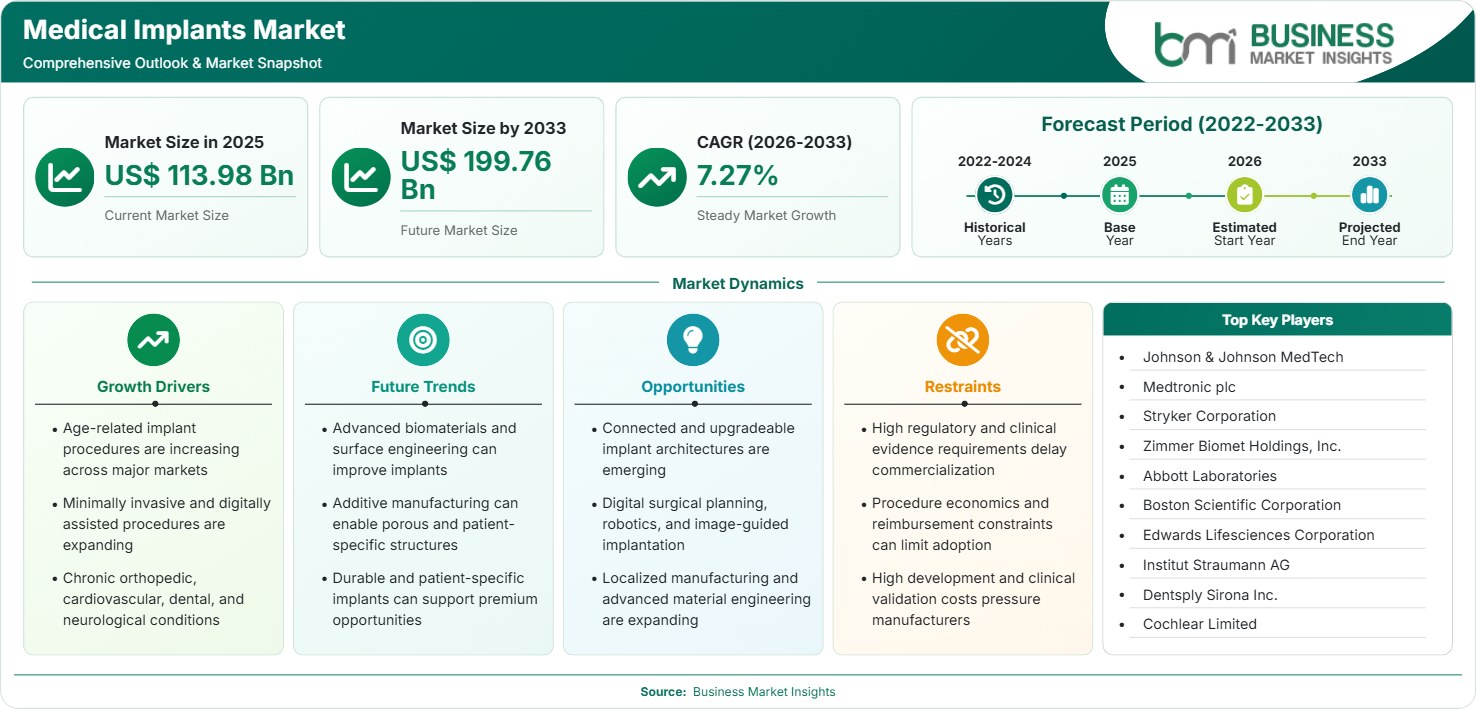
The Medical Implants Market size was valued at US$ 113.98 Billion in 2025 and is projected to reach US$ 199.76 Billion by 2033, growing at a CAGR of 7.27% during 2026–2033, driven by ageing populations, minimally invasive procedures, advanced biomaterials, digital surgery, and expanding specialty-care infrastructure.

Report Coverage
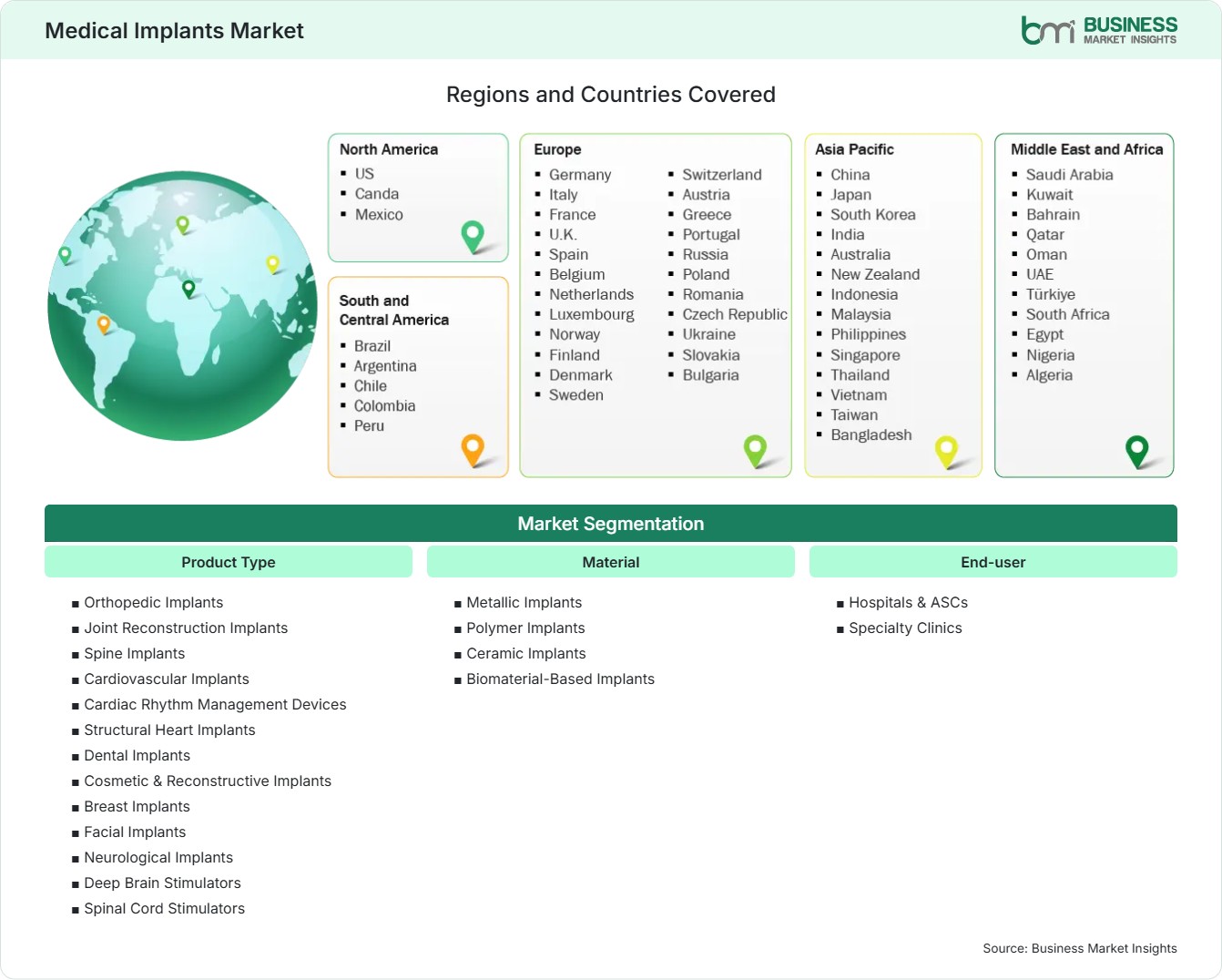
  • Product Type: Orthopedic Implants, Joint Reconstruction Implants, Spine Implants, Cardiovascular Implants, Cardiac Rhythm Management Devices, Structural Heart Implants, Dental Implants, Cosmetic & Reconstructive Implants, Breast Implants, Facial Implants, Neurological Implants, Deep Brain Stimulators, Spinal Cord Stimulators
  • Material: Metallic Implants, Polymer Implants, Ceramic Implants, Biomaterial-Based Implants
  • End-user: Hospitals & ASCs, Specialty Clinics
US$ 113.98 Bn Market size in 2025
US$ 199.76 Bn Market Size by 2033
7.27% CAGR, 2026 - 2033
2026-2033 Forecast Period

AI Overview

Medical Implants Market Summary

  • North America Region: North America holds a 34%–37% share of the Medical Implants market in 2025, growing with a CAGR of 6.8%–7.2%, influenced by ageing demographics, advanced surgical infrastructure, reimbursement depth, robotic procedures, replacement demand, and connected implant innovation. The U.S. contributes most regional demand, supported by advanced hospitals and specialist adoption, with a 6.7%–7.1% CAGR through 2033.
  • Fastest Growing Region: Asia Pacific holds a 24%–27% share in 2025, growing with a CAGR of 8.0%–8.6%, supported by expanding healthcare access, ageing populations, surgical capacity, domestic manufacturing, medical tourism, and increasing adoption of advanced implant technologies.
  • Leading Segment: Orthopedic Implants holds a 41%–44% share in 2025, growing with a CAGR of 6.9%–7.4%, driven by joint replacement volumes, spinal procedures, ageing populations, improved fixation, robotic assistance, and increasing demand for durable patient-specific implant solutions.
  • High Growth Segment: Neurological Implants holds a 7%–10% share of the Medical Implants market in 2025, growing with a CAGR of 9.2%–10.1%, supported by neuromodulation advances, Parkinson’s treatment, chronic pain management, rechargeable systems, precision stimulation, and expanding clinical acceptance.
  • Key Market Opportunity: The strongest opportunity lies in intelligent, minimally invasive, patient-specific implants combining advanced biomaterials, embedded sensing, remote monitoring, and data-enabled care pathways to improve outcomes and lifecycle value.
  • Major Market Players: Johnson & Johnson MedTech, Medtronic plc, Stryker Corporation, Zimmer Biomet Holdings, Inc., Abbott Laboratories, Boston Scientific Corporation, Edwards Lifesciences Corporation, Institut Straumann AG, Dentsply Sirona Inc., and Cochlear Limited.
Strategic Insights

Medical Implants Market: Strategic Insights

Medical Implants Market Strategic Framework
FREE PDF
Request your free sample
Request free sample
Stakeholder View

Key Takeaways

  • The value chain is becoming more integrated, linking material suppliers, implant manufacturers, software providers, surgical-navigation companies, hospitals, specialty clinics, and post-operative monitoring platforms. Competitive advantage increasingly depends on ecosystem coordination rather than hardware alone.
  • Orthopedic implants remain the largest revenue pool, while neurological implants provide greater percentage-growth potential. Joint reconstruction, spinal stimulation, and advanced cardiac interventions offer attractive opportunities where clinical need intersects with technological differentiation.
  • Product development is moving toward porous architectures, patient-specific geometry, smarter stimulation, wireless communication, firmware-enabled functionality, and improved surface engineering. Additive manufacturing is also supporting complex geometries that conventional machining cannot efficiently reproduce.
  • Asia Pacific offers the strongest expansion case because healthcare capacity, ageing demographics, private hospital investment, and local manufacturing are developing simultaneously. China, India, Japan, South Korea, and Australia represent distinct commercialization pathways.
  • Portfolio transactions increasingly target differentiated technologies rather than broad product expansion. Boston Scientific’s acquisition activity and Johnson & Johnson’s Atraverse Medical transaction illustrate continued interest in specialized technologies supporting minimally invasive intervention.
  • Manufacturers should balance innovation with lifecycle economics. Reimbursement, surgeon familiarity, sterilization requirements, revision rates, clinical evidence, and manufacturing scalability can determine commercial adoption as strongly as technical specifications.
Geographic Outlook

Medical Implants Market Regional Highlights

North America Medical Implants Market

North America is expected to account for 34%-37% of the medical implants market share in 2025 and to grow at a 6.8%-7.2% CAGR through 2033. North America has mature hospital facilities, specialized doctors per population, reimbursement infrastructure, high procedure volume, and acceptance of advanced surgeries such as robotic and image-guided surgeries. Population aging drives demand for replacement procedures, while innovations in the neurology and cardiology segments expand the addressable market. The US will be the key market in the region owing to its clinical infrastructure and presence of manufacturers.

  • Advanced hospitals are accelerating adoption of robotic-assisted orthopedic procedures, improving planning precision, workflow integration, and implant utilization.
  • Cardiovascular implantation is benefiting from minimally invasive approaches that reduce procedural burden for patients unsuitable for conventional surgery.
  • Strong specialist networks support faster clinical adoption of differentiated implants backed by evidence, training, and reimbursement pathways.
  • Digital connectivity is increasing attention toward cybersecurity, software lifecycle management, and secure data handling for implant-related technologies.

US Medical Implants Market

The U.S. accounts for 78%–82% of North American demand in 2025 and expands at a 6.7%–7.1% CAGR of the Medical Implants market through 2033. High procedure intensity, advanced specialty hospitals, reimbursement depth, clinical research capabilities, and rapid adoption of innovative technologies sustain demand. Regulatory requirements increasingly incorporate cybersecurity considerations for connected medical devices, making secure-by-design development more important for implant ecosystems involving wireless communication or software.

  • Orthopedic replacement remains a major demand center, with manufacturers competing through implant geometry, surgical systems, instrumentation, and clinical workflow integration.
  • Structural heart technologies are broadening minimally invasive treatment options for patients who face elevated risks from open surgery.
  • Neuromodulation and implantable stimulation technologies are gaining attention as clinicians seek longer-duration alternatives for selected chronic neurological and pain conditions.

Europe Medical Implants Market

Europe accounts for 27%–30% of the Medical Implants market in 2025 and is projected to grow at a CAGR of 6.9%–7.4% from 2025 to 2033. Countries such as Germany, France, the UK, Italy, and Spain account for significant existing demand, with Germany having the most advanced procedure-related infrastructure. The UK and France have the best opportunities in high-tech cardiac and neurological devices. Italy and Spain have aging populations and increasingly specialized expertise, and regulations affect commercialization decisions.

  • Germany remains a leading European hub for orthopedic procedures, specialist hospitals, medical engineering, and advanced implant manufacturing.
  • France and the United Kingdom provide opportunities for cardiovascular, neurological, and reconstructive technologies supported by specialist clinical networks.
  • Italy and Spain offer attractive replacement-demand opportunities as ageing populations increase the need for orthopedic and cardiovascular interventions.
  • European manufacturers increasingly prioritize traceability, clinical evidence, sustainability, and manufacturing efficiency across implant value chains.

Asia Pacific Medical Implants Market

The Asia-Pacific region has a market share of 24%-27% in 2025 and is experiencing the fastest regional growth in the Medical Implants market, with a CAGR of 8.0%-8.6% during 2024-2033. China, Japan, India, South Korea, and Australia are the leading regions of opportunity. Japan enjoys an advanced healthcare system as well as a quickly aging population, whereas India and China provide a large patient base and a growing number of private hospitals. South Korea supports advanced technology adoption, and Australia is a mature implant market with specialist services and manufacturing.

  • China combines large patient volumes with expanding domestic medical-device capabilities, creating opportunities for localized implants and cost-efficient manufacturing.
  • India offers substantial long-term potential as private hospitals, specialty clinics, medical tourism, and advanced surgical capabilities expand beyond major metropolitan centers.
  • Japan presents strong demand for age-related orthopedic, cardiovascular, and hearing implants, supported by an increasingly elderly population.
  • South Korea and Australia provide sophisticated clinical environments that can support early adoption of premium implant technologies and digital workflows.

Rest of World Medical Implants Market

Rest of World accounts for an estimated 10%–13% segment share in 2025 and is projected to grow at a CAGR of 7.5%–8.1% in the Medical Implants market through 2033. South and Central America are led by Brazil and Mexico, where private-sector healthcare investments, along with specialized offerings, fuel market growth. The Middle East and Africa regions are being fueled by healthcare reforms in the GCC, particularly in Saudi Arabia & UAE, which offer the strongest commercial pathways as infrastructure and specialist services improve.

  • Brazil remains the leading South American opportunity, supported by a large healthcare system and established orthopedic, dental, and cardiovascular procedure base.
  • Mexico benefits from private healthcare expansion and proximity to North American supply networks, supporting advanced implant distribution and clinical adoption.
  • Saudi Arabia is investing in specialized healthcare capacity, creating opportunities for cardiovascular, orthopedic, reconstructive, and neurological technologies.
  • The UAE offers a premium healthcare environment where medical tourism, specialist hospitals, and technology-oriented procurement support advanced implant adoption.
Global Market Geography
FREE PDF
Request your free sample
Request free sample
Segment Analysis

Medical Implants Market Segmentation

Product Type

Product Type is the leading segment, capturing a market share of 68%–72% by 2025 and registering a CAGR of 7.0%–7.5% from 2025 to 2034 in the Medical Implants market. The use of implants in orthopedic surgery remains prevalent; however, other areas of application include cardiovascular, dental, cosmetic, reconstructive, and neurological surgery. Product developments focus on durability, minimally invasive delivery, patient-specific geometry, and compatibility.

  • Orthopedic Implants: Joint reconstruction and spinal applications generate substantial demand as ageing populations increase replacement procedures, while robotic planning, porous surfaces, and improved fixation support adoption across specialist hospitals.
  • Joint Reconstruction Implants: Hip and knee replacement demand benefits from ageing demographics, osteoarthritis prevalence, improved implant longevity, and surgical navigation, while patient-specific designs support better procedural planning.
  • Spine Implants: Degenerative spinal conditions, minimally invasive surgery, biologic integration, and navigation-assisted procedures support demand, with manufacturers emphasizing fixation strength, restoration of alignment, and procedural efficiency.
  • Cardiovascular Implants: Structural and rhythm-management technologies benefit from ageing-related cardiovascular disease, minimally invasive interventions, and expanding treatment options for patients unsuitable for conventional surgery.
  • Cardiac Rhythm Management Devices: Pacemakers and related technologies are evolving toward smaller systems, leadless configurations, remote monitoring, and improved battery performance to reduce procedural complexity and long-term complications.
  • Structural Heart Implants: Transcatheter technologies expand treatment access for selected valve patients, with innovation focused on delivery systems, anatomical fit, procedural safety, and broader patient eligibility.
  • Dental Implants: Rising awareness of restorative dentistry, digital planning, implant-supported rehabilitation, and dental tourism supports demand, while CAD/CAM integration improves planning precision and clinic productivity.
  • Cosmetic & Reconstructive Implants: Reconstructive procedures and aesthetic demand support implant utilization, with manufacturers emphasizing anatomical conformity, material safety, durability, and improved surgical outcomes.
  • Breast Implants: Demand is shaped by reconstructive procedures and aesthetic surgery, while manufacturers focus on implant surfaces, shape options, safety considerations, and improved patient-selection protocols.
  • Facial Implants: Facial reconstruction and aesthetic procedures require anatomically precise solutions, encouraging customized geometries, biocompatible materials, improved fixation, and digitally assisted surgical planning.
  • Neurological Implants: Neuromodulation applications provide strong growth potential as stimulation technologies become more precise, rechargeable, programmable, and increasingly integrated with clinician-controlled digital systems.
  • Deep Brain Stimulators: Parkinson’s disease and movement-disorder treatment supports adoption, while directional stimulation, programming improvements, rechargeable systems, and better targeting enhance clinical utility.
  • Spinal Cord Stimulators: Chronic pain management supports demand for programmable stimulation systems, with waveform innovation, rechargeable batteries, and personalized therapy expanding treatment flexibility.

Material

Material forms a key technology component, with metallic implants holding a 52%-56% market share in 2025 and the category experiencing a 6.8%-7.3% growth rate until 2034. The selection of materials now considers mechanical properties, corrosion resistance, biocompatibility, wear properties, imaging, and tissue response.

  • Metallic Implants: Titanium, cobalt-chrome, stainless steel, and specialized alloys remain important where mechanical strength and durability are essential, particularly in orthopedic and cardiovascular applications.
  • Polymer Implants: Polymers provide flexibility, lower weight, radiolucency, and application-specific performance, supporting spinal, reconstructive, cardiovascular, and selected neurological implant designs.
  • Ceramic Implants: Ceramics offer wear resistance, hardness, and favorable biological characteristics, supporting dental and orthopedic applications where low-wear articulating surfaces are commercially valuable.
  • Biomaterial-Based Implants: Advanced biomaterials support tissue integration and regenerative approaches, with research emphasizing bioactive surfaces, controlled degradation, and improved interaction between implant structures and surrounding tissue.

End-user

Hospitals & ASCs are projected to capture 76%-80% market share by 2025 and grow at a CAGR of 7.1%-7.6% through 2034 in the Medical Implants market. Hospitals and ASCs offer sophisticated procedures, specialized expertise, advanced imaging, surgical robots, and implant availability. Specialty clinics support the ecosystem through dental care, aesthetic treatments, reconstruction, and some outpatient procedures that involve process efficiency and specialized skill sets.

  • Hospitals & ASCs: High procedure volumes, specialist teams, advanced operating rooms, and growing outpatient care support implant utilization, while procurement increasingly emphasizes clinical outcomes and total procedural economics.
  • Specialty Clinics: Dental, cosmetic, reconstructive, and focused neurological services support demand through specialist expertise, patient convenience, personalized treatment pathways, and increasingly sophisticated outpatient technologies.
Market Forces

Medical Implants Market Dynamics

Rising Demand for Age-Related Implant Procedures

The ageing population is a foundational demand driver because older adults have higher requirements for orthopedic replacement, cardiovascular intervention, hearing restoration, and selected neurological therapies. As reported by the WHO, the number of people aged 60 and older worldwide will increase from 1 billion in 2020 to 1.4 billion in 2030. The trends in the above demographic pattern favor continued procedure volume in the replacement and restorative sectors. Market trends will thus depend on demographic patterns, not just on short-term spending in discretionary health care. The Medical Implants Market trends include increased emphasis on implant durability, lower revision rates, and more efficient procedures due to complications that may be faced by older patients.

Expansion of Minimally Invasive and Digitally Assisted Procedures

Minimally invasive treatments are paving the way for implants that can be inserted through minimally invasive entry points, guided by imaging technology, catheters, and robotic systems. There are many examples in which structural heart implants represent this trend; thus, transcatheter solutions are extending the possibility of treating patients who cannot be operated on traditionally. Edwards Lifesciences was granted FDA approval in December 2025 for the SAPIEN M3 transcatheter mitral valve replacement system. Abbott has also introduced several structural heart solutions, such as transcatheter mitral and tricuspid technologies. The introduction of such innovations creates business opportunities for companies that can integrate their implants with insertion technology.

Connected and Upgradeable Implant Architectures

The design of implants has evolved from passive hardware to platforms that can sense, stimulate, diagnose, connect, or be upgraded via software. The Cochlear Nucleus Nexa System provides an example of such an evolution by using implant firmware, built-in memory, diagnostic capability, and an upgradeable platform. This evolution highlights that the industry is moving towards a lifecycle implant architecture in which value is generated even after the implant surgery itself. For connected implants, cybersecurity is becoming an integral part of product design. The FDA guidance provided in 2026 on Cybersecurity Design, Labeling, and Premarket Considerations for Devices with Cybersecurity Risk highlights the need.

Localized Manufacturing and Advanced Material Engineering

There is an increased focus by manufacturers on regional manufacturing, machining, additive manufacturing, porosity, and surface modification due to the dependence of implant performance on geometry and biology. Titanium and cobalt chrome remain relevant for weight-bearing applications, but ceramics and plastics offer unique properties for wear and imaging. Lattices may be produced using additive manufacturing technologies that promote bone growth while reducing waste materials. Regional manufacturing will help in reducing the length of the supply chain and enable customization based on local anatomy, regulatory considerations, and procurement cost structures. This is most evident in instances where manufacturers apply material science expertise alongside scalable manufacturing.

Expansion of Implant Access in Emerging Healthcare Systems

Infrastructure development in the health sector in Asia, Latin America, and the Middle East offers opportunities for market growth alongside mature markets. China and India are characterized by large patient numbers and an increasing number of specialists, whereas Gulf healthcare facilities are working to develop tertiary care and technology-based services. The business opportunity goes far beyond marketing premium products as imports since local production, surgeon education, distribution alliances, and affordable product lines could promote adoption. The Medical Implants Market forecasts rely heavily on manufacturers' ability to address pricing and access to procedures, as well as the technical aspects of their products.

Growth of Personalized and Patient-Specific Implant Solutions

The option of patient-specific design is another area that holds promise as imaging, computer-assisted planning, 3D modeling, and additive manufacturing become further integrated into surgical practice. Patient-specific implants will be able to address anatomical problems, revision operations, craniomaxillofacial reconstructions, and certain orthopedic procedures where standard geometries do not provide sufficient fit. The business case here is based on enhanced procedural planning, fewer intraoperative adjustments, and better functional results. In addition to the opportunities for digital services and software, and service opportunities in planning, simulation, and clinical support. Companies with well-tested design and production processes may set themselves apart by offering faster customization, controlled quality, and integration with hospitals' imaging systems.

Factor: High Regulatory and Clinical-Evidence Requirements

Factor: Implant manufacturers face extensive requirements covering biocompatibility, sterilization, mechanical performance, clinical evidence, manufacturing quality, labeling, post-market surveillance, and, for connected products, cybersecurity.

Impact: Such responsibilities lead to delays, expenses, and risks across the development, validation, documentation, and commercialization processes, especially for new manufacturers entering more complex implant sectors. FDA regulation of cyber products requires additional documentation in the product development process, in addition to safety and performance documentation. As such, regulatory complexity is more advantageous to established manufacturers that have developed quality systems, clinical relationships, and regulatory expertise. Smaller innovators may need strategic partnerships or specialized commercialization models to reach multiple jurisdictions efficiently while maintaining evidence quality and consistent product controls.

Factor: Procedure Economics and Reimbursement Constraints

Factor: Implant adoption depends on reimbursement, hospital budgets, operating-room economics, surgeon training, procurement contracts, and the total cost of the procedure rather than device price alone.

Impact: Premium technologies can experience slower adoption when clinical benefits are difficult to translate into measurable economic value for payers or hospitals. Hospitals increasingly assess implant costs alongside procedure duration, instrumentation requirements, revision risk, inventory management, and length of stay. This creates pressure on suppliers to demonstrate measurable outcomes and workflow efficiencies. Emerging markets face additional affordability constraints, requiring manufacturers to develop scalable products, local partnerships, and pricing structures that preserve clinical quality while expanding access.

Company Analysis

Competitive Landscape

The Medical Implants Market analysis shows competition spanning orthopedic reconstruction, cardiovascular intervention, dental restoration, neuromodulation, reconstructive surgery, and hearing implants. Leading companies increasingly compete through technology platforms, clinical evidence, surgeon relationships, product breadth, manufacturing scale, and acquisitions targeting specialized technologies.

Company Name

Overview

Products and Services relevant to this market

Johnson & Johnson MedTech

Major diversified medical technology business with extensive surgical and cardiovascular capabilities and a broad global clinical network.

Orthopedic implants, electrophysiology technologies, surgical systems, cardiovascular devices, and minimally invasive procedural technologies.

Medtronic plc

Diversified medical technology company with significant exposure to cardiovascular, neurological, surgical, and implantable therapies.

Pacemakers, neurostimulation systems, spinal technologies, cardiac devices, surgical technologies, and implantable therapeutic platforms.

Stryker Corporation

Leading medical technology manufacturer with strong orthopedic and surgical franchises serving hospitals worldwide.

Joint reconstruction implants, trauma products, spinal technologies, surgical robotics, navigation, and associated instrumentation.

Zimmer Biomet Holdings, Inc.

Orthopedic specialist focused on reconstruction, extremities, sports medicine, and digitally enabled surgical solutions.

Knee and hip implants, extremity systems, orthopedic robotics, surgical planning, and reconstruction technologies.

Abbott Laboratories

Diversified healthcare company with substantial cardiovascular and structural heart technology capabilities.

Leadless pacemakers, structural heart implants, cardiac rhythm management technologies, and minimally invasive cardiovascular systems.

Boston Scientific Corporation

Medical technology company focused on minimally invasive therapies across cardiovascular, neurological, urological, and other specialties.

Neuromodulation, implantable stimulation technologies, cardiovascular systems, urology implants, and interventional platforms.

Edwards Lifesciences Corporation

Cardiovascular technology specialist with a strong focus on structural heart and transcatheter therapies.

Transcatheter valve replacement systems, surgical heart valves, delivery systems, and structural heart technologies.

Institut Straumann AG

Dental technology specialist serving implant dentistry and related digital workflows across international markets.

Dental implants, prosthetic components, digital dentistry solutions, biomaterials, and implant-supported restoration systems.

Dentsply Sirona Inc.

Dental technology company providing integrated solutions across restorative dentistry, implants, imaging, and digital workflows.

Dental implant systems, prosthetics, digital planning, imaging, CAD/CAM technologies, and restorative solutions.

Cochlear Limited

Specialized implantable hearing technology company with a strong global position in cochlear and bone-conduction systems.

Cochlear implants, bone-conduction implants, sound processors, fitting software, connectivity, and implant-related digital services.

Trust & Transparency

Research Methodology

The market analysis combines proprietary research with secondary data from government agencies, company disclosures, regulatory filings, industry databases and expert interviews. Market estimates are validated through data triangulation, cross-market benchmarking and analyst review.

View Full Research Methodology

Questions Answered

Frequently Asked Questions

How can manufacturers improve implant adoption in cost-sensitive markets?

Manufacturers can improve adoption through localized production, tiered product portfolios, distributor partnerships, surgeon training, evidence-based value propositions, streamlined instrumentation, and designs that reduce total procedural costs while maintaining safety and clinical performance.

Why is Asia Pacific strategically important for implant manufacturers?

Asia Pacific combines large patient populations, ageing demographics, healthcare infrastructure expansion, private hospital investment, domestic manufacturing development, and growing specialist capacity. Japan, China, India, South Korea, and Australia each offer distinct opportunities based on healthcare maturity and reimbursement conditions.

How is cybersecurity affecting connected implant development?

Cybersecurity is becoming a formal design and regulatory consideration for connected medical devices. Manufacturers must increasingly address secure architecture, vulnerability management, software updates, documentation, and post-market controls throughout the product lifecycle.

What makes neurological implants attractive compared with mature implant categories?

Neurological implants have substantial technological headroom because stimulation can become more targeted, programmable, rechargeable, and personalized. Expansion of indications and improvements in implant control systems can support higher growth even though the segment remains smaller than orthopedic applications.

What technologies are shaping next-generation implant development?

Advanced biomaterials, additive manufacturing, robotic surgery, image guidance, neuromodulation, wireless communication, onboard diagnostics, and software-enabled functionality are shaping development. Manufacturers increasingly design implants as components of broader clinical ecosystems rather than standalone devices.

Access the Full Medical Implants Market Report

Get segment-level forecasts, regional estimates, competitive benchmarking, company profiles and downloadable Excel datasets.

Access the full Medical Implants Market Report
350 pages PDF & Excel | 2026-09-02
Similar Research

Related Market Reports