
Medical Wearables Market Outlook: Size, Share, Trends, Growth Analysis, Competitive Landscape & Forecast, 2026-2033

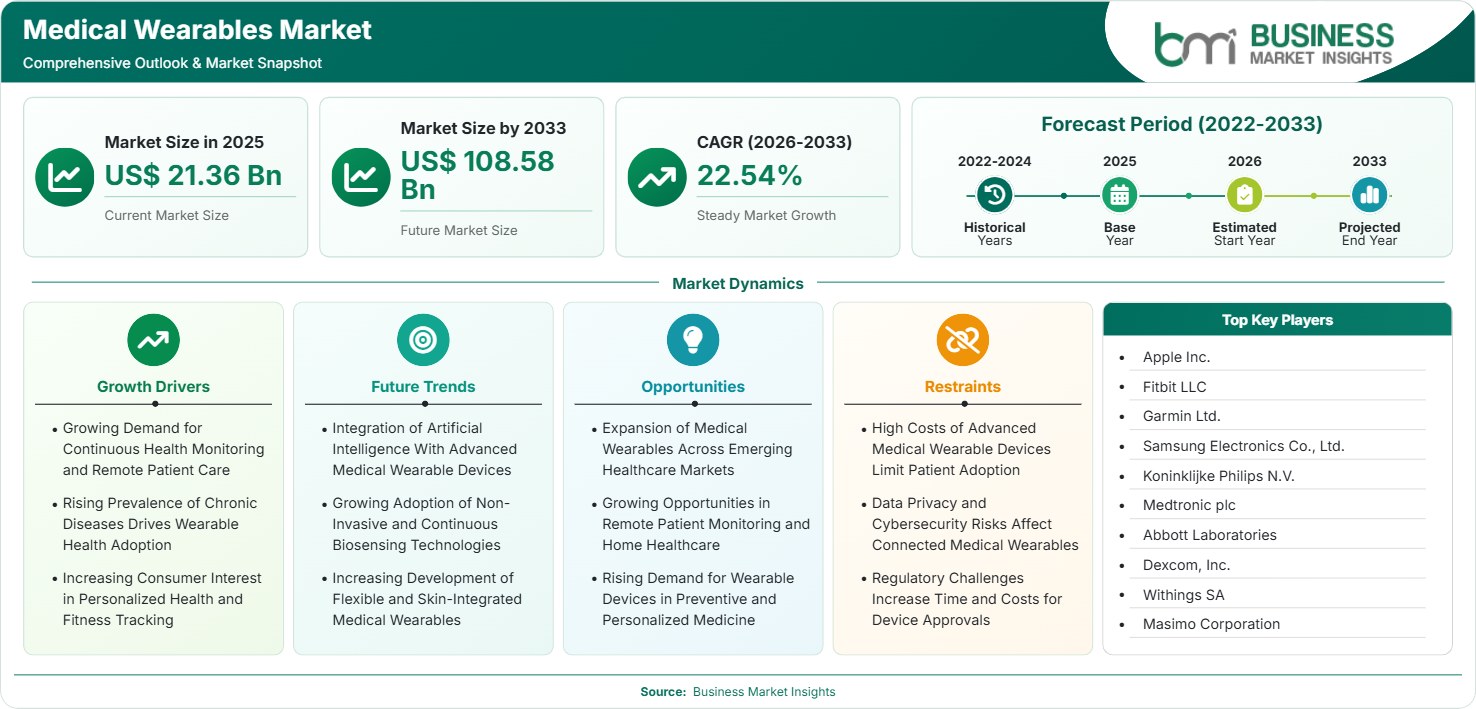
The Medical Wearables Market size was valued at US$ 21.36 Billion in 2025 and is projected to reach US$ 108.58 Billion by 2033, growing at a CAGR of 22.54% during 2026–2033, driven by continuous monitoring, chronic disease management, remote care, personalized medicine, preventive healthcare, and expanding digital health infrastructure.

Report Coverage
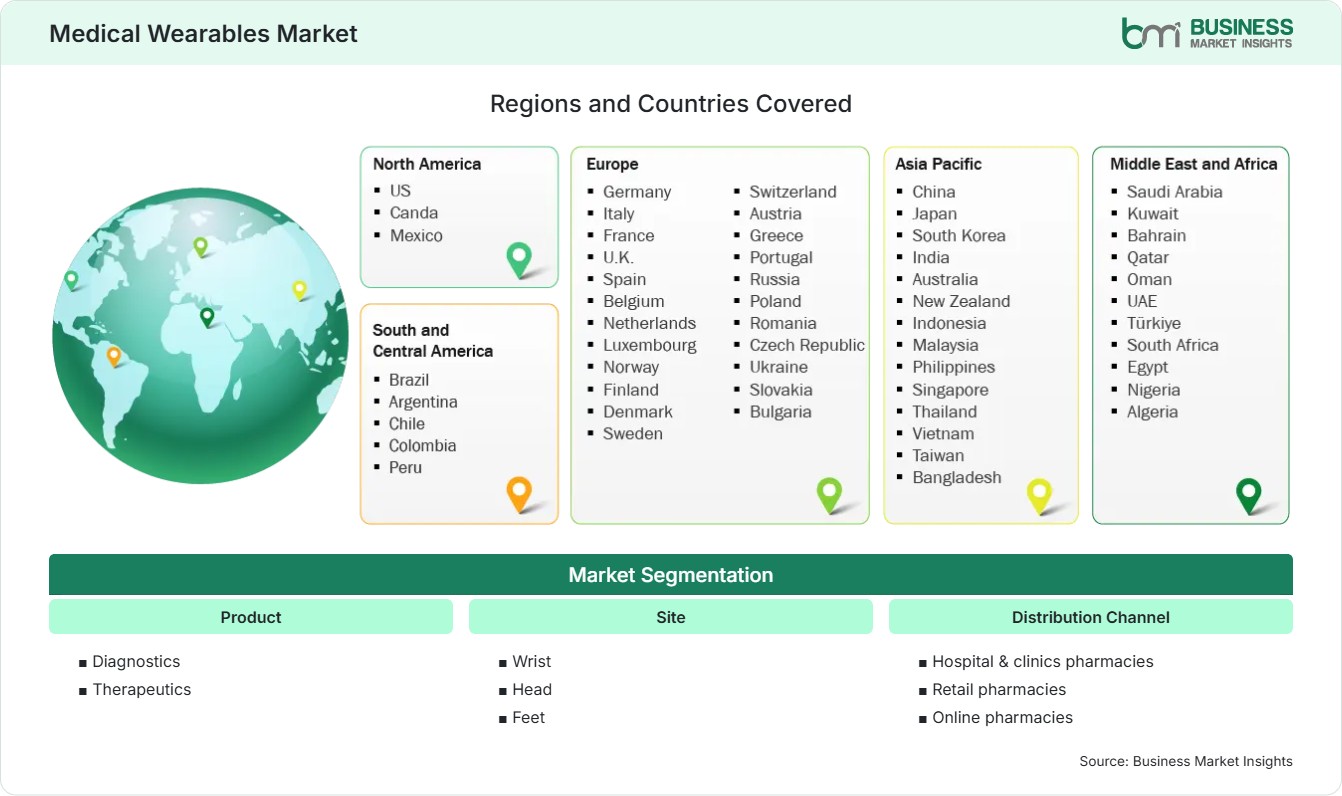
  • Product: Diagnostics, Therapeutics
  • Site: Wrist, Head, Feet
  • Distribution Channel: Hospital & clinics pharmacies, Retail pharmacies, Online pharmacies
US$ 21.36 Bn Market size in 2025
US$ 108.58 Bn Market Size by 2033
22.54% CAGR, 2026 - 2033
2026-2033 Forecast Period

AI Overview

Medical Wearables Market Summary

  • North America Region: North America holds a share of 38%–42% in 2025, growing with a CAGR of 20.5%–22.5%, supported by remote patient monitoring, chronic disease management, reimbursement expansion, advanced healthcare infrastructure, and consumer adoption of connected health technologies. The US represents 34%–38% share, with a CAGR of 20.8%–23.0%, supported by digital health investment and remote monitoring adoption.
  • Fastest Growing Region: Asia Pacific holds a share of 19%–23% in 2025, growing with a CAGR of 24.5%–27.0%, driven by expanding healthcare access, increasing chronic disease burden, smartphone penetration, digital health investment, and rising demand for affordable home-based monitoring solutions.
  • Leading Segment: Diagnostics holds a share of 67%–71% in 2025, growing with a CAGR of 21.5%–23.5%, supported by continuous glucose monitoring, cardiac monitoring, vital-sign tracking, remote diagnostics, and growing integration of wearable-generated data into clinical workflows.
  • High Growth Segment: Online pharmacies hold a Medical Wearables Market share of 19%–23% in 2025, growing with a CAGR of 25.0%–28.0%, driven by e-commerce penetration, direct-to-consumer healthcare, digital prescriptions, home delivery, broader product availability, and increasing consumer preference for convenient purchasing.
  • Key Market Opportunity: Remote patient monitoring, preventive healthcare, and personalized medicine are creating opportunities for connected devices that combine continuous physiological data with analytics, clinical decision support, and virtual care.
  • Major Market Players: Apple Inc., Fitbit LLC, Garmin Ltd., Samsung Electronics Co., Ltd., Koninklijke Philips N.V., Medtronic plc, Abbott Laboratories, Dexcom, Inc., Withings SA, and Masimo Corporation.
Strategic Insights

Medical Wearables Market: Strategic Insights

Medical Wearables Market Strategic Framework
FREE PDF
Request your free sample
Request free sample
Stakeholder View

Key Takeaways

  • The value chain is evolving from standalone hardware toward integrated ecosystems combining sensors, connectivity, mobile applications, cloud platforms, analytics, clinical dashboards, and recurring digital health services.
  • Diagnostic applications offer the strongest commercial foundation because continuous monitoring can support earlier intervention, chronic disease management, and remote clinical decision-making across cardiovascular, metabolic, and other conditions.
  • Sensor miniaturization, improved battery performance, AI-enabled analytics, and multi-parameter monitoring are driving product evolution, with manufacturers increasingly focused on clinically meaningful data rather than activity tracking alone.
  • Asia Pacific provides a compelling investment case as healthcare providers seek cost-efficient remote monitoring solutions for expanding patient populations and growing chronic disease management requirements.
  • Strategic partnerships between medical device manufacturers, technology companies, healthcare providers, insurers, and pharmacies are becoming increasingly important for expanding reimbursement, clinical validation, distribution, and patient adoption.
  • Long-term differentiation will depend on data quality, regulatory clearance, interoperability, cybersecurity, and the ability to convert continuous physiological measurements into actionable clinical insights.
Geographic Outlook

Medical Wearables Market Regional Highlights

North America Medical Wearables Market

North America represents a Medical Wearables Market share of 38%–42% in 2025 and records a CAGR of 20.5%–22.5% during 2026–2033. The region benefits from advanced healthcare infrastructure, high digital health expenditure, established medical device ecosystems, and strong consumer awareness. The US dominates regional demand through remote patient monitoring and chronic disease management. Canada contributes through virtual care and digital health initiatives. Demand is shifting toward clinically validated devices capable of supporting continuous monitoring, healthcare provider connectivity, and data-driven treatment decisions.

  • Remote patient monitoring adoption is increasing demand for connected devices capable of transmitting physiological measurements to healthcare professionals, supporting post-discharge care and chronic disease management.
  • Cardiovascular and metabolic monitoring remain major applications, with wearable technologies increasingly supporting continuous measurement, earlier intervention, and personalized treatment approaches.
  • Healthcare providers are integrating wearable data into virtual care workflows, increasing demand for interoperable platforms that connect devices, applications, clinical systems, and patient records.
  • Partnerships among medical device companies, technology providers, insurers, and healthcare organizations are expanding commercial opportunities and supporting broader clinical adoption.

US Medical Wearables Market

The US represents a Medical Wearables Market share of 34%–38% in 2025 and records a CAGR of 20.8%–23.0% through 2033. Demand is supported by high healthcare expenditure, widespread smartphone adoption, advanced digital infrastructure, and increasing use of remote patient monitoring. Regulatory clearance for clinically relevant devices is strengthening confidence, while healthcare providers increasingly explore wearable-generated data to support virtual consultations, chronic care, and personalized interventions.

  • Remote patient monitoring programs are expanding the role of connected medical devices in managing chronic conditions and reducing unnecessary in-person healthcare interactions.
  • Continuous glucose monitoring and cardiac monitoring are strengthening demand for clinically relevant wearable technologies that provide actionable physiological information.
  • Consumer health platforms are increasingly connecting wearable data with digital health services, creating opportunities for subscription models and personalized wellness programs.

Europe Medical Wearables Market

Europe accounts for a Medical Wearables Market share of 24%–28% in 2025 and records a CAGR of 21.0%–23.5% through 2033. Germany, the UK, France, and the Netherlands represent leading markets, while Spain and Italy offer additional growth opportunities. Aging populations, chronic disease prevalence, digital health adoption, and healthcare modernization support demand. Healthcare systems are increasingly evaluating remote monitoring to improve efficiency and support patients outside traditional clinical settings.

  • Germany remains a leading market due to advanced healthcare infrastructure, medical technology capabilities, and increasing adoption of connected patient monitoring.
  • The UK benefits from digital health initiatives and growing interest in remote monitoring solutions that can support healthcare capacity and chronic disease management.
  • Spain represents a high-growth market at a CAGR of 23.0%–25.0%, supported by digital healthcare adoption, aging demographics, and increasing demand for home-based monitoring.
  • The Netherlands offers a CAGR of 22.5%–24.5%, driven by connected healthcare infrastructure, telemedicine adoption, and strong interest in preventive and personalized care.

Asia Pacific Medical Wearables Market

Asia Pacific represents a share of 19%–23% in 2025 and medical wearables market forecast to grow at CAGR of 24.5%–27.0% through 2033. China, Japan, India, South Korea, and Australia are major demand centers, while India and Southeast Asia provide strong expansion opportunities. Increasing healthcare expenditure, chronic disease prevalence, smartphone penetration, and digital health investment are supporting adoption. Manufacturers are developing more affordable connected devices, while hospitals and healthcare providers are exploring remote monitoring to extend services beyond traditional facilities.

  • India offers a CAGR of 27.0%–29.5%, supported by digital health expansion, increasing chronic disease management requirements, growing smartphone penetration, and rising demand for affordable monitoring.
  • China remains a major market as technology adoption, healthcare digitization, and domestic medical device development expand the connected health ecosystem.
  • Southeast Asia provides a CAGR of 26.0%–28.5%, supported by expanding digital healthcare infrastructure, private healthcare investment, and growing consumer demand for connected health solutions.
  • Japan and South Korea maintain strong adoption through aging populations, advanced technology ecosystems, healthcare innovation, and demand for remote monitoring and preventive care.

Rest of World Medical Wearables Market

South and Central America represent approximately 7%–10% of regional demand in 2025 and record a CAGR of 20.0%–23.0%. Brazil and Mexico are leading markets, supported by expanding private healthcare, digital health adoption, and growing chronic disease management requirements. The Middle East and Africa represent approximately 8%–11% share in 2025 and achieve a CAGR of 22.0%–25.0%. The UAE, Saudi Arabia, Israel, and South Africa lead regional demand. Digital transformation, healthcare modernization, preventive health programs, and investment in smart healthcare infrastructure are creating opportunities for connected monitoring.

  • Brazil is a leading opportunity as private healthcare providers and digital health companies increasingly explore connected monitoring for chronic disease management.
  • Mexico benefits from expanding healthcare digitization and technology adoption, although affordability and uneven healthcare access influence product penetration.
  • The UAE and Saudi Arabia offer high-growth opportunities through healthcare modernization, smart healthcare initiatives, digital transformation, and investment in advanced medical technologies.
  • Israel contributes through healthcare technology innovation and digital health capabilities, while South Africa provides a comparatively developed medical technology and private healthcare ecosystem.
Global Market Geography
FREE PDF
Request your free sample
Request free sample
Segment Analysis

Medical Wearables Market Segmentation

Product

Diagnostics accounted for a market share of 67%–71% in 2025 and is projected to grow at a CAGR of 21.5%–23.5% between 2026–2033. Diagnostic wearables are gaining traction as healthcare shifts toward continuous physiological monitoring and remote care. Clinical applications such as cardiac monitoring and glucose measurement are strengthening adoption, while improved sensors and connectivity enhance data quality. Increasing clinical validation and integration with digital health platforms are improving the commercial potential of both categories.

  • Diagnostics: Diagnostic wearables measure physiological parameters continuously or periodically, supporting cardiac monitoring, glucose management, vital-sign assessment, and remote clinical decision-making.
  • Therapeutics: Therapeutic wearables support treatment delivery, rehabilitation, pain management, and other interventions, with innovation focused on personalized and home-based care.

Site

Wrist-based devices accounted for a market share of 54%–58% in 2025 and are projected to grow at a CAGR of 20.5%–22.5% between 2026–2033. Wrist devices benefit from consumer familiarity, compact design, continuous contact, and broad sensor integration. Head-based wearables support neurological, sleep, and specialized monitoring applications. Foot-based devices are increasingly used for gait analysis, rehabilitation, mobility assessment, and diabetic foot monitoring.

  • Wrist: Wrist devices dominate consumer and medical applications through convenient wearability, continuous heart-rate monitoring, activity tracking, and increasingly advanced physiological sensing.
  • Head: Head-based devices support specialized applications including neurological monitoring, sleep assessment, brain activity measurement, and emerging therapeutic use cases.
  • Feet: Foot-worn technologies enable gait analysis, mobility assessment, rehabilitation monitoring, balance evaluation, and specialized applications involving diabetic foot health.

Distribution Channel

Retail pharmacies accounted for a Medical Wearables Market share of 38%–42% in 2025 and are projected to grow at a CAGR of 20.5%–22.5% between 2026–2033. Retail channels provide physical product access and consumer assistance, while hospital and clinic pharmacies remain important for clinically prescribed devices. Digital distribution also enables manufacturers to reach consumers directly and connect hardware sales with software subscriptions and remote care services.

  • Hospital & clinics pharmacies: Hospital and clinic pharmacies support clinically prescribed wearable devices, enabling healthcare professionals to guide product selection and integrate monitoring into patient care.
  • Retail pharmacies: Retail pharmacies provide convenient access to consumer and medical wearables, supporting product visibility and allowing patients to compare devices in physical locations.
  • Online pharmacies: Online pharmacies expand geographic reach, simplify purchasing, and support direct-to-consumer models, subscription services, and home delivery of connected health products.
Market Forces

Medical Wearables Market Dynamics

Key Market Drivers

Growing Demand for Continuous Health Monitoring and Remote Patient Care

Health monitoring is gaining significance for early diagnosis and proactive intervention. Wearable devices may collect physiological data over extended periods, providing clinicians with more frequent data than infrequent clinic visits. Remote patient monitoring is adding new dimensions to the usefulness of connected devices in such cases as cardiovascular disease, diabetes, rehabilitation, and after discharge from the hospital. With the help of smartphones and cloud-based applications, data can be sent to the healthcare professional. These medical wearables market trends this will help in virtual consultations and longitudinal monitoring.

Rising Prevalence of Chronic Diseases Drives Wearable Health Adoption

With the rising burden of chronic diseases, there will be a growing demand for technologies that aid patients and healthcare providers in monitoring diseases. Chronic diseases such as diabetes, heart conditions, and obesity are characterized by the need to measure and manage the diseases on a regular basis. Wearable technology facilitates this aspect by providing physiological information beyond hospital walls. With increased demand for chronic care from health care systems, wearable technology may facilitate remote management.

Increasing Consumer Interest in Personalized Health and Fitness Tracking

Consumers have shown an increasing interest in personalized data regarding their sleep, exercise, heart function, recovery, and other facets of their well-being. The wearable devices deliver consistent feedback, which helps individuals make changes to their behaviour in accordance with the information received. The technology is advanced enough to make the devices not just track the activity of the wearer but also deliver other measurements related to the health of the individual. The devices also integrate with other applications to deliver recommendations based on the measurements to the user.

Key Market Opportunities

Expansion of Medical Wearables Across Emerging Healthcare Markets

The emerging healthcare industry presents great potential since wearable devices can enhance monitoring capabilities outside hospitals and specialty clinics. Countries experiencing growth in smartphone and internet use can adopt these technologies without necessarily building additional physical healthcare facilities. Cheap sensors, cloud-based connectivity services, and applications can assist in disease management and prevention for those living far apart. Collaboration with local hospitals, pharmacies, insurance companies, and telecoms will enhance device delivery.

Growing Opportunities in Remote Patient Monitoring and Home Healthcare

Remote patient monitoring is creating an important commercial opportunity as healthcare delivery increasingly moves into patients' homes. Wearables can support monitoring before and after procedures, track chronic conditions, and provide clinicians with ongoing physiological information. Home-based care can improve convenience while potentially reducing pressure on hospitals and outpatient facilities. As aging populations increase demand for ongoing care, wearable technologies that enable caregivers and clinicians to monitor patients remotely may become increasingly relevant across chronic disease management, rehabilitation, and preventive healthcare.

Rising Demand for Wearable Devices in Preventive and Personalized Medicine

Preventive medicine offers opportunities to use continuous data to identify changes before symptoms become clinically significant. Wearable technologies can monitor trends in activity, sleep, heart rate, glucose, and other indicators, providing individuals and healthcare professionals with information for personalized interventions. Partnerships with healthcare providers and digital health platforms can further improve utility. As healthcare systems emphasize prevention and early intervention, demand is likely to expand for devices that connect continuous monitoring with personalized care pathways.

Market Restraints and Challenges

High Costs of Advanced Medical Wearable Devices Limit Patient Adoption

Factor: Modern medical devices frequently use specialized sensors, clinical-grade parts, connection technology, software, and other components, raising the cost of manufacturing and commercialization. Impact: The high price of the product may prevent patients from using it, especially for those with limited financial resources for healthcare. Additional costs for sensors, subscriptions, or connections may increase the total cost of ownership.

Data Privacy and Cybersecurity Risks Affect Connected Medical Wearables

Factor: Connected medical wearables collect sensitive health information and frequently transmit data through smartphones, cloud platforms, wireless networks, and healthcare systems, creating multiple potential cybersecurity exposure points. Impact: Privacy breaches, unauthorized access, and cyberattacks can reduce patient trust, increase regulatory risk, and discourage healthcare providers from integrating wearable data into clinical workflows. Strong cybersecurity is therefore becoming a competitive requirement, with vendors expected to demonstrate not only accurate monitoring but also secure handling of highly sensitive patient information.

Company Analysis

Competitive Landscape

Medical Wearables Market analysis indicates competition between consumer technology companies, specialized medical device manufacturers, diagnostic technology providers, and digital health innovators. Competitive positioning increasingly depends on clinical validation, sensor accuracy, regulatory approvals, interoperability, ecosystem integration, and the ability to translate continuous data into actionable healthcare insights.

Company Name

Overview

Products and Services relevant to this market

Apple Inc.

Technology company with a large connected device ecosystem and expanding health monitoring capabilities integrated into consumer products.

Apple Watch health features, ECG, heart-rate monitoring, blood oxygen-related capabilities where permitted, activity tracking, health applications, and developer ecosystem.

Fitbit LLC

Wearable technology company focused on health, fitness, activity, sleep, and wellness monitoring through connected devices and digital services.

Fitbit wearables, activity tracking, sleep monitoring, heart-rate measurement, health insights, and connected wellness applications.

Garmin Ltd.

Wearable technology provider offering advanced activity, fitness, wellness, and physiological monitoring capabilities across multiple device categories.

Garmin smartwatches, health monitoring, heart-rate tracking, pulse oximetry, sleep tracking, activity measurement, and connected health data services.

Samsung Electronics Co., Ltd.

Global electronics company integrating health and wellness monitoring capabilities into connected wearable devices and smartphones.

Galaxy Watch health sensors, ECG, body composition, sleep monitoring, heart-rate tracking, wellness applications, and connected health ecosystem services.

Koninklijke Philips N.V.

Healthcare technology company providing connected patient monitoring and digital health solutions for clinical and home healthcare environments.

Remote patient monitoring, connected health platforms, clinical monitoring solutions, wearable-enabled care, and digital health technologies.

Medtronic plc

Medical technology company specializing in therapeutic and diagnostic technologies across chronic disease management and connected care.

Wearable and connected diabetes technologies, continuous glucose monitoring-related solutions, remote monitoring, and chronic disease management systems.

Abbott Laboratories

Healthcare company with major capabilities in diagnostics, medical devices, and glucose monitoring technologies.

FreeStyle Libre continuous glucose monitoring systems, connected sensors, digital health applications, and diabetes management technologies.

Dexcom, Inc.

Medical device company focused on continuous glucose monitoring and connected diabetes management technologies.

Continuous glucose monitoring systems, wearable sensors, mobile applications, data platforms, and remote glucose monitoring capabilities.

Withings SA

Connected health technology company developing consumer and medical-grade devices for monitoring health and wellness indicators.

Connected watches, ECG-enabled devices, sleep monitoring, blood pressure monitoring, smart scales, and digital health applications.

Masimo Corporation

Medical technology company specializing in noninvasive monitoring and advanced sensing technologies for clinical and consumer applications.

Pulse oximetry, wearable monitoring, biosensing technologies, remote monitoring solutions, and connected health devices.

Trust & Transparency

Research Methodology

The market analysis combines proprietary research with secondary data from government agencies, company disclosures, regulatory filings, industry databases and expert interviews. Market estimates are validated through data triangulation, cross-market benchmarking and analyst review.

View Full Research Methodology

Questions Answered

Frequently Asked Questions

What does the Market Report assess?

The Medical Wearables Market Report evaluates product, site, and distribution channel segments alongside regional demand, competitive positioning, and strategic growth opportunities.

Which applications offer strong long-term potential?

Remote monitoring, continuous glucose monitoring, cardiovascular tracking, rehabilitation, preventive healthcare, and personalized medicine and ongoing patient engagement.

Why is interoperability important for medical wearables?

Interoperability allows wearable-generated information to connect with smartphones, electronic health records, remote monitoring platforms, and clinical systems.

What role does artificial intelligence play in wearable healthcare?

AI can analyze continuous physiological data, identify patterns, generate alerts, and personalize recommendations.

How are medical wearables different from consumer fitness trackers?

Medical wearables are designed or validated for specific health monitoring or therapeutic applications and may require regulatory clearance.

Access the Full Medical Wearables Market Report

Get segment-level forecasts, regional estimates, competitive benchmarking, company profiles and downloadable Excel datasets.

Access the full Medical Wearables Market Report
350 pages PDF & Excel | 2026-08-10