
Medical Robotic Systems Market Outlook: Size, Share, Trends, Growth Analysis, Competitive Landscape & Forecast, 2026-2033

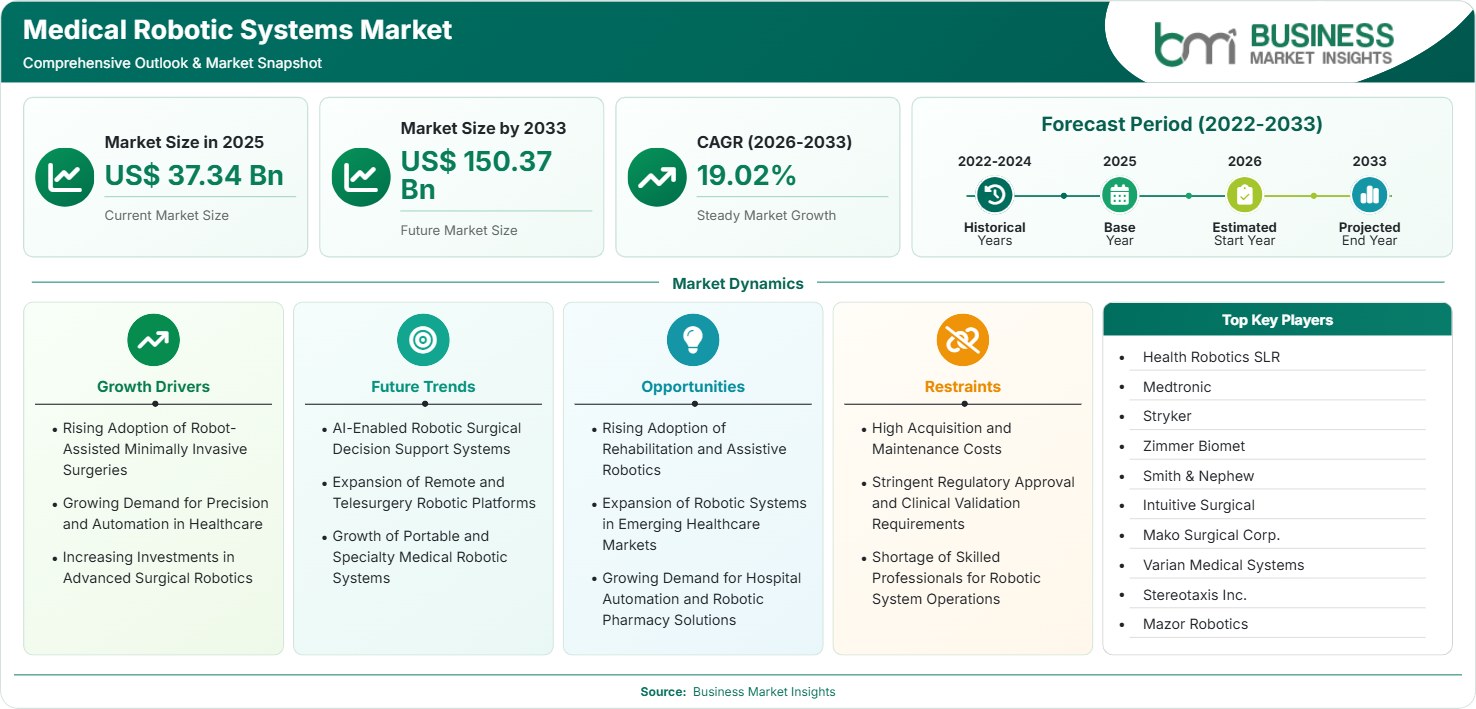
The Medical Robotic Systems Market size was valued at US$ 37.34 Billion in 2025 and is projected to reach US$ 150.37 Billion by 2033, growing at a CAGR of 19.02% during 2026–2033. Rising adoption of minimally invasive surgical procedures, increasing demand for precision-based healthcare technologies, growing investments in robotic-assisted surgery, and expanding applications of automation in rehabilitation and patient care are supporting market growth globally.

Report Coverage
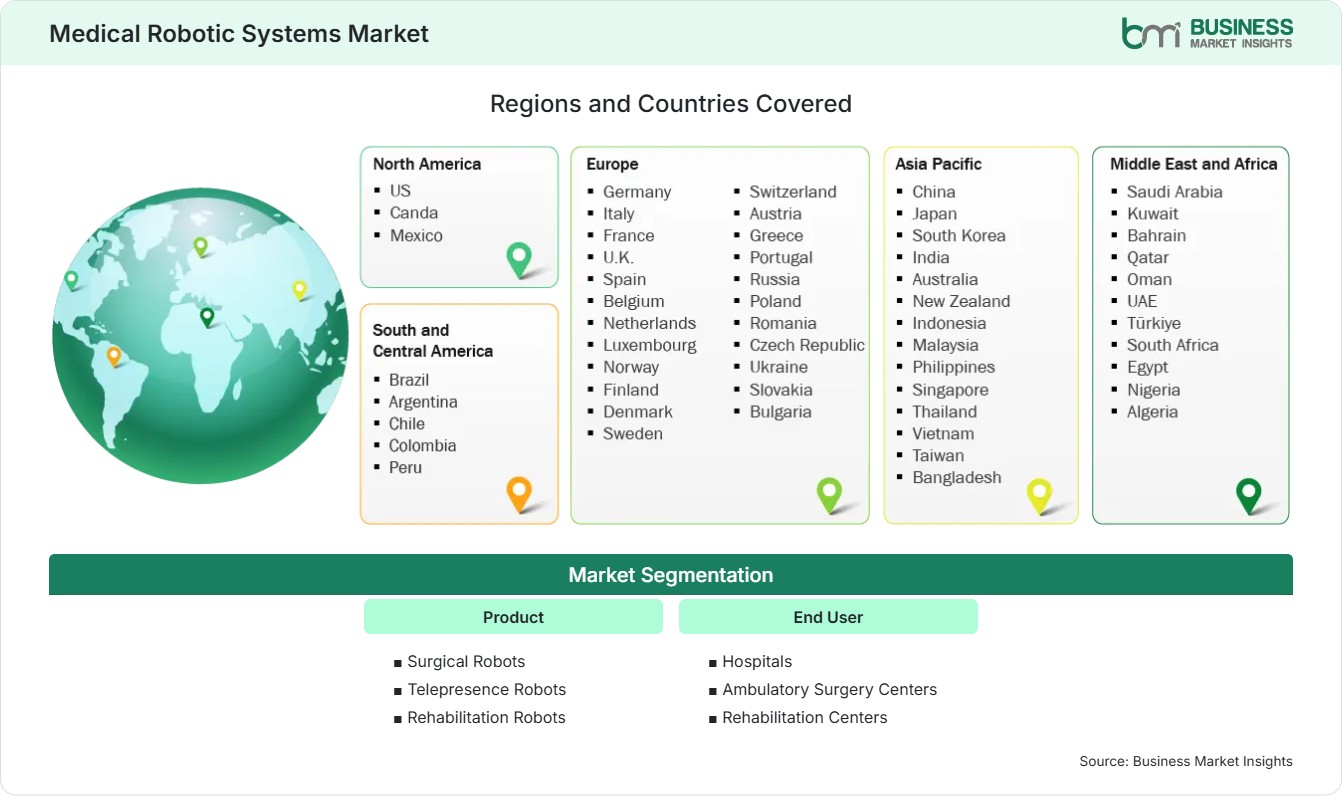
  • Product: Surgical Robots, Telepresence Robots, Rehabilitation Robots
  • End User: Hospitals, Ambulatory Surgery Centers, Rehabilitation Centers
US$ 37.34 Bn Market size in 2025
US$ 150.37 Bn Market Size by 2033
19.02% CAGR, 2026 - 2033
2026-2033 Forecast Period

01 AI Overview

Medical Robotic Systems Market Summary

  • North America Region: North America holds a market share of 39%–42% in 2025, growing with a CAGR of 18.2%–19.0% during 2026–2033. Strong healthcare infrastructure, increasing adoption of robotic-assisted surgical systems, and substantial spending on advanced medical technologies continue supporting regional leadership. The U.S. market is expected to register a CAGR of 18.4%–19.2%.
  • Fastest Growing Region: Asia Pacific accounts for 22%–25% share in 2025 and is projected to grow at a CAGR of 20.5%–21.3% through 2033. Expanding healthcare infrastructure, increasing healthcare expenditure, growing medical tourism, and rising adoption of advanced treatment technologies continue driving regional growth.
  • Leading Segment: Surgical Robots represent 62%–65% share in 2025 and are expected to grow at a CAGR of 19.0%–19.8% through 2033. Growing demand for minimally invasive procedures and improved surgical precision continues supporting segment dominance.
  • High Growth Segment: Hospitals account for 68%–71% share in 2025 and are forecast to grow at a CAGR of 19.4%–20.2% during 2026–2033. Increasing installation of robotic-assisted surgical systems and expansion of advanced healthcare facilities continue accelerating growth.
  • Key Market Opportunity: Expansion of robotic-assisted surgery platforms, AI-powered medical robotics, remote healthcare services, and rehabilitation technologies is creating substantial growth opportunities.
  • Major Market Players: Health Robotics SLR, Medtronic, Stryker, Zimmer Biomet, Smith & Nephew, Intuitive Surgical, Mako Surgical Corp., Varian Medical Systems, Stereotaxis Inc., and Mazor Robotics.
02 Strategic Insights

Medical Robotic Systems Market: Strategic Insights

Medical Robotic Systems Market Strategic Framework
FREE PDF
Request your free sample
Request free sample
03 Stakeholder View

Key Takeaways

  • Surgical robots remain the largest product segment due to strong demand for minimally invasive and precision-based procedures.
  • Hospitals continue representing the dominant end-user category because of their extensive adoption of robotic surgical platforms.
  • Technological advancements in artificial intelligence and robotic navigation systems are improving clinical outcomes.
  • Healthcare providers are increasingly investing in robotic solutions to enhance procedural efficiency and patient safety.
  • Rehabilitation robotics is gaining traction due to growing demand for advanced physical therapy solutions.
  • North America maintains medical robotic systems market leadership through strong healthcare infrastructure and high technology adoption.
  • Asia Pacific is projected to experience the fastest growth owing to healthcare modernization and rising investments in advanced medical equipment.
  • Expansion of remote healthcare, robotic-assisted interventions, and AI-enabled surgical systems is expected to create significant future opportunities.
04 Geographic Outlook

Medical Robotic Systems Market Regional Highlights

North America Medical Robotic Systems Market

North America accounts for 39%–42% Medical Robotic Systems Market share in 2025 and is projected to grow at a CAGR of 18.2%–19.0% through 2033. Strong healthcare infrastructure, increasing adoption of minimally invasive procedures, and rising investments in medical innovation continue supporting regional leadership.

  • Hospitals are increasingly adopting robotic-assisted surgical systems across multiple specialties.
  • Growing prevalence of chronic diseases is supporting demand for advanced treatment technologies.
  • Healthcare providers continue investing in precision surgical platforms.
  • Favorable reimbursement environments continue encouraging technology adoption.
  • Strong research and development capabilities support ongoing innovation.
  • Expansion of AI-integrated robotic systems is creating additional growth opportunities.

US Medical Robotic Systems Market

The United States contributes approximately 86%–90% of North American revenue and is expected to register a CAGR of 18.4%–19.2% through 2033. High healthcare expenditure and widespread deployment of advanced robotic technologies continue supporting market leadership.

  • Healthcare systems continue adopting robotic-assisted surgery to improve clinical outcomes.
  • Medical technology companies remain highly active in product innovation.
  • Robotic systems are increasingly utilized across oncology, orthopedics, and cardiovascular procedures.
  • Investment in digital healthcare technologies continues accelerating adoption.
  • Strong clinical research activity supports continued market expansion.

Europe Medical Robotic Systems Market

Europe represents 25%–28% of global revenue in 2025 and is anticipated to expand at a CAGR of 18.6%–19.4% through 2033. Growing healthcare modernization, increasing adoption of robotic surgery, and rising demand for advanced patient care technologies continue supporting regional growth. Germany remains the leading market while Poland demonstrates stronger growth momentum.

  • Germany continues leading regional adoption through advanced healthcare infrastructure.
  • Poland is among the fastest-growing markets and is estimated to register a CAGR of 20.0%–20.8% during the forecast period.
  • Healthcare providers are increasingly investing in robotic-assisted treatment technologies.
  • Demand for minimally invasive surgery continues expanding.
  • Rehabilitation robotics is witnessing greater adoption across healthcare facilities.
  • Innovation in medical automation continues supporting long-term growth.

Asia Pacific Medical Robotic Systems Market

Asia Pacific accounts for 22%–25% of global revenue in 2025 and is expected to achieve the fastest CAGR of 20.5%–21.3% through 2033. Rapid healthcare infrastructure development, increasing medical tourism, growing healthcare spending, and rising adoption of advanced treatment technologies continue supporting strong medical robotic systems market growth.

  • China remains the largest regional market due to extensive healthcare investments and technological advancements.
  • India is projected to achieve approximately 21.5%–22.3% CAGR, supported by hospital modernization and growing adoption of robotic procedures.
  • Healthcare providers are expanding access to robotic-assisted surgeries.
  • Demand for advanced rehabilitation systems continues increasing.
  • Public and private healthcare investments are strengthening technology adoption.
  • Growing awareness regarding minimally invasive treatments is driving market demand.

Rest of World Medical Robotic Systems Market

Rest of World accounts for 8%–11% of global revenue in 2025 and is projected to expand at a CAGR of 18.5%–19.3% through 2033. Improving healthcare infrastructure, increasing investment in advanced medical technologies, and growing demand for quality healthcare services continue supporting medical robotic systems market growth.

  • Brazil continues generating demand through healthcare modernization initiatives.
  • The UAE is witnessing increased investment in advanced surgical technologies.
  • Saudi Arabia is expected to achieve approximately 19.6%–20.4% CAGR through 2033, supported by healthcare transformation programs.
  • Hospitals are increasingly adopting robotic-assisted solutions.
  • Demand for high-precision surgical procedures continues rising.
  • Government investments are supporting long-term healthcare technology development.
Global Market Geography
FREE PDF
Request your free sample
Request free sample
05 Segment Analysis

Medical Robotic Systems Market Segmentation

Product

The product segment represents the core technology categories within the medical robotic systems industry, encompassing robotic platforms designed to improve surgical outcomes, support patient rehabilitation, and facilitate remote healthcare delivery. The segment accounts for approximately 62%–65% share in 2025 and is projected to grow at a CAGR of 19.0%–19.8% through 2033. The expanding Medical Robotic Systems Market scope is supported by increasing adoption of minimally invasive procedures, rising healthcare automation, growing investments in digital healthcare technologies, and continuous advancements in robotic-assisted clinical systems.

  • Surgical Robots: Surgical robots remain the dominant segment due to their extensive use in urology, gynecology, orthopedics, neurosurgery, cardiology, and general surgery. These systems provide enhanced precision, improved visualization, reduced surgical trauma, and shorter patient recovery periods. Hospitals continue increasing investments in robotic-assisted surgery platforms to improve procedural outcomes and operational efficiency.
  • Telepresence Robots: Telepresence robots are gaining popularity as healthcare providers focus on expanding remote healthcare capabilities. These solutions allow physicians to communicate with patients, monitor clinical conditions, and collaborate with healthcare teams while reducing geographical barriers and improving accessibility to specialized medical expertise.
  • Rehabilitation Robots: Rehabilitation robots are increasingly utilized for physical therapy, neurological recovery, stroke rehabilitation, and mobility enhancement programs. Growing demand for long-term rehabilitation support and rising incidence of musculoskeletal and neurological disorders continue supporting adoption across healthcare facilities.

End User

End-user adoption remains a critical determinant of market growth as healthcare providers increasingly integrate robotic technologies into clinical workflows. This segment accounts for approximately 68%–71% share in 2025 and is expected to register a CAGR of 19.4%–20.2% through 2033. Current Medical Robotic Systems Market trends indicate expanding deployment across hospitals, ambulatory care facilities, and rehabilitation centers seeking improved patient outcomes and operational productivity.

  • Hospitals: Hospitals remain the largest end-user segment due to extensive adoption of robotic-assisted surgery systems, advanced imaging-guided procedures, automated pharmacy solutions, and integrated healthcare technologies. Large healthcare institutions continue investing heavily in robotic platforms to strengthen clinical capabilities and improve treatment outcomes.
  • Ambulatory Surgery Centers: Ambulatory surgery centers are increasingly implementing robotic technologies to enhance precision, reduce procedure times, and support growing demand for minimally invasive outpatient procedures. Cost efficiency and improved patient throughput continue driving adoption.
  • Rehabilitation Centers: Rehabilitation centers continue expanding their use of robotic therapy systems to improve mobility training, neurological rehabilitation, and physical recovery outcomes. Increasing patient volumes and greater emphasis on personalized rehabilitation programs are strengthening demand for advanced robotic solutions.
06 Market Forces

Medical Robotic Systems Market Dynamics

Key Market Drivers

Rising Adoption of Robot-Assisted Minimally Invasive Surgeries

The healthcare industry's growing focus on minimally invasive procedures continues serving as one of the strongest drivers of the medical robotic systems market. Robotic-assisted surgeries offer numerous advantages compared with traditional open procedures, including smaller incisions, reduced blood loss, lower complication rates, shorter hospital stays, and faster patient recovery. Surgeons increasingly utilize robotic platforms to perform complex interventions with improved dexterity, visualization, and precision. Technological advancements in robotic navigation, imaging integration, and real-time surgical guidance are further improving procedural outcomes. Hospitals also recognize the operational benefits associated with robotic systems, including enhanced surgical consistency and improved patient satisfaction. As healthcare providers continue prioritizing value-based care and superior clinical outcomes, demand for robotic-assisted minimally invasive surgery systems is expected to increase substantially throughout the forecast period.

Growing Demand for Precision and Automation in Healthcare

The need for precision medicine and automation in the modern-day healthcare environment is increasingly becoming prominent. The robotic medical system helps health practitioners perform their medical procedures accurately and lowers the extent of variability. Healthcare institutions are integrating robots in order to enhance efficiency, maximize resource utilization, and adhere to the requirements of patient safety regulations. Automation helps handle repetitive tasks in healthcare, such as medication management, imaging, surgery, and other areas, enabling healthcare professionals to devote more time to critical activities.

Increasing Investments in Advanced Surgical Robotics

Firms involved in the provision of medical technology, hospitals, and investors continue to spend significant amounts on the creation and deployment of highly sophisticated surgical robot platforms. The competition among firms has led to innovations in surgical robot systems meant for various clinical specialties such as orthopedic, cardiovascular, oncology, neurology, and minimally invasive surgeries. Robots have now become a key asset to hospitals since they are being used to improve their ability to attract patients and offer services. Furthermore, technological innovations have enhanced the system's capabilities and made it more efficient. The development of advanced robots capable of operating with higher precision is still ongoing in research centers and commercial entities.

Key Market Opportunities

Rising Adoption of Rehabilitation and Assistive Robotics

Increasing cases of neurological disorders, stroke impairments, musculoskeletal diseases, and age-related mobility issues create great business potential for rehabilitation robotics. More and more healthcare practitioners use robotic devices for rehabilitation purposes to provide their patients with repetitive and personalized treatment programs. Moreover, the use of robotic technology helps to enhance the efficiency of the treatment, its speed, and promotes patients’ mobility improvement. In addition, assistive robotic systems have become popular among healthcare providers seeking innovations that promote patient independence and improve patients' quality of life.

Expansion of Robotic Systems in Emerging Healthcare Markets

The emerging economies are still offering growth opportunities as a result of advancements in the health sector through the development of infrastructure for hospitals and development in the medical equipment and technology industry. The health care sector in Asia, Latin America, Middle East, and some regions in Africa is looking for means by which it will be able to provide improved treatment while dealing with the issue of increased number of patients. This sector is making considerable investments in terms of digital health care infrastructure and technology-enabled medical services.

Growing Demand for Hospital Automation and Robotic Pharmacy Solutions

Hospitals are increasingly implementing automation technologies to improve operational efficiency, reduce medication errors, and optimize resource management. Robotic pharmacy systems, automated dispensing solutions, and healthcare logistics robotics are becoming critical components of modern healthcare infrastructure. These technologies support improved medication management, inventory control, and workflow automation while reducing labor-intensive manual processes. Long-term Medical Robotic Systems Market Forecasts remain favorable as healthcare providers continue prioritizing efficiency, patient safety, and cost optimization through advanced automation technologies.

Market Restraints and Challenges

High Acquisition and Maintenance Costs

Factor: Medical robotic systems often involve substantial capital expenditure associated with equipment acquisition, installation, staff training, software upgrades, and ongoing maintenance. Advanced surgical platforms require specialized infrastructure and regular servicing to ensure optimal performance and regulatory compliance. Smaller healthcare facilities may face particular challenges in justifying the significant investment required for robotic technology adoption.

Impact: High costs can slow adoption rates, particularly among budget-constrained healthcare providers and facilities located in developing regions. Organizations frequently conduct extensive cost-benefit analyses before investing in robotic systems, potentially delaying purchasing decisions and limiting market penetration in certain segments.

Stringent Regulatory Approval and Clinical Validation Requirements

Factor: Medical robotic systems must undergo rigorous regulatory review processes and extensive clinical validation before receiving approval for commercial use. Manufacturers are required to demonstrate safety, efficacy, reliability, and long-term clinical benefits through comprehensive testing and documentation. Regulatory requirements often vary across jurisdictions, increasing development complexity and market-entry timelines.

Impact: Lengthy approval processes and extensive validation requirements may increase development costs, delay commercialization schedules, and create barriers for new market entrants. Companies must invest considerable resources in regulatory compliance, clinical research, and post-market monitoring activities, influencing overall market dynamics and innovation timelines.

07 Company Analysis

Competitive Landscape

The Medical Robotic Systems Market analysis is characterized by strong competition among surgical robotics developers, medical device manufacturers, rehabilitation technology providers, and healthcare automation companies. Market participants are focusing on robotic-assisted surgery platforms, rehabilitation robotics, AI-enabled navigation systems, automated pharmacy solutions, and minimally invasive treatment technologies to strengthen their market positions. Growing demand for precision medicine, increasing healthcare automation, rising adoption of robot-assisted procedures, and expanding investments in advanced healthcare technologies continue driving innovation across the market. Companies are actively pursuing product enhancements, clinical validation programs, software integration capabilities, and strategic healthcare partnerships to expand their presence in the rapidly evolving medical robotics ecosystem.

Company Name

Overview

Products and Services relevant to this market

Health Robotics SLR

Healthcare automation company specializing in robotic pharmacy and medication management systems.

Robotic pharmacy solutions, medication dispensing systems, healthcare automation technologies, and hospital workflow optimization tools.

Medtronic

Global medical technology company with a broad portfolio of robotic-assisted surgical and healthcare solutions.

Robotic-assisted surgery platforms, navigation technologies, minimally invasive surgical systems, and advanced healthcare technologies.

Stryker

Medical technology company focused on surgical innovation, orthopedics, and robotic-assisted healthcare solutions.

Robotic surgical platforms, orthopedic robotics, navigation systems, joint replacement technologies, and surgical planning solutions.

Zimmer Biomet

Musculoskeletal healthcare company specializing in robotic-assisted orthopedic solutions.

Robotic orthopedic surgery systems, joint replacement technologies, surgical planning software, and healthcare robotics solutions.

Smith & Nephew

Medical technology company focused on orthopedics, sports medicine, and robotic-assisted procedures.

Surgical robotics, orthopedic solutions, digital surgery technologies, and minimally invasive treatment systems.

Intuitive Surgical

Pioneer in robotic-assisted surgery and one of the leading providers of surgical robotic platforms globally.

Robotic-assisted surgical systems, minimally invasive surgery platforms, surgical visualization technologies, and robotic instrumentation.

Mako Surgical Corp.

Robotics-focused healthcare company known for orthopedic surgery technologies.

Robotic-arm assisted surgery systems, orthopedic surgical planning software, and joint replacement technologies.

Varian Medical Systems

Healthcare technology company specializing in cancer treatment and advanced medical systems.

Robotic treatment platforms, oncology technologies, imaging-guided solutions, and precision treatment systems.

Stereotaxis Inc.

Medical robotics company focused on robotic navigation and minimally invasive interventional technologies.

Robotic navigation systems, interventional robotics platforms, electrophysiology solutions, and image-guided treatment technologies.

Mazor Robotics

Medical robotics company specializing in robotic-guided spine and orthopedic surgery solutions.

Robotic guidance platforms, spine surgery technologies, surgical planning software, and robotic-assisted orthopedic solutions.

10 Trust & Transparency

Research Methodology

The market analysis combines proprietary research with secondary data from government agencies, company disclosures, regulatory filings, industry databases and expert interviews. Market estimates are validated through data triangulation, cross-market benchmarking and analyst review.

View Full Research Methodology

11 Questions Answered

Frequently Asked Questions

How are medical robotic systems improving patient outcomes?

Medical robotic systems help improve surgical precision, reduce complications, minimize tissue trauma, shorten hospital stays, support faster recovery, and enhance treatment consistency across a broad range of medical procedures.

What does this medical robotic systems market report cover?

This report covers product analysis, end-user assessment, regional trends, competitive landscape evaluation, market drivers, opportunities, restraints, challenges, and future growth prospects through 2033.

Why do hospitals account for the largest market share?

Hospitals dominate the market because they perform a high volume of surgical procedures, possess the infrastructure necessary to support robotic systems, and continue investing in advanced medical technologies to improve patient outcomes.

Which product segment dominates the market?

Surgical Robots represent the leading segment due to increasing utilization in orthopedic, neurological, cardiovascular, gynecological, and general surgery procedures. Their ability to improve precision and reduce recovery times continues supporting widespread adoption.

What is driving growth in the market?

Rising adoption of robot-assisted minimally invasive surgeries, growing demand for precision and automation in healthcare, increasing investments in advanced surgical robotics, and expanding applications of robotic systems across treatment and rehabilitation settings are major factors driving market growth.

Access the Full Medical Robotic Systems Market Report

Get segment-level forecasts, regional estimates, competitive benchmarking, company profiles and downloadable Excel datasets.

Access the full Medical Robotic Systems Market Report
350 pages PDF & Excel | 2026-08-12