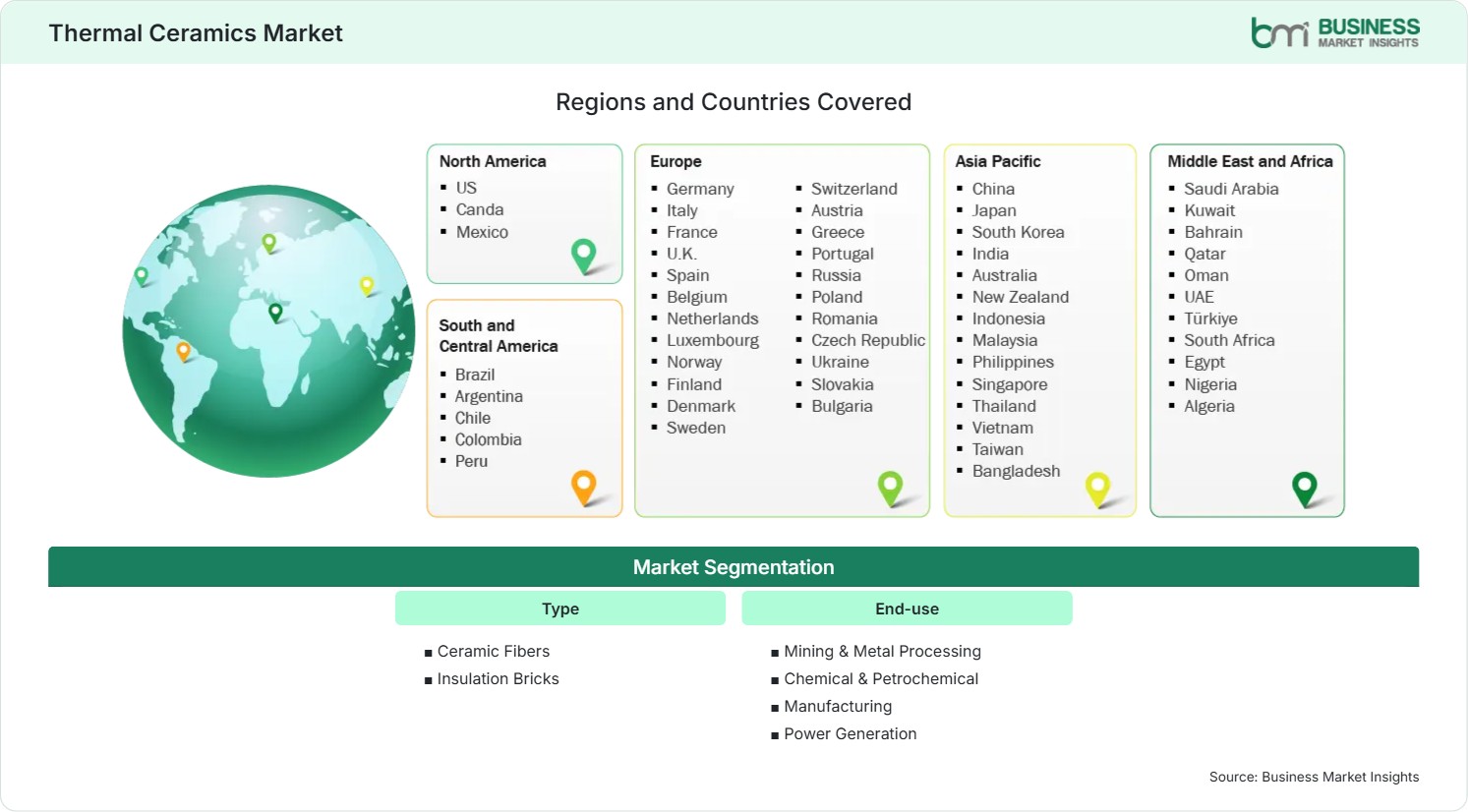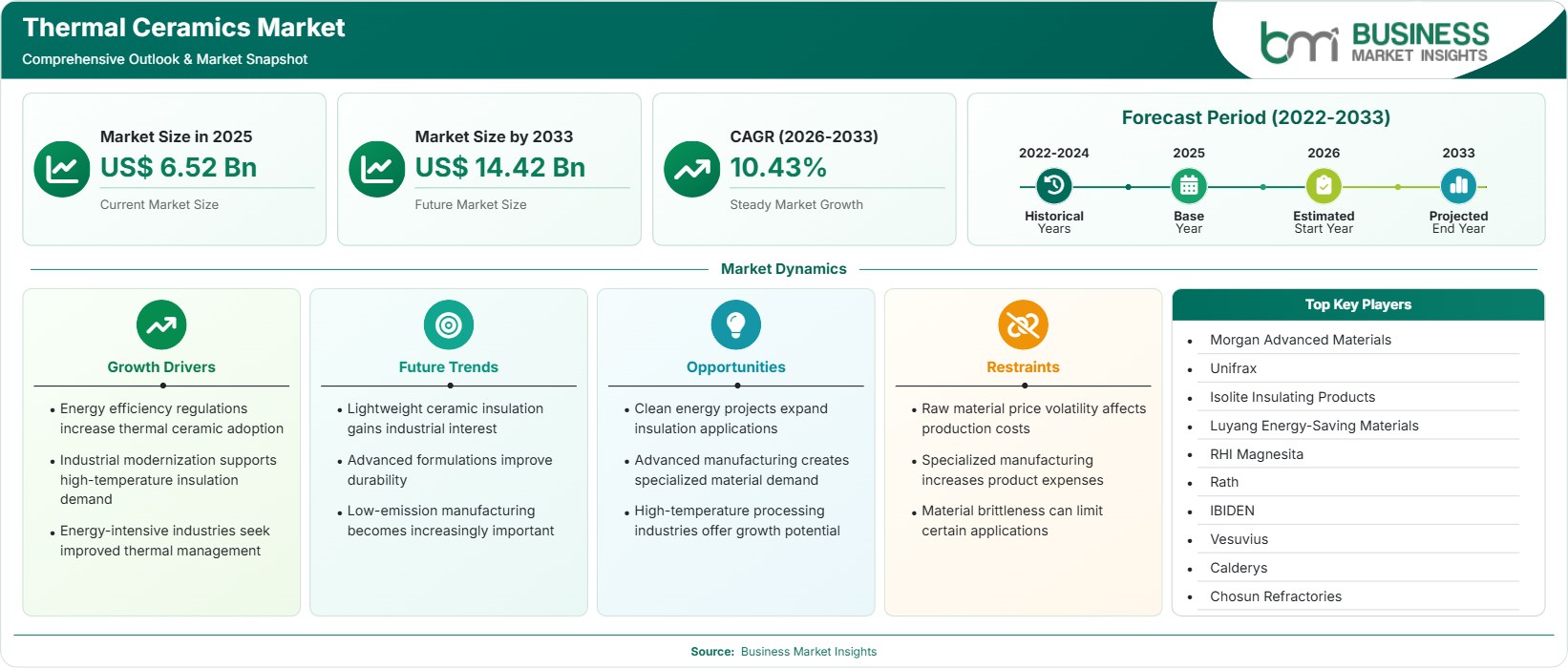
Thermal Ceramics Market Regional Highlights
North America Thermal Ceramics Market
North America represented 31%–34% Thermal Ceramics Market share in 2025 and is forecast to expand at a 9.4%–10.0% CAGR through 2033. Strong industrial infrastructure, increasing energy-efficiency requirements, and continued upgrades to manufacturing facilities support market expansion. Industrial operators are investing in advanced insulation technologies to reduce heat loss, improve energy utilization, and comply with environmental objectives. Petrochemical, metal-processing, and power-generation industries remain key consumers of high-performance thermal ceramic materials throughout the region.
- Industrial modernization projects continue supporting replacement of aging insulation systems with advanced ceramic fiber solutions that improve thermal performance and operational efficiency.
- Energy-intensive industries increasingly adopt high-temperature insulation materials to reduce fuel consumption and improve process economics.
- Environmental compliance initiatives encourage adoption of technologies that support energy conservation and emission-reduction goals.
- Growing investment in clean-energy and industrial infrastructure projects strengthens demand for advanced thermal-management solutions.
- Research and innovation activities continue supporting development of next-generation high-performance thermal ceramic materials.
US Thermal Ceramics Market
The United States accounts for approximately 78%–82% Thermal Ceramics Market share within North America and is projected to grow at a 9.6%–10.2% CAGR during 2026–2033. Expanding industrial investment, modernization of process industries, and increasing focus on energy efficiency contribute to market leadership. Industrial operators continue implementing advanced insulation systems to improve furnace performance, reduce energy expenditure, and enhance reliability across manufacturing and power-generation operations.
- Metal-processing industries remain major consumers of thermal ceramic products due to extensive furnace and kiln operations.
- Power-generation facilities continue upgrading thermal systems to improve efficiency and support long-term operational performance.
- Industrial decarbonization initiatives are encouraging broader deployment of advanced insulation technologies.
- Increased adoption of engineered ceramic materials supports improved process reliability and reduced maintenance requirements.
Europe Thermal Ceramics Market
Europe accounted for 24%–27% Thermal Ceramics Market share in 2025 and is expected to grow at a 9.8%–10.5% CAGR through 2033. Strong regulatory emphasis on industrial energy efficiency, decarbonization initiatives, and modernization of high-temperature processing facilities continue driving regional demand. Germany remains the largest market due to its extensive industrial manufacturing base, while Eastern European countries demonstrate accelerating growth as investments in industrial infrastructure and energy optimization expand. Demand remains particularly robust across steel, glass, and petrochemical applications.
- Germany leads regional demand through extensive deployment of advanced insulation systems across metal-processing, automotive, and heavy manufacturing sectors.
- Poland and the Czech Republic are recording strong growth as industrial investments increase demand for high-temperature insulation technologies.
- Decarbonization initiatives encourage industries to improve thermal efficiency and reduce operational energy consumption.
- Manufacturers increasingly replace conventional refractory systems with lightweight ceramic fiber solutions to improve productivity.
- Investments in clean-energy infrastructure create additional requirements for advanced thermal management technologies.
Asia Pacific Thermal Ceramics Market
Asia Pacific represented 39%–42% share in 2025 and is projected to record the fastest expansion at 11.5%–12.2% CAGR through 2033. Large-scale industrial production, increasing steel output, expanding petrochemical investments, and growing manufacturing activity continue strengthening regional demand. China remains the dominant revenue contributor due to extensive industrial capacity, while India displays the highest growth momentum supported by infrastructure development and industrial expansion programs. Energy-efficiency improvements remain a major demand catalyst throughout the region.
- China benefits from large-scale manufacturing operations, expanding industrial capacity, and sustained investments in industrial modernization projects, supporting continued demand for advanced insulation solutions.
- India demonstrates significant growth potential driven by expanding metal-processing, cement, and power-generation industries, alongside ongoing investments in industrial infrastructure and production capacity.
- Southeast Asian countries continue increasing adoption of advanced thermal insulation materials across manufacturing facilities, supported by industrial expansion, energy-efficiency requirements, and modernization initiatives.
- Energy-cost optimization initiatives encourage deployment of ceramic-fiber-based insulation technologies.
- Industrial capacity expansions support rising demand for high-temperature refractory and insulation products.
Rest of World Thermal Ceramics Market
Rest of World accounted for 7%–10% share in 2025 and is anticipated to expand at a 10.2%–10.9% CAGR through 2033. South and Central America benefit from mining activity, industrial investment, and metallurgical capacity enhancements. The Middle East and Africa region is witnessing growth through petrochemical expansion, refinery upgrades, and energy-sector developments. Brazil remains the leading contributor within Latin America, while Saudi Arabia and the United Arab Emirates provide notable opportunities through industrial diversification initiatives.
- Mining and metal-processing investments continue increasing demand for durable thermal insulation solutions.
- Petrochemical expansion projects support adoption of advanced high-temperature insulation systems.
- Industrial diversification programs stimulate investment in manufacturing and energy infrastructure.
- Refinery modernization efforts encourage deployment of modern refractory and ceramic-fiber materials.
- Growing energy demand supports construction of facilities requiring advanced thermal-management technologies.