
Building Thermal Insulation Market Outlook: Size, Share, Trends, Growth Analysis, Competitive Landscape & Forecast, 2026-2033

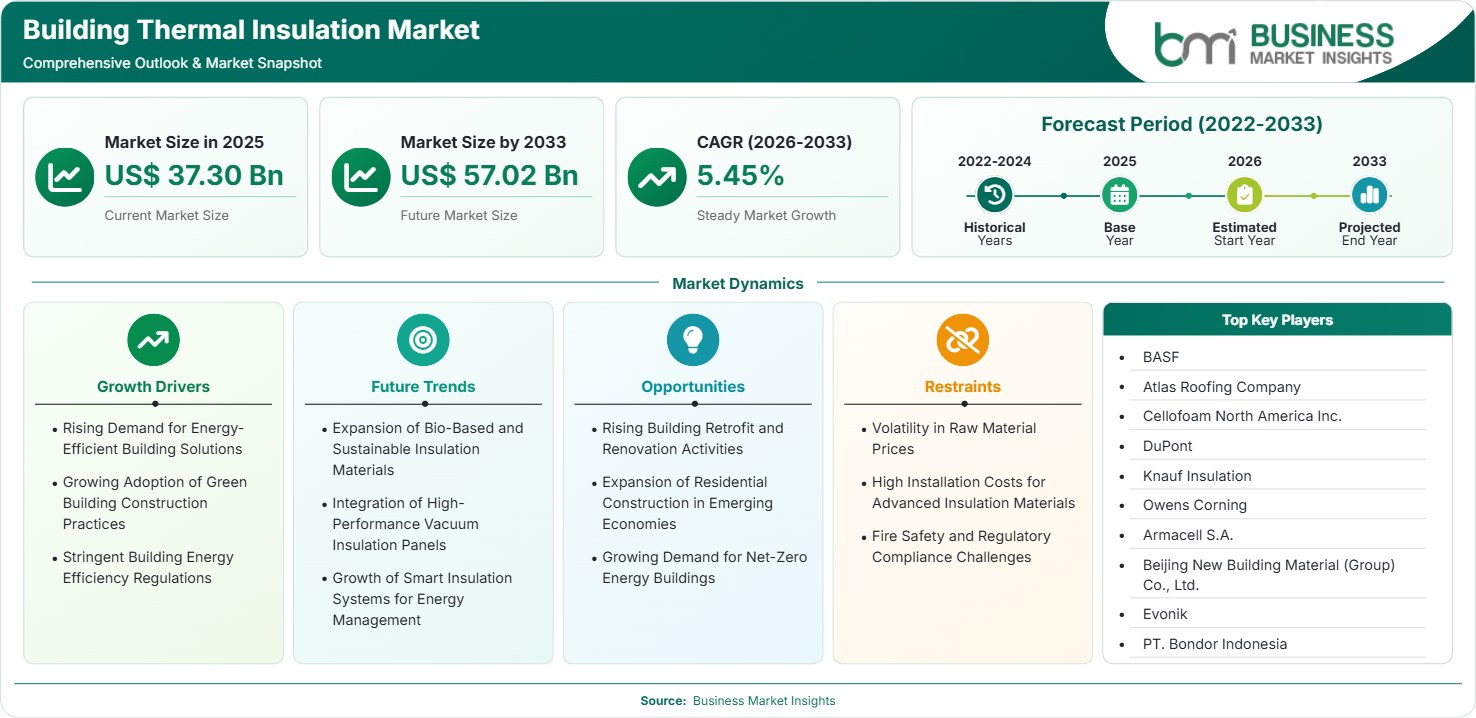
The Building Thermal Insulation Market size was valued at US$ 37.30 Billion in 2025 and is projected to reach US$ 57.02 Billion by 2033, growing at a CAGR of 5.45% during 2026–2033. Rising demand for energy-efficient buildings, increasing adoption of sustainable construction practices, growing regulatory focus on reducing carbon emissions, and expanding investments in green infrastructure are supporting market growth globally.

Report Coverage
  • Material: Mineral Wool , Foamed Plastics , Cellulose, Aerogels, Others
  • Application: Floor & Basement, Wall, Roof & Ceiling
  • EndUse: Residential, Nonresidential
US$ 37.30 Bn Market size in 2025
US$ 57.02 Bn Market Size by 2033
5.45% CAGR, 2026 - 2033
2026-2033 Forecast Period

01 AI Overview

Building Thermal Insulation Market Summary

  • North America Region: North America holds a building thermal insulation market share of 36%–39% in 2025, growing with a CAGR of 5.0%–5.7% during 2026–2033. Strong implementation of energy-efficiency regulations, building retrofitting activities, and increasing demand for sustainable construction materials continue supporting regional leadership. The U.S. market is expected to register a CAGR of 5.2%–5.9%.
  • Fastest Growing Region: Asia Pacific accounts for 27%–30% share in 2025 and is projected to grow at a CAGR of 6.0%–6.7% through 2033. Rapid urbanization, infrastructure development, increasing residential construction, and growing awareness regarding energy conservation continue driving regional growth.
  • Leading Segment: Foamed Plastics represent 42%–45% share in 2025 and are expected to grow at a CAGR of 5.5%–6.2% through 2033. Superior thermal performance, lightweight characteristics, and widespread adoption in residential and commercial construction continue supporting segment dominance.
  • High Growth Segment: Wall Applications account for 38%–41% share in 2025 and are forecast to grow at a CAGR of 5.8%–6.5% during 2026–2033. Increasing emphasis on building energy efficiency and thermal performance continues accelerating segment growth.
  • Key Market Opportunity: Expansion of green building projects, energy-efficient retrofitting initiatives, and development of advanced insulation materials are creating substantial opportunities.
  • Major Market Players: BASF, Atlas Roofing Company, Cellofoam North America Inc., DuPont, Knauf Insulation, Owens Corning, Armacell S.A., Beijing New Building Material (Group) Co., Ltd., Evonik, and PT. Bondor Indonesia.
02 Strategic Insights

Building Thermal Insulation Market: Strategic Insights

Building Thermal Insulation Market Strategic Framework
FREE PDF
Request your free sample
Request free sample
03 Stakeholder View

Key Takeaways

  • Building insulation remains a critical solution for improving energy efficiency and reducing heating and cooling costs.
  • Foamed plastics continue to dominate the market due to superior thermal performance and broad construction industry adoption.
  • Wall insulation remains the largest application segment as building envelopes become increasingly energy efficient.
  • Residential construction continues generating significant demand for insulation products globally.
  • Government regulations focused on sustainability and carbon reduction are supporting building thermal insulation market expansion.
  • North America maintains market leadership through extensive building retrofitting and energy-efficiency initiatives.
  • Asia Pacific is projected to witness the fastest growth due to rapid urbanization and expanding construction activity.
  • Innovation in high-performance insulation materials and sustainable building solutions is expected to create future growth opportunities.
04 Geographic Outlook

Building Thermal Insulation Market Regional Highlights

North America Building Thermal Insulation Market

North America accounts for 36%–39% Building Thermal Insulation Market share in 2025 and is projected to grow at a CAGR of 5.0%–5.7% through 2033. Strong regulatory emphasis on energy conservation, increasing renovation activities, and widespread adoption of energy-efficient construction practices continue supporting regional leadership.

  • Residential and commercial building owners are increasingly investing in insulation upgrades to improve energy performance.
  • Building codes continue emphasizing improved thermal efficiency across new construction projects.
  • Retrofitting initiatives remain a key contributor to insulation demand.
  • Sustainable construction practices continue gaining traction across the region.
  • Growing awareness regarding energy cost savings is supporting market expansion.
  • Technological innovations are improving insulation product performance and durability.

US Building Thermal Insulation Market

The United States contributes approximately 85%–89% of North American revenue and is expected to register a CAGR of 5.2%–5.9% through 2033. Rising investment in energy-efficient buildings, extensive renovation activities, and increasing sustainability initiatives continue supporting building thermal insulation market leadership.

  • Residential construction remains a major source of insulation demand.
  • Commercial property owners are increasingly adopting advanced insulation solutions.
  • Green building certifications continue encouraging product adoption.
  • Energy-efficiency regulations are influencing construction material selection.
  • Investments in building modernization continue supporting growth.

Europe Building Thermal Insulation Market

Europe represents 25%–28% of global revenue in 2025 and is anticipated to expand at a CAGR of 5.3%–6.0% through 2033. Strong environmental regulations, ambitious carbon reduction targets, and increasing adoption of sustainable building technologies continue supporting regional growth. Germany remains the leading market while Poland demonstrates stronger growth momentum.

  • Germany continues leading regional demand through strong construction and renovation activity.
  • Poland is among the fastest-growing markets and is estimated to register a CAGR of 6.1%–6.8% during the forecast period.
  • Energy-efficient building renovation programs continue supporting insulation demand.
  • Sustainable construction materials are gaining broader market acceptance.
  • Carbon reduction objectives are encouraging investments in thermal efficiency.
  • Advanced insulation technologies continue attracting industry attention.

Asia Pacific Building Thermal Insulation Market

Asia Pacific accounts for 27%–30% of global revenue in 2025 and is expected to achieve the fastest CAGR of 6.0%–6.7% through 2033. Rapid urbanization, infrastructure development, rising residential construction, and increasing awareness regarding energy conservation continue supporting strong building thermal insulation market growth.

  • China remains the largest regional market due to extensive construction activity and urban development.
  • India is projected to achieve approximately 6.7%–7.4% CAGR, supported by housing development and infrastructure expansion.
  • Governments are increasingly promoting energy-efficient building practices.
  • Commercial construction growth continues generating significant insulation demand.
  • Rising energy costs are encouraging broader adoption of thermal insulation solutions.
  • Green building initiatives continue creating new opportunities across the region.

Rest of World Building Thermal Insulation Market

Rest of World accounts for 8%–11% of global revenue in 2025 and is projected to expand at a CAGR of 5.2%–5.9% through 2033. Growing construction activity, infrastructure modernization, and increasing attention to energy efficiency continue supporting market growth.

  • Brazil continues generating demand through residential and commercial construction projects.
  • The UAE is witnessing increased adoption of thermal insulation solutions in sustainable building projects.
  • Saudi Arabia is expected to achieve approximately 6.0%–6.7% CAGR through 2033, supported by major infrastructure developments.
  • Commercial construction remains a key demand generator.
  • Energy conservation initiatives are encouraging insulation adoption.
  • Sustainable development projects continue supporting long-term market growth.
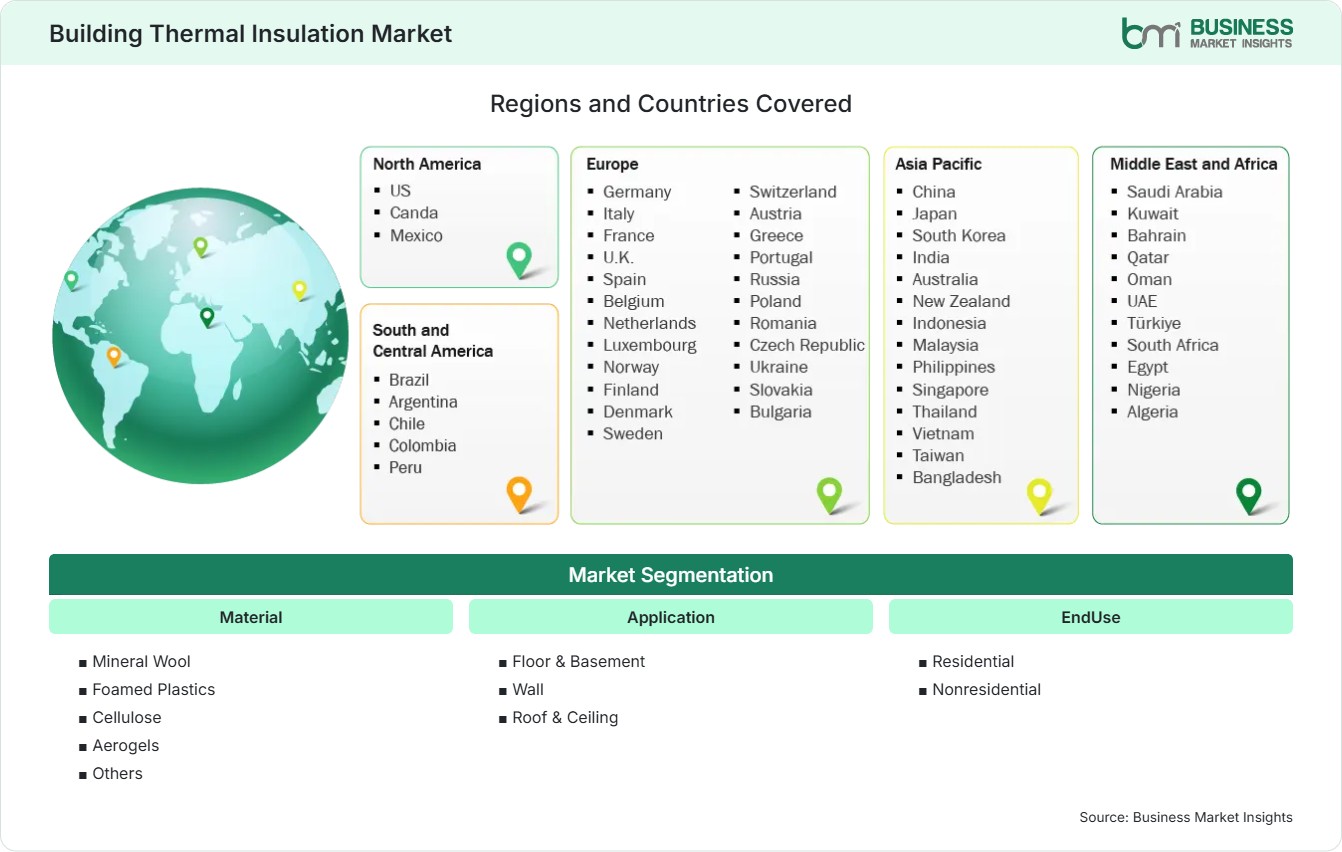
Global Market Geography
FREE PDF
Request your free sample
Request free sample
05 Segment Analysis

Building Thermal Insulation Market Segmentation

Material

The material segment forms the foundation of the building thermal insulation industry, determining thermal performance, energy efficiency, fire resistance, moisture protection, and long-term building sustainability. The segment accounts for approximately 42%–45% share in 2025 and is projected to grow at a CAGR of 5.5%–6.2% through 2033. The expanding Building Thermal Insulation Market scope is supported by growing demand for energy-efficient buildings, increasing investments in sustainable construction materials, regulatory emphasis on reducing building energy consumption, and rising adoption of green building standards globally.

  • Mineral Wool (Glass Wool, Stone Wool): Mineral wool remains widely utilized due to its excellent thermal insulation properties, fire resistance, sound absorption capabilities, and long service life. Its adoption is particularly strong across commercial, industrial, and multi-family residential buildings.
  • Foamed Plastics (Expanded Polystyrene [EPS], Extruded Polystyrene [XPS], Polyurethane [PU], Polyisocyanurate [PIR], and Other Foamed Plastics): Foamed plastics represent the leading segment owing to their superior insulation performance, lightweight structure, moisture resistance, and ease of installation. These materials are extensively used in walls, roofs, flooring, and building envelopes.
  • Cellulose: Cellulose insulation is increasingly gaining traction as a sustainable alternative due to its recycled content, environmental benefits, and growing use in energy-efficient residential construction.
  • Aerogels: Aerogel-based insulation materials are witnessing growing interest because of their exceptional thermal resistance and suitability for space-constrained applications requiring high insulation performance.
  • Others: Additional materials include natural fibers, phenolic foam, fiberglass variants, vacuum insulation panels, and advanced hybrid insulation products designed for specialized building requirements.

Application

Application diversity continues supporting demand for thermal insulation solutions across all critical building structures. This segment accounts for approximately 38%–41% share in 2025 and is expected to register a CAGR of 5.8%–6.5% through 2033. Current Building Thermal Insulation Market trends indicate increasing insulation adoption across building envelopes to improve energy performance and occupant comfort.

  • Floor & Basement: Floor and basement insulation continues gaining importance for reducing heat loss, improving indoor comfort, and enhancing energy efficiency in residential and commercial properties.
  • Wall: Wall applications represent the dominant segment due to their significant contribution to overall building thermal performance. Exterior and cavity wall insulation solutions are increasingly adopted to reduce heating and cooling energy requirements.
  • Roof & Ceiling: Roof and ceiling insulation remains essential for controlling heat transfer, reducing energy consumption, and maintaining indoor temperature stability across climate conditions.

End-Use

End-use industries continue expanding thermal insulation adoption as building owners increasingly prioritize sustainability, energy savings, and regulatory compliance. This segment accounts for approximately 55%–58% share in 2025 and is projected to grow at a CAGR of 5.4%–6.1% through 2033.

  • Residential: Residential buildings represent the leading segment due to growing housing construction activities, increasing renovation projects, rising energy costs, and heightened consumer awareness regarding energy-efficient homes.
  • Non-residential: Commercial offices, educational institutions, healthcare facilities, industrial buildings, hospitality properties, and government infrastructure continue contributing significantly to thermal insulation demand.
06 Market Forces

Building Thermal Insulation Market Dynamics

Key Market Drivers

Rising Demand for Energy-Efficient Building Solutions

Energy Efficiency has emerged as one of the most prominent concerns in the worldwide construction industry. There is a rising trend towards finding solutions that can cut down on energy usage and increase sustainability along with operating efficiency. The thermal insulation materials have an important role to play in reducing the heat exchange between the indoor and outdoor environment by cutting down the usage of air conditioning and heating systems throughout the year. There is an increasing trend towards the usage of insulation material owing to the rising prices of energy and awareness about the savings in utilities in the long term. There is a rising focus on comfort and environmental performance of buildings among the residents and commercial buildings as well.

Growing Adoption of Green Building Construction Practices

The expansion of green building construction is significantly supporting demand for building thermal insulation materials worldwide. Developers are increasingly pursuing sustainable building certifications and environmentally responsible construction methodologies to meet evolving regulatory requirements and market expectations. Thermal insulation contributes directly to improved building performance by reducing energy consumption, lowering emissions, and supporting long-term sustainability objectives. Governments, investors, and property owners continue prioritizing environmentally friendly construction approaches that enhance resource efficiency and building resilience. In addition, corporate sustainability commitments are encouraging broader implementation of green building technologies across commercial real estate developments. As sustainable construction becomes increasingly mainstream, insulation manufacturers are benefiting from strong demand for high-performance and environmentally responsible products.

Stringent Building Energy Efficiency Regulations

Governments worldwide continue introducing stricter energy-efficiency standards aimed at reducing environmental impacts associated with buildings. Building codes increasingly require higher insulation performance levels to support national energy conservation and climate objectives. Regulatory frameworks covering residential, commercial, and public-sector construction projects are encouraging the use of advanced insulation materials capable of significantly reducing energy losses. Compliance with these standards often necessitates upgrades to existing structures as well as enhanced thermal performance in new developments. As regulations continue evolving and enforcement becomes more rigorous, insulation adoption is expected to increase across a broad range of building categories, supporting long-term market expansion.

Key Market Opportunities

Rising Building Retrofit and Renovation Activities

Building retrofit and renovation projects represent one of the most significant opportunities in the thermal insulation market. A large proportion of existing building stock was constructed before modern energy-efficiency standards were implemented, creating substantial potential for insulation upgrades. Governments and utility organizations increasingly support energy-retrofit programs designed to improve building performance and reduce carbon emissions. Property owners are also investing in renovation projects to lower energy expenses and improve asset value. Thermal insulation upgrades often provide attractive returns through reduced heating and cooling costs, making them a key component of renovation strategies. Continued investment in building modernization initiatives is expected to create sustained growth opportunities for insulation suppliers.

Expansion of Residential Construction in Emerging Economies

Rapid urbanization, population growth, and economic development across emerging markets continue driving residential construction activity. Expanding housing demand is generating significant requirements for energy-efficient building materials, including thermal insulation products. Governments in many developing economies are promoting affordable housing development alongside sustainable construction standards, creating a favorable environment for insulation adoption. As living standards improve and consumers become more aware of energy efficiency benefits, demand for insulated residential structures is expected to increase significantly. These trends present considerable opportunities for manufacturers seeking growth in high-potential markets.

Growing Demand for Net-Zero Energy Buildings

Net-zero energy buildings are becoming increasingly important within the global sustainability agenda. These structures are designed to minimize energy consumption while maximizing efficiency through advanced design strategies and renewable energy integration. High-performance insulation systems are essential for achieving net-zero objectives because they significantly reduce heating and cooling requirements. Governments, corporations, and real estate developers continue investing in net-zero projects to support environmental commitments and regulatory compliance. Long-term Building Thermal Insulation Market Forecasts remain favorable as demand for ultra-efficient building envelopes and sustainable construction technologies continues expanding worldwide.

Market Restraints and Challenges

Volatility in Raw Material Prices

Factor: Thermal insulation products rely on various raw materials including petrochemical derivatives, mineral resources, polymers, glass fibers, and specialty chemicals. Fluctuations in energy prices, supply chain disruptions, transportation costs, and geopolitical developments can significantly influence raw material costs. Manufacturers often face challenges in maintaining stable pricing structures and production planning when input costs fluctuate significantly.

Impact: Raw material price volatility may reduce profit margins, increase pricing uncertainty, and affect procurement strategies throughout the value chain. Construction companies and building owners may also experience budgetary challenges when insulation product prices fluctuate, potentially influencing project timelines and purchasing decisions.

High Installation Costs for Advanced Insulation Materials

Factor: Advanced insulation technologies such as aerogels, high-performance foam systems, and specialized sustainable materials often involve higher material and installation costs compared to conventional alternatives. These solutions may require skilled labor, specialized installation techniques, and additional project planning requirements to achieve optimal performance.

Impact: Higher installation costs may discourage adoption among cost-sensitive customers and limit utilization in budget-constrained construction projects. Building owners frequently evaluate upfront costs against long-term energy savings before investing in premium insulation solutions, potentially slowing market penetration in certain segments.

07 Company Analysis

Competitive Landscape

The Building Thermal Insulation Market analysis is characterized by strong competition among global insulation manufacturers, specialty material providers, building products companies, and construction material suppliers. Market participants are focusing on high-performance thermal insulation solutions, energy-efficient building materials, sustainable product development, and advanced insulation technologies to strengthen their market positions. Growing demand for green buildings, increasing building retrofit activities, and stricter energy-efficiency regulations continue driving innovation across the industry. Companies are investing in recyclable insulation materials, low-carbon manufacturing technologies, and advanced thermal performance solutions to address evolving construction and sustainability requirements.

Company Name

Overview

Products and Services relevant to this market

BASF

Global chemical company providing advanced construction materials and insulation technologies.

Polyurethane insulation materials, advanced foam solutions, building energy-efficiency products, and construction chemicals.

Atlas Roofing Company

Manufacturer of roofing and insulation products serving residential and commercial construction sectors.

Polyisocyanurate insulation, roofing insulation systems, wall insulation products, and building envelope solutions.

Cellofoam North America Inc.

Insulation products manufacturer focused on foam-based thermal solutions.

Expanded polystyrene insulation, thermal insulation panels, packaging foams, and construction insulation products.

DuPont

Materials science company providing advanced building and construction solutions.

Building insulation materials, energy-efficiency solutions, foam insulation technologies, and high-performance construction products.

Knauf Insulation

Global insulation manufacturer focused on sustainable thermal and acoustic solutions.

Glass wool insulation, mineral wool products, wall insulation systems, roofing insulation, and energy-efficiency solutions.

Owens Corning

Building materials company specializing in insulation, roofing, and composite solutions.

Fiberglass insulation, foam insulation products, residential insulation systems, and commercial building insulation solutions.

Armacell S.A.

Insulation technology company serving building, industrial, and infrastructure applications.

Flexible foam insulation, thermal insulation systems, building energy-efficiency products, and specialty insulation solutions.

Beijing New Building Material (Group) Co., Ltd.

Construction materials manufacturer serving residential and commercial building markets.

Thermal insulation products, mineral wool systems, building materials, and energy-saving construction solutions.

Evonik

Specialty chemicals company providing advanced materials for insulation and construction applications.

High-performance insulation materials, specialty foams, advanced construction additives, and energy-efficiency technologies.

PT. Bondor Indonesia

Building materials company focused on insulated panels and construction solutions.

Insulated wall panels, roofing panels, thermal insulation systems, and industrial building solutions.

10 Trust & Transparency

Research Methodology

The market analysis combines proprietary research with secondary data from government agencies, company disclosures, regulatory filings, industry databases and expert interviews. Market estimates are validated through data triangulation, cross-market benchmarking and analyst review.

View Full Research Methodology

11 Questions Answered

Frequently Asked Questions

How does thermal insulation contribute to sustainable construction?

Thermal insulation reduces heating and cooling energy requirements, lowers greenhouse gas emissions, improves occupant comfort, supports regulatory compliance, and helps achieve green building and net-zero energy objectives.

What does this Building Thermal Insulation Market Report cover?

This report covers material analysis, application segmentation, end-use assessment, regional trends, competitive landscape evaluation, market dynamics, opportunities, restraints, and growth prospects through 2033.

Why are wall applications the largest segment?

Wall insulation accounts for the largest share because walls represent a major source of heat gain and heat loss in buildings. Improving wall thermal performance significantly reduces overall energy consumption and operating costs.

Which material segment dominates the market?

Foamed Plastics represent the leading segment due to their superior thermal performance, lightweight characteristics, moisture resistance, and broad applicability across residential and commercial construction projects.

What is driving growth in the market?

Rising demand for energy-efficient building solutions, growing adoption of green building construction practices, increasing building retrofit activities, and stringent building energy-efficiency regulations are the primary factors driving market growth.

Access the Full Building Thermal Insulation Market Report

Get segment-level forecasts, regional estimates, competitive benchmarking, company profiles and downloadable Excel datasets.

Access the full Building Thermal Insulation Market Report
350 pages PDF & Excel | 2026-08-12