
Engineering Ceramics Market Outlook: Size, Share, Trends, Growth Analysis, Competitive Landscape & Forecast, 2026-2033

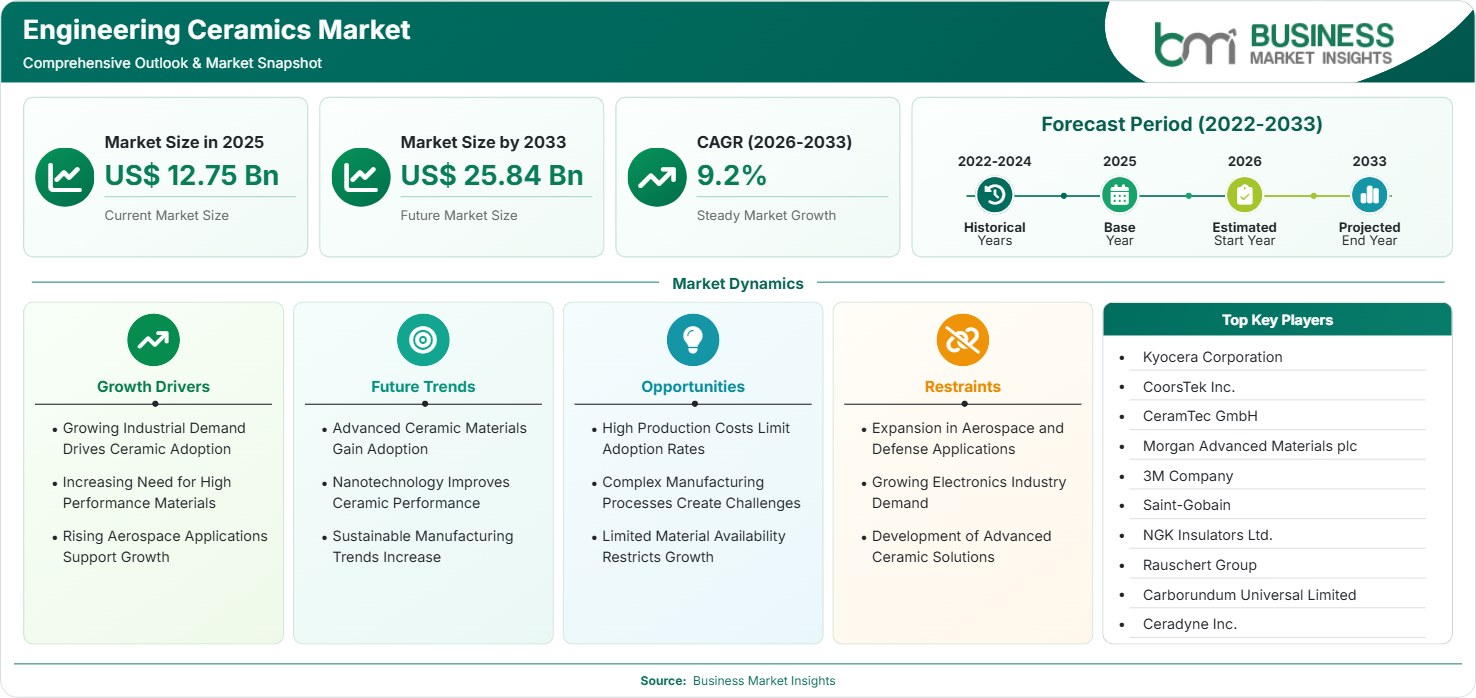
The Engineering Ceramics Market size was valued at US$ 12.75 billion in 2025 and is projected to reach US$ 25.84 billion by 2033, growing at a CAGR of 9.2% during 2026–2033, driven by industrial automation, semiconductor expansion, aerospace material requirements, medical technology advancements, and opportunities in advanced ceramic innovation.

Report Coverage
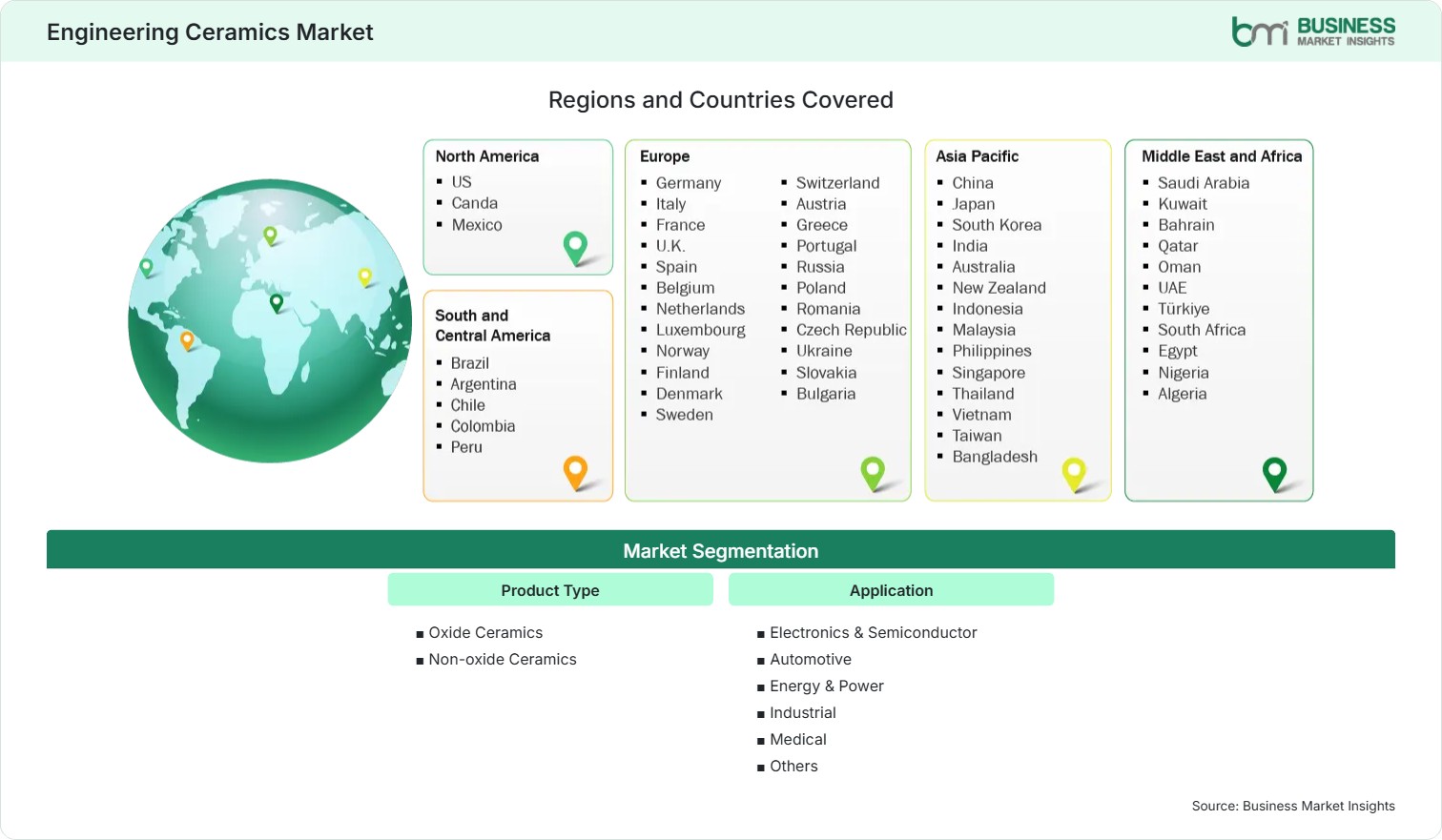
  • Product Type: Oxide Ceramics, Non-oxide Ceramics
  • Application: Electronics & Semiconductor, Automotive, Energy & Power, Industrial, Medical, Others
US$ 12.75 Bn Market size in 2025
US$ 25.84 Bn Market Size by 2033
9.2% CAGR, 2026 - 2033
2026-2033 Forecast Period

01 AI Overview

Engineering Ceramics Market Summary

  • North America Region: North America holds a market share of 28%–31% in 2025, growing with a CAGR of 8%–10% influenced by aerospace manufacturing, semiconductor investments, medical device demand, and advanced industrial applications. The US market demonstrates steady adoption with a CAGR of 8%–10% from 2026–2033, supported by defense programs, electronics manufacturing, and high-performance material requirements.
  • Fastest Growing Region: Asia Pacific holds market share of 38%–41% in 2025, growing with a CAGR of 10%–12% supported by semiconductor manufacturing expansion, automotive electrification, industrial development, and increasing adoption of advanced ceramic components.
  • Leading Segment: Oxide Ceramics holds market share of 55%–58% in 2025, growing with a CAGR of 8%–10% influenced by superior thermal stability, electrical insulation properties, corrosion resistance, and extensive industrial applications.
  • High Growth Segment: Non-oxide Ceramics holds market share of 42%–45% in 2025, growing with a CAGR of 10%–12% driven by high-temperature performance, aerospace applications, semiconductor demand, and advanced engineering requirements.
  • Key Market Opportunity: Growth opportunities are concentrated in aerospace components, semiconductor manufacturing equipment, electric vehicle systems, medical implants, and next-generation ceramic materials requiring enhanced durability and performance.
  • Major Market Players: Kyocera Corporation, CoorsTek Inc., CeramTec GmbH, Morgan Advanced Materials plc, 3M Company, Saint-Gobain, NGK Insulators Ltd., Rauschert Group, Carborundum Universal Limited, Ceradyne Inc.
02 Strategic Insights

Engineering Ceramics Market: Strategic Insights

Engineering Ceramics Market Strategic Framework
FREE PDF
Request your free sample
Request free sample
03 Stakeholder View

Key Takeaways

  • Engineering ceramics are becoming essential materials across high-performance industries due to their ability to withstand extreme temperatures, mechanical stress, corrosion, and electrical challenges.
  • Semiconductor equipment, aerospace systems, medical devices, and automotive technologies represent major application areas offering long-term demand opportunities for ceramic manufacturers.
  • Material innovation is focused on improving toughness, reducing brittleness, enhancing processing efficiency, and developing ceramics suitable for advanced industrial environments.
  • Asia Pacific presents a strong investment opportunity due to semiconductor manufacturing growth, automotive production expansion, and increasing industrial automation across emerging economies.
  • Companies are strengthening market positions through acquisitions, technology partnerships, production expansion, and investments in specialized ceramic manufacturing capabilities.
  • Sustainable manufacturing practices and improved production efficiency are becoming important factors influencing competitiveness among engineering ceramic suppliers.
04 Geographic Outlook

Engineering Ceramics Market Regional Highlights

North America Engineering Ceramics Market

North America accounts for a 28%–31% share in 2025 with a CAGR of 8%–10% during 2026–2033. The region benefits from advanced aerospace capabilities, semiconductor manufacturing investments, defense applications, and medical technology development. The Engineering Ceramics Market share in North America is supported by demand for durable materials in high-performance industrial environments and increasing adoption of advanced manufacturing processes.

  • United States and Canada are expanding ceramic applications through aerospace, defense, electronics, and industrial technology investments.
  • Semiconductor manufacturing growth is increasing demand for ceramic components used in processing equipment and thermal management systems.
  • Aerospace manufacturers are adopting advanced ceramics for lightweight, heat-resistant, and durable component requirements.
  • Medical technology companies are increasing ceramic usage in implants, dental applications, and precision healthcare devices.

US Engineering Ceramics Market

The US holds a 22%–25% share in 2025 with a CAGR of 8%–10% from 2026–2033. The market is supported by aerospace innovation, defense manufacturing, semiconductor investments, and advanced industrial applications. The Engineering Ceramics Market growth in the US is influenced by increasing demand for high-performance materials across critical technology sectors.

  • Defense modernization programs are increasing demand for ceramic armor, thermal components, and specialized engineering materials.
  • Semiconductor investments are creating opportunities for precision ceramic components used in manufacturing equipment.
  • Aerospace companies are adopting advanced ceramics to improve component performance under extreme operating conditions.
  • Research institutions are supporting development of next-generation ceramic materials with enhanced properties.

Europe Engineering Ceramics Market

Europe represents a 24%–27% share in 2025 with a CAGR of 8%–10% between 2026–2033. The region benefits from strong automotive manufacturing, aerospace capabilities, industrial engineering expertise, and medical technology development. Germany, France, and the United Kingdom remain key contributors, while Italy and Switzerland demonstrate growth through specialized manufacturing applications.

  • Germany leads ceramic adoption through automotive engineering, industrial machinery, and advanced manufacturing applications.
  • France is expanding ceramic utilization through aerospace production and defense technology programs.
  • United Kingdom companies are investing in advanced materials supporting aerospace and electronics applications.
  • European manufacturers are adopting ceramics for improved efficiency, durability, and component performance.
  • Medical technology innovation is increasing demand for biocompatible ceramic materials across healthcare applications.

Asia Pacific Engineering Ceramics Market

Asia Pacific dominates the Engineering Ceramics Market with a 38%–41% share in 2025 and a CAGR of 10%–12% during 2026–2033. The region benefits from semiconductor production, electronics manufacturing, automotive expansion, and industrial development. China, Japan, South Korea, and India are driving demand through advanced manufacturing capabilities and technology investments.

  • China maintains leadership through extensive electronics manufacturing, semiconductor production, and industrial ceramic applications.
  • Japan continues developing high-performance ceramic materials for electronics, automotive, and precision engineering sectors.
  • South Korea is expanding ceramic demand through semiconductor and advanced technology manufacturing.
  • India is increasing adoption through industrial growth, automotive production, and infrastructure development.
  • Regional electronics manufacturing expansion supports demand for specialized ceramic components.

Rest of World Engineering Ceramics Market

Rest of World holds a 10%–13% share in 2025 with a CAGR of 8%–10% from 2026–2033. South America and Middle East, and African markets are developing through industrial modernization, energy investments, and healthcare expansion. Brazil, Saudi Arabia, and the United Arab Emirates are emerging markets due to infrastructure development and technology adoption.

  • Brazil is expanding ceramic applications through industrial manufacturing and energy sector development initiatives.
  • Middle Eastern countries are investing in industrial diversification programs supporting advanced material adoption.
  • Saudi Arabia is developing manufacturing capabilities through technology and infrastructure investments.
  • Healthcare modernization is increasing demand for ceramic-based medical components across developing markets.
  • Regional industrial growth is creating opportunities for ceramic suppliers and technology providers.
Global Market Geography
FREE PDF
Request your free sample
Request free sample
05 Segment Analysis

Engineering Ceramics Market Segmentation

Product Type

The product type segment defines ceramic material selection based on performance characteristics, thermal resistance, mechanical strength, and application requirements. The segment accounted for a significant share in 2025 and is projected to expand with a CAGR of 9%–11% between 2026–2034. Adoption of engineering ceramics is increasing across the electronics, aerospace, automotive, and industrial sectors due to demand for materials offering durability, insulation, and operational reliability.

  • Oxide Ceramics: Oxide ceramics are widely used due to high temperature resistance, electrical insulation properties, chemical stability, and suitability for industrial components, electronics applications, medical devices, and wear-resistant applications.
  • Non-oxide Ceramics: Non-oxide ceramics provide exceptional mechanical strength, thermal shock resistance, and high-temperature performance. They are increasingly adopted in aerospace, semiconductor equipment, automotive, and advanced engineering applications.

Application

The application segment demonstrates that engineering ceramics are widely used in industries that require special material characteristics for effective performance. This segment held a considerable market share in 2025 and is forecasted to register a CAGR of 9%–11% during 2026–2034. The Engineering Ceramics Market scope continues to grow as more industries adopt these advanced materials.

  • Electronics & Semiconductor: Electronics and semiconductor industries utilize engineering ceramics for insulating components, processing equipment, substrates, and precision parts requiring thermal stability and electrical performance.
  • Automotive: Automotive applications are increasing through demand for lightweight, durable components, electric vehicle systems, sensors, and high-temperature components supporting vehicle efficiency and electrification.
  • Energy & Power: Energy and power sectors adopt ceramics for insulation systems, protective components, renewable energy equipment, and applications requiring resistance to extreme operating conditions.
  • Industrial: Industrial applications include machinery components, wear-resistant parts, cutting tools, and equipment requiring enhanced durability, reduced maintenance requirements, and improved operational performance.
  • Medical: Medical applications utilize engineering ceramics for implants, dental components, surgical tools, and healthcare devices due to biocompatibility, strength, and chemical resistance.
  • Others: Other applications include aerospace, defense, telecommunications, and specialized engineering uses where advanced ceramics provide improved reliability and performance advantages.
06 Market Forces

Engineering Ceramics Market Dynamics

Key Market Drivers

Growing Industrial Demand Drives Ceramic Adoption

With the increase in manufacturing demand across industries, there is a need for ceramics that can withstand extreme heat, mechanical pressure, and corrosion. Engineering ceramics are increasingly being employed in manufacturing machinery, semiconductors, automobiles, and energy plants because of their superior properties. The engineering ceramics market growth can be attributed to the automation of manufacturing processes, infrastructure development, and the increasing need for reliable parts. To increase the efficiency and longevity of products, industries have been opting for ceramics over conventional materials.

Increasing Need for High Performance Materials

As demand for high-performance materials increases, more engineering ceramics are being used in industries requiring excellent mechanical, thermal, and electrical properties. Industries such as aerospace, electronics, medicine, and automotive require materials that can accommodate the latest technologies and environmental conditions. Recent engineering ceramics market trends indicate increased investment in developing new materials with enhanced toughness, improved processing, and application-oriented formulations. The emphasis in manufacturing is on developing reliable, lightweight ceramics to enable future industrial systems.

Rising Aerospace Applications Support Growth

Advancements in aerospace applications will drive the market as aircraft companies seek lightweight, heat-resistant, and tough materials. Engineering ceramics are utilized in the manufacturing of aerospace parts owing to their ability to withstand high temperatures, wear, and chemical attack. Expansion in aircraft production, modernization of defense systems, and the desire for enhanced fuel efficiency are driving demand for materials. Ceramic manufacturers have been developing advanced solutions for aerospace applications, including thermal and structural systems.

Key Market Opportunities

Expansion in Aerospace and Defense Applications

The growing use of engineering ceramics in aerospace and defense has created substantial opportunities, driven by increased investment by governments and producers in systems requiring high-performance materials. Advantages associated with engineering ceramics include heat resistance, lightweight, and strength, which make them good candidates for aerospace parts and defense technology. Increased aircraft production and modernization have led to increased demand for special ceramics. Producers of custom-engineered ceramics can take advantage of opportunities arising from working with aerospace and defense companies.

Growing Electronics Industry Demand

Increased demand in the electronics industry presents opportunities for engineering ceramic suppliers, as semiconductor manufacturing, electronic products, and communication systems require reliable materials. Engineering ceramics are used as substrates, insulators, and in semiconductor manufacturing equipment and electronic assemblies because of their electrical and thermal conductivity. Increased semiconductor manufacturing capacity in Asia-Pacific, North America, and Europe will drive demand for high-quality ceramic products. Engineering ceramics suppliers that have invested in modern manufacturing techniques and unique ceramic compositions may capitalize on the increased demand in electronics.

Development of Advanced Ceramic Solutions

The creation of novel ceramic solutions can be seen as an opportunity for producers seeking to develop superior material characteristics, novel processing technologies, and design solutions. Research is underway to improve toughness, thermal conductivity, and manufacturing process performance, thereby overcoming drawbacks inherent in traditional ceramics. Advanced ceramics are becoming popular for new applications like electric cars, renewable energy sources, the semiconductor industry, and medical equipment. Investment in research cooperation and mass production of ceramics can help to improve the competitive position of companies.

Market Restraints and Challenges

High Production Costs Limit Adoption Rates

Factor: High production costs associated with raw materials, specialized equipment, precision processing, and quality control requirements create financial challenges for ceramic manufacturers. Impact: High manufacturing costs of engineering ceramics may limit their use by cost-sensitive industries. The use of ceramics requires sophisticated manufacturing techniques that involve high temperatures and advanced machining operations, thereby complicating the process. Firms must adopt manufacturing techniques that can help them enhance their cost structures. Despite offering improved performance characteristics, price considerations can hinder the use of ceramics.

Complex Manufacturing Processes Create Challenges

Factor: Complex manufacturing processes that involve precise formulation, shaping, sintering, and finishing pose production challenges. Impact: The complexity of technology may result in longer development periods, less flexible manufacturing processes, and a requirement for specialist knowledge. Engineering ceramics frequently have very high requirements concerning the quality of the materials needed to ensure consistent mechanical and thermal characteristics. The company needs to be technologically advanced, with a focus on factors such as defect minimization and manufacturing process efficiency. This may prevent other competitors from entering the market.

07 Company Analysis

Competitive Landscape

The competitive environment includes global ceramic manufacturers, advanced material suppliers, and technology-focused companies developing high-performance solutions for industrial, electronics, aerospace, automotive, and medical applications. The Engineering Ceramics Market analysis highlights competition around material innovation, production capabilities, application-specific solutions, and strategic expansion into high-value industries. Leading companies are investing in research, manufacturing capacity, and partnerships to strengthen their positions in advanced ceramic applications.

Company Name

Overview

Products and Services relevant to this market

Kyocera Corporation

Japanese advanced materials company providing ceramic-based components across multiple industries.

Fine ceramics, semiconductor components, electronic parts, industrial ceramic components, and precision solutions.

CoorsTek Inc.

Global technical ceramics manufacturer serving industrial and technology markets.

Engineered ceramic components, semiconductor parts, wear-resistant products, and custom ceramic solutions.

CeramTec GmbH

German manufacturer specializing in advanced ceramic components and applications.

Medical ceramics, industrial ceramics, electronic components, and high-performance ceramic solutions.

Morgan Advanced Materials plc

Global materials technology company developing advanced ceramic and carbon solutions.

Ceramic components, thermal products, electrical insulation materials, and industrial solutions.

3M Company

Diversified technology company offering advanced material products and ceramic-based solutions.

Ceramic abrasives, industrial materials, filtration solutions, and engineered products.

Saint-Gobain

Global materials company producing advanced ceramics for industrial applications.

Ceramic components, refractory materials, abrasives, and high-performance material solutions.

NGK Insulators Ltd.

Japanese manufacturer specializing in ceramic-based industrial and energy products.

Ceramic components, electronic materials, energy systems, and industrial ceramic technologies.

Rauschert Group

German technical ceramics company serving specialized industrial applications.

Ceramic components, electrical insulation products, precision ceramics, and custom solutions.

Carborundum Universal Limited

Indian advanced materials company producing ceramic and abrasive products.

Industrial ceramics, abrasives, ceramic components, and engineered material solutions.

Ceradyne Inc.

Advanced ceramics company focused on specialized ceramic technologies and applications.

Technical ceramics, armor materials, industrial components, and high-performance ceramic products.

08 Industry Activity

Recent Developments

May 2026

CeramTec GmbH presented advanced ceramic substrate solutions for high-performance power electronics at PCIM Expo 2026 in Nuremberg, Germany. The company showcased technical ceramic materials including aluminum oxide (Al₂O₃), aluminum nitride (AlN), silicon nitride (Si₃N₄), and zirconia-toughened alumina (ZTA) substrates, along with ceramic heat sinks designed for applications such as SiC power modules, electric mobility, and energy systems.

September 2025

Kyocera Corporation entered into a joint development agreement with Kyoto Fusioneering Ltd. to develop advanced ceramic materials for next-generation fusion energy plants. The collaboration focuses on silicon carbide composite materials and other high-performance ceramic components, expanding Kyocera’s engineering ceramics applications in advanced energy systems.

June 2025

Morgan Advanced Materials plc conducted its first real-time ceramic sintering research using high-temperature X-ray diffraction (XRD) facilities at Diamond Light Source. The research analyzed the firing behavior of alumina ceramics during the critical sintering process, helping Morgan better understand phase formation and optimize ceramic manufacturing processes while maintaining material performance.

January 2025

NGK Insulators Ltd. initiated joint research with Nagoya University to improve the accuracy of thermal diffusivity evaluation for silicon nitride (Si₃N₄) ceramic substrates. The research aims to enhance evaluation methods for high-performance ceramic substrates used in power electronics, supporting the development of advanced thermal management solutions for semiconductor and electric mobility applications.

10 Trust & Transparency

Research Methodology

The market analysis combines proprietary research with secondary data from government agencies, company disclosures, regulatory filings, industry databases and expert interviews. Market estimates are validated through data triangulation, cross-market benchmarking and analyst review.

View Full Research Methodology

11 Questions Answered

Frequently Asked Questions

How does the Engineering Ceramics Market Report support strategic planning?

The Engineering Ceramics Report provides insights into market trends, competitive strategies, segmentation opportunities, regional developments, and industry dynamics to support investment and business decisions.

How is technology improving ceramic manufacturing?

Manufacturers are adopting advanced processing techniques, precision manufacturing, material engineering, and quality control systems to improve ceramic performance, reliability, and production efficiency. These technological advancements are expected to play a significant role in the engineering ceramics market forecast by enabling the production of high-performance ceramic components with enhanced durability, dimensional accuracy, and cost-effective manufacturing processes.

Which applications offer strong growth opportunities for engineering ceramics?

Semiconductor equipment, aerospace components, electric vehicles, medical devices, renewable energy systems, and advanced industrial machinery represent important growth areas for ceramic adoption.

Why are engineering ceramics preferred over conventional materials?

Engineering ceramics provide advantages such as high temperature resistance, electrical insulation, chemical stability, wear resistance, and longer operational performance in demanding environments.

What factors are driving market growth?

Growth is supported by increasing demand for high-performance materials across aerospace, semiconductor, automotive, medical, and industrial applications requiring thermal stability, strength, and durability.

Access the Full Engineering Ceramics Market Report

Get segment-level forecasts, regional estimates, competitive benchmarking, company profiles and downloadable Excel datasets.

Access the full Engineering Ceramics Market Report
350 pages PDF & Excel | 2026-07-30