
Spinal Muscular Atrophy Treatment Market Outlook: Size, Share, Trends, Growth Analysis, Competitive Landscape & Forecast, 2026-2033

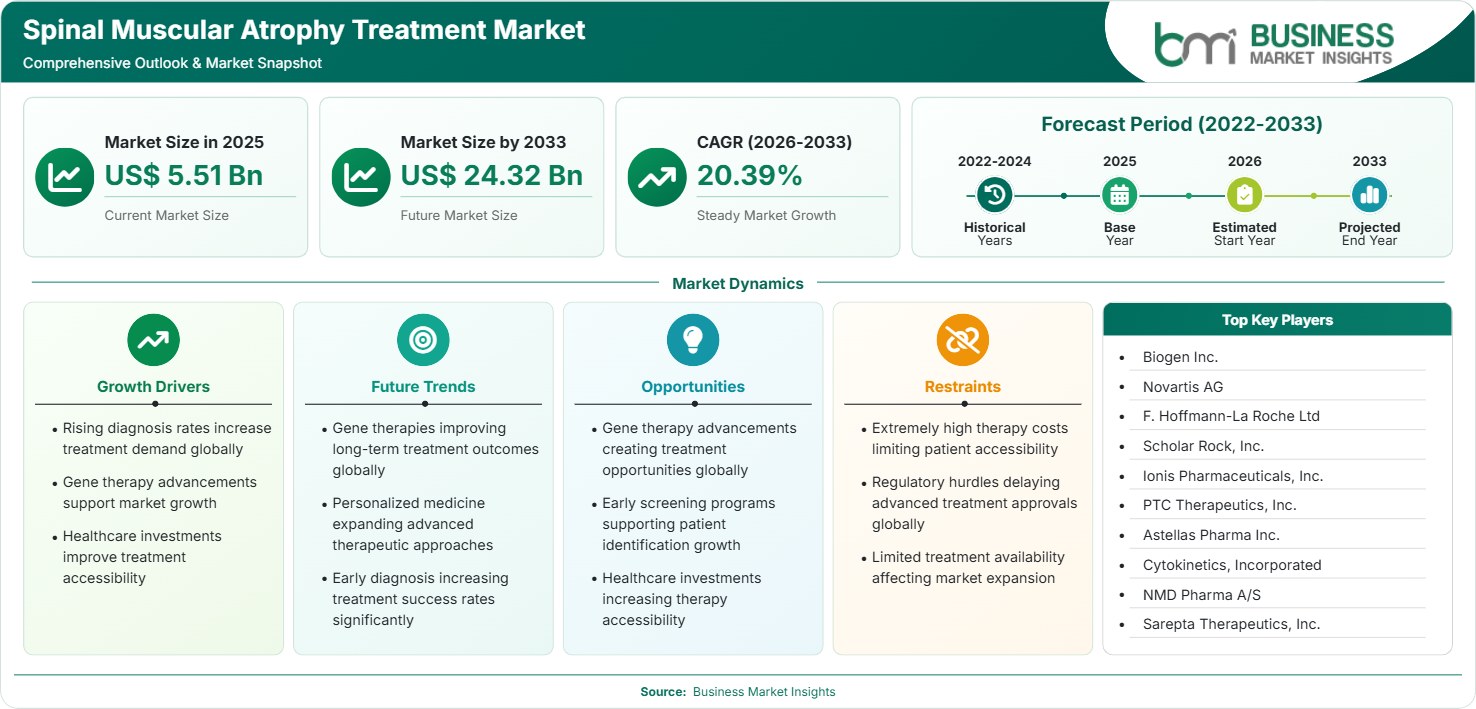
The Spinal Muscular Atrophy Treatment Market size was valued at US$ 5.51 Billion in 2025 and is projected to reach US$ 24.32 Billion by 2033, growing at a CAGR of 20.39% during 2026–2033, driven by earlier diagnosis, disease-modifying therapies, gene replacement, newborn screening, expanded treatment access, and muscle-targeted innovation.

Report Coverage
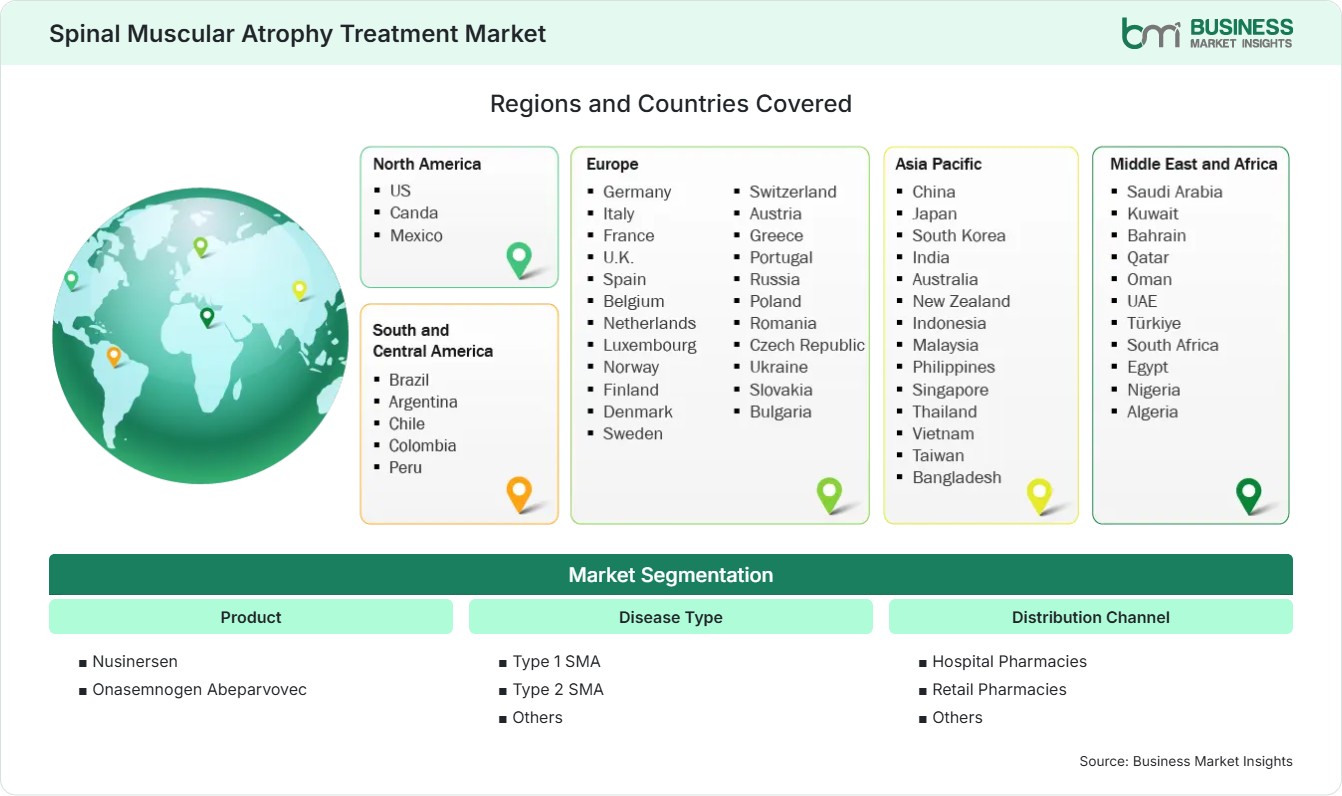
  • Product: Nusinersen, Onasemnogen Abeparvovec
  • Disease Type: Type 1 SMA, Type 2 SMA, Others
  • Distribution Channel: Hospital Pharmacies, Retail Pharmacies, Others
US$ 5.51 Bn Market size in 2025
US$ 24.32 Bn Market Size by 2033
20.39% CAGR, 2026 - 2033
2026-2033 Forecast Period

AI Overview

Spinal Muscular Atrophy Treatment Market Summary

  • North America Region: holds a market share of 46%–50% in 2025, growing with a CAGR of 19%–21%, influenced by newborn screening, reimbursement expansion, specialist centers, gene replacement adoption, clinical research, and advanced patient support programs across major treatment networks.
  • The US market benefits from broad specialist infrastructure, rapid uptake of novel therapies, expanded treatment eligibility, strong reimbursement capabilities, and intensive clinical development, supporting a 19%–21% CAGR through 2033.
  • Fastest Growing Region: Asia Pacific holds a Spinal Muscular Atrophy Treatment Market share of 16%–20% in 2025, growing with a CAGR of 23%–26%, influenced by expanding diagnosis, newborn screening, improving healthcare infrastructure, rising specialist capacity, regulatory modernization, local manufacturing, and broader access to advanced SMA therapies.
  • Leading Segment: Nusinersen holds a market share of 48%–52% in 2025, growing with a CAGR of 18%–20%, supported by established clinical use, expanded treatment experience, high physician familiarity, treatment continuity, improved dosing strategies, and broad availability across developed healthcare systems.
  • High Growth Segment: Onasemnogen Abeparvovec holds a market share of 28%–32% in 2025, growing with a CAGR of 22%–25%, supported by one-time gene replacement, expanded age eligibility, treatment convenience, earlier diagnosis, improved referral pathways, and increasing adoption across specialized centers.
  • Key Market Opportunity: Earlier diagnosis combined with gene replacement, SMN-targeted therapies, muscle-directed approaches, and newborn screening can expand treated populations, strengthen treatment sequencing, and create substantial opportunities across emerging healthcare systems.
  • Major Market Players: Biogen Inc.; Novartis AG; F. Hoffmann-La Roche Ltd; Scholar Rock, Inc.; Ionis Pharmaceuticals, Inc.; PTC Therapeutics, Inc.; Astellas Pharma Inc.; Cytokinetics, Incorporated; NMD Pharma A/S; Sarepta Therapeutics, Inc.
Strategic Insights

Spinal Muscular Atrophy Treatment Market: Strategic Insights

Spinal Muscular Atrophy Treatment Market Strategic Framework
FREE PDF
Request your free sample
Request free sample
Stakeholder View

Key Takeaways

  • The value chain is growing more integrated since genetic testing, newborn screening, specialist diagnosis, the manufacturing of pharmaceuticals, the administration of treatment, reimbursement, and long-term monitoring of patients are becoming more closely linked.
  • The most significant positive development is coming from therapies that allow treatment to be extended into wider age groups and more advanced stages of disease, especially from one-off gene replacement procedures and muscle-directed approaches that are used in conjunction with existing SMN-targeted treatment.
  • Product innovation is now going beyond simple replacement of mechanisms to focus on the convenience of use, optimizing dosing, preserving muscle mass, and using combination approaches. The recent approvals and clinical programs show that there is a growing emphasis on achieving durable functional outcomes rather than just improving biomarkers in the short term.
  • Asia Pacific has a promising case for regional investment since expanding diagnosis, increasing the capacity of specialists, and improving access to advanced therapies can lead to faster adoption from a relatively underdeveloped treatment sector.
  • Investment is now increasingly focused on different types of mechanisms and platform technologies, as shown by the US approval of apitegromab in 2026, which illustrates the way in which muscle-targeted treatments can add a further commercial dimension to existing SMN-directed therapy.
  • The economics of treatment will ever more rely on evidence based on outcomes, on the management of the disease over a patient's entire lifetime, on the burden of administration, and on payers' willingness to finance highly costly therapies; companies that show lasting functional benefits can thus strengthen their position in discussions regarding reimbursement.
Geographic Outlook

Spinal Muscular Atrophy Treatment Market Regional Highlights

North America Spinal Muscular Atrophy Treatment Market

North America accounted for 46%–50% Spinal Muscular Atrophy Treatment Market share in 2025, with a 19%–21% CAGR through 2033. Strong newborn screening, specialist neuromuscular centers, reimbursement infrastructure, and clinical research sustain leadership. The US represents the principal revenue contributor, while Canada expands access through specialized healthcare programs.

  • Broadening newborn screening enables the detection of the condition before irreversible damage to the motor neurons occurs, which in turn makes it more likely that infants who are diagnosed will enter treatment pathways at an earlier stage and thus increases the demand for high-value disease-modifying therapies.
  • Specialist neuromuscular centers still play a central role in choosing treatments since making treatment decisions involves confirming the genetic basis of the condition, classifying the disease, carrying out multidisciplinary monitoring, and assessing motor-function outcomes over long periods.
  • In discussions about reimbursement, there is a growing emphasis on durability and healthcare utilization, which is leading manufacturers to offer patient-support schemes, evidence packages, and administrative services together with their therapeutic products.
  • The use of gene replacement and treatments that are directed at the muscles widens the range of competitive options, making it possible to combine different treatments in sequence or use complementary methods rather than depending only on a single mechanism.

US Spinal Muscular Atrophy Treatment Market

The US represented approximately 36%–40% of the global Spinal Muscular Atrophy Treatment Market share in 2025 and is estimated to expand at 19%–21% CAGR through 2033. Its leadership reflects mature diagnosis, established reimbursement pathways, extensive specialist capacity, and rapid adoption of innovative therapies.

  • Because of the availability of comprehensive specialist infrastructure, therapies can be quickly brought into use after receiving regulatory approval—especially in the case of multidisciplinary centers that are able to combine genetic confirmation, treatment administration, rehabilitation, and continuous functional assessment.
  • When it comes to launching new products, competition now focuses on administrative convenience, the length of time that a treatment works, and the way it complements other treatments, which in turn gives doctors more flexibility in choosing therapies to match the individual course of a disease.
  • It is still important to carry out scrutiny of the payer since expensive interventions need to be backed by evidence of substantial clinical value, which may in turn increase the demand for monitoring of outcomes and for structured patient-support services.

Europe Spinal Muscular Atrophy Treatment Market

Europe held approximately 25%–29% Spinal Muscular Atrophy Treatment Market share in 2025, with a 19%–22% CAGR through 2033. Germany, France, Italy, and the United Kingdom represent leading markets because of specialist networks, genetic testing capabilities, and established rare-disease pathways.

  • Germany is still a major market for commercial purposes since specialized neurological centers and well-established reimbursement systems enable access to advanced treatments for rare diseases and help with the monitoring of treatment.
  • France and Italy have benefited from their well-established rare disease networks, as these enable better referral routes and support earlier diagnosis by means of multidisciplinary clinical management.
  • The United Kingdom is still stressing the importance of specialized treatment pathways and adopting measures based on evidence, which provides opportunities for therapies that show lasting functional results and that have manageable healthcare usage.
  • Spain has the potential for relatively strong growth since the sectors of specialized diagnosis, genetic testing, and access to disease-modifying treatments are still expanding within the various regional healthcare networks.

Asia Pacific Spinal Muscular Atrophy Treatment Market

Asia Pacific represented approximately 16%–20% Spinal Muscular Atrophy Treatment Market share in 2025 and is projected to grow at 23%–26% CAGR, making it the fastest-growing regional market. Japan and Australia provide relatively mature treatment infrastructure, while China and India offer substantial expansion potential through improving genetic diagnosis and specialist capacity.

  • Japan has the advantage of having a well-established infrastructure for rare diseases and specialist knowledge, which in turn ensures fairly consistent access for patients who have been diagnosed to advanced treatments and to long-term monitoring.
  • There is a significant potential for expansion in China as genetic testing, specialist diagnosis, the regulatory routes, and awareness of rare diseases all improve in the major metropolitan healthcare centers.
  • India has great potential due to the expansion of its capabilities in pediatric neurology, genetic diagnostics, and private healthcare investment, but affordability and reimbursement still remain important factors in terms of adoption.
  • Australia has a well-developed access environment, backed by specialized clinical services, centralized healthcare systems, and increasing experience in the use of advanced disease-modifying therapies.

Rest of World Spinal Muscular Atrophy Treatment Market

South and Central America represented a smaller portion of global demand in 2025, with a regional share estimated at 5%–7%, while Spinal Muscular Atrophy Treatment Market growth is expected at around 18%–22% CAGR. Brazil and Mexico lead the regional opportunity because of their larger healthcare systems and expanding specialist capabilities.

  • Brazil presents the best opportunity in Latin America since specialist centers, genetic diagnosis services, and programs for the treatment of rare diseases can all help to promote the wider use of advanced therapies.
  • Mexico is also an important market since specialist networks are expanding and access to treatment is becoming more focused on the major pediatric and neurological referral centers.
  • Saudi Arabia and the United Arab Emirates provide advantageous conditions for the adoption of advanced therapies via specialized hospitals, through their high-value healthcare infrastructure and by investing in precision medicine.
  • The African market encounters more difficulties in terms of diagnosis and affordability, which is why regional centers of excellence, partnerships in genetic screening, and specialized procurement models are important factors for growth.
Global Market Geography
FREE PDF
Request your free sample
Request free sample
Segment Analysis

Spinal Muscular Atrophy Treatment Market Segmentation

Product

The Product segment represented approximately 92%–96% of 2025 revenue and is expected to expand at 19%–22% CAGR during 2026–2034. Established SMN-targeted treatment retains a broad commercial base, while gene replacement is increasing value per treated patient. The Spinal Muscular Atrophy Treatment Market scope is therefore expanding as therapies address different clinical needs.

  • Nusinersen: Established clinical experience, broad physician familiarity, and continuing treatment demand support adoption. High-dose regimen development and long-term treatment experience reinforce its relevance across diagnosed SMA populations.
  • Onasemnogen Abeparvovec: One-time gene replacement offers a differentiated treatment model, with broader eligibility increasing addressable patients. Treatment-center expertise, genetic confirmation, safety monitoring, and upfront cost remain important adoption factors.

Disease Type

The Disease Type segment reflects differentiated treatment requirements across SMA severity and patient age. The Spinal Muscular Atrophy Treatment Market segment is projected to grow at 19%–22% CAGR during 2026–2034, supported by improved diagnosis, earlier intervention, and broader therapeutic eligibility.

  • Type 1 SMA: Severe early-onset disease creates a strong demand for rapid diagnosis and treatment. Newborn screening and presymptomatic identification increasingly influence therapy selection and improve opportunities for early disease modification.
  • Type 2 SMA: Longer-term management requirements support sustained therapy demand. Motor-function preservation, treatment adherence, rehabilitation, and emerging muscle-directed therapies are important factors shaping clinical and commercial opportunities.

Distribution Channel

Distribution infrastructure is becoming more specialized as high-value therapies require controlled handling, specialist coordination, patient assistance, and monitoring. The distribution segment is expected to expand at 18%–21% CAGR during 2026–2034, with hospital pharmacies retaining importance for complex therapies and retail channels benefiting from oral treatment convenience.

  • Hospital Pharmacies: Specialist hospitals coordinate genetic confirmation, treatment administration, safety monitoring, and multidisciplinary care, making hospital pharmacies essential for high-complexity and gene-based therapies.
  • Retail Pharmacies: Retail channels benefit from oral administration and decentralized treatment models, improving convenience for patients receiving therapies suitable for home-based management and routine prescription fulfillment.
Market Forces

Spinal Muscular Atrophy Treatment Market Dynamics

Key Market Drivers

Earlier Diagnosis Through Newborn Screening

Newborn screening is shifting treatment from symptomatic intervention toward presymptomatic disease modification. SMA results from pathogenic SMN1 changes and progressive motor-neuron loss, making treatment timing clinically important. Expanded screening programs can identify affected infants before substantial functional deterioration, increasing eligibility for high-value therapies. The Spinal Muscular Atrophy Treatment Market growth therefore benefits from a structural increase in treatable patients rather than only population growth. In the United States, SMA screening has been incorporated into state newborn screening programs, while international programs continue expanding. Earlier identification also improves referral efficiency because confirmed infants can move more rapidly from genetic diagnosis to specialist assessment.

Expansion of Disease-Modifying Treatment Options

Broadening Therapeutic Choice Across Disease Stages

The range of treatment options has moved from being based on a small number of therapeutic methods to include a variety of approaches aimed at restoring SMN and improving downstream muscle function. Nusinersen created an important precedent in terms of disease modification, whereas onasemnogen abeparvovec offered a one-time gene replacement therapy. Roche's oral medication risdiplam has provided an additional way of administering the treatment, and Scholar Rock's apitegromab now offers a muscle-targeted therapy for patients who are on an SMN2-targeted treatment. The FDA gave approval to apitegromab in September 2026 for use in adults and children aged two years and above who are receiving an SMN2-targeted treatment, thus underlining the trend towards the use of complementary treatment strategies.

Regulatory Expansion and Broader Eligibility

Wider Treatment Eligibility Across Patient Populations

Regulatory expansion is creating additional addressable populations by extending treatment availability beyond the earliest pediatric groups. Novartis received US approval for Itvisma in November 2025 for children aged two years and older, teenagers, and adults with confirmed SMN1 mutation, establishing broader eligibility for one-time gene replacement. European Commission approval followed in July 2026 for a broad population, including children, adolescents, and adults. The Spinal Muscular Atrophy Treatment Market Trends highlight that these approvals strengthen the commercial role of genetic confirmation and specialist treatment centers while expanding potential treatment sequencing.

Key Market Opportunities

Integration of Muscle-Targeted Therapies

Muscle-directed therapies represent an important opportunity because SMN restoration and motor-neuron preservation do not necessarily address every downstream consequence of chronic disease. Apitegromab provides a commercially relevant example of this approach. Future Spinal Muscular Atrophy Treatment Market Trends may therefore involve sequencing, combination treatment, and differentiated therapy for patients with persistent motor impairment despite genetic treatment. These strategies can expand treatment value beyond initial gene or SMN correction.

Expansion Across Emerging Healthcare Systems

Emerging markets offer substantial opportunities because diagnosis and advanced treatment penetration remain below levels observed in North America and Western Europe. China, India, Brazil, Mexico, Saudi Arabia, and the United Arab Emirates can support incremental demand as genetic testing becomes more accessible and specialist centers expand. The Spinal Muscular Atrophy Treatment Market Forecasts should therefore consider infrastructure development as a commercial variable rather than treating regional growth solely as a function of disease prevalence. Manufacturers can improve access through regional treatment partnerships, patient-assistance programs, specialist education, centralized referral networks, and differentiated procurement models.

Digital Monitoring and Long-Term Outcome Management

Digital monitoring has the potential to become a useful commercial and clinical component as survival rates improve and patients need ongoing functional management. By means of remote assessments, reports of outcomes made by carers, tracking of mobility, monitoring of respiration, and the use of electronic treatment records, doctors will be able to assess the progression of the condition between specialist consultations. This kind of infrastructure can also enhance the generation of evidence for therapies that have high initial costs by providing information on real-world durability and healthcare utilization.

Market Restraints and Challenges

High Treatment Costs and Reimbursement Pressure

The high costs of acquiring genes and other advanced treatments for rare diseases can lead to a large initial financial exposure for payers, especially in cases where the number of people who have been diagnosed is small, and the long-term outcomes are still uncertain. As a result, reimbursement authorities might demand further evidence, insist on payment structures that are made in stages, require outcomes-based contracts, or impose strict eligibility conditions before granting wide access.

Limited Diagnosis and Specialist Capacity

The diagnosis of SMA calls for genetic confirmation, clinical recognition, and access to properly trained pediatric neurologists or neuromuscular specialists, whereas many developing healthcare systems do not have adequate specialist coverage. As a result, patients who go undiagnosed may stay outside of treatment pathways even though treatments are available. A delay in diagnosis is especially serious in the case of severe early-onset disease since the loss of motor neurons progresses quickly.

Company Analysis

Competitive Landscape

The competitive environment is moving from a two-product structure toward a broader ecosystem of SMN-targeted, gene-replacement, oral, and muscle-directed therapies. Spinal Muscular Atrophy Treatment Market analysis indicates that established commercial leadership remains concentrated among major pharmaceutical companies, while emerging specialists are targeting differentiated mechanisms and treatment combinations.

Company Name

Overview

Products and Services relevant to this market

Biogen Inc.

Global biotechnology company with a major position in neurology and an established SMA commercial franchise supported by extensive treatment experience.

Spinraza (nusinersen), SMA clinical development, patient support, treatment education, and disease-management resources.

Novartis AG

Global pharmaceutical company with a leading gene-replacement franchise addressing the genetic cause of SMA.

Onasemnogen abeparvovec-based gene replacement, Itvisma, Zolgensma legacy franchise, clinical development, and patient-support services.

F. Hoffmann-La Roche Ltd

Global healthcare company with a broad neurology portfolio and an established oral SMA treatment franchise.

Evrysdi (risdiplam), oral treatment solutions, clinical development, long-term evidence generation, and patient-support activities.

Scholar Rock, Inc.

Biopharmaceutical company focused on growth-factor biology and muscle-directed treatment approaches for neuromuscular disease.

Apitegromab, ISEMBYLD, SMA clinical development, muscle-targeted treatment, and patient-support infrastructure.

Ionis Pharmaceuticals, Inc.

RNA-focused biotechnology company with significant expertise in antisense medicines and collaboration-driven drug development.

Nusinersen-related antisense technology, RNA therapeutics research, neuromuscular development, and strategic partnerships.

PTC Therapeutics, Inc.

Commercial-stage biotechnology company focused on rare diseases and genetic disorders with an established SMA-related collaboration history.

Risdiplam collaboration activities, rare-disease commercialization, clinical development, and patient-access support.

Astellas Pharma Inc.

Global pharmaceutical company with capabilities spanning rare diseases, genetic medicines, and neuromuscular research.

Gene-therapy expertise, SMA research programs, clinical development, and specialized rare-disease infrastructure.

Cytokinetics, Incorporated

Biopharmaceutical company specializing in muscle biology and muscle-function therapeutics for serious diseases.

Muscle-directed research, neuromuscular development capabilities, clinical-stage assets, and functional outcome expertise.

NMD Pharma A/S

A biopharmaceutical company focused on precision medicines for neuromuscular disorders and skeletal muscle function.

Small-molecule neuromuscular research, muscle-function therapeutics, preclinical development, and clinical-stage innovation.

Sarepta Therapeutics, Inc.

Genetic-medicine company with capabilities in RNA-based therapies and gene-transfer technologies for rare neuromuscular disorders.

Genetic medicine platforms, RNA technologies, gene-transfer expertise, clinical development, and specialized rare-disease commercialization.

Trust & Transparency

Research Methodology

The market analysis combines proprietary research with secondary data from government agencies, company disclosures, regulatory filings, industry databases and expert interviews. Market estimates are validated through data triangulation, cross-market benchmarking and analyst review.

View Full Research Methodology

Questions Answered

Frequently Asked Questions

How will reimbursement influence future commercialization?

The Spinal Muscular Atrophy Treatment Market Report highlights that Reimbursement will increasingly depend on evidence of durable functional benefit, treatment durability, healthcare resource utilization, and patient outcomes. Manufacturers that combine clinical evidence with structured patient support, monitoring, and economic evidence can improve their ability to secure sustainable access for high-value therapies.

What role will emerging markets play in future demand?

Emerging markets can contribute substantial incremental demand as genetic testing, specialist neurology services, newborn screening, reimbursement systems, and rare-disease awareness improve. Countries with large populations and expanding healthcare infrastructure can become important growth markets even when current treatment penetration remains relatively low.

Why are treatment combinations becoming more relevant?

Different therapies address different biological aspects of SMA. SMN-directed therapies target the underlying protein-production pathway, while muscle-directed approaches can address downstream muscle function. This creates opportunities for sequencing or complementary treatment strategies when patients continue to experience functional limitations.

How is newborn screening affecting SMA treatment?

Newborn screening enables affected infants to be identified before substantial motor-neuron loss occurs. Earlier confirmation can accelerate specialist referral and treatment initiation, increasing the clinical value of disease-modifying therapies and strengthening demand for genetic diagnostics and specialized treatment infrastructure.

What is driving treatment innovation in spinal muscular atrophy?

Treatment innovation is increasingly focused on earlier intervention, gene replacement, improved dosing, oral administration, muscle preservation, and complementary treatment mechanisms. The development of muscle-targeted therapy alongside SMN-directed treatment is particularly important because it expands therapeutic strategies beyond correcting the underlying genetic pathway.

Access the Full Spinal Muscular Atrophy Treatment Market Report

Get segment-level forecasts, regional estimates, competitive benchmarking, company profiles and downloadable Excel datasets.

Access the full Spinal Muscular Atrophy Treatment Market Report
350 pages PDF & Excel | 2026-11-02
Similar Research

Related Market Reports