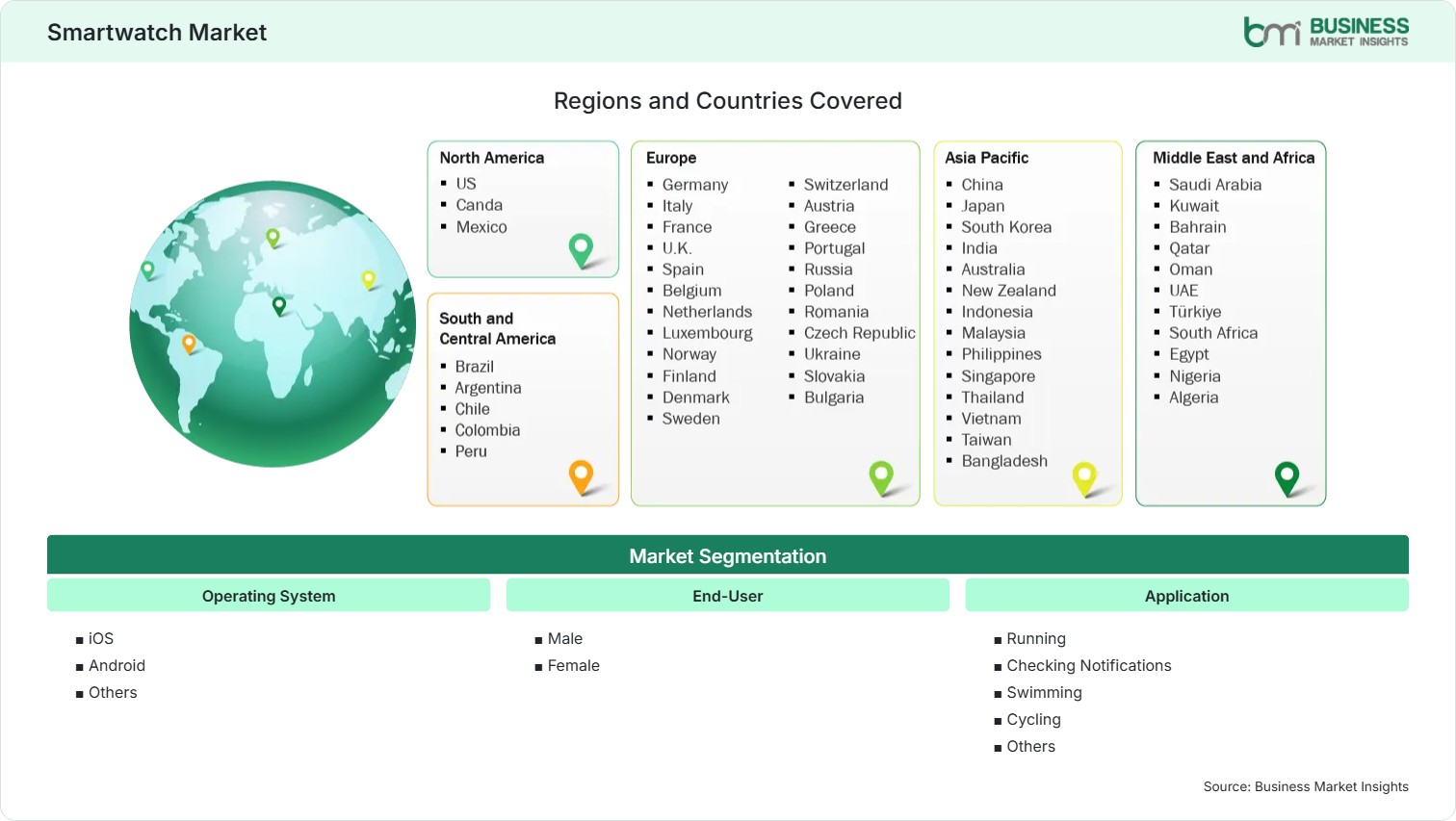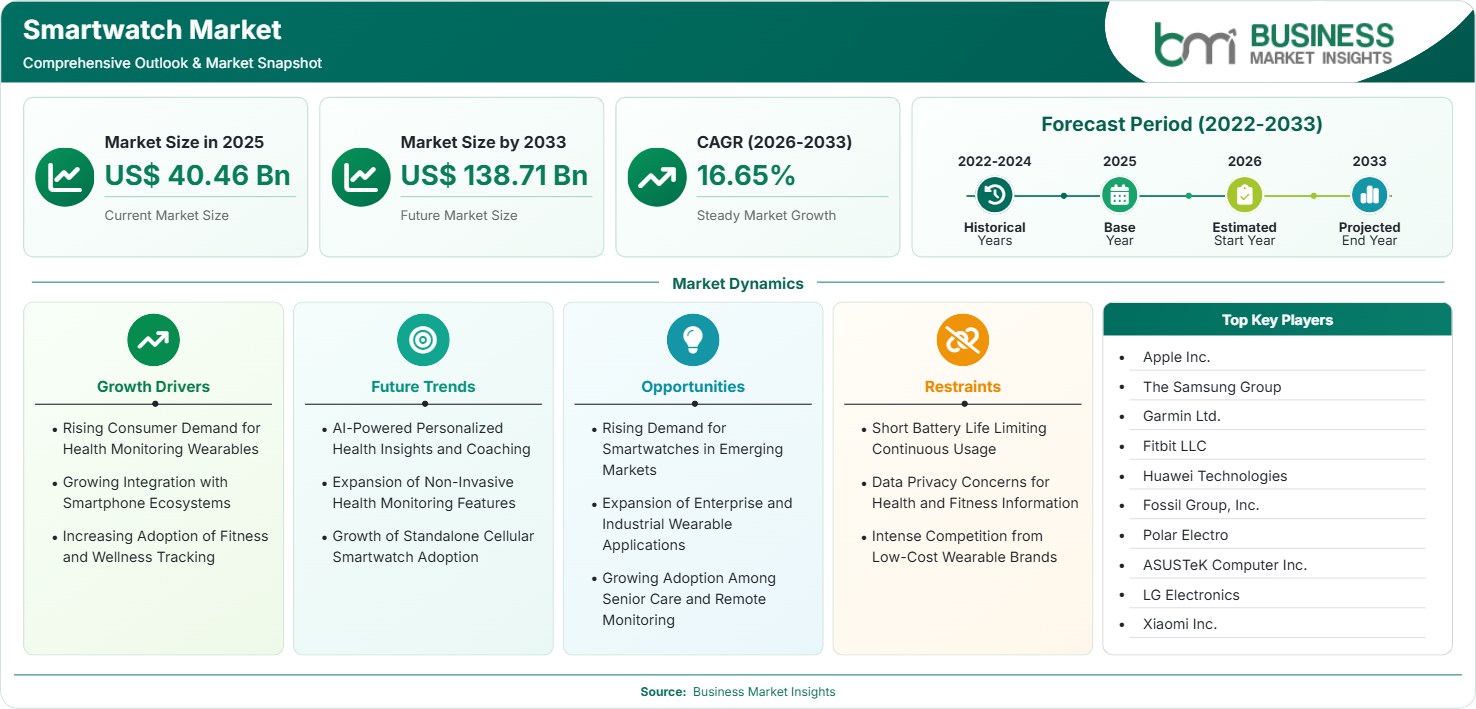
Smartwatch Market Regional Highlights
North America Smartwatch Market
North America accounted for a 34%–37% share in 2025 and is projected to expand at a CAGR of 15.8%–16.8% during 2026–2033. The region benefits from strong consumer spending on wearable technology, widespread smartphone adoption, and increasing demand for health-monitoring devices. Premium smartwatch brands continue to experience strong demand as consumers seek advanced wellness, fitness, and connectivity features.
- Consumers are increasingly adopting smartwatches for fitness monitoring, sleep analysis, and heart-rate tracking.
- Integration with digital health platforms is expanding the use of wearable devices beyond fitness applications.
- Premium smartwatch models continue gaining traction due to advanced sensors and ecosystem connectivity.
- Growing adoption of contactless payments and smart notifications is supporting device usage.
- Enterprise and healthcare applications are creating additional opportunities for wearable technology providers.
US Smartwatch Market
The US represented a 29%–32% share in 2025 and is estimated to grow at a CAGR of 16.0%–17.0% through 2033. Strong consumer awareness, high disposable income, and rapid adoption of connected devices support market expansion.
- Fitness and wellness remain major drivers of smartwatch purchasing decisions.
- Increasing health-conscious consumers are utilizing wearables for continuous health monitoring.
- Smartwatch manufacturers are expanding premium product portfolios with advanced health functions.
- Demand for ecosystem-connected devices continues supporting long-term market growth.
Europe Smartwatch Market
Europe held a 24%–27% share in 2025 and is expected to grow at a CAGR of 15.5%–16.5% from 2026–2033. Germany, the UK, and France represent major Smartwatch markets due to growing adoption of wearable technology, increasing health awareness, and rising demand for connected consumer electronics. Germany is estimated to expand at 16.0%–17.0% CAGR.
- Consumers are increasingly utilizing wearable devices for health monitoring and fitness management.
- Growing awareness regarding preventive healthcare is supporting smartwatch adoption.
- Sports and fitness applications are driving demand for activity-tracking features.
- Manufacturers are introducing innovative products with enhanced battery performance and sensor capabilities.
- Digital wellness initiatives continue supporting growth across the region.
Asia Pacific Smartwatch Market
Asia Pacific accounted for a 29%–32% share in 2025 and is projected to register a CAGR of 17.8%–18.8% during 2026–2033. China, India, Japan, and South Korea are leading markets due to rising disposable incomes, rapid urbanization, and growing adoption of wearable consumer electronics. China is expected to grow at 18.5%–19.5% CAGR, while India demonstrates strong growth potential with a CAGR of 19.0%–20.0% during the forecast period.
- Expanding middle-class populations are increasing demand for connected wearable devices.
- China continues witnessing strong adoption driven by innovation and broad product availability.
- India is emerging as a key growth market due to increasing affordability and health awareness.
- Fitness tracking and sports applications are becoming increasingly popular among younger consumers.
- Local and international brands are expanding offerings across multiple price categories.
Rest of World Smartwatch Market
Rest of World accounted for a 10%–13% share in 2025 and is expected to grow at a CAGR of 16.0%–17.0% through 2033. Latin America, the Middle East, and Africa are witnessing increasing adoption of wearable devices due to improving digital connectivity, rising consumer awareness, and expanding smartphone penetration.
- Growing interest in personal fitness and wellness is supporting wearable device adoption.
- Increasing availability of affordable smartwatch models is expanding consumer access.
- Retail channels and e-commerce platforms are improving product availability across emerging markets.
- Consumers are increasingly seeking health-monitoring and productivity-enhancing wearable devices.
- Rising digitalization continues supporting long-term demand for connected consumer electronics.