Smart Naval Munitions Market Regional Highlights
North America Smart Naval Munitions Market
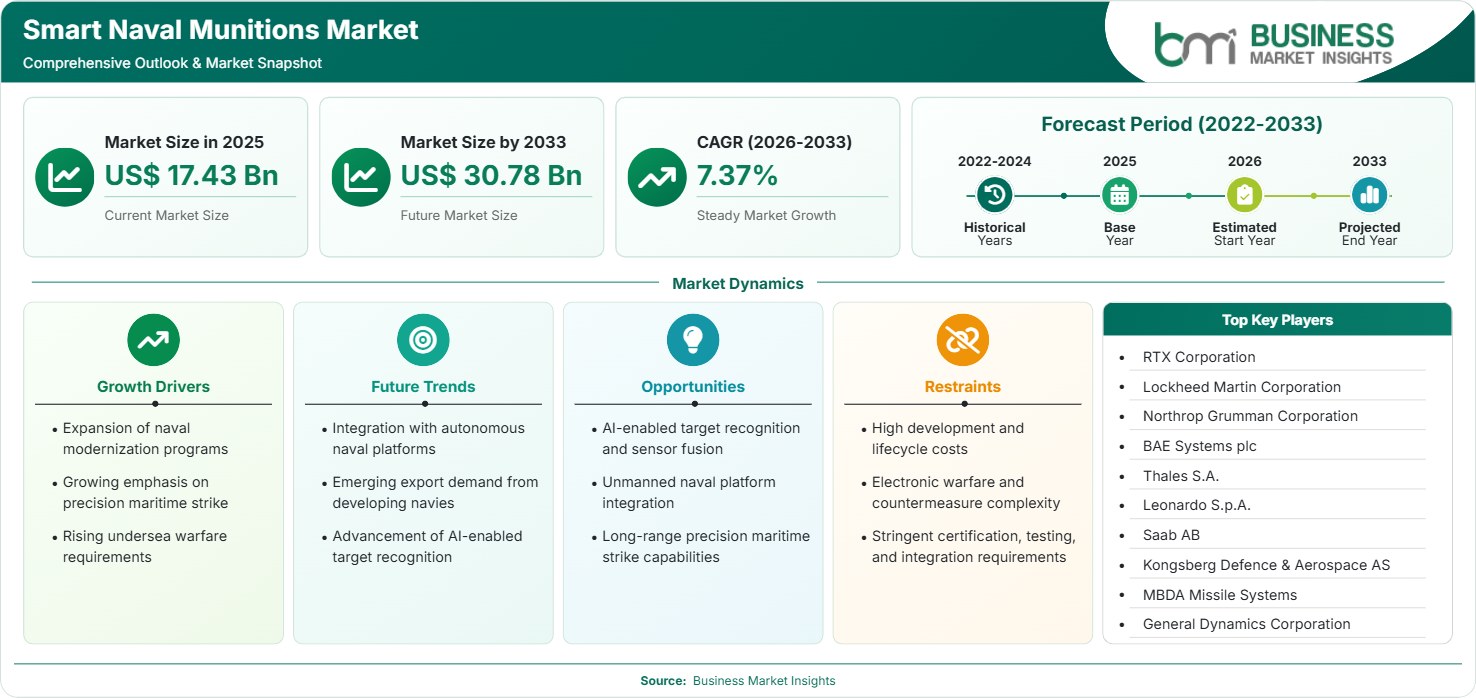
North America represents approximately 34%–37% of revenue in 2025 and advances at a CAGR of 6.8%–7.2%. Strong procurement budgets, missile inventory replenishment, naval modernization programs, and advanced R&D capabilities sustain regional leadership. The region maintains significant advantages in autonomous guidance, network-centric warfare systems, and undersea weapon technologies. Smart Naval Munitions Market share remains concentrated among major defense primes serving navy modernization priorities across the United States and allied procurement networks.
- U.S. Navy programs continue emphasizing long-range precision strike and distributed maritime operations.
- Investments in hypersonic integration and counter-access capabilities strengthen procurement pipelines.
- Strong domestic manufacturing ecosystems improve production scalability and resilience.
- Export demand from allied nations supports sustained technology development funding.
US Smart Naval Munitions Market
The United States accounts for 78%–82% of regional demand and expands at 6.9%–7.3%. Procurement priorities focus on anti-ship missiles, submarine-launched systems, and electronic warfare-resilient guidance technologies. Industrial investment supports production expansion and inventory replenishment. Smart Naval Munitions Market growth in the country benefits from Indo-Pacific force-posture strategies, extensive R&D budgets, and long-term maritime deterrence planning.
- Navy modernization initiatives prioritize precision engagement in contested maritime environments.
- Increased missile production capacity supports domestic requirements and allied exports.
- Advanced AI-enabled target engagement technologies move from testing toward deployment.
- Undersea warfare investments continue strengthening demand for guided naval weapons.
Europe Smart Naval Munitions Market
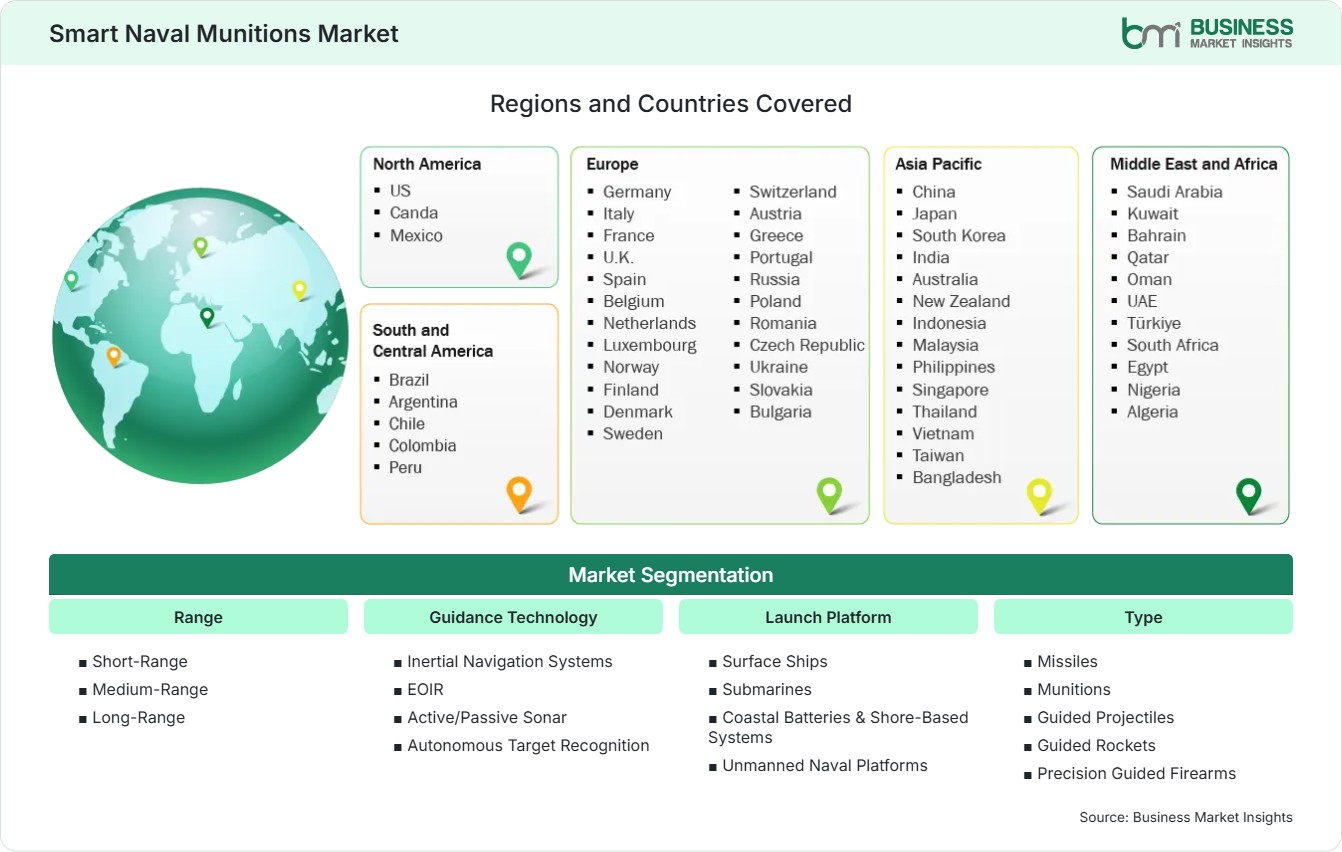
Europe captures 24%–27% Smart Naval Munitions Market share in 2025 and grows at 7.0%–7.5%. Maritime security concerns, NATO readiness objectives, and ammunition stockpile replenishment sustain investments. France and the United Kingdom remain leading markets, while Poland and Norway demonstrate faster growth trajectories near 8.0%–8.5%. Regional manufacturers benefit from advanced missile expertise, collaborative defense programs, and export-oriented product strategies.
- NATO interoperability requirements encourage adoption of advanced precision munitions.
- Coastal defense modernization supports anti-ship missile procurement activities.
- Indigenous production initiatives strengthen supply-chain resilience across member countries.
- Northern European governments increase investments in maritime deterrence capabilities.
Asia Pacific Smart Naval Munitions Market
Asia Pacific holds 28%–31% share and records the fastest CAGR of 8.5%–8.9%. Naval competition, territorial disputes, and submarine acquisition programs stimulate strong procurement activity. China, India, Japan, South Korea, and Australia remain major contributors. Smart Naval Munitions Market share continues increasing as regional governments prioritize indigenous defense production, advanced missile development, and maritime force expansion.
- India expands domestic missile manufacturing and naval modernization investments.
- Regional fleets increasingly adopt long-range precision strike capabilities.
- Submarine procurement programs accelerate demand for guided underwater weapons.
- Growing unmanned platform deployment supports intelligent munition integration.
- Export-oriented defense industrial strategies strengthen regional manufacturing capacity.
Rest of World Smart Naval Munitions Market
Rest of World represents 11%–14% share and advances at 7.4%–7.9%. Middle Eastern governments are investing in maritime security and coastal defense, while select South American nations focus on fleet modernization. Saudi Arabia leads regional procurement activity, while Brazil demonstrates notable modernization momentum. Demand increasingly favors versatile, precision-guided systems suitable for coastal protection and exclusive economic zone monitoring.
- Gulf countries invest in anti-ship systems and maritime infrastructure protection.
- Brazil advances naval modernization through indigenous industrial participation initiatives.
- Coastal security missions drive procurement of precision engagement capabilities.
- Collaborative defense partnerships accelerate technology transfer and localization efforts.